Conservation efforts and information sharing between China and Vietnam are helping to protect the eastern black crested gibbons, one of the rarest and most critically endangered primates in the world, for future generations.
Deep in the jungles of northern Vietnam lies the Trung Khanh Cao Vit Gibbon Species and Habitat Conservation Area bordering China. That is where Asia's last black crested gibbons or Cao Vit gibbons as they are known in Vietnam, roam.
"Gibbons can just cross over. For example, they might be in Vietnam in the morning and sleep in China at night, then return to Vietnam the next day. This is a normal occurrence," said Hua Van Trụ, a member of a Vietnamese gibbons conservation team.
The elusive tree-dwelling primate was believed to be extinct, but their rediscovery in the 2000s ignited cross-border conservation efforts between China and Vietnam to save the species from extinction.
"To protect this gibbon species, we have to continuously exchange information, collaborate and have frequent cross-border conservation activities," said Hoang Van Duong, head of Trung Khanh's forest ranger station.
Kilometers away on the Vietnamese side of the border, a team of men in charge of their continued survival ventured into this wild terrain.
"Our department has increased the frequency of patrol activities with a focus on preventing any illegal trapping and capturing of the gibbons. There aren't many of them left. Within this 2,000-hectare area, there are only 74 of them. That's why we must undertake these actions together to try our best to prevent them from going extinct," said Hoang.
The cooperation team of five is made up of members of Fauna and Flora International, or FFI's gibbons conservation team and Trung Khanh's forest rangers. They will make an overnight trek to reach an observation point where they hope to spot an elusive troop they have been tracking for months.
The team will only observe them from afar, for fear of startling the troop. Here, patience and silence are their greatest tools. The team's efforts finally pay off.
"Based on the observations we have made of this group over the last five months, there are now nine individuals in this troop," said Hua.
Hua continued to watch them. Every sighting is a victory, a reminder of the importance of their work. He recorded the sightings in a shared platform with his Chinese counterparts.
"We frequently share reports (with our Chinese counterparts) about poaching activities, waste from border crossers, and information about the gibbons. For example, if we see gibbons near the border, we'll quickly exchange updates," said Hua.
"As a forest ranger being assigned to manage and protect this conservation area, I feel very fortunate. This is also a source of pride that motivates me to play a part in nature conservation," said Hoang Duc Tuan, forest ranger of the Cao-Vit Gibbon Species and Habitat Conservation Area.
The work these conservationists do is about more than protecting a species. Their work is a symbol of the amazing positive impact that can be made on a global scale when countries work together for a common cause.
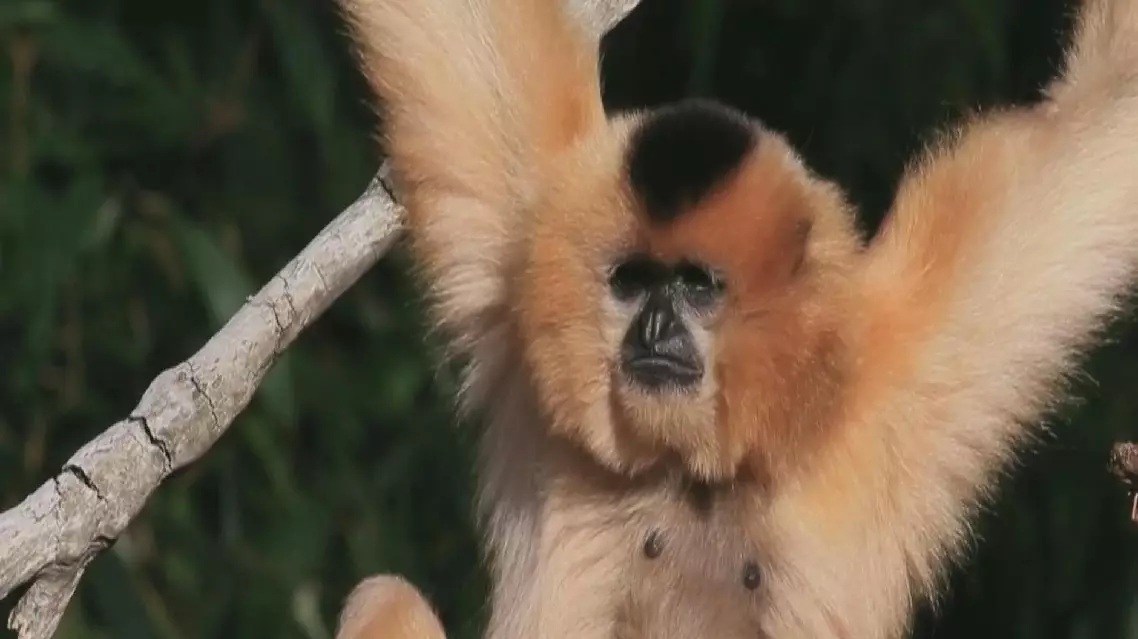
China-Vietnam conservation efforts save eastern black crested gibbons from extinction