Malaysia and Vietnam are among the Southeast Asian countries expanding cooperation with China in the renewable energy sector, as the region seeks to accelerate its clean energy transition toward a greener future.
China is the global leader in electricity production from renewable energy sources, supplying 50 percent of the world's wind power equipment and 80 percent of global photovoltaic equipment, according to official data.
A special program produced by the China Global Television Network (CGTN) explores the transformative impact of Chinese renewable energy technology in Southeast Asia, focusing on two groundbreaking projects, the Bertam Smart City in Malaysia and the Hoa Binh Wind Farm in Vietnam.
Through the perspectives of key stakeholders, the CGTN production showcases the power of innovative collaboration between China and Southeast Asia in advancing sustainable development.
In Malaysia, the Bertam Smart City Project is pioneering renewable energy use through photovoltaic systems in a partnership with Shanghai-based solar panel giant Jinko Solar in China. Professor Lim Chin Haw at the Solar Energy Research Institute of the Universiti Kebangsaan Malaysia (UKM) leads the project team.
"UKM really stresses on the importance of the collaboration or the synergy between academia, industry and community. So, we feel that what we are developing will suit the demand of the industry and make the university really relevant," said Dr. Norazah Mohd Nordin, vice-chancellor of the UKM's Industry and Community Partnerships Affairs.
By using a digital twin of Bertam, the team can simulate energy consumption and carbon emissions, allowing for the strategic placement of solar panels throughout the city. Based on these simulations, specific buildings were selected for unique reasons.
The Bertam City Hospital was proposed by Dr. Mohd Noor during his PhD studies under the supervision of Dr. Lim.
"Renewable energy like solar power has transformative potential for healthcare facilities because it can provide a stable and reliable power source that can reduce dependence on the grid and the vulnerability to power outages, [which] is critical for healthcare facilities that require uninterrupted power for patient care and sensitive equipment," Dr. Mohd Noor explained.
Another building included in the trial was the Abdullah Fahim Mosque.
"As the mosque is a focal point, this (solar panel use) will have a huge impact on people because they can witness an example with their own eyes. It sets a great example of a place of worship implementing a sustainability agenda," said Bertam resident Zahari Zin.
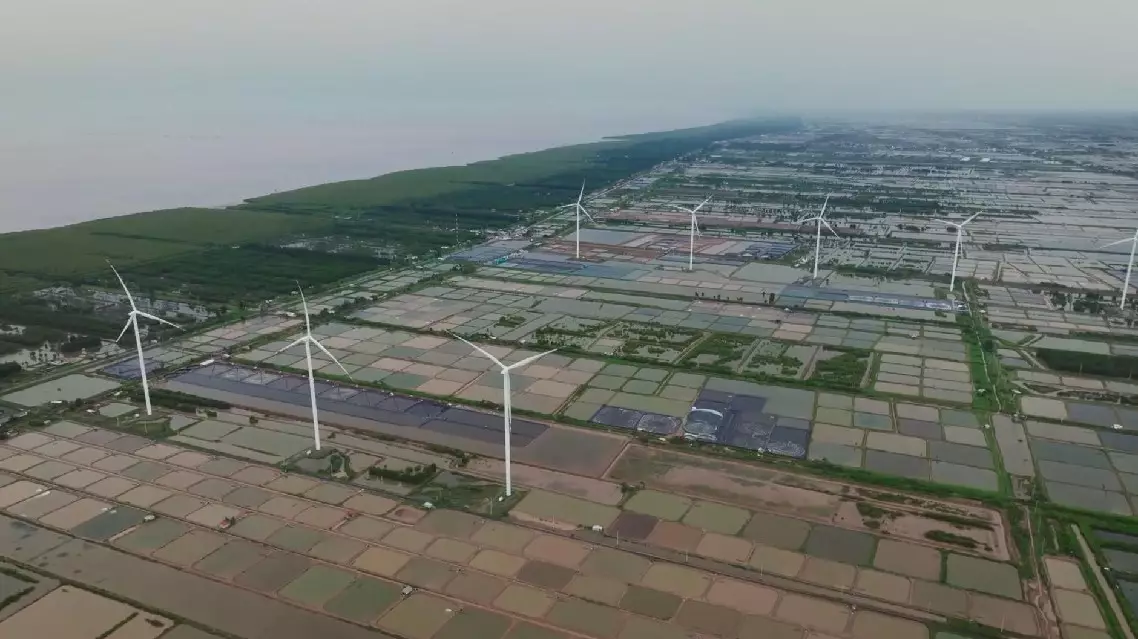
Meanwhile, in Bac Lieu province of Vietnam, wind power is transforming the landscape, with this clean energy source expected to contribute 30 percent of the country's energy by 2050.
The province is home to the Hoa Binh Wind Farm, a project developed in collaboration with the Chinese multinational corporation Envision Energy.
"A few of them use wind turbines from China, particularly the Hoa Binh 5 project, which uses turbines from the Envision brand. To my knowledge, Chinese investors are involved in quite a number of projects, it is not just limited to Bac Lieu," said Hoang Van Cuong, director of a local wind power resort.
Projects like the Hoa Binh 1 Wind Farm, a 290MW offshore wind power project, serve as a beacon of progress, contributing to more than just Vietnam's renewable energy sector.
"We came up with the proposal for a small ecotourism project located at the Hoa Binh 1 wind power plant in Bac Lieu," said Hoang Van Cuong.
Hoa Binh Group developed a series of eco-pathways that lead tourists to the wind farms through the mangroves.
"Given Bac Lieu's natural conditions, which are full of mangroves by the sea, we researched and developed a model that combined wind power plant and ecotourism," Hoang Van Cuong said.
These projects have also boosted local economies. Homestays, such as Luu Kieu Dim's near the wind farm, have thrived by attracting tourists and improving livelihoods.
"Before the wind farm was built, the roads were at a lower level, so during that period, they were often flooded, and it was difficult for locals and tourists alike to move around. But ever since the wind farm was built, the roads were raised higher and wider, so transportation for locals became much easier. After the roads and transportation improved, our numbers kept increasing and increasing. At the moment, we receive about 10,000 guests per month," said Luu Kieu Dim, manager of the Vuon Nha Tom Homestay.
The thriving Bertam Smart City and Hoa Binh Wind Farm demonstrate how China's innovative solutions are paving the way for a greener future for Southeast Asia, with reduced carbon footprints and stronger local economies.
Chinese renewable energy technology advances green transition in Malaysia, Vietnam