An influential group of law enforcement leaders is pushing police departments across the U.S. to change how officers use force when they subdue people and to improve training so they avoid “consistent blind spots” that have contributed to civilian deaths.
Calling the use of force “a defining issue in policing today,” the Police Executive Research Forum released extensive new guidance it says can reduce the risks of deaths following police restraint. The group credited an ongoing investigation led by The Associated Press for inspiring the reforms.
Click to Gallery
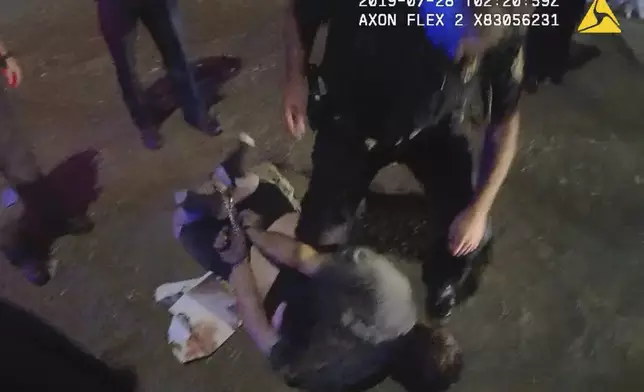
FILE - In this image from Knox County Sheriff's Office body-camera video, cuffs on the wrists and ankles are used to restrain Johnathan Binkley in Knoxville, Tenn., on July 28, 2019. He rolled around for three more minutes, as deputies watched. One thrust a knee into his back, forcing him to be still, and he became unresponsive within a minute. (Knox County Sheriff's Office via AP, File)
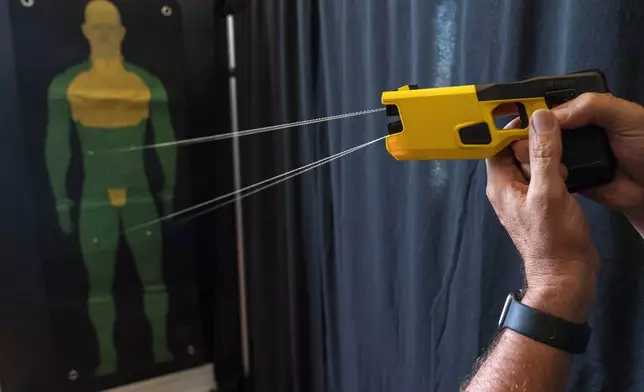
FILE - A representative for Axon Enterprise Inc. demonstrates the company's TASER 7 in Washington on Thursday, May 12, 2022. (AP Photo/Jacquelyn Martin, File)
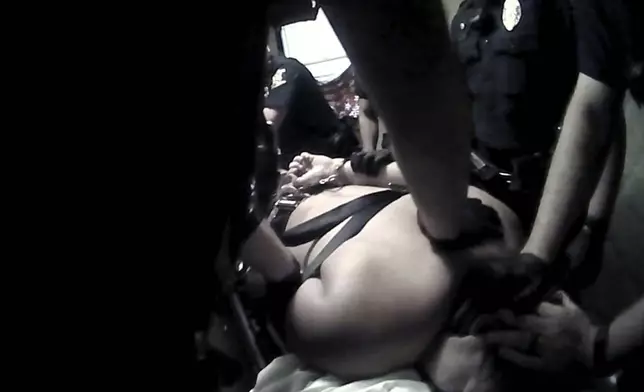
FILE - In this image from Bristol Police Department body-camera video, police restrain Austin Hunter Turner, facedown, at his girlfriend's apartment in Bristol, Tenn., on Aug. 29, 2017. The 23-year old suffering a seizure died after medics and then police in Tennessee considered his body movements to be resistance. (Bristol Police Department via AP, File)
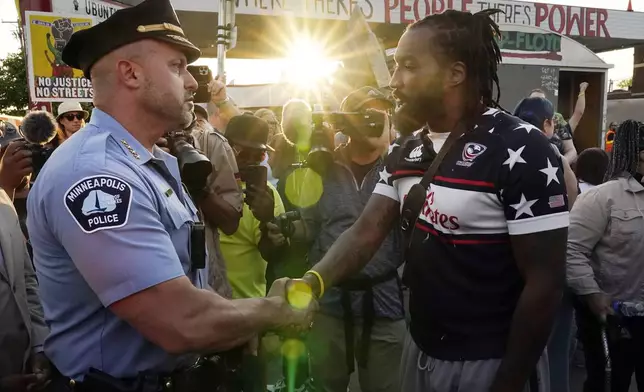
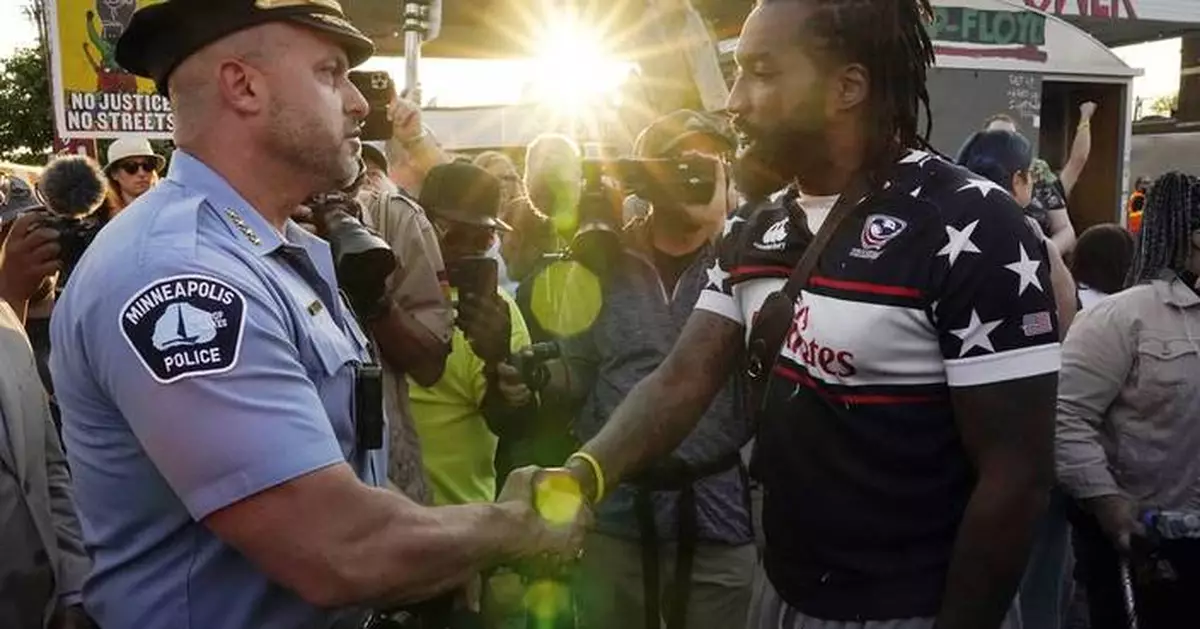
FILE - Minneapolis Police Chief Brian O'Hara, left, shakes hands with Michael Wilson on the three-year anniversary of George Floyd's death at George Floyd Square, Thursday, May 25, 2023, in Minneapolis. (AP Photo/Abbie Parr, File)
The AP and its reporting partners created a database of more than 1,000 deaths over a decade after officers used tactics meant to subdue people without killing them — the same category of force that killed George Floyd.
The research forum’s recommendations — spanning better coordination with medical responders, de-escalation tactics and adherence to long-standing safety warnings — apply to all incidents officers handle.
But the group focused on a particular type of case that AP’s investigation repeatedly documented: People in a medical, mental or drug crisis who die after police use physical blows, restraints or weapons like Tasers. The group's report shifts the focus from blaming those with mental illness and addiction for their own deaths.
“These people are not suspects. They are patients,” said Minneapolis Police Chief Brian O’Hara, who two years ago took over a department at the center of calls for change after Floyd was killed there in 2020. “This is not just about making it safer for a patient. It’s about increasing safety for everyone.” O’Hara plans to meet with his staff this week to discuss implementing the recommendations.
Deaths that AP identified happened everywhere, affecting people from all walks of life, though Black people were disproportionately represented. In hundreds of cases, officers weren’t taught or didn’t follow well-known guidelines for safely restraining people. These kinds of mistakes were part of what pushed the research forum to act.
“Every police chief, sheriff, trainer, officer, and any other person involved in these incidents should take the time to read these principles and put them to use,” the recommendations said. “They can save lives.”
The Police Executive Research Forum, based in Washington, D.C., and led by police chiefs and administrators, has written policy guidelines on Tasers and body cameras at the request of the Justice Department. While the group largely represents big city departments, its guidelines help inform policy and training standards in many agencies and its work has been cited in court decisions and federal investigations.
In June, the group convened about 20 experts to start hashing out recommendations following the AP-led investigation, done with the Howard Center for Investigative Journalism programs at the University of Maryland and Arizona State University, and FRONTLINE (PBS).
While some states have banned chokeholds and other tactics since Floyd’s death, sweeping changes met resistance. A federal package of reforms named in his honor failed to reach President Joe Biden’s desk.
“In these situations, police need to know what they can do,” said Chuck Wexler, the research forum’s executive director. “Because if it doesn’t go right, the police are going to be held accountable.”
The recommendations sent to hundreds of police leaders Saturday will be used in training programs the research forum operates, Wexler said.
While officers in about 30% of the deaths AP identified from 2012-2021 used force to protect someone, many more incidents weren’t imminently dangerous and often involved people suffering a health emergency. Cases like these frequently turned volatile after officers misinterpreted as defiance someone’s hesitation or inability to follow commands. Escalating to physical force then exacerbated the medical condition.
In one death AP featured, medics and police in Tennessee treated the body movements of a 23-year-old man suffering a seizure as resistance. The mother of Austin Hunter Turner sued police and other responders after learning from body-camera video AP unearthed that her son was subjected to more force than she realized.
People in these “medical behavior emergencies” appear to be at greater risk of dying when police restrain them, the research forum wrote. It urged departments to improve training so officers can better recognize and respond to these situations.
Repeatedly yelling at someone in medical crisis to “calm down” or “relax,” for example, often makes the situation worse, the report said. Police should coordinate with fire, dispatch and medics ahead of time so everyone knows their role.
The research forum reiterated and expanded on long-standing safety warnings on physical holds, specifically saying officers should limit when and how long they pin someone face down in what is known as prone position.
Police have been on notice since the 1990s that leaving someone in prone restraint can dangerously restrict their lungs and heart. AP found police often failed to turn over the person once they were handcuffed. In dozens of cases, officers blew off cries of, “I can’t breathe.”
The research forum said police could save lives by rolling people onto their side as soon as possible, even if they are flailing, and by having at least one officer monitor their health. The group also warned police not to buy misconceptions about prone restraint, including that if someone is talking, they can breathe adequately.
The report addressed another finding from AP’s investigation by recommending that officers should never seek to influence whether medics give someone an injection to calm them down.
The AP found at least 94 people died after they were given sedatives and restrained. In more than 15 of those cases, police requested or suggested that emergency medical workers inject sedatives, such as ketamine or midazolam, to temporarily immobilize someone for transport. Experts told the AP that requests from police can pressure medics to use treatments that may be high risk — especially if a person is held face down — but not medically necessary.
“Get the shot to calm him down!” a California officer told a paramedic in the 2020 death of a 40-year-old man who received midazolam while restrained.
Some departments such as Minneapolis have barred officers from requesting sedation, as does a state law in Colorado. But many others offer little or no guidance to officers, some of whom embrace sedation when they see it work rapidly on combative people.
Medics should make decisions independently of police, “based on the totality of the circumstances,” the report said. It added that medics should feel comfortable intervening when officers are restraining people in dangerous ways.
“We’re not trying to interfere with the job they are doing,” Eric Jaeger, an EMS educator and paramedic who helped develop the guidelines, said of police. “We are trying to do our job, which is to protect the health of the patient.”
This story is part of the ongoing investigation “Lethal Restraint” led by The Associated Press in collaboration with the Howard Center for Investigative Journalism programs and FRONTLINE (PBS). The investigation includes an interactive story, database and the film “Documenting Police Use Of Force.”
The Associated Press receives support from the Public Welfare Foundation for reporting focused on criminal justice. This story also was supported by Columbia University’s Ira A. Lipman Center for Journalism and Civil and Human Rights in conjunction with Arnold Ventures. The AP is solely responsible for all content.
Contact AP’s global investigative team at Investigative@ap.org or https://www.ap.org/tips
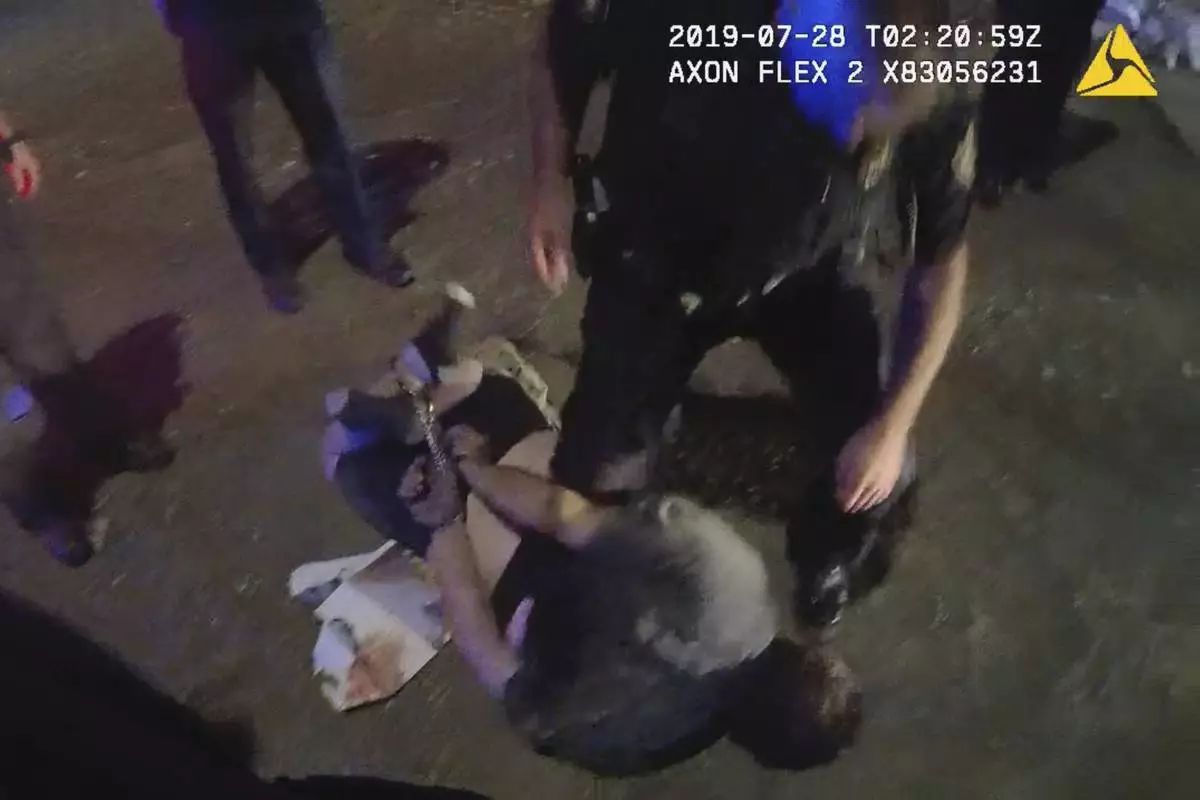
FILE - In this image from Knox County Sheriff's Office body-camera video, cuffs on the wrists and ankles are used to restrain Johnathan Binkley in Knoxville, Tenn., on July 28, 2019. He rolled around for three more minutes, as deputies watched. One thrust a knee into his back, forcing him to be still, and he became unresponsive within a minute. (Knox County Sheriff's Office via AP, File)
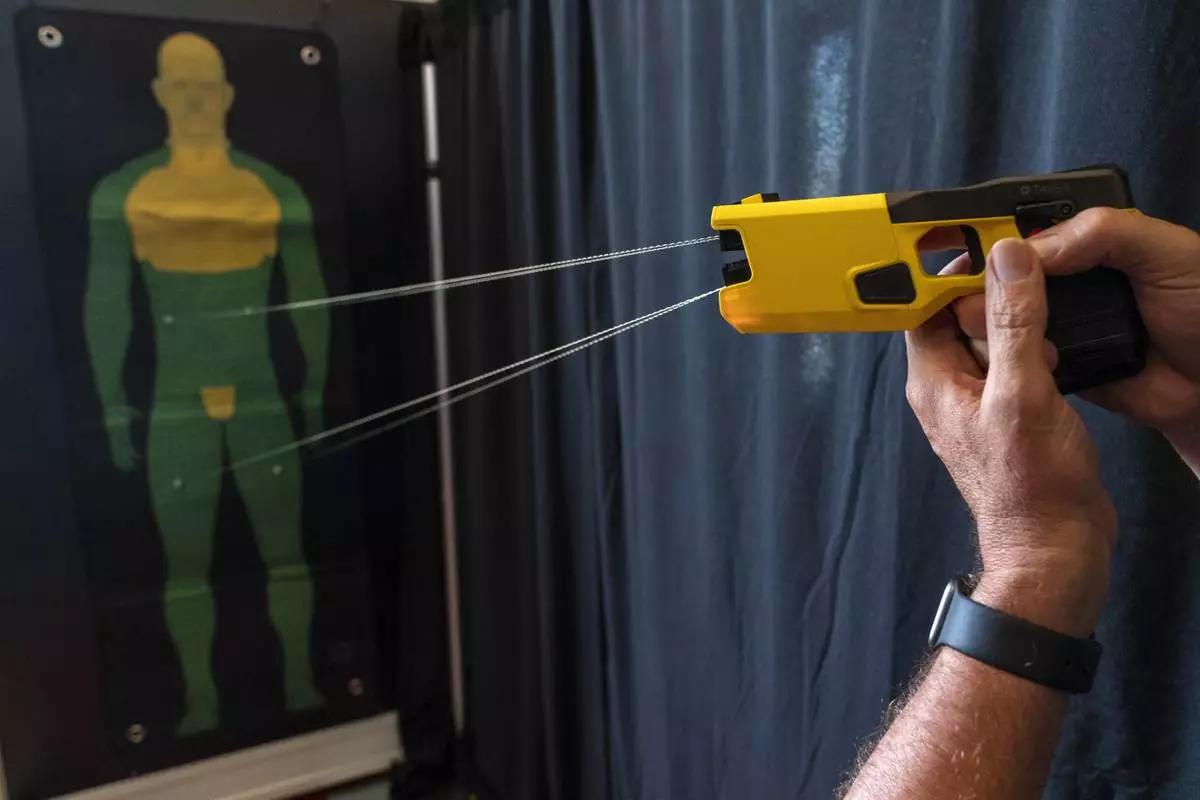
FILE - A representative for Axon Enterprise Inc. demonstrates the company's TASER 7 in Washington on Thursday, May 12, 2022. (AP Photo/Jacquelyn Martin, File)
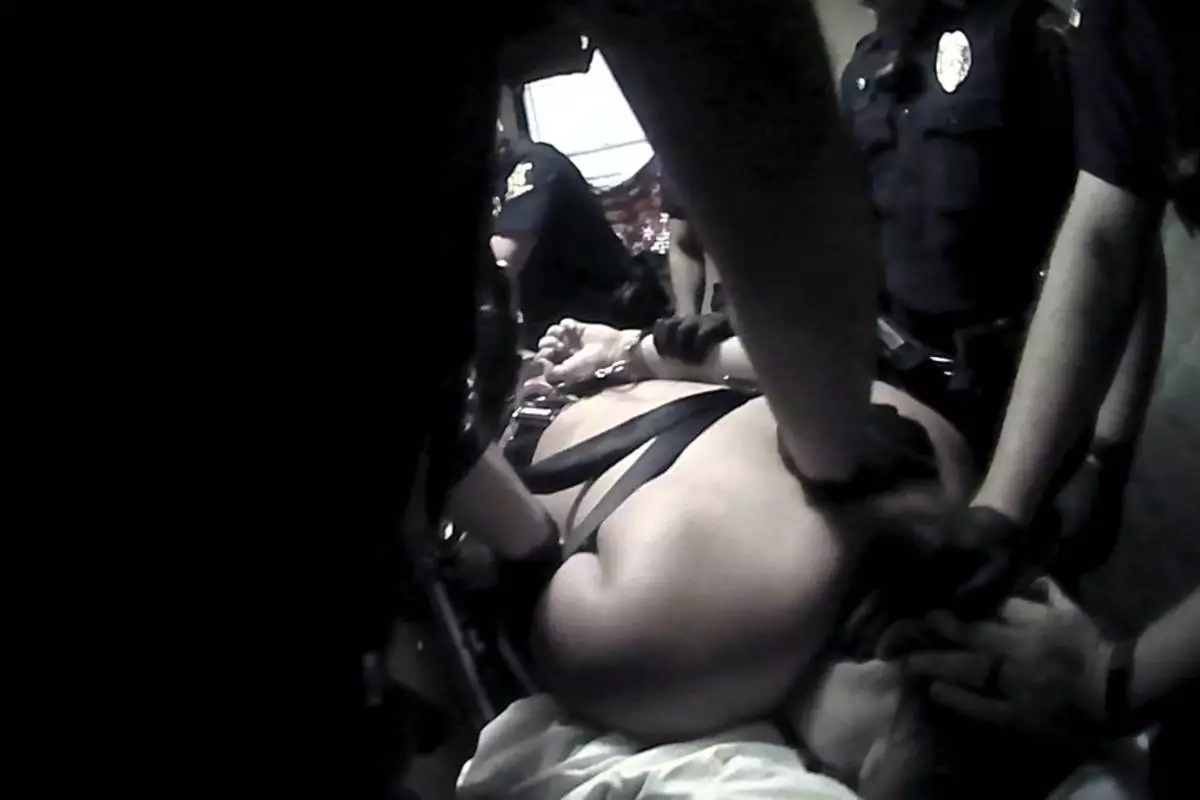
FILE - In this image from Bristol Police Department body-camera video, police restrain Austin Hunter Turner, facedown, at his girlfriend's apartment in Bristol, Tenn., on Aug. 29, 2017. The 23-year old suffering a seizure died after medics and then police in Tennessee considered his body movements to be resistance. (Bristol Police Department via AP, File)
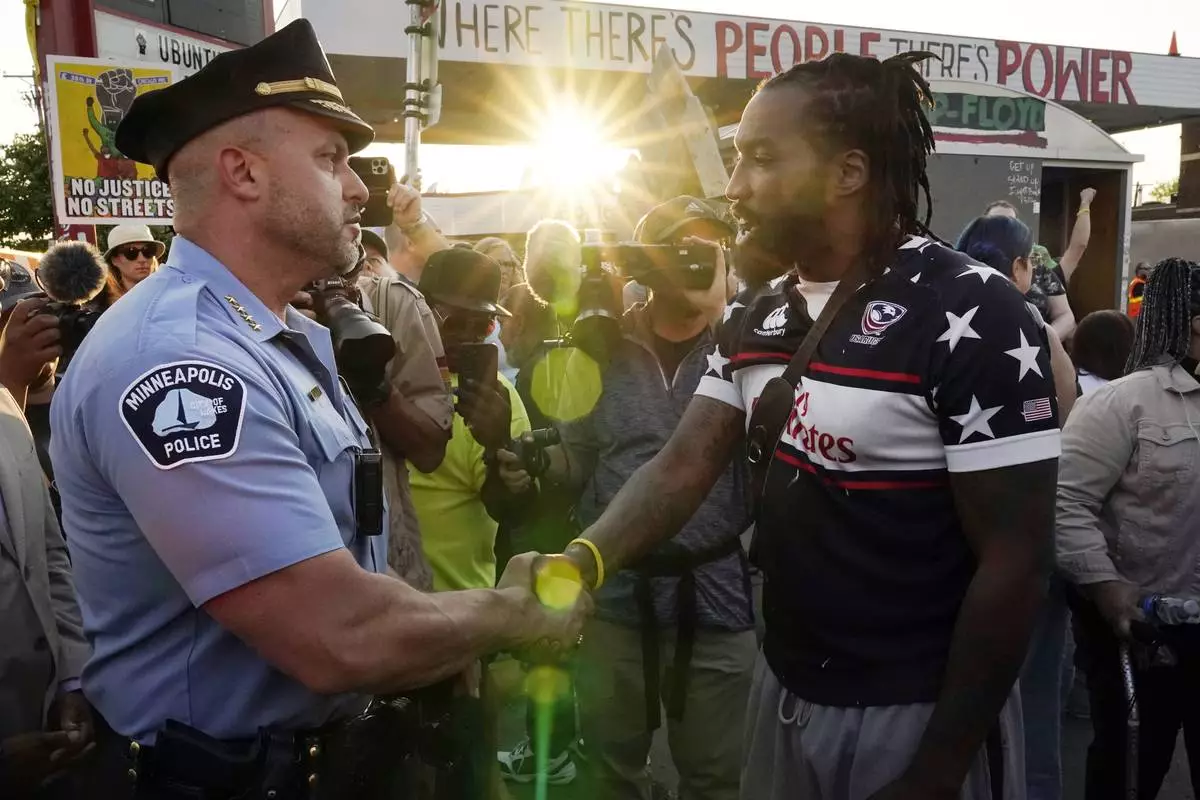
FILE - Minneapolis Police Chief Brian O'Hara, left, shakes hands with Michael Wilson on the three-year anniversary of George Floyd's death at George Floyd Square, Thursday, May 25, 2023, in Minneapolis. (AP Photo/Abbie Parr, File)