Xizang Autonomous Region has made significant strides in wetland protection and restoration, fostering a thriving eco-tourism industry that benefits both the local economy and communities.
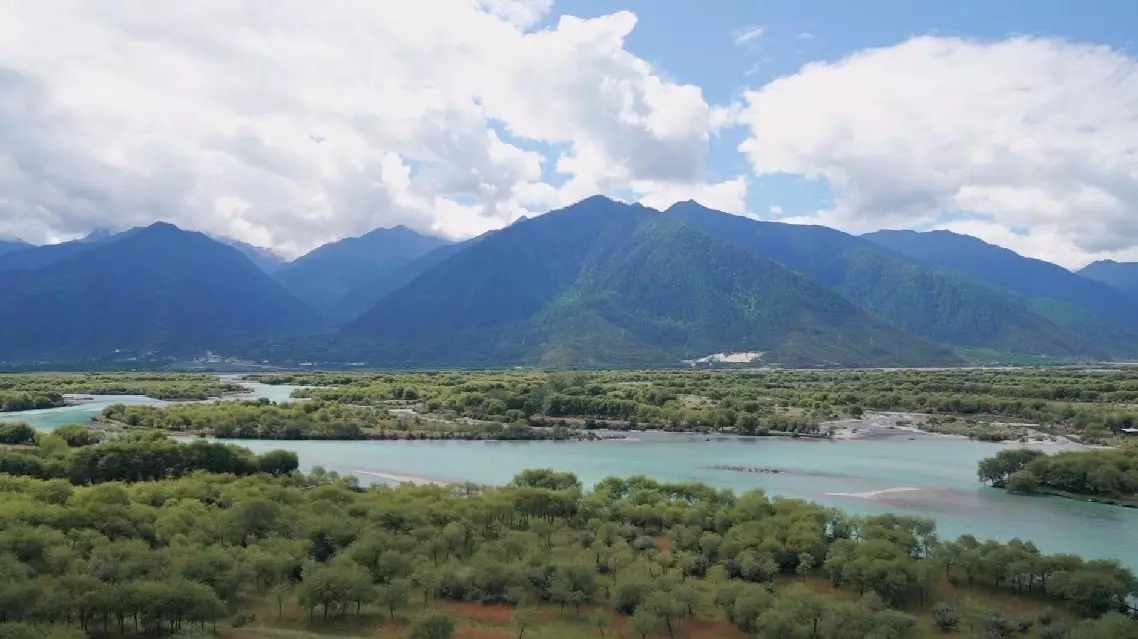
Yani National Wetland Park, situated at the confluence of the Yarlung Zangbo and Niyang Rivers in Linzhi City, exemplifies the region's commitment to environmental conservation. Spanning over 6,900 hectares at an altitude of 2,900 meters, the park showcases the breathtaking beauty of the plateau's vibrant ecosystem. During the summer months, crystal-clear waters meander through the park, while lush greenery adorns the riverbanks.
Prior to the commencement of the pilot construction project in 2009, the area that would become Yani National Wetland Park was a desolate stretch of river valley sandbanks. The exposed riverbeds and frequent dust storms that followed the rainy season, when water levels receded, highlighted the region's environmental vulnerability.
Since the establishment of the park's administration in 2016, the local government has invested approximately 21.15 million U.S. dollars on infrastructure development, ecosystem restoration, and scientific monitoring initiatives. The local community has also been engaged in wetland protection efforts, contributing to the park's successful transformation.
"As part of our continuous efforts in reforestation, we've been planting native willow trees around the barren grasslands. This helps stabilize the sandy soil on the edges and prevents erosion. Local communities have also been involved in the process, which not only boosts their income but also raises their awareness of environmental protection," said Jiang Wentao, the director of the Forestry and Grassland Bureau at Bayi District in Linzhi.
So far, over 340 hectares of the Yani wetland and its surrounding areas have been restored, and it is now home to more than 500 species of wild plants and over 200 species of wildlife.
The improving environment has attracted a growing number of tourists.
To ensure proper management, 45 local villagers have been hired as wetland rangers to conduct daily patrols. One of them is Wangzha, who has been conducting three patrols a day for over a decade.
"I'm responsible for forest management in five villages here, and the government provides financial support. I earn an income of 3,200 yuan (about 455 U.S. dollars) a month. Things have changed a lot around here -- there are more tourists coming, and our economy has improved. I have three kids -- two girls and one boy. And one of them is in his final year of university," he said.
In recent years, the local government has successfully balanced environmental protection and sustainable development of its ecological and cultural resources, greatly enhancing the region's environment and establishing it as a premier destination for both eco-tourism and conservation research.
Xizang's ecological restoration efforts boost livelihood
Xizang's ecological restoration efforts boost livelihood