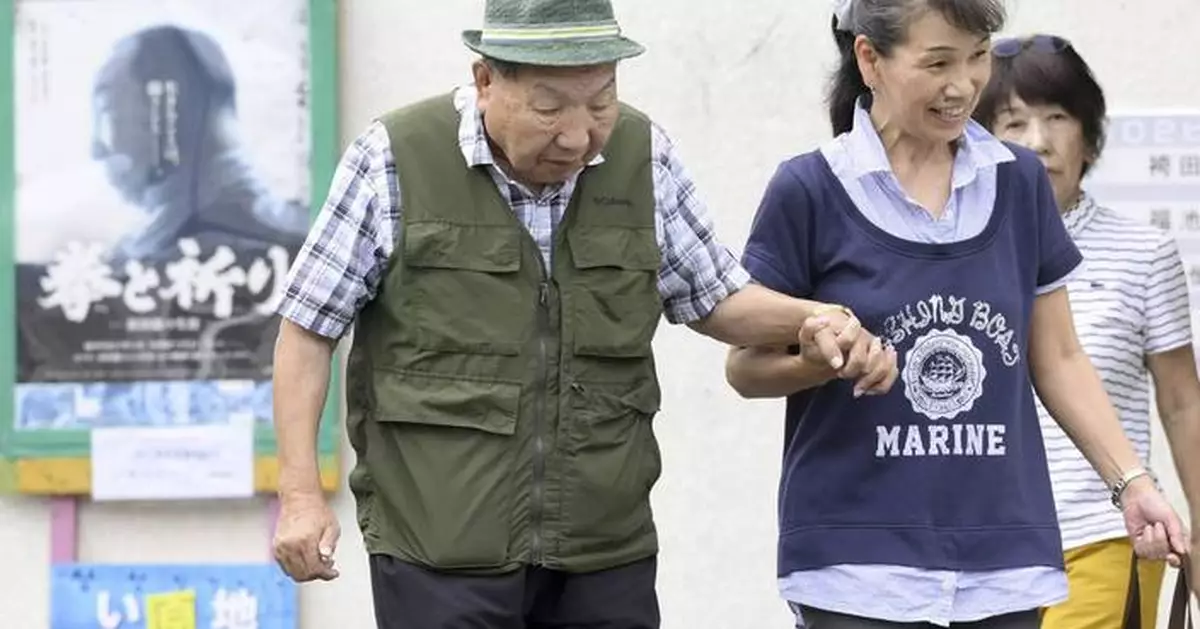
TOKYO (AP) — A Japanese court found an 88-year-old former boxer not guilty on Thursday after a retrial for a 1966 quadruple murder, reversing a decision that made him the world's longest-serving death row inmate.
Iwao Hakamada’s acquittal by the Shizuoka District Court makes him the fifth death row inmate to be found not guilty in a retrial in postwar Japan, where prosecutors have a more than 99% conviction rate. The case could rekindle a debate around abolishing the death penalty in Japan.
Click to Gallery
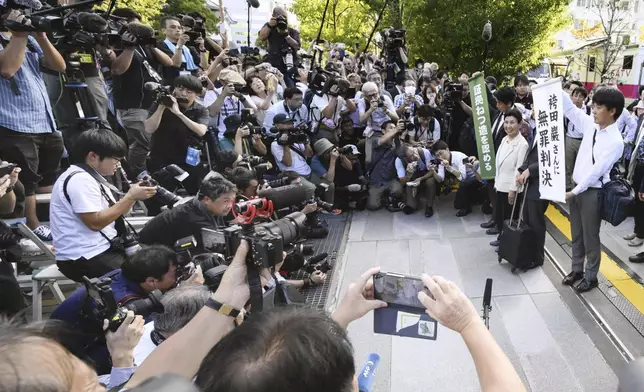
Hideko Hakamada, center at right side, sister of 88-year-old former boxer Iwao Hakamada who has been on death row for nearly six decades after his murder conviction that his lawyers said was based on forced confession and fabricated evidence, is surrounded by journalists after a court ruled that her brother was not guilty in a retrial for a 1966 quadruple murder, in front of the court in Hamamatsu, Shizuoka prefecture, Thursday, Sept. 26, 2024. The signs read "Acquittal to Mr. Iwao Hakamada, " right, and "Acknowledged fabrications of evidence." (Kyodo News via AP)
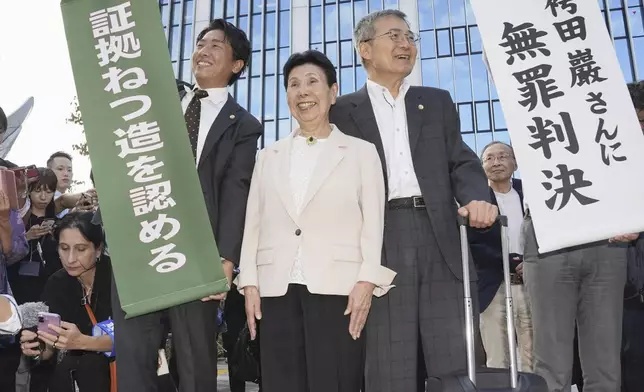
Hideko Hakamada, center, sister of 88-year-old former boxer Iwao Hakamada who has been on death row for nearly six decades after his murder conviction that his lawyers said was based on forced confession and fabricated evidence, reacts after a court ruled that her brother was not guilty in a retrial for a 1966 quadruple murder, in front of the court in Hamamatsu, Shizuoka prefecture, Thursday, Sept. 26, 2024. The signs read "Acquittal to Mr. Iwao Hakamada, " right, and "Acknowledged fabrications of evidence." (Kyodo News via AP)
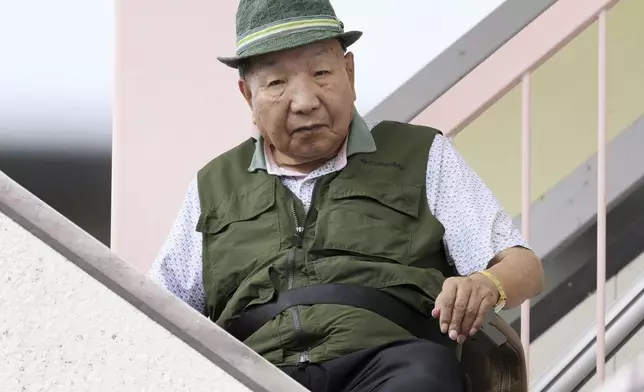
Iwao Hakamada, 88-year-old former boxer who has been on death row for nearly six decades after his murder conviction that his lawyers said was based on forced confession and fabricated evidence, goes for a walk in Hamamatsu, Shizuoka prefecture, central Japan Thrusday, Sept. 26, 2024. (Kyodo News via AP)
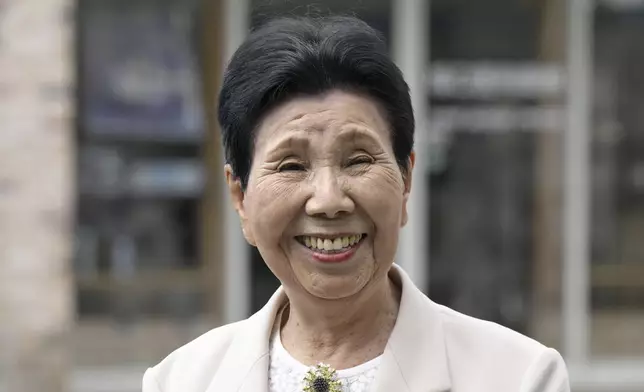
Hideko Hakamada, sister of 88-year-old former boxer Iwao Hakamada who has been on death row for nearly six decades after his murder conviction that his lawyers said was based on forced confession and fabricated evidence, speaks to journalists ahead of a retrial for a 1966 quadruple murder case, in Hamamatsu, Shizuoka prefecture, Thursday, Sept. 26, 2024. (Kyodo News via AP)
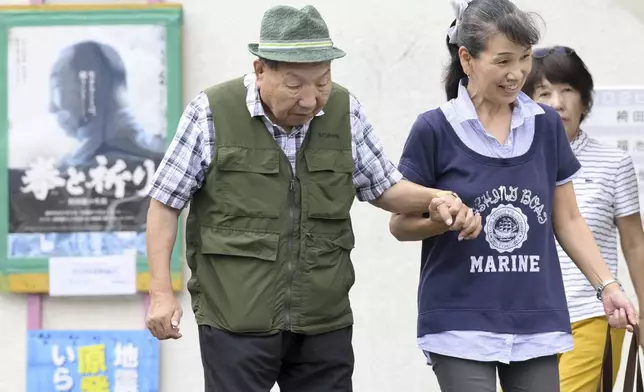
Iwao Hakamada, left, 88-year-old former boxer who has been on death row for nearly six decades after his murder conviction that his lawyers said was based on forced confession and fabricated evidence, is helped by a supporter as he goes for a walk in Hamamatsu, Shizuoka prefecture, central Japan Wednesday, Sept. 25, 2024. (Kyodo News via AP)
The court found that evidence was fabricated and planted by investigators and that Hakamada was not the culprit, his lawyer Hideyo Ogawa said.
After the ruling and an explanation were read out, his 91-year-old sister Hideko Hakamada walked out of the courthouse with a big smile, welcomed by cheers and two big bouquets of flowers to celebrate the acquittal of her brother after the 58-year legal battle.
“Thank you, everyone, we won an acquittal,” she told a televised news conference. “When I heard the main sentence, it sounded almost divine. I was so touched and could not stop crying with joy."
Hakamada was convicted of murder in the 1966 killing of an executive and three of his family members, and setting fire to their home in central Japan. He was sentenced to death in 1968, but was not executed due to the lengthy appeal and retrial process in Japan's notoriously slow-paced criminal justice system.
He spent 48 years behind bars — more than 45 of them on death row — making him the world’s longest-serving death row inmate, according to Amnesty International.
Ogawa said he asked the prosecutors not to appeal the case, as is possible, but was told they have not yet decided what to do.
The lawyer also said the defense team is considering filing a lawsuit against the government, in part to learn more about the troubled investigation. If prosecutors do not appeal and his acquittal is finalized, Hakamada would be entitled to seek compensation.
It took 27 years for the top court to deny his first appeal for retrial. His second appeal for a retrial was filed in 2008 by his sister.
That request was granted in 2014, when a court ruled there was evidence suggesting he was wrongly accused. He was not cleared of the conviction, but he was released from prison and allowed to await retrial at home because his poor health and age made him a low risk for escape.
But the case continued to bounce among several courts, until one finally ruled in his favor in 2023, paving the way for the latest retrial that began in October.
Following his arrest, Hakamada initially denied the accusations, but then confessed. He later said his confession was forced during a violent interrogation by police.
"I have nothing to do with the case … I am innocent,” he wrote in his letter to his mother while on trial in 1967.
On Thursday, the court concluded that five pieces of bloodstained clothing that investigators claimed to have found hidden in a tank of fermented soybean paste, or miso, a year after Hakamada's arrest must have been put there long after the arrest.
The court cited scientific experiments that showed the bloodstains should not have been visible on clothing soaked in miso for a year. The ruling concluded that investigators, who had said Hakamada wore the clothes during the crime, had applied the bloodstains themselves and planted the clothing.
According to defense lawyers and earlier court rulings, the blood samples did not match Hakamada’s DNA, and trousers that prosecutors submitted as evidence were too small for him.
Thursday's ruling also blamed the prosecutors for forcing Hakamada into a false confession because of an “inhumane" interrogation.
Ogawa, Hakamada’s lawyer, praised the ruling as “groundbreaking” for clearly stating that the prosecution fabricated key evidence at the beginning. “I believe this ruling puts an end to the case. ... Now we must prevent prosecutors from appealing no matter what.”
After Hakamada was sentenced to death, he expressed fear and anger at being falsely accused.
“When I go to sleep in a soundless solitary cell every night, I sometimes cannot help cursing God. I have not done anything wrong,” he wrote to his family. “What a cold-blooded act to inflict such cruelty on me."
Hakamada, whose Christian name is Paulo, was invited to a Mass in Tokyo during Pope Francis' visit in 2019, five years after his release.
Supporters say Hakamada’s nearly half-century detention took a toll on his mental health. Most of his 48 years behind bars was spent in solitary confinement. The first two months after Hakamada's release, he kept pacing inside the apartment, without even trying to go outside, his sister said.
One day, she asked him to help her with groceries to get him to agree to leave the house. Going out for a walk then became his daily routine, though today he is less able and he goes out by car, assisted by his supporters.
The case has drawn attention to and criticism of Japan's legal system. Japan Bar Association Chairperson Reiko Fuchigami urged the government and parliament on Thursday to promptly take steps to abolish the death penalty and lower hurdles for retrials.
“The Hakamada case clearly shows the cruelty of the wrongful death penalty, and the tragedy should never be repeated,” she said, expressing hope that Hakamada truly regains his freedom and lives in serenity as a citizen.
At a final hearing at the Shizuoka court in May before Thursday’s decision, prosecutors again demanded the death penalty, triggering criticism from rights groups that prosecutors were trying to prolong the trial.
Japan and the United States are the only two countries in the Group of Seven advanced nations that retain capital punishment. A survey by the Japanese government showed an overwhelming majority of the public supports executions.
Executions are carried out in secrecy in Japan and prisoners are not informed of their fate until the morning they are hanged. In 2007, Japan began disclosing the names of those executed and some details of their crimes, but disclosures are still limited.
Hideko Hakamada has devoted around half of her life to her brother's case. Before Thursday's ruling, she said she was in a never-ending battle.
“It is so difficult to get a retrial started,” She told reporters in Tokyo. “I’m sure there are other people who have been wrongly accused and crying. … I want the criminal law revised so that retrials are more easily available.”
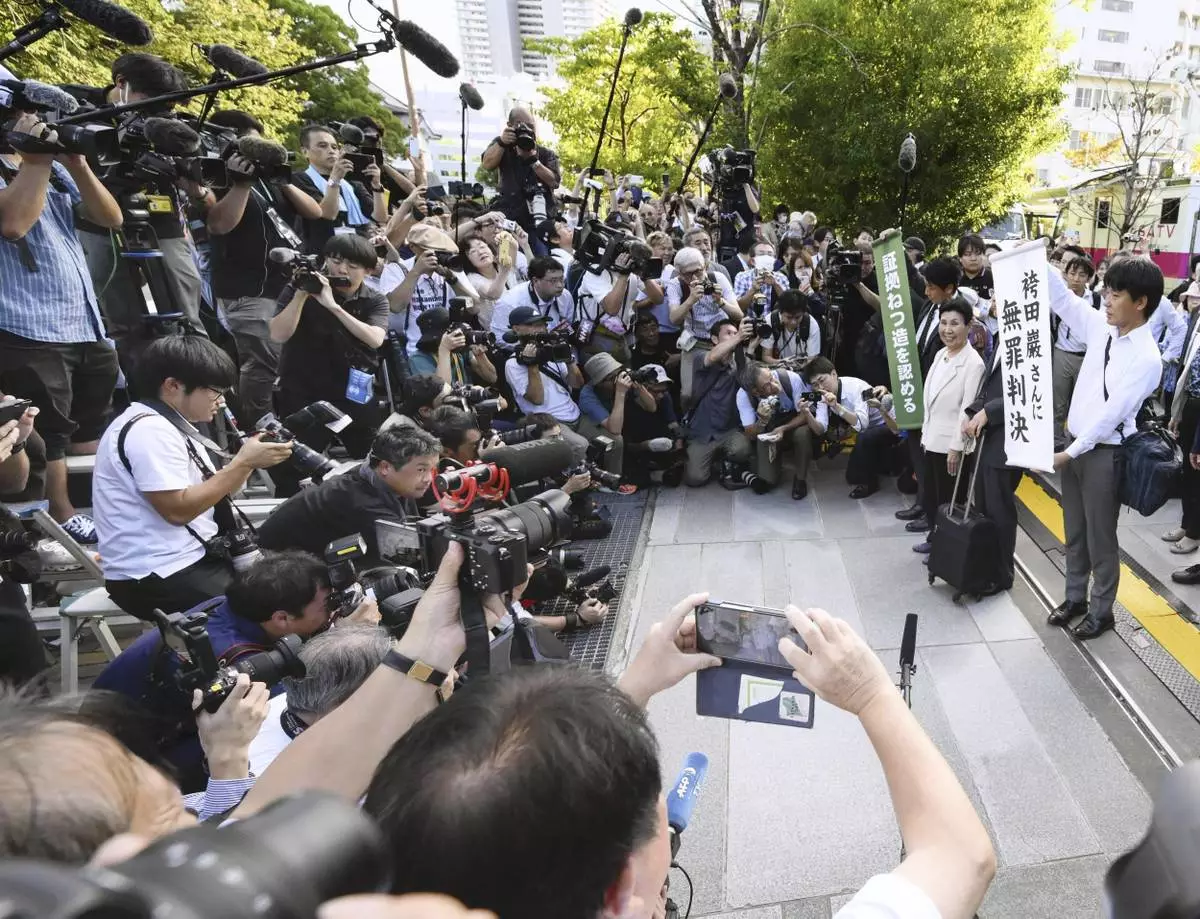
Hideko Hakamada, center at right side, sister of 88-year-old former boxer Iwao Hakamada who has been on death row for nearly six decades after his murder conviction that his lawyers said was based on forced confession and fabricated evidence, is surrounded by journalists after a court ruled that her brother was not guilty in a retrial for a 1966 quadruple murder, in front of the court in Hamamatsu, Shizuoka prefecture, Thursday, Sept. 26, 2024. The signs read "Acquittal to Mr. Iwao Hakamada, " right, and "Acknowledged fabrications of evidence." (Kyodo News via AP)
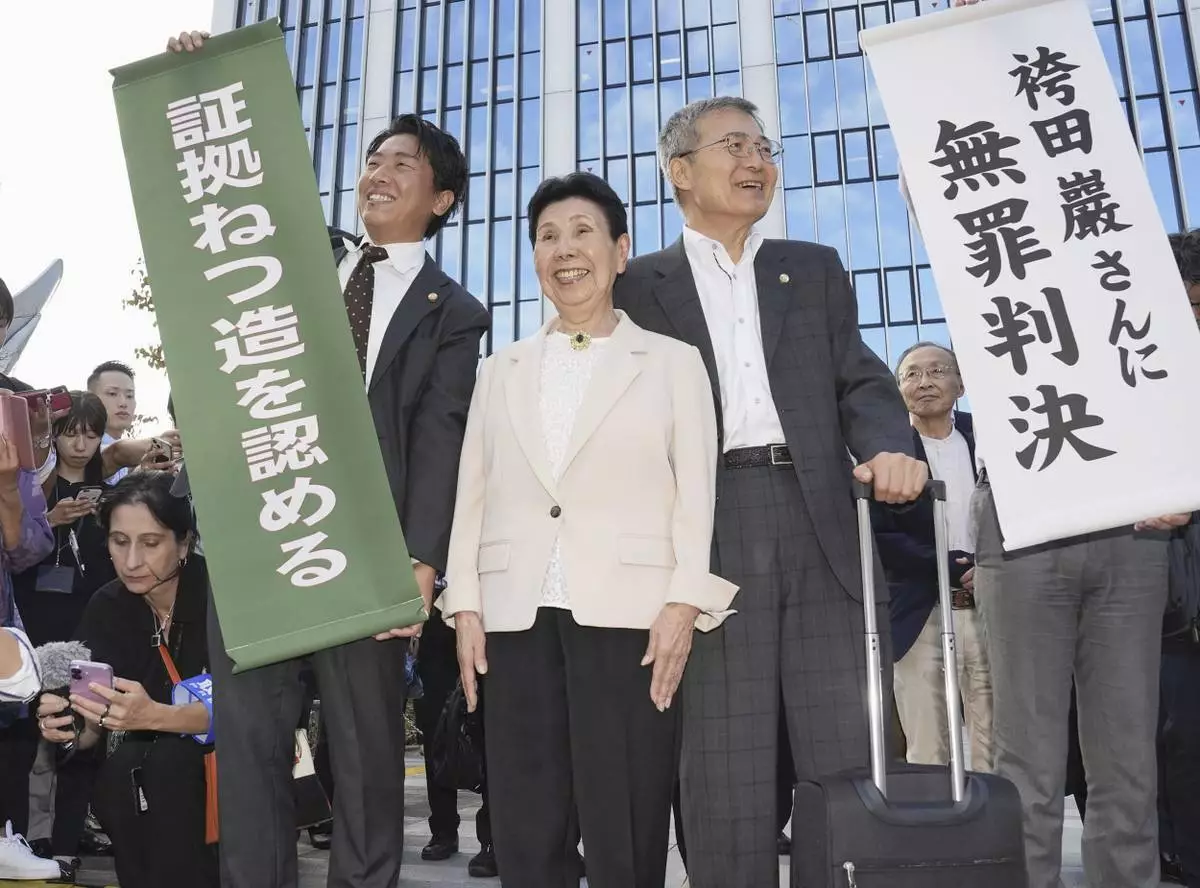
Hideko Hakamada, center, sister of 88-year-old former boxer Iwao Hakamada who has been on death row for nearly six decades after his murder conviction that his lawyers said was based on forced confession and fabricated evidence, reacts after a court ruled that her brother was not guilty in a retrial for a 1966 quadruple murder, in front of the court in Hamamatsu, Shizuoka prefecture, Thursday, Sept. 26, 2024. The signs read "Acquittal to Mr. Iwao Hakamada, " right, and "Acknowledged fabrications of evidence." (Kyodo News via AP)
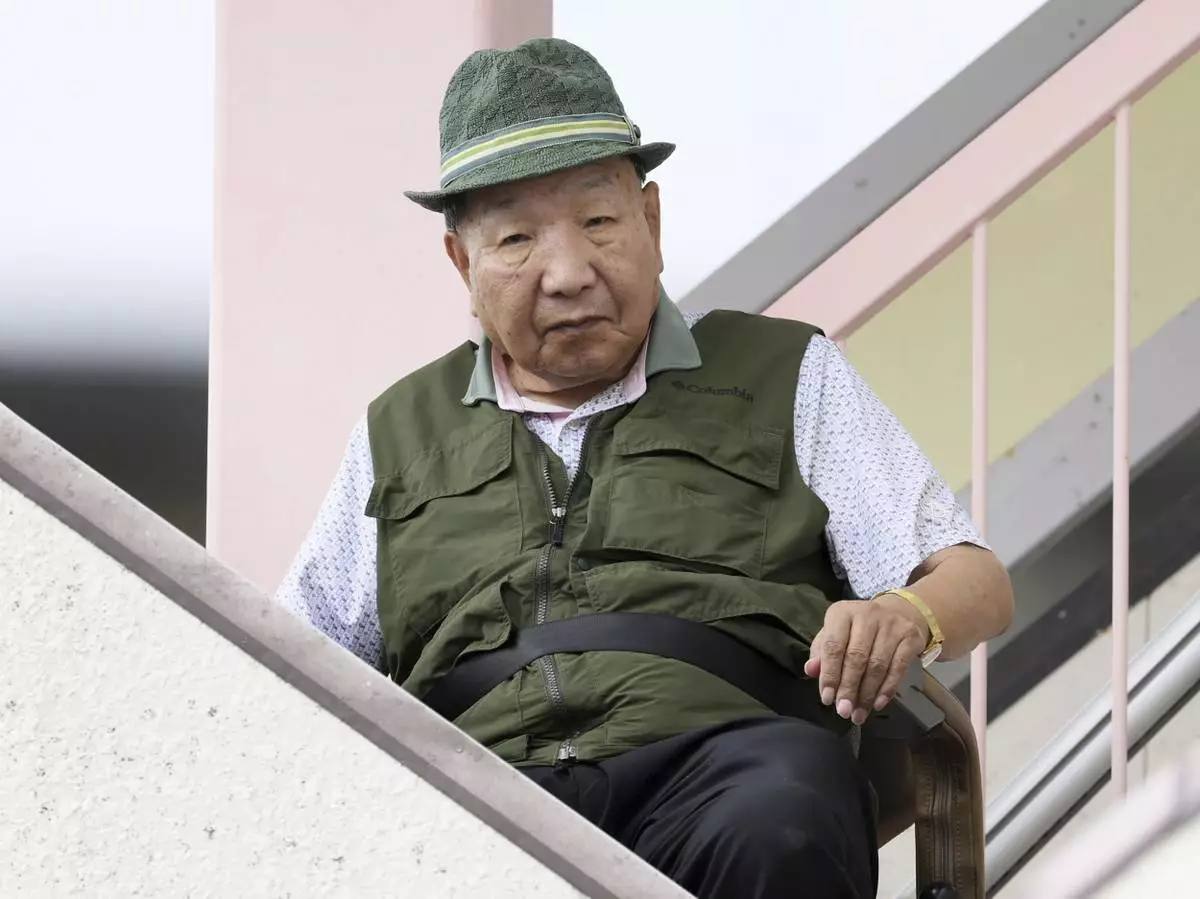
Iwao Hakamada, 88-year-old former boxer who has been on death row for nearly six decades after his murder conviction that his lawyers said was based on forced confession and fabricated evidence, goes for a walk in Hamamatsu, Shizuoka prefecture, central Japan Thrusday, Sept. 26, 2024. (Kyodo News via AP)
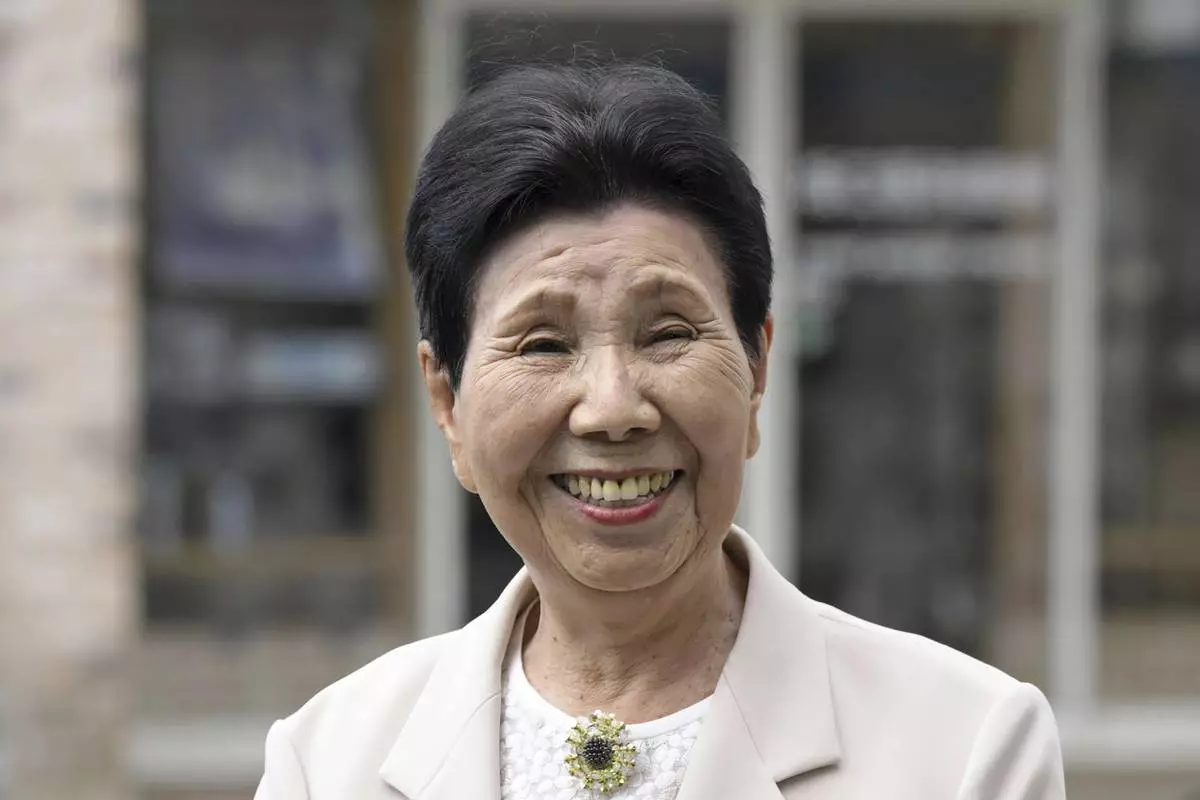
Hideko Hakamada, sister of 88-year-old former boxer Iwao Hakamada who has been on death row for nearly six decades after his murder conviction that his lawyers said was based on forced confession and fabricated evidence, speaks to journalists ahead of a retrial for a 1966 quadruple murder case, in Hamamatsu, Shizuoka prefecture, Thursday, Sept. 26, 2024. (Kyodo News via AP)
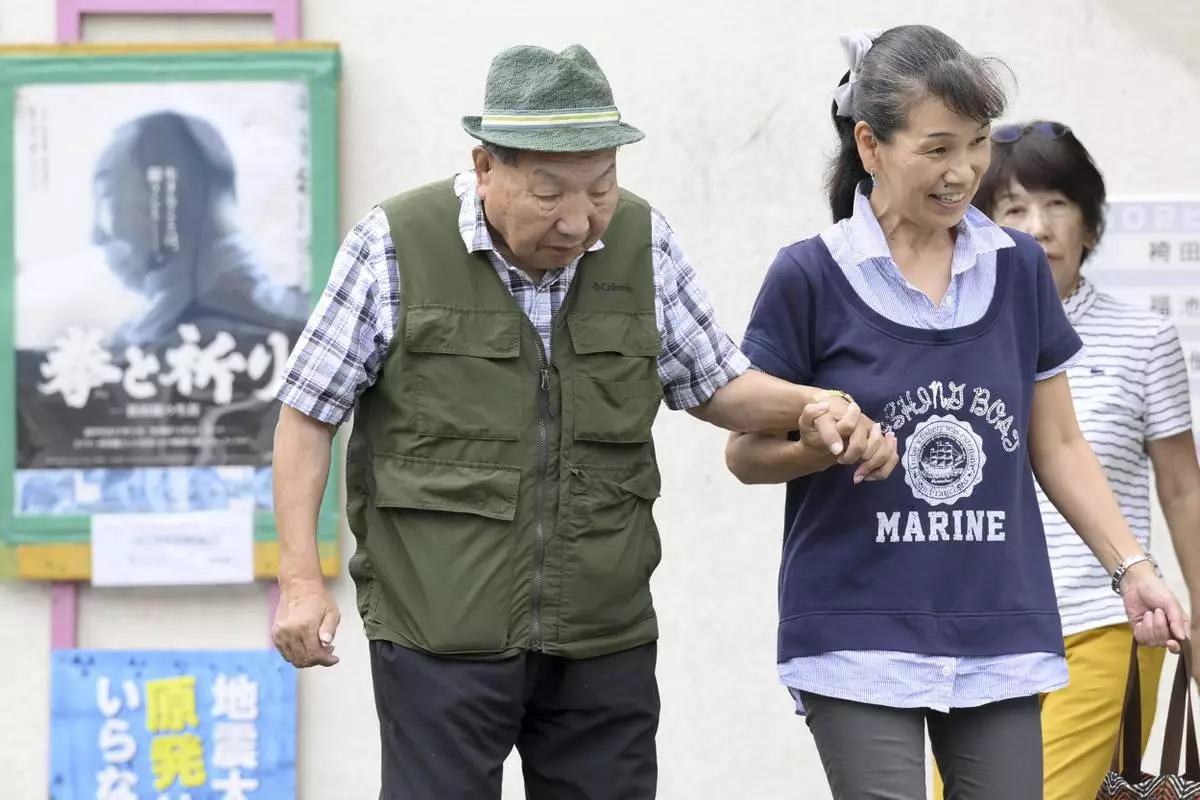
Iwao Hakamada, left, 88-year-old former boxer who has been on death row for nearly six decades after his murder conviction that his lawyers said was based on forced confession and fabricated evidence, is helped by a supporter as he goes for a walk in Hamamatsu, Shizuoka prefecture, central Japan Wednesday, Sept. 25, 2024. (Kyodo News via AP)