China's Qinghai Province is at the forefront of national park construction efforts, leading the nation in sustainable development initiatives.
It stands as the only province with three national parks currently under construction, including the Sanjiangyuan National Park, Qinghai Lake National Park, and the Qilian Mountain National Park.
Located on the Qinghai-Tibet Plateau, the Sanjiangyuan region serves as the headwaters for the Yangtze, Yellow and Lancang rivers, and is known as the "Water Tower of Asia."
Designated as one of China's first national parks in 2021, the Sanjiangyuan National Park covers 190,700 square kilometers with an average altitude surpassing 4,700 meters.
The park now delivers over 60 billion to 90 billion cubic meters of high-quality freshwater downstream every year, and the grassland coverage and grass yield in the park have increased by over 11 percent and 30 percent, respectively.
Emphasizing ecological restoration, the park focuses on diverse ecosystems and rare wildlife habitats. Additionally, clean energy initiatives have been introduced across the region, contributing to sustainable practices.
Among the relentless restoration efforts is relocation of herders. Starting from 2004, over more than 50,000 herders from 10,000 households in the Sanjiangyuan region left the grassland where their ancestors had lived for generations. They resettled in 86 new nearby communities, with many of them becoming ecological stewards, returning to their homeland in a different way.
Amid efforts to improve wildlife habitats and conserve the ecosystems, populations of several rare and endangered species have gradually recovered in Sanjiangyuan.
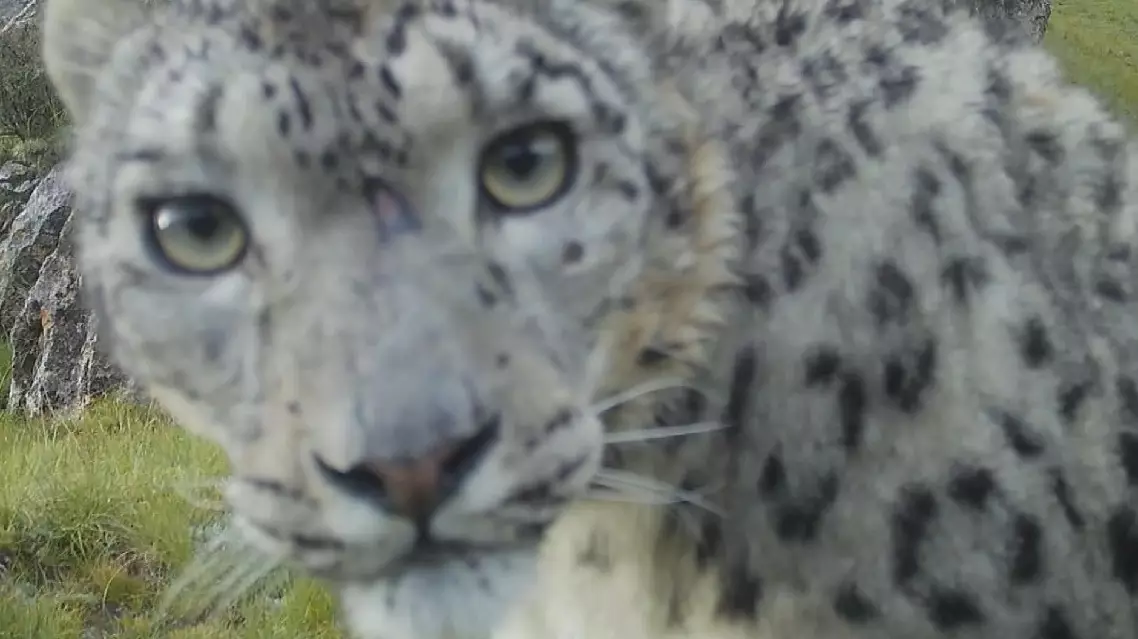
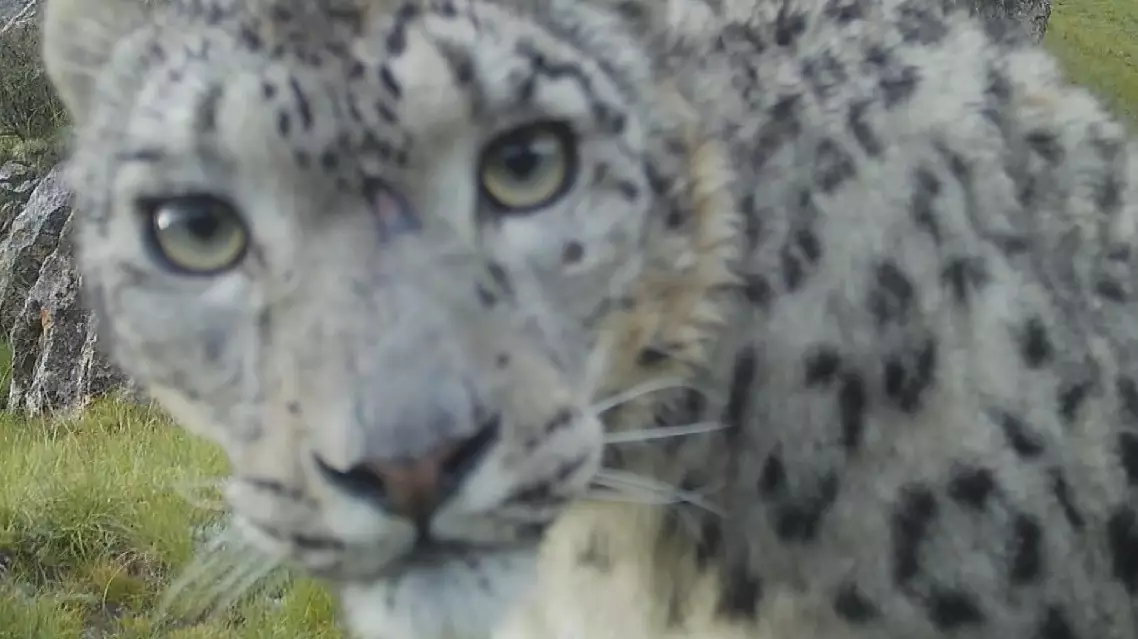
The park's conservation efforts have led to the recovery of various rare and endangered species, including the elusive snow leopard, which has become a highlight for visitors in the Angsai Canyon. The park's success in wildlife protection sets a significant precedent for biodiversity conservation.
Nestled in the northeastern part of the Qinghai-Xizang (Tibet) Plateau, the Qinghai Lake is an important ecological barrier in northwest China, which has pivotal status in terms of ecological security. It is also called the "biological gene bank on the plateau."
In 2022, Qinghai Province started construction of the Qinghai Lake National Park. The local government issued fish bans in the lake to protect naked carps, which serve as an important link in the lake's core species and local eco-system.
Through continuous protection efforts, the area of the Qinghai Lake was 4,622 square kilometers during the high-water period in 2023, showing a 2.2 percent increase over the average of the past decade.
Now, the lake is home to 223 species of birds, with its Bird Island, a national nature reserve, serving as a critical habitat for four major breeding bird species.
The Qilian Mountains, located on the border of the provinces of Gansu and Qinghai, are considered a vital shield for ecological security in the western part of China. In the Qilianshan National Park, the landscape there encompasses forests, grasslands, high mountains, glaciers, and wetlands, with elevations ranging from 2,000 to 5,000 meters.
With the establishment of forest and grassland chief, as well as river and lake chief systems, each river, forest, and grassland in the area now has dedicated guardians, achieving comprehensive ecological protection.
In the hinterland of the Qilian Mountains lies the only wildlife rescue base in China, located within a national park. Injured animals discovered during routine patrols by caretakers are brought there for treatment. The establishment of the Qilian Mountain National Park provides more opportunities for biodiversity conservation, embodying the principles of respecting, adapting to, and protecting nature.
China’s Qinghai Province leads national park conservation efforts
China’s Qinghai Province leads national park conservation efforts