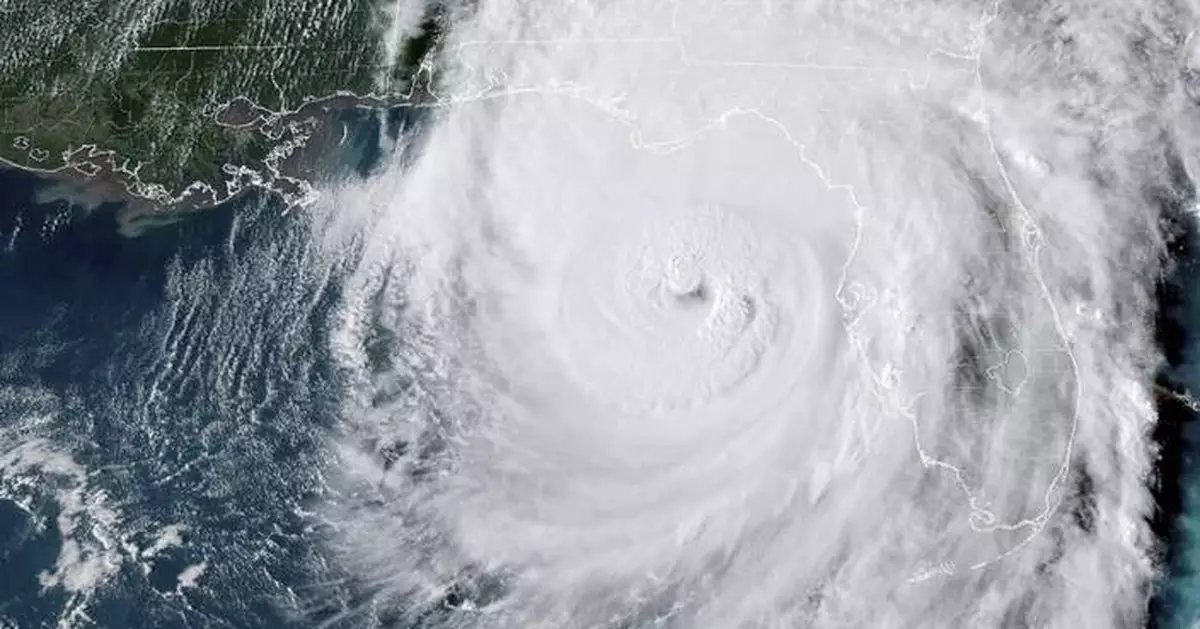
FORT LAUDERDALE, Fla. (AP) — Massive Hurricane Helene crashed into Florida's sparsely populated Big Bend region, bringing storm surge and high winds across the state's Gulf Coast communities before ripping into southern Georgia. The storm has been blamed for at least 40 deaths, according to an Associated Press tally.
Hurricane Helene weakened to a tropical depression over the Carolinas with maximum sustained winds of 30 mph (48 kph) by early afternoon Friday, the National Hurricane Center said.
The storm will continue to weaken as it continues to move north. At 2 p.m., Helene was centered about 125 miles (205 kilometers) southeast of Louisville, Kentucky.
Helene wobbled as it approached Florida's coast late Thursday before making landfall near the mouth of the Aucilla River with maximum sustained winds estimated at 140 mph (225 kph). That location was only about 20 miles (32 kilometers) northwest of where Hurricane Idalia came ashore last year at nearly the same ferocity and caused widespread damage.
Evacuations were underway Friday in areas of Western North Carolina. The Haywood County Sheriff’s Office west of Asheville said it was helping with evacuations in in Cruso, Clyde, Canton and lower-lying parts of Waynesville.
Airports in Florida that closed due to Hurricane Helene were reopened Friday. That included airports in Tampa, St. Petersburg, Lakeland and Tallahassee.
At Tampa International Airport there had been 130 flight cancellations in the past 24 hours, as of Friday afternoon, according to FlightAware.
Airports in Atlanta and Charlotte, North Carolina, remained open Friday but were reporting large numbers of cancellations and heavy delays. By 2 p.m., nearly 400 flights to or from Charlotte, a major hub for American Airlines, had been canceled. Nearly 580 more, to or from Charlotte, were delayed, according to FlightAware.
At the larger Atlanta airport, 175 flights were canceled and more than 500 were delayed, according to FlightAware.
On Friday morning, inspectors were out examining bridges and causeways along Florida's Gulf Coast to get them back open to traffic quickly, Perdue said.
In addition, 2,000 miles (3,200 kilometers) of roadway across Florida have been cleared of debris, Perdue said during a news conference in Tallahassee.
“Some of the causeways were underwater, so we have to inspect them and make sure they are safe to pass,” Perdue said. “We had a lot of storm surge up and down the west coast. We had a lot of roads underwater.”
As of 2:30 p.m. Friday, some 4.2 million people across Florida, Georgia, South Carolina, North Carolina and Tennessee were without power, according to poweroutage.us.
Most of the outages were in North Carolina and South Carolina — each with more than 1 million outages. Florida had more than 840,000 customers and Georgia nearly 950,000 customers without power.
Almost 45% of homes and businesses in South Carolina were without power Friday. Whole counties were without electricity as winds gusted to near hurricane force. Trees or other debris blocked every major road leading into Greenwood, a city of about 22,000 people about 65 miles (105 kilometers) west of Columbia, Greenwood County officials said on social media.
Crews of linemen were stationed across the region, ready to begin the process of restoring power as soon as the winds from Helene died down.
Flooding along Florida's coast began well before Hurricane Helene made landfall, with rapidly rising waters reported from as far south as Fort Myers on the state's Gulf Coast.
Early Friday, sheriff's officials in Hillsborough County, where Tampa is located, were using a large ATV to rescue people who were stranded by rising waters.
In Cedar Key, an old Florida-style island off the Gulf Coast, many homes, motels and businesses were flooded. Not even the city's fire rescue building was spared.
"It actually blew out the storm panels on the front doors. Blew out one of the breakaway walls on the back and two entry doors,” the agency posted online. “It appears that we had about 6 feet or better of water inside.”
Storm surge is the level at which sea water rises above its normal level.
Much like the way a storm’s sustained winds do not include the potential for even stronger gusts, storm surge doesn’t include the wave height above the mean water level.
Surge is also the amount above what the normal tide is at a time, so a 15-foot storm surge at high tide can be far more devastating than the same surge at low tide.
The most common way to measure a hurricane’s strength is the Saffir-Simpson Scale that assigns a category from 1 to 5 based on a storm’s sustained wind speed at its center, with 5 being the strongest.

A man lights charcoal to cook dinner in his flooded home after the passage of Hurricane Helene in Guanimar, Artemisa province, Cuba, Sept. 25, 2024. (AP Photo/Ramon Espinosa)
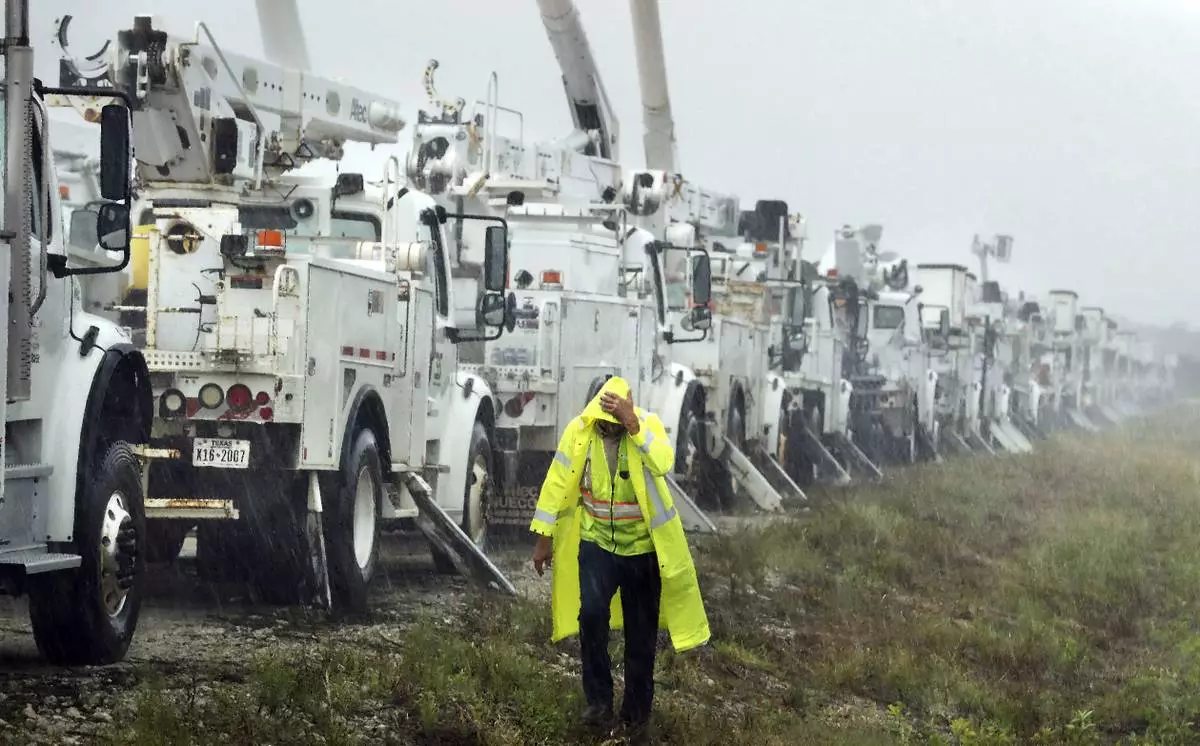
Charles Starling, a lineman with Team Fishel, is pelted with rain as he walks by a row of electrical line trucks stage in a field in The Villages, Fla., Thursday, Sept. 26, 2024, in preparation for damage from Hurricane Helene. (Stephen M. Dowell/Orlando Sentinel via AP)
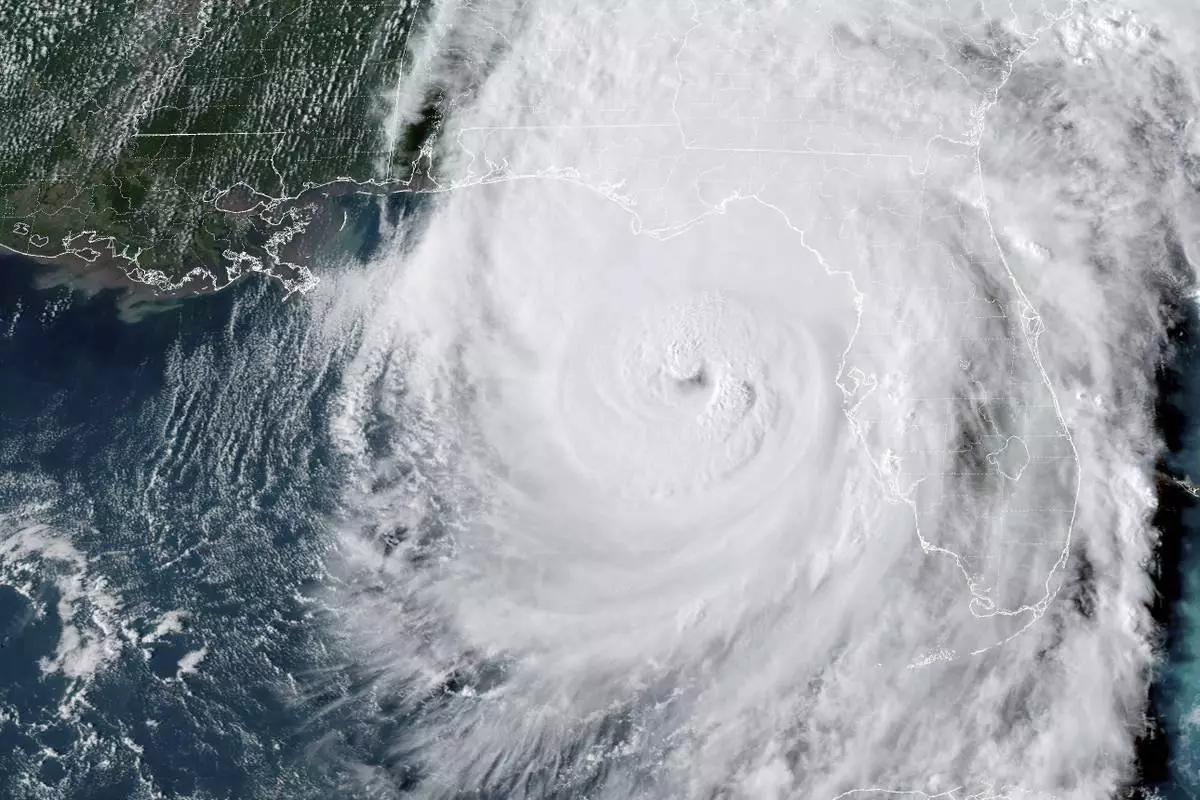
This GOES-16 GeoColor satellite image taken at 5:46 p.m. EDT and provided by National Oceanic and Atmospheric Administration (NOAA) shows Hurricane Helene in the Gulf of Mexico moving towards Florida, Thursday, Sept. 26 2024. (NOAA via AP)
INGLEWOOD, Calif. (AP) — Iran captain Mehdi Taremi says his team is having a challenging World Cup experience amid the multifold disruptions created by their nation's war with the U.S., the tournament's co-host.
The Iranians arrived in the Los Angeles area on Sunday from their training base in Tijuana, Mexico, just over the U.S. border — about 140 miles (225 kilometers) from the stadium where they will open group-stage play against New Zealand on Monday night. Iran's training camp was relocated from the U.S. after the war began, and the Iranian team has endured numerous distractions since then, including visa problems.
“I have felt the tension from the first moment we arrived at this World Cup,” Taremi said through an interpreter. “At any tournament when there is tension, we won’t have the same beautiful experience we always talk about with peace and joy. ... I know it wasn’t just us. I know several countries had visa problems and changes with training camps. Before we arrived, the feeling, the sensation people always have, how they look forward to the World Cup, I think this time maybe they haven’t had the same feeling.”
The U.S. attacked Iran on Feb. 28, and the initial missile strikes killed its Supreme Leader, Ayatollah Ali Khamenei. The war has slowed and resumed several times since then, with President Donald Trump even announcing a peace deal earlier Sunday — one that wasn't addressed at the news conference.
“This kind of tension, it undermines that joy and it undermines the message of FIFA and our people, which is that football brings about peace,” said Taremi, the 33-year-old Olympiacos striker who is playing in his third World Cup. “I feel like this World Cup could have provided a better atmosphere than it has, but I hope in the future it will be better for all fans, whatever team they are supporting in the World Cup.”
Iran initially planned to train in Tucson, Arizona, before the war’s outbreak, but quickly moved to Baja California. FIFA then rejected Iran’s desire to play its group-stage World Cup matches outside the U.S., claiming logistics and contracts wouldn’t allow it.
Iran has been beset with logistical problems since then, including the denial of visas for certain members of its delegation. A team spokesperson said Sunday that two members of its media relations group were denied U.S. visas for the opening match. Iran and its traveling fans also have faced multiple issues with match tickets.
“Without any doubt, this will impact negatively the spirit of football,” Iran coach Amir Ghalenoei said. “Football is supposed to bring nations and cultures together. Whether we win, whether we lose, that’s a personal feeling we have, but football as a game is about bringing about joy. These conditions, they have impacted our technical focus, but I have really tried to make sure that my players focus on strategy and techniques.”
The Iranian team is limited to brief trips into the U.S. for its matches, flying in the day before the game and reportedly flying out immediately afterward. Iran plays in Inglewood, California, again next Sunday against Belgium, before completing the group stage in Seattle against Egypt on June 26.
Without giving details, Taremi said Iran's travel from Tijuana to SoFi Stadium took roughly five hours, including the very short flight.
“Of course that impacts us,” Ghalenoei said. “I would like to thank the good people of Mexico, but we Iranians, we are accustomed to make opportunities out of hardship, and we don’t think about anything other than bringing joy to people.”
The Iranian team took the field at SoFi Stadium after the news conference, allowing the players to familiarize themselves with the unfamiliar venue. Players walked around the futuristic arena in small groups, pointing out features of the towering stands and examining the quality of the grass.
Iran was among the earliest qualifiers for this World Cup, and its strong team is currently 20th in FIFA’s rankings. But after the war began, Trump suggested the Iranian team might not be safe in the U.S. — and Iranian officials debated whether the team should compete in the tournament at all.
The Los Angeles area likely was picked to host two of Iran's matches in part because it has the world's largest Iranian population outside Iran. The so-called Tehrangeles area of the city is filled with the families of untold thousands who fled the country after the Islamic Revolution in the late 1970s.
Taremi and Ghalenoei are aware that many U.S.-based Iranians will be cheering against their success — both inside the stadium and outside, where various protests against the Iranian government are reportedly planned. Yet another source of possible tumult doesn't bother the team leaders.
“We play for every Iranian, be it in the diaspora or in Iran,” Taremi said. “People have different opinions, but we are here to unite people and we will try to bring joy to all Iranians wherever they live. We do not get involved in politics. We are here to play football.”
AP World Cup: https://apnews.com/fifa-world-cup
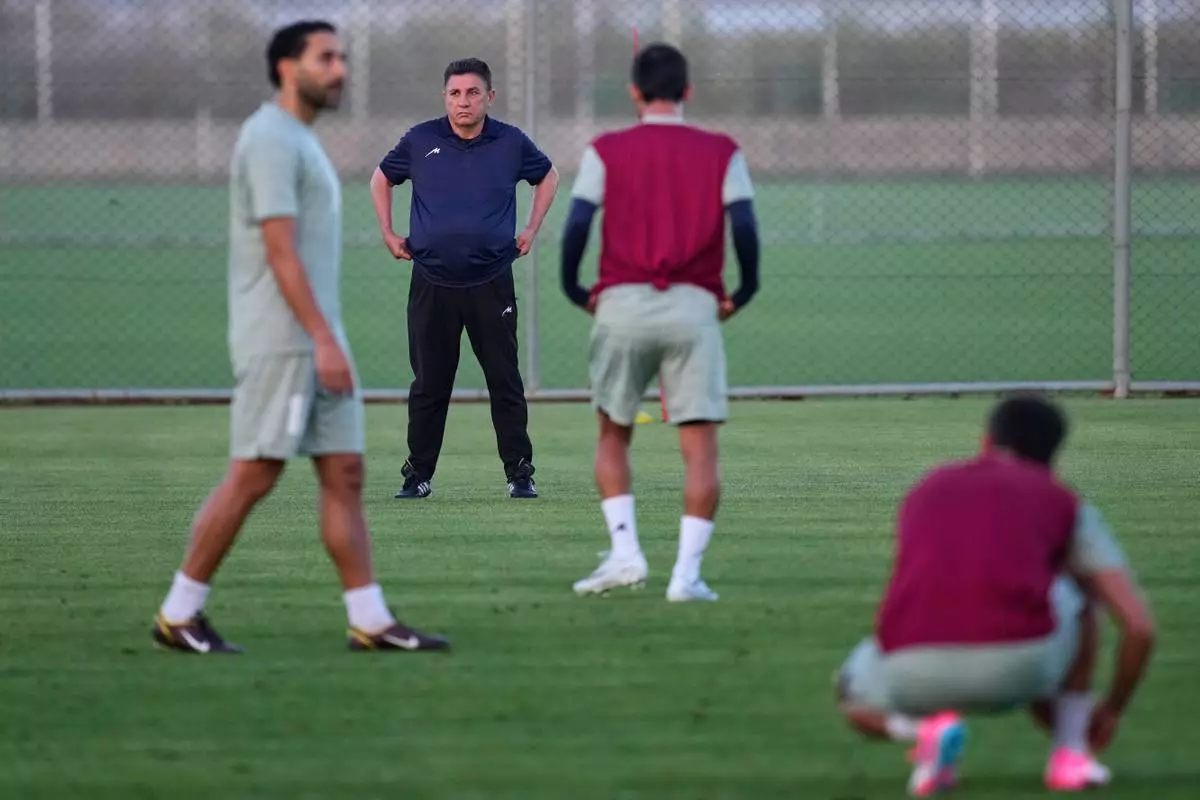
Iran's head coach Amir Ghalenoei attends a training session, in Antalya, southern Turkey, Tuesday, June 2, 2026, ahead of the World Cup soccer tournament. (AP Photo/Khalil Hamra)
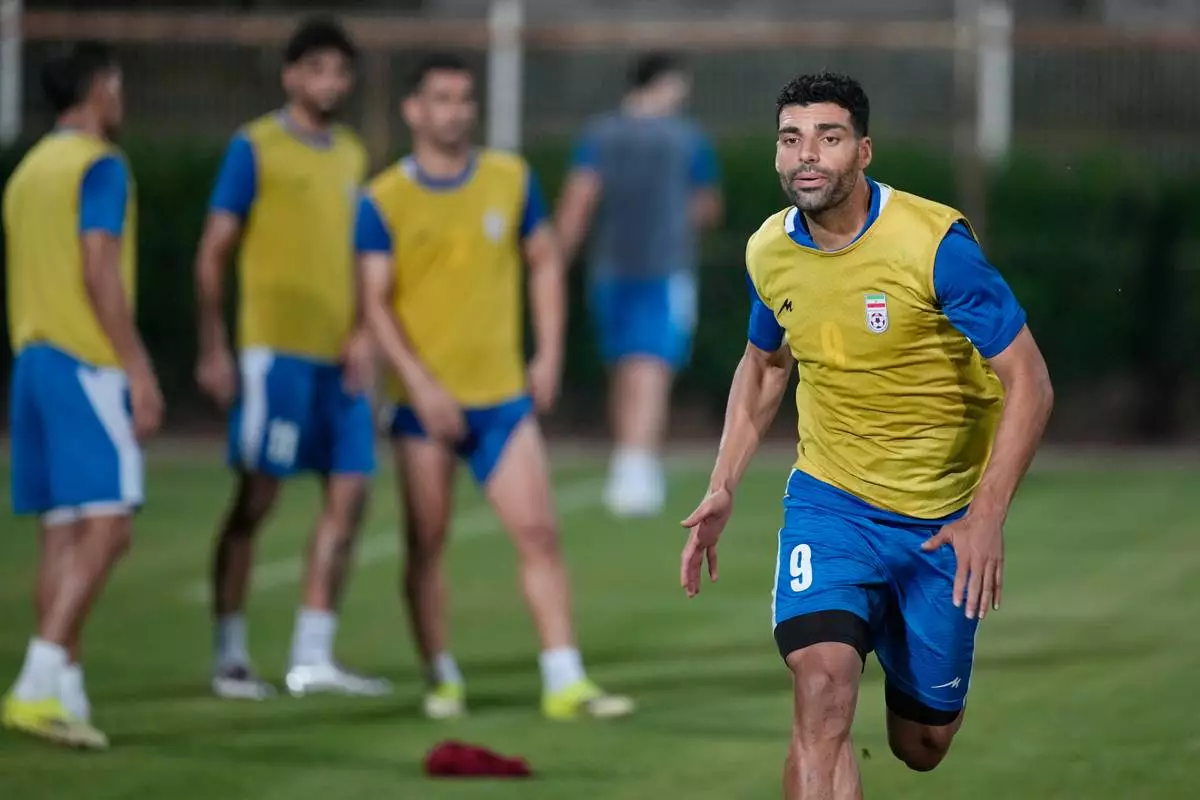
Iran's Mehdi Taremi works out during a training session, in Antalya, southern Turkey, Monday, June 1, 2026. (AP Photo/Khalil Hamra)

Iran head coach Amir Ghalehnoy speaks during a press conference ahead of his FIFA World Cup match against New Zealand in Inglewood, Calif., near Los Angeles, Sunday, June 14, 2026. (AP Photo/Andre Penner)

Iran head coach Amir Ghalehnoy, right, and player Mehdi Taremi listens to a question during a press conference ahead of their FIFA World Cup match against New Zealand in Inglewood, Calif., near Los Angeles, Sunday, June 14, 2026. (AP Photo/Andre Penner)
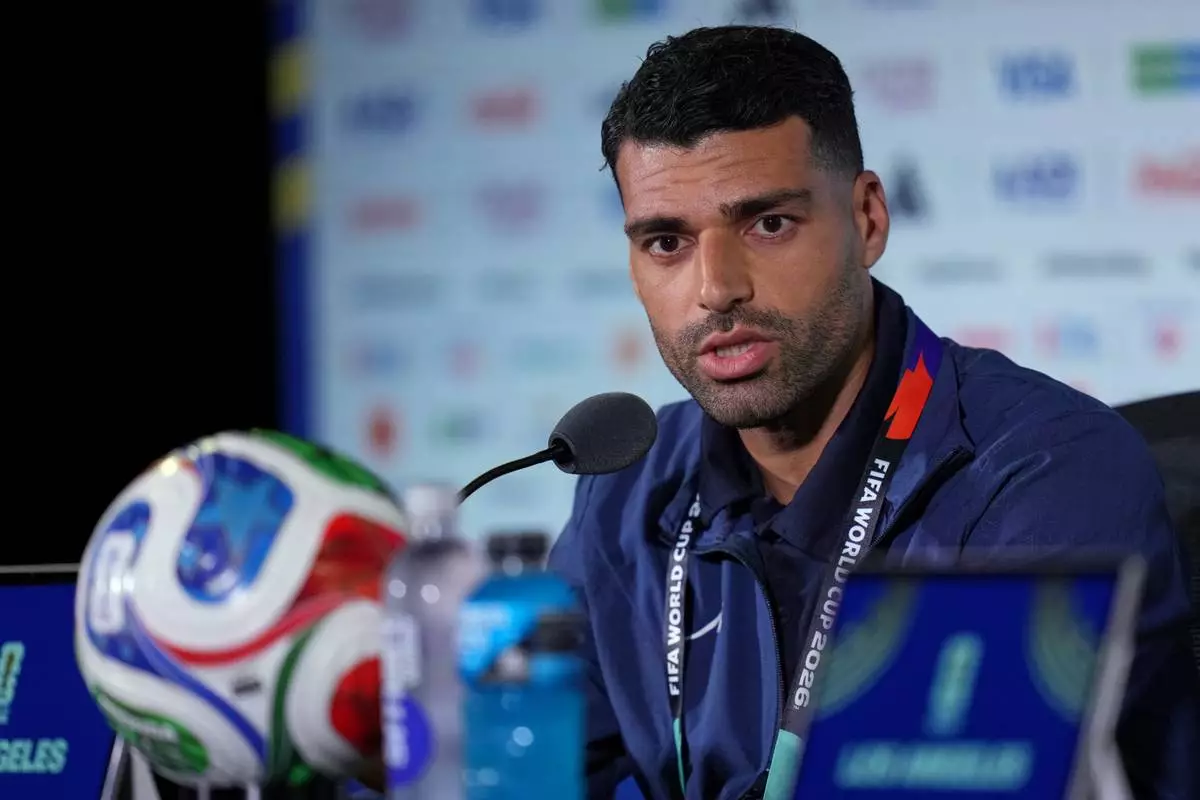
Iran's Mehdi Taremi speaks during a press conference ahead of his FIFA World Cup match against New Zealand in Inglewood, Calif., near Los Angeles, Sunday, June 14, 2026. (AP Photo/Andre Penner)