Engaging over five million consumers, China's innovative home appliance trade-in initiative has generated a remarkable 33.5 billion yuan in sales, revealing a vibrant consumption landscape brimming with potential.
According to the Ministry of Commerce, more than 5.11 million consumers have participated in the nationwide appliance trade-in program as of Sunday, purchasing 7.11 million units across eight major categories. This surge has led to sales exceeding 33.5 billion yuan, supported by 6.4 billion yuan in central subsidies.
The program has ignited a passion among the consumers for energy-efficient and smart technology, with a staggering 92.5 percent of sales coming from first-level energy efficiency appliances.
Regions like Hubei, Shanghai, and Chongqing are getting creative with their subsidy offerings, incorporating popular items such as water purifiers, dishwashers, and robotic vacuum cleaners.
As the initiative gains momentum, the Ministry of Commerce is committed to further enhancing the subsidy rollouts. By encouraging local governments to act swiftly, they aim to capitalize on major shopping events like the National Day and "Double Eleven" to fully release the policy effects.

Trade-in program unlocks consumer potential in China's appliance market
The three astronauts aboard China's Shenzhou-23 spaceship have entered the country's Tiangong space station and met with their astronaut colleagues early Monday morning, as they now begin an in-orbit crew handover.
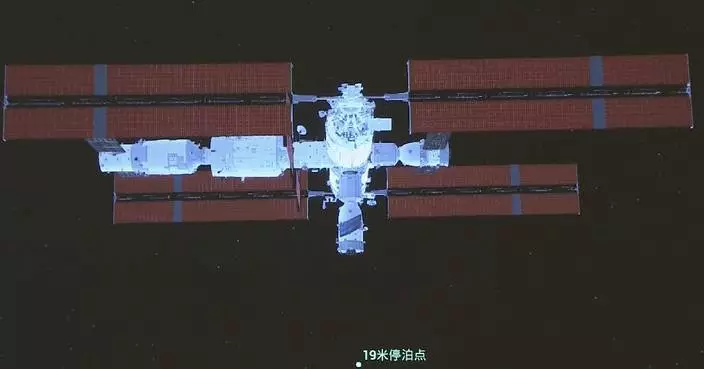
Mission commander Zhu Yangzhu and fellow astronauts Zhang Zhiyuan and Lai Ka-ying successfully entered the station's core module Tianhe after the spaceship made a fast automated rendezvous and docked with the Tianhe module at 02:45 (Beijing Time) on Monday.
The three Shenzhou-21 crew members opened the hatch at 05:13 (Beijing Time) and greeted the new arrivals, according to the China Manned Space Agency (CMSA).
The six astronauts then took group pictures for the eighth in-orbit get-together in China's aerospace history.
Notably, one of the Shenzhou-23 crew members is set to undertake a year-long stay aboard the space station, double the usual duration of previous Shenzhou missions.
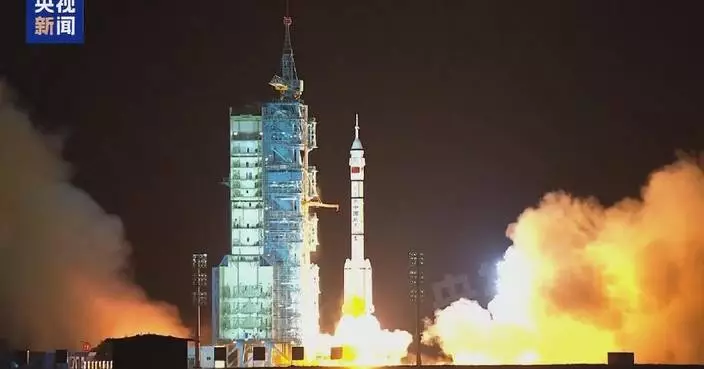
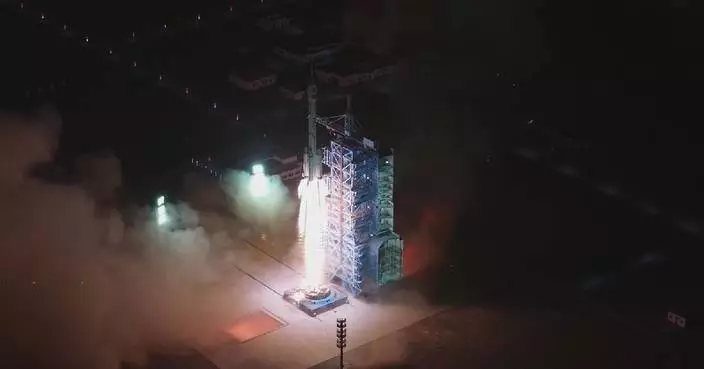
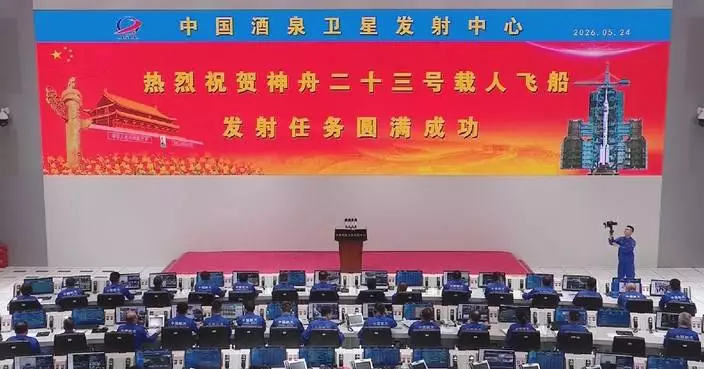
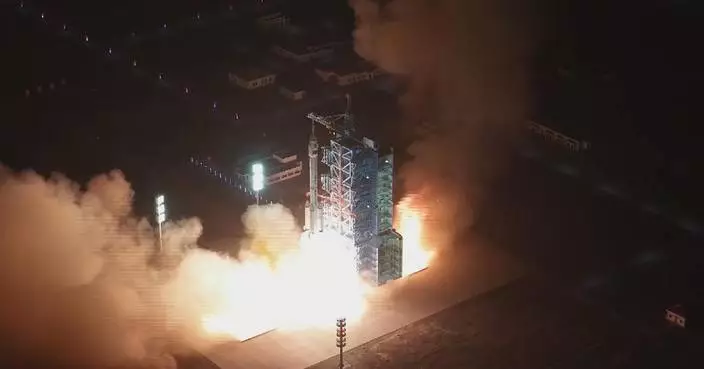
The Shenzhou-23 spaceship, atop a Long March-2F carrier rocket, blasted off from the Jiuquan Satellite Launch Center in northwest China at 23:08 (Beijing Time) on Sunday.
Shenzhou-23 marks the 40th flight of China's manned spaceflight program and the seventh manned flight mission since the Tiangong space station entered its application and development phase in late 2022.
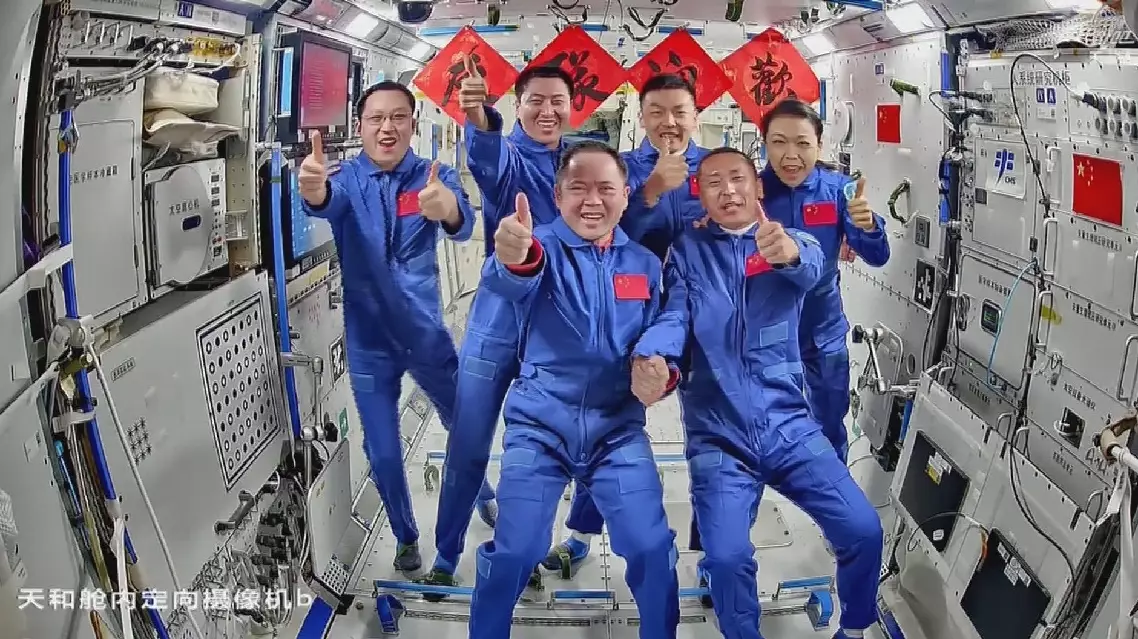
Shenzhou-23 astronauts enter Tiangong space station, meet Shenzhou-21 crew