China's first comprehensive regulations on the management of its rare earth industry came into effect on Tuesday, playing a key role in ensuring sustainable output of the critical materials used to make products from consumer electronics and electric vehicles to military equipment.
The State Council approved the new set of regulations governing the mining, metal smelting and circulation of the minerals in June this year.
Under the regulations, only government-approved companies can mine and refine rare earths.
The regulation introduces a production control system, based on reserves and market demand.
Companies are banned from using raw ore in production. A product traceability system will track rare earths across the supply chain.
The regulations also specify punishment for illegal activities in areas including rare earth mining, smelting and extraction, product distribution, as well as unlawful imports and exports.
Rare earths are a group of 17 chemical elements that are essential components for a variety of high-tech consumer products, such as computers, smartphones and hybrid cars, and military equipment, including lasers and radar systems, among others.
China is the world's largest producer of rare earth metals, accounting for about 70 percent of the total global output. The country has been consolidating its mining assets and established the China Rare Earth Group in 2021 through the merger of several key producers.
According to Lin Boqiang, director of the China Institute for Studies in Energy Policy at Xiamen University, the new regulations are aimed at boosting sustainability in the rare earth industry, as the critical metals are vital to high-tech manufacturing and the green energy transition.
"I think the regulation itself is intended to ensure the sustainability of this industry and could be viewed as a reform process. And [it is about] resource protection, higher concentration, avoid illegal mining. China, I think, is the first class in many areas in real earth production. I think as very important upstream materials for renewables and smart development, I think that sustainability is very important for China's future," he said in an interview with China Global Television Network (CGTN).
Lin also said minimizing the environmental impacts of rare earth production is key for the development of the industry.
"One is low-carbon development and environmental improvement because this industry involves a lot of environmental pollution. And also, another one is the shortage. So, keep these two major challenges in mind, I think, that the rare earth industry not only has to abide by the regulations, [they] also need to actively participate in the low-carbon, clean production," he said.
Last year, China's rare earth output reached 240,000 metric tons, accounting for over 68 percent of the world's total. The country held the world's largest reserves of rare earths at 44 million metric tons, according to data from the United States Geological Survey.
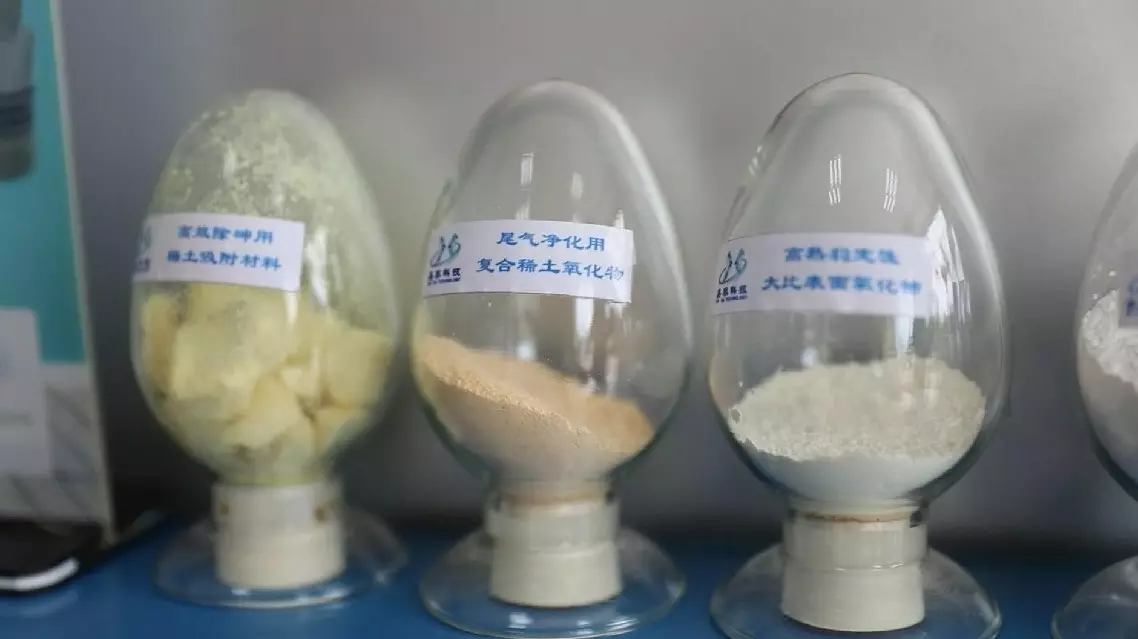
New rules on rare earths play key role in ensuring sustainable output: expert