China has seen a robust tourism market during the week-long National Day holiday that started on October 1.
The National Day holiday, also known as "golden week," is usually one of the peak seasons on China's domestic tourism calendar.
Many places across China upgraded services at scenic spots and launched distinctive tourism projects to stimulate consumer activity.
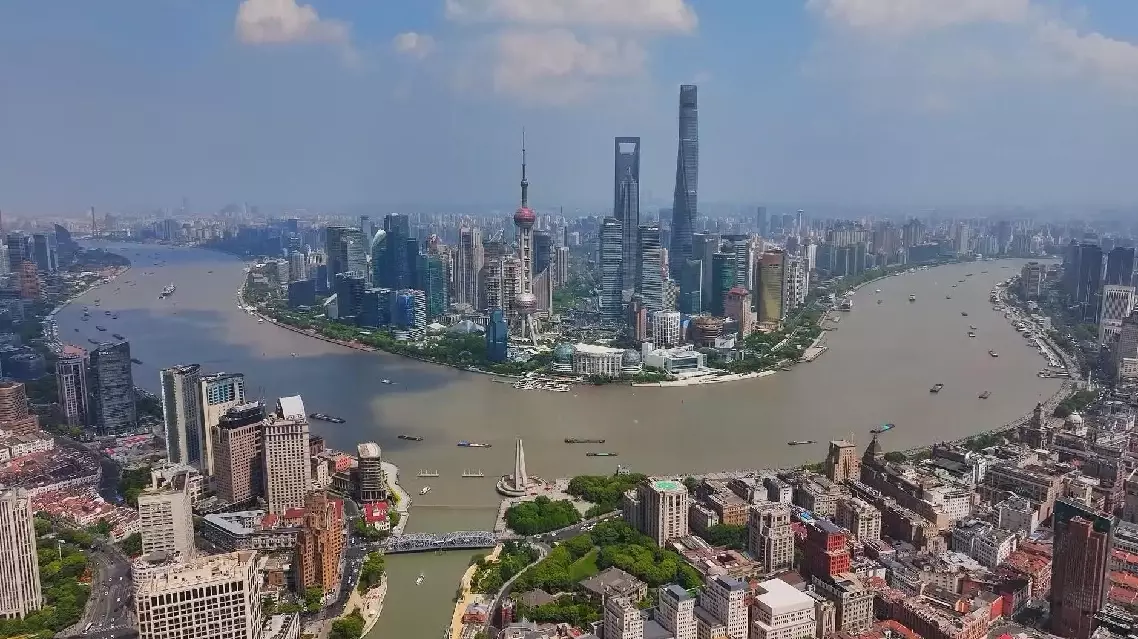
In Shanghai, Visitors could admire the architectural landscape along the banks of the Huangpu River and capture memorable photographs at the Oriental Pearl Tower, all while enjoying stunning views of the city.
"Standing here, I still find it quite impressive," said a tourist.
During the first five days of the holiday, the Oriental Pearl Tower register a total of 135,000 visits, marking a 4 percent increase compared to the previous year. Meanwhile, the Happy Valley scenic area in Shanghai's Sheshan National Tourist Resort received a total of 78,000 visitors, a 2.5 percent increase year on year. To manage the massive influx of visitors, the scenic areas not only extended their opening hours and equipment operation times but also added more performances.
Over 750,000 visitors visited Taining County in Sanming City of east China's Fujian Province in the first four days of the holiday, a 13.64 percent increase from the previous year.
Many tourists visited the Shangqingxi scenic area in Taining to ride bamboo rafts and experience the magnificent Danxia landform.
"We sat on the bamboo raft, enjoying the scenery along the way, which was very pleasant and relaxing," said Deng Xianpeng, another tourist.
The Jiulongtan scenic area in Taining introduced a “day tour and night tour” model, which proved popular among visitors. Tickets for the night tours were sold out for four consecutive days, and it was anticipated that the number of visitors during the seven-day holiday would exceed 50,000.
While enhancing services in scenic areas, local authorities in Taining also organized a variety of vibrant cultural activities to enrich visitors' experience.
Laoshan Mountain, a famous scenic area in Qingdao City of east China's Shandong Province, experienced its peak tourism season during the holiday.
Visitors can enjoy the stunning autumn scenery of the scenic area while sipping tea, and they also had the chance to get up close to steep peaks and uniquely shaped rocks, experiencing the joy of mountain climbing.

China sees robust tourism market during National Day holiday
China will take further steps to expand high-standard opening-up and create a new landscape of win-win cooperation in 2026, which marks the start of the 15th Five-Year Plan period (2026-2030), Commerce Minister Wang Wentao said in a recent interview with China Media Group.
Wang said opening up and cooperation for mutual benefit are integral to Chinese modernization. This year, China will actively expand voluntary opening up.
The country will steadily open up such areas as value-added telecommunications, biotechnology and wholly foreign-owned hospitals, while accelerating comprehensive pilot and demonstration programs for expanded opening-up in the services sector, he noted.
"We will expand the scope and regions of unilateral opening-up and ensure the implementation of zero-tariff treatment on 100 percent of tariff lines for all African countries that have diplomatic relations with China. We will vigorously promote the effective implementation of policies for special customs operations of the Hainan Free Trade Port, further enhance the level of trade and investment liberalization and facilitation, optimize the regional layout and coverage of pilot free trade zones, and support these zones in carrying out more robust institutional opening-up trials in areas such as market access, environmental standards and government procurement, so as to better leverage their role as comprehensive pilot platforms for reform and opening-up," said Wang.
Wang said China will promote the orderly planning of cross-border industrial and supply chains.
Efforts will be made to deepen economic and trade cooperation under the Belt and Road Initiative, enhance integration and connectivity across production and supply chains, and encourage cooperation in areas including green development, the digital economy, green minerals, new infrastructure and new energy so as to help build global production and supply chain partnerships that are equal, inclusive and constructive, he noted.
"We will give play to the platform role of overseas economic and trade cooperation zones, expand overseas marketing networks and explore international markets through outward investment, achieve mutual promotion between investment and trade, and advance the integrated development of trade and investment. We will also improve the overseas comprehensive service system and the national-level overseas comprehensive service platform," said the minister.
In addition, China will participate constructively in global economic governance, according to the minister.
In 2026, Wang said, China will pursue flexible and pragmatic approaches to negotiate trade and investment agreements with more willing countries and regions, while strengthening economic and trade cooperation under multilateral frameworks such as BRICS, G20 and the Shanghai Cooperation Organization, to further promote mutual benefit and win-win outcomes.
China to expand high-standard opening-up to foster win-win cooperation: minister