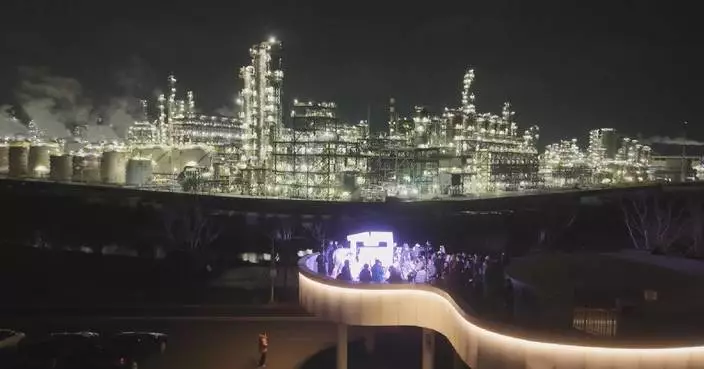
Spectacular fireworks display is presented at Hepu County of Beihai City in south China's Guangxi Zhuang Autonomous Region in the ongoing week-long National Day holiday, captivating tourists as they admire the stunning scenery of the historic port first built in ancient China's Han Dynasty (202 BC-AD 220).
The county once served as a port of departure along the ancient Maritime Silk Road because of its convenient land-sea transportation.
Over recent years, Beihai City has focused on developing a unique tourism style, drawing on its rich cultural heritage linked to the Maritime Silk Road, local fishing customs, and its pearl industry. This has led to the flourishing of seaside resorts, leisure cruise marinas, and tourist towns, significantly boosting the local tourism industry.
As night falls, an interactive show performed on the stage along the seaside narrates the story of a pearl fisher's life and the rise of the Maritime Silk Road in historical times. More than 100 actors engage the audience in a vivid dialog with the area's ancient history.
During this National Day holiday, new fireworks and the latest stage design have dazzled tourists, creating an immersive experience that offered an eye-catching display.
From September 30 to October 6, this fireworks display has been staged for seven consecutive days. The brilliant bursts ignited visitors' enthusiasm, elevating the festival atmosphere to new heights.
"I come from Liuzhou City. The live stage performance is fun and engaging. I am thrilled by the brilliant fireworks show, which goes beyond my expectations. This trip is definitely worthwhile," said Liu Fen, a tourist.
During the holiday, the scenic area is bustling with visitors wandering against a backdrop of grand fireworks display, capturing impressive moments in photos as they make heartfelt wishes.
"Our future will be better. May our country enjoy prosperity and our people live in peace and harmony!" said Gan Boxuan, another tourist.

Spectacular fireworks show lights up departure port on ancient Maritime Silk Road
China's push toward a greener future is once again in the spotlight at this year's annual political "two sessions", as lawmakers are reviewing a draft ecological environment code, a significant step toward establishing a comprehensive legal framework for ecological protection.
The draft code was submitted on March 5 to the ongoing fourth session of the 14th National People's Congress (NPC), China's top legislature, for deliberation.
Once adopted, it will become China's second formal statutory code, after the Civil Code, which was adopted in 2020.
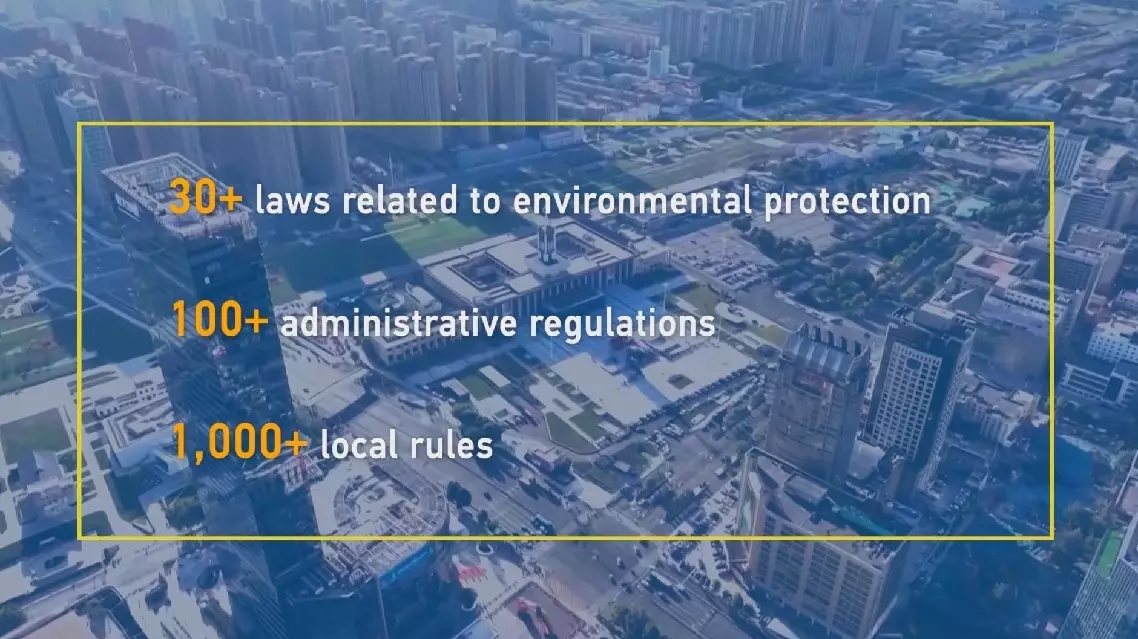
The rule of law has been continuously strengthened to support the country's green progress. China already has more than 30 laws related to environmental protection, along with over 100 sets of administrative regulations and more than 1,000 sets of local rules.
The latest legislative move comes amid China's historic gains in ecological conservation over the past decade or so. Championing green development, the country has recorded the world's fastest growth in forest resources and afforestation, led globally in renewable energy development, and achieved one of the fastest national reductions in energy intensity worldwide.
The 1,242-article draft has five chapters, covering areas including pollution control, ecological protection, and green and low-carbon development.
Scholars involved in drafting the legislation say the code goes beyond broad legal principles. It is also designed to address environmental issues that affect people's daily lives.
"Electric vehicles are becoming very common in China. My family has one. We all think it environment-friendly. But have you ever thought about this question: how do we deal with the first generation of EV batteries after they expire a few years later? The same goes for wind turbine blades and solar panels," said Ding Lin, assistant professor of the Renmin University of China.
China's environmental progress has drawn global attention in recent years, from improving air quality to expanding renewable energy. Yet amid geopolitical tensions and economic uncertainty, some observers have questioned whether the country will maintain the same pace of green transition.
"Last year during the COP30, even some friends who are very familiar with China asked me whether China will continue its green development path. I told them we have gradually worked out new policies. We have a very clear direction and goal. In a world full of uncertainties, we are providing the most certainty," said Wang Yi, an NPC deputy from east China's Zhejiang Province and professor of the Chinese Academy of Sciences.
In a country pursuing modernization, taking the time to codify environmental laws sends a clear message: economic growth and environmental protection are not a trade-off to be managed, but a commitment to be upheld. For China, a beautiful environment is not a luxury for the future, it is a right for the present, and a responsibility to the next generation.
"This code reflects China's vision of harmonious coexistence between humanity and nature. It shows how development and environmental protection can move forward together," said Lyu Zhongmei, vice chair of the NPC Environmental Protection and Resources Conservation Committee.
China will accelerate the green transition across the board and cut carbon dioxide emissions per unit of the GDP by a total of 17 percent in the 2026-2030 period, according to a draft outline of the 15th Five-Year Plan (2026-30) for national economic and social development submitted to the NPC for deliberation on March 5.
Chinese lawmakers review draft ecological environment code in major green legislative push