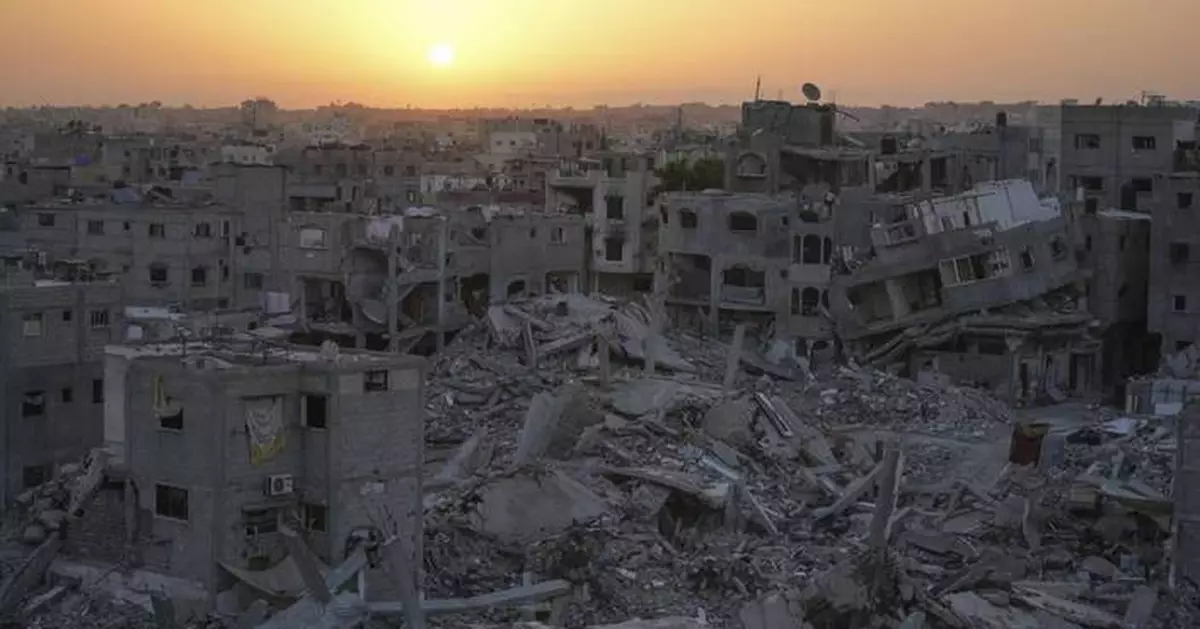
The Gaza Strip is in ruins.
There are hills of rubble where apartment blocks stood, and pools of sewage-tainted water spreading disease. City streets have been churned into dirt canyons and, in many places, the air is filled with the stench of unrecovered corpses.
Click to Gallery
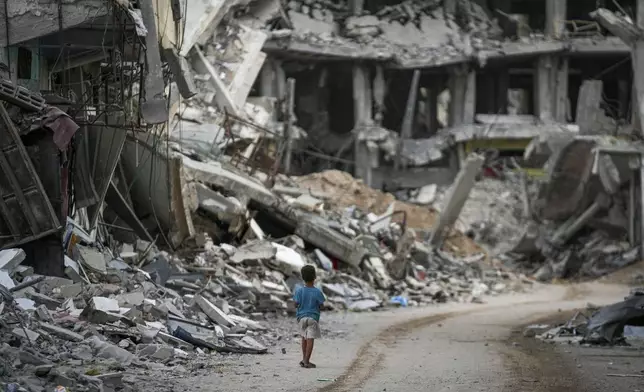
A child walks through the destruction left by the Israeli air and ground offensive on Khan Younis, Gaza Strip, Thursday, Sept. 12, 2024. (AP Photo/Abdel Kareem Hana)
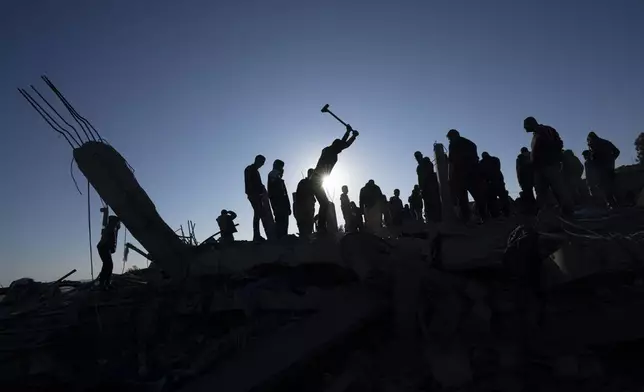
FILE - Palestinians search for bodies and survivors in the rubble of a house destroyed in an Israeli airstrike, in Rafah, southern Gaza Strip, Sunday, Jan. 7, 2024. (AP Photo/Fatima Shbair, File)
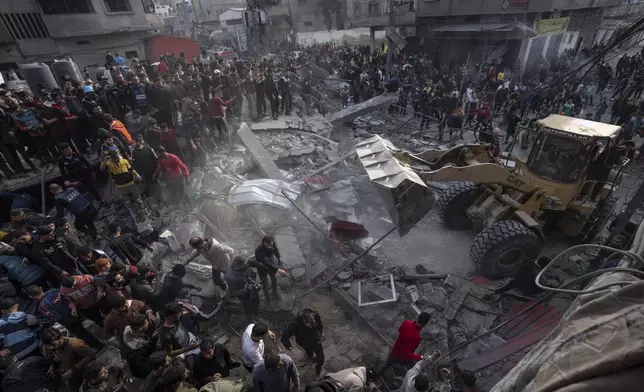
FILE - Palestinians search for bodies and survivors in the rubble of a residential building destroyed in an Israeli airstrike, in Rafah southern Gaza Strip, Wednesday, Dec. 20, 2023. (AP Photo/Fatima Shbair, File)
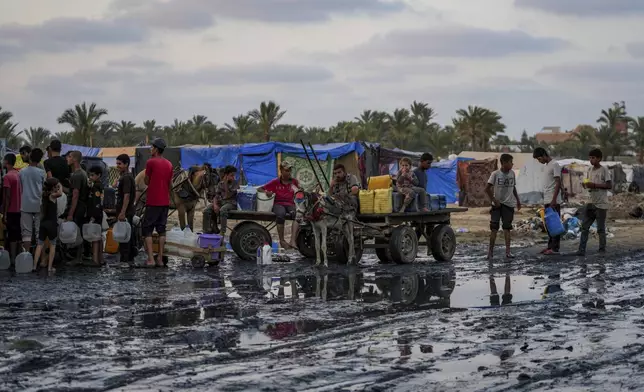
FILE - Palestinians gather to fill water jugs near one of the strip's few functioning desalination plants in Deir al-Balah, Gaza Strip, Thursday, June 20, 2024. (AP Photo/Abdel Kareem Hana, File)
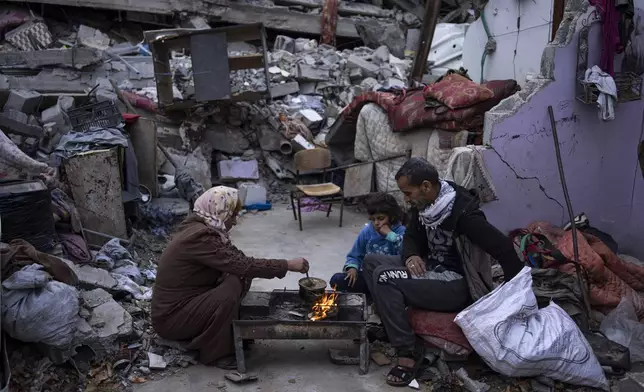
FILE - Members of the Al-Rabaya family break their fast during the Muslim holy month of Ramadan outside their home destroyed by Israeli airstrikes in Rafah, Gaza Strip, Monday, March 18, 2024. (AP Photo/Fatima Shbair, File)
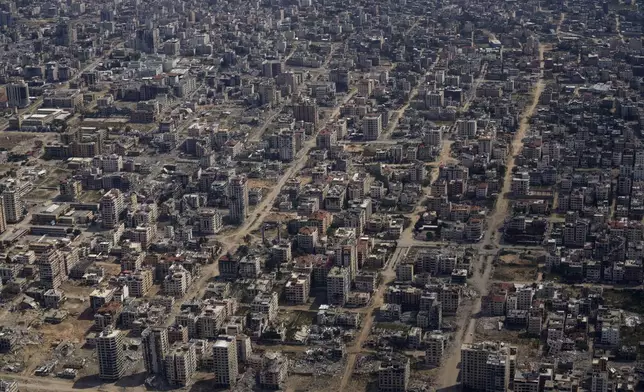
FILE - Destroyed buildings are seen through the window of an airplane from the U.S. Air Force overflying the Gaza Strip, Thursday, March 14, 2024. (AP Photo/Leo Correa, File)
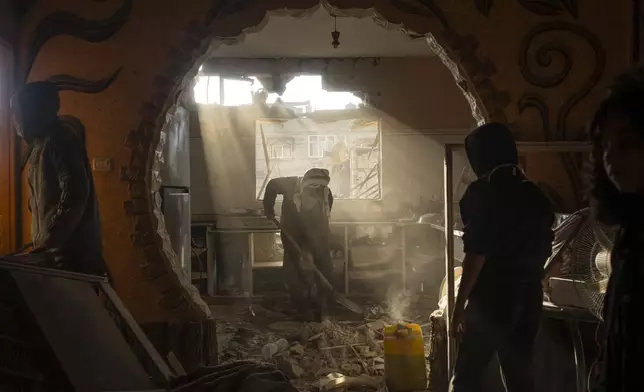
FILE - Palestinians look at their neighbor's damaged house following an Israeli strike in Rafah, southern Gaza Strip, Saturday, Jan. 27, 2024. (AP Photo/Fatima Shbair, File)
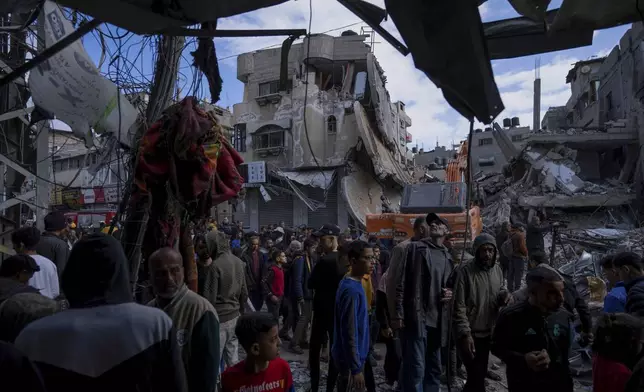
FILE - Palestinians check destruction after an Israeli strike in Rafah, Gaza Strip, Monday, March 4, 2024. (AP Photo/Fatima Shbair, File)
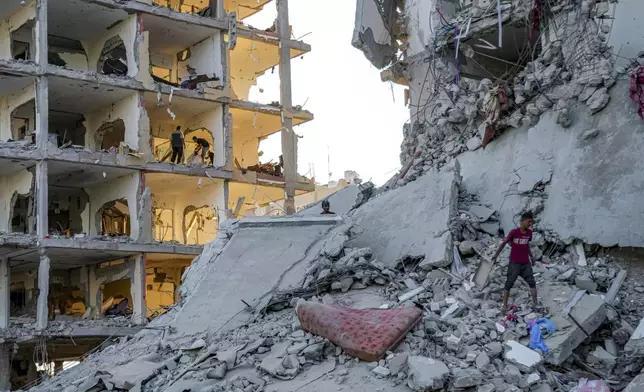
FILE - Palestinians inspect their houses after Israeli bombardment on Deir al-Balah, Thursday, Aug. 29, 2024. (AP Photo/Abdel Kareem Hana, File)
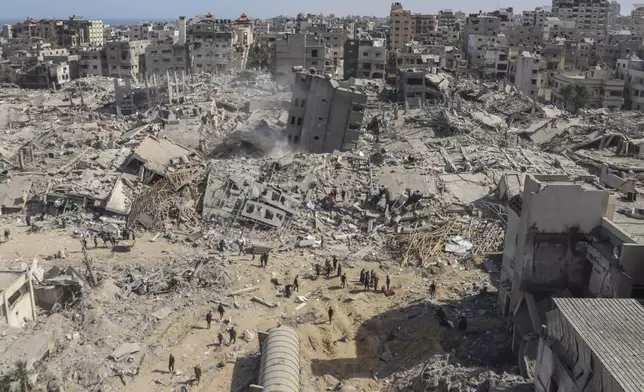
FILE - Palestinians walk through the destruction left by the Israeli air and ground offensive on the Gaza Strip near Shifa Hospital in Gaza City, Monday, April 1, 2024. (AP Photo/Mohammed Hajjar, File)
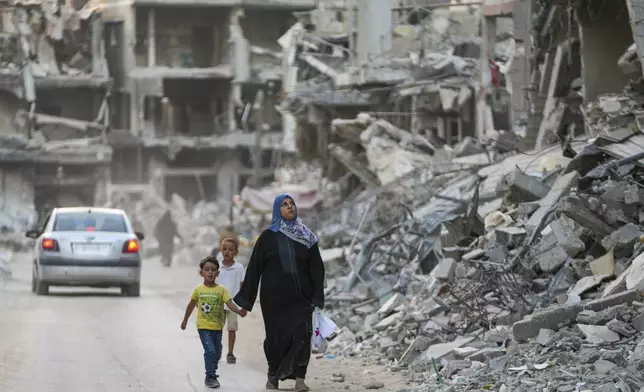
Palestinians walk through the destruction left by the Israeli air and ground offensive on Khan Younis, Gaza Strip, Thursday, Sept. 12, 2024. (AP Photo/Abdel Kareem Hana)
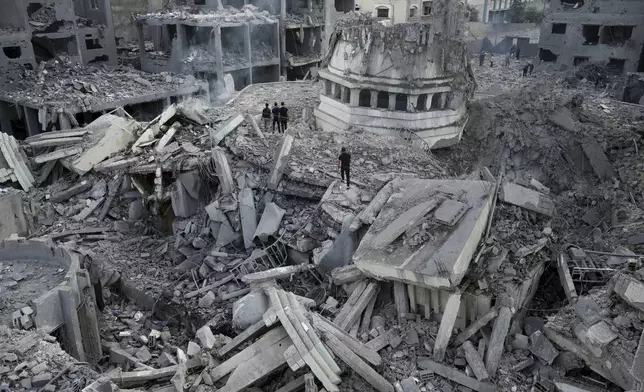
FILE - Palestinians inspect the rubble of the Yassin Mosque destroyed after it was hit by an Israeli airstrike at Shati refugee camp in Gaza City, early Monday, Oct. 9, 2023. Israel's military battled to drive Hamas fighters out of southern towns and seal its borders Monday as it pounded the Gaza Strip. (AP Photo/Adel Hana, File)
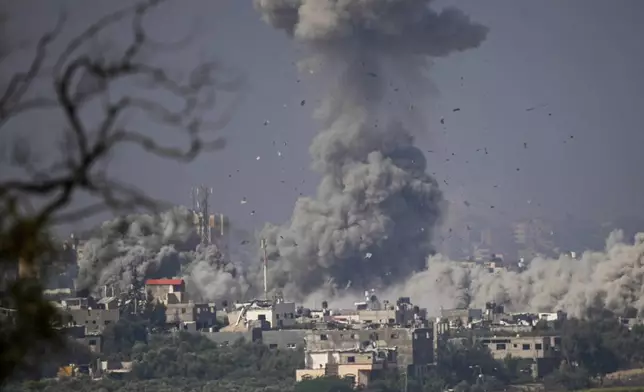
FILE - Smoke rises following an Israeli airstrike in the Gaza Strip, as seen from southern Israel, Monday, Oct. 23, 2023. (AP Photo/Ariel Schalit, File)
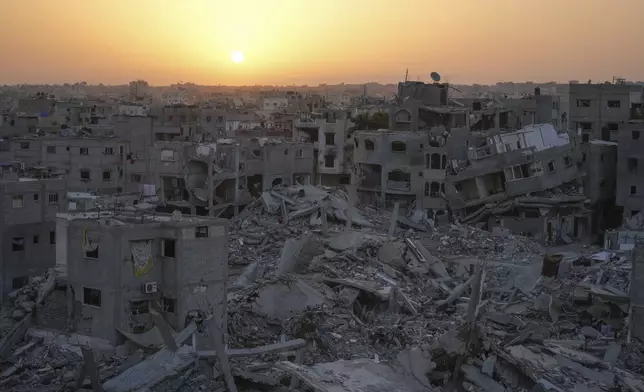
Destruction left by the Israeli air and ground offensive is seen in Khan Younis, Gaza Strip, Friday, Sept. 13, 2024. (AP Photo/Abdel Kareem Hana)
Israel’s yearlong offensive against Hamas, one of the deadliest and most destructive in recent history, has killed more than 41,000 people, a little over half of them women and children, according to local health officials. With no end in sight to the war and no plan for the day after, it is impossible to say when – or even if – anything will be rebuilt.
Even after the fighting stops, hundreds of thousands of people could be stuck living in squalid tent camps for years. Experts say reconstruction could take decades.
“This war is destruction and misery. It would make the stones cry out,” said Shifaa Hejjo, a 60-year-old housewife living in a tent pitched on land where her home once stood. “Whoever sees Gaza ... It will make them cry.”
Israel blames the destruction on Hamas. Its Oct. 7 attack on Israel — in which some 1,200 people were killed and around 250 taken hostage — ignited the war. Israel says Hamas embedded much of its military infrastructure, including hundreds of kilometers (miles) of tunnels, in densely populated areas where some of the heaviest battles were fought.
The fighting left roughly a quarter of all structures in Gaza destroyed or severely damaged, according to a U.N. assessment in September based on satellite videos. It said around 66% of structures, including more than 227,000 housing units, had sustained at least some damage.
If there's a cease-fire, around half of all families “have nowhere to go back to,” said Alison Ely, a Gaza-based coordinator with the Shelter Cluster, an international coalition of aid providers led by the Norwegian Refugee Council.
Almost as many buildings have been destroyed or damaged in Gaza as in all of Ukraine after its first two years of war with Russia, according to Corey Scher and Jamon Van Den Hoek, U.S.-based researchers who use satellite radar to document the wars' devastation.
To put that into perspective: Gaza is less than half the size of Ukraine's capital, Kyiv.
The amount of destruction in central and southern Gaza alone, Scher said, is roughly equivalent to what was lost in the front-line town of Bakhmut, the scene of one of the deadliest battles in the Ukraine war and where Russian forces destroyed nearly every building in their path to force Ukrainian troops to withdraw. The destruction in northern Gaza is even worse, he said.
Gaza’s water and sanitation system has collapsed. More than 80% of its health facilities — and even more of its roads — are damaged or destroyed.
“I can’t think of any parallel, in terms of the severity of damage, for an enclave or a country or a people,” Scher said.
At the end of January, the World Bank estimated $18.5 billion of damage — nearly the combined economic output of the West Bank and Gaza in 2022. That was before some intensely destructive Israeli ground operations, including in the southern border city of Rafah.
When Israeli ground forces pushed into the southern city of Khan Younis in January, Shifaa Hejjo and her family fled their four-story home with only the clothes they were wearing.
They spent months in various tent camps before she decided to return – and the sight brought her to tears.
Her entire neighborhood had been destroyed, her former home and the roads leading to it lost in a sea of rubble.
“I didn’t recognize it,” she said. “I couldn’t tell where people’s homes were.”
Around 90% of Gaza’s 2.3 million people have been displaced by the war, often multiple times, according to U.N. estimates. Hundreds of thousands have crowded into sprawling tent camps near the coast with no electricity, running water or toilets. Hunger is widespread.
Hejjo lived in a tent in the courtyard of a hospital. Before that, she was in Muwasi, the main tent camp in southern Gaza.
“It smelled bad,” she said. “There were diseases spreading.”
She said her husband, who was suffering from liver disease, was broken-hearted when he heard their home had been destroyed and he died shortly thereafter.
She was among the first to return after Israeli forces withdrew in April. Her neighbors stayed away, fearful they would find bodies or unexploded bombs.
But for her it was still home.
“It is better to live in my home, where I lived for 37 years, even though it is destroyed,” she said.
Hejjo and her children dug through the rubble with shovels and their bare hands, going brick by brick and saving whatever could be reused. Torn clothes were used to feed cooking fires.
Rats had crept in, and swarms of mosquitoes hovered over the ruins. There was broken glass everywhere. They set up a tent fortified by corrugated metal sheeting and some bricks salvaged from her destroyed home. A light drizzle wet their clothes as they slept.
U.N. agencies say unemployment has soared to around 80% — up from nearly 50% before the war — and that almost the entire population is living in poverty. Even those with means would find it nearly impossible to import construction materials because of Israeli restrictions, ongoing fighting and the breakdown of law and order.
The first obstacle to any significant rebuilding is the rubble – mountains of it.
Where houses, shops and office buildings once stood, there are now giant drifts of rubble laced with human remains, hazardous substances and unexploded munitions.
The U.N. estimates the war has left some 40 million tons of debris and rubble in Gaza, enough to fill New York’s Central Park to a depth of eight meters (about 25 feet). It could take up to 15 years and nearly $650 million to clear it all away, it said.
There’s also the question of where to dispose of it: The U.N. estimates about five square kilometers (about two square miles) of land would be needed, which will be hard to come by in the small and densely populated territory.
It isn’t just homes that were destroyed, but also critical infrastructure.
The U.N. estimates nearly 70% of Gaza’s water and sanitation plants have been destroyed or damaged. That includes all five of the territory’s wastewater treatment facilities, plus desalination plants, sewage pumping stations, wells and reservoirs.
The employees who once managed municipal water and waste systems have been displaced, and some killed. And fuel shortages have made it difficult to keep operating facilities that are still intact.
The international charity Oxfam said it applied in December for a permit to bring in desalination units, and pipes to repair water infrastructure. It took three months for Israel to approve the shipment, but it still has not entered Gaza, Oxfam said.
The destruction of sewage networks has left streets flooded with putrid water, hastening the spread of disease.
There has been no central power in Gaza since the opening days of the war, when its sole power plant was forced to shut down for lack of fuel, and more than half of the territory's electrical grid has been destroyed, according to the World Bank.
Wealthy Arab countries like Saudi Arabia and the United Arab Emirates have said they are only willing to contribute to Gaza’s reconstruction as part of a postwar settlement that creates a path to a Palestinian state.
Israeli Prime Minister Benjamin Netanyahu has ruled that out, saying he won’t allow Hamas or even the Western-backed Palestinian Authority to govern Gaza. He has said Israel will maintain open-ended security control and delegate civilian affairs to local Palestinians. But none are known to have volunteered, and Hamas has threatened to kill anyone who aids the occupation.
Rebuilding Gaza would also require the import of massive amounts of construction supplies and heavy equipment, which Israel is unlikely to allow as long as there’s a potential for Hamas to rebuild its militant infrastructure. In any case, Gaza has only a small number of crossings with limited capacity.
The Israeli military body that coordinates civilian affairs in Gaza says it does not restrict the entry of civilian supplies and allows so-called dual-use items that could also be used for military purposes. Israel allowed some construction materials in before the war under what was known as the Gaza Reconstruction Mechanism, but it was subject to heavy restrictions and delays.
The Shelter Cluster estimates that it would take 40 years to rebuild all of Gaza’s destroyed homes under that setup.
For now, aid providers are struggling just to bring in enough basic tents because of the limited number of trucks going into Gaza and the challenges of delivering aid. Efforts to bring in more robust temporary housing are still in the early stages, and no one has even tried to bring in construction materials, according to Ely.
In September, the Shelter Cluster estimated 900,000 people were still in need of tents, bedding and other items to prepare for the region's typically cold and rainy winters.
El Deeb reported from Beirut. Associated Press reporter Mohammad Jahjouh in Khan Younis, Gaza Strip, contributed.
Follow AP’s coverage at https://apnews.com/hub/mideast-wars
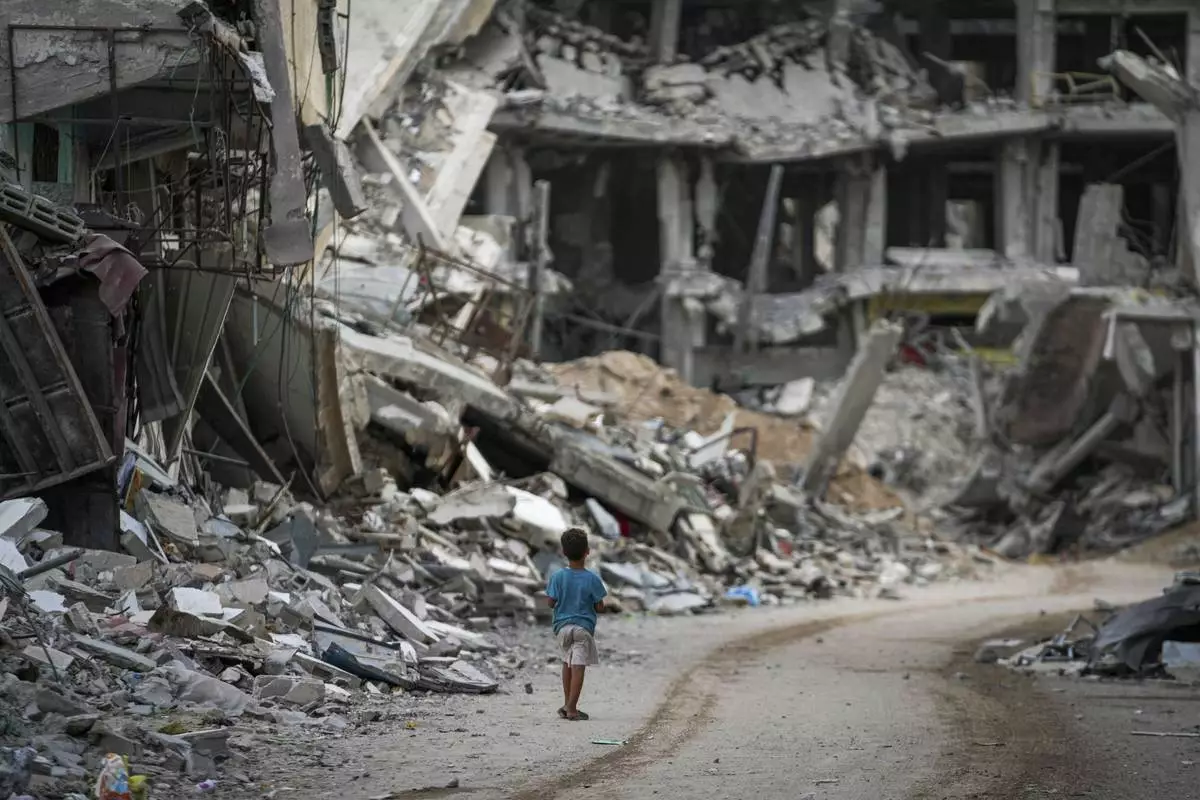
A child walks through the destruction left by the Israeli air and ground offensive on Khan Younis, Gaza Strip, Thursday, Sept. 12, 2024. (AP Photo/Abdel Kareem Hana)
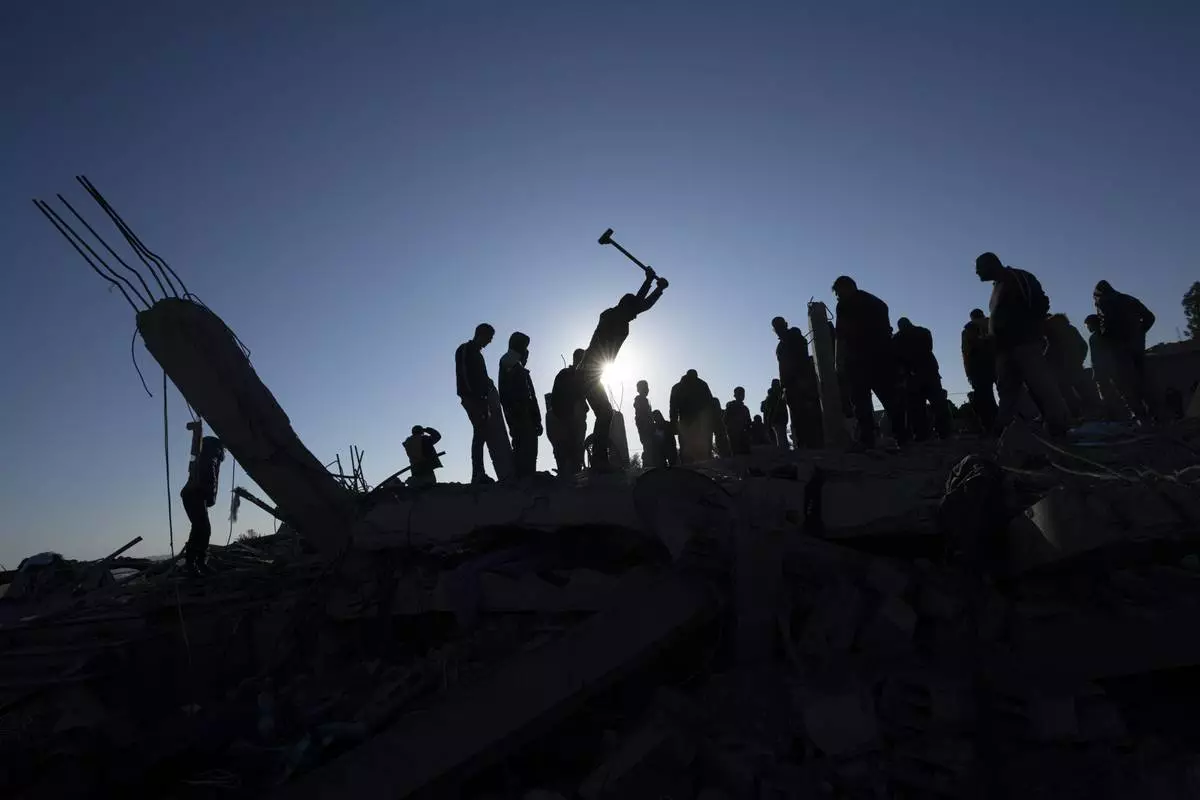
FILE - Palestinians search for bodies and survivors in the rubble of a house destroyed in an Israeli airstrike, in Rafah, southern Gaza Strip, Sunday, Jan. 7, 2024. (AP Photo/Fatima Shbair, File)
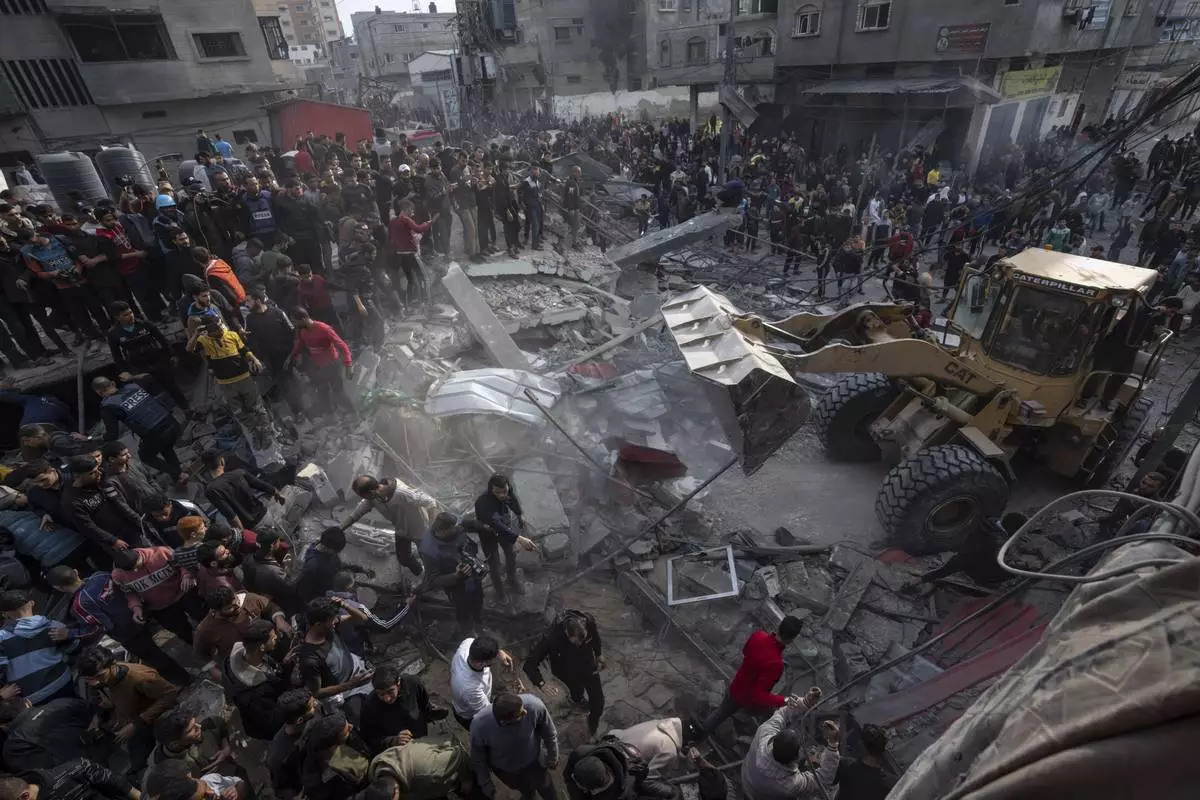
FILE - Palestinians search for bodies and survivors in the rubble of a residential building destroyed in an Israeli airstrike, in Rafah southern Gaza Strip, Wednesday, Dec. 20, 2023. (AP Photo/Fatima Shbair, File)
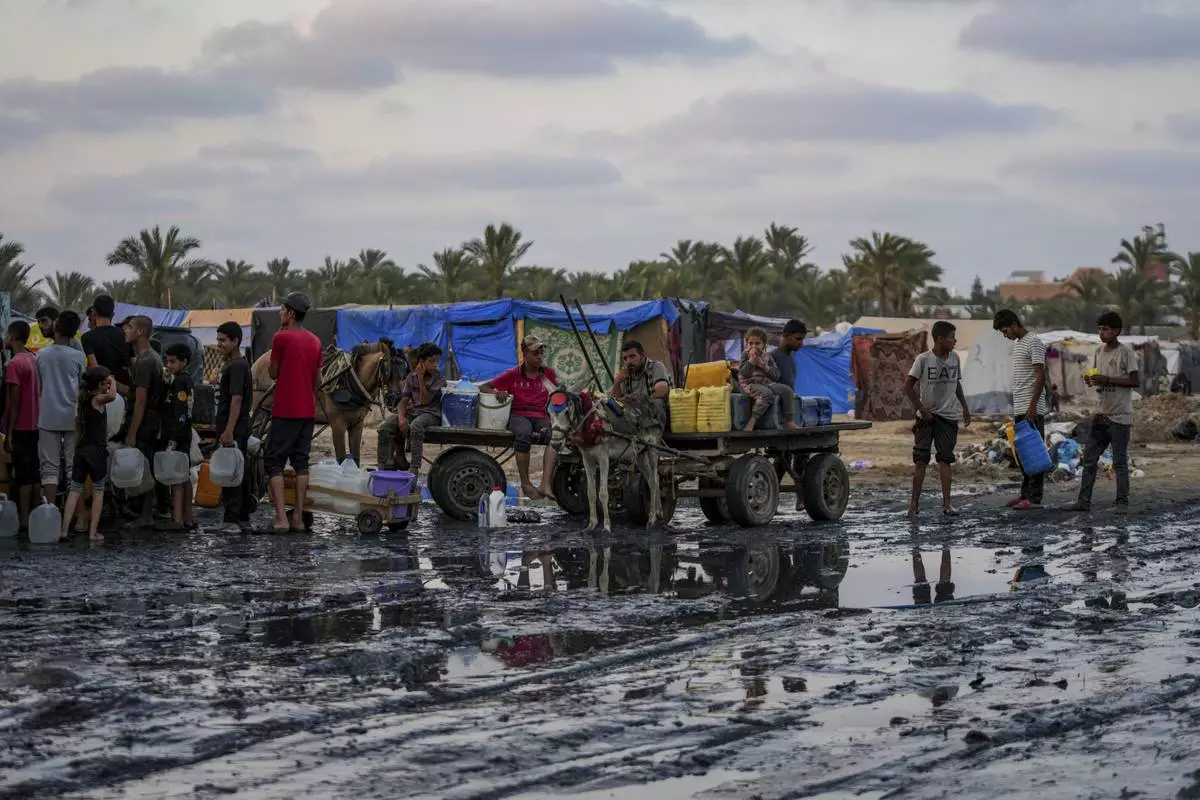
FILE - Palestinians gather to fill water jugs near one of the strip's few functioning desalination plants in Deir al-Balah, Gaza Strip, Thursday, June 20, 2024. (AP Photo/Abdel Kareem Hana, File)
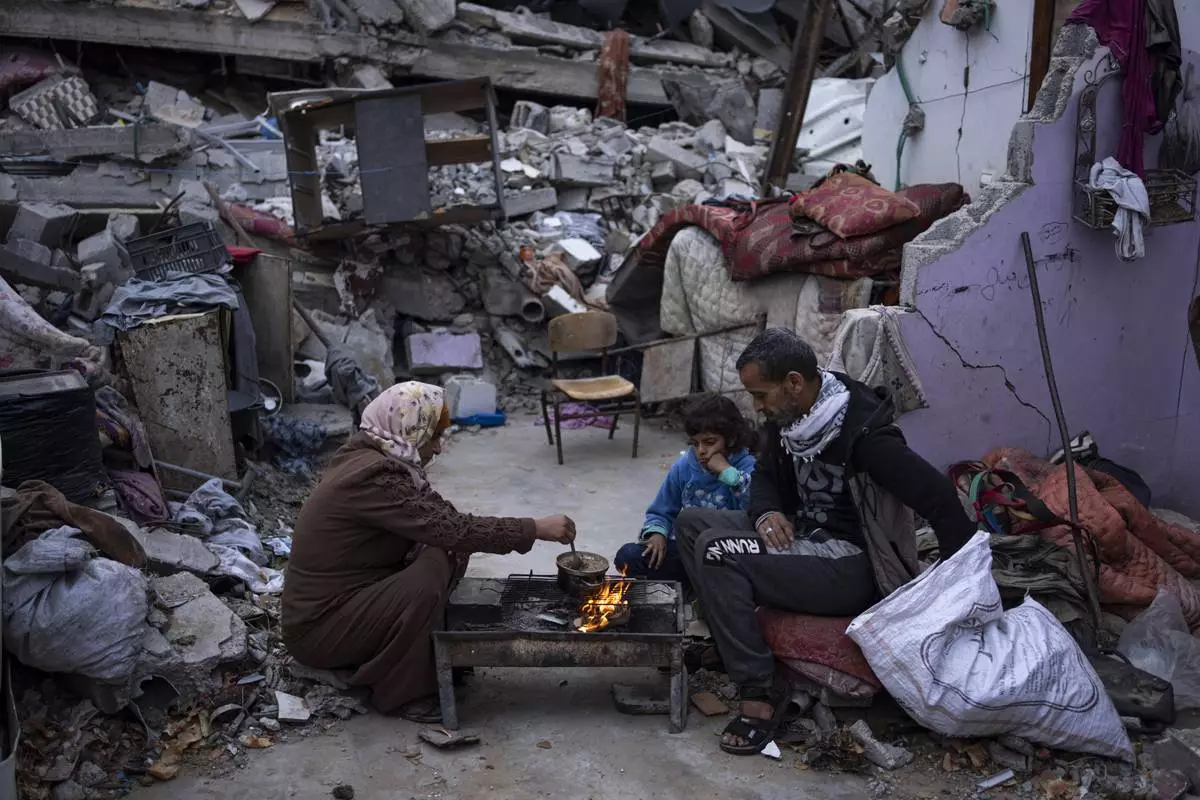
FILE - Members of the Al-Rabaya family break their fast during the Muslim holy month of Ramadan outside their home destroyed by Israeli airstrikes in Rafah, Gaza Strip, Monday, March 18, 2024. (AP Photo/Fatima Shbair, File)
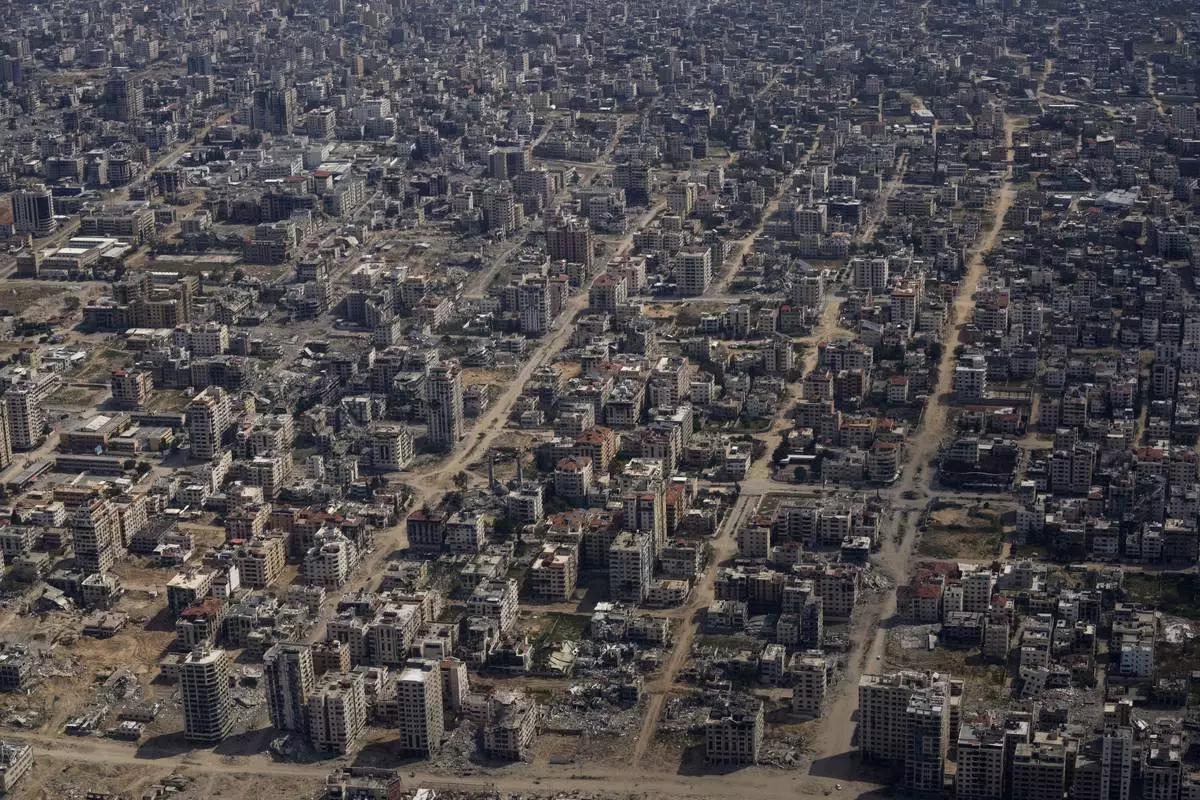
FILE - Destroyed buildings are seen through the window of an airplane from the U.S. Air Force overflying the Gaza Strip, Thursday, March 14, 2024. (AP Photo/Leo Correa, File)
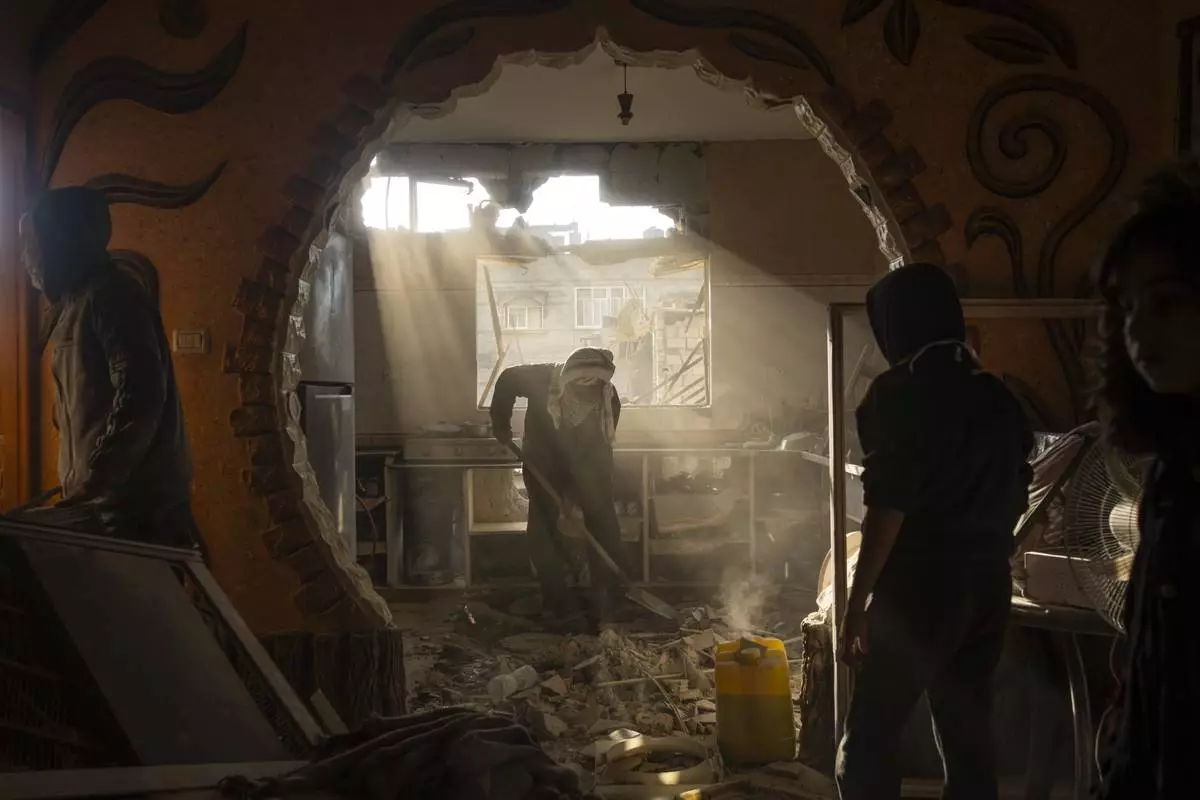
FILE - Palestinians look at their neighbor's damaged house following an Israeli strike in Rafah, southern Gaza Strip, Saturday, Jan. 27, 2024. (AP Photo/Fatima Shbair, File)
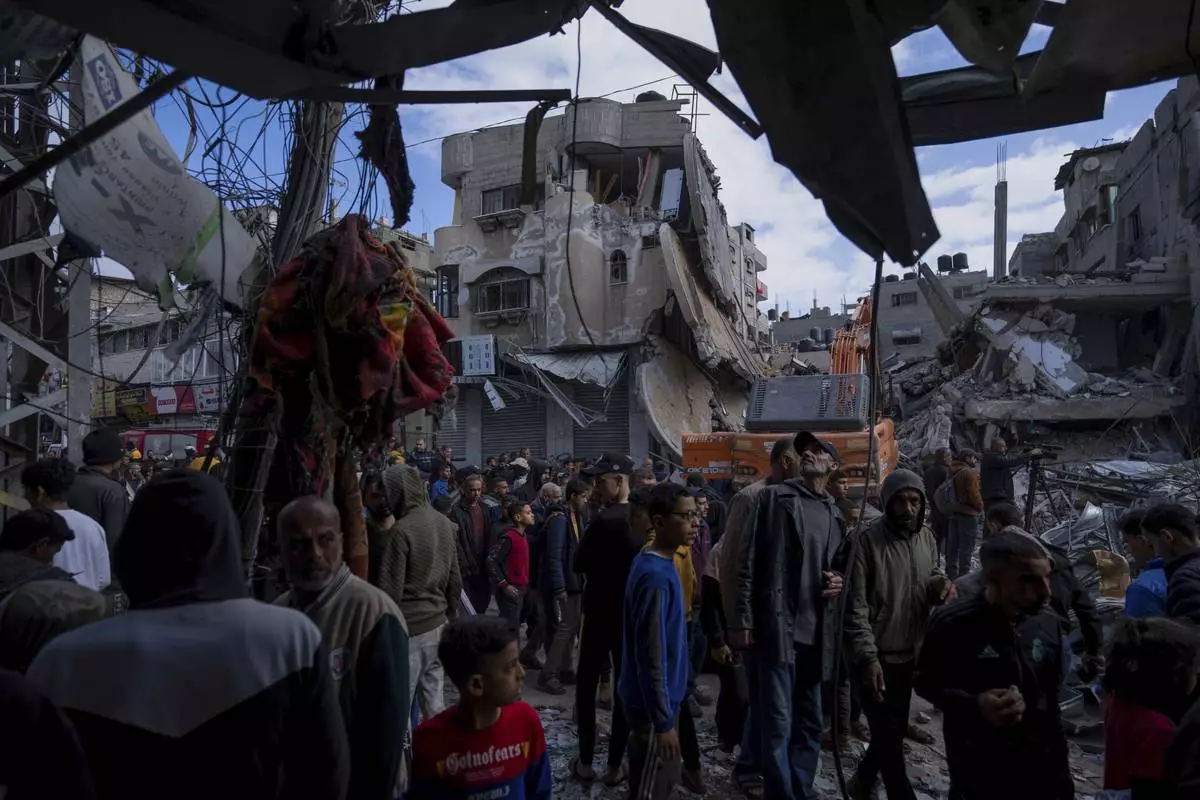
FILE - Palestinians check destruction after an Israeli strike in Rafah, Gaza Strip, Monday, March 4, 2024. (AP Photo/Fatima Shbair, File)
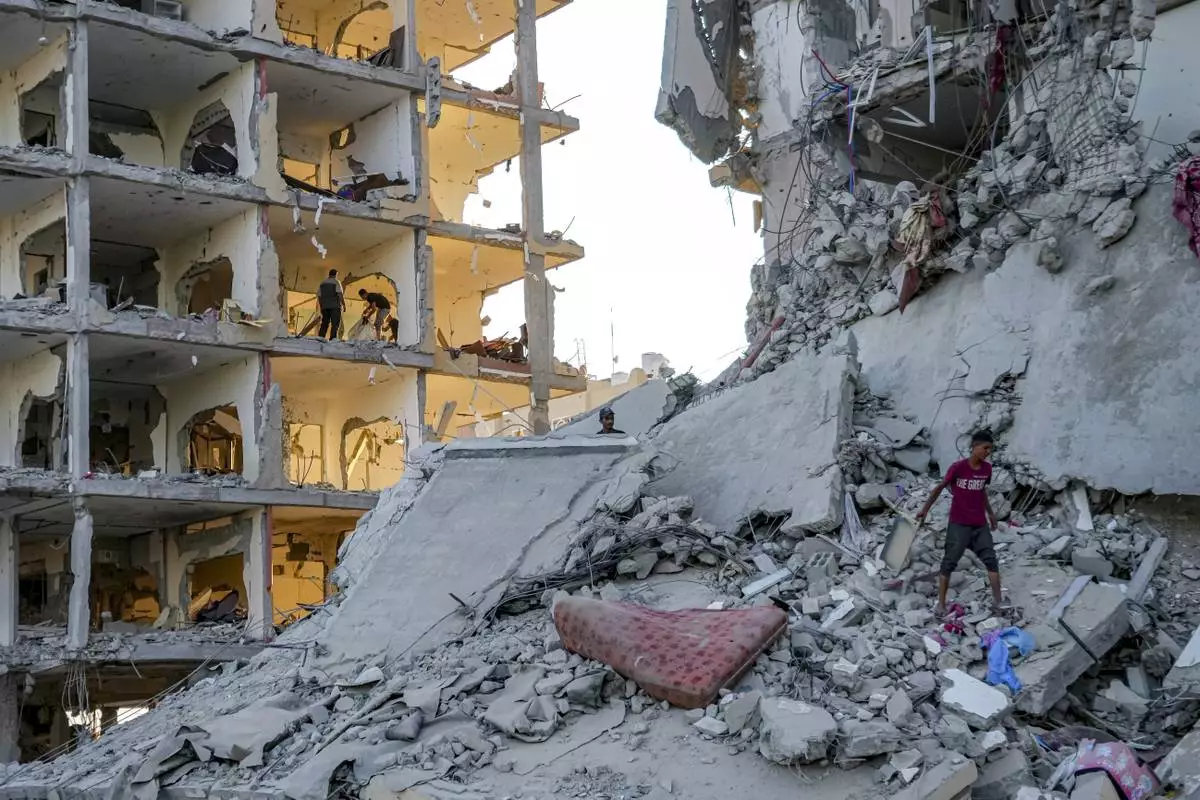
FILE - Palestinians inspect their houses after Israeli bombardment on Deir al-Balah, Thursday, Aug. 29, 2024. (AP Photo/Abdel Kareem Hana, File)
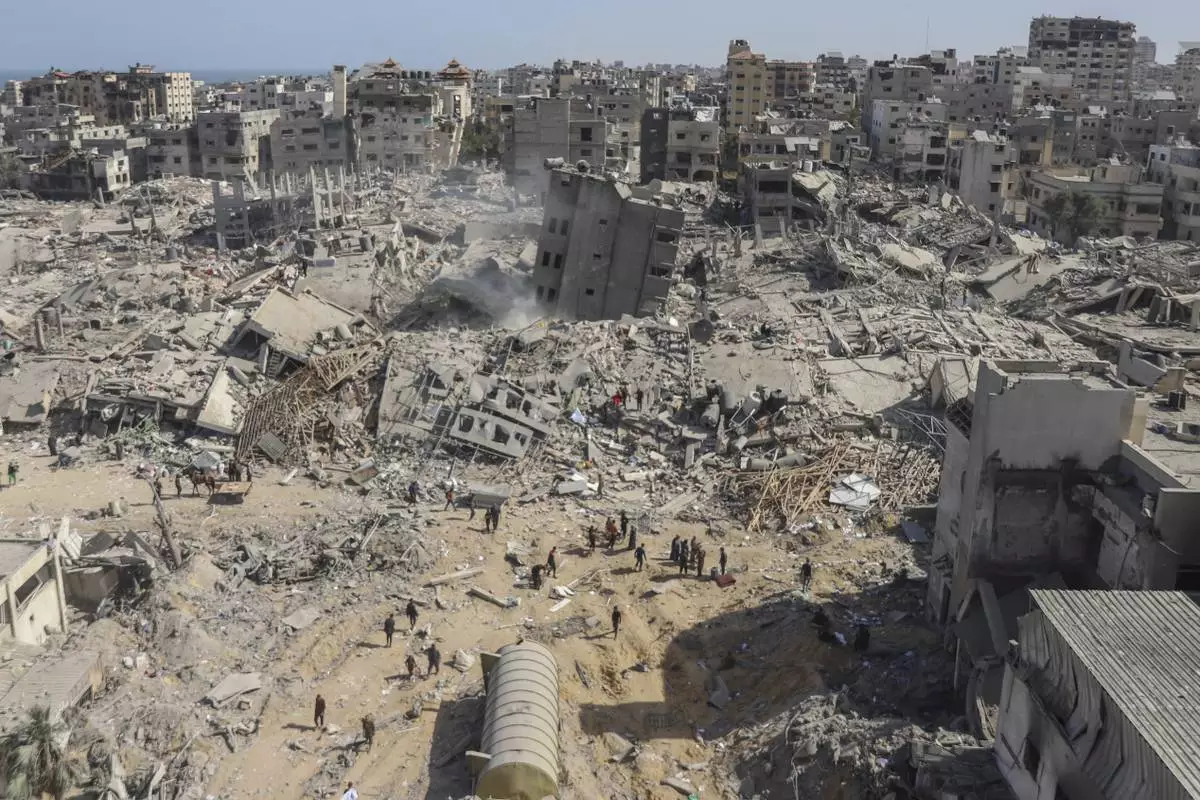
FILE - Palestinians walk through the destruction left by the Israeli air and ground offensive on the Gaza Strip near Shifa Hospital in Gaza City, Monday, April 1, 2024. (AP Photo/Mohammed Hajjar, File)
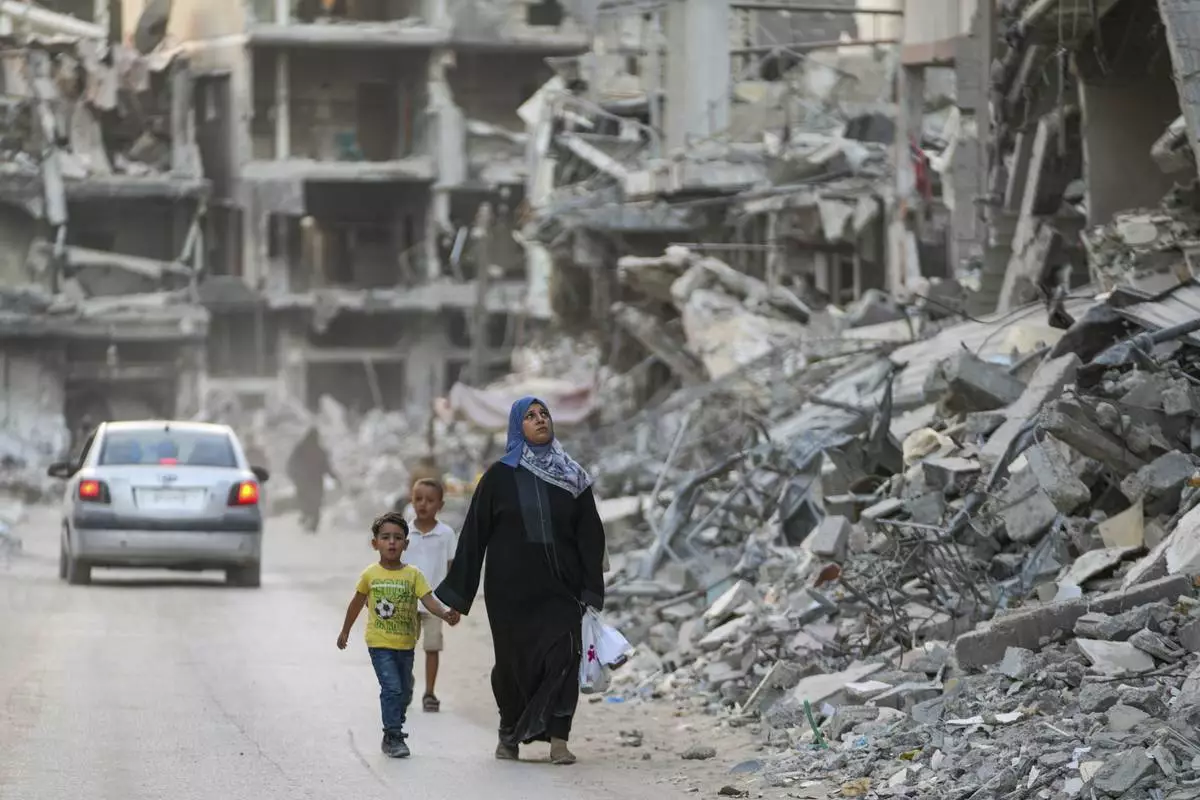
Palestinians walk through the destruction left by the Israeli air and ground offensive on Khan Younis, Gaza Strip, Thursday, Sept. 12, 2024. (AP Photo/Abdel Kareem Hana)
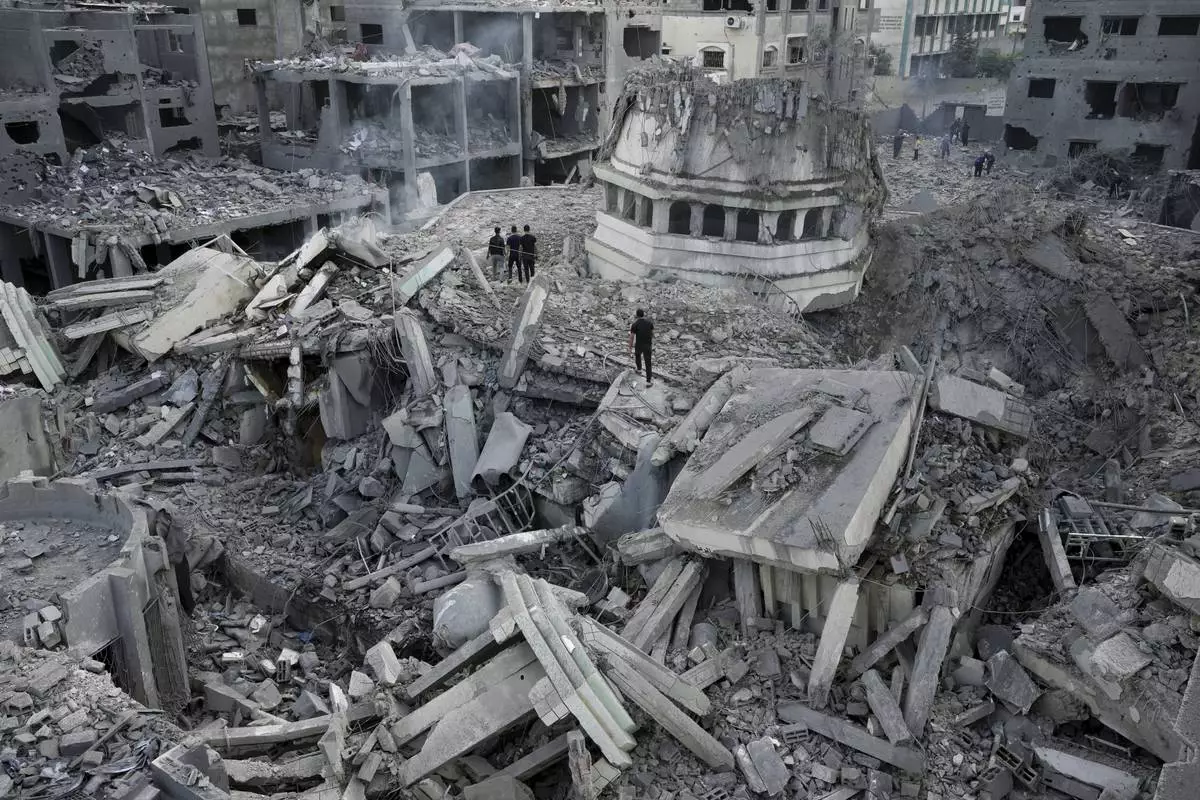
FILE - Palestinians inspect the rubble of the Yassin Mosque destroyed after it was hit by an Israeli airstrike at Shati refugee camp in Gaza City, early Monday, Oct. 9, 2023. Israel's military battled to drive Hamas fighters out of southern towns and seal its borders Monday as it pounded the Gaza Strip. (AP Photo/Adel Hana, File)
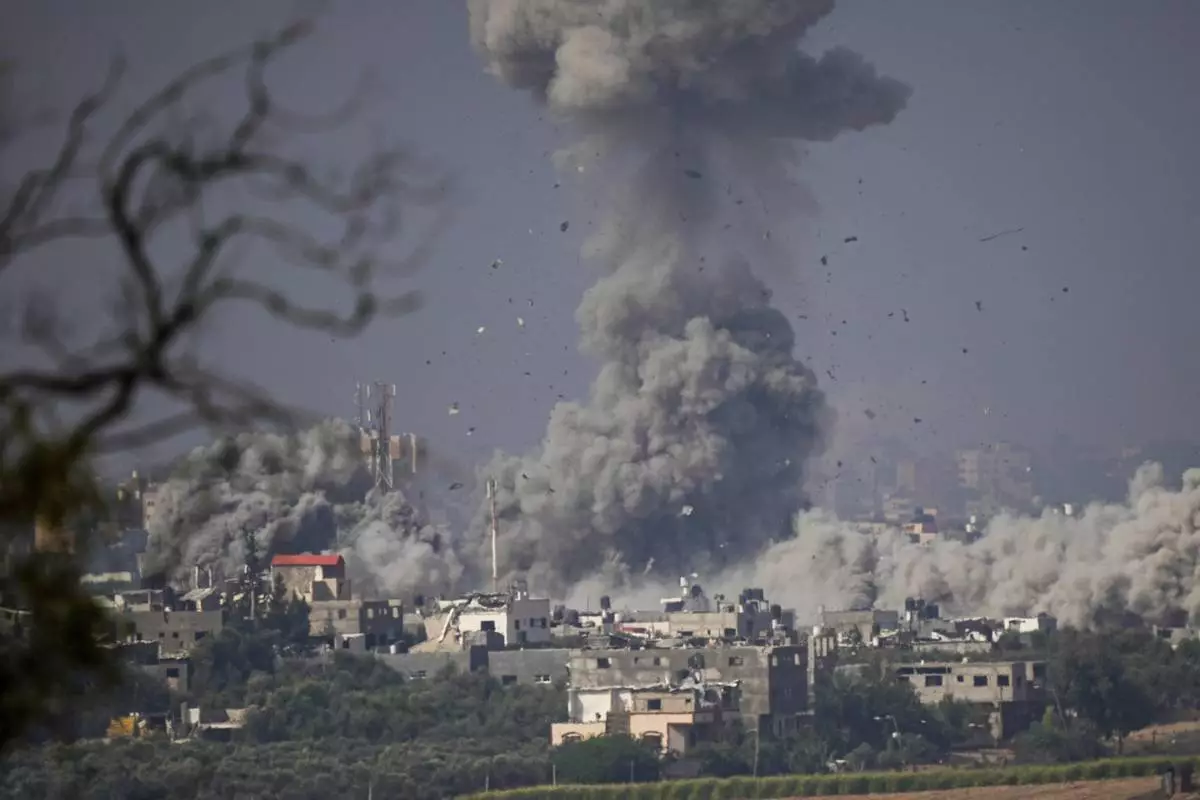
FILE - Smoke rises following an Israeli airstrike in the Gaza Strip, as seen from southern Israel, Monday, Oct. 23, 2023. (AP Photo/Ariel Schalit, File)
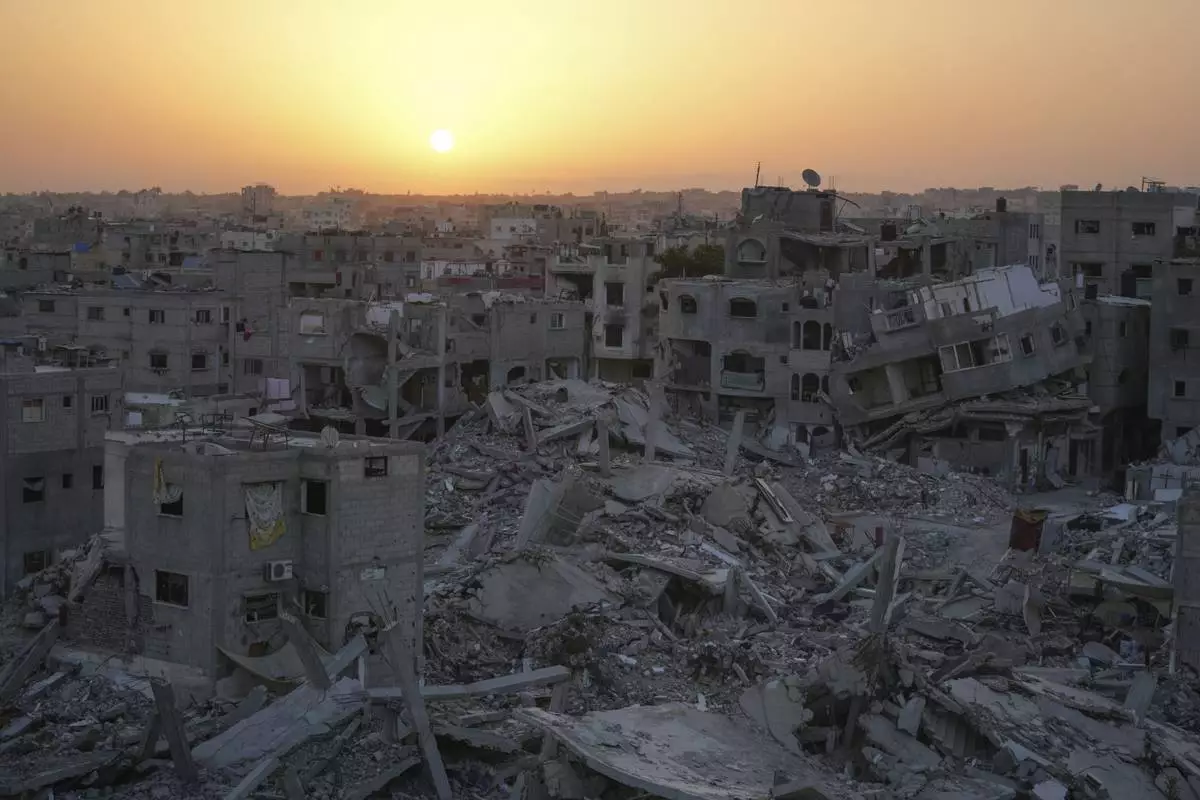
Destruction left by the Israeli air and ground offensive is seen in Khan Younis, Gaza Strip, Friday, Sept. 13, 2024. (AP Photo/Abdel Kareem Hana)