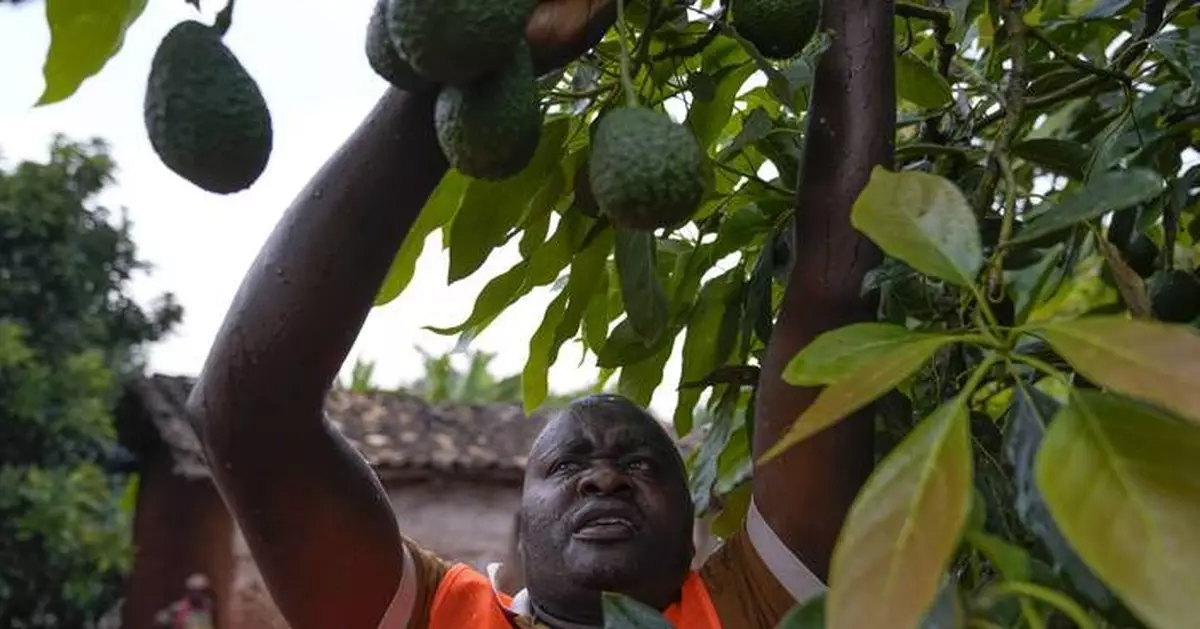
KAYANZA, Burundi (AP) — Farmers in a remote part of Burundi know to look for a truck parked by a highway when it is time to sell their avocados. They materialize from villages and form a crowd around the vehicle, watching closely as crews weigh and load the crated fruits.
Such roadside exchanges, repeated regularly during peak harvest season, long provided a ready market for smallholder avocado growers in a country that’s sometimes ranked as the world’s poorest. But the transactions now promise real earnings thanks in part to the intervention of the national government and farmers’ cooperatives that worked to set terms for foreign avocado dealers.
Click to Gallery

Onesime Niyukuri take notes during an interview with the Associated Press in Bujumbura, Burundi, Sept. 18, 2024. (AP Photo/Brian Inganga)
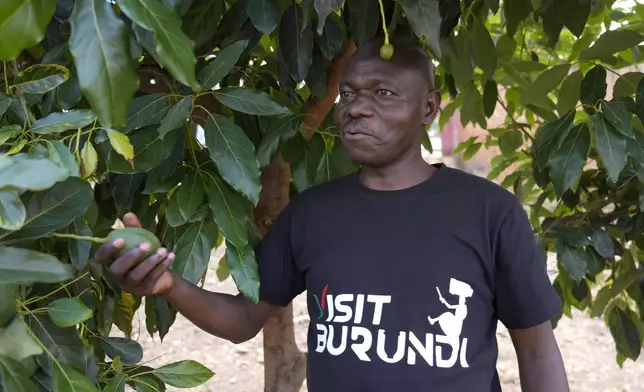
Ferdinand Habimana, vice-president of the administrative board for Green Gold Burundi, stands under an avocado tree in Kayanza province, Burundi, Sept. 18, 2024. (AP Photo/Brian Inganga)
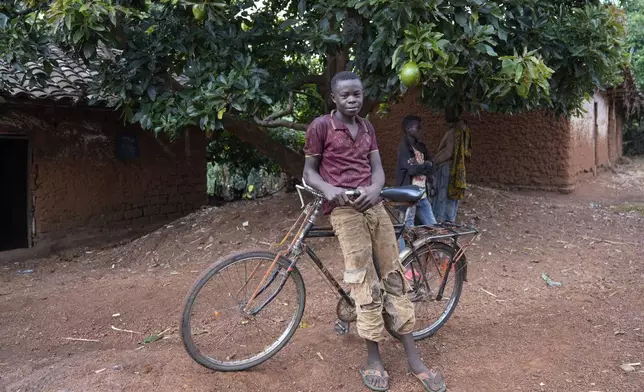
A young boy pose for a photograph under an avocado tree in Kayanza province, Burundi, Sept. 18, 2024. (AP Photo/Brian Inganga)
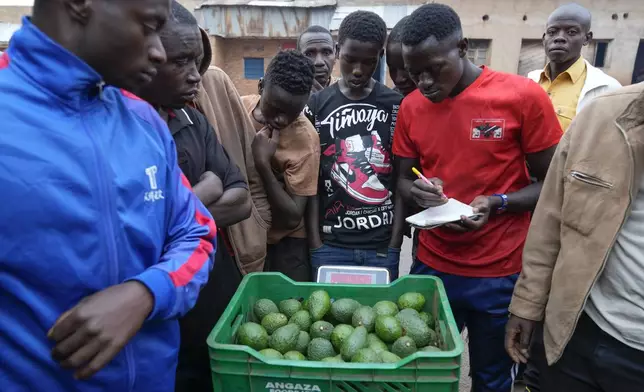
Farmers and workers measure the weight on a scale of a crate full of avocados in Kayanza province, Burundi, Sept. 18, 2024. (AP Photo/Brian Inganga)
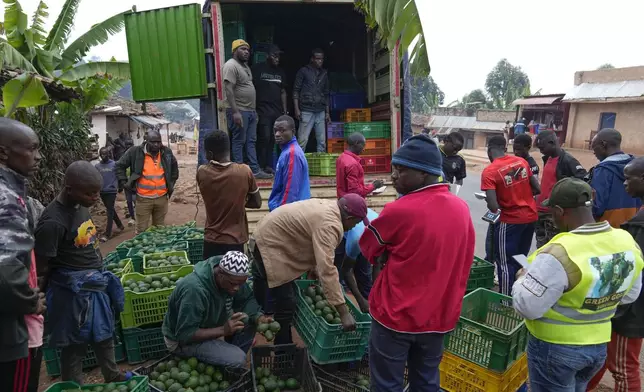
A truck is loaded with avocados in Kayanza province, Burundi, Sept. 18, 2024. (AP Photo/Brian Inganga)
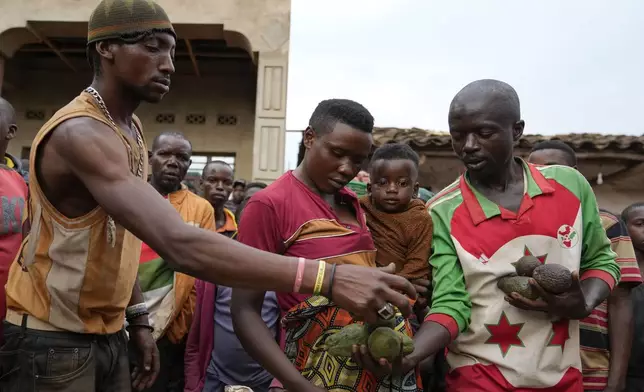
A street vendor sells avocados in Kayanza province, Burundi, Sept. 18, 2024. (AP Photo/Brian Inganga)
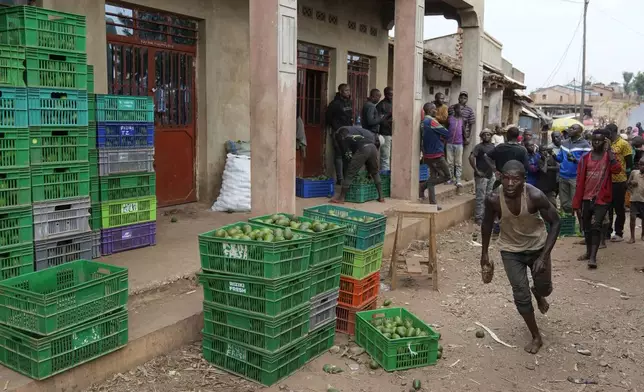
A man runs to load a crate of avocados inside a truck in Kayanza province, Burundi, Sept. 18, 2024. (AP Photo/Brian Inganga)
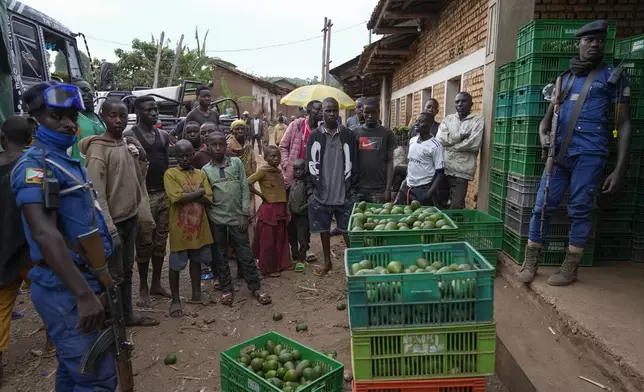
Burundian police officers stand beside crates of avocados in Kayanza province, Burundi, Sept. 18, 2024. (AP Photo/Brian Inganga)
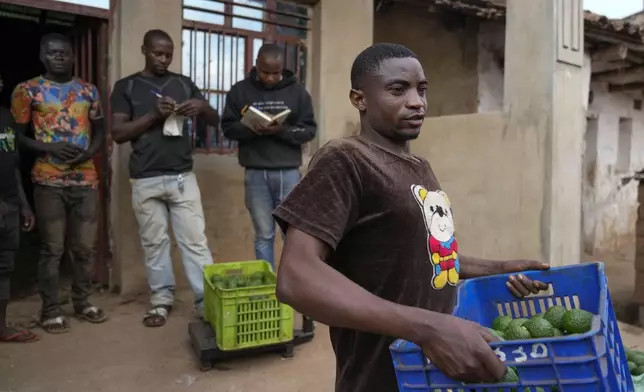
A farmer carries a crate of avocados at a plantation in Kayanza province, Burundi, Sept. 18, 2024. (AP Photo/Brian Inganga)
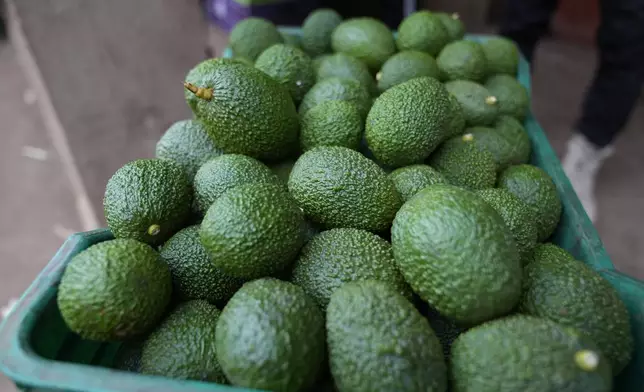
A crate of avocados at a packing facility in Kayanza province, Burundi, Sept. 18, 2024. (AP Photo/Brian Inganga)
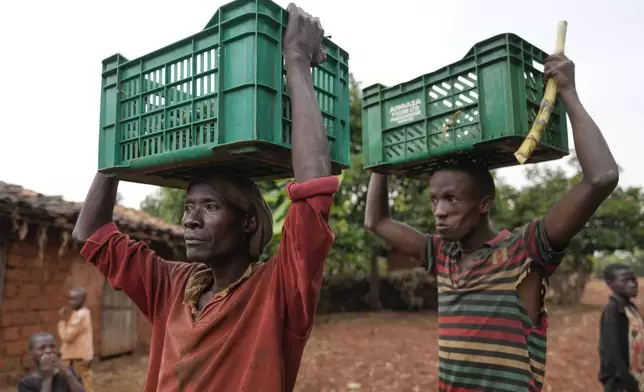
Farmers carry crates with avocados from a plantation in Ngozi, Burundi, Sept. 18, 2024. (AP Photo/Brian Inganga)
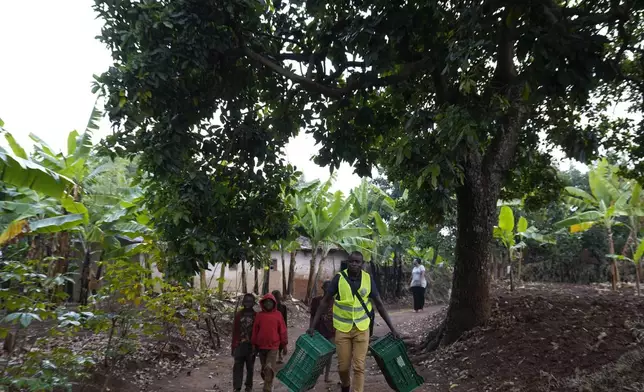
A man carries crates to pack avocados in Kayanza province, Burundi, Sept. 18, 2024. (AP Photo/Brian Inganga)
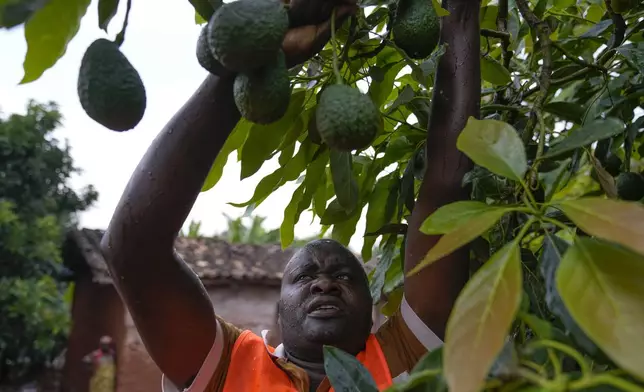
A farmer harvests avocados at a plantation in Kayanza province, Burundi, Sept. 18, 2024. (AP Photo/Brian Inganga)
Just a year ago, farmers selling their avocados to the transporters earned 10 cents per kilogram (2.2 pounds), far less than the price for a small bottle of water. These days, they get roughly 70 cents for the same quantity, a meaningful increase for people who mainly farm to feed their families.
A major change in the trade is that payments in U.S. currency now go into the bank accounts of cooperatives that pay their members directly almost as soon as the avocado haulers leave. Acting as intermediaries, groups such as Green Gold Burundi, which has its headquarters in the northern province of Kayanza and represents 200,000 farmers nationwide, say they are better positioned than individual growers to stem exploitation.
The participation of the cooperatives is an important step toward regulating the country's avocado exports, said Ferdinand Habimana, vice president of Green Gold Burundi’s administrative board. Although the government is promoting avocado farming to diversify exports, avocados grown in Burundi are yet to be trademarked as coming from there, he said.
“So it is legally done now, but what we are developing now is that the (avocados) can reach the final destination as avocados taken from Burundi,” said Habimana, speaking of his group’s dealings with exporters in Tanzania and elsewhere in East Africa.
Zacharie Munezero, who oversees quality management for Green Gold Burundi, acknowledged that the 70 cents farmers earn for a kilogram of avocados is still insufficient when exporters can fetch between $3 and $5 for the same quantity in international markets.
Avocados are cheap in many parts of sub-Saharan Africa, where they can be purchased from farmers in bulk for almost nothing. In Burundi, avocados became more widely cultivated after the country's former leader, Pierre Nkurunziza, started extolling the fruit in 2007 as a source of nutrition and income.
Many households that don’t produce the varieties favored by exporters usually look after at least one avocado plant of the local variety known to Burundians as “amapeter,” in remembrance of Nkurunziza, who died in 2020.
But while coffee and tea exports – Burundi’s traditional sources of much-needed foreign currency – have long been coordinated, the trade in Burundian avocados has remained unregulated, according to farmer representatives and a trade official. They said that avocado exports could be as profitable for the country as coffee if the government asserted its rule-making authority.
Desirable measures include guaranteeing a minimum price for farmers, stopping foreign traders from dealing directly with farmers, and encouraging widespread cultivation of the Hass avocados favored by European consumers, they said.
Burundi “cannot rely only on coffee and tea,” Onesime Niyukuri, an adviser in the foreign trade department of the Ministry of Foreign Affairs, said of the country's limited exports.
If avocado dealers from elsewhere in East Africa “can come and buy at a price that is already set by the government, there is no problem,” he said.
The government ramped up its efforts to organize avocado exports earlier this year as dollar shortages fueled sporadic shortages of sugar and other goods.
Under new regulations, which require foreign dealers to register with local authorities, exporters must submit copies of their supply contracts and specify market destinations for Burundian avocados, according to the Ministry of Trade, Transport, Industry and Tourism.
Burundi aims to export more than 10 million tonnes (11 million tons) of avocados each year by 2030, said Niyukuri, citing the government’s strategic plan. Recent figures on Burundi’s foreign exchange earnings from the avocado crop were not readily available.
The government’s target is to plant 50,000 avocado trees in each of Burundi’s 17 provinces. Local authorities in provinces such as Kayanza want each household to own at least 10 trees producing exportable avocados.
That includes the Mexican variety Fuerte and especially Hass avocado, the most commercially successful variety globally. The fruit, which has dark bumpy skin and bright yellow-green flesh, takes more than two weeks to ripen and can survive several days in transit.
Burundi, a small mountainous country about the size of Maryland, is home to 13 million people. Annual income per capita was $199 in 2023, among the lowest globally, and nearly 65% of the population lives below the poverty line, according to World Bank figures.
Agriculture is the main economic activity, and many people in rural provinces such as Kayanza mostly grow the potatoes and vegetables they will consume through the year. For some, including those with a few avocado trees in their compounds, the pear-shaped green fruit has proven a surprisingly reliable source of income.
Eric Nsabimana, a farmer in Kayanza, recalled starting as an avocado grower in response to the campaign of former leader Nkurunziza. Some farmers, feeling forced into planting avocados, uprooted the seedlings the government gave them and now rue the missed opportunity, Nsabimana said.
“The people who didn’t plant, they regret,” he said.
Nsabimana, who anticipates making more than $6,000 a year selling avocados now that the price is higher, said he used his earnings to acquire five more hectares (12.4 acres) of land now planted with 500 avocado trees.
Habimana, the senior official with Green Gold Burundi, said his group moved to mobilize avocado farmers for better rewards after it realized at the beginning of the year they were being exploited by foreign traders.
One day in January, he followed a truck transporting Burundian avocados to neighboring Tanzania, believing the cargo was destined for consumption in the region. When he saw the avocados getting washed, weighed and packed in the town of Njombe, he realized the goods were bound for another export market abroad.
“There was another destination somewhere else, not in Njombe,” Nsabimana said.
When he returned to Kayanza, Green Gold Burundi prioritized plans to register avocado farmers in a way that eliminated middlemen and guaranteed a reasonable price for farmers. The cooperative pays taxes and keeps a cut of avocado proceeds to sustain operations that include providing members with seedlings and organic manure.
Munezero, the cooperative's quality management official, said that while the price of avocados “is still a problem,” his group is “focusing on capacity building" and encouraging residents to plant more avocado trees.
Green Gold Burundi has distributed millions of seedlings in the past year, finding enthusiasm among farmers eager to join the avocado bandwagon. Even growers with only a few backyard Hass plants said they increasingly see avocado as a cash crop.
“Avocados mean dollars to us,” one such grower, Samuel Niyinyibutsa, said, adding that he knows some Kayanza residents who feel “left behind” when they see others collect payments for their produce.
“But they still have time,” Niyinyibutsa said. “They can be awakened and start planting avocados because avocado can do well to them as it is doing well to us.”
The Associated Press receives financial support for global health and development coverage in Africa from the Gates Foundation. The AP is solely responsible for all content. Find AP’s standards for working with philanthropies, a list of supporters and funded coverage areas at AP.org.

Onesime Niyukuri take notes during an interview with the Associated Press in Bujumbura, Burundi, Sept. 18, 2024. (AP Photo/Brian Inganga)
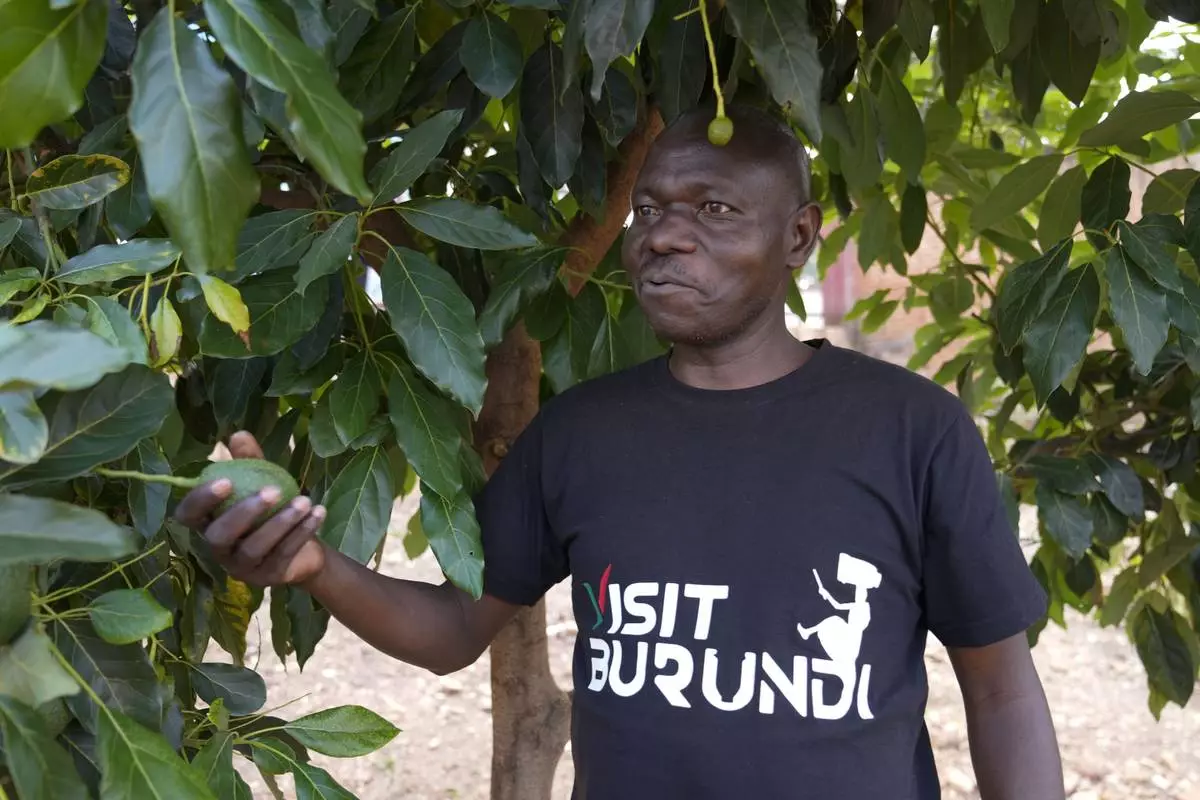
Ferdinand Habimana, vice-president of the administrative board for Green Gold Burundi, stands under an avocado tree in Kayanza province, Burundi, Sept. 18, 2024. (AP Photo/Brian Inganga)
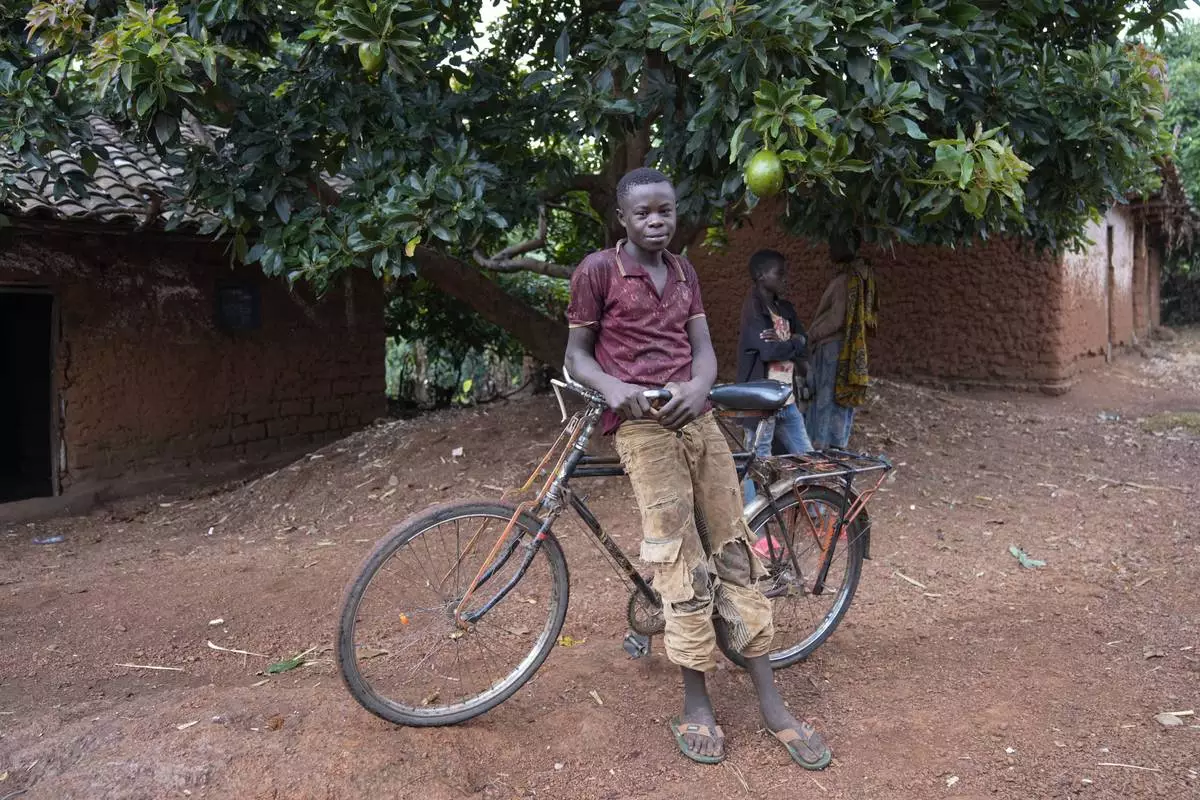
A young boy pose for a photograph under an avocado tree in Kayanza province, Burundi, Sept. 18, 2024. (AP Photo/Brian Inganga)
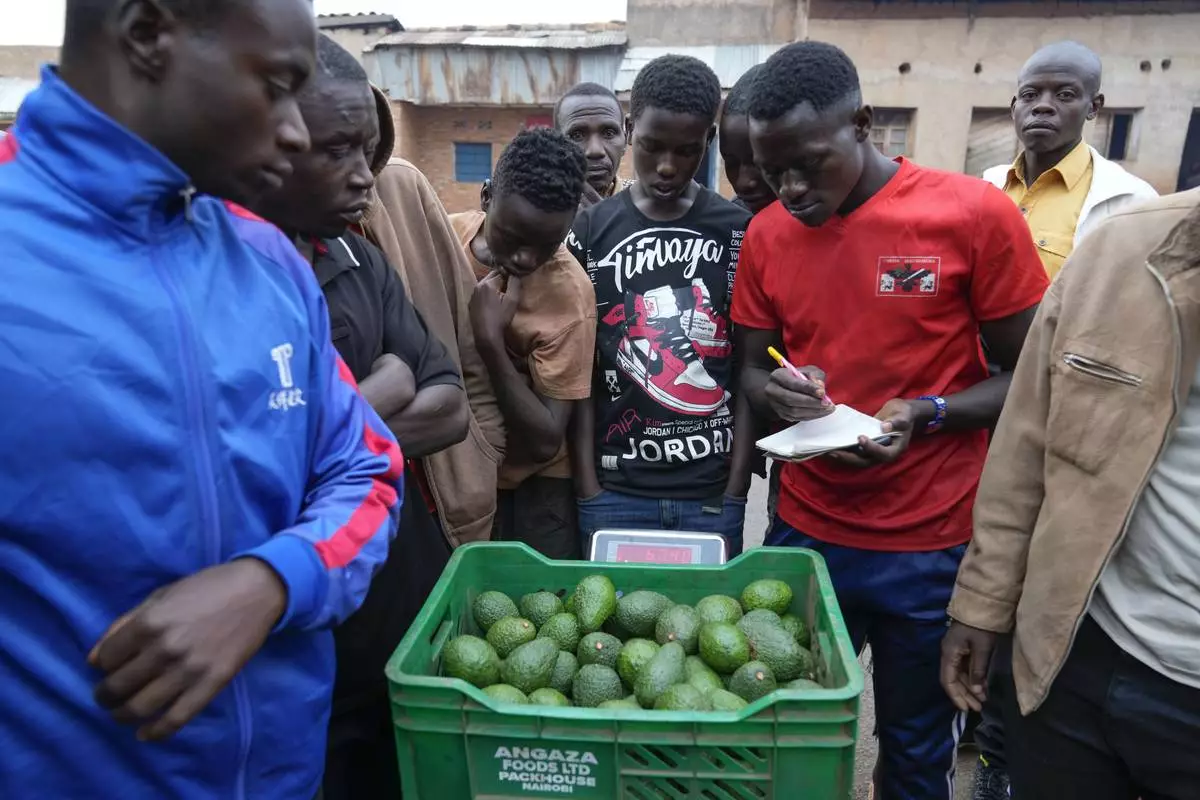
Farmers and workers measure the weight on a scale of a crate full of avocados in Kayanza province, Burundi, Sept. 18, 2024. (AP Photo/Brian Inganga)
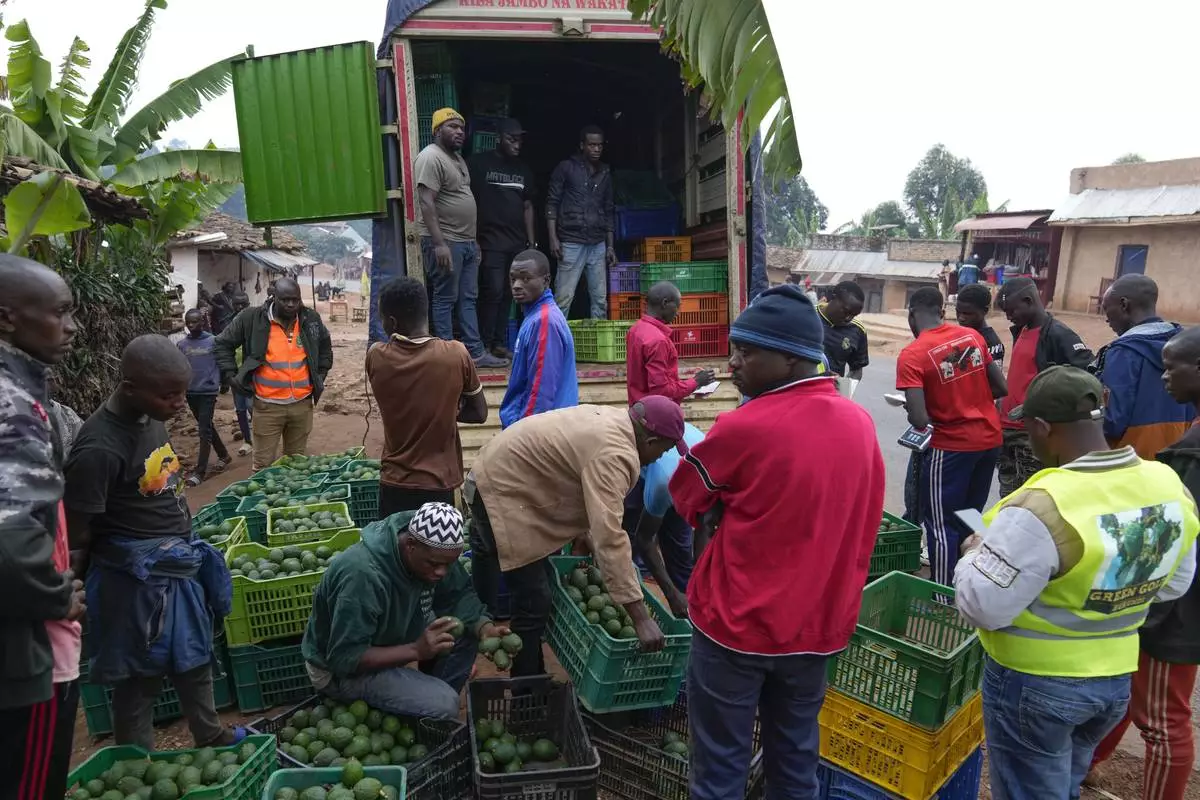
A truck is loaded with avocados in Kayanza province, Burundi, Sept. 18, 2024. (AP Photo/Brian Inganga)
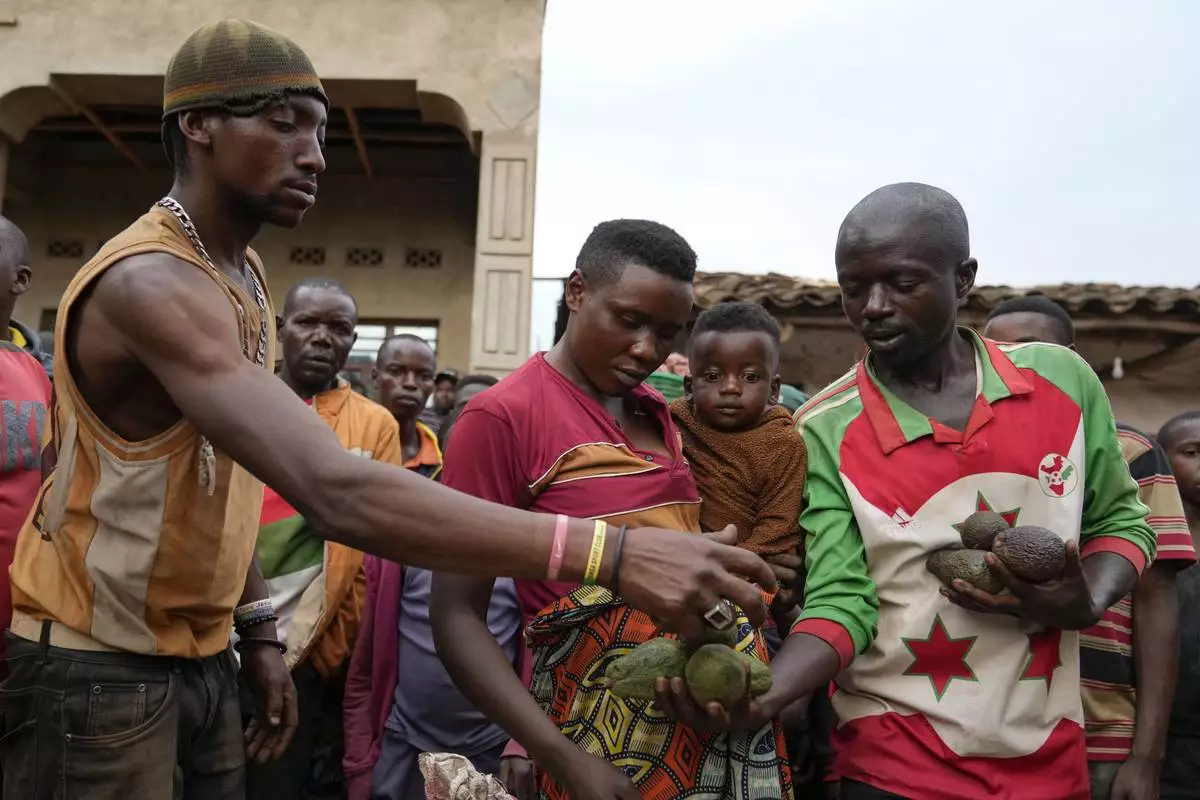
A street vendor sells avocados in Kayanza province, Burundi, Sept. 18, 2024. (AP Photo/Brian Inganga)
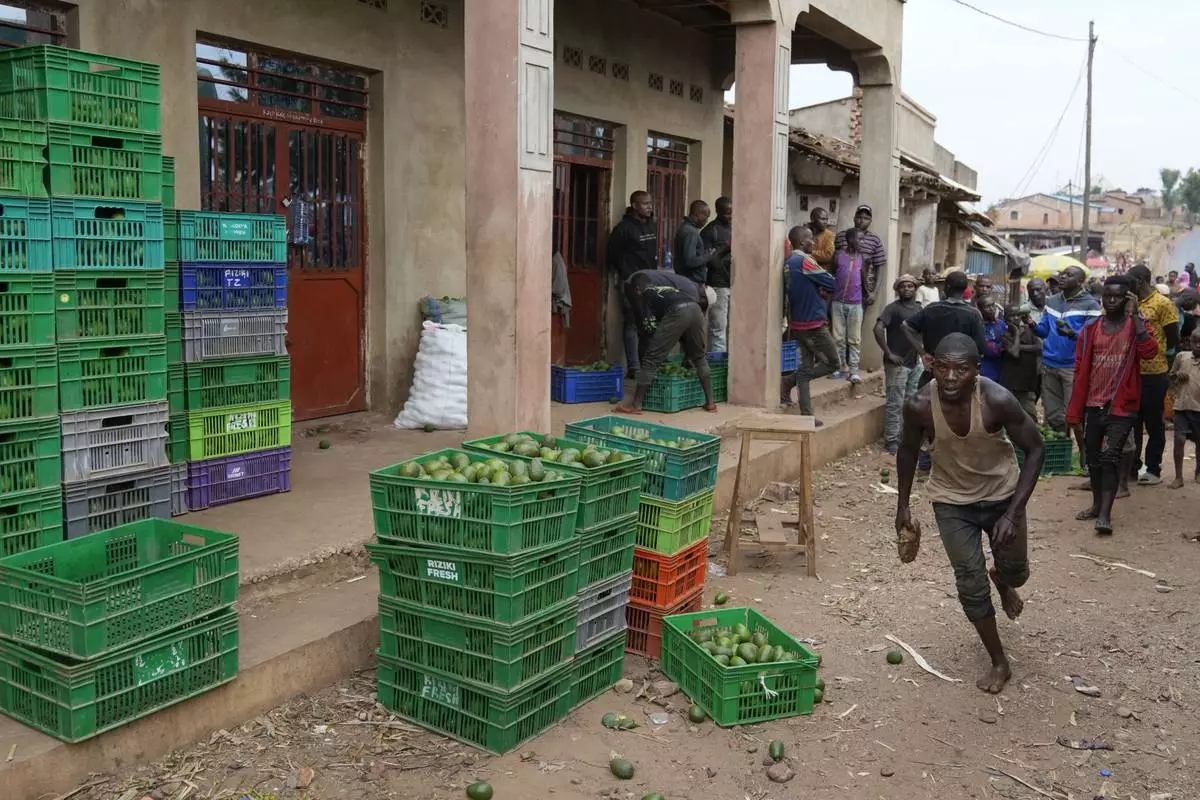
A man runs to load a crate of avocados inside a truck in Kayanza province, Burundi, Sept. 18, 2024. (AP Photo/Brian Inganga)
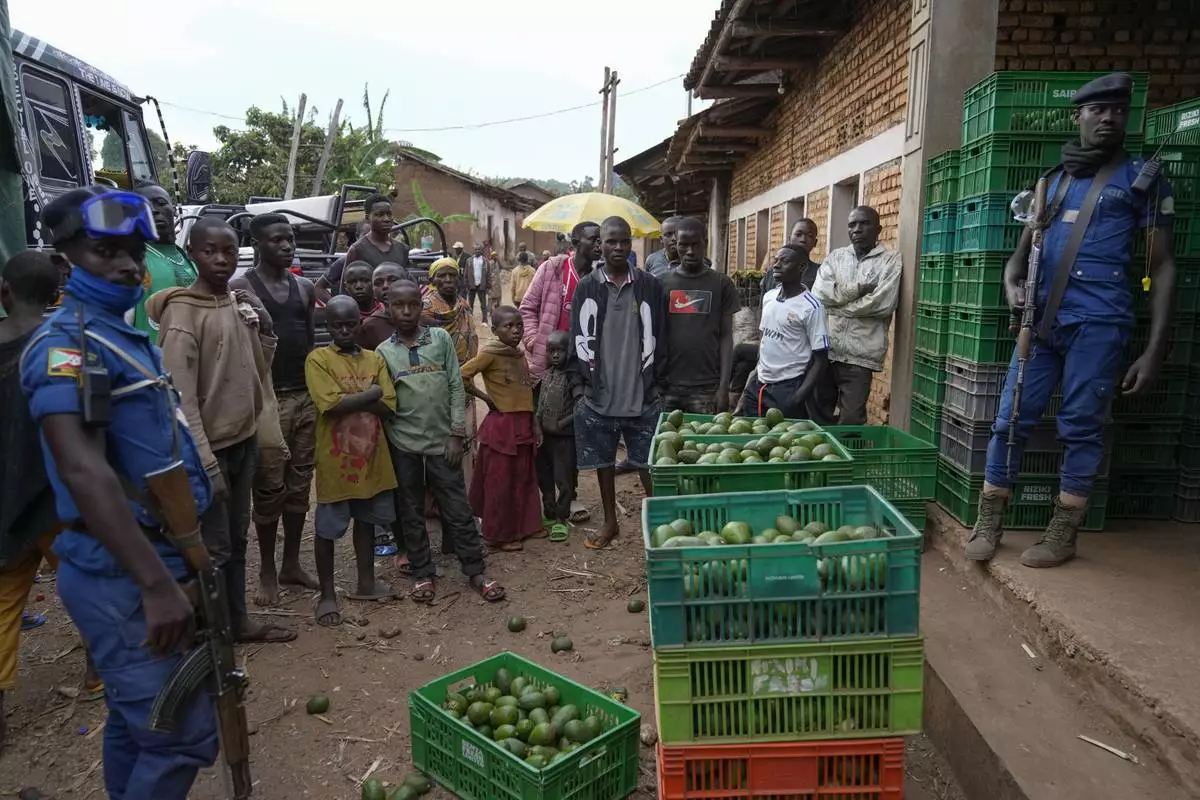
Burundian police officers stand beside crates of avocados in Kayanza province, Burundi, Sept. 18, 2024. (AP Photo/Brian Inganga)
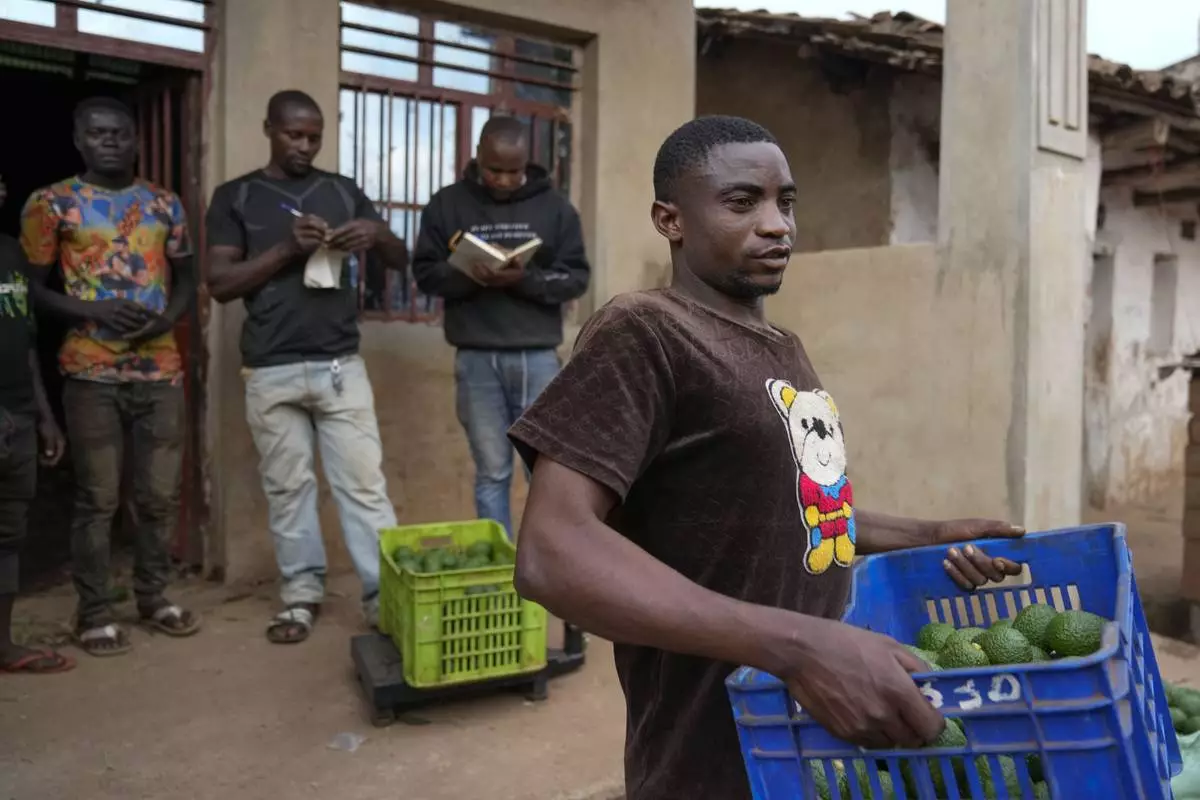
A farmer carries a crate of avocados at a plantation in Kayanza province, Burundi, Sept. 18, 2024. (AP Photo/Brian Inganga)
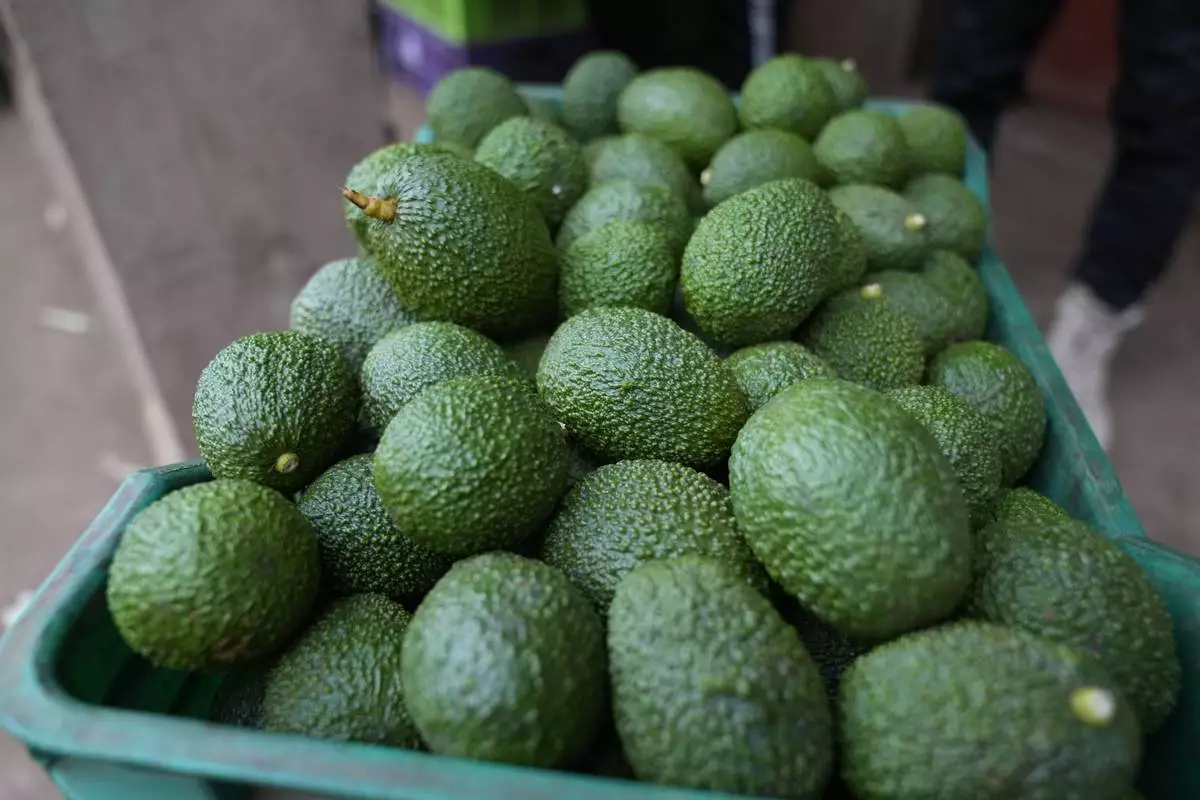
A crate of avocados at a packing facility in Kayanza province, Burundi, Sept. 18, 2024. (AP Photo/Brian Inganga)
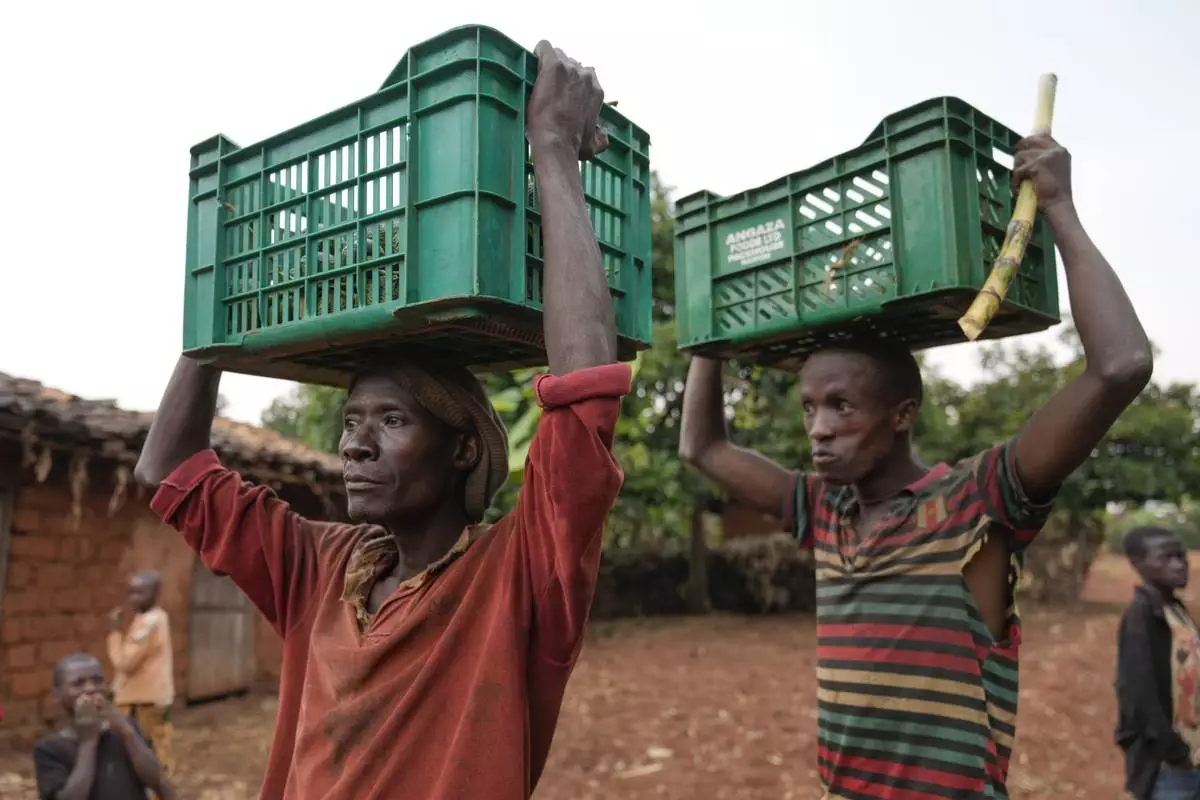
Farmers carry crates with avocados from a plantation in Ngozi, Burundi, Sept. 18, 2024. (AP Photo/Brian Inganga)
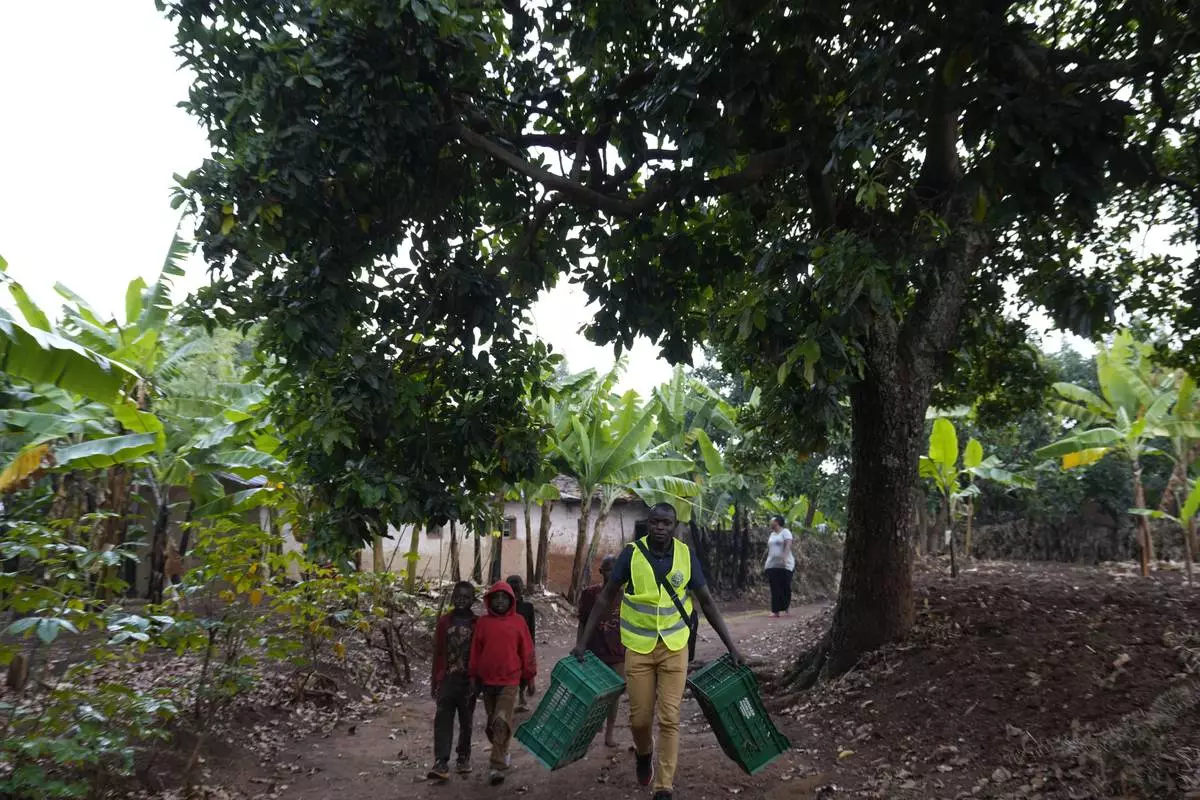
A man carries crates to pack avocados in Kayanza province, Burundi, Sept. 18, 2024. (AP Photo/Brian Inganga)
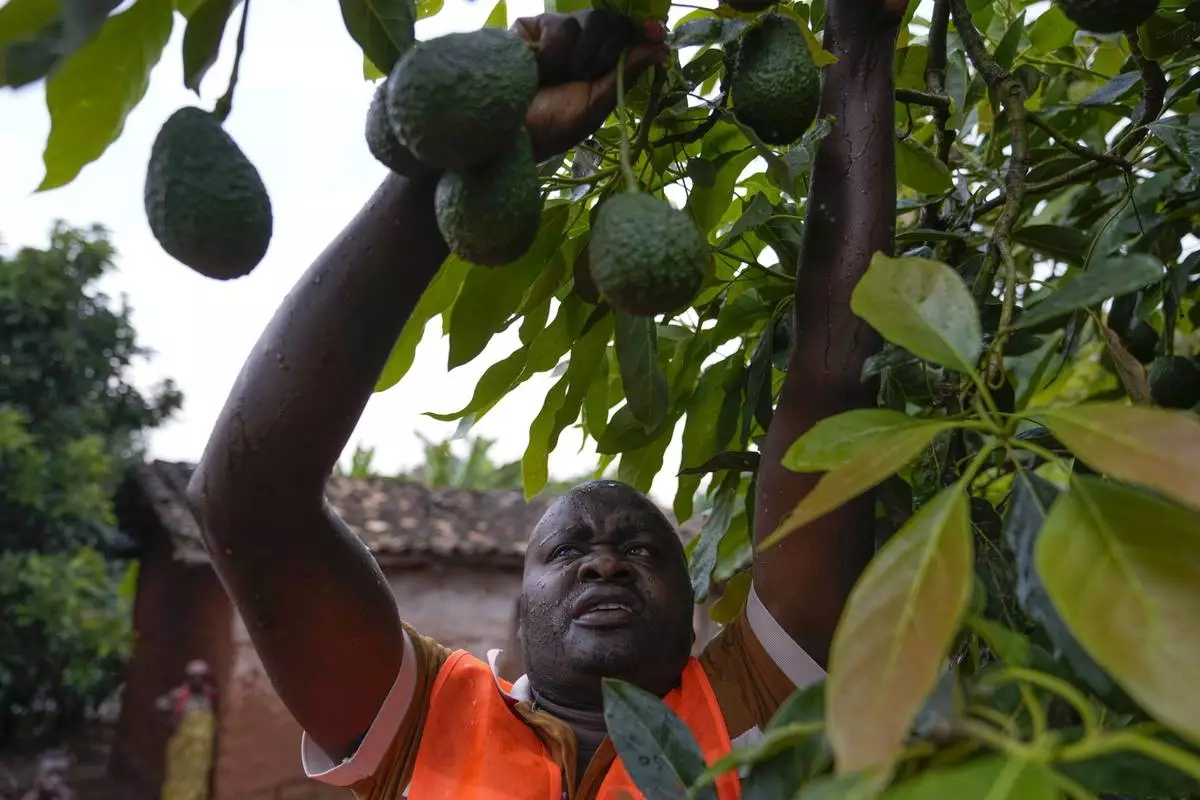
A farmer harvests avocados at a plantation in Kayanza province, Burundi, Sept. 18, 2024. (AP Photo/Brian Inganga)