China's central bank announced Thursday that it has decided to set up the Securities, Funds and Insurance companies Swap Facility (SFISF), with the initial scale of 500 billion yuan (about 71 billion U.S. dollars) for "the healthy and stable development of the capital market."
The SFISF will allow eligible securities, funds and insurance companies to use their assets including bonds, stock ETFs and holdings in constituents of the CSI 300 Index as collateral in exchange for highly liquid assets such as treasury bonds and central bank bills, the People's Bank of China said in a statement.
The scale of the SFISF could be expanded depending on the development of the situation, according to the central bank.
Starting Thursday, applications from eligible securities, funds and insurance companies will be accepted.
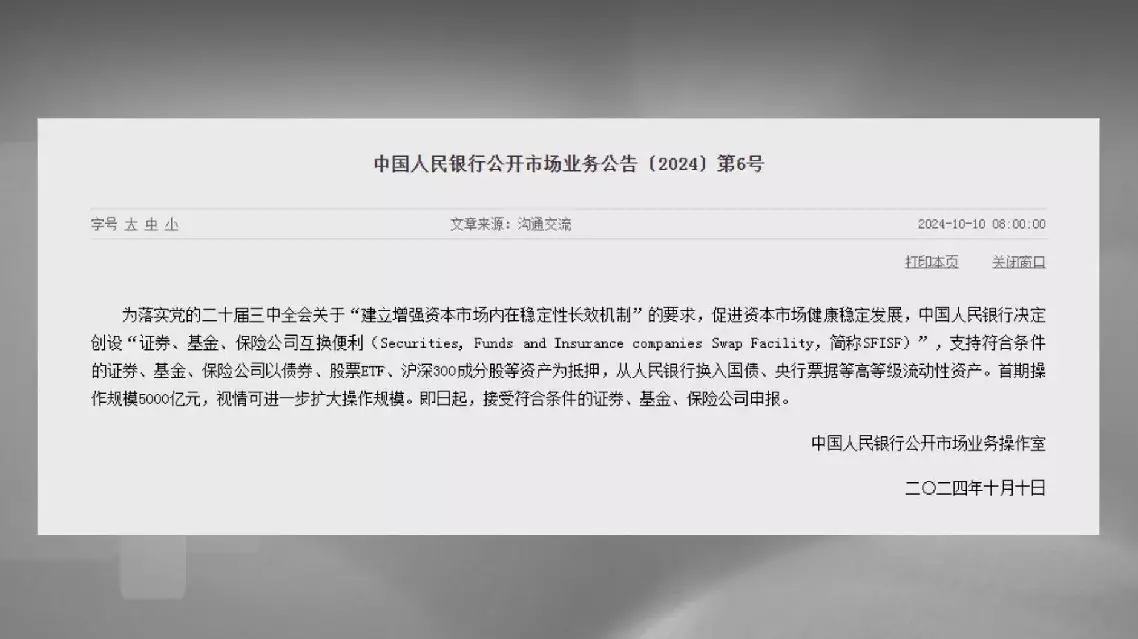
Central bank launches swap facility to boost capital market
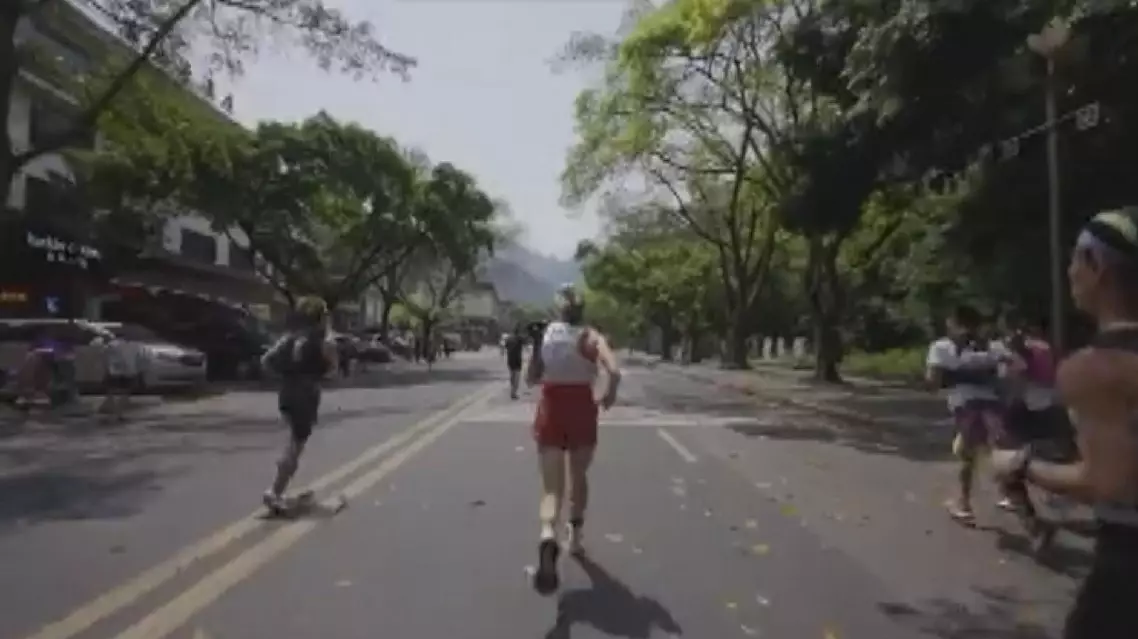
The 2026 Emei Mountain Trail Challenge wrapped up Sunday at Mount Emei in Leshan City, southwest China's Sichuan Province.
The event attracted more than 8,000 trail running enthusiasts and professional athletes from 15 countries and regions, including China, the United States, the United Kingdom, and India.
For the first time, the event was held over two weekends. The opening week, held from April 18 to 19, featured shorter distances of 8 km, 18 km, 28 km, and 42 km, designed for amateur and intermediate runners. The second week, held from April 25 to 26, catered to elite athletes with more challenging races of 27 km, 50 km, 75 km, and 102 km.
Runners tackled a variety of challenging terrains such as high alpine trails, dense forests, tea plantations, and flatter sections, while passing iconic landmarks.
In the most demanding 102 km challenge, Chinese athletes Yang Jianjian and Zheng Wen claimed the men's and women's titles respectively. In the 75 km event, China's Zhang Hongfu won the men's division, while American runner Ruby Lindquist secured the women's victory.
"It's very beautiful and everyone is so nice. I was so happy to see the people. They made me feel very supportive. And they were very nice and they clapped for me. And I really like that," said Lindquist.
The event, also known as North Face 100 Ultra Trail Mt. Emei Challenge, was staged on Mount Emei, a UNESCO World Heritage site and one of the four sacred mountains of Chinese Buddhism.
Trail challengers conquer Mount Emei in Sichuan