
WELLINGTON, New Zealand (AP) — New Zealand's defense minister issued stinging rebukes of what she said were “vile” and “misogynistic” online remarks by “armchair admirals” about the woman captain of a navy ship that ran aground, caught fire and sank off the coast of Samoa.
“Seriously, it’s 2024,” Judith Collins told reporters Thursday. “What the hell’s going on here?”
Click to Gallery
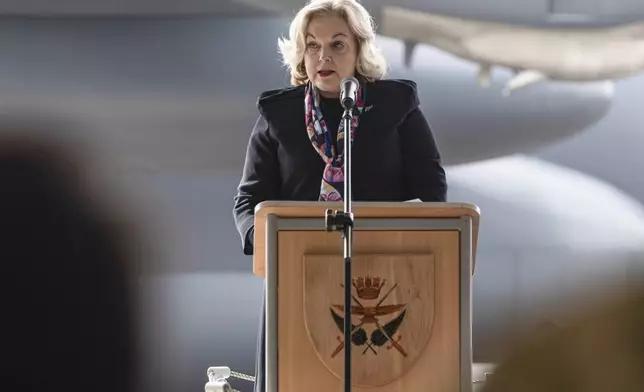
In this photo provided by New Zealand Defence Force, New Zealand's Defense Minister Judith Collins speaks at Auckland's Whenuapai Air Force Base, on Sept. 10, 2024. (LAC Jalesa Noman/New Zealand Defence Force via AP)
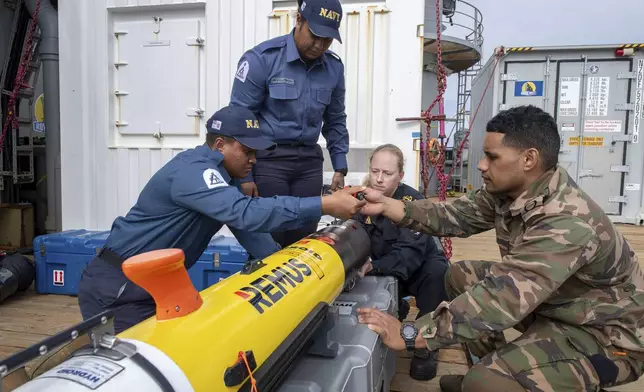
In this undated photo provided by New Zealand's Defence Public Affairs, hydrographers onboard HMNZS Manawanui prep REMUS ready for surveying in Tonga during Op Calypso. (Petty Officer Chris Weissenborn/Defence Public Affairs via AP)
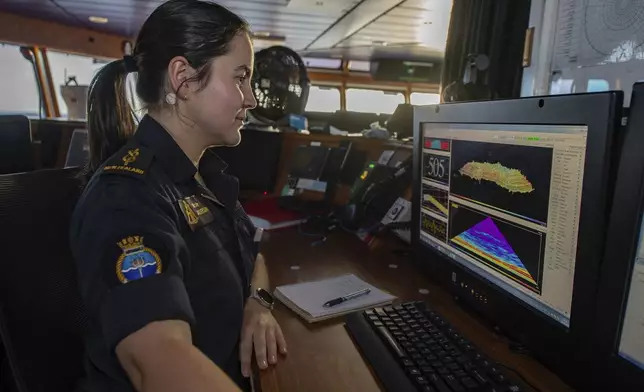
In this undated photo provided by New Zealand's Defence Public Affairs, a hydrographer surveys uncharted positions during the transit to Vanuatu on Op Calypso onboard HMNZS Manawanui. (Petty Officer Chris Weissenborn/Defence Public Affairs via AP)
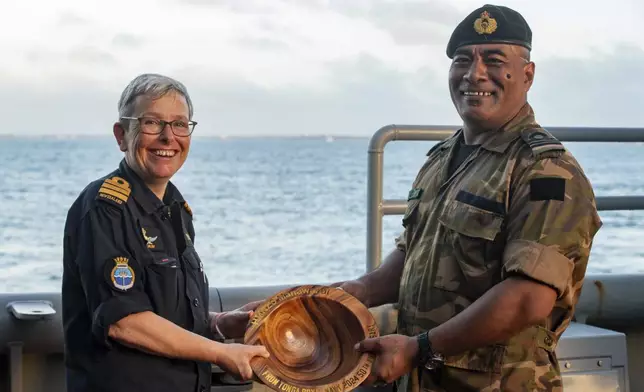
In this undated photo provided by the New Zealand Defence Force, Lieutenant Commander Tala Mafile'o of the Royal Tongan Navy presents Commander Yvonne Gray, left, with a carved wooden bowl as a memento of the RNZN's participation in the 50th Anniversary Fleet Review. (New Zealand Defence Force via AP)

In this photo provided by New Zealand Defence Force, New Zealand's Defense Minister Judith Collins speaks at Auckland's Whenuapai Air Force Base, Sept. 10, 2024. (LAC Jalesa Noman/New Zealand Defence Force via AP)

FILE- Leader of the New Zealand opposition National Party, Judith Collins, speaks prior to entering a salmon factory in Christchurch, N.Z., July 30, 2020. (AP Photo/Mark Baker, File)
After days of comments on social media directed at the gender of Commander Yvonne Gray, Collins urged the public to “be better.” Women members of the military had also faced verbal abuse in the street in New Zealand since the ship — one of nine in the country's navy — was lost on Sunday, Collins said.
All 75 people on board evacuated to safety with only minor injuries after the vessel ran aground on the reef it was surveying about a mile off the coast of Upolu, Samoa's most populous island. The cause of the disaster is not known.
“The one thing that we already know did not cause it is the gender of the ship's captain, a woman with 30 years' naval experience who on the night made the call to get her people to safety,” Collins said.
One of the posters was a truck driver from Melbourne, Australia, she added.
“I think that he should keep his comments to people who drive trucks rather than people who drive ships,” Collins said. “These are the sorts of people I'm calling out and I'm happy to keep calling them out for as long as it takes to stop this behavior.”
About 20% of New Zealand’s uniformed military members are women. Collins is New Zealand's first woman defense minister and said she stood alongside Gray and Maj. Gen. Rose King, the country's first woman army chief, who assumed her role in June.
“We are all appointed on merit, not gender,” said Collins.
The sinking prompted fears of a major fuel spill. On Thursday, officials in Samoa said while the vessel was leaking oil from three places, the amount was reducing each day and was dissipating quickly due to strong winds in the area.
Most of the ship's fuel appeared to have burned out in the fire, according to a statement by the Marine Pollution Advisory Committee. Officials were due to meet with locals Thursday to discuss how to remove the vessel's anchor and three shipping containers from the reef without further damaging the fragile marine ecosystem.
New Zealand’s government has ordered a military court of inquiry into the episode, which will be led by senior military officers. It will assemble for the first time on Friday.
Passengers, including civilian scientists and foreign military personnel, left the vessel on life boats in “challenging conditions” and darkness, New Zealand’s Chief of Navy Rear Admiral Garin Golding told reporters after the sinking.
Those on board have since returned to New Zealand by plane.
The specialist dive and hydrographic vessel had been in service for New Zealand since 2019, but was 20 years old and had previously belonged to Norway. The military said the ship, purchased for $100 million NZ dollars ($61 million), was not covered by replacement insurance.
The state of New Zealand’s aging military hardware has prompted warnings from the defense agency, which in a March report described the navy as “extremely fragile,” with ships idle due to problems retaining the staff needed to service and maintain them. Of the navy’s eight remaining ships, five are currently operational.
Golding said the HMNZS Manawanui underwent a maintenance period before the deployment.
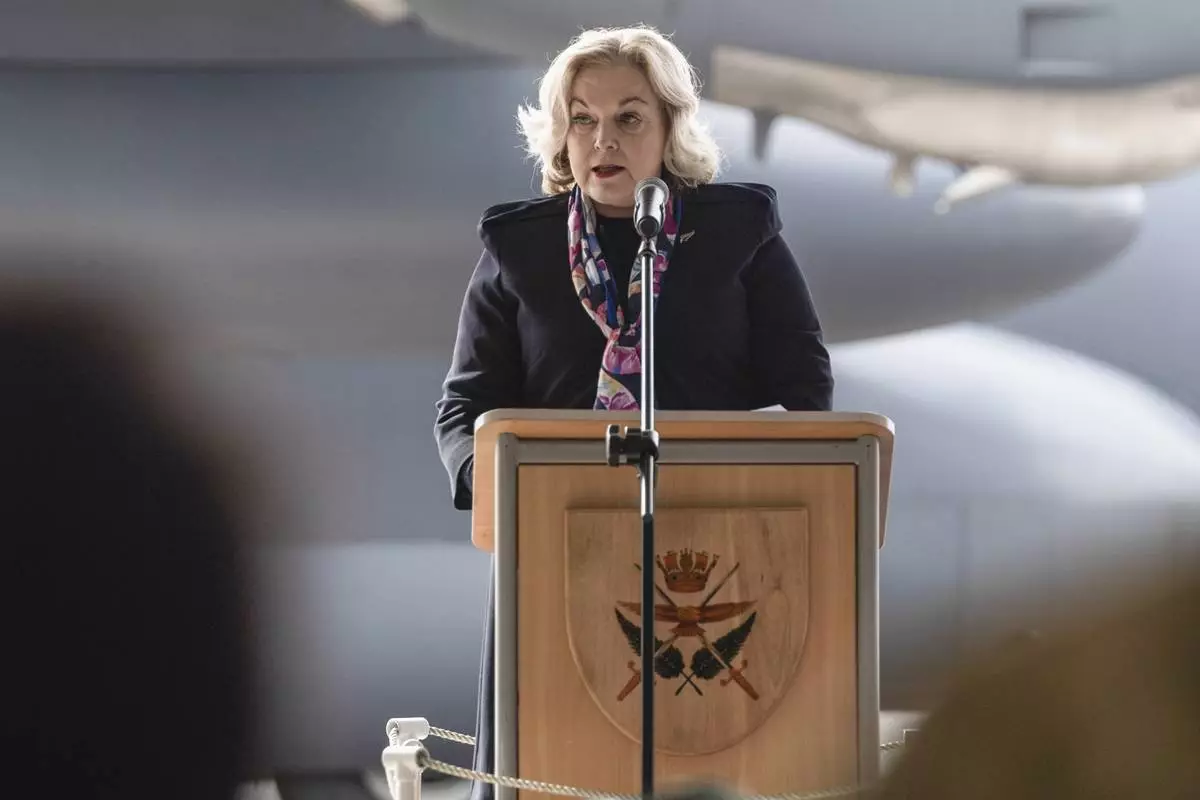
In this photo provided by New Zealand Defence Force, New Zealand's Defense Minister Judith Collins speaks at Auckland's Whenuapai Air Force Base, on Sept. 10, 2024. (LAC Jalesa Noman/New Zealand Defence Force via AP)
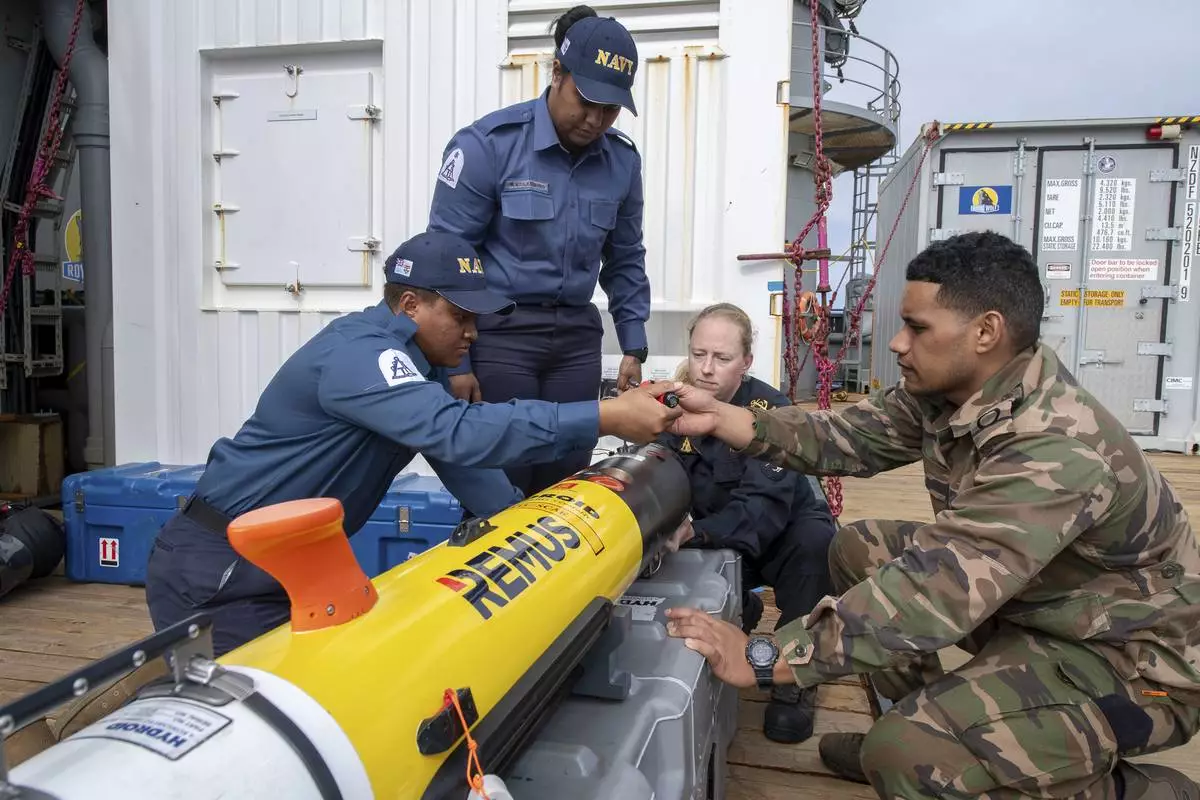
In this undated photo provided by New Zealand's Defence Public Affairs, hydrographers onboard HMNZS Manawanui prep REMUS ready for surveying in Tonga during Op Calypso. (Petty Officer Chris Weissenborn/Defence Public Affairs via AP)
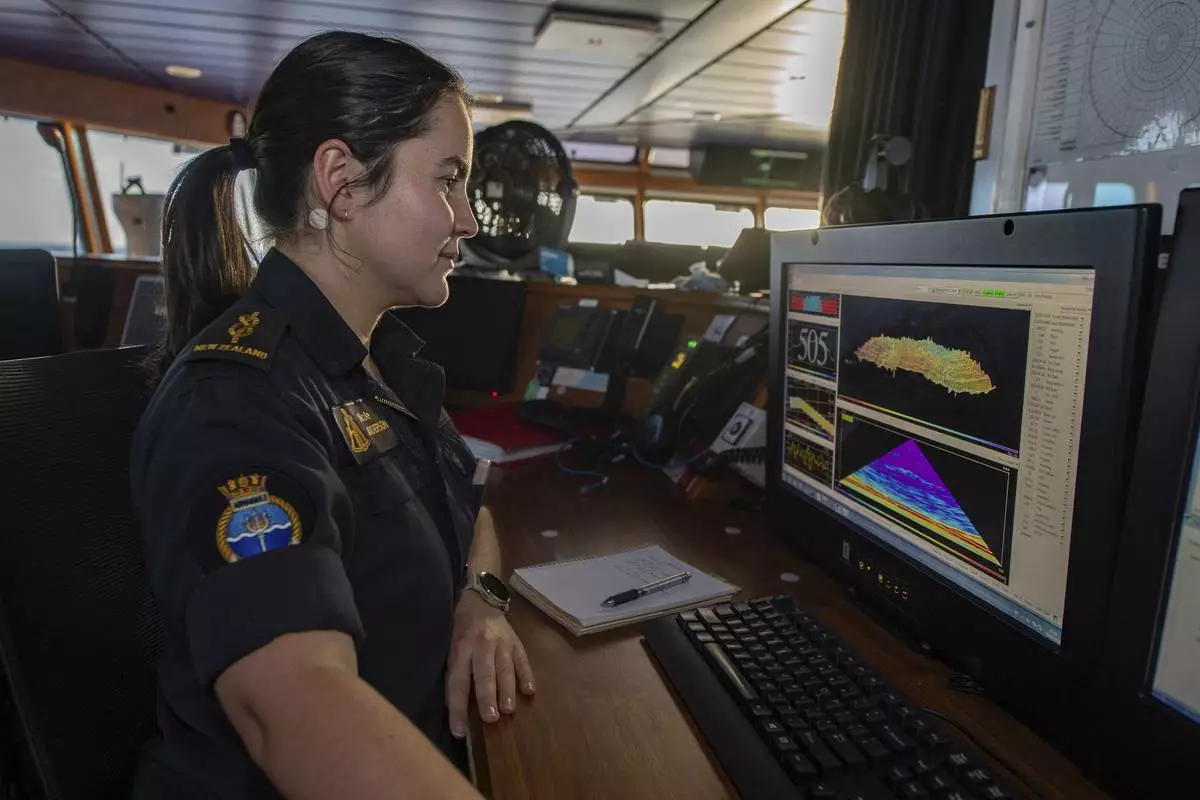
In this undated photo provided by New Zealand's Defence Public Affairs, a hydrographer surveys uncharted positions during the transit to Vanuatu on Op Calypso onboard HMNZS Manawanui. (Petty Officer Chris Weissenborn/Defence Public Affairs via AP)
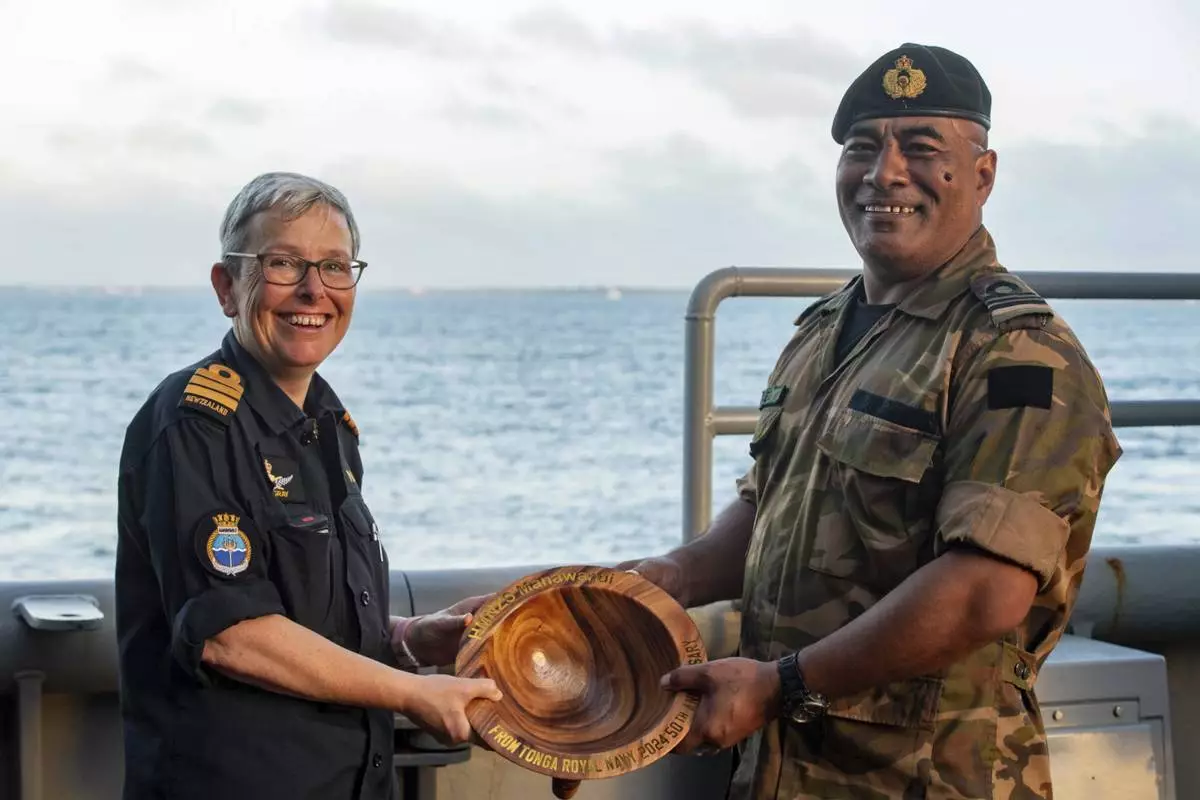
In this undated photo provided by the New Zealand Defence Force, Lieutenant Commander Tala Mafile'o of the Royal Tongan Navy presents Commander Yvonne Gray, left, with a carved wooden bowl as a memento of the RNZN's participation in the 50th Anniversary Fleet Review. (New Zealand Defence Force via AP)
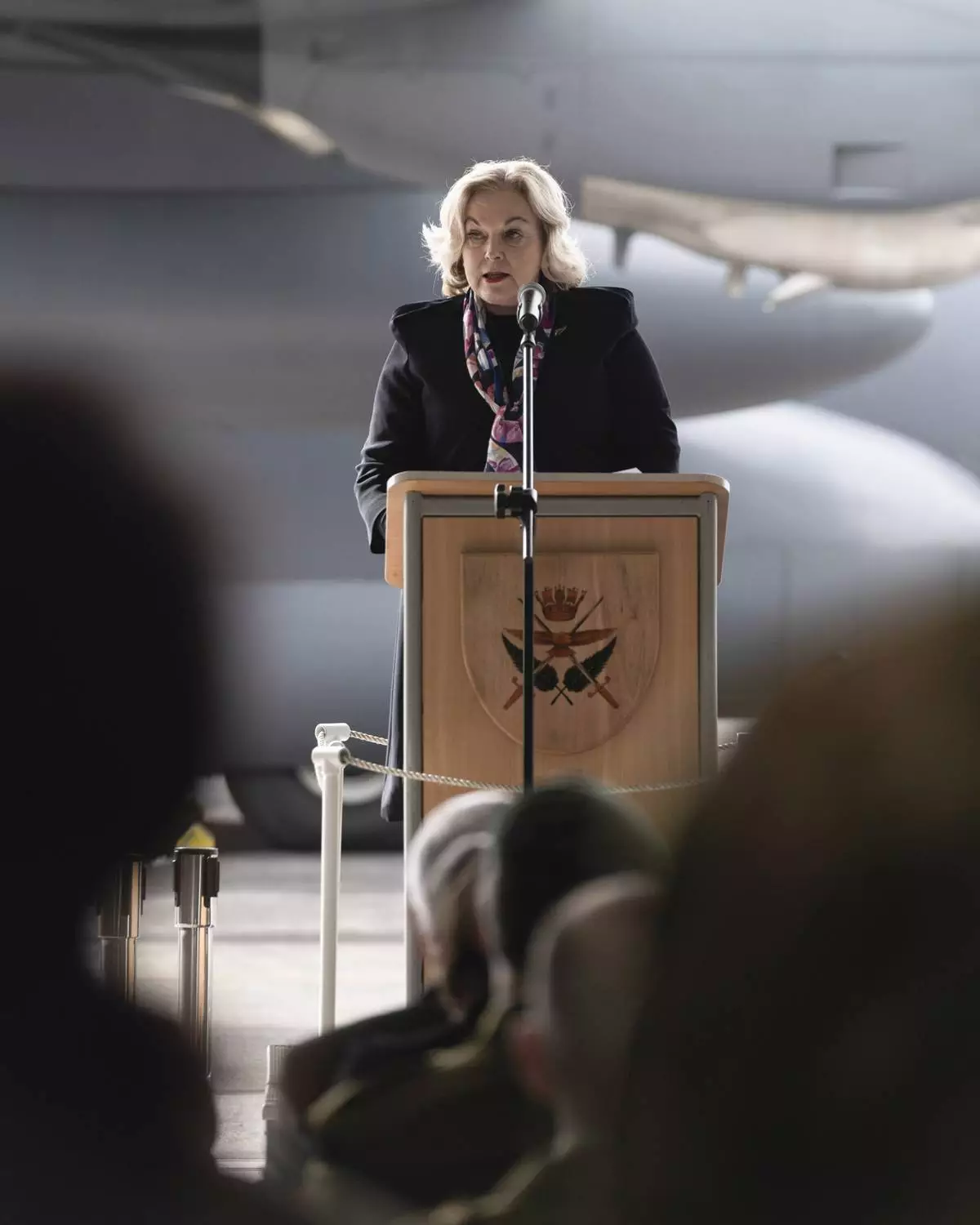
In this photo provided by New Zealand Defence Force, New Zealand's Defense Minister Judith Collins speaks at Auckland's Whenuapai Air Force Base, Sept. 10, 2024. (LAC Jalesa Noman/New Zealand Defence Force via AP)

FILE- Leader of the New Zealand opposition National Party, Judith Collins, speaks prior to entering a salmon factory in Christchurch, N.Z., July 30, 2020. (AP Photo/Mark Baker, File)