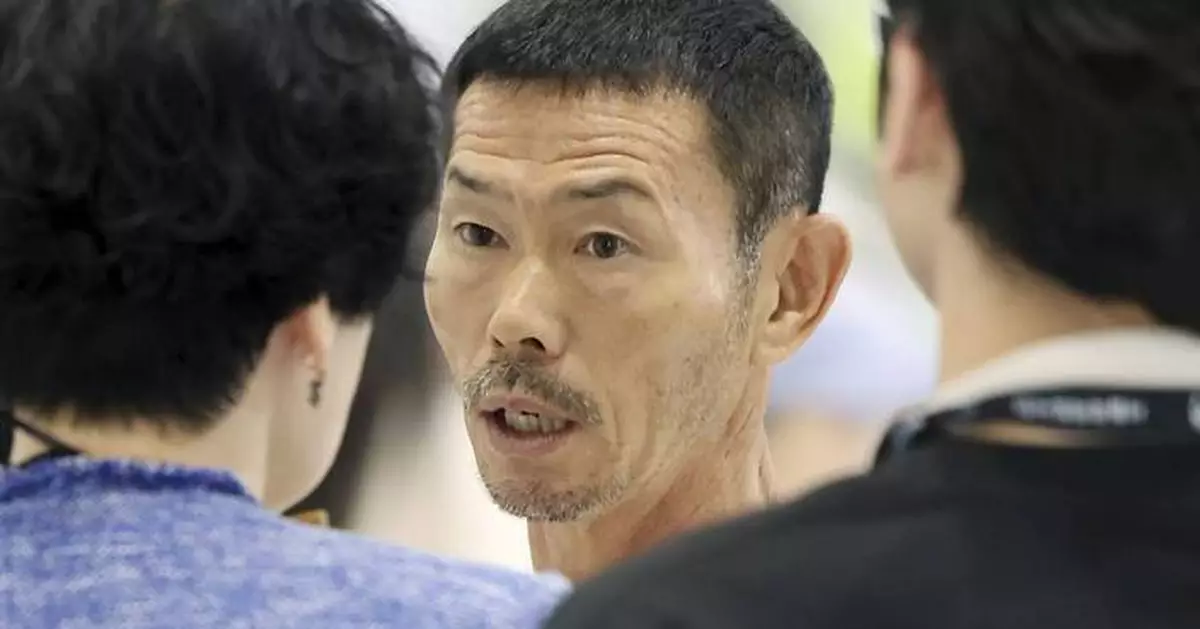
SEOUL, South Korea (AP) — A court in South Korea has fined Son Woong-jung, the father of English Premier League star Son Heung-min, 3 million won ($2,200) for violating child welfare law at his soccer academy.
The Chuncheon District Court notified prosecutors on Friday that it issued such a ruling on Son Woong-jung, director of the Son Football Academy in Chuncheon city, according to a local prosecutors’ office.
The academy opened in 2021, with much of the estimated cost of $15 million funded by Son Heung-min, the Tottenham and South Korea star.
Two coaches at the academy also each received a 3 million won fine for the same violation, the prosecutors’ office said.
The parents of a young player have said their son was hit by one of the two coaches with a corner flag and also subjected to verbal abuse.
Son Woong-jung denied wrongdoing but offered an apology and promised to evaluate his coaching methods.
AP soccer: https://apnews.com/hub/soccer
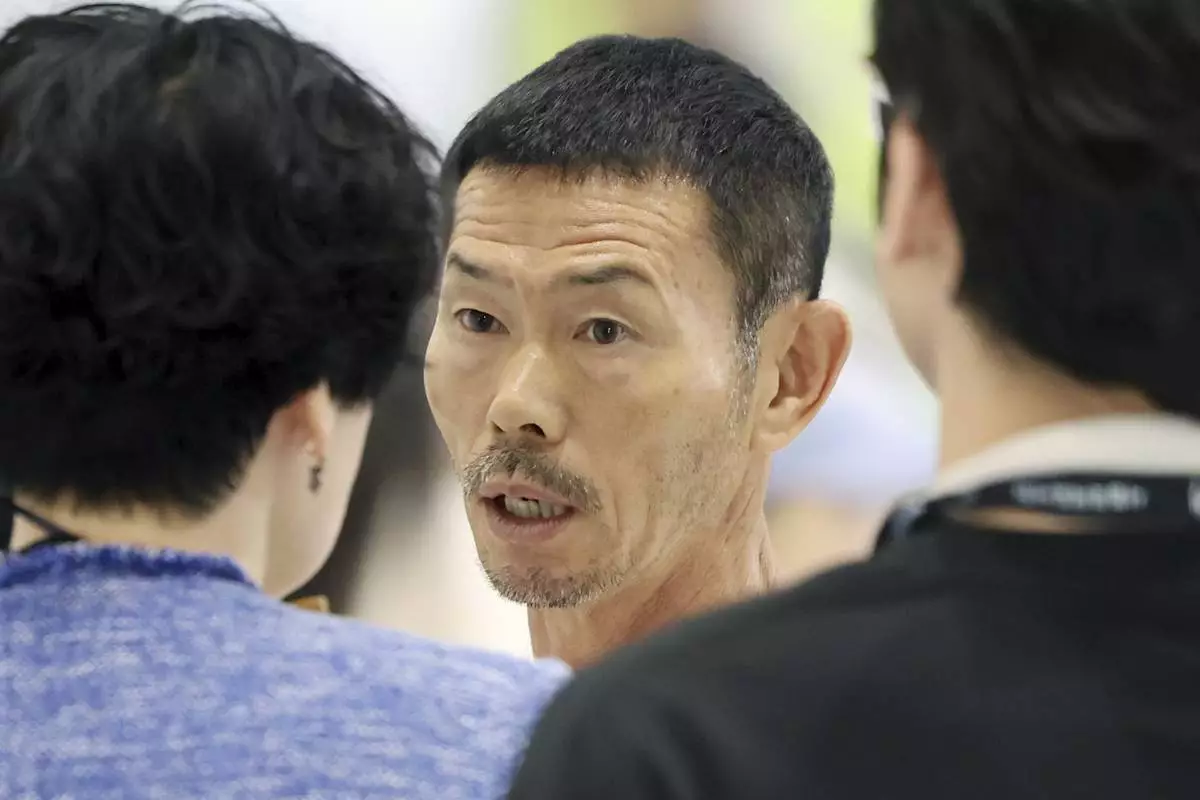
Son Woong-jung, center, father of English Premier League star Son Heung-min, waits for his book signing event in Seoul, South Korea, Wednesday, June 26, 2024. (Park Jin-hee/Newsis via AP)
BRISTOL, Tenn. (AP) — Ryan Blaney captured his first NASCAR Cup Series pole position since last August, bumping points leader Tyler Reddick from the top spot in qualifying Saturday at Bristol Motor Speedway.
Blaney turned a 127.064-mph lap to qualify first for the 13th time in 386 career starts. His previous pole was 19 starts ago at Watkins Glen International last season.
The Team Penske driver also started on pole at Bristol two years ago. He has led 585 laps at the track, the most of any Cup driver without a win on the 0.533-mile oval.
“Cool start to the weekend,” the 2023 Cup champion said. “Now we’ve got to do it for 500 laps. Should be fun. I think we’re going to have a handful, and everyone’s going to be like that keeping up with the racetrack.”
Reddick, who won four of the first six races this season, qualified a career-best second at Bristol, where he had started no better than 12th in nine previous starts.
“We got into Turn 3 on the money lap pretty good, and I just oversent it a little bit with a big correction,” said the 23XI Racing driver, who has 12 career wins but is seeking his first victory at a short track in NASCAR’s premier series. “I was concerned that I left some on the table there, and that’s definitely where we gave it up to (Blaney).”
Chase Briscoe qualified third, followed by Riley Herbst and Ty Gibbs as Toyotas took the four starting spots behind Blaney’s No. 12 Ford.
Ross Chastain qualified sixth but lost his choice of pit selection and had a crew member ejected because his No. 1 Chevrolet failed inspection twice. The same penalty befell Kyle Larson, who qualified eighth after his No. 5 Chevy failed inspection twice.
Alex Bowman qualified 27th in his return from missing four races with vertigo.
AP auto racing: https://apnews.com/hub/auto-racing
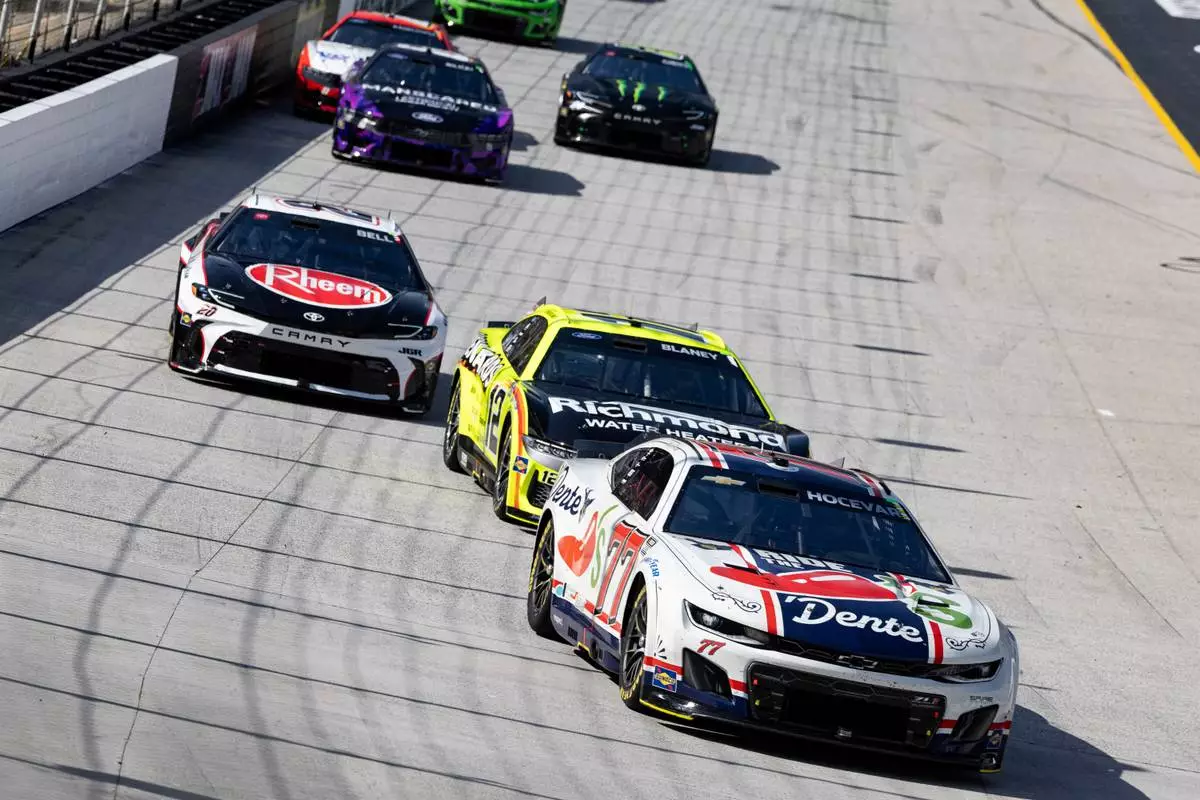
FILE - Carson Hocevar (77) leads Ryan Blaney (12), and Christopher Bell (20) Riley Herbst (35) during a NASCAR Cup Series auto race April 13, 2025, in Bristol, Tenn. (AP Photo/Wade Payne, File)