SEOUL, South Korea (AP) — North Korea has accused rival South Korea of flying drones to its capital to drop anti-North Korean propaganda leaflets and threatened to respond with force if such flights occur again. South Korea issued a vague denial of the allegation.
North Korea’s Foreign Ministry said in a statement Friday that South Korean drones were detected in the night skies of Pyongyang on Oct. 3 and Wednesday and Thursday this week.
Click to Gallery
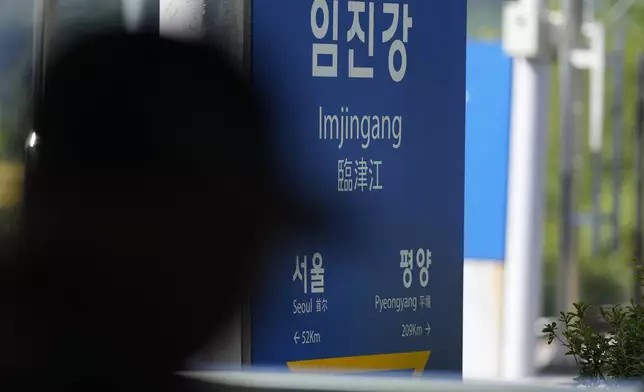
A visitor walks past near a signboard showing the distance to North Korea's capital Pyongyang and to South Korea's capital Seoul from Imjingang Station in Paju, South Korea, Wednesday, Oct. 9, 2024. (AP Photo/Lee Jin-man)
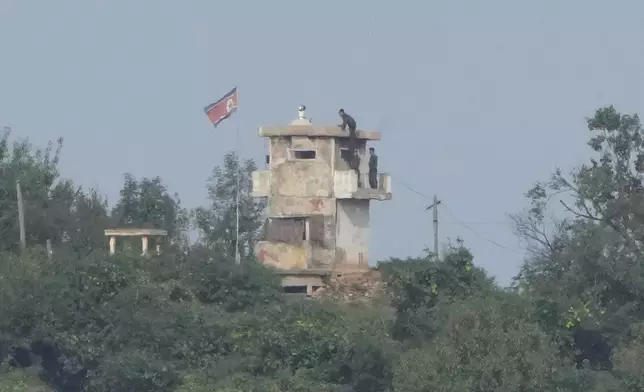
A North Korean flag flutters in the wind atop a 160-meter (525-foot) tower in the North's Kijong-dong village near the truce village of Panmunjom, seen from Paju, South Korea, near the border with North Korea, Wednesday, Oct. 9, 2024. (AP Photo/Lee Jin-man)
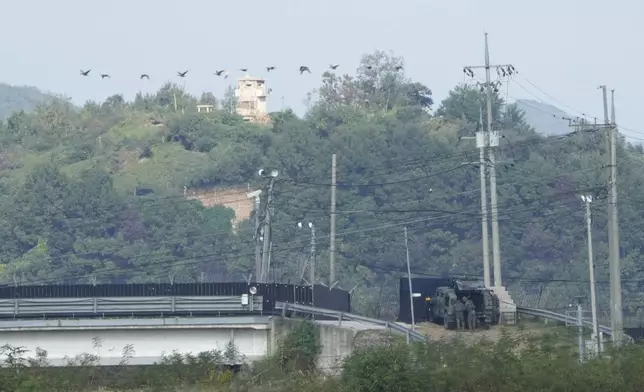
A North Korean military guard post, top, and South Korean army soldiers, bottom, are seen from Paju, South Korea, near the border with North Korea, Thursday, Oct. 10, 2024. (AP Photo/Ahn Young-joon)
North Korean soldiers work at the North's military guard post as a North Korean flag flutters in the wind, are seen from Paju, South Korea, near the border with North Korea, Thursday, Oct. 10, 2024. (AP Photo/Ahn Young-joon)
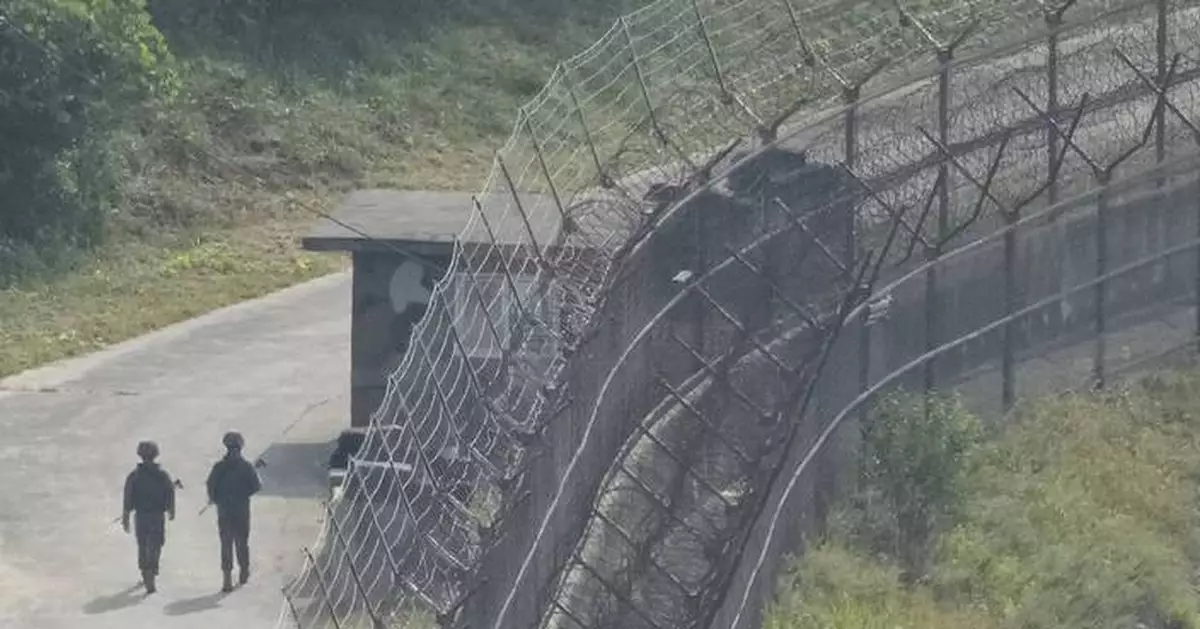
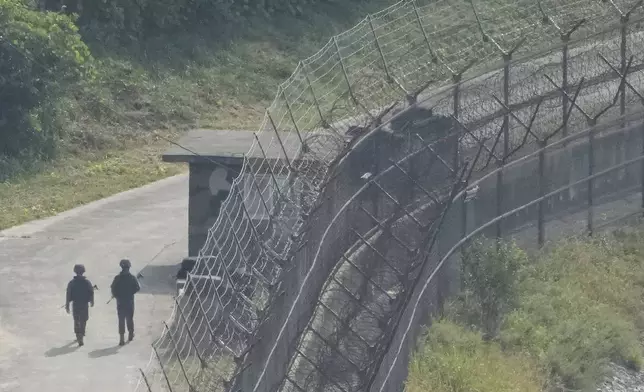
South Korean army soldiers patrol along the barbed-wire fence in Paju, South Korea, near the border with North Korea, Thursday, Oct. 10, 2024. (AP Photo/Ahn Young-joon)
The ministry accused the South of violating North Korea’s “sacred” sovereignty and threatening its security, and described the alleged flights as a “dangerous provocation” that could escalate to an armed conflict and even war.
It said North Korean forces will prepare “all means of attack” capable of destroying the southern side of the border and the South Korean military, and respond without warning if South Korean drones are detected in its territory again.
“The safety lock on our trigger has now been released,” the ministry said. “We will be prepared for everything and will be watching. The criminals should no longer gamble with the lives of their citizens.”
Asked about the North Korean claims during a parliamentary hearing, South Korean Defense Minister Kim Yong-hyun told lawmakers, “We have not done that.” He said he was still trying to assess the situation and didn’t elaborate further.
It wasn’t immediately clear whether Kim was referring to South Korean military drones, or also drones possibly operated by South Korean civilians.
The South’s Joint Chiefs of Staff later said in a statement that it couldn’t confirm whether the North’s claims were true, without elaborating why. The joint chiefs warned the North to “exercise restraint and not act recklessly.”
“If the safety of our citizens is threatened in any way, our military will respond with stern and thorough retaliation,” it said.
North Korea is extremely sensitive to any outside criticism of the authoritarian government of leader Kim Jong Un and his family’s dynastic rule over the country.
Since May, North Korea has sent thousands of balloons carrying paper waste, plastic and other trash to drop on the South, in what it described as retaliation against South Korean civilian activists who flew balloons with anti-North Korean propaganda leaflets across the border. South Korea’s joint chiefs said in a separate statement that the North was again flying balloons toward the South Friday evening and warned civilians to beware of objects falling from the sky.
South Korea’s military responded to the North’s balloon campaign by using border loudspeakers to broadcast propaganda and K-pop to North Korea.
The psychological warfare campaigns have further escalated tensions created by Kim’s weapons tests and verbal threats of nuclear conflict against Washington and Seoul. The allies have responded by strengthening their combined military exercises and expanding three-way cooperation with Japan, while also upgrading nuclear deterrence plans built around U.S. strategic assets.
On Wednesday, North Korea said it will permanently block its border with South Korea and build front-line defense structures to cope with “confrontational hysteria” by South Korean and U.S. forces.
North Korea’s military said in a statement on state media that it will “completely cut off roads and railways” linked to South Korea and “fortify the relevant areas of our side with strong defense structures.”
North Korea called its steps a “self-defensive measure for inhibiting war and defending the security” of the country and accused its rivals of “getting ever more reckless in their confrontational hysteria.” North Korea cited what it called various military exercises in South Korea, the deployment of U.S. strategic assets and its rivals’ harsh rhetoric.
Experts say Kim’s nuclear push is aimed at eventually forcing the United States to accept North Korea as a nuclear power and allowing the North to negotiate security and economic concessions from a position of strength.
In written answers to questions by The Associated Press this month, South Korean President Yoon Suk Yeol said North Korea will likely stage major provocations such as a nuclear test explosion or an intercontinental ballistic missile test around the U.S. presidential election in November to grab Washington’s attention.
Yoon also condemned North Korea over its balloon campaign and warned that it “will face consequences that it will find difficult to withstand” if its balloon activities jeopardize the safety of South Korean people. He didn’t elaborate on what steps his government was considering.
Associated Press writer Hyung-jin Kim contributed to this report.
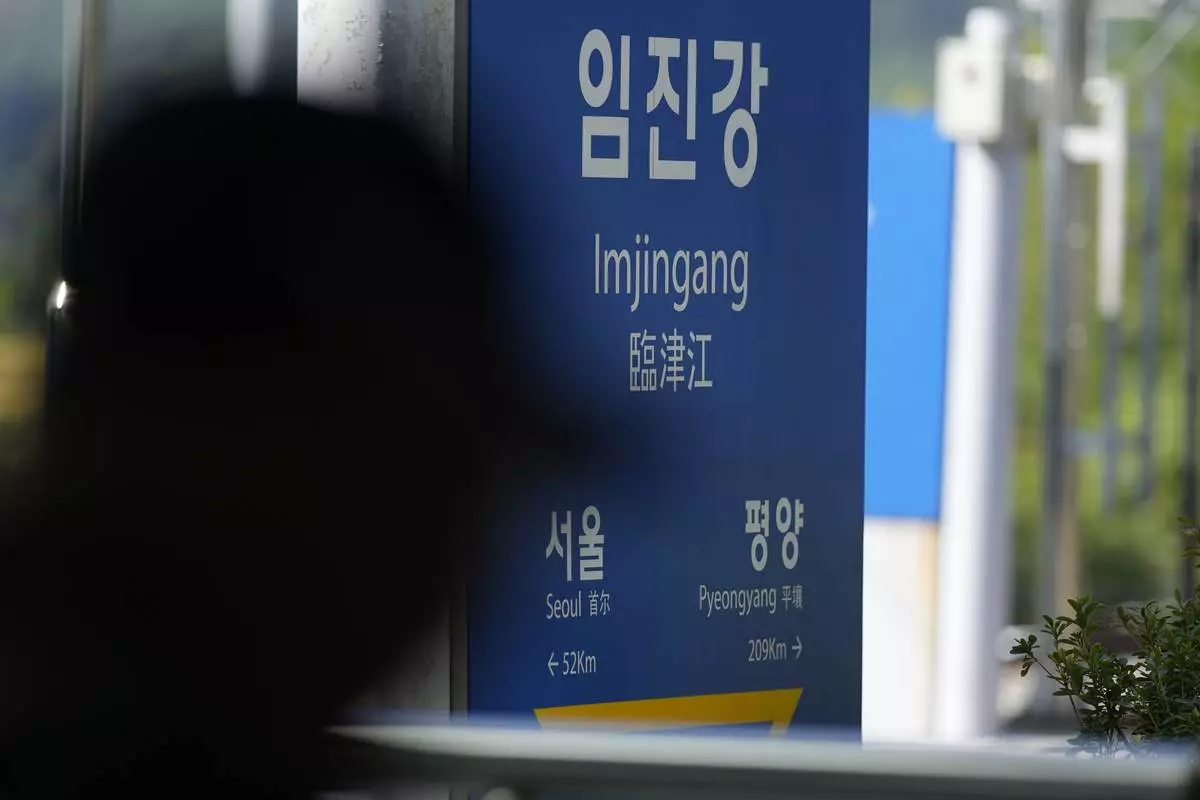
A visitor walks past near a signboard showing the distance to North Korea's capital Pyongyang and to South Korea's capital Seoul from Imjingang Station in Paju, South Korea, Wednesday, Oct. 9, 2024. (AP Photo/Lee Jin-man)

A North Korean flag flutters in the wind atop a 160-meter (525-foot) tower in the North's Kijong-dong village near the truce village of Panmunjom, seen from Paju, South Korea, near the border with North Korea, Wednesday, Oct. 9, 2024. (AP Photo/Lee Jin-man)

A North Korean military guard post, top, and South Korean army soldiers, bottom, are seen from Paju, South Korea, near the border with North Korea, Thursday, Oct. 10, 2024. (AP Photo/Ahn Young-joon)
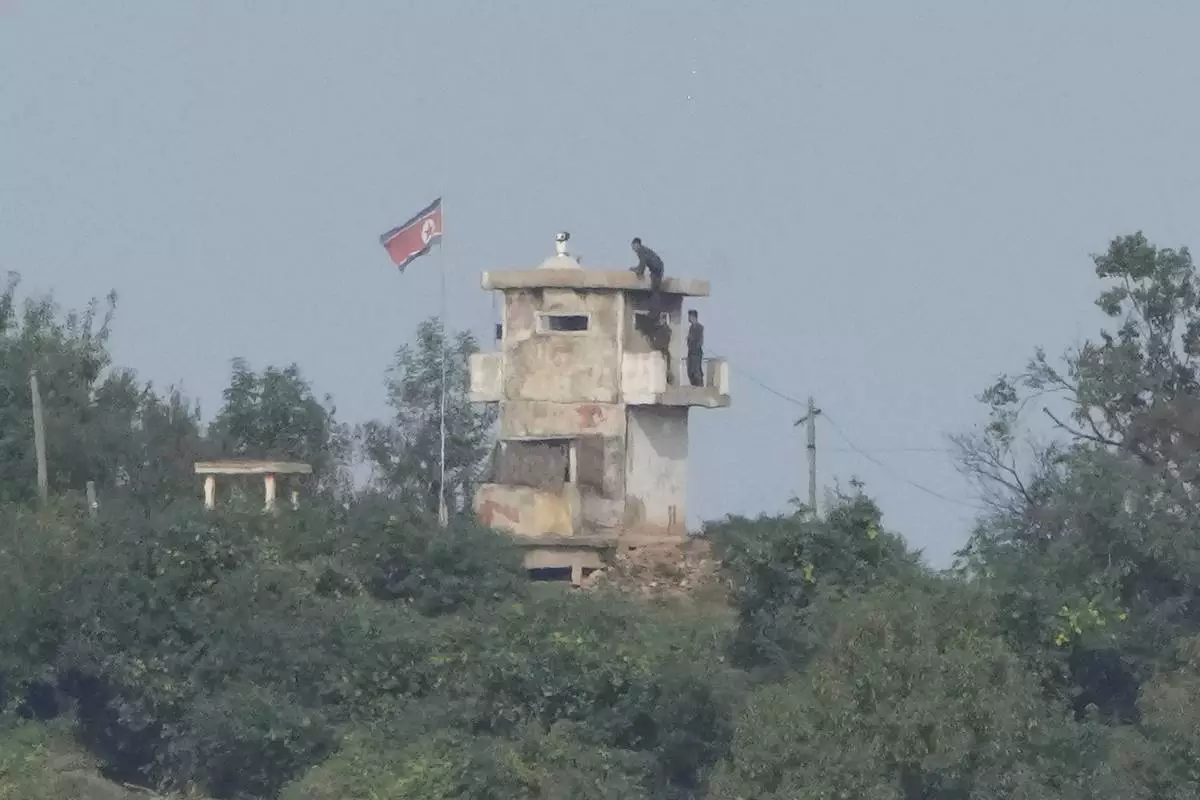
North Korean soldiers work at the North's military guard post as a North Korean flag flutters in the wind, are seen from Paju, South Korea, near the border with North Korea, Thursday, Oct. 10, 2024. (AP Photo/Ahn Young-joon)
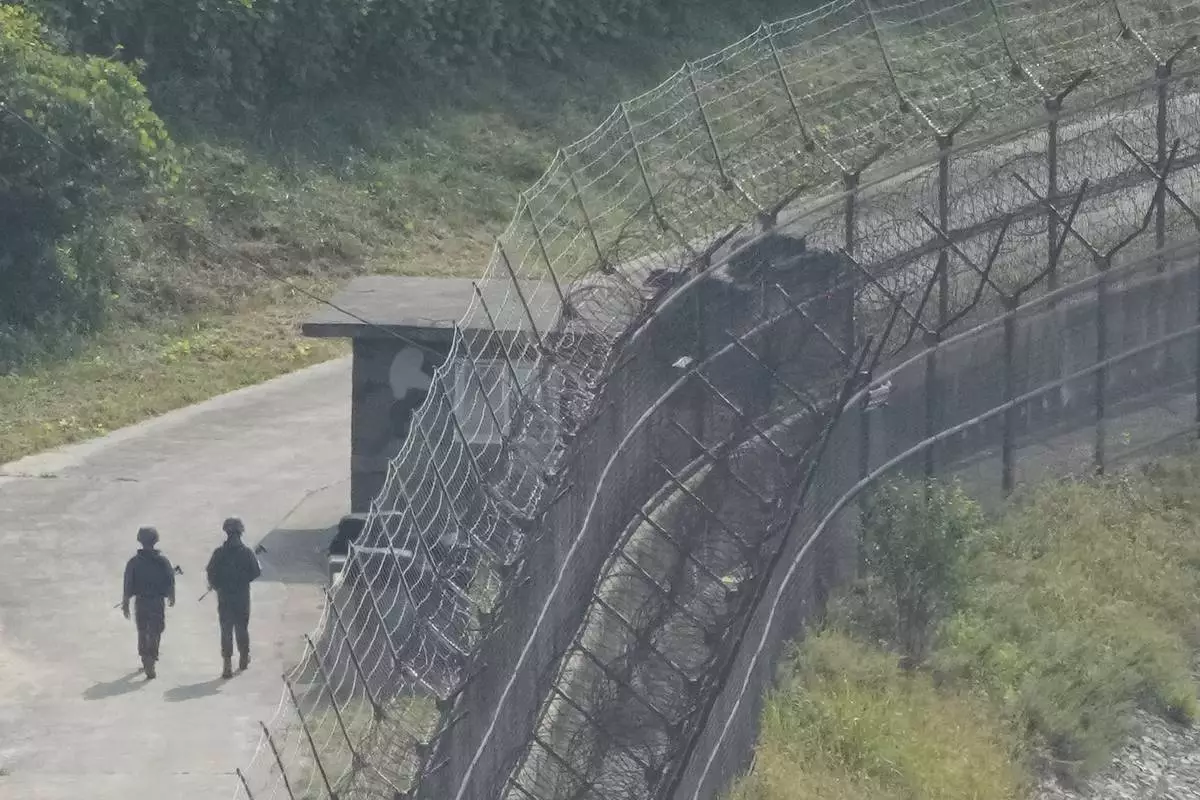
South Korean army soldiers patrol along the barbed-wire fence in Paju, South Korea, near the border with North Korea, Thursday, Oct. 10, 2024. (AP Photo/Ahn Young-joon)
ATLANTA (AP) — Derek Dooley will compete against Rep. Mike Collins for the Republican nomination for U.S. Senate in a June 16 runoff, as neither received at least 50% of the vote in Tuesday’s primary to win outright.
Collins, 58, represents a district east of Atlanta. Dooley, 57, is a lawyer and former football coach running for office the first time.
Candidate Rep. Buddy Carter, 68, did not qualify for the runoff.
The winner of the runoff will face Democratic Sen. Jon Ossoff, 39, in November. Ossoff is the only Democratic senator in the country seeking reelection this year in a state that President Donald Trump won in 2024. Republicans are hopeful that they can oust him and prevent Democrats from gaining a Senate majority.
Meanwhile, former Atlanta Mayor Keisha Lance Bottoms won the Democratic nomination to be Georgia’s next governor on Tuesday, setting up a November election where she hopes to win a seat that has eluded her party for more than two decades.
Bottoms snagged a rare endorsement from former President Joe Biden after serving in his administration. She has argued to voters that she was “battle-tested,” trying to make a virtue out of a mayoral term where she had to manage crime, disorder and the COVID-19 pandemic before her surprise decision not to seek reelection.
Following her win Tuesday night, Bottoms said she was going to work to make sure “every Georgian has an opportunity to succeed."
“It means stopping Donald Trump every time his policies hurt Georgia, and also taking action here to make life better for people across the state,” she said.
She cites protecting the right to vote and expanding healthcare, affordable housing and better education as among her top issues.
Democrats have not won the Georgia governor’s office for 24 years. It’s the third consecutive time that Georgia Democrats have nominated a Black woman as their candidate for governor, reflecting a party that relies on support from Black women as its most loyal voters.
In the Republican primary for governor, Lt. Gov. Burt Jones and healthcare billionaire Rick Jackson have advanced to the June 16 runoff, extending a bruising campaign battle.
Trump endorsed Jones last year, and Jones thanked him Tuesday night. A Jones win would boost the president's influence in a critical battleground state. Trump's kingmaker record in Georgia had been shaky, failing to dislodge Gov. Brian Kemp and others in 2022 and backing Herschel Walker in a Senate loss that year.
Ossoff, 39, had no opposition in Tuesday's primary. This is his first reelection campaign.
He's the only Democratic senator in the country seeking reelection this year in a state that Trump won in 2024, making his race one of the most closely watched in the country. He has positioned himself as a critic of political corruption, targeting Trump and his sons for business dealings that have enriched the first family.
Meanwhile, the Republican primary has been a test of fealty to the president.
Carter has attacked Collins over a House ethics complaint accusing him of abusing taxpayer funds by paying the girlfriend of a top aide for work she allegedly didn't perform. The Office of Congressional Conduct, after an initial inquiry, has referred the matter to the House Ethics Committee.
Collins denies wrongdoing.
“If taxpayers can’t trust you to properly steward their money, how can they trust you to be a U.S. senator?” Carter asked Collins in a primary debate.
“Buddy,” Collins shot back, “I can tell through your voice that you know how the polling is going out there.”
Collins sponsored the Laken Riley Act, a 2025 law that requires immigrants be detained when charged with certain crimes. Republicans believe the issue damages Ossoff because he initially voted against the measure before supporting it after Trump’s 2024 victory.
Collins criticized Ossoff during remarks Tuesday night. He talked up his support for the Lake Riley Act and looked ahead to the general election.
“You can replace a Democrat with an actual conservative,” he said.
More than $125 million has been spent on advertising in the Republican primary for governor, with more than $66 million of that spent by Jackson’s campaign, according to the latest figures from ad-tracking firm AdImpact. By contrast, Democrats running for governor have only spent about $4 million.
Jones argues that his conservative record as a state senator and lieutenant governor, combined with Trump's support, should make him the clear choice for Republican voters.
“I think Georgia just spoke, y’all,” Jones said at his election night party. “The reason why I know we’re gonna win is because of friends and family members."
Jackson is betting that his outsider pitch will win over antiestablishment conservatives. On Tuesday night, he called Jones a political insider who is “working inside the system for his own benefit.”
“I cannot be bought, and I will not back down,” Jackson said.
Democrat Jasmine Clark won her party’s nomination on Tuesday to succeed Rep. David Scott for a two-year term representing Georgia’s 13th Congressional District after Scott died in April while seeking another term.
Clark is a state representative, microbiologist and a lecturer at Emory University who has promised to prioritize science in Congress. Her candidacy was boosted by more than $2 million in outside spending by cryptocurrency interests, but Clark said she did not court the support.
Clark will be the odds-on favorite to succeed Scott for a full term starting next January, with Jonathan Chavez unopposed to become the Republican nominee.
In the 11th District northwest of Atlanta, Loudermilk announced his retirement and endorsed staffer Rob Adkerson, who's challenged by neurologist John Cowan and Public Service Commissioner Tricia Pridemore. Cowan has advanced to the runoff.
In the 10th District east of Atlanta, state Rep. Houston Gaines is the top Republican seeking to take the departing Collins' seat. Jim Kingston, the son of longtime U.S. Rep. Jack Kingston, is the top Republican to take Carter's seat in coastal Georgia's 1st District.
In northeast Georgia's 9th District, three-term Republican incumbent Andrew Clyde fended off primary challenges from former Gainesville Mayor Sam Couvillon and Hall County Commissioner Gregg Poole.
Tuesday is the general election for Georgia's judgeships. The posts are technically nonpartisan, but eight of the nine justices on the state Supreme Court were appointed by Republicans governors. Democrats are supporting Miracle Rankin in her challenge to Justice Charlie Bethel. They hope a strong Democratic turnout could produce the first defeat of an incumbent justice since 1922.
Justice Sarah Hawkins Warren won over Democrat-supported former state Sen. Jen Jordan on Tuesday. A third justice, Ben Land, is unopposed for a six-year term.
The state Judicial Qualifications Commission, which investigates allegations of wrongdoing by judges, said in statements dated Sunday that Jordan and Rankin violated rules of judicial conduct by publicly endorsing each other and making statements supporting the restoration of abortion rights.
The commission said it reached its conclusions, which are not a final determination, after receiving and reviewing a complaint about each candidate.
State Democratic Party Chair Charlie Bailey called the commission's statements “a cynical attempt by a mere bureaucratic arm of the Georgia Republican establishment to hide the truth about this race from Georgia voters.”
——
This article has been corrected to show it's the Laken Riley Act, not the Lake Riley Act.
Amy is a former Associated Press reporter. Associated Press reporter Mike Catalini in Morrisville, Pennsylvania, contributed.

Republican U.S. Senate candidate Derek Dooley speaks at a campaign stop at Farmview Market in Madison, Ga., on May 8, 2026. (Arvin Temkar/Atlanta Journal-Constitution via AP)
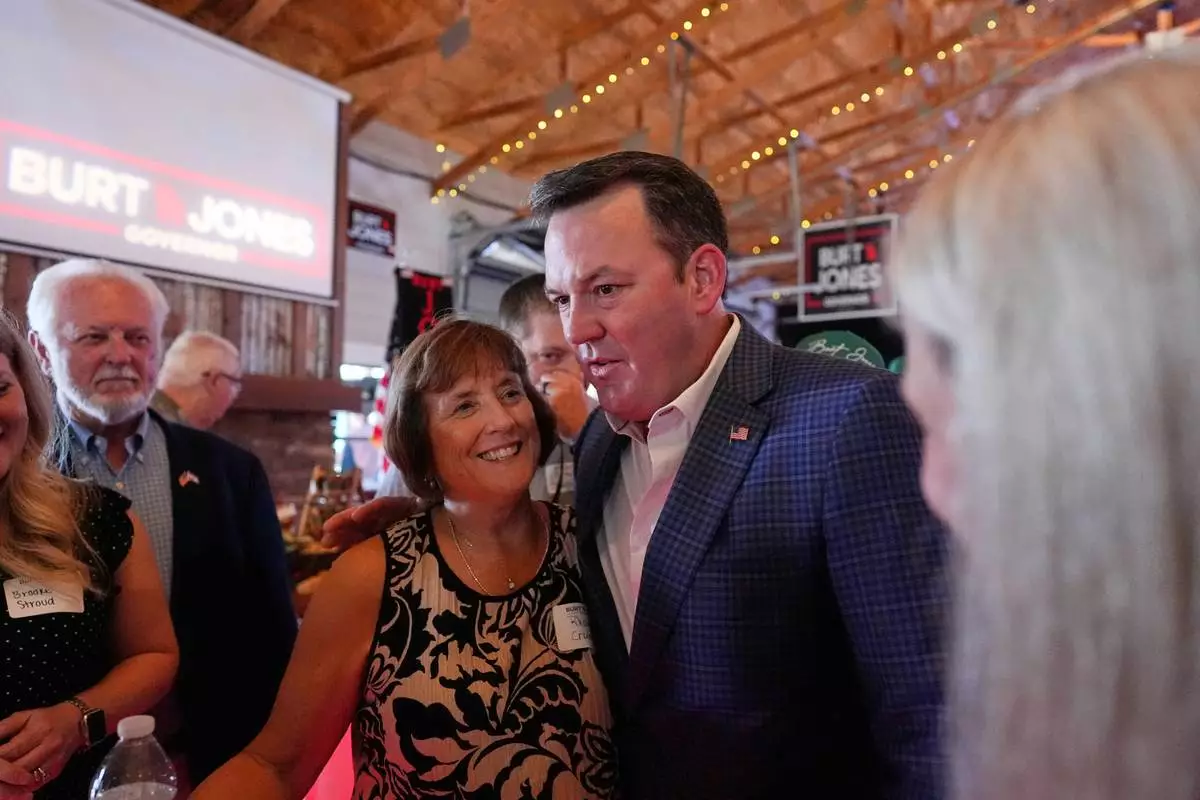
Georgia gubernatorial candidate Burt Jones meets with supporters during a primary election night watch party, Tuesday, May 19, 2026, in Jackson, Ga. (AP Photo/Mike Stewart)
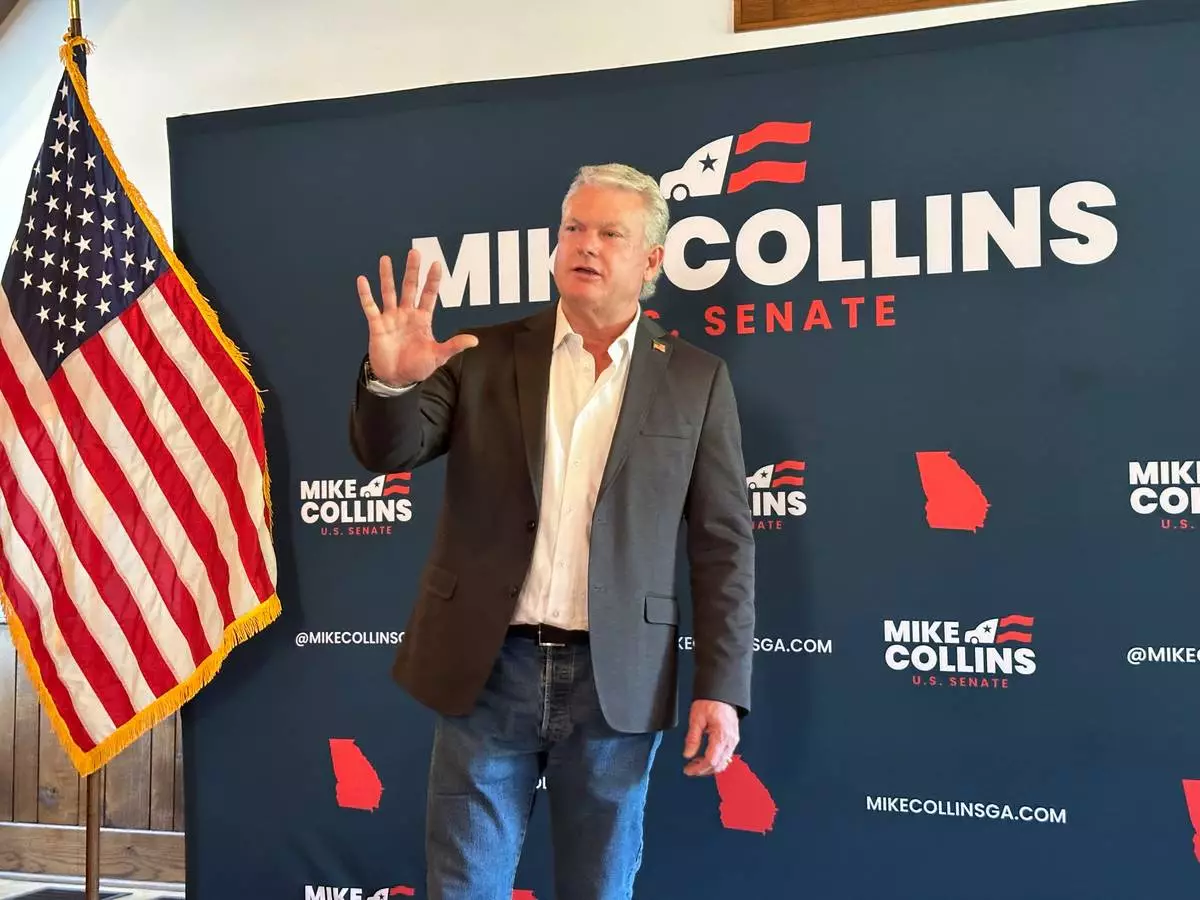
U.S. Rep. Mike Collins, R-Ga., speaks to supporters in Acworth, Ga., on Monday, May 4, 2026. (AP Photo/Jeff Amy)
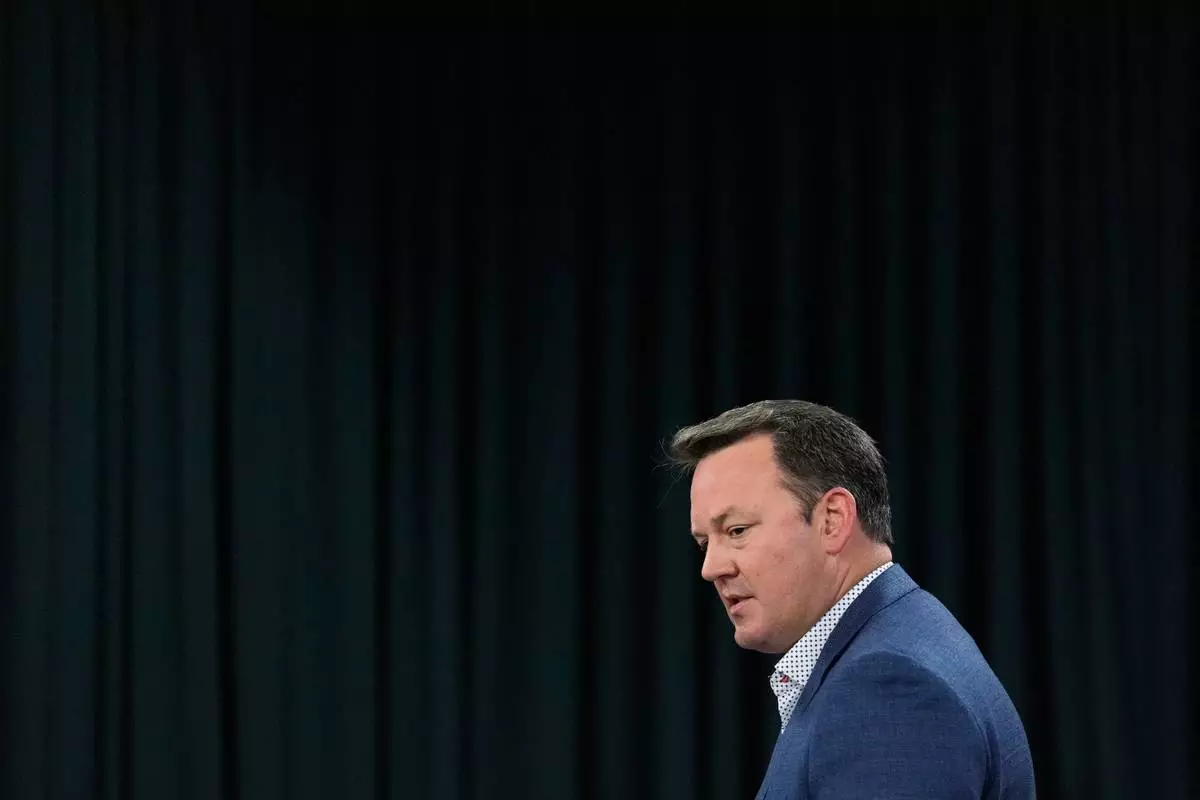
Georgia Republican candidate for governor Burt Jones speaks to supporters Tuesday, May 12, 2026, in Smyrna, Ga. (AP Photo/Brynn Anderson)
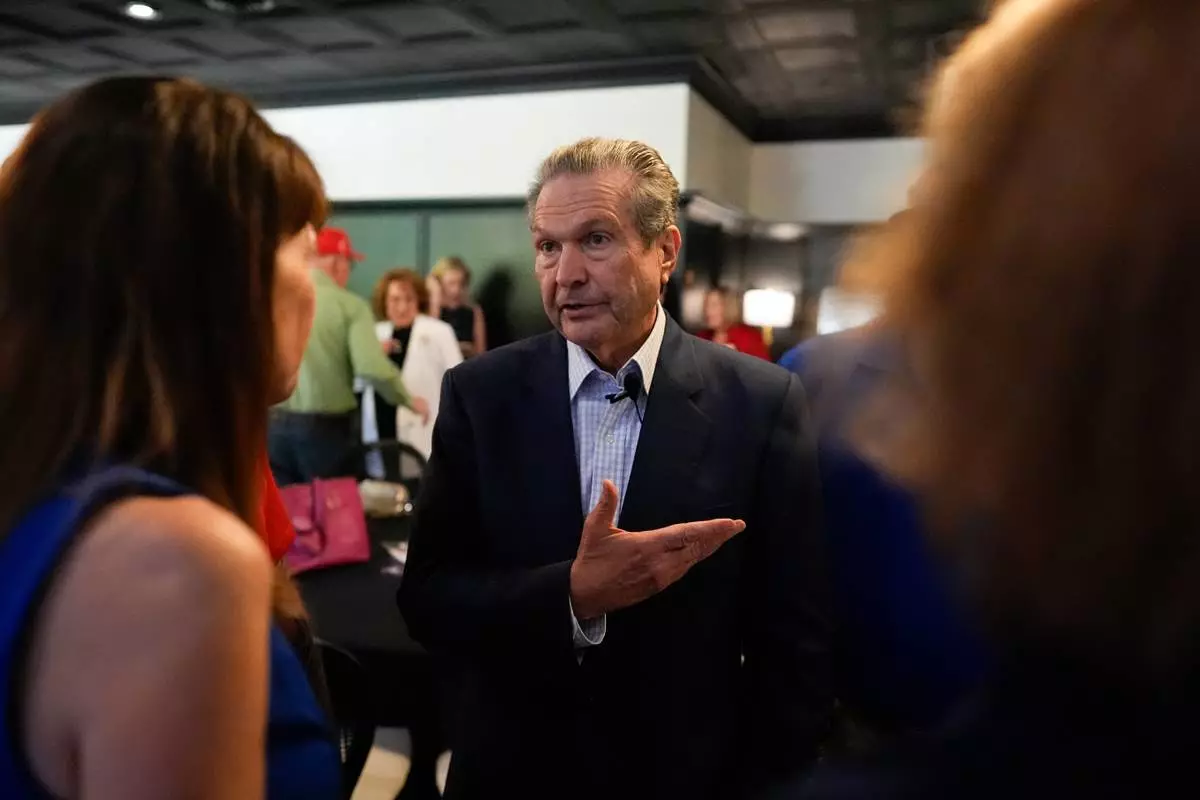
Republican gubernatorial candidate Rick Jackson speaks to voters during a campaign stop, Wednesday, May 13, 2026, in Hiram, Ga. (AP Photo/Mike Stewart)
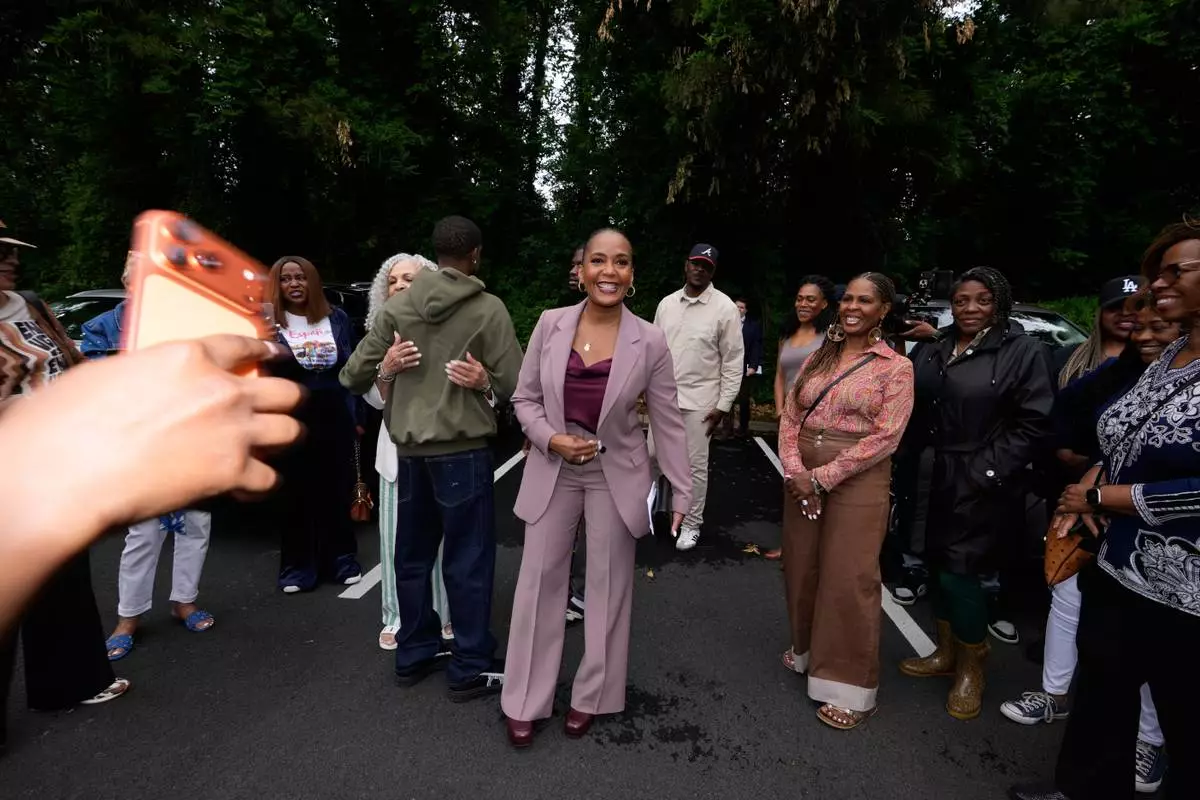
Democratic gubernatorial candidate Keisha Lance Bottoms, arrives to vote early in the Georgia Primary Election, Thursday, May 7, 2026, in Atlanta. (AP Photo/Brynn Anderson)