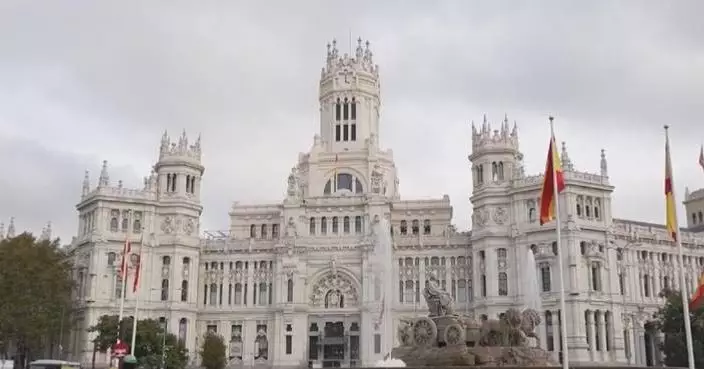
Persistent water shortages in Mexico City have been exacerbated by a combination of more frequent extreme weather events, rapid population growth, and swift expansion of urban areas, according to Mexican experts.
Water scarcity has been a longstanding urban challenge in the Mexican capital for decades, stemming from natural factors such as droughts and human-induced issues like significant underinvestment in the local water supply infrastructure.
"In recent decades, more and more people demand water. And they don't have access to it, so it's almost the same amount of water that has to be distributed among many more people. That is probably the main reason. The second reason is that in previous decades there was not enough investment in the infrastructure. After we use water, we just simply get rid of it. And what we don't do is to re-clean or clean again the water to distribute among people," said Victor Orlando Magana, a researcher at the Institute of Geography under the National Autonomous University of Mexico.
According to municipal data, over 12,000 kilometers of water supply pipelines are long overdue for maintenance, resulting in severe leakage issues in the city.
Additionally, groundwater faces problems such as overexploitation and significant pollution. Unequal distribution of water resources among different districts in the city is also a pressing concern.
"The exploitation rate of groundwater in Mexico City is 2.15 times faster than its natural recharge rate. If this exploitation rate continues without intervention, groundwater resources could be depleted within the next four to five decades," said Jorge Alberto Arriaga, coordinator of the Water Network Project at the National Autonomous University of Mexico.
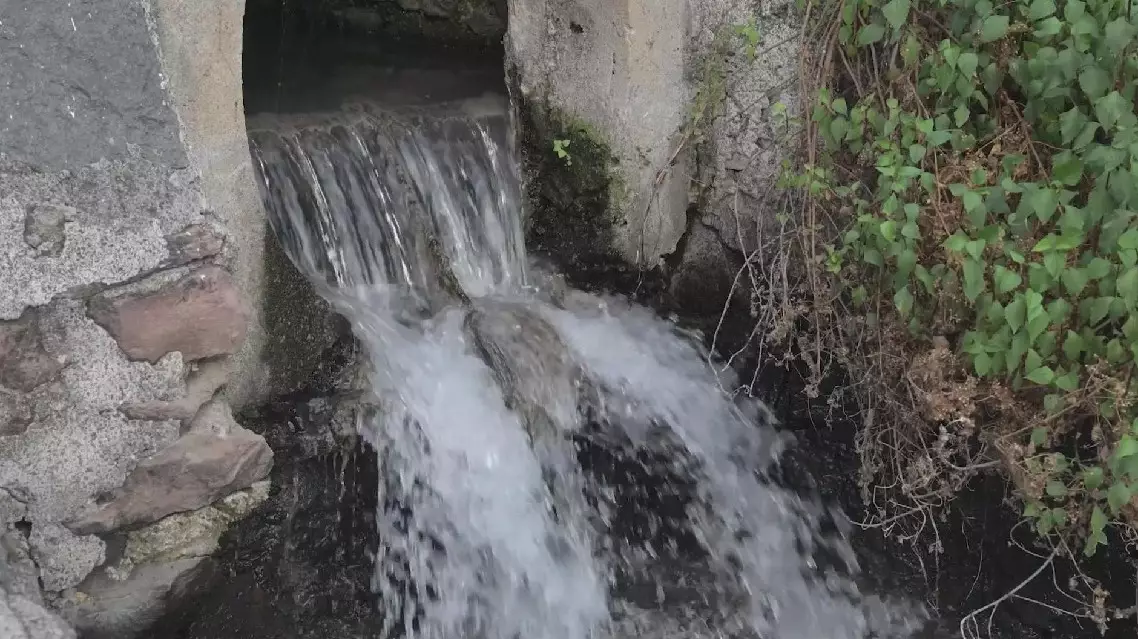
Water shortages worsen in Mexico City as extreme weather and urban growth collide
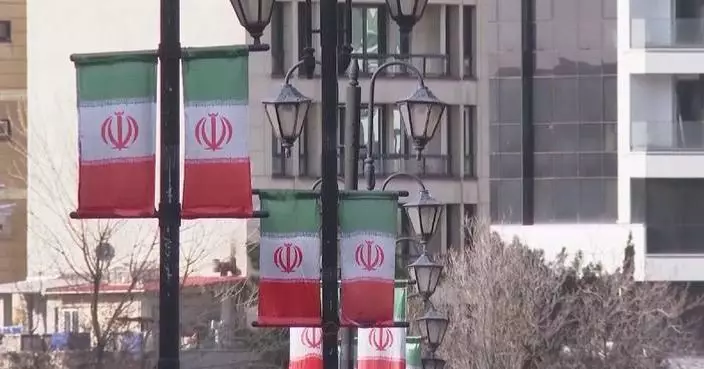
Crowds of Tehran residents have been rallying every night since the outbreak of the war with the United States and Israel to voice support and show solidarity with their country during the wartime.
U.S. President Donald Trump said on Sunday that a second round of talks between the United States and Iran would be held. However, Iran's Tasnim news agency said Sunday that Iran currently has no decision to send a negotiating delegation for peace talks with the United States as long as the U.S. "anti-Iran" naval blockade remains in place.
In a community in western Tehran, local residents were seen gathering at a rally site to voice support for the country.
Volunteers also participated in the gathering to offer practical help for those in need, providing food and medical services for free.
"We have been here every night for the past 40 days. There are many different booths. My field is psychology, and I work with children, so I offer help within my expertise. Whenever other assistance is needed, we cooperate. We've here since the very first beginning when the war occurred some 40 days ago, and when people started to rally on streets. The gatherings were pretty small at first. Gradually, more and more people came, and the activities became more diverse," said an instructor in psychology.
Seyed Mohammad Dehghi Mousavizadeh, a medical student at the Shahid Beheshti University, said he and his classmates would come to those rallies to provide medical help after the war broke out.
"Students are part of the people. We are here providing medical assistance, serving tea, and distributing food, as students involve in events of various fields. People from all walks of life are participating. Every night, people come to the streets and pray. They pray for the negotiators and for those on the frontlines. But the legitimate demands we want the U.S. to respond to are the people's rights, [including] the right to freedom, the right to peace, the right for a cancer patient to get medicine, the right to be free from sanctions, to have a good economy, and to see inflation go down. It is for these rights that the people have stood up," said Seyed.
"Today is my first day here. We are just doing what we feel we should do. We don't care what others (the U.S.) do. We are just doing our own thing spontaneously," said a volunteer.
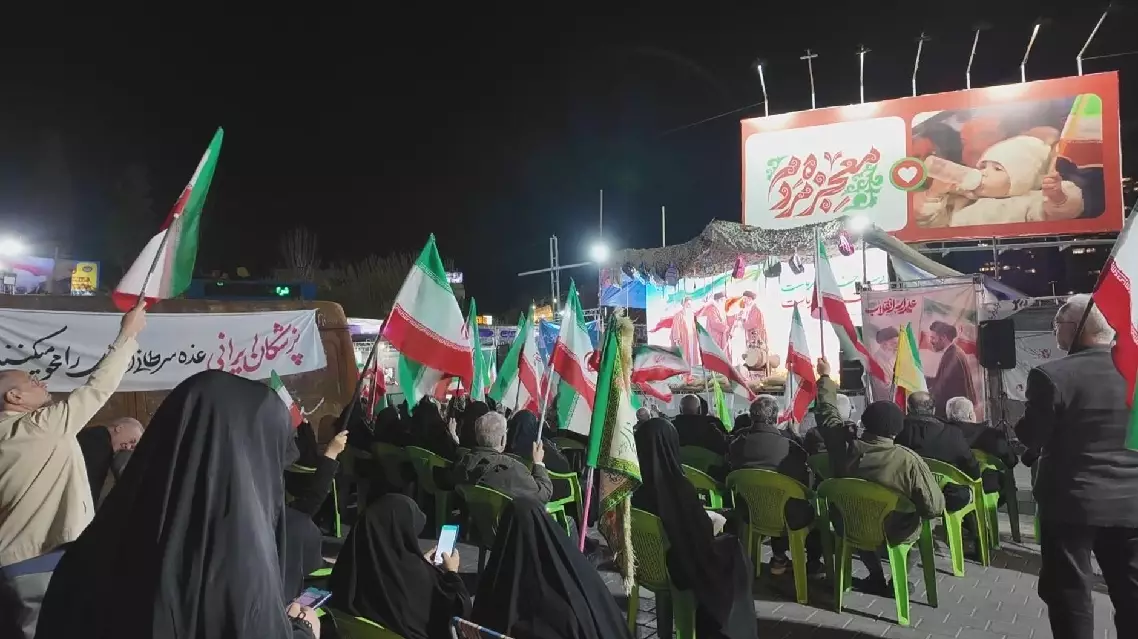
Tehran residents rally to show support, solidarity in wartime