- Kia has launched the first-ever car accessory made using plastic extracted from the Great Pacific Garbage Patch by The Ocean Cleanup
- New EV3 accessory highlights Kia's partnership with The Ocean Cleanup
- Kia to raise recycled plastic application in vehicles to more than 20% by 2030
SEOUL, South Korea, Oct. 14, 2024 /PRNewswire/ -- Kia Corporation (Kia) has developed the world's first car accessory made from plastic extracted from the Great Pacific Garbage Patch (GPGP) by The Ocean Cleanup. The announcement of the accessory is a major milestone in its long-term partnership with The Ocean Cleanup. Since 2022, Kia's support of the non-profit organization, which is dedicated to developing and scaling technologies to rid the world's oceans of plastic, has been a key part of the brand's ongoing transformation into a leading provider of sustainable mobility solutions.
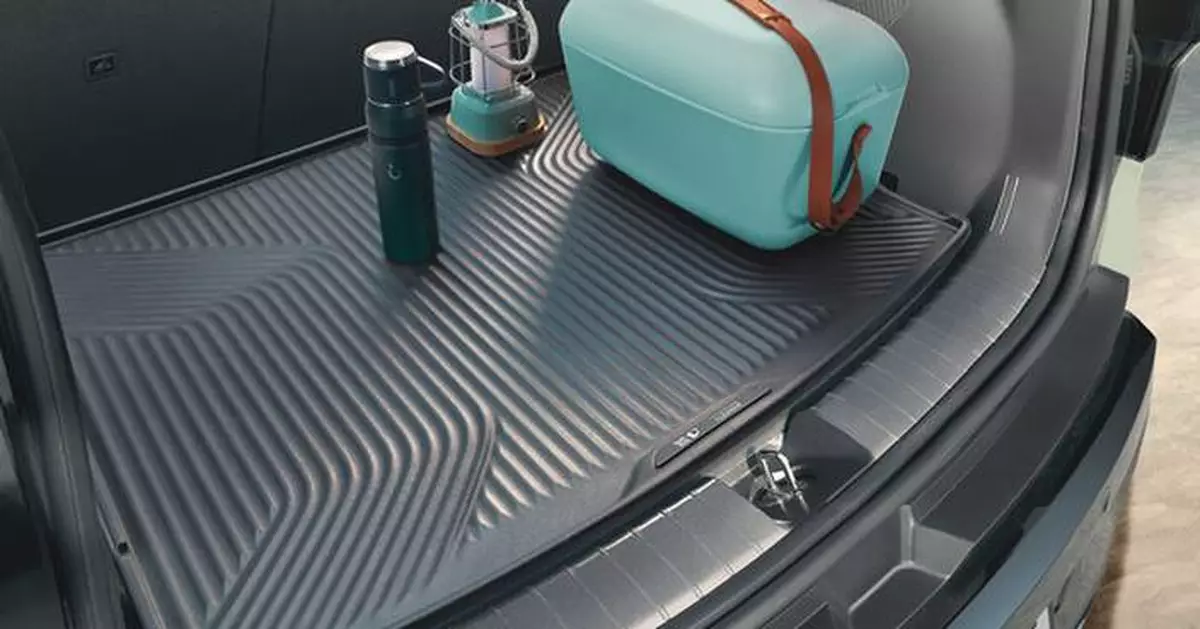
As one of the most significant outcomes of the partnership so far, Kia will introduce a limited-edition trunk liner for the all-new Kia EV3 made using ocean plastic received from The Ocean Cleanup. The exclusive accessory will be available for EV3 in selected markets and available to order in line with the model's market introduction.
Charles Ryu, Executive Vice President and Head of the Global Brand & CX Division, Kia, commented: "This partnership is not only a testament to our shared commitment to environmental stewardship and innovation, but a worldwide movement to create a cleaner, healthier oceans for future generations."
"As the first genuine Kia accessory made using reclaimed ocean plastic, we are proud to see tangible progress made toward creating a circular resource system for ocean plastic. We will leverage the lessons learned during the recycling and product development process to continue to manufacture useful and beneficial products for our customers using ocean plastic retrieved and provided by The Ocean Cleanup."
"We are so grateful to have a visionary and passionate partner in Kia, who shares our vision of ensuring that the plastic we extract from the Great Pacific Garbage Patch is given a new life in sustainable items", said Boyan Slat, Founder & CEO, The Ocean Cleanup. "Our mission is made possible by partners such as Kia and we look forward to this launch being the first of many ways we turn ocean plastic from trash to treasure."
For more information, visit the Kia Global Media Center at www.kianewscenter.com
** The press release content is from PR Newswire. Bastille Post is not involved in its creation. **
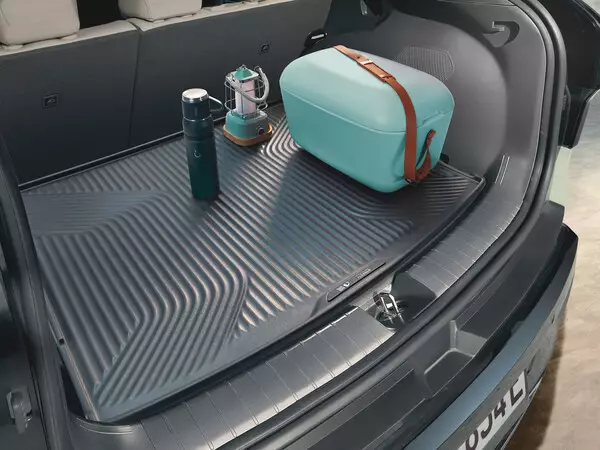
Kia introduces world's first car accessory made using recycled plastic from the Great Pacific Garbage Patch
SHANGHAI, April 5, 2026 /PRNewswire/ -- DFRobot, a global leader in open-source hardware, recently participated in the Robot Hokoten @ Akihabara event in Tokyo, appearing at the DigiKey booth. The company presented two AI-driven projects based on open-source hardware—an "Electronic Nose" gas recognition system and an AI-powered cell recognition teaching system—demonstrating how AI and open hardware can be effectively applied in STEAM education and maker scenarios.
Electronic Nose: Integrating TinyML with On-Device AI
The "Electronic Nose" project combines edge AI with embedded hardware. It uses four MEMS gas sensors connected to an ESP32 running a TinyML model for real-time odor analysis.
During the demonstration, the sensor probe was placed above a glass of beer. Within 20 to 30 seconds, the system completed odor sampling and analysis. The results were then transmitted to the LattePanda Sigma, a compact x86 computing module, which generated descriptive content or tasting notes using a locally deployed language model. The entire process was executed on-device, without relying on network connectivity.
Xia Qing, Senior Engineer at DFRobot, commented: "This demonstration shows how makers can combine TinyML-based sensing with local AI models to transform sensor data into intuitive insights. Potential applications include coffee flavor analysis, fermentation monitoring, and food freshness detection."
AI Cell Recognition: Bringing AI into the STEAM Classroom
Another featured project focused on educational applications. DFRobot presented an AI-powered cell recognition teaching system designed to integrate artificial intelligence into middle school biology education. The system is built using the HUSKYLENS 2 AI vision sensor and the UNIHIKER K10 development board.
Powered by the K230 processor with up to 6 TOPS of AI computing performance, HUSKYLENS 2 can efficiently run both pre-trained and user-trained models with low latency. In the demonstration, the system performed real-time identification and classification of cells under a microscope, making abstract AI and machine learning concepts tangible through hands-on interaction.
The project showcases the complete AI workflow—from data collection and model training to edge inference—highlighting its practical applicability in educational settings.
Partnering with DigiKey to Expand the Open-Source Hardware Ecosystem
DFRobot and DigiKey jointly showcased at Robot Hokoten to promote open-source hardware and AI education. The two parties will continue collaborating on technical content, global marketing, and educational solutions, lowering the barrier to AI and open hardware adoption, and accelerating the transition from maker projects to real STEAM classroom applications.
** This press release is distributed by PR Newswire through automated distribution system, for which the client assumes full responsibility. **
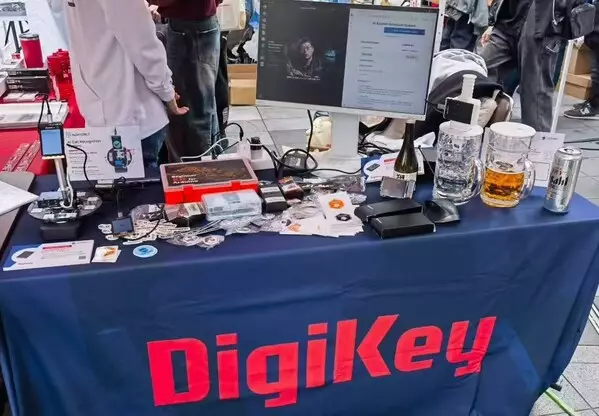
DFRobot Showcases AI Maker Projects at Robot Hokoten in Akihabara