Skip to Content Facebook Feature Image

Macao residents hold high hopes for brighter future under leadership of new government

China

China

China

Macao residents hold high hopes for brighter future under leadership of new government

2024-10-15 03:20 Last Updated At:12:27

People from all walks of life in the Macao Special Administrative Region (SAR) hold high hopes for a brighter future under the leadership of Sam Hou Fai who has been elected by an overwhelming majority as the sixth-term chief executive designate of the Macao SAR.

Sam won the election with 394 votes in favor out of 398 valid ballots.

Ho Sut Heng, a deputy to the 14th National People's Congress (NPC) and president of the Macao Federation of Trade Unions, highlighted the strong anticipation of the public for the realization of Sam's promises with a focus on law-based governance, effective leadership and unity.

"Mr. Sam Hou Fai's platform has garnered high recognition from the public, so his sweeping election victory today is well-deserved. His policies aim to unite all social sectors, and I believe he will successfully lead Macao in better integrating into the overall national development and build Macao into a better place," Ho said.

"I think the election plays an important role in fully implementing the principle of 'patriots administering Macao'. Each vote for Sam represents the hopes of all sectors in Macao for a brighter future. I firmly believe that the new government of the Macao SAR will steer the region's society towards broader development prospects," said Wong Chi Choi, president of the Macao New Chinese Youth Association.

Young residents of Macao have underlined the significance of the election for the youth, hoping that the new chief executive's platform will create more opportunities for them in the future.

"What resonates with me most from his platform is his commitment to better integrating Macao into the country's overall development, and what's more, how we young people can better contribute to the development of the Guangdong-Hong Kong-Macao Greater Bay Area and the Guangdong-Macao in-depth cooperation zone in Hengqin. I hope the new government will put up more favorable policies in this regard," Fong Cho Ho said.

"Young people have been paying close attention to the election. After reviewing Mr. Sam Hou Fai's platform, I knew that he has responded to our needs. I hope that under his leadership, the new government of the Macao SAR will create more opportunities for young people and build a better Macao for all," Ou Wing Yan said.
Macao residents hold high hopes for brighter future under leadership of new government

Macao residents hold high hopes for brighter future under leadership of new government
China's push toward a greener future is once again in the spotlight at this year's annual political "two sessions", as lawmakers are reviewing a draft ecological environment code, a significant step toward establishing a comprehensive legal framework for ecological protection.

The draft code was submitted on March 5 to the ongoing fourth session of the 14th National People's Congress (NPC), China's top legislature, for deliberation.

Once adopted, it will become China's second formal statutory code, after the Civil Code, which was adopted in 2020.

The rule of law has been continuously strengthened to support the country's green progress. China already has more than 30 laws related to environmental protection, along with over 100 sets of administrative regulations and more than 1,000 sets of local rules.

The latest legislative move comes amid China's historic gains in ecological conservation over the past decade or so. Championing green development, the country has recorded the world's fastest growth in forest resources and afforestation, led globally in renewable energy development, and achieved one of the fastest national reductions in energy intensity worldwide.

The 1,242-article draft has five chapters, covering areas including pollution control, ecological protection, and green and low-carbon development.

Scholars involved in drafting the legislation say the code goes beyond broad legal principles. It is also designed to address environmental issues that affect people's daily lives.

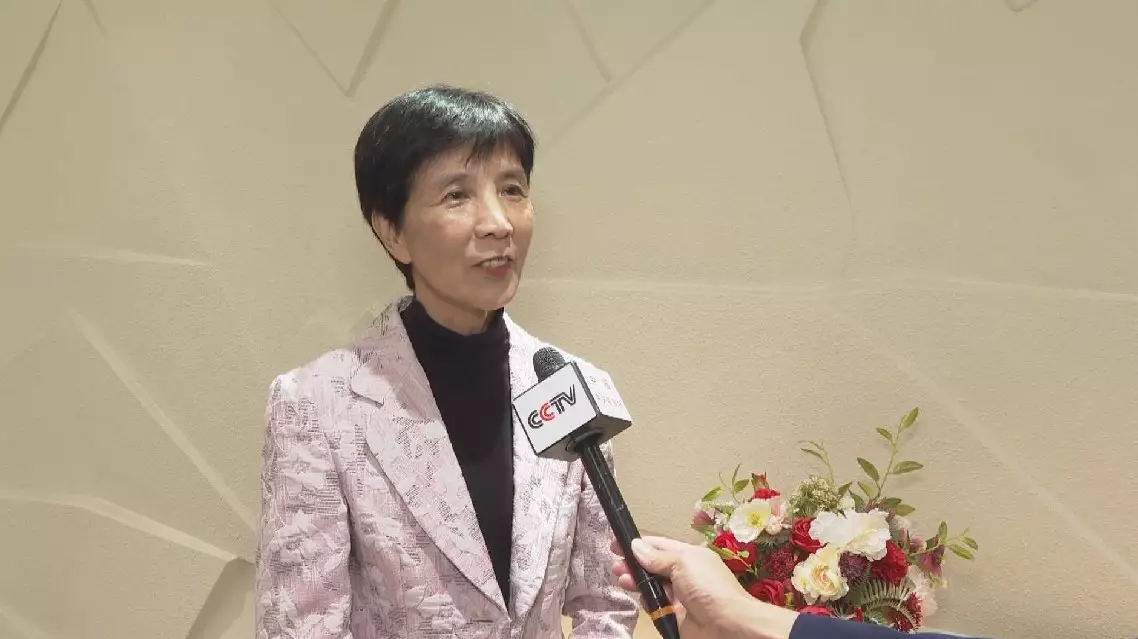
"Electric vehicles are becoming very common in China. My family has one. We all think it environment-friendly. But have you ever thought about this question: how do we deal with the first generation of EV batteries after they expire a few years later? The same goes for wind turbine blades and solar panels," said Ding Lin, assistant professor of the Renmin University of China.

China's environmental progress has drawn global attention in recent years, from improving air quality to expanding renewable energy. Yet amid geopolitical tensions and economic uncertainty, some observers have questioned whether the country will maintain the same pace of green transition.

"Last year during the COP30, even some friends who are very familiar with China asked me whether China will continue its green development path. I told them we have gradually worked out new policies. We have a very clear direction and goal. In a world full of uncertainties, we are providing the most certainty," said Wang Yi, an NPC deputy from east China's Zhejiang Province and professor of the Chinese Academy of Sciences.

In a country pursuing modernization, taking the time to codify environmental laws sends a clear message: economic growth and environmental protection are not a trade-off to be managed, but a commitment to be upheld. For China, a beautiful environment is not a luxury for the future, it is a right for the present, and a responsibility to the next generation.

"This code reflects China's vision of harmonious coexistence between humanity and nature. It shows how development and environmental protection can move forward together," said Lyu Zhongmei, vice chair of the NPC Environmental Protection and Resources Conservation Committee.

China will accelerate the green transition across the board and cut carbon dioxide emissions per unit of the GDP by a total of 17 percent in the 2026-2030 period, according to a draft outline of the 15th Five-Year Plan (2026-30) for national economic and social development submitted to the NPC for deliberation on March 5.

Chinese lawmakers review draft ecological environment code in major green legislative push

Chinese lawmakers review draft ecological environment code in major green legislative push

Recommended Articles