BANGKOK (AP) — The head of Myanmar’s military government on Tuesday invited ethnic rebels to hold peace talks to end armed conflict across the country, the second time in less than a month that the ruling generals have publicly promoted negotiations.
Senior Gen. Min Aung Hlaing’s proposal was broadcast on state television on the ninth anniversary of the signing of its nationwide cease-fire agreement. About half of the nation’s 21 established ethnic armed organizations agreed to the pact but some no longer honor it.
Last month, the military announced its most direct invitation for peace talks since it seized power from the elected government of Aung San Suu Kyi in February 2021. It was aimed at the broader pro-democracy forces that have also taken up arms as well as the ethnic groups, but was quickly rejected.
In Tuesday’s brief broadcast, Min Aung Hlaing said the ruling military council will only follow the framework of its existing cease-fire agreement for peace and appealed to the ethnic armed groups to negotiate their issues through dialogue.
“Wishes can’t be demanded through armed violence, but through dialogue at the political table with peaceful means to resolve the conflict,” Min Aung Hlaing said.
Myanmar for several decades has seen a cycle of cease-fires bringing in intermittent periods of relative peace, but none have led to a comprehensive political settlement that would grant the ethnic groups the degree of autonomy they seek in the frontier regions where they are dominant.
The army is currently on the defensive against ethnic militias in much of the country, as well as hundreds of armed guerrilla groups collectively called People’s Defense Forces, formed to fight to restore democracy after the army takeover.
Over the past year, the army has suffered unprecedented battlefield defeats, and the initiative seems to be in the hands of the resistance forces.
In October 2015, eight ethnic armed groups signed the cease-fire agreement, and in February 2018, under Aung San Suu Kyi’s civilian government, two more joined.
The cease-fire was seen by the military as a step toward ending the longstanding ethnic rebellions. Maintaining the cease-fire with as many groups as possible is tactically crucial for the military government so it doesn’t have to fight a strong and united opposition.
Some of the largest and most powerful groups, including the Kachin Independence Army and United Wa State Army, did not endorse the agreement, which they viewed as lacking inclusiveness.
Min Aung Hlaing said that some groups that signed it broke the agreement after the 2021 army takeover, aligning themselves with the shadow National Unity Government, the main opposition group against military rule.
Armed militias representing the Karen, Chin and Pa-O minorities, along with the All Burma Students’ Democratic Front, have spurned peace talks.
“I see that what the military is doing is only creating conditions that will prolong the military dictatorship,” said Aye Lwin, the spokesperson of the students’ front. “There is currently no reason to accept the military-led dialogue.”

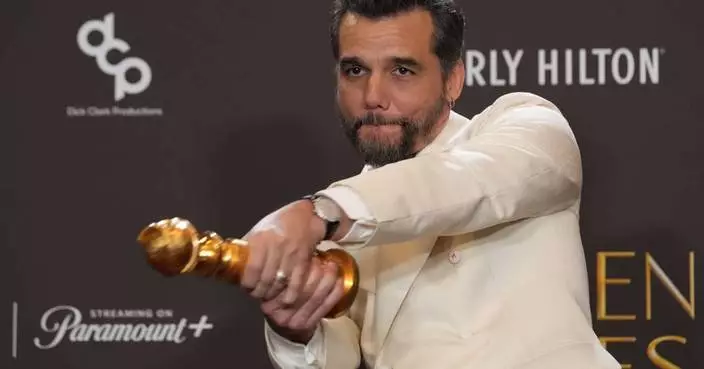
In this photo released by Myanmar Military True News Information Team, Senior General Min Aung Hlaing, the Myanmar military leader, delivers video speech to mark the 9th anniversary of signing Nationwide Ceasefire Agreement- NCA with 8 Ethnic Armed Organizations, Tuesday, Oct. 15, 2024, in Naypyitaw, Myanmar. (The Myanmar Military True News Information Team via AP)
DUBAI, United Arab Emirates (AP) — U.S. President Donald Trump said Iran wants to negotiate with Washington after his threat to strike the Islamic Republic over its bloody crackdown on protesters, a move coming as activists said Monday the death toll in the nationwide demonstrations rose to at least 544.
Iran had no immediate reaction to the news, which came after the foreign minister of Oman — long an interlocutor between Washington and Tehran — traveled to Iran this weekend. It also remains unclear just what Iran could promise, particularly as Trump has set strict demands over its nuclear program and its ballistic missile arsenal, which Tehran insists is crucial for its national defense.
Meanwhile Monday, Iran called for pro-government demonstrators to head to the streets in support of the theocracy, a show of force after days of protests directly challenging the rule of 86-year-old Supreme Leader Ayatollah Ali Khamenei. Iranian state television aired chants from the crowd, who shouted “Death to America!” and “Death to Israel!”
Trump and his national security team have been weighing a range of potential responses against Iran including cyberattacks and direct strikes by the U.S. or Israel, according to two people familiar with internal White House discussions who were not authorized to comment publicly and spoke on condition of anonymity.
“The military is looking at it, and we’re looking at some very strong options,” Trump told reporters on Air Force One on Sunday night. Asked about Iran’s threats of retaliation, he said: “If they do that, we will hit them at levels that they’ve never been hit before.”
Trump said that his administration was in talks to set up a meeting with Tehran, but cautioned that he may have to act first as reports of the death toll in Iran mount and the government continues to arrest protesters.
“I think they’re tired of being beat up by the United States,” Trump said. “Iran wants to negotiate.”
He added: “The meeting is being set up, but we may have to act because of what’s happening before the meeting. But a meeting is being set up. Iran called, they want to negotiate.”
Iran through country's parliamentary speaker warned Sunday that the U.S. military and Israel would be “legitimate targets” if America uses force to protect demonstrators.
More than 10,600 people also have been detained over the two weeks of protests, said the U.S.-based Human Rights Activists News Agency, which has been accurate in previous unrest in recent years and gave the death toll. It relies on supporters in Iran crosschecking information. It said 496 of the dead were protesters and 48 were with security forces.
With the internet down in Iran and phone lines cut off, gauging the demonstrations from abroad has grown more difficult. The Associated Press has been unable to independently assess the toll. Iran’s government has not offered overall casualty figures.
Those abroad fear the information blackout is emboldening hard-liners within Iran’s security services to launch a bloody crackdown. Protesters flooded the streets in the country’s capital and its second-largest city on Saturday night into Sunday morning. Online videos purported to show more demonstrations Sunday night into Monday, with a Tehran official acknowledging them in state media.
In Tehran, a witness told the AP that the streets of the capital empty at the sunset call to prayers each night. By the Isha, or nighttime prayer, the streets are deserted.
Part of that stems from the fear of getting caught in the crackdown. Police sent the public a text message that warned: “Given the presence of terrorist groups and armed individuals in some gatherings last night and their plans to cause death, and the firm decision to not tolerate any appeasement and to deal decisively with the rioters, families are strongly advised to take care of their youth and teenagers.”
Another text, which claimed to come from the intelligence arm of the paramilitary Revolutionary Guard, also directly warned people not to take part in demonstrations.
“Dear parents, in view of the enemy’s plan to increase the level of naked violence and the decision to kill people, ... refrain from being on the streets and gathering in places involved in violence, and inform your children about the consequences of cooperating with terrorist mercenaries, which is an example of treason against the country,” the text warned.
The witness spoke to the AP on condition of anonymity due to the ongoing crackdown.
The demonstrations began Dec. 28 over the collapse of the Iranian rial currency, which trades at over 1.4 million to $1, as the country’s economy is squeezed by international sanctions in part levied over its nuclear program. The protests intensified and grew into calls directly challenging Iran’s theocracy.
Nikhinson reported from aboard Air Force One.
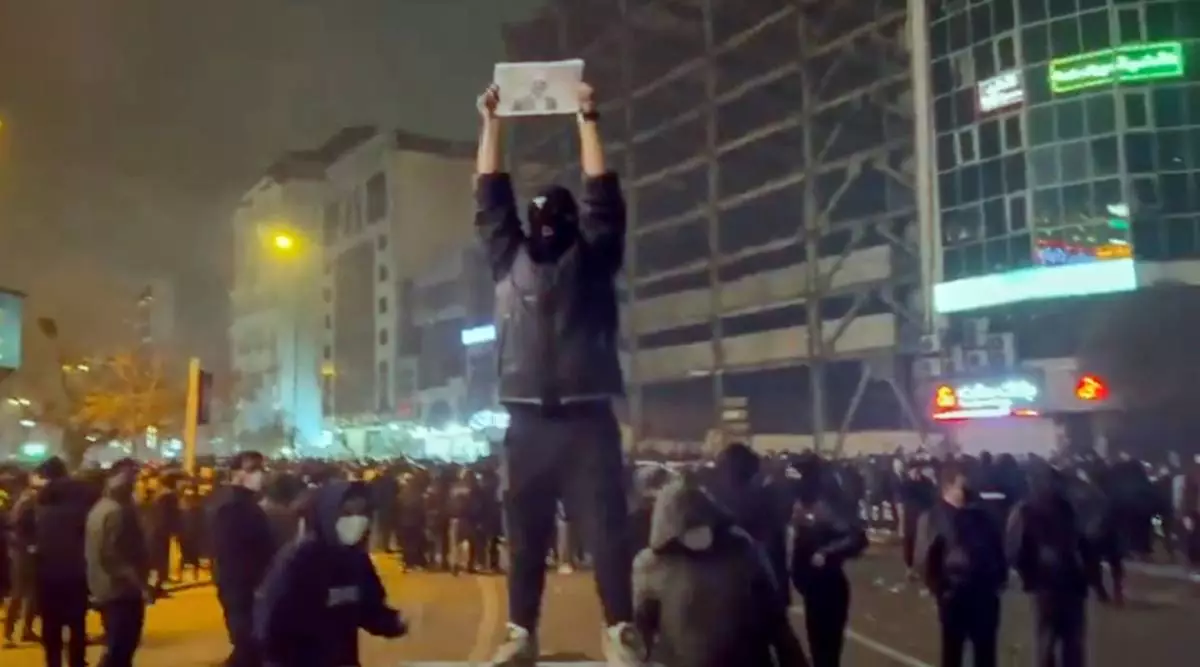
In this frame grab from video obtained by the AP outside Iran, a masked demonstrator holds a picture of Iran's Crown Prince Reza Pahlavi during a protest in Tehran, Iran, Friday, January. 9, 2026. (UGC via AP)
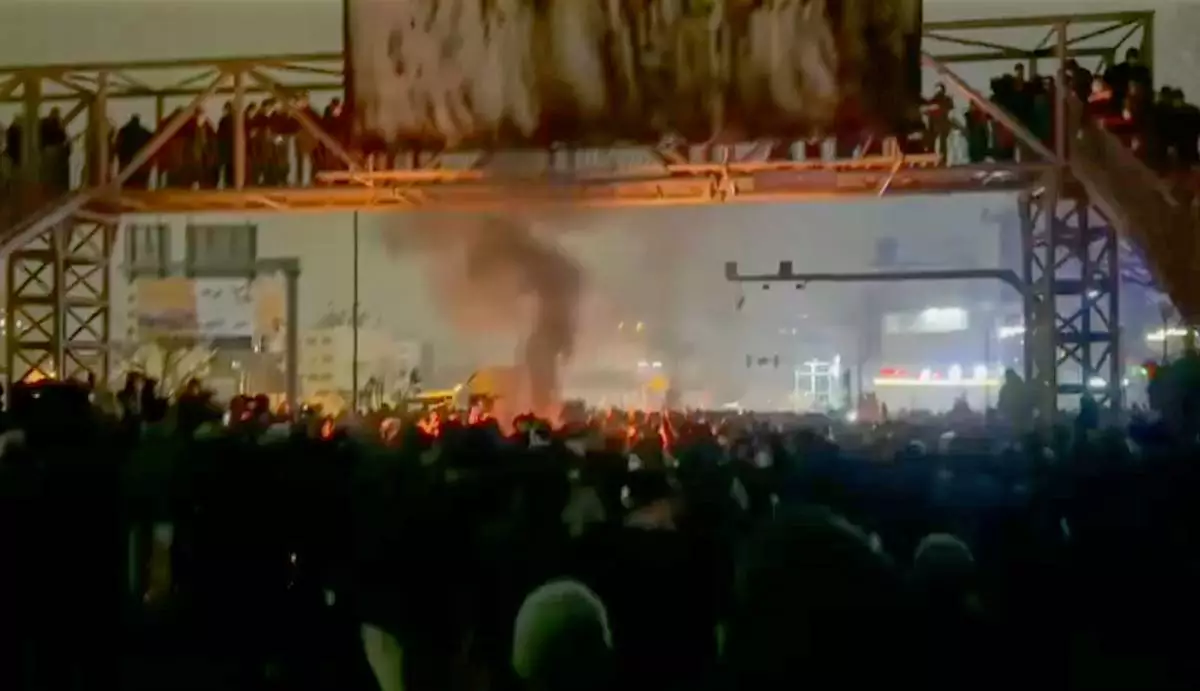
In this frame grab from footage circulating on social media from Iran shows protesters taking to the streets despite an intensifying crackdown as the Islamic Republic remains cut off from the rest of the world in Tehran, Iran, Friday, Jan. 9, 2026.(UGC via AP)
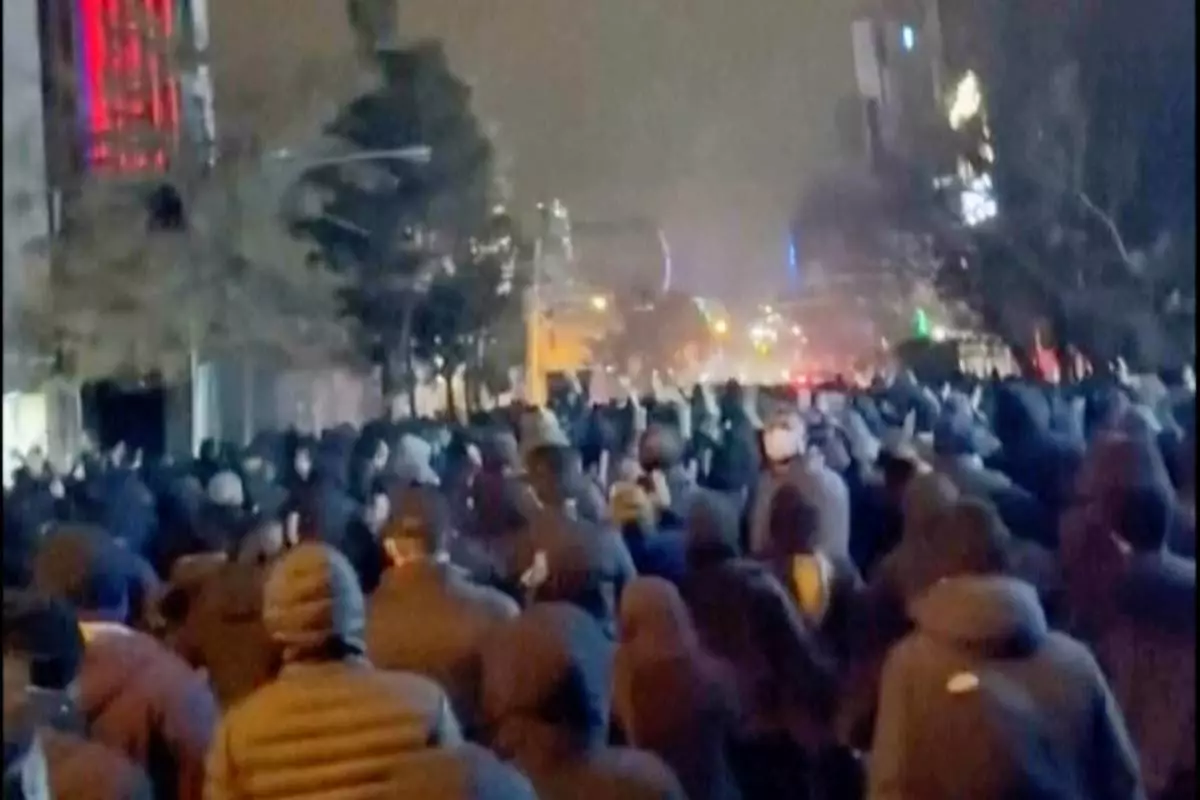
In this frame grab from footage circulating on social media from Iran showed protesters once again taking to the streets of Tehran despite an intensifying crackdown as the Islamic Republic remains cut off from the rest of the world in Tehran, Iran, Saturday Jan. 10, 2026. (UGC via AP)