Skip to Content Facebook Feature Image

Free trade zone on China-Kazakhstan border sees booming business

China

China

China

Free trade zone on China-Kazakhstan border sees booming business

2024-10-16 07:53 Last Updated At:18:07

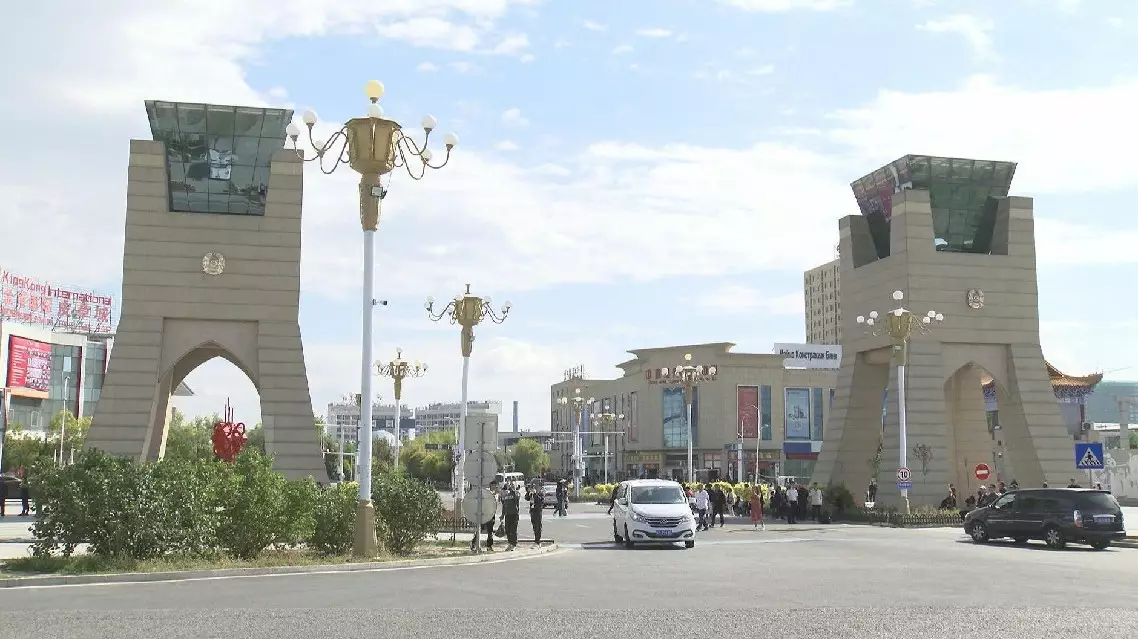
Located on the China-Kazakhstan border, the Horgos International Border Cooperation Center has witnessed booming business as it continues to attract buyers, live-streamers and tourists from both sides since it was launched in 2012.

It is also the first cross-border economic cooperation zone that China has established with other countries.

Customers can buy duty-free products at a wholesale market in the center, but they cannot splurge, as the discounts depend on the weight of the goods. For each person, the duty-free allowance is 25 kilograms per month.

Many shops, therefore, have prepared vacuum-packing machines to help customers weigh the goods they plan to buy.

Shuttle bus services are provided daily to transport buyers from Kazakhstan to purchase a wide variety of high-quality goods.

"This time we are here to buy bedding sets and clothes. The quality of the products here is quite good, and we bought over 300,000 Kazakh tenge (around 617.53 U.S. dollars) worth of goods," said a buyer from Kazakhstan.

A number of shops at the wholesale market has hired foreign live-streamers to help sell products.

"We earn an average of 15,000 Kazakh tenge (around 30.88 U.S. dollars) per day, so many people from Kazakhstan would like to work here," said a live-streamer from Kazakhstan.

Straddling the China-Kazakhstan border, the center has become a popular tourist destination. In the first half of this year, it recorded over 2.72 million visits, up 113 percent from the same period last year.

The China-Kazakhstan mutual visa exemption agreement taking effect last year has further consolidated this tourism boom, as self-driving tours and group tours bring more tourists in and out of the border. Each domestic tourist can enjoy a duty-free allowance of 8,000 yuan (1,124.69 U.S. dollars) per day at the duty-free shops in the center.

"Of all the tourists visiting the shop, domestic tourists account for 80 to 90 percent. The shop's sales reach an average of 1.5 million yuan (around 210,762.9 U.S. dollars) per month from May till now. The goods are directly imported from Europe or transported by China-Europe freight trains," said Zhang Hongying, manager of a duty free shop in the center.

Taking advantage of its unique geographical location and favorable policies, the center has become a testing ground for connectivity between Eurasian countries, a popular tourist destination, and a must-visit shopping spot, said an official from the center.

From January to August this year, the total trade value of goods entering the center from China reached 3.2 billion yuan (about 449.79 million U.S. dollars).
Free trade zone on China-Kazakhstan border sees booming business

Free trade zone on China-Kazakhstan border sees booming business
A former television host from Taiwan, Zhai Xuan, has made a pivotal decision to leave mainstream broadcasting in order to create content that provides a better understanding of the Chinese mainland and cross-strait relations.

Zhai, a seasoned television host with over a decade of experience in Taiwan's media landscape, recently addressed an audience at an event in Beijing, where she revealed her complete transition into independent online media.

In her remarks, she articulated her aspiration to bridge what she perceives as a significant information gap between audiences on both sides of the Strait, highlighting her commitment to fostering a deeper understanding and connection through her new endeavors.

"I was really surprised by all the fake news. There were stories saying people on the mainland can't afford tea eggs or that they live in mud houses and in Taiwan, this was the main information many people received," said Zhai.

Zhai said she initially began producing online videos to challenge such perceptions while continuing her work as a television host.

In April 2025, she travelled to the mainland with her father to fulfill her late grandfather's wish to return to his hometown. The trip, which reunited family members separated since 1949, was recorded in a video series titled "Journey to Find Our Roots", drawing attention from viewers in both Taiwan and the mainland.

"Many people in Taiwan told me that after watching, they wanted to apply for a mainland travel permit immediately and go looking for their relatives. Some had long forgotten these things, but after seeing my story, they began thinking about their hometowns and family members they had never met and decided to search for their roots," Zhai shared her story at the event.

By mid-2025, Zhai said she began to feel increasing pressure amid rising political tensions and a tightening atmosphere around cross-Strait exchanges in Taiwan.

After more than 12 years in the industry, Zhai resigned from her position, believing it was the right thing to do.

"At that moment, I felt this was a major issue,not just for me, but for Chinese people on both sides of the Strait. If I backed down then, I wouldn’t be standing on the right side," said Zhai.

Since leaving television, Zhai has broadened her online programming to encompass a range of daily-life topics, including practical guidance on applying for a mainland travel permit and using commonly employed mobile applications, in addition to content that delves into historical memory and cultural connections across the Strait.

As the debate over cross-Strait relations continues in Taiwan, Zhai said she remains committed to her current path.

Former Taiwan TV host bridges cross-Strait divide via online media

Former Taiwan TV host bridges cross-Strait divide via online media

Recommended Articles