MEXICO CITY (AP) — A U.S. indictment unsealed Wednesday in the District of Columbia claims that the leader of one of Mexico’s most violent gangs continued to run an offshoot group, the Northeast Cartel, from inside a Mexican prison.
Miguel Angel Treviño Morales, alias “Zeta 40,” was a founder and leader of the notorious Zetas cartel. He has been in a Mexican prison since his arrest in 2013.
Together with the killing of the Zetas' other top leader in 2012, the old cartel, which spread terror throughout Mexico with bloody massacres, basically fell apart.
The indictment says the new Northeast Cartel was created and run by Treviño Morales and his brother Omar — who was arrested in 2015 — as a successor organization to the Zetas. The brothers allegedly got their relatives to run day-to-day operations for the new gang.
Those accusations represent a grim comment on the lack of security at Mexican prisons, where inmates can often hold large numbers of relatively unsupervised meetings with lawyers and relatives, allowing them to pass messages to the outside.
The defendants renamed the Zetas to “Cartel Del Noreste” or CDN, according to the indictment, which adds they ”continued to control the Cartel and installed various family members to operate the CDN after their incarceration."
The new indictment accuses the brothers of drug, conspiracy, money laundering, criminal enterprise and other offenses that could get them up to life in prison. The U.S. has filed a request for the extradition of Miguel Angel Treviño Morales, but it has been held up for about a decade by court appeals.
Drug lords in Mexico usually fight extradition tooth and nail, in part because they can continue to run their gangs if they stay in Mexican prisons.
In 2022, one of those relatives who allegedly ran the day to day operations of the CDN cartel, Juan Gerardo Treviño — whose alias was “El Huevo” or “The Egg”— was captured and deported to the United States because he apparently had U.S. citizenship, thus avoiding the long route of extradition.
The CDN cartel dominates the border city of Nuevo Laredo, across the border from Laredo, Texas.
Like the Zetas, the Northeast gang is ruthlessly violent. It regularly carries out violent shooting attacks on army patrols there, and just last week one soldier was killed there in a shootout.
President Claudia Sheinbaum said earlier this week that “Nuevo Laredo is where criminal groups have carried out the most attacks on the army and the National Guard.”
U.S. Attorney Jaime Esparza of the Western District of Texas, said the Treviño Morales brothers had committed “horrible atrocities.”
"For decades, these individuals have controlled one of the most violent drug organizations in Mexico, committing and directing the commission of horrible atrocities against our neighbors, the people of Mexico, and also in the United States,” Esparza said.
Follow AP’s coverage of Latin America and the Caribbean at https://apnews.com/hub/latin-america
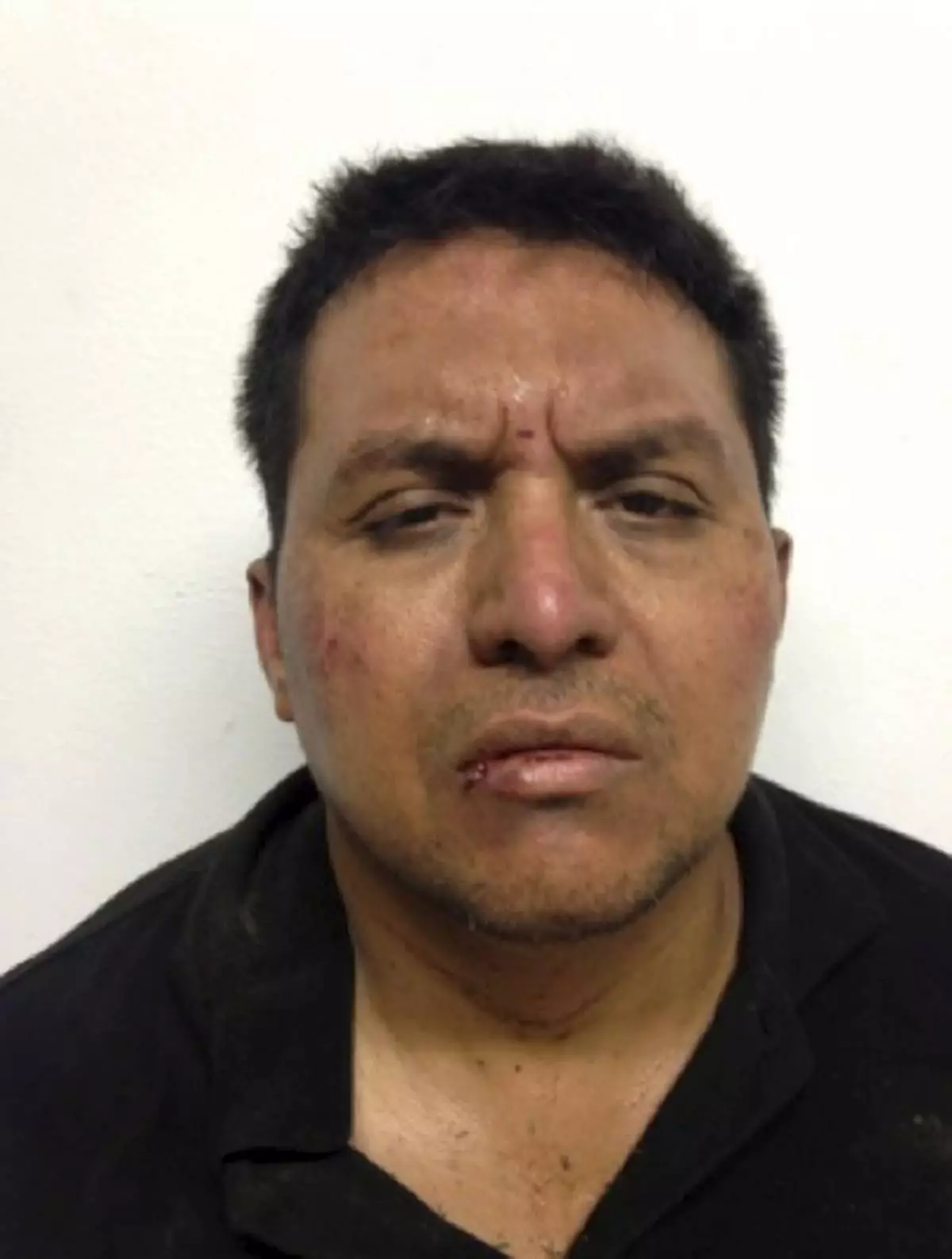
FILE - This file photo shows a mug shot, released on July 15, 2013 by Mexico's Interior Ministry, of Zetas drug cartel leader Miguel Angel Trevino Morales after his arrest in Mexico. (AP Photo/Mexico's Interior Ministry, File)
PARIS (AP) — Activists worldwide held May Day rallies and street protests Friday, calling for peace, higher wages and better working conditions as many workers grapple with rising energy costs and shrinking purchasing power tied to the Iran war.
May 1 is a public holiday in many countries to mark International Workers’ Day, or Labor Day, when workers’ unions traditionally rally around wages, pensions, inequality and broader political issues. Demonstrations were held from Seoul, Sydney and Jakarta to many European capitals. In the U.S., activists opposing President Donald Trump’s policies also were holding marches and boycotts.
“Working people refuse to pay the price for Donald Trump’s war in the Middle East,” the European Trade Union Confederation, which represents 93 trade union organizations in 41 European countries, said. “Today’s rallies show working people will not stand by and see their jobs and living standards destroyed.”
What to know about May Day:
Rising living costs linked to the conflict in the Middle East emerged as a key theme in Friday’s rallies.
In the Philippine capital, Manila, large crowds denounced the U.S. role in the Iran war. Protesters clashed with police blocking the way near the U.S. Embassy.
Indonesian President Prabowo Subianto joined a rally in Jakarta where workers called for stronger government protection from rising prices and difficulties in finding raw materials for key industries.
On a main avenue in Casablanca, Morocco’s largest city, taxi drivers honked their horns and bus drivers parked their vehicles to protest rising fuel costs.
“All my expenses have gone up, but my wages haven’t budged,” Akherraz Lhachimi of the Moroccan Labor Union said.
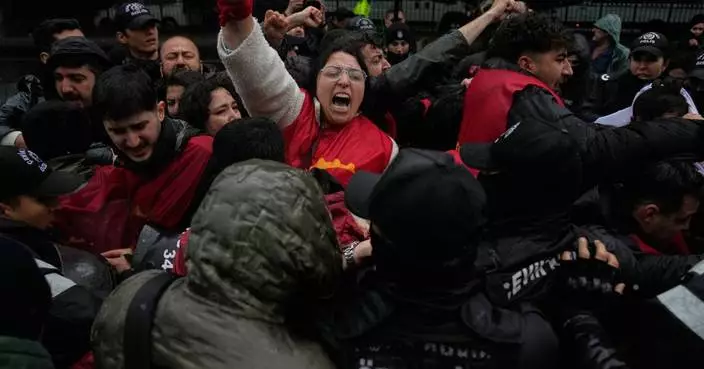
Turkish authorities in Istanbul detained hundreds of demonstrators for attempting to march in areas declared off-limits on security grounds, most notably central Taksim Square, the epicenter of 2013 protests. May Day rallies in Turkey are frequently marred by clashes with authorities.
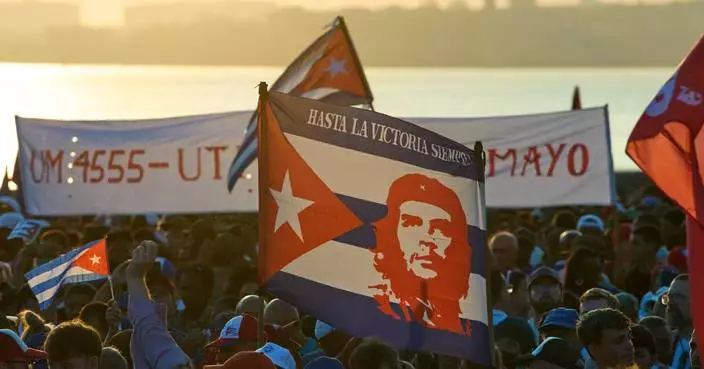
Tens of thousands of people crowded into a public square across from the U.S. Embassy in Havana, celebrating Cuba's workers and decrying U.S. sanctions. Many held banners that read, “Down with Imperialism” and “U.S. hands off Cuba.” President Miguel Díaz-Canel and former President Raúl Castro attended the event.
Several rallies were staged in South Africa, where the head of the Congress of South African Trade Unions, Zingiswa Losi, said workers were “suffocating” under rising costs of food, electricity, transport and healthcare.
May Day carries special meaning this year in France, after a heated debate about whether employees should be allowed to work on the country’s most protected public holiday — the only day when most employees have a mandatory paid day off.
Almost all businesses, shops and malls are closed, and only essential sectors such as hospitals, transport and hotels are exempt. A recent parliamentary proposal to expand work on the day prompted major outcry from unions and left-leaning politicians.
“Don’t touch May Day,” unions said in a joint statement.
Tens of thousands of people joined marches across the country, including in Paris, where brief scuffles with police broke out.
“May 1 is not just any day,” Small and Medium-sized Businesses Minister Serge Papin said. “It symbolizes social gains stemming from a century of building social rules that have led to the labor code we know in France. It is indeed a special day.”
In the United States, where May Day is not a federal holiday, May Day Strong, a coalition of activist groups and labor unions, called on people to protest under the banner of “workers over billionaires.”
Voicing strong opposition to Trump's policies, organizers listed thousands of May Day actions across the country and called for an economic blackout through “no school, no work, no shopping.”
Demands include taxing the rich and putting an end to the Trump administration’s immigration crackdown.
While labor and immigrant rights are historically intertwined, the focus of May Day rallies in the U.S. shifted to immigration in 2006. That’s when roughly 1 million people, including nearly half a million in Chicago alone, took to the streets to protest federal legislation that would have made living in the U.S. without legal permission a felony.
May Day, or International Workers’ Day, traces back more than a century to a pivotal period in U.S. labor history.
In the 1880s, unions pushed for an eight-hour workday. A Chicago rally in May 1886 turned deadly when a bomb exploded and police responded with gunfire. Several labor activists — most of them immigrants — were convicted of conspiracy and other charges; four were executed.
Unions later designated May 1 to honor workers. A monument in Chicago’s Haymarket Square commemorates them with the inscription: “Dedicated to all workers of the world.”
Associated Press journalists Barry Hatton in Lisbon, Portugal, Giada Zampano in Rome, Munir Ahmed in Islamabad, Niniek Karmini in Jakarta, Indonesia, Jim Gomez in Manila, Philippines, Cinar Kiper in Istanbul, Turkey, Akram Oubachir in Casablanca, Morocco, and Dánica Coto in Havana contributed to this report.
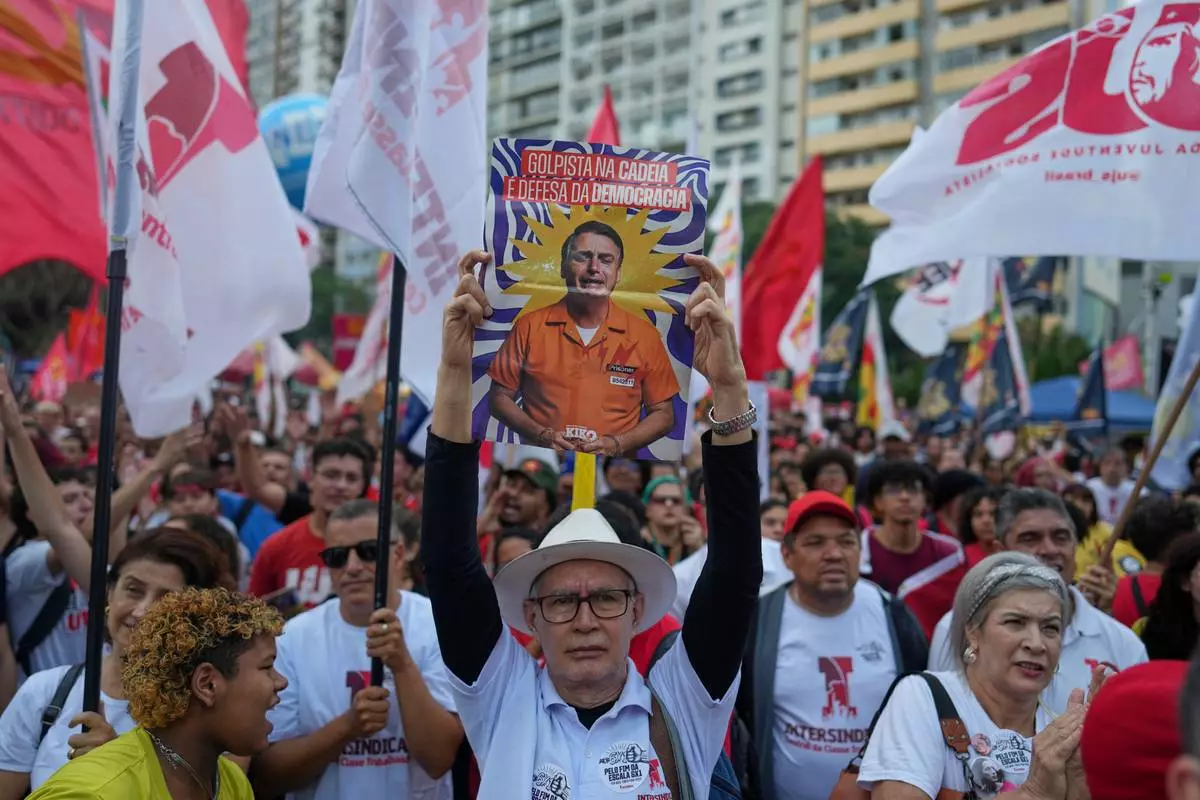
A man holds a picture or former Brazilian President Jair Bolsonaro wearing a prison uniform during a May Day rally demanding greater labor rights in Sao Paulo, Brazil, Friday, May 1, 2026. (AP Photo/Andre Penner)
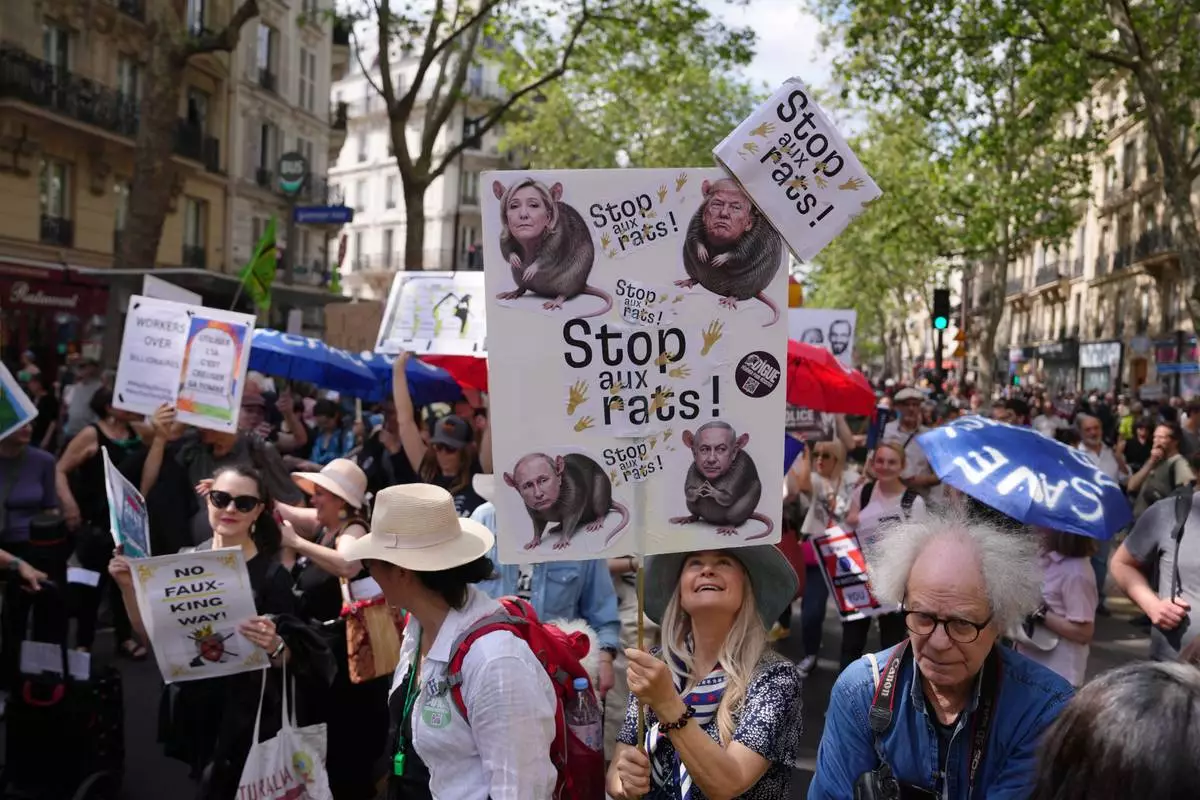
Protesters march during the May Day demonstration in Paris, Friday, May 1, 2026. (AP Photo/Aurelien Morissard)
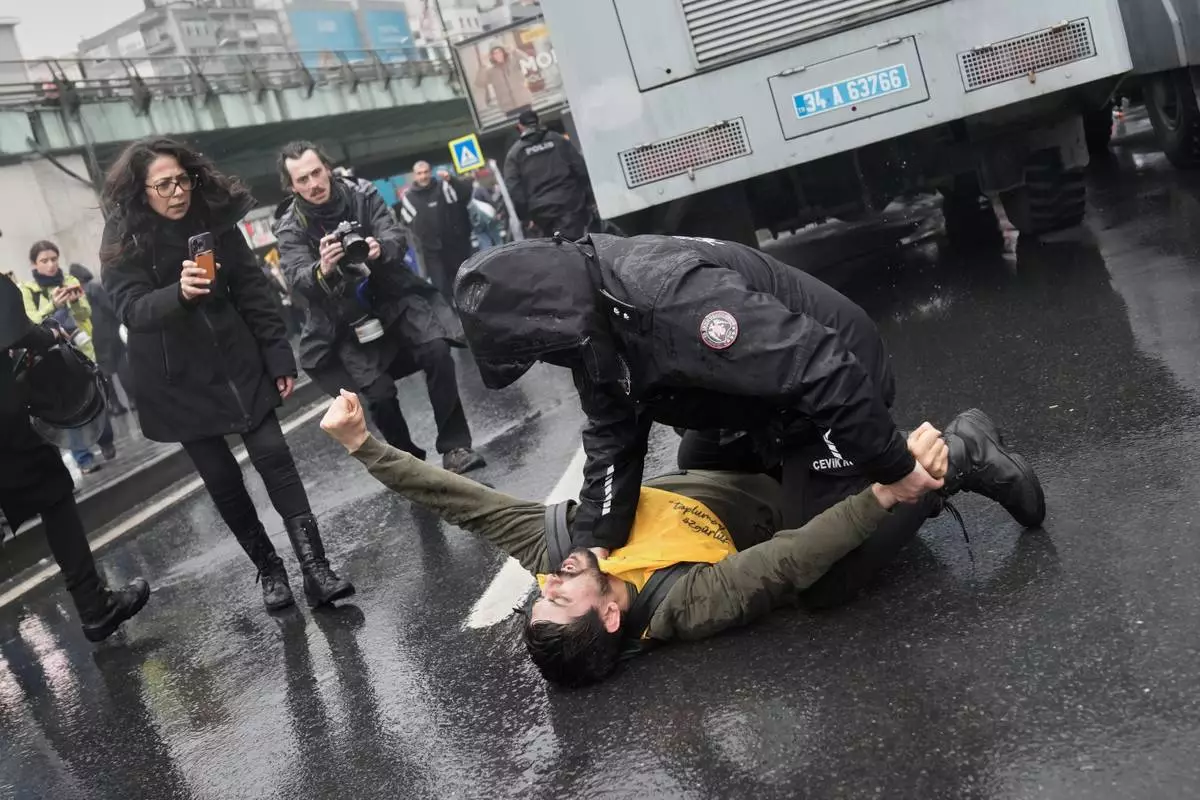
An union member is detained by a Turkish police officer as people try to march towards Taksim square in Istanbul, Turkey, Friday, May 1, 2026, during Labor Day celebrations. (AP Photo/Khalil Hamra)
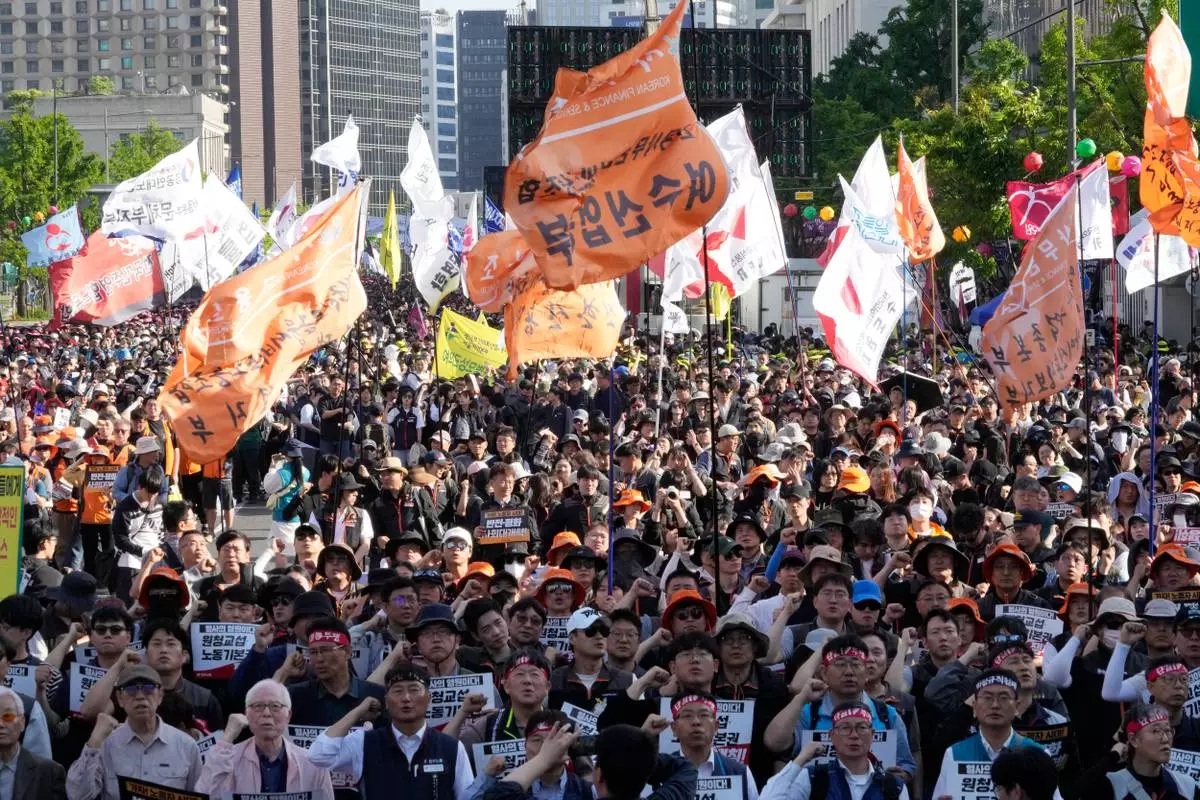
Members of the Korean Confederation of Trade Unions stage a rally on May Day in Seoul, South Korea, Friday, May 1, 2026. (AP Photo/Ahn Young-joon)
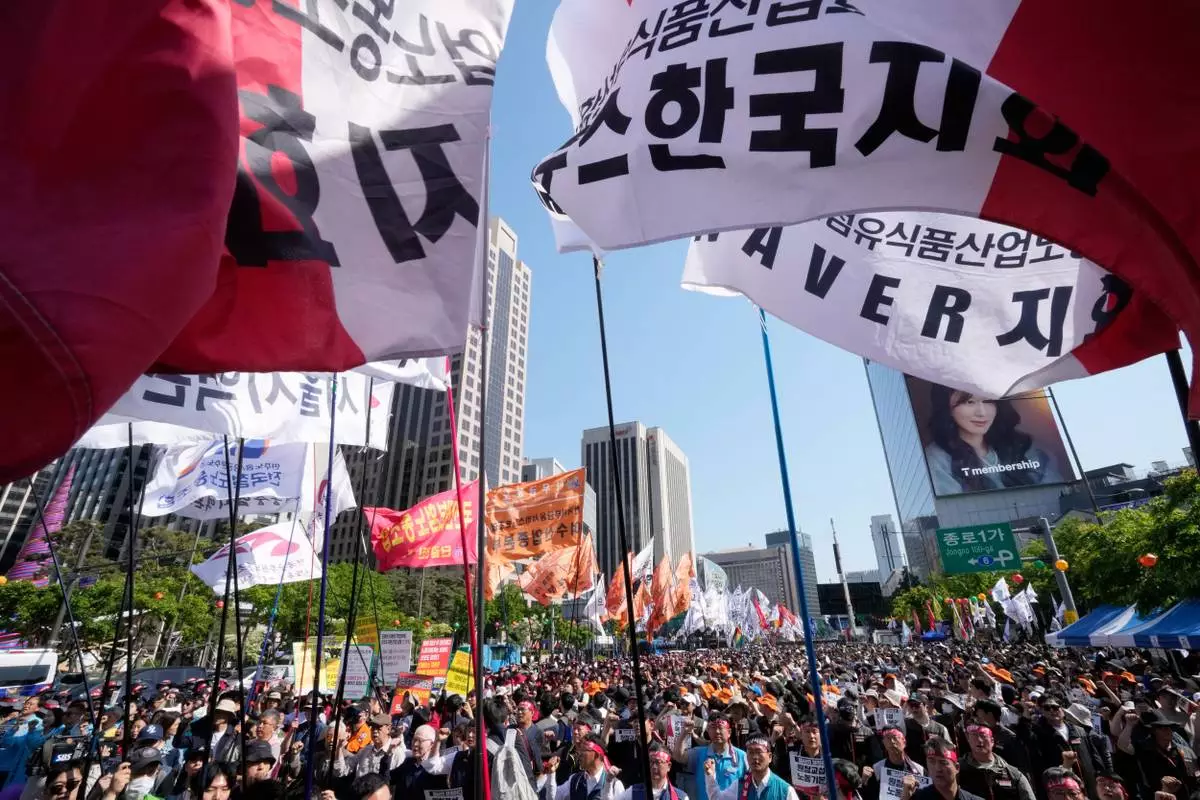
Members of the Korean Confederation of Trade Unions stage a rally on May Day in Seoul, South Korea, Friday, May 1, 2026. (AP Photo/Ahn Young-joon)
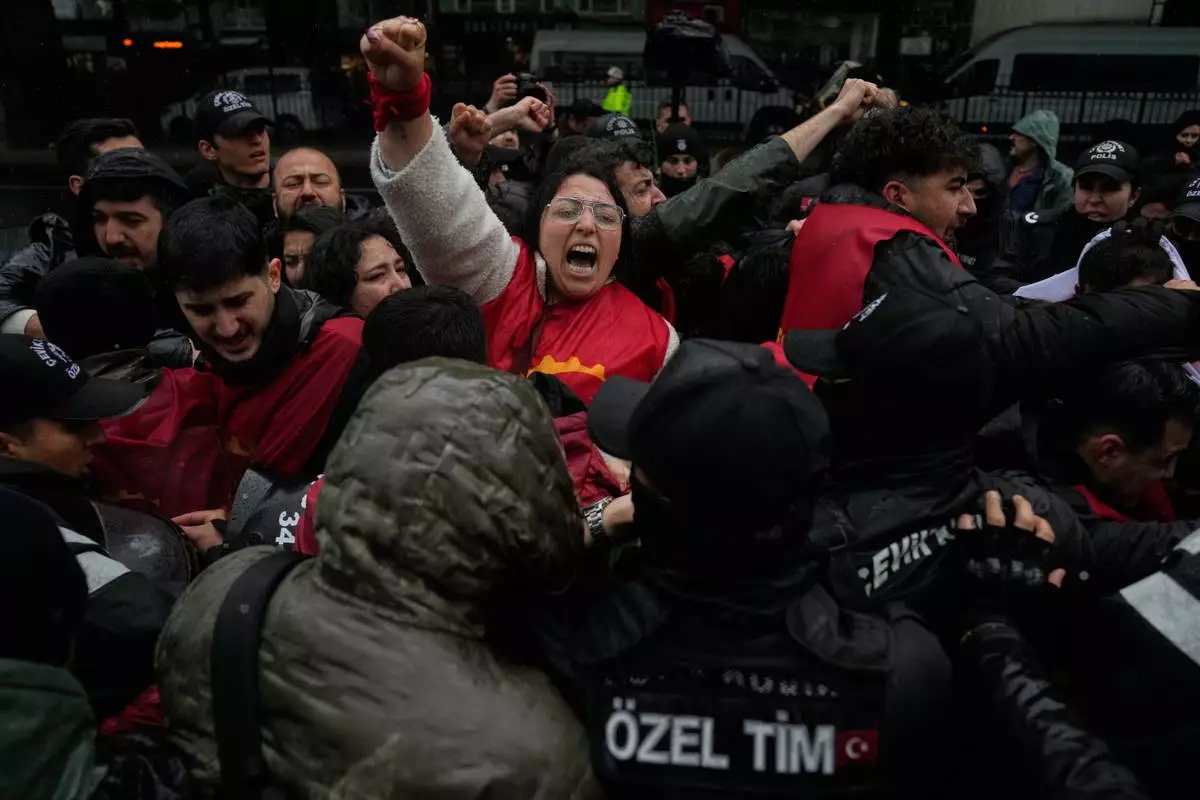
Union members scuffle with Turkish police officers as they try to march towards Taksim square in Istanbul, Turkey, Friday, May 1, 2026, during Labor Day celebrations. (AP Photo/Khalil Hamra)
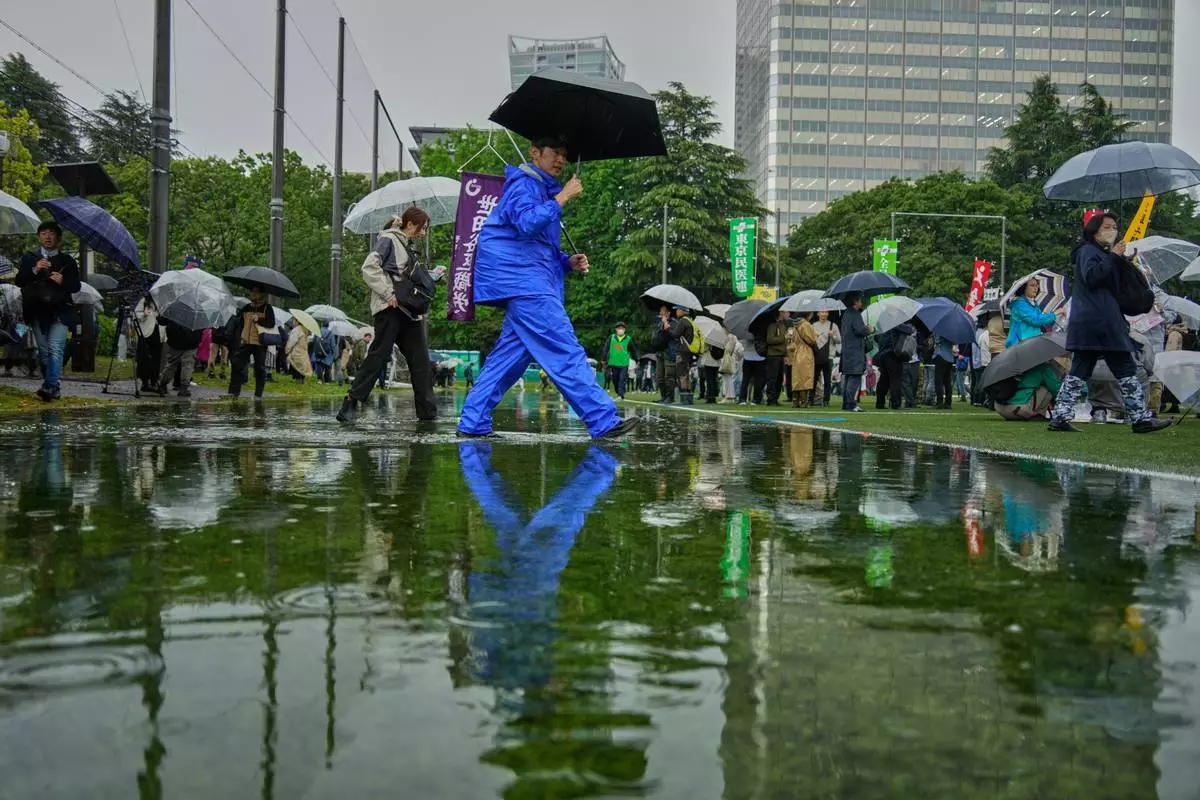
Union members carefully step through rain-formed puddles to participate in a May Day rally in the rain Friday, May 1, 2026, in Tokyo. (AP Photo/Eugene Hoshiko)
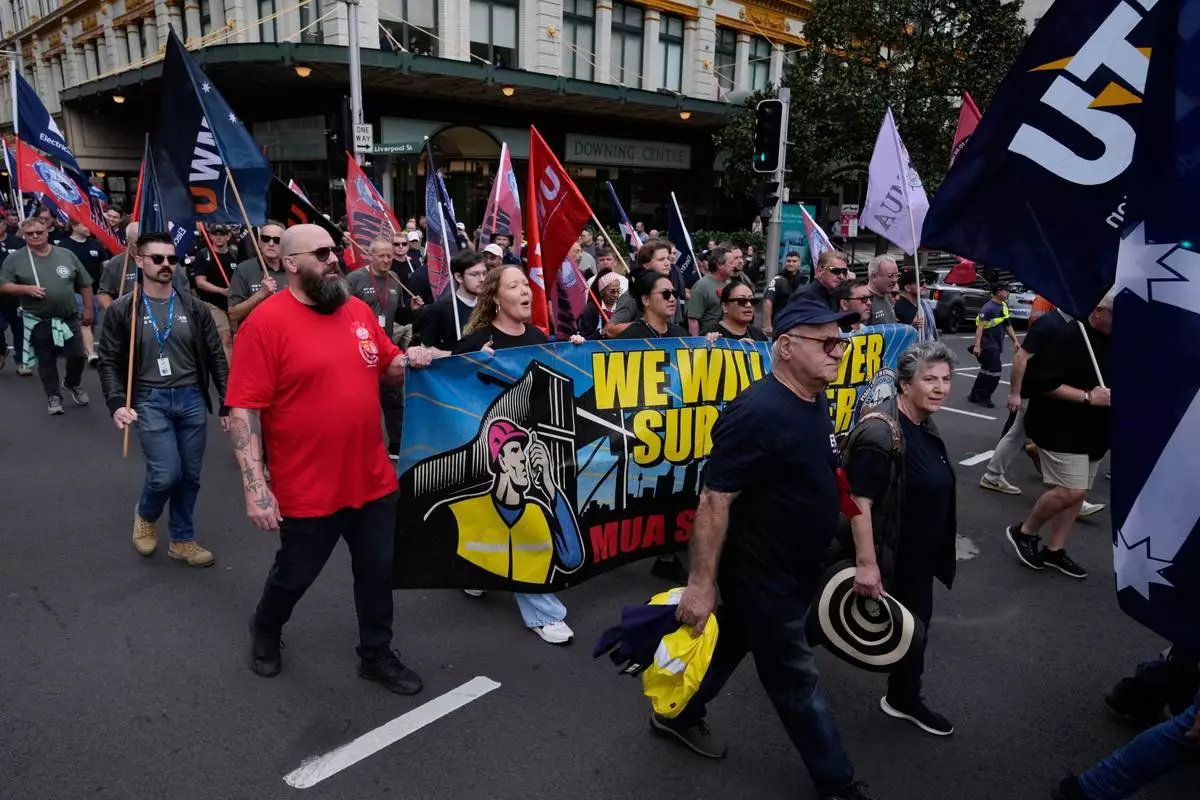
People march to mark International Workers' Day, also known as May Day, in Sydney, Friday, May 1, 2026. (AP Photo/Rick Rycroft)
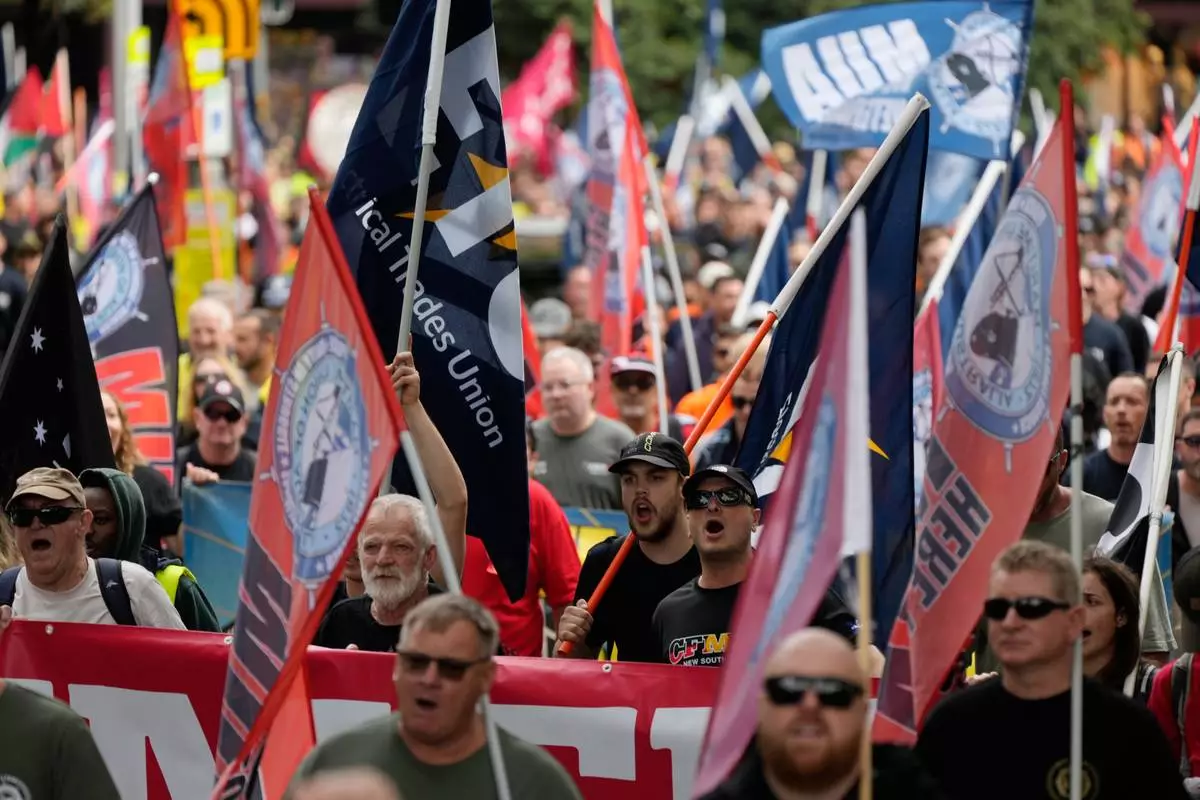
People march to mark International Workers' Day, also known as May Day, in Sydney, Friday, May 1, 2026. (AP Photo/Rick Rycroft)
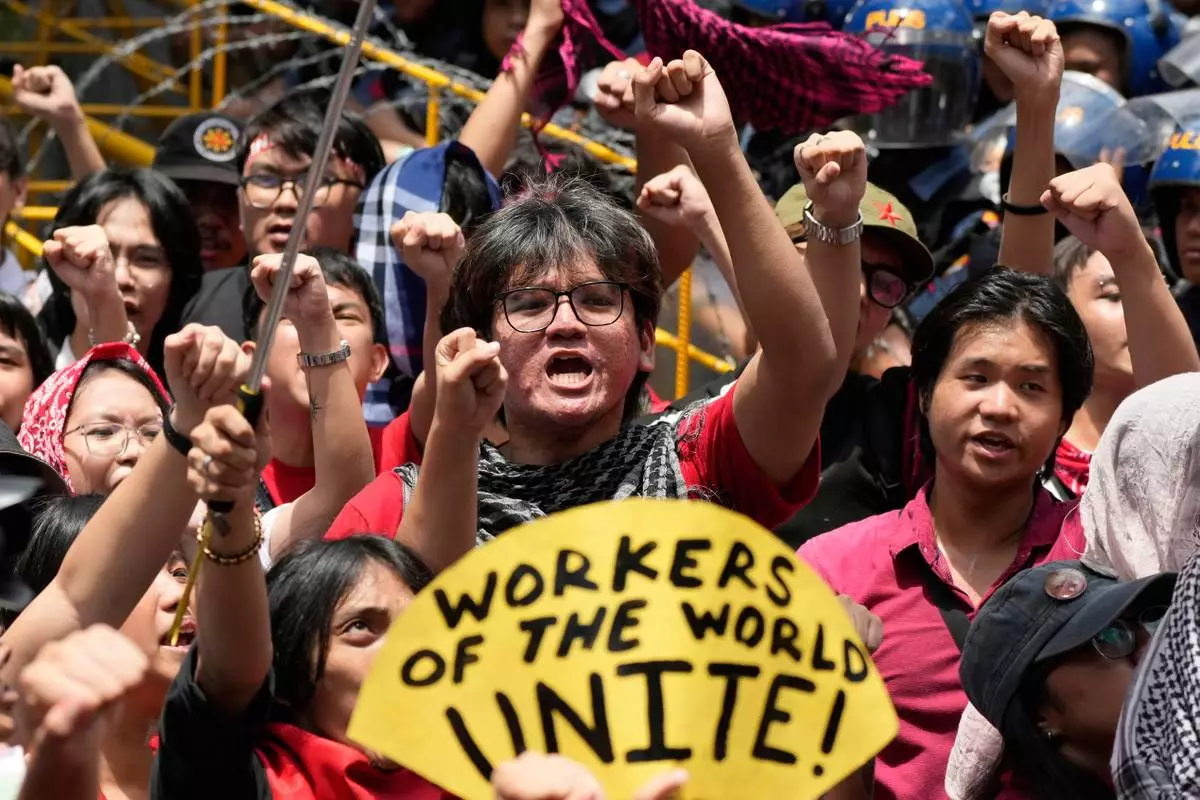
FILE - Activist and workers raise their clenched fists during a May Day rally in Manila, Philippines, May 1, 2025. (AP Photo/Aaron Favila, File)
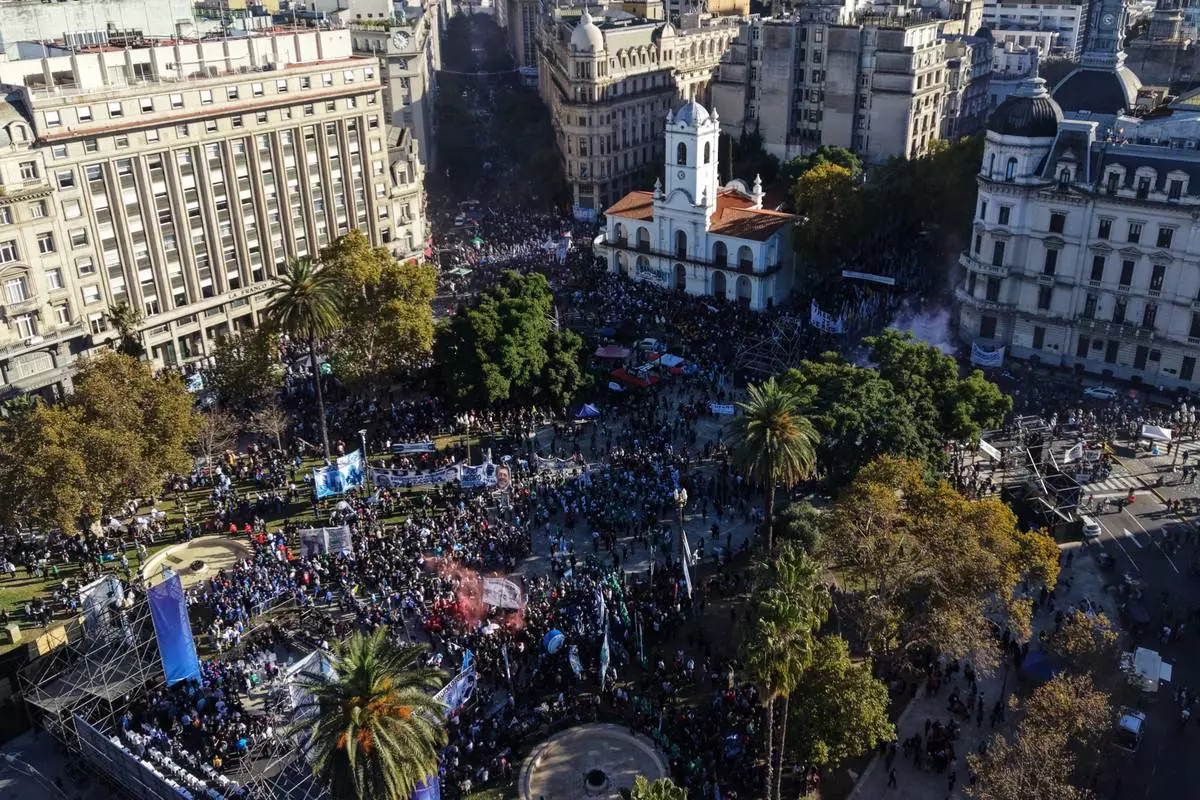
Laborers protest during a May Day demonstration in Buenos Aires, Argentina, Thursday, April 30, 2026. (AP Photo/Rodrigo Abd)
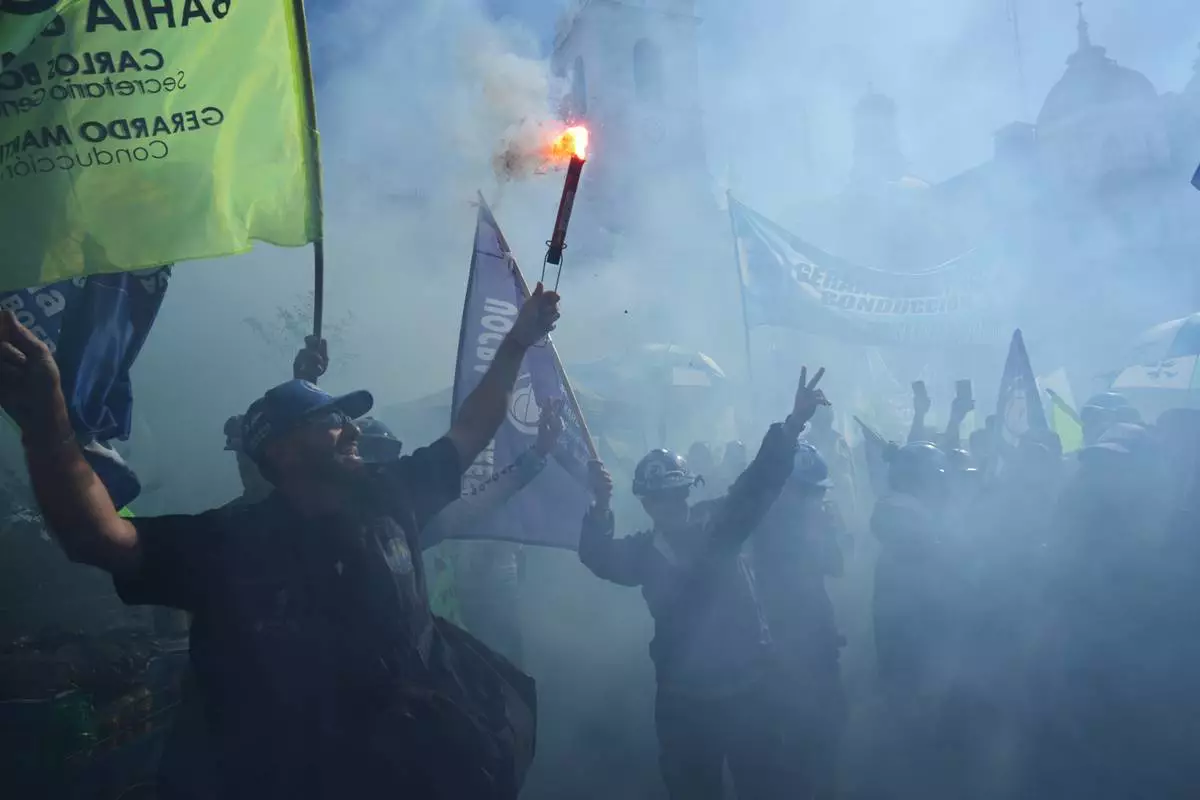
Laborers hold flares during a May Day demonstration in Buenos Aires, Argentina, Thursday, April 30, 2026. (AP Photo/Rodrigo Abd)
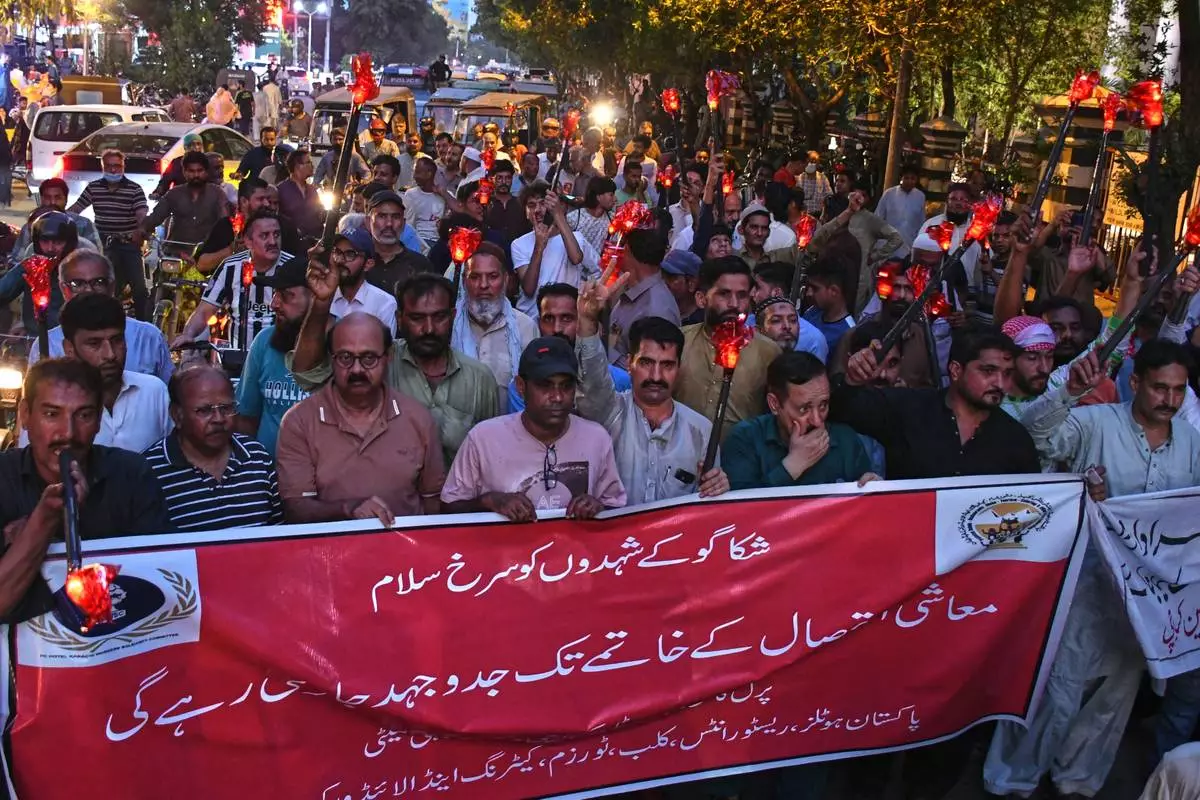
Members of trade unions take part in a rally a day ahead of the International Labor Day, in Karachi, Pakistan, Thursday, April 30, 2026. The banner in center reading as 'red salute to the martyrs of Chicago and the struggle will continue until economic exploitation is ended' (AP Photo/Ali Raza)
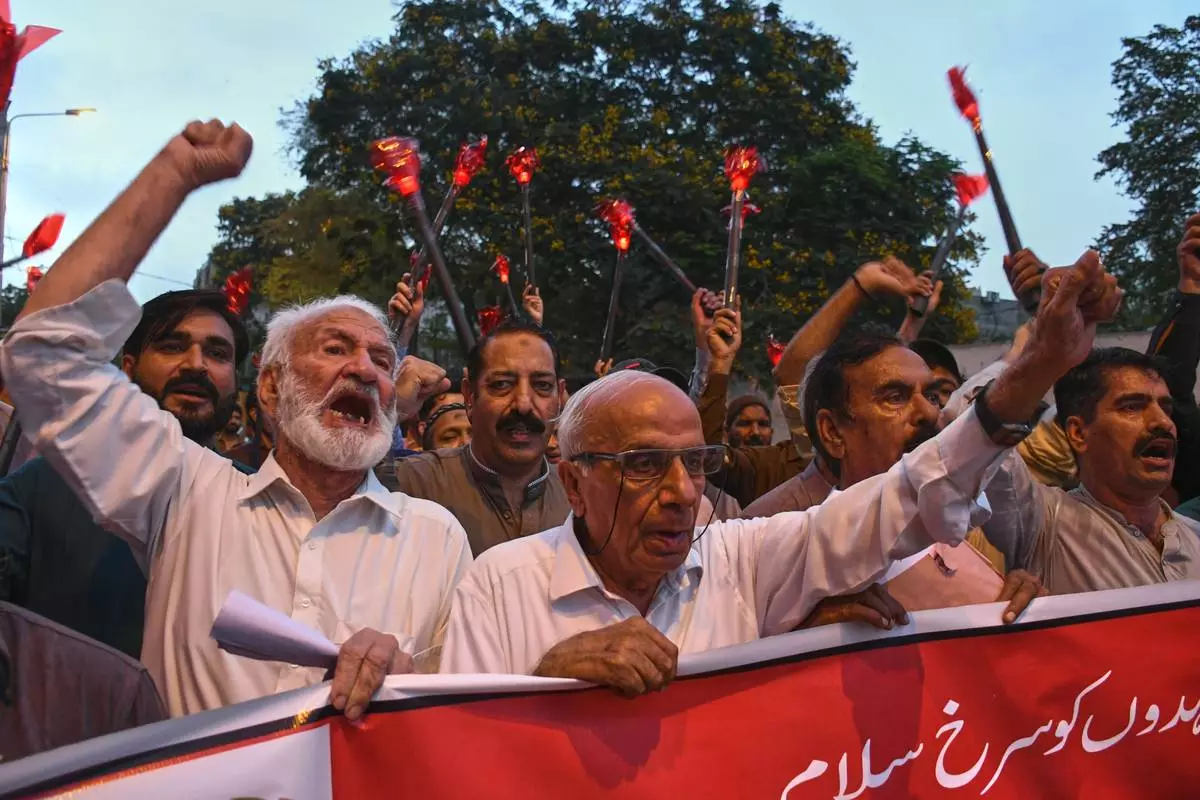
Members of trade unions take part in a rally a day ahead of the International Labor Day, in Karachi, Pakistan, Thursday, April 30, 2026. (AP Photo/Ali Raza)