Director-General of the World Health Organization Tedros Adhanom Ghebreyesus on Wednesday called for joint efforts to ensure peace and provide sufficient space for the completion of the mass polio vaccination campaign for children in the Gaza Strip. Amid the continuing conflict, WHO and its partners launched the second round of a polio vaccination campaign on Monday, aiming to immunize over half a million children.
At a press conference held at the WHO headquarters in Geneva, Tedros briefed the media on the latest situation in Gaza after the WHO and its partners began the second round of its vaccine campaign targeting more than half a million children on Monday.
"A minimum of two doses of vaccine are needed to interrupt poliovirus transmission. This will only be achieved if at least 90 percent of all eligible children are vaccinated in all communities and neighborhoods. In this round, children will also receive vitamin A to help boost their immunity," he said.
Tedros added that nearly 157,000 children had already received a second dose of the polio vaccine in central Gaza in the first two days of the latest vaccination round.
The first round was implemented across three phases in early September, vaccinating more than 559,000 children, after Gaza recorded the first case of poliovirus infection in 25 years in August.
The WHO chief also urged Israel to grant access to northern Gaza, where increasing levels of violence have blocked humanitarian missions from delivering critical food and medical supplies.
"Escalating violence in the north of Gaza has blocked humanitarian missions from reaching people with food and medical supplies. In the first half of October, only one UN mission out of 54 to northern Gaza was successfully facilitated. The rest were denied, cancelled or impeded. Under international humanitarian law, all actors have a duty to ensure health care is protected, and not attacked," Tedros said.
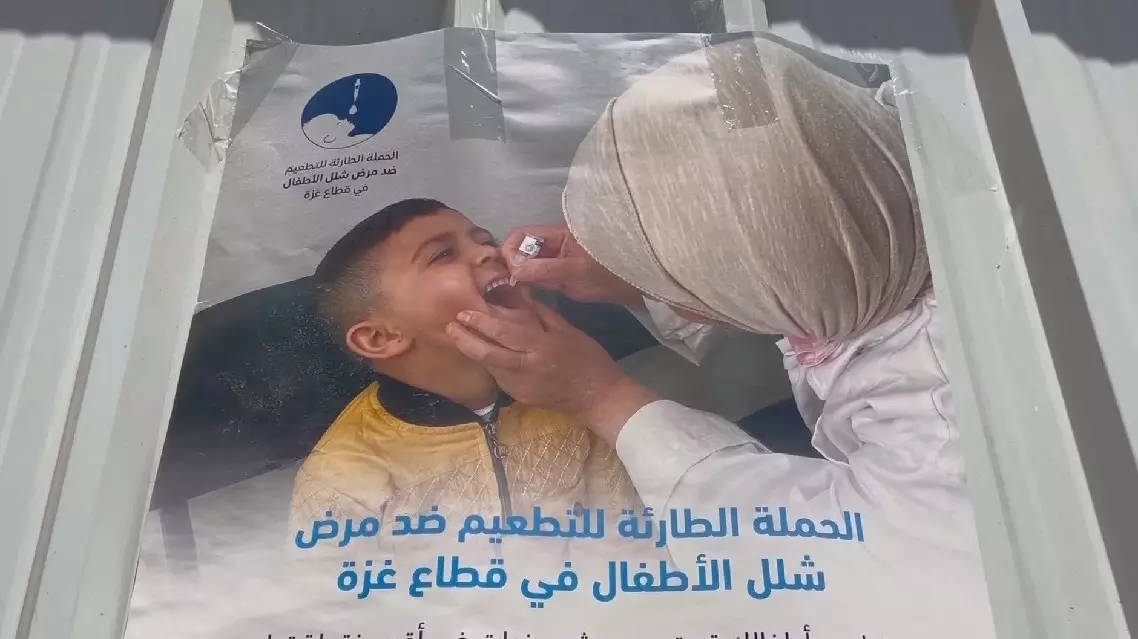
WHO calls for peace, space to complete polio vaccination in Gaza
China's achievements in poverty alleviation and rural revitalization have set examples for the rest of the world, with rural tourism playing a key role in transforming impoverished villages into thriving tourist destinations through agriculture-tourism integration, said UN Tourism Executive Director Liu Shijun.
The country now boasts a total of 19 "Best Tourism Villages" as recognized by the UN Tourism agency. These rural areas have become thriving economic hubs.
In a recent interview with China Global Network Television (CGTN), Liu said that China's tourism villages are showing the world how to defeat poverty and achieve rural revitalization.
"China really has a lot to share. Countries just starting out in tourism, as well as developing nations, can learn a lot from China - and even developed countries can, too. Take the 'Best Tourism Villages.' China has 19 of them. They serve as global examples of poverty alleviation and rural revitalization. No matter the size or development level of your country, there is something valuable you can learn. If you're looking for a roadmap on how to do it, the blueprint is right there," Liu said.
"This all comes down to China’s ongoing efforts to fight poverty and boost rural areas. As we know, over the past decade or so, the Chinese government has lifted nearly 100 million people out of poverty. So, we have some fantastic case studies, like the Azheke Project in Yunnan and the sites in Anji. Beyond just enjoying the event, they were able to use their own eyes to see the real changes happening in rural China. We have already passed the stage of basic poverty alleviation. We have entered the era of rural revitalization. Now, it's about how to build on that success and keep moving forward," he said.
UN Tourism's continuous recognition of China's rural destinations attests to the exemplary work of China's rural tourism industry and to global acclaim for the drastic changes taking place in rural China.

China's poverty alleviation experience through rural tourism sets example for world