PHOENIX (AP) — It was Donald Trump's mispronunciation that first caught attention.
“Also, we have many Asur-Asians in our room,” Trump said at a weekend rally in Prescott Valley, Arizona. “We have some incredible people in our room.”
Asur-Asians?
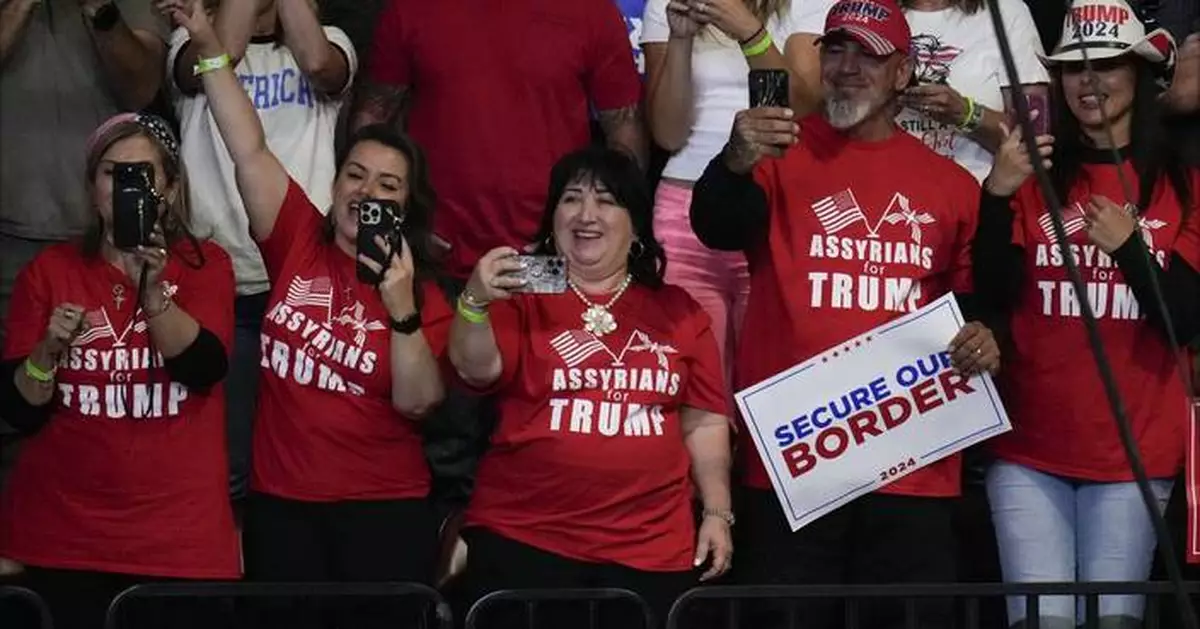
It turns out the former president was trying to shout out a small group of Assyrians supporting his campaign. They'd been given prominent seats right behind him, donning red “Assyrians for Trump” shirts as he spoke in a packed arena 90 minutes north of Phoenix.
Assyrians, a Christian indigenous group tracing their ancestry to ancient Mesopotamia in the modern Middle East, are a tiny minority community in the United States, but they happen to have significant communities in two of the seven swing states that will decide the Nov. 5 election, Michigan and Arizona. That could give them outsized influence in an election that polls show is essentially tied.
“Thank you, President Trump, for making a mistake in our name,” said Sam Darmo, a Phoenix real estate agent and a co-founder of Assyrians for Trump who was seated behind the president at the rally. “Because you know what? Assyrians became very famous. More Americans know who the Assyrians are today than they did back on Sunday.”
Assyrians hail from portions of what is now Iraq, Iran, Syria and Turkey. They are descendants of a powerful Middle Eastern empire and early followers of Christianity whose language is a form of Aramaic, the language scholars believe Jesus Christ spoke.
Many Assyrians, some identifying as Chaldean or Syriac, have fled centuries of persecution and genocide in their homeland, most recently at the hands of the Islamic State group. Ancient relics have been destroyed or stolen and trafficked.
About 95,000 people living in the United States identify their ancestry as Assyrian/Chaldean/Syriac, according to U.S. Census Bureau data from 2022. By far the largest concentration is in Michigan, a battleground state home to 38,000 Assyrians. About 5,000 Assyrians live in Arizona. The other five battleground states have fewer than 500 Assyrians each. California and the Chicago area also have large Assyrian communities but are not politically competitive.
Throughout the global Assyrian diaspora, the community has pushed to build monuments to preserve the memory of the atrocities they have faced, including the 1915 deportation and massacre of Assyrians, Armenians and Greeks by the Ottoman Turks. They've also pushed to convince local and national governments to formally recognize the massacre as a genocide, a term widely accepted by historians. Such declarations are vehemently fought by Turkey, which denies the deaths constituted genocide, saying the toll has been inflated and that those killed were victims of civil war and unrest.
Trump pronounced Assyrian correctly in an interview released Thursday with podcaster Patrick Bet-David, who is Assyrian and Armenian.
“You know why they were there?” Trump said. “They were so nice. I met them, the Assyrians. They said, 'Could you give us a shout out?' I said, ‘Who are you?’ I didn’t know. They said, ‘We’re Assyrians.' I said, ‘What’s that mean?’ But they were really nice people. But I said — I think I mispronounced it.”
Darmo confirmed Trump's account, saying he asked Trump for the favor while four Assyrians posed with Trump before the rally. He said the former president instructed an aide to add a shoutout to the teleprompter and speculated that the aide may have misspelled Assyrians in the script.
“We want the Americans to know who we are, and how much we suffered, and how many massacres, genocides have been committed against our people in the Middle East,” Darmo said.
Trump sent his son, Eric Trump, to court Assyrians in Phoenix shortly before the 2020 election.
Ramond Takhsh, director of advocacy and outreach for the Assyrian American Association of Southern California, said the community, like all ethnic groups, is not monolithic, and the reaction to Trump's mangled shout-out was not universal.
“We have a diverse spectrum of political viewpoints just like any other ethnic group,” Takhsh said. “Some Assyrians are happy with the recognition that came from former President Trump’s mispronunciation but some are not.”
Mona Oshana, an Iraqi-born Assyrian American who co-founded Assyrians for Trump during his first campaign, said the GOP is a good fit for a religious population that fled persecution by authoritarian governments.
“We are an America First community because we came to America based on the echo of freedom and the Constitution,” Oshana said. “We often say we were Americans before coming to America, because we believed in the liberties of America, we believed in the Constitution, we believed in the fight of America.”
Democratic Vice President Kamala Harris ' campaign also has a grassroots organizing group, Chaldeans and Assyrians for Harris Walz, which is particularly active in Michigan.
Some in the Assyrian community were infuriated by Trump's immigration policies, which significantly curtailed refugee resettlement in the United States. Some were affected by his travel ban restricting entry to the country from seven Muslim-majority countries, including Iran, Iraq and Syria.
A low point was the 2019 death in Baghdad of a 41-year-old Chaldean man who had lived in the U.S. since he was an infant. Jimmy Al-Daoud, who had a history of diabetes and mental illness, was deported for committing multiple crimes in the U.S.
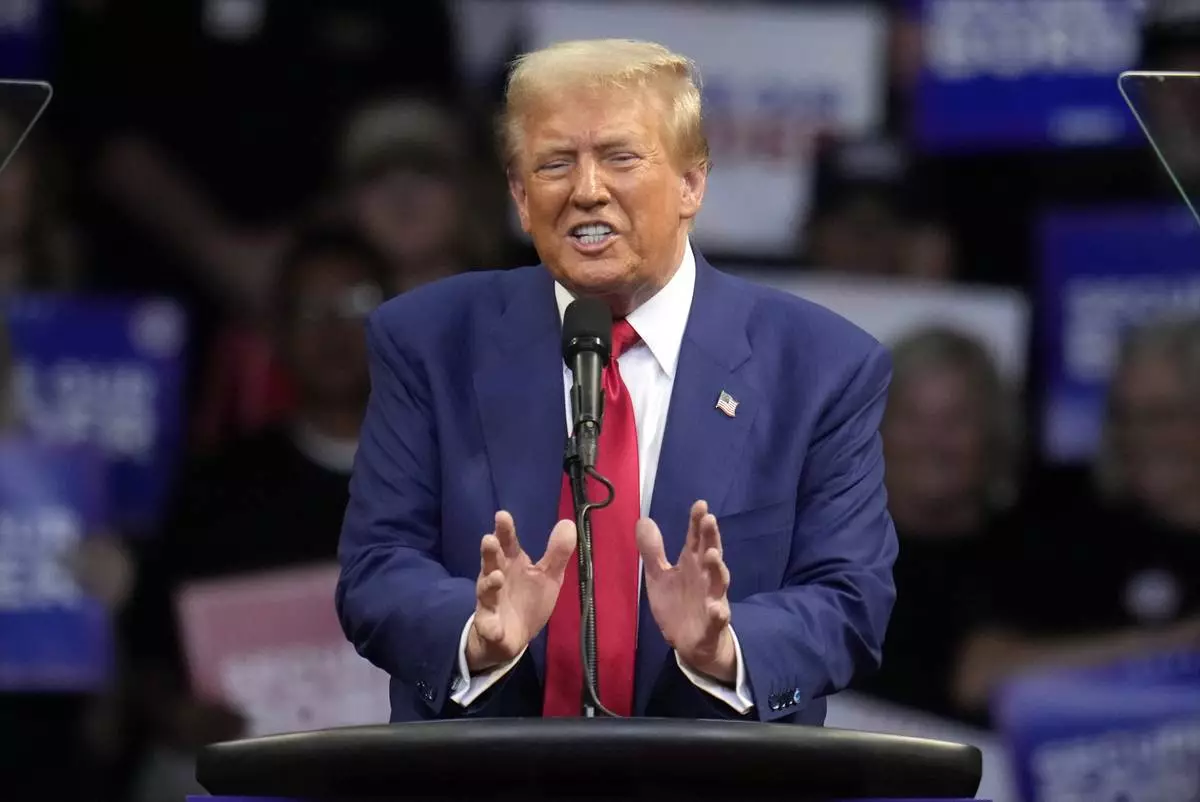
Republican presidential nominee former President Donald Trump speaks at a campaign rally at the Findlay Toyota Arena Sunday, Oct. 13, 2024, in Prescott Valley, Ariz. (AP Photo/Ross D. Franklin)
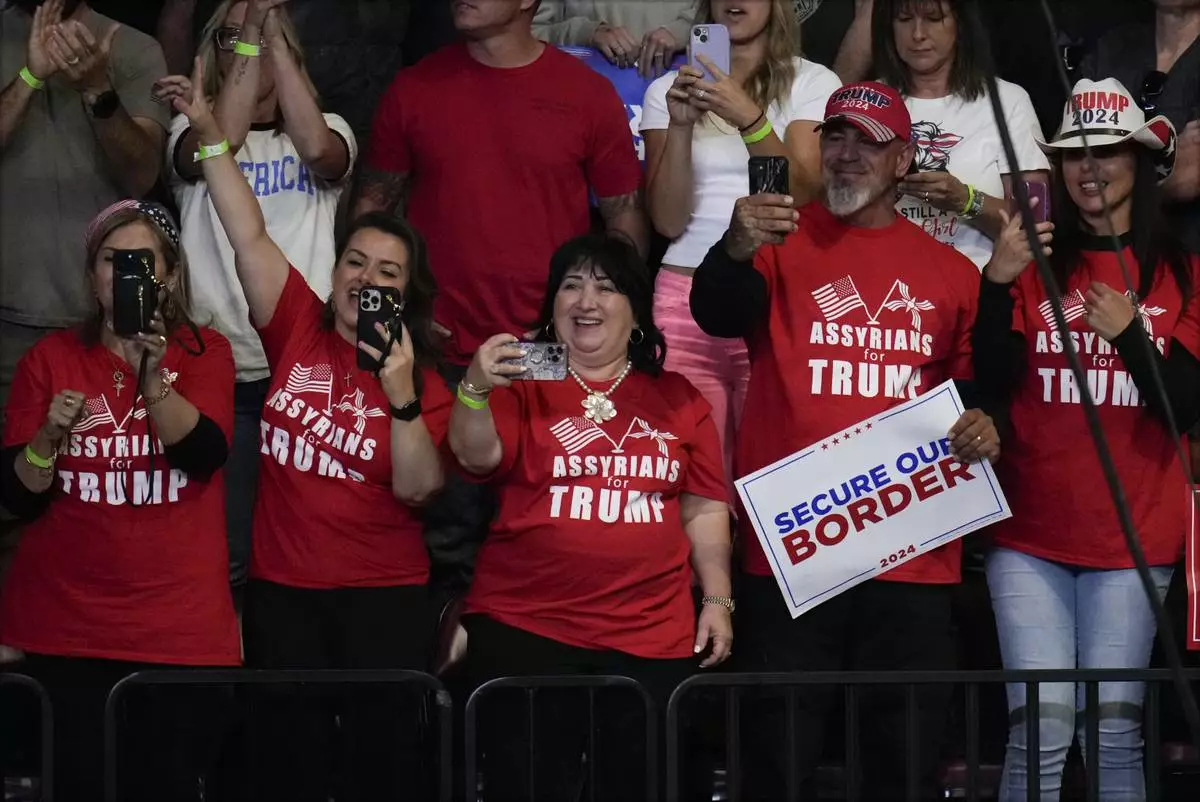
Supporters react before Republican presidential nominee former President Donald Trump speaks at a campaign rally at the Findlay Toyota Arena Sunday, Oct. 13, 2024, in Prescott Valley, Ariz. (AP Photo/Ross D. Franklin)
MINNEAPOLIS (AP) — Federal agents carrying out immigration arrests in Minnesota's Twin Cities region already shaken by the fatal shooting of a woman rammed the door of one home Sunday and pushed their way inside, part of what the Department of Homeland Security has called its largest enforcement operation ever.
In a dramatic scene similar to those playing out across Minneapolis, agents captured a man in the home just minutes after pepper spraying protesters outside who had confronted the heavily armed federal agents. Along the residential street, protesters honked car horns, banged on drums and blew whistles in attempts to disrupt the operation.
Video of the clash taken by The Associated Press showed some agents pushing back protesters while a distraught woman later emerged from the house with a document that federal agents presented to arrest the man. Signed by an immigration officer, the document — unlike a warrant signed by a judge — does not authorize forced entry into a private residence. A warrant signed by an immigration officer only authorizes arrest in a public area.
Immigrant advocacy groups have conducted extensive “know-your-rights” campaigns urging people not to open their doors unless agents have a court order signed by a judge.
But within minutes of ramming the door in a neighborhood filled with single-family homes, the handcuffed man was led away.
More than 2,000 immigration arrests have been made in Minnesota since the enforcement operation began at the beginning of December, said Homeland Security spokesperson Tricia McLaughlin.
Homeland Security Secretary Kristi Noem told Fox News on Sunday that the administration would send additional federal agents to Minnesota to protect immigration officers and continue enforcement.
The Twin Cities — the latest target in President Donald Trump’s immigration enforcement campaign — is bracing for what is next after 37-year-old Renee Good was shot and killed by an immigration officer on Wednesday.
“We’re seeing a lot of immigration enforcement across Minneapolis and across the state, federal agents just swarming around our neighborhoods,” said Jason Chavez, a Minneapolis city councilmember. “They’ve definitely been out here.”
Chavez, the son of Mexican immigrants who represents an area with a growing immigrant population, said he is closely monitoring information from chat groups about where residents are seeing agents operating.
People holding whistles positioned themselves in freezing temperatures on street corners Sunday in the neighborhood where Good was killed, watching for any signs of federal agents.
More than 20,000 people have taken part in a variety of trainings to become “observers” of enforcement activities in Minnesota since the 2024 election, said Luis Argueta, a spokesperson for Unidos MN, a local human rights organization .
“It’s a role that people choose to take on voluntarily, because they choose to look out for their neighbors,” Argueta said.
The protests have been largely peaceful, but residents remained anxious. On Monday, Minneapolis public schools will start offering remote learning for the next month in response to concerns that children might feel unsafe venturing out while tensions remain high.
Many schools closed last week after Good’s shooting and the upheaval that followed.
While the enforcement activity continues, two of the state’s leading Democrats said that the investigation into Good's shooting death should not be overseen solely by the federal government.
Minneapolis Mayor Jacob Frey and U.S. Sen. Tina Smith said in separate interviews Sunday that state authorities should be included in the investigation because the federal government has already made clear what it believes happened.
“How can we trust the federal government to do an objective, unbiased investigation, without prejudice, when at the beginning of that investigation they have already announced exactly what they saw — what they think happened," Smith said on ABC’s "This Week."
The Trump administration has defended the officer who shot Good in her car, saying he was protecting himself and fellow agents and that Good had “weaponized” her vehicle.
Todd Lyons, acting director of U.S. Immigration and Customs Enforcement, defended the officer on Fox News Channel’s “The Sunday Briefing.”
"That law enforcement officer had milliseconds, if not short time to make a decision to save his life and his other fellow agents,” he said.
Lyons also said the administration’s enforcement operations in Minnesota wouldn't be needed “if local jurisdictions worked with us to turn over these criminally illegal aliens once they are already considered a public safety threat by the locals.”
The killing of Good by an ICE officer and the shooting of two people by federal agents in Portland, Oregon, led to dozens of protests in cities across the country over the weekend, including New York, Los Angeles, Washington D.C. and Oakland, California.
Contributing were Associated Press journalists Giovanna Dell’Orto in Minneapolis; Thomas Strong in Washington; Bill Barrow in Atlanta; Christopher Weber in Los Angeles; and John Seewer in Toledo, Ohio.
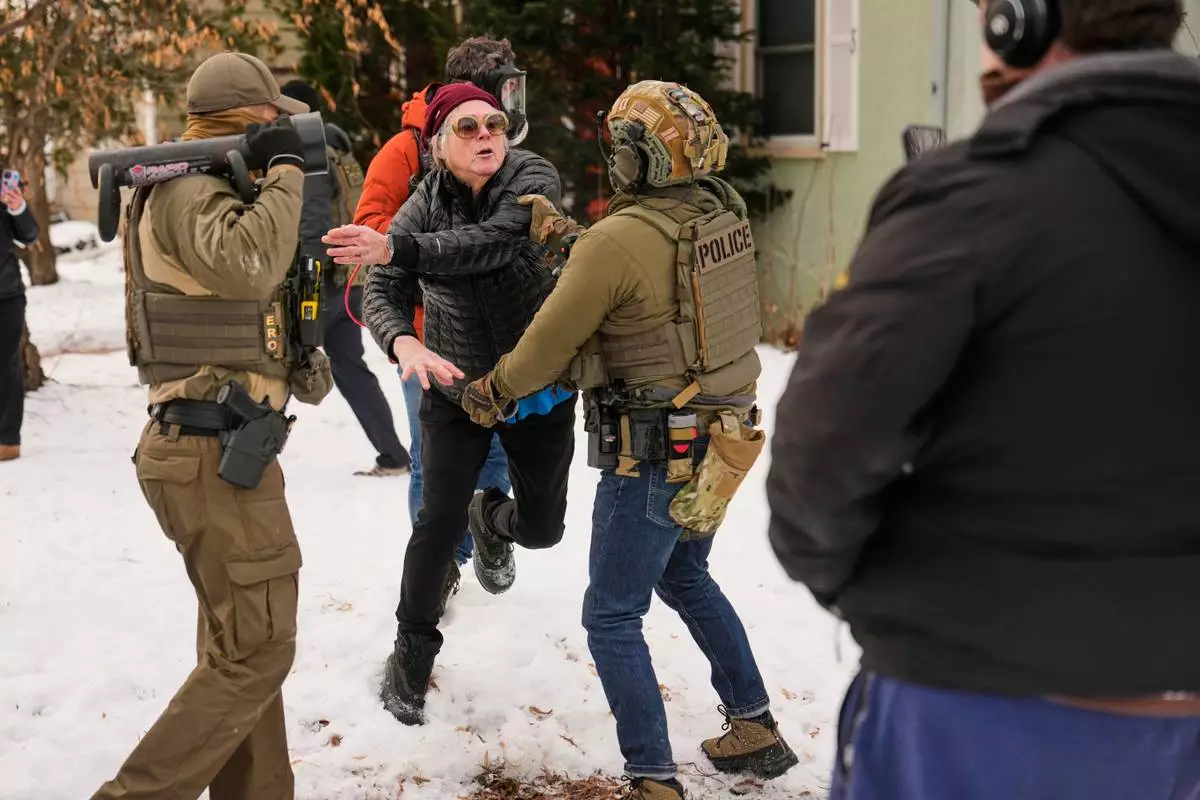
A woman gets into an altercation with a federal immigration officer as officers make an arrest Sunday, Jan. 11, 2026, in Minneapolis. (AP Photo/John Locher)
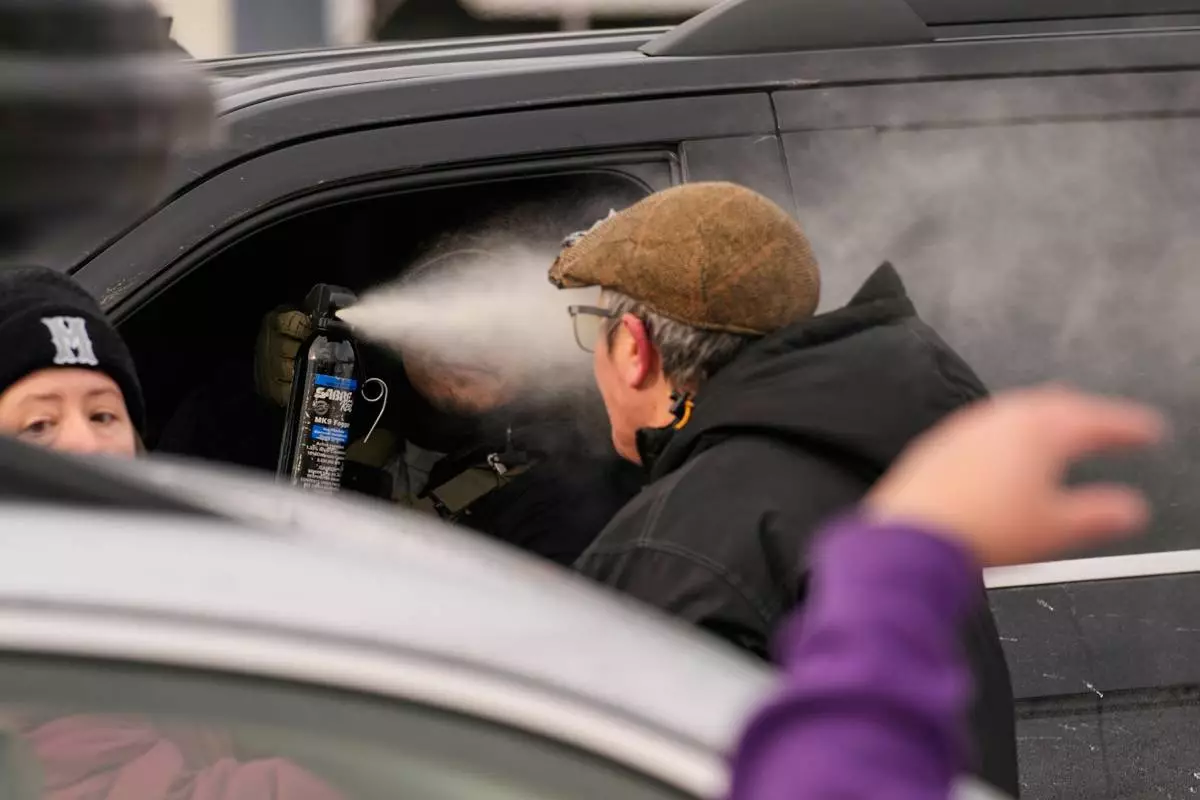
A federal immigration officer deploys pepper spray as officers make an arrest Sunday, Jan. 11, 2026, in Minneapolis. (AP Photo/John Locher)
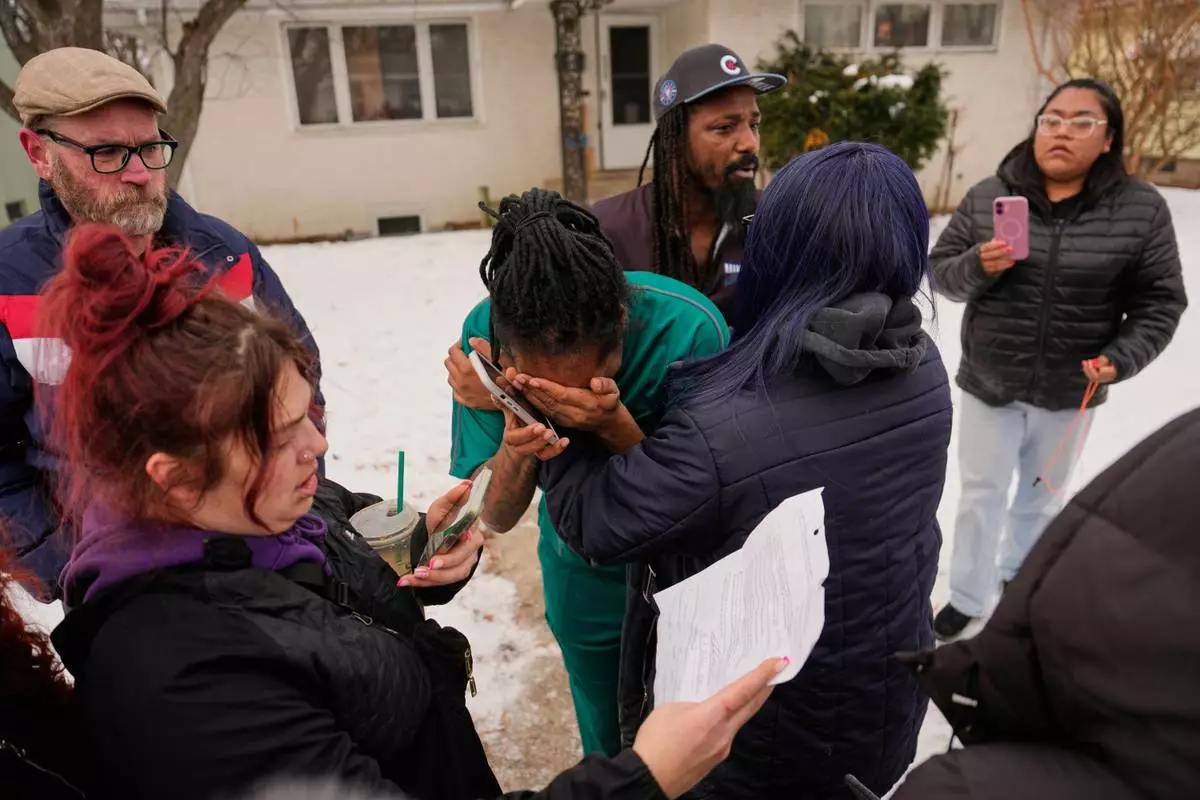
A family member, center, reacts after federal immigration officers make an arrest Sunday, Jan. 11, 2026, in Minneapolis. (AP Photo/John Locher)
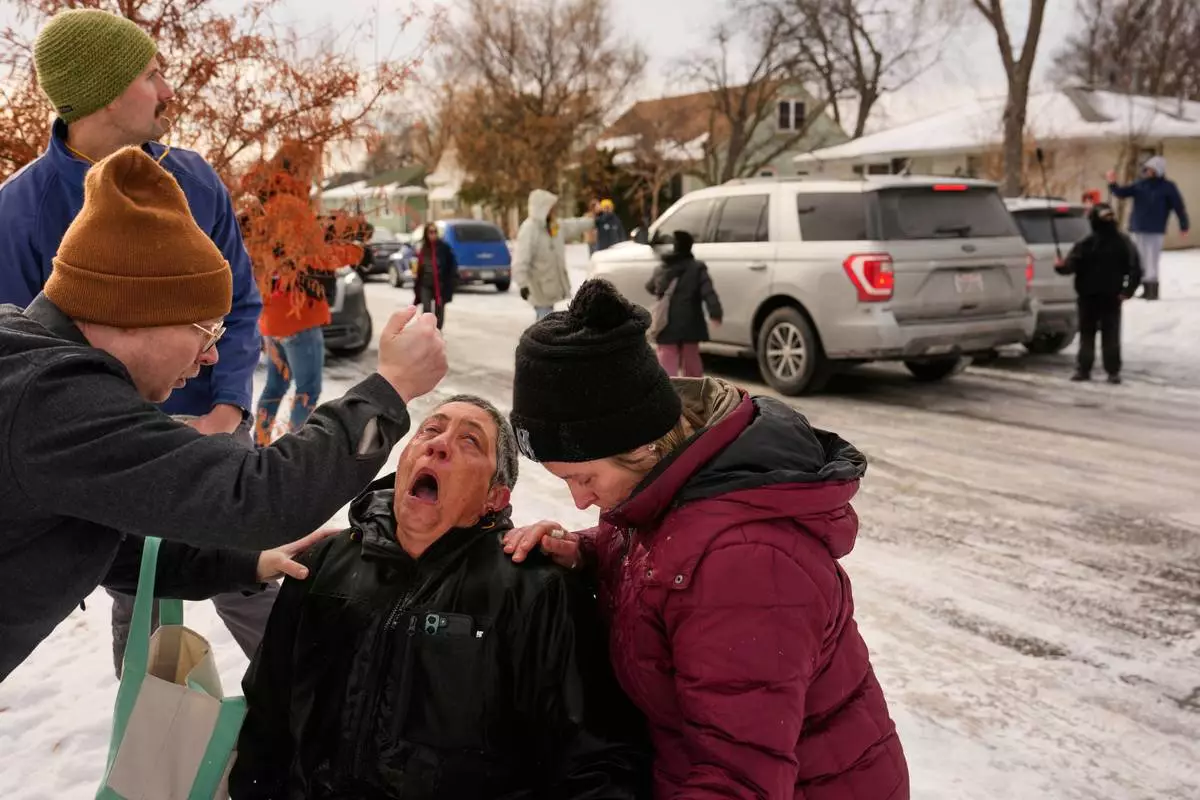
Bystanders are treated after being pepper sprayed as federal immigration officers make an arrest Sunday, Jan. 11, 2026, in Minneapolis. (AP Photo/John Locher)
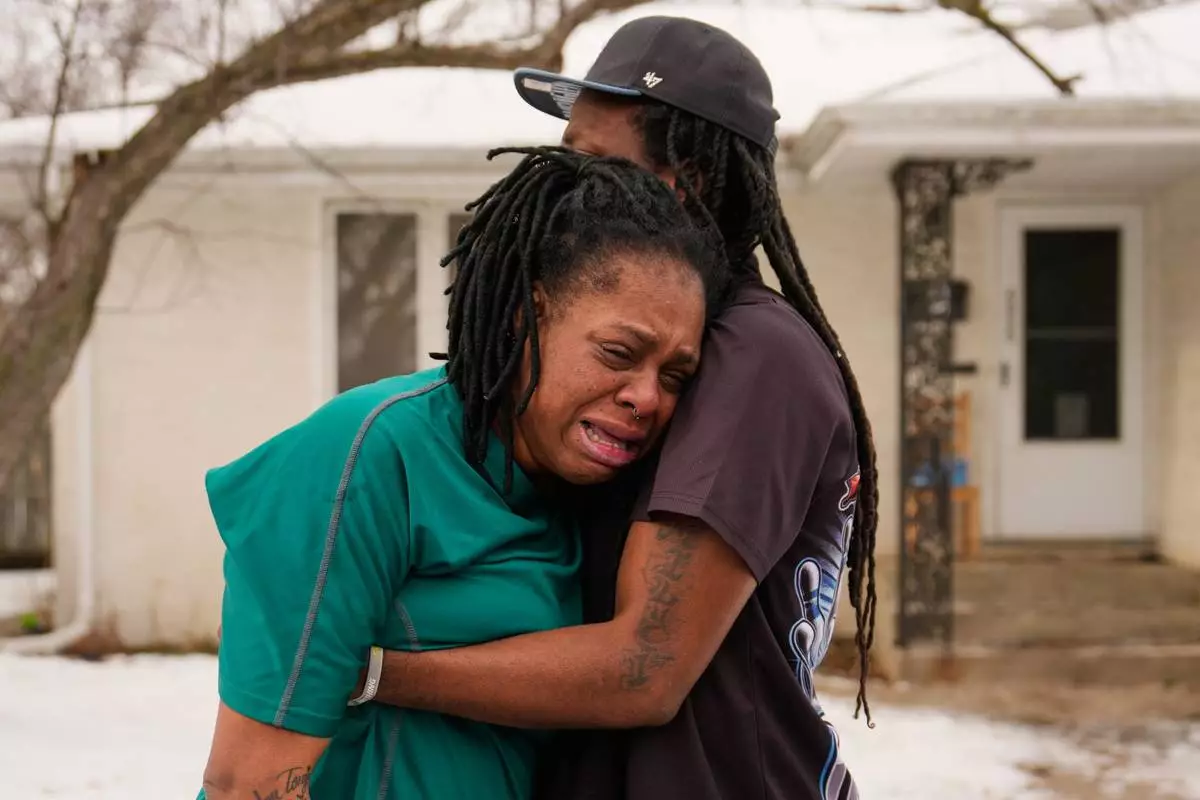
A family member reacts after federal immigration officers make an arrest Sunday, Jan. 11, 2026, in Minneapolis. (AP Photo/John Locher)
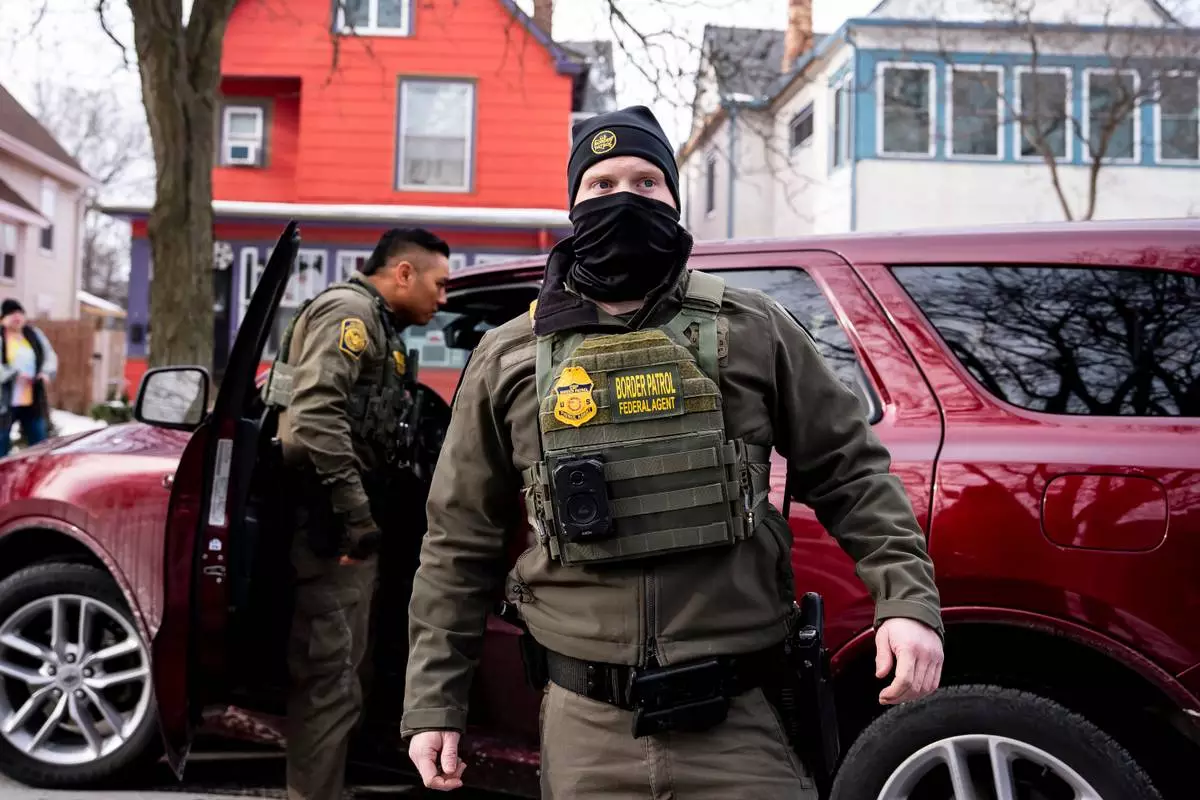
Federal agents look on after detaining a person during a patrol in Minneapolis, Minn., Sunday, Jan. 11, 2026. (Christopher Katsarov/The Canadian Press via AP)
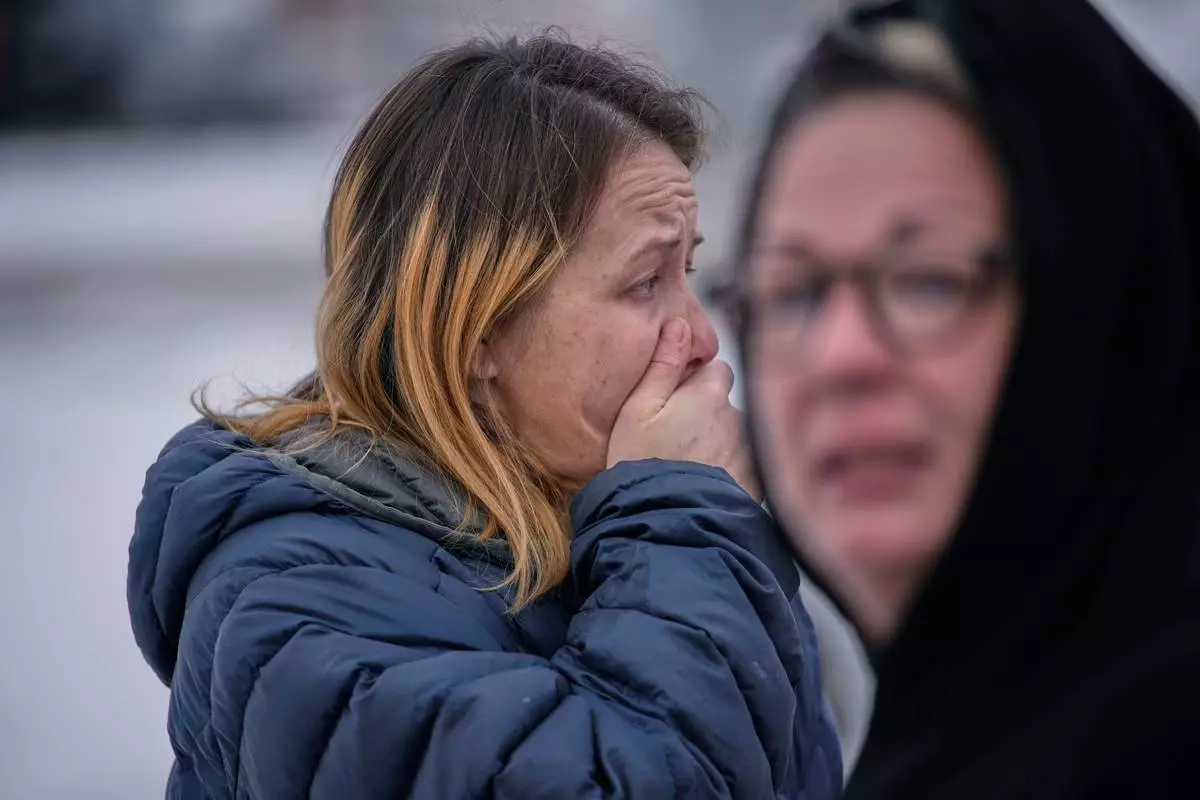
Bystanders react after a man was detained by Immigration and Customs Enforcement (ICE) agents during a traffic stop, Sunday, Jan. 11, 2026, in Robbinsdale, Minn. (AP Photo/John Locher)
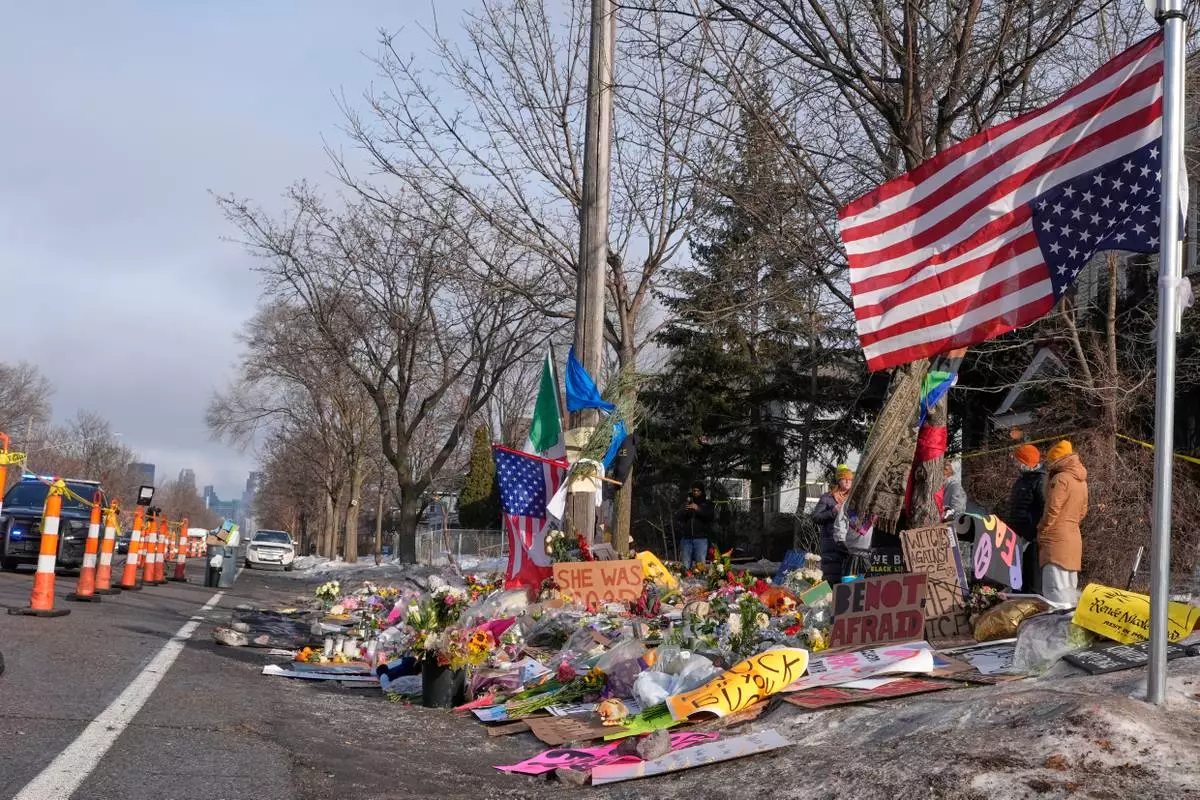
People stand near a memorial at the site where Renee Good was fatally shot by an ICE agent, Sunday, Jan. 11, 2026, in Minneapolis. (AP Photo/Jen Golbeck)
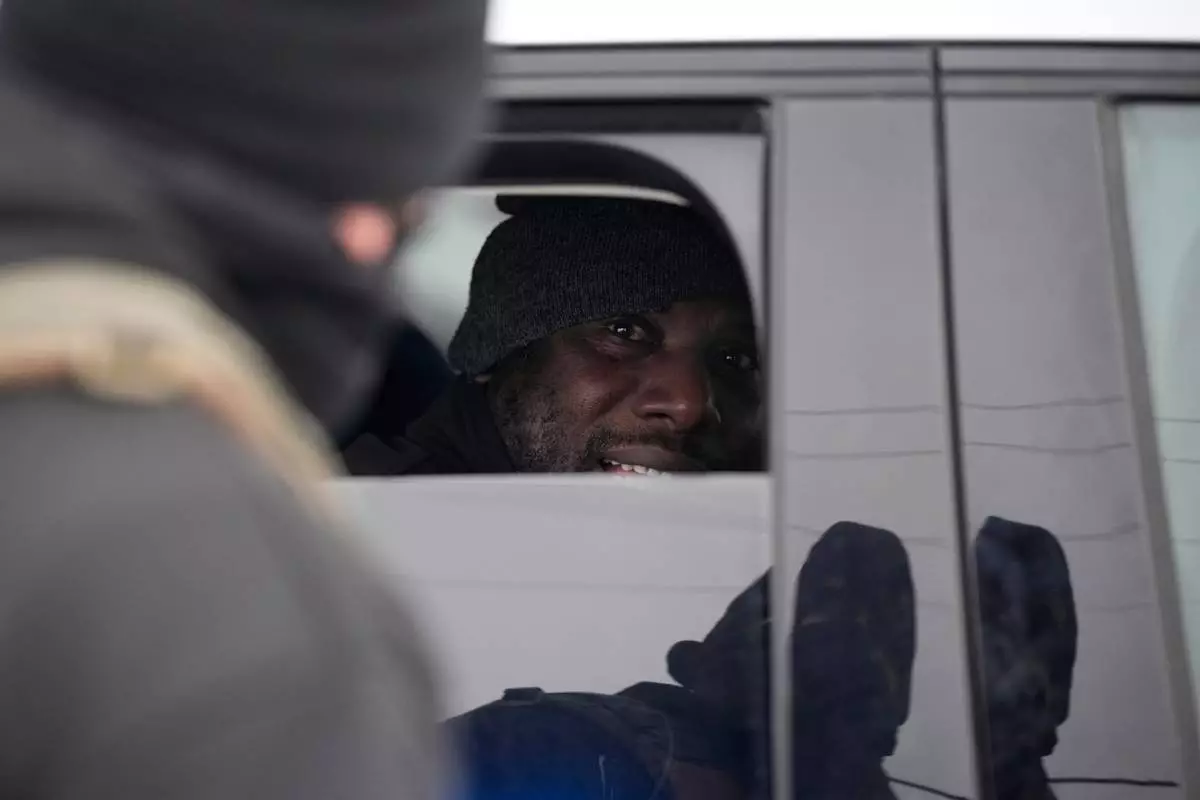
A man looks out of a car window after being detained by Immigration and Customs Enforcement (ICE) agents during a traffic stop, Sunday, Jan. 11, 2026, in Robbinsdale, Minn. (AP Photo/John Locher)
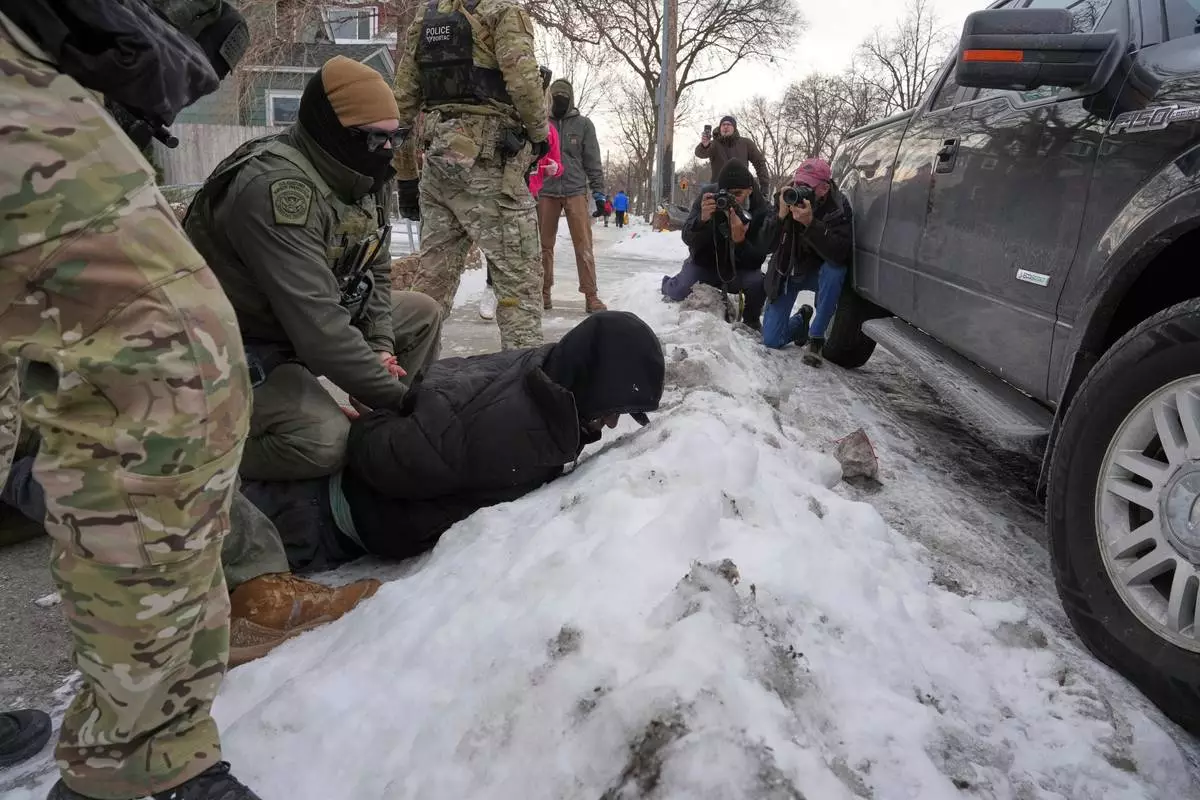
Border Patrol agents detain a man, Sunday, Jan. 11, 2026, in Minneapolis. (AP Photo/Adam Gray)
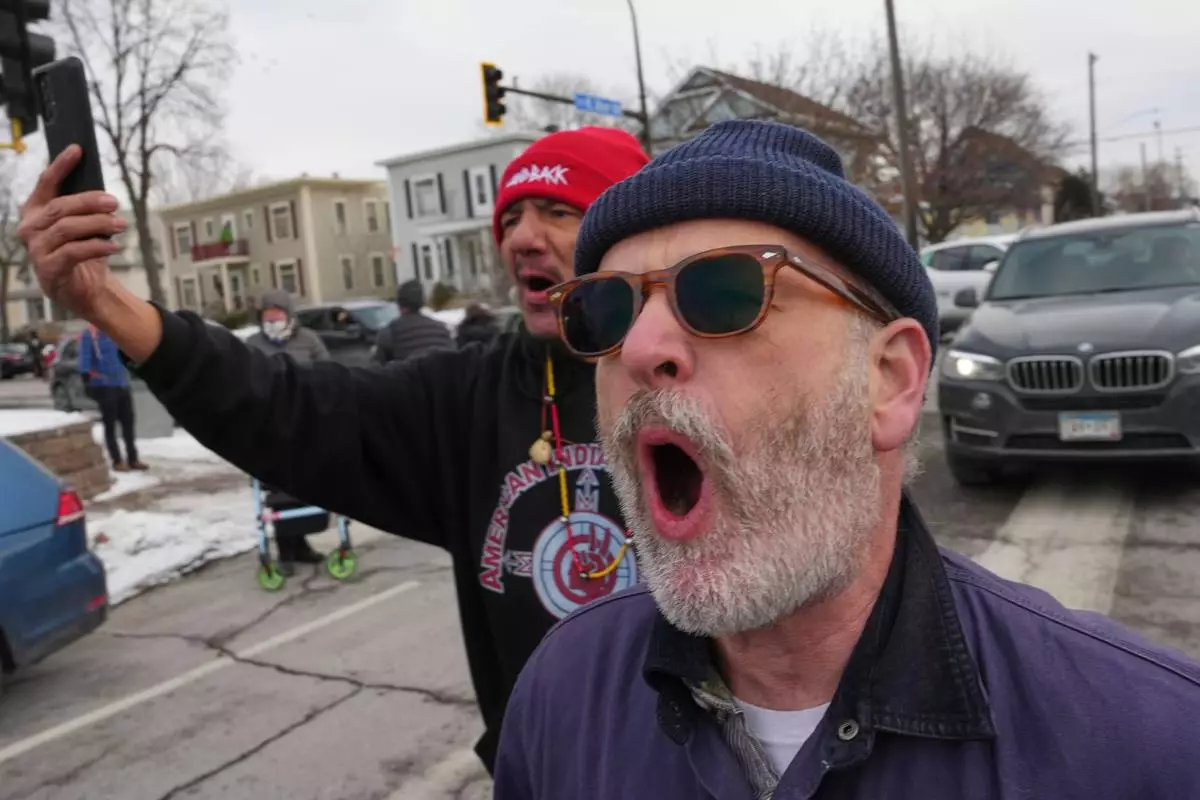
People shout toward Border Patrol agents making an arrest, Sunday, Jan. 11, 2026, in Minneapolis. (AP Photo/Adam Gray)
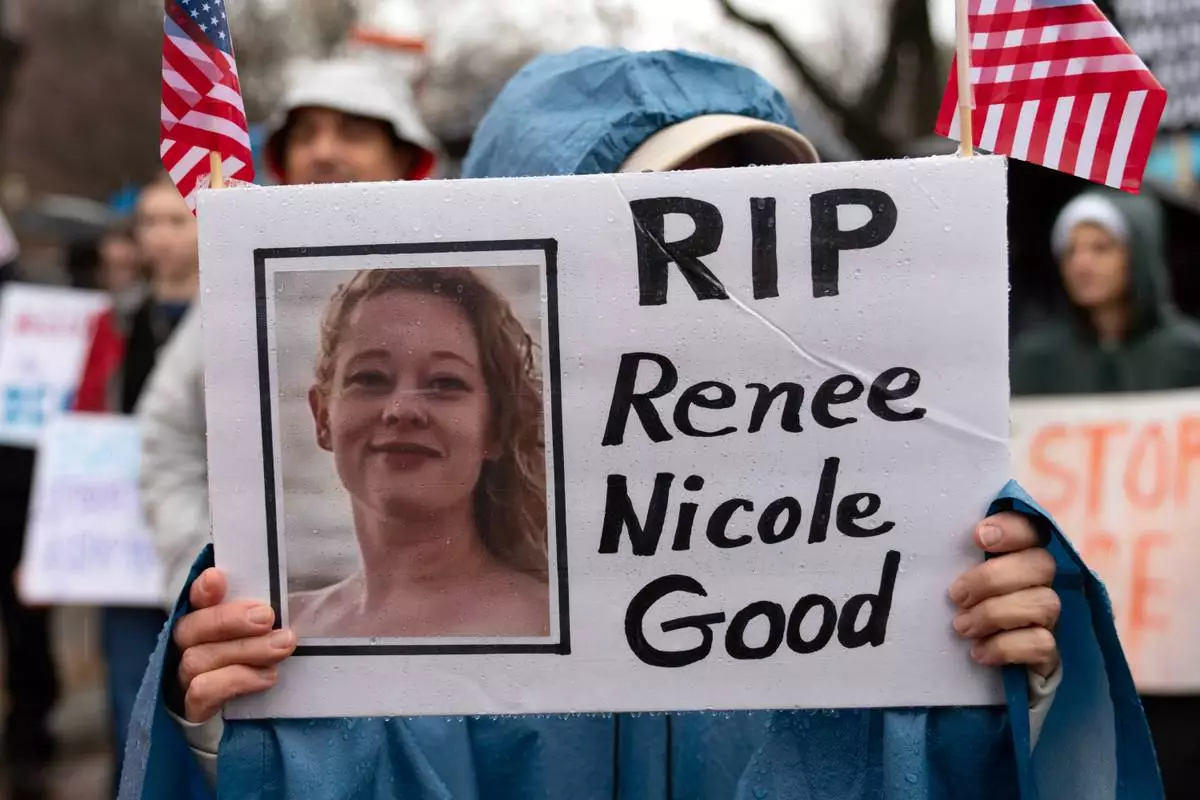
Demonstrators protest outside the White House in Washington, Saturday, Jan. 10, 2026, against the Immigration and Customs Enforcement agent who fatally shot Renee Good in Minneapolis. (AP Photo/Jose Luis Magana)
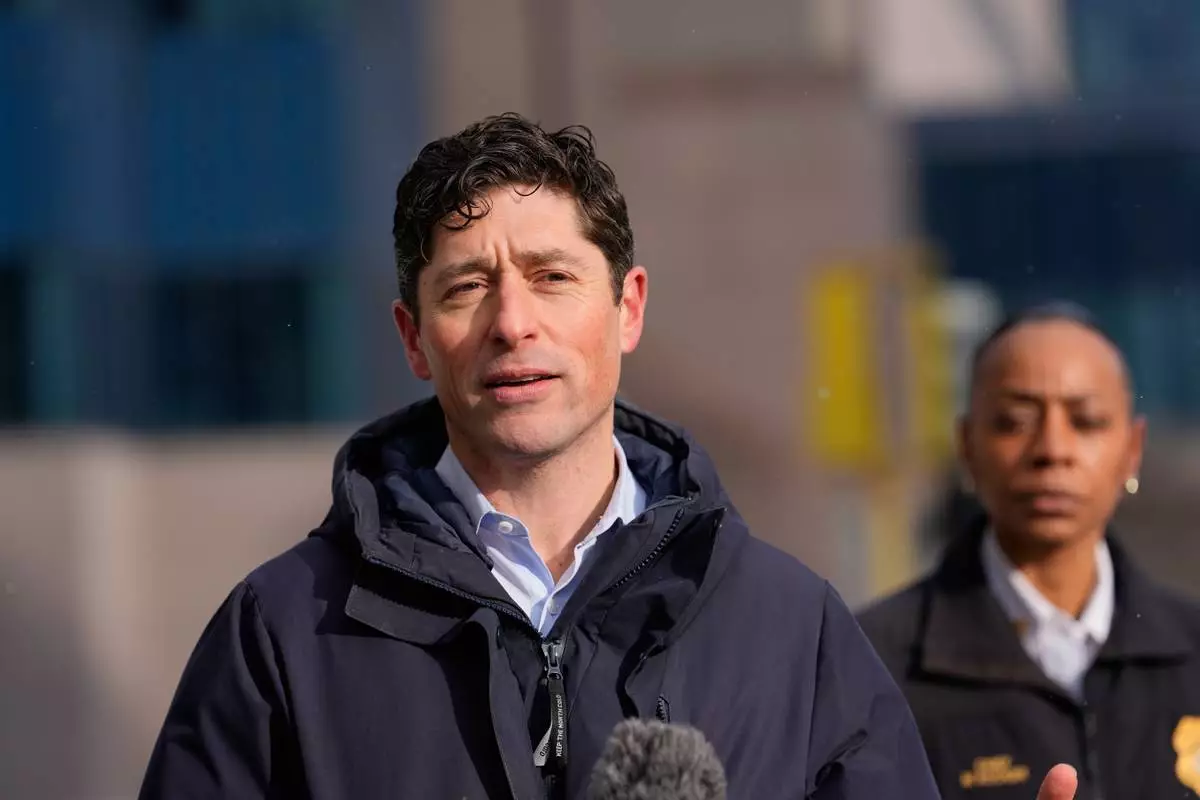
Minneapolis Mayor Jacob Frey holds a news conference on Saturday, Jan. 10, 2026, in Minneapolis. (AP Photo/Jen Golbeck)
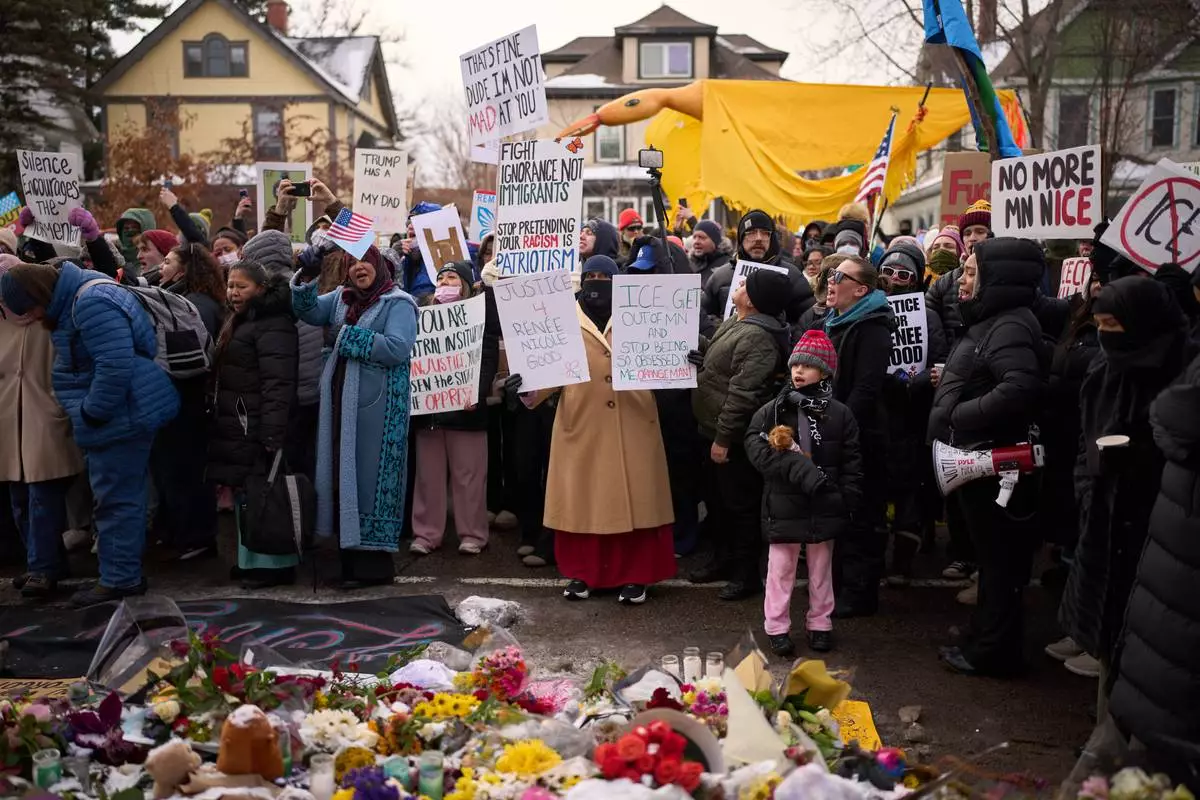
Protesters react as they visit a makeshift memorial during a rally for Renee Good, who was fatally shot by an ICE officer earlier in the week, Saturday, Jan. 10, 2026, in Minneapolis. (AP Photo/John Locher)