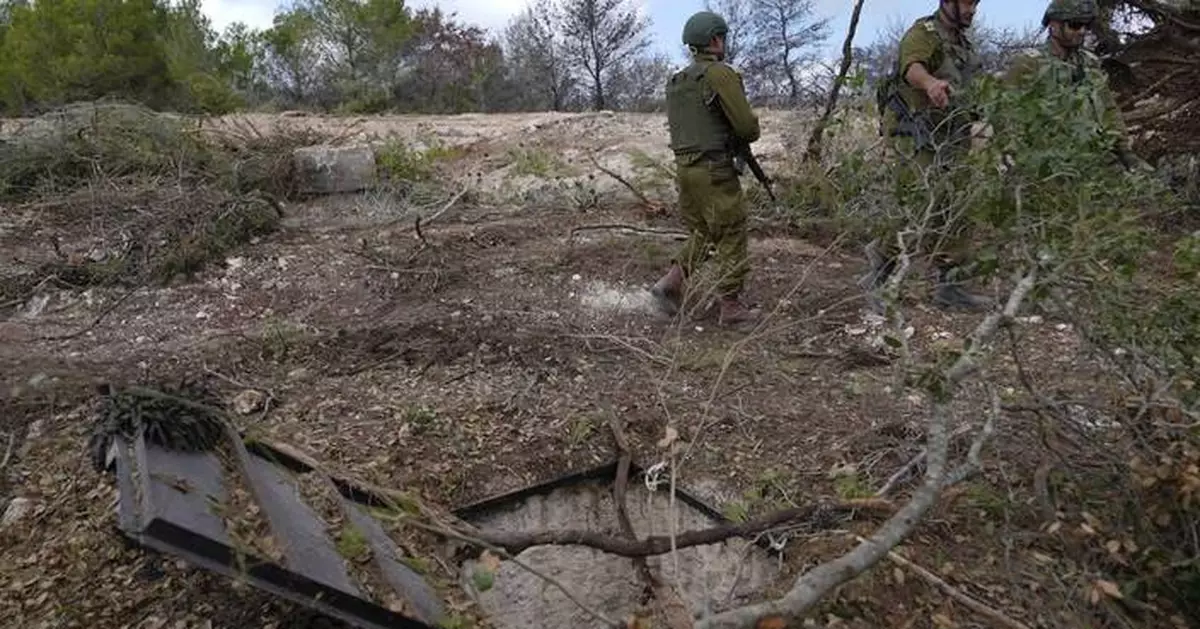
TEL AVIV, Israel (AP) — Israeli forces have spent much of the past year destroying Hamas’ vast underground network in Gaza. They are now focused on dismantling tunnels and other hideouts belonging to Hezbollah militants in southern Lebanon.
Scarred by Hamas’ deadly raid into Israel last year that sparked the war in Gaza, Israel says it aims to prevent a similar incursion across its northern border from ever getting off the ground.
Click to Gallery
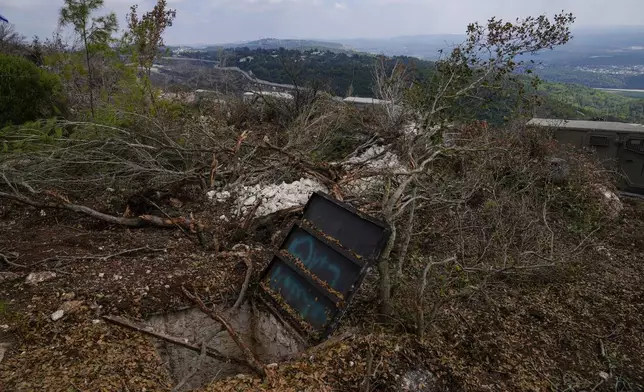
Israeli soldiers display what they say is an entrance to a Hezbollah tunnel found during their ground operation in southern Lebanon, near the border with Israel, Sunday, Oct. 13, 2024. (AP Photo/Sam McNeil)
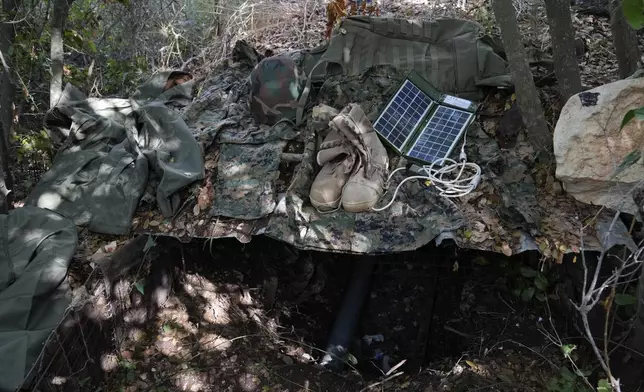
Israeli soldiers display to the media what they say is Hezbollah gear found during their ground operation in southern Lebanon, near the border with Israel, Sunday, Oct. 13, 2024. (AP Photo/Sam McNeil)
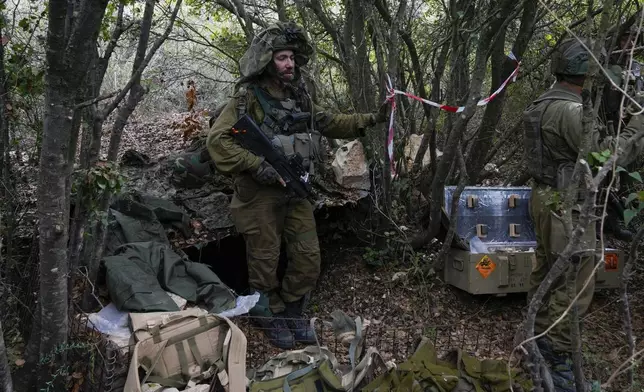
Israeli soldiers display what they say are Hezbollah ammunition and explosives found during their ground operation in southern Lebanon, near the border with Israel, Sunday, Oct. 13, 2024. (AP Photo/Sam McNeil)
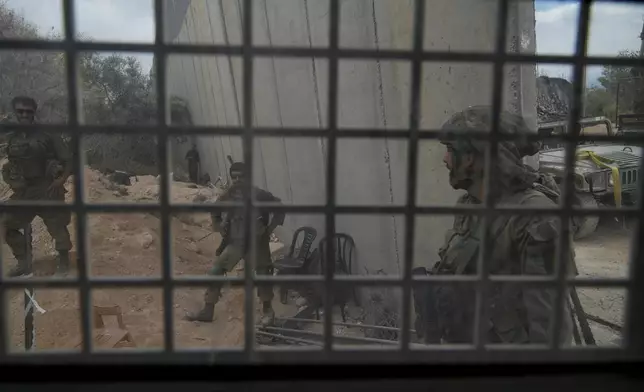
Israeli soldiers are seen during a ground operation in southern Lebanon, near the border with Israel, Sunday, Oct. 13, 2024. (AP Photo/Sam McNeil)
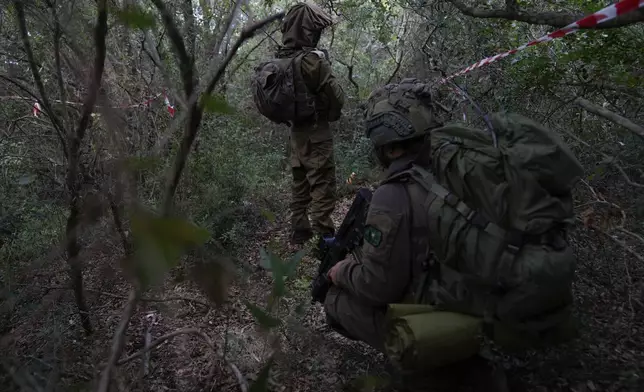
Israeli soldiers are seen during a ground operation in southern Lebanon, near the border with Israel, Sunday, Oct. 13, 2024. (AP Photo/Sam McNeil)
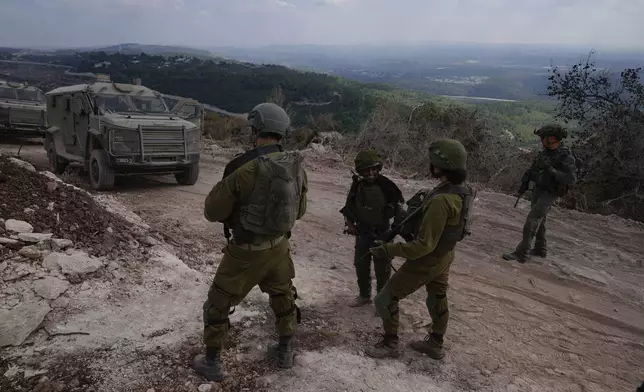
Israeli soldiers are seen during a ground operation in southern Lebanon, near the border with Israel, Sunday, Oct. 13, 2024. (AP Photo/Sam McNeil)
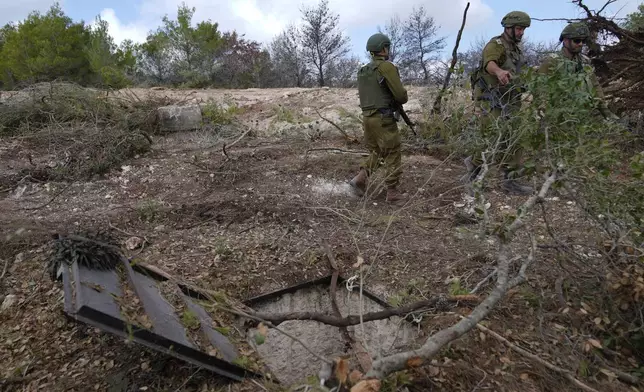
Israeli soldiers display what they say is an entrance to a Hezbollah tunnel found during their ground operation in southern Lebanon, near the border with Israel, Sunday, Oct. 13, 2024. (AP Photo/Sam McNeil)
The Israeli military has combed through the dense brush of southern Lebanon for the past two weeks, uncovering what it says are Hezbollah’s deep attack capabilities — highlighted by a tunnel system equipped with weapons caches and rocket launchers that Israel says pose a direct threat to nearby communities.
Israel’s war against the Iran-backed militant group stretches far inside Lebanon, and its airstrikes in recent weeks have killed more than 1,700 people, about a quarter of whom were women and children, according to local health authorities. But its ground campaign has centered on a narrow patch of land just along the border, where Hezbollah has had a longstanding presence.
Hezbollah, which has called for Israel’s destruction, is the Arab world’s most significant paramilitary force. It began firing rockets into Israel a day after Hamas' attack. After nearly a year of tit-for-tat fighting with Hezbollah, Israel launched its ground invasion into southern Lebanon on Oct. 1 and has since sent thousands of troops into the rugged terrain.
Even as it continues to bolster its forces, Israel says its invasion consists of “limited, localized and targeted ground raids” that are meant to destroy Hezbollah infrastructure so that tens of thousands of displaced Israelis can return home. The fighting also has uprooted more than 1 million Lebanese in the past month.
Many residents of southern Lebanon are supporters of the group and benefit from its social outreach. Though most fled the area months ago, they widely see the heavily armed Hezbollah as their defender, especially as the U.S.-backed Lebanese army does not have suitable weapons to protect them from any Israeli incursion.
That broad support has allowed Hezbollah to establish “a military infrastructure for itself” within the villages, said Eva J. Koulouriotis, a political analyst specialized in the Middle East and Islamic militant groups. The Israeli military says it has found weapons within homes and buildings in the villages.
With Israel’s air power far outstripping Hezbollah’s defenses, the militant group has turned to underground tunnels as a way to elude Israeli drones and jets. Experts say Hezbollah's tunnels are not limited to the south.
“It’s a land of tunnels,” said Tal Beeri, who studies Hezbollah as director of research at The Alma Research and Education Center, a think tank with a focus on northern Israel’s security.
Koulouriotis said tunnels stretch under the southern suburbs of Beirut, where Hezbollah's command and control are located and where it keeps a stockpile of strategic missiles. She said the group also maintains tunnels along the border with Syria, which it uses to smuggle weapons and other supplies from Iran into Lebanon.
Southern Lebanon is where Hezbollah maintains tunnels to store missiles — and from where it can launch them, Koulouriotis said. Some of the more than 50 Israelis killed by Hezbollah over the past year were hit by anti-tank missiles.
In contrast to the tunnels dug out by Hamas in the sandy coastal terrain of Gaza, Hezbollah's tunnels in southern Lebanon were carved into solid rock, a feat that likely required time, money, machinery and expertise.
An Israeli military official said that using prior intelligence, Israel had found “hundreds and hundreds and hundreds” of underground positions, many of which could hold about ten fighters and were stocked with rations. The official, who spoke on condition of anonymity in line with military rules, said troops were blowing up the tunnels found or using cement to make them unusable.
Israel's military on Saturday said troops had found and destroyed over 50 tunnel shafts in southern Lebanon but did not say over what period of time.
The group used tunnels during the monthlong 2006 Israel-Hezbollah war, but the network has been expanded since, even as a United Nations cease-fire resolution compelled Lebanese and U.N. forces to keep Hezbollah fighters out of the south.
In mid-August, Hezbollah released a video showing what appeared to be a cavernous underground tunnel large enough for trucks loaded with missiles to drive through. Hezbollah operatives were also seen riding motorcycles inside the illuminated tunnel, named Imad-4 after the group’s late military commander, Imad Mughniyeh, who was killed in Syria in 2008 in an explosion blamed on Israel.
Israeli troops are pushing through southern Lebanon using tanks and engineering equipment, and air and ground forces have struck thousands of targets in the area since the invasion began.
The military recently said it found one cross-border tunnel that stretched just a few meters into Israel but did not have an opening. Israel also exposed a tunnel shaft that was located about 100 meters (yards) from a U.N. peacekeepers ’ post, although it wasn't clear what the precise purpose of that tunnel was.
Israel says the tunnels are stocked with supplies and weapons and are outfitted with lighting, ventilation and sometimes plumbing, indicating they could be used for long stays. It says it has arrested several Hezbollah fighters hiding inside, including three on Tuesday who were said to have been found armed. The Israeli military official said many Hezbollah fighters appear to have withdrawn from the area.
Lebanese military expert, Naji Malaeb, a retired brigadier general, said he assessed that Hezbollah’s tunnels were preventing Israel from making major gains. He compared that achievement to the war in Gaza, where Hamas has used its tunnels to bedevil Israeli forces and stage insurgency-like attacks.
Israeli authorities insist the mission in Lebanon is succeeding. It says it has killed hundreds of Hezbollah fighters since the ground operation in Lebanon began, though at least 15 Israeli soldiers have been killed during that time.
Israel has encountered Hezbollah’s tunnels before. In 2018, Israel launched an operation to destroy what is said were attack tunnels that crossed into Israeli territory. Beeri said that six tunnels were discovered, including one that was 1 kilometer (1,000 yards) long and 80 meters (87 yards) deep, crossing some 50 meters (yards) into Israel.
For Israel, the tunnels are evidence that Hezbollah planned what Israel says would be a bloody offensive against communities in the north.
“Hezbollah has openly declared that it plans to carry out its own Oct. 7 massacre on Israel’s northern border, on an even larger scale,” Israeli military spokesman Rear. Adm. Daniel Hagari said the day troops entered Lebanon.
Israel has not released evidence that any such attack was imminent but has expressed concern that one might be launched once residents return.
Former Hezbollah leader Hassan Nasrallah, who was killed by Israel last month while in an underground bunker, had signaled in speeches that Hezbollah could launch an attack on northern Israel.
In May 2023, just months before Hamas’ attack, Hezbollah staged a simulation of an incursion into northern Israel with rifle-toting militants on motorcycles bursting through a mock border fence bedecked with Israeli flags.
Hezbollah officials have at times framed calls for an attack against Israel as a defensive measure that would be taken in times of war.
Mroue reported from Beirut.
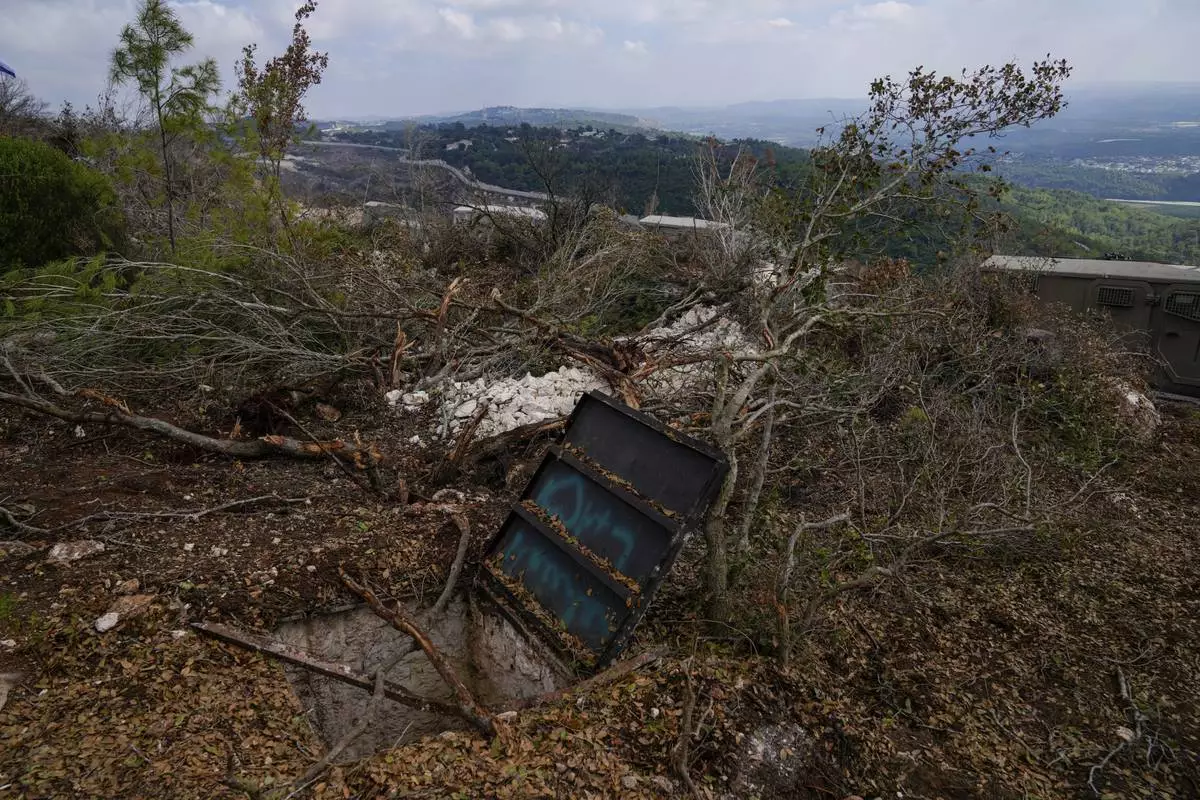
Israeli soldiers display what they say is an entrance to a Hezbollah tunnel found during their ground operation in southern Lebanon, near the border with Israel, Sunday, Oct. 13, 2024. (AP Photo/Sam McNeil)
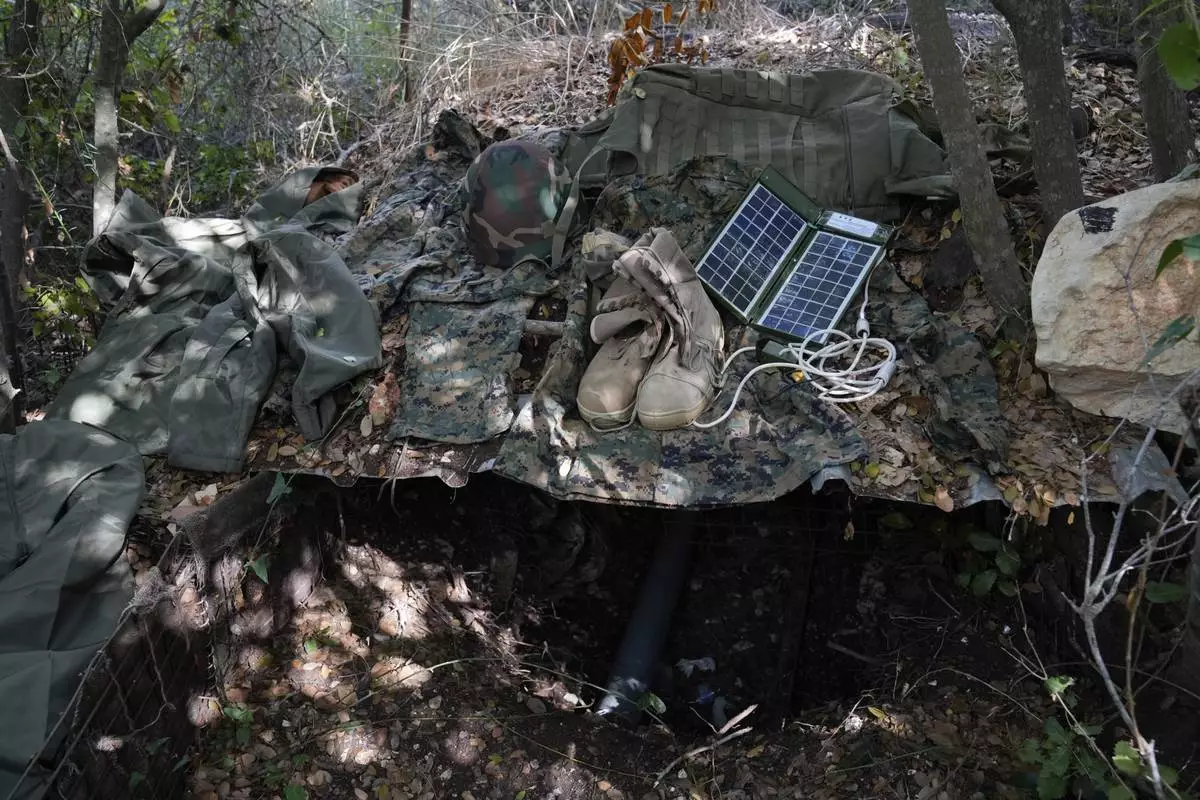
Israeli soldiers display to the media what they say is Hezbollah gear found during their ground operation in southern Lebanon, near the border with Israel, Sunday, Oct. 13, 2024. (AP Photo/Sam McNeil)
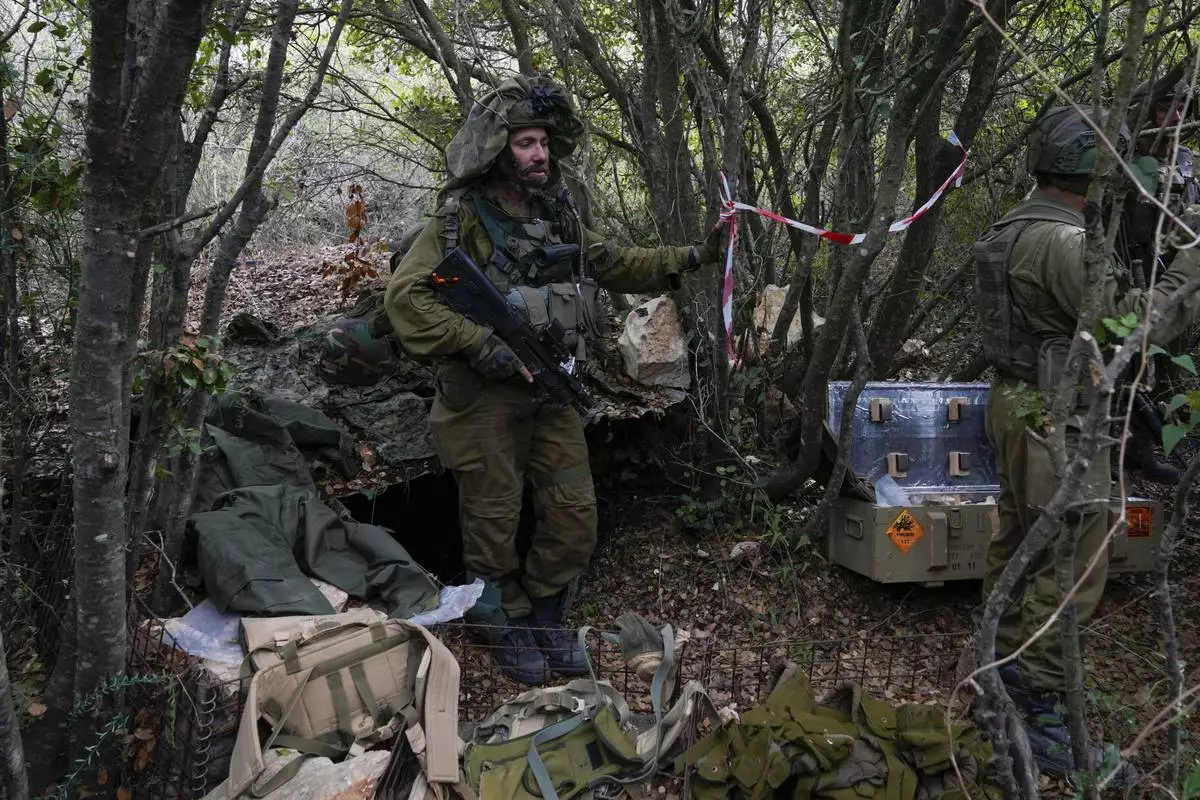
Israeli soldiers display what they say are Hezbollah ammunition and explosives found during their ground operation in southern Lebanon, near the border with Israel, Sunday, Oct. 13, 2024. (AP Photo/Sam McNeil)
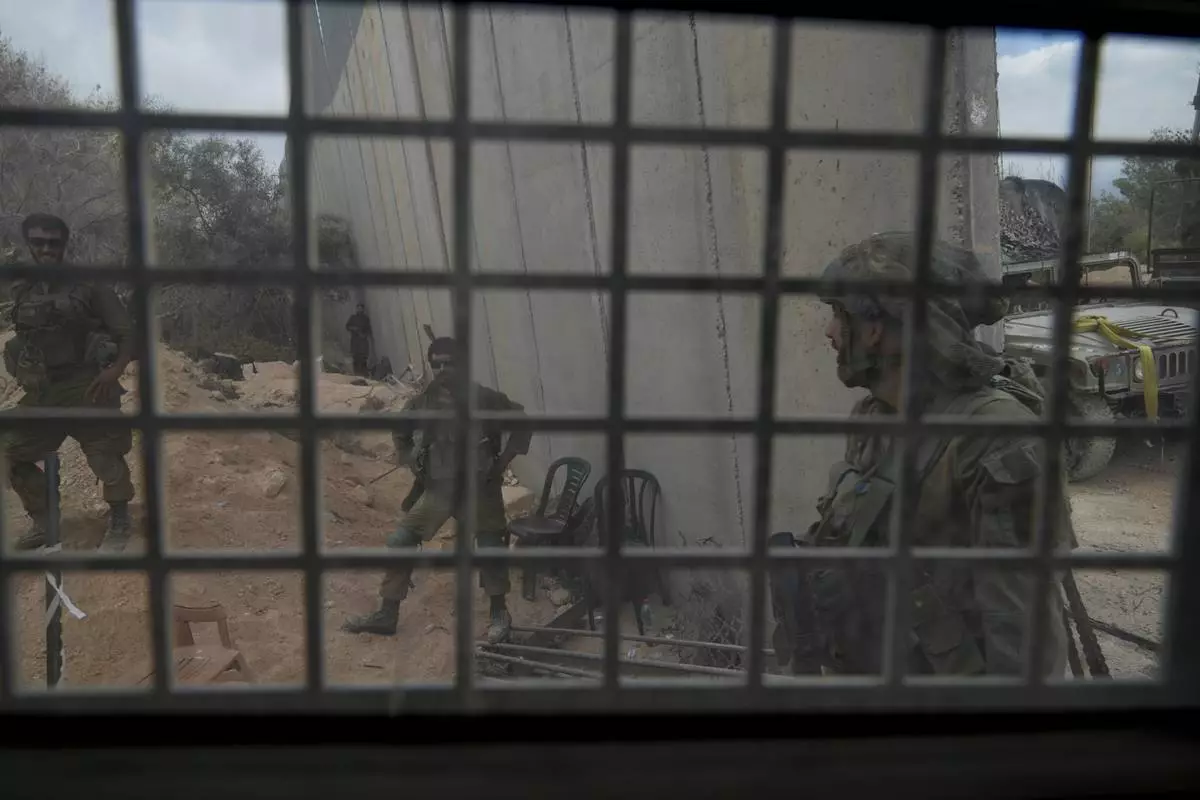
Israeli soldiers are seen during a ground operation in southern Lebanon, near the border with Israel, Sunday, Oct. 13, 2024. (AP Photo/Sam McNeil)
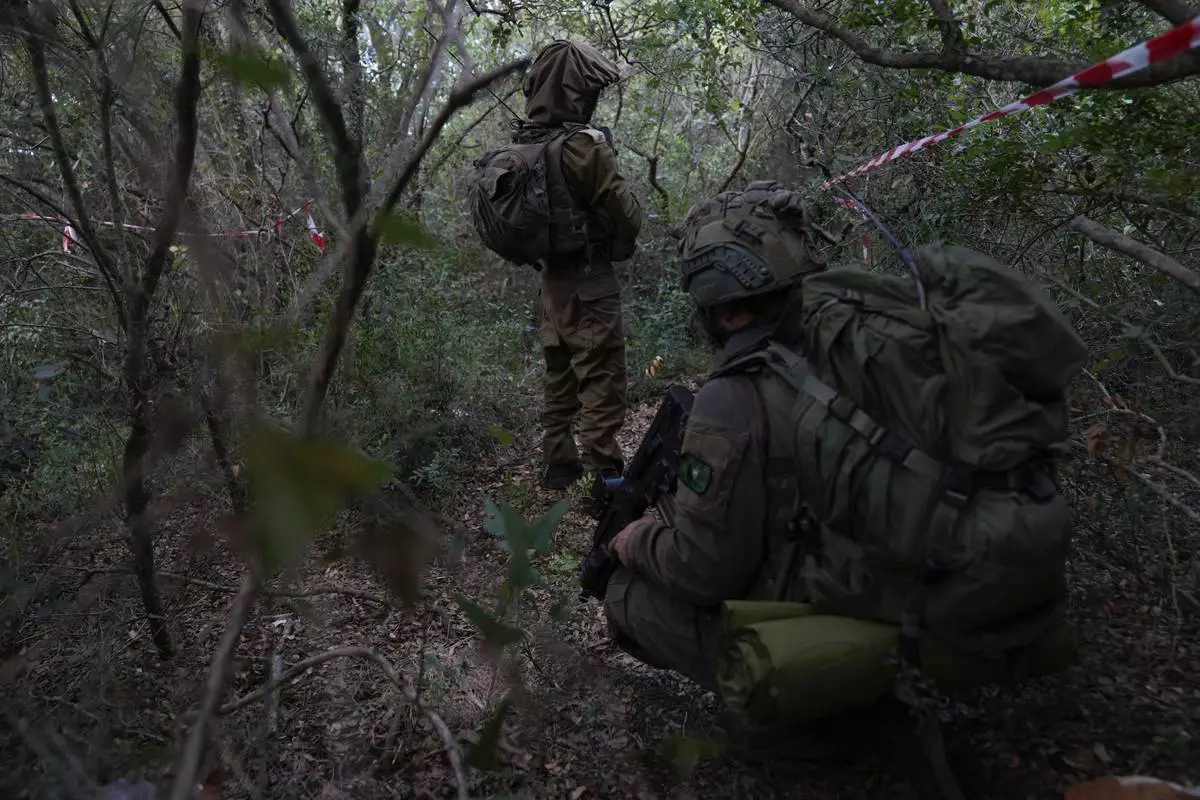
Israeli soldiers are seen during a ground operation in southern Lebanon, near the border with Israel, Sunday, Oct. 13, 2024. (AP Photo/Sam McNeil)
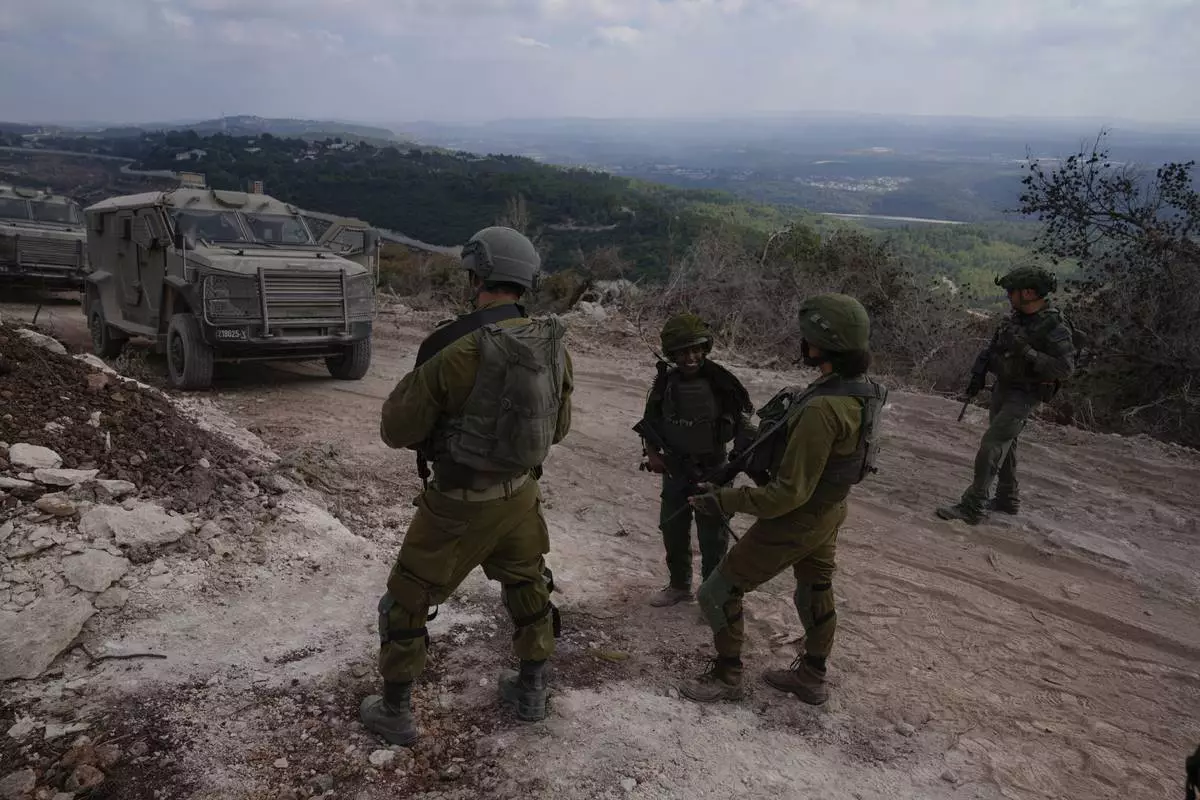
Israeli soldiers are seen during a ground operation in southern Lebanon, near the border with Israel, Sunday, Oct. 13, 2024. (AP Photo/Sam McNeil)
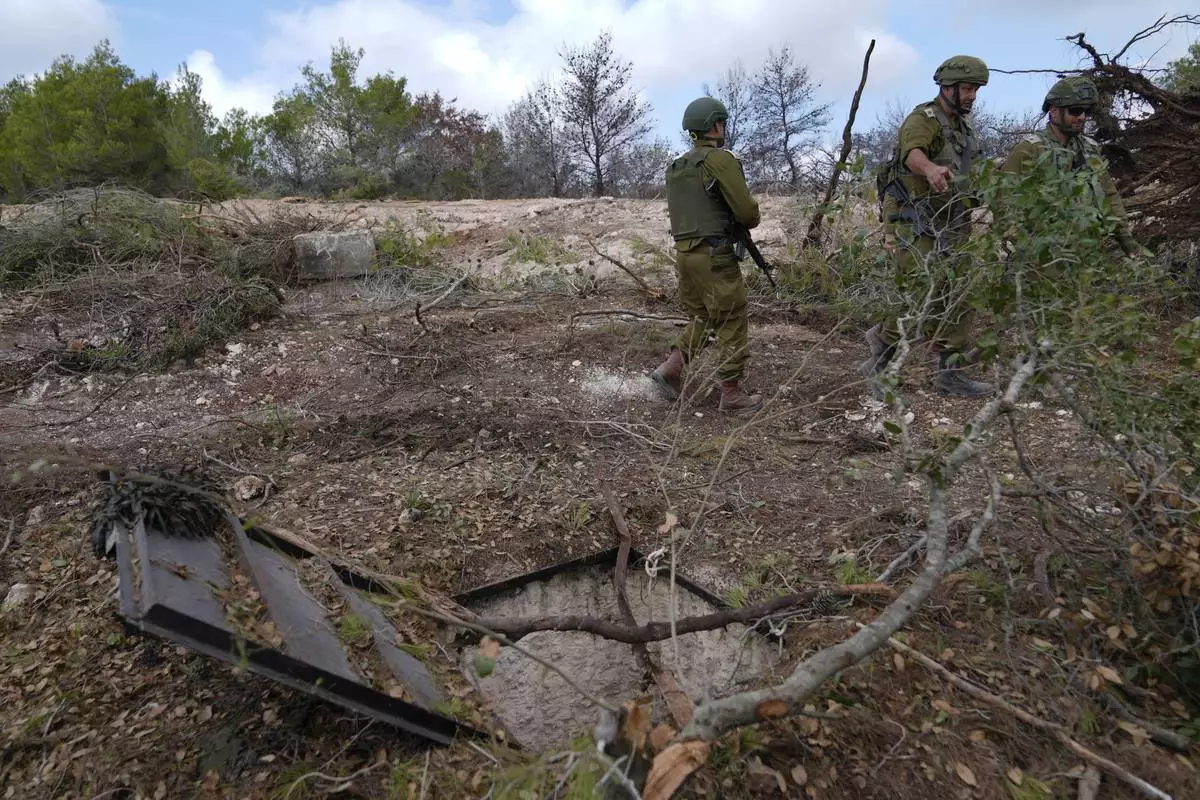
Israeli soldiers display what they say is an entrance to a Hezbollah tunnel found during their ground operation in southern Lebanon, near the border with Israel, Sunday, Oct. 13, 2024. (AP Photo/Sam McNeil)