The just-concluded 2024 International Astronautical Congress, or IAC exhibition, in Italy's Milan has showcased the latest breakthroughs in aerospace technology and innovation from spacesuits and rovers to cutting-edge satellites and space stations for ordinary people.
The 75th session of the world's largest space event featured over 530 exhibitors from 46 countries displaying their most eye-catching innovations from October 14 to 18 this year.
The coolest high-tech exhibits included a stylish unmanned vehicle designed by a group of Polish university students and a newly unveiled Prada Axiom spacesuit that combines style with function.
The event also gave visitors a chance to try out a lunar rover with a headset to navigate over rocks and uneven terrain on the surface of the moon. The FLEX Rover developed by California-headquartered Venturi Astrolab is expected to be sent to the moon via a commercial lunar mission in the next few years.
"We are working with commercial entities, as well as there is interest from governmental space agencies if they have instruments that they would like to use for data collection," said Alex Henry, Astrolab's sales manager.
A scale model of a private space station named "Haven" designed by Vast presented a vision for humanity's next-generation space stations - a resort-like experience, not just a stroll through the distant space. Visitors were offered a taste of what it would be like to spend a night in a space station, floating in zero gravity and tucked under a cozy blanket.
"We welcome all types of visitors on our space stations - space tourists, private citizens, astronauts, scientists, researchers. Anybody is welcomed to join us," said Yu Dali, Industrial Designer at Vast.
As the upcoming commercial and touristic space missions have made the need for space farming more relevant, this year's IAC exhibition also highlighted innovations in space agriculture with systems designed to cultivate plants in microgravity.
The exhibition hall showcased not only novelty, but also for one of the most essential elements of space missions - rockets. Latest rocket models from around world were on full display, with each boasting its unique brilliance.
Among the stunning models was Long March 12, China's latest liquid fueled rocket. It is expected to have its maiden launch by the end of this year.
Aside from the participating space agencies, most of this year's exhibitors were private companies, clearly showing that the space economy is growing faster than ever.
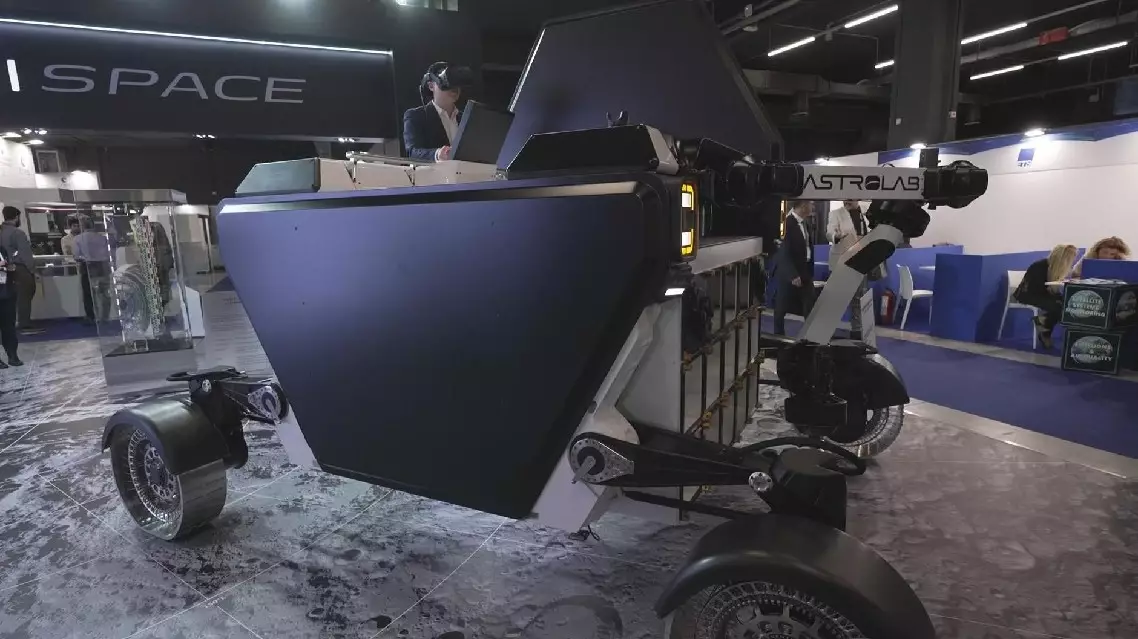
IAC exhibition in Milan displays most eye-catching innovations
The Italian capital Rome, one of the world's most famous tourism destinations, is looking to live up to its nickname of the "Eternal City" by doubling down on efforts to protect and promote its historical sites as visitor numbers rise.
The city welcomed a record number of 22.9 million tourist arrivals last year as its popularity as a premier tourism spot continued to climb. But as more and more people flock to Rome's landmark sites, authorities are taking steps to keep things under control.
Visitors hoping to get up close to the city's 264-year-old Trevi Fountain, a masterpiece of Roman Baroque architecture and one of the world's most famous landmarks, must now pay a small fee after Rome Council introduced a 2-euro entry price to access the fountain's lower basin
"During February, we had around 230,000 tickets sold. This system guarantees a much more orderly access for tourists," said Giorgio Trabucco, vice president of the Rome Tourism Commission.
The measure was brought in to combat overcrowding, and also follows a series of incidents involving tourists sitting, eating, and even jumping into the historic waters.
"It's clear there have been episodes of disrespect. It's a difficult challenge, but our administration, with interventions like this – managing tourism not limiting it – is an added value for our city," said Trabucco.
The funds raised by the entrance tickets will go towards security, cleaning and maintenance of the ancient site, and while some tourists are annoyed at having to fork out, the majority believe it's money well spent.
"I would pay 2 euros, it's not breaking the bank and it's lovely to see," said a tourist.
Meanwhile, at the newly-upgraded Colosseum Metro Station, history is very much part of the journey, with ancient artifacts which were uncovered during the subway line's construction on display to the public for free.
It points to the fine balancing act facing city management, as it looks to preserve its cultural heritage while also keeping it open to everyone.
Paolo Aielli, head of Rome's public transport company ATAC, said conserving the past while building for the future depends on close cooperation across different interest groups.
"(We have adopted a very co-operative model) because we have the responsibility in terms of engineering but at the same time we have a very important interaction with the archaeological authority," he said.
The new "museum station" -- which opened late last year -- is part of Rome's expanding rail network, and has quickly become an attraction in its own right. According to Aielli, the station received more than 1 million visitors in its first month.
For now, officials say there are no plans to introduce fees at other major sites, though the option remains on the table as tourism continues to rise.
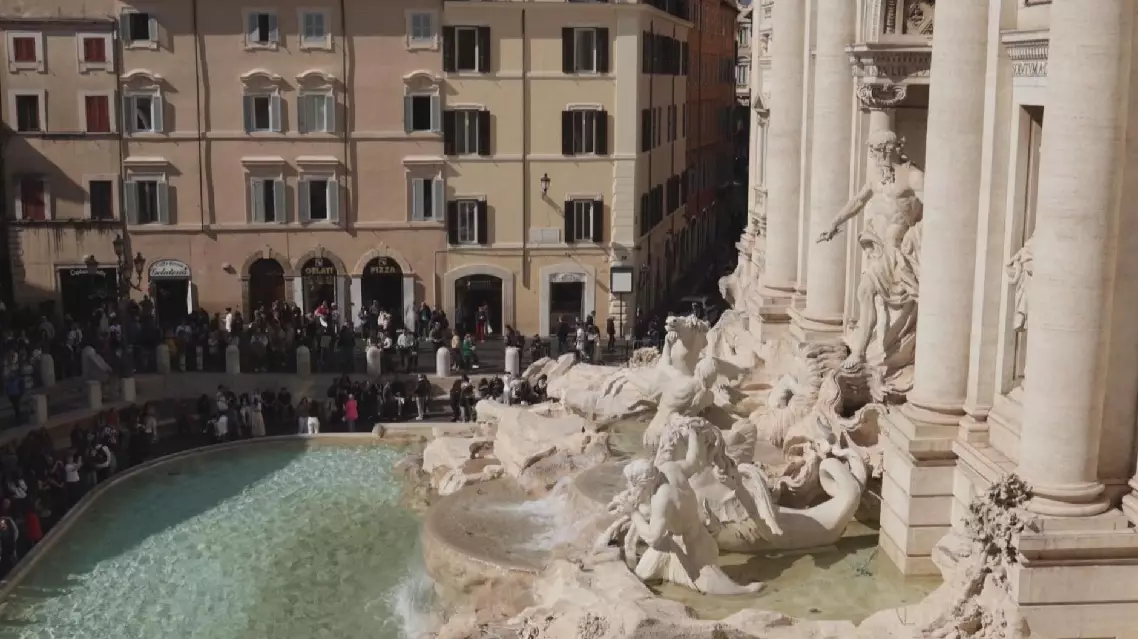
Rome steps up efforts to protect historical sites amid tourism boom