MANILA, Philippines (AP) — The U.S. Army’s recent deployment of a midrange missile system to the northern Philippines was “incredibly important” and allowed American and Filipino forces to jointly train for the potential usage of such heavy weaponry in Asian archipelago conditions, a U.S. general said Monday.
The Biden administration has moved to strengthen an arc of military alliances in the Indo-Pacific to better counter China, including in any possible confrontation over Taiwan and other Asian flashpoints. The Philippines has also worked on shoring up its territorial defenses after its disputes with China started to escalate last year in the increasingly volatile South China Sea.
Click to Gallery
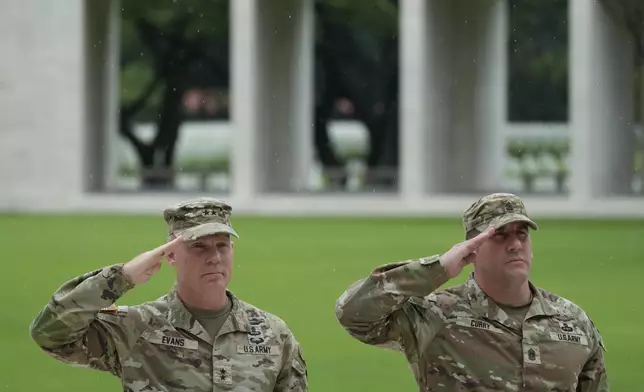
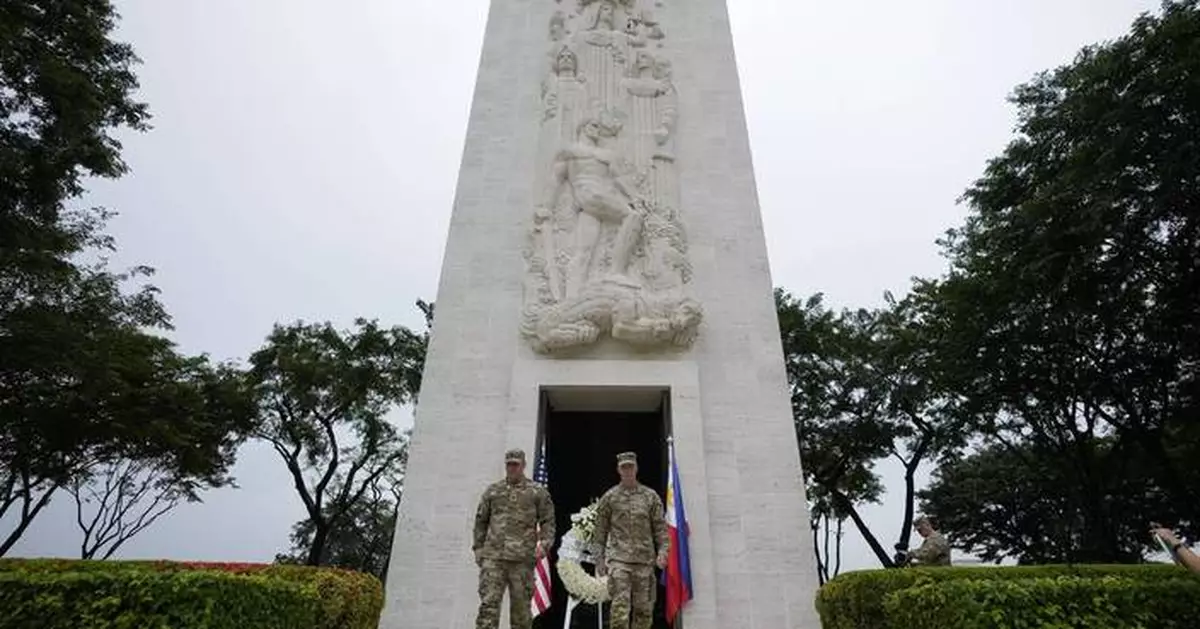
U.S. Maj. Gen. Marcus Evans, left, commanding general of the U.S. Army's 25th Infantry Division and Sgt. Major Shaun Curry salute during a wreath laying ceremony to honor American soldiers died during World War II at the Manila American Cemetery and Memorial in Taguig, Philippines Monday, Oct. 21, 2024. (AP Photo/Aaron Favila)
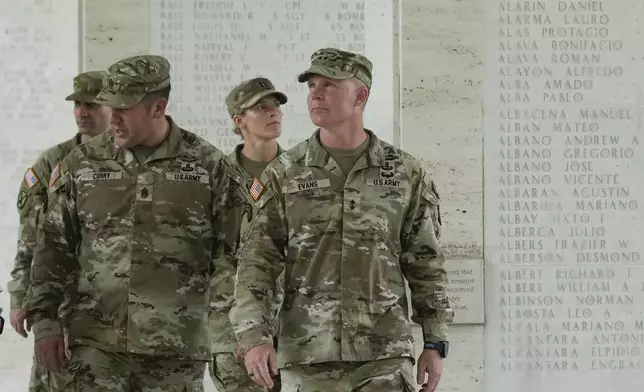
U.S. Maj. Gen. Marcus Evans, right, commanding general of the U.S. Army's 25th Infantry Division, looks at names of American soldiers who died during World War II that are carved on a wall at the Manila American Cemetery and Memorial in Taguig, Philippines on Monday, Oct. 21, 2024. (AP Photo/Aaron Favila)
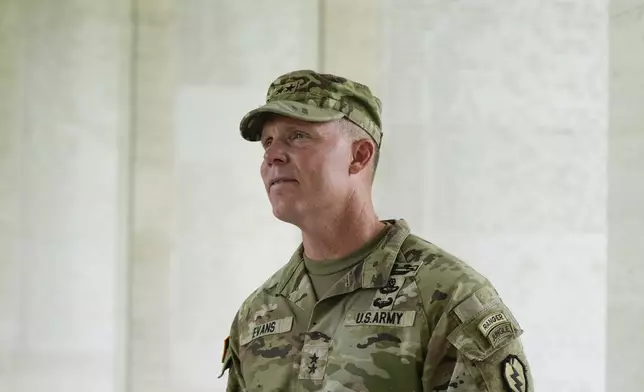
U.S. Maj. Gen. Marcus Evans, commanding general of the U.S. Army's 25th Infantry Division looks at names of American soldiers who died during World War II that are carved on a wall at the Manila American Cemetery and Memorial in Taguig, Philippines Monday, Oct. 21, 2024. (AP Photo/Aaron Favila)
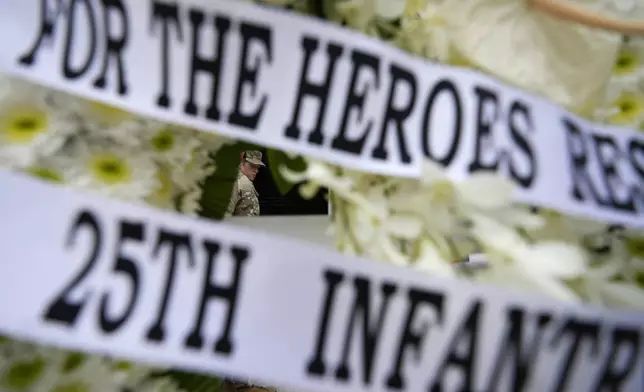
An American soldier walks past a wreath during ceremonies to honor American soldiers died during World War II at the Manila American Cemetery and Memorial in Taguig, Philippines Monday, Oct. 21, 2024. (AP Photo/Aaron Favila)
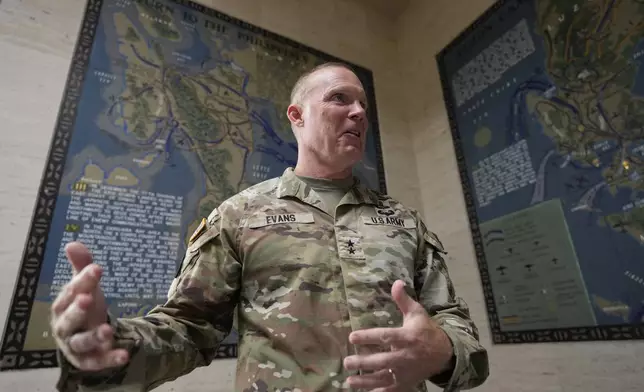
U.S. Maj. Gen. Marcus Evans, commanding general of the U.S. Army's 25th Infantry Division, gestures during an interview with The Associated Press at the Manila American Cemetery and Memorial in Taguig, Philippines Monday, Oct. 21, 2024. (AP Photo/Aaron Favila)
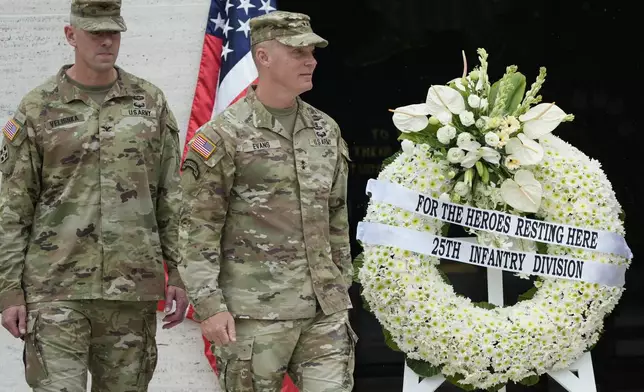
U.S. Maj. Gen. Marcus Evans, right, commanding general of the U.S. Army's 25th Infantry Division walks beside a wreath during rites to honor American soldiers died during World War II at the Manila American Cemetery and Memorial in Taguig, Philippines Monday, Oct. 21, 2024. (AP Photo/Aaron Favila)
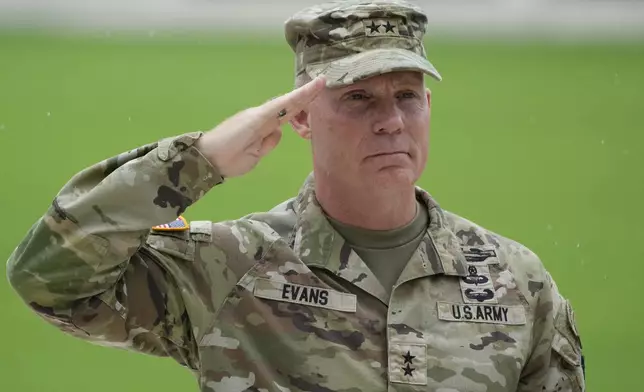
U.S. Maj. Gen. Marcus Evans, commanding general of the U.S. Army's 25th Infantry Division, salutes during a wreath laying rite to honor American soldiers died during World War II at the Manila American Cemetery and Memorial in Taguig, Philippines Monday, Oct. 21, 2024. (AP Photo/Aaron Favila)
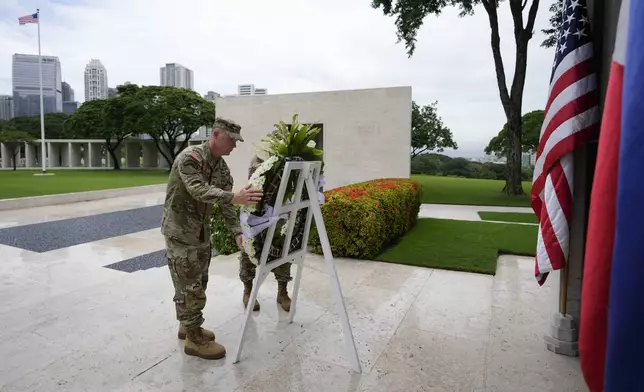
U.S. Maj. Gen. Marcus Evans, left, commanding general of the U.S. Army's 25th Infantry Division and Sgt. Major Shaun Curry arrange a wreath during rites to honor American soldiers died during World War II at the Manila American Cemetery and Memorial in Taguig, Philippines Monday, Oct. 21, 2024. (AP Photo/Aaron Favila)
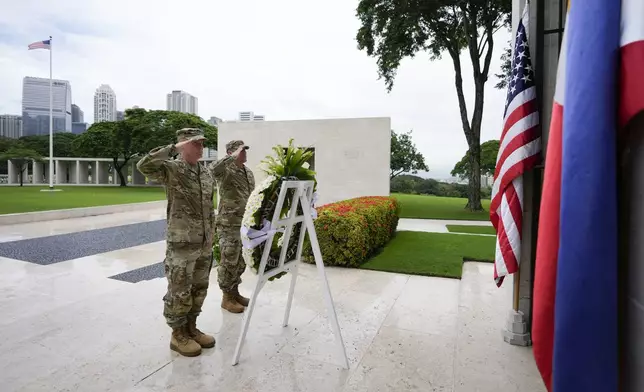
U.S. Maj. Gen. Marcus Evans, left, commanding general of the U.S. Army's 25th Infantry Division and Sgt. Major Shaun Curry salute during a wreath laying rite to honor American soldiers died during World War II at the Manila American Cemetery and Memorial in Taguig, Philippines Monday, Oct. 21, 2024. (AP Photo/Aaron Favila)
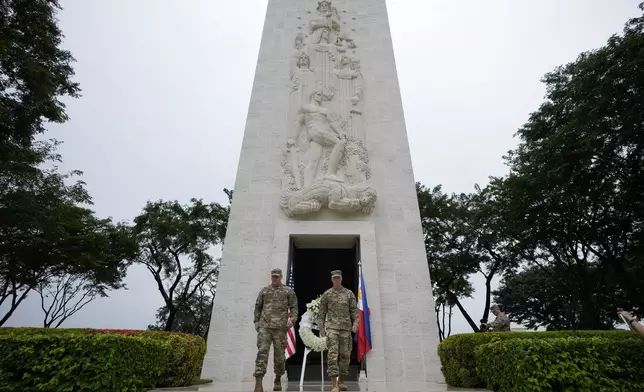
U.S. Maj. Gen. Marcus Evans, right, commanding general of the U.S. Army's 25th Infantry Division and Sgt. Major Shaun Curry walk after a wreath laying rite to honor American soldiers died during World War II at the Manila American Cemetery and Memorial in Taguig, Philippines Monday, Oct. 21, 2024. (AP Photo/Aaron Favila)
China has vehemently opposed the increased deployment of American combat forces to Asia. But it has been particularly alarmed by the U.S. Army’s deployment in April of the Typhon missile system, a land-based weapon that can fire the Standard Missile-6 and the Tomahawk Land Attack Missile, to the northern Philippines as part of joint combat exercises in April with Philippine troops.
"What it does collectively, it provides us the opportunity to understand how to employ that capability — the environmental challenges here are very unique to any other place in the region,” U.S. Maj. Gen. Marcus Evans, Commanding General of the Hawaii-based 25th Infantry Division, said when asked how the missile system has helped participants in joint combat training in the Philippines.
"Last year, we also deployed long-range fires capabilities with HIMARS and we were able to move those around with fixed-wing aircraft around the archipelago environment,” Evans told The Associated Press in an interview in Manila, referring to the High Mobility Artillery Rocket Systems, the truck-mounted launchers, which fire GPS-guided missiles capable of hitting distant targets.
"Those are just incredibly important operations because you get to work in the environment, but most importantly, you’re working alongside our partners here in the Philippines to understand how those will be integrated into their operations,” Evans said without elaborating.
The Typhon missile system was supposed to be flown out of the Philippines last month, but three Philippine security officials told the AP recently that the longtime treaty allies had agreed to keep the missile system in the northern Philippines indefinitely to boost deterrence despite China’s expressions of alarm.
The Philippine officials spoke on condition of anonymity because they were not authorized to discuss the sensitive U.S. missile deployment publicly.
Evans flew to Manila to start talks with Philippine army counterparts on holding annual military exercises by the allied forces in the Southeast Asian country next year, particularly the Salaknib drills, which aim to boost the combat-readiness of thousands of American and Filipino troops in increasingly realistic settings.
"Conceptually, it is scheduled to be a larger, more complex exercise,” Evans said adding that there could be joint training maneuvers from the jungles in the northern Philippines to former U.S. military bases in the region.
“We’re also planning on bringing new equipment to train alongside our Filipino army teammates that last year we did not have,” he said without providing details.
“Our job is to get 1% better each day alongside our Filipino army teammates in terms of readiness,” he said. “Those relationships that are built, the readiness that is developed, should remove any doubt about the importance of our alliances and the work we do here with the Philippine army.”
Evans and other U.S. Army officials attended a ceremony Sunday marking the anniversary of a historic moment in U.S.-Philippine relations when U.S. Gen. Douglas Macarthur fulfilled his promise to return to the Philippines in October 1944 by wading ashore into the coast of central Leyte province to help lead the liberation of the country from Japanese occupation forces.
On Monday, Evans and his men laid a wreath in an austere ceremony at the American Cemetery in metropolitan Manila, the largest such U.S. World War II cemetery and memorial in the world.
The Leyte Gulf ceremony reflected the long history that had bonded American and Filipino forces in war and peace, he said.
"That trust was built over eight decades,” Evans said.
Associated Press photographer Aaron Favila contributed to this report.
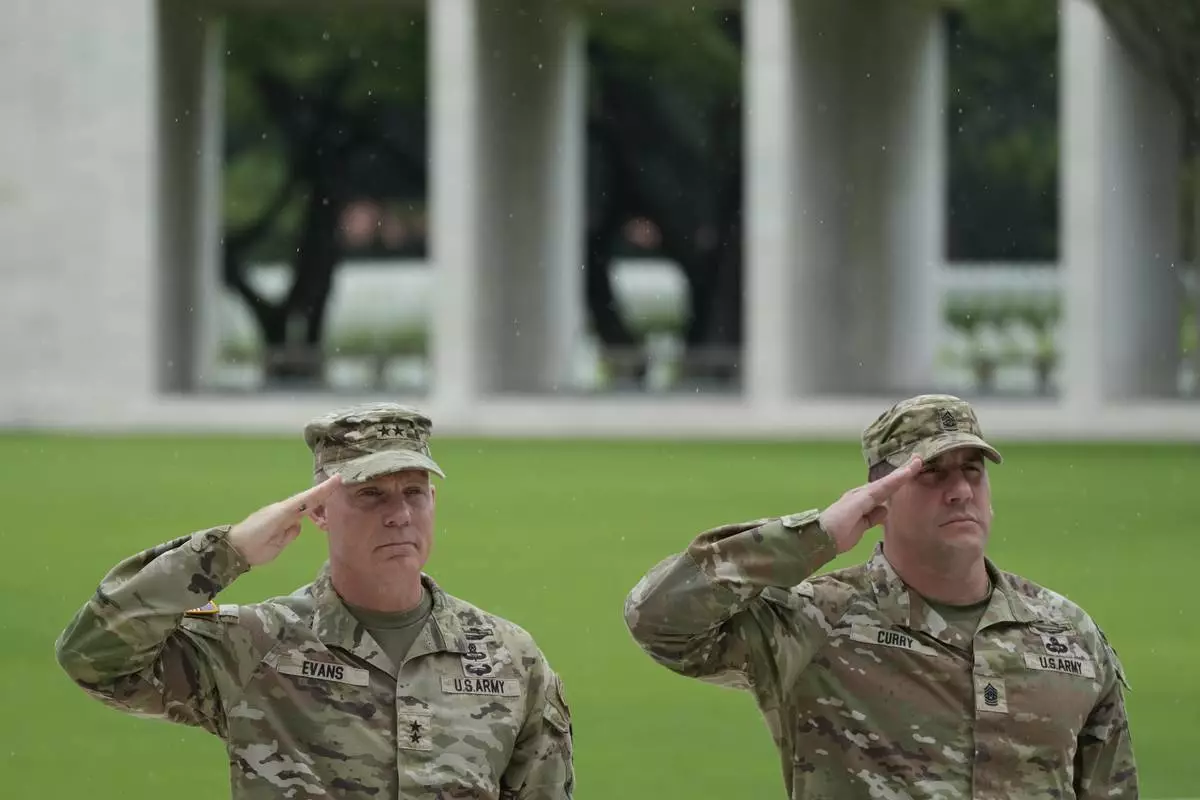
U.S. Maj. Gen. Marcus Evans, left, commanding general of the U.S. Army's 25th Infantry Division and Sgt. Major Shaun Curry salute during a wreath laying ceremony to honor American soldiers died during World War II at the Manila American Cemetery and Memorial in Taguig, Philippines Monday, Oct. 21, 2024. (AP Photo/Aaron Favila)
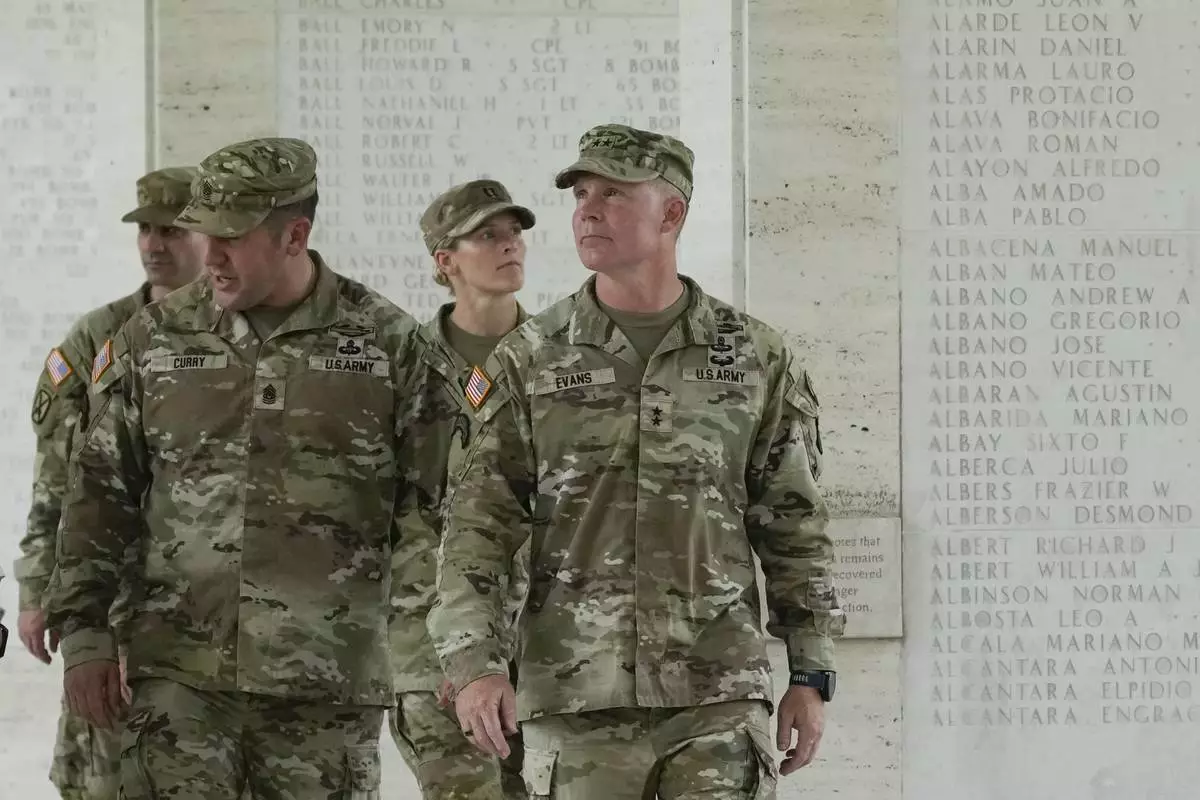
U.S. Maj. Gen. Marcus Evans, right, commanding general of the U.S. Army's 25th Infantry Division, looks at names of American soldiers who died during World War II that are carved on a wall at the Manila American Cemetery and Memorial in Taguig, Philippines on Monday, Oct. 21, 2024. (AP Photo/Aaron Favila)
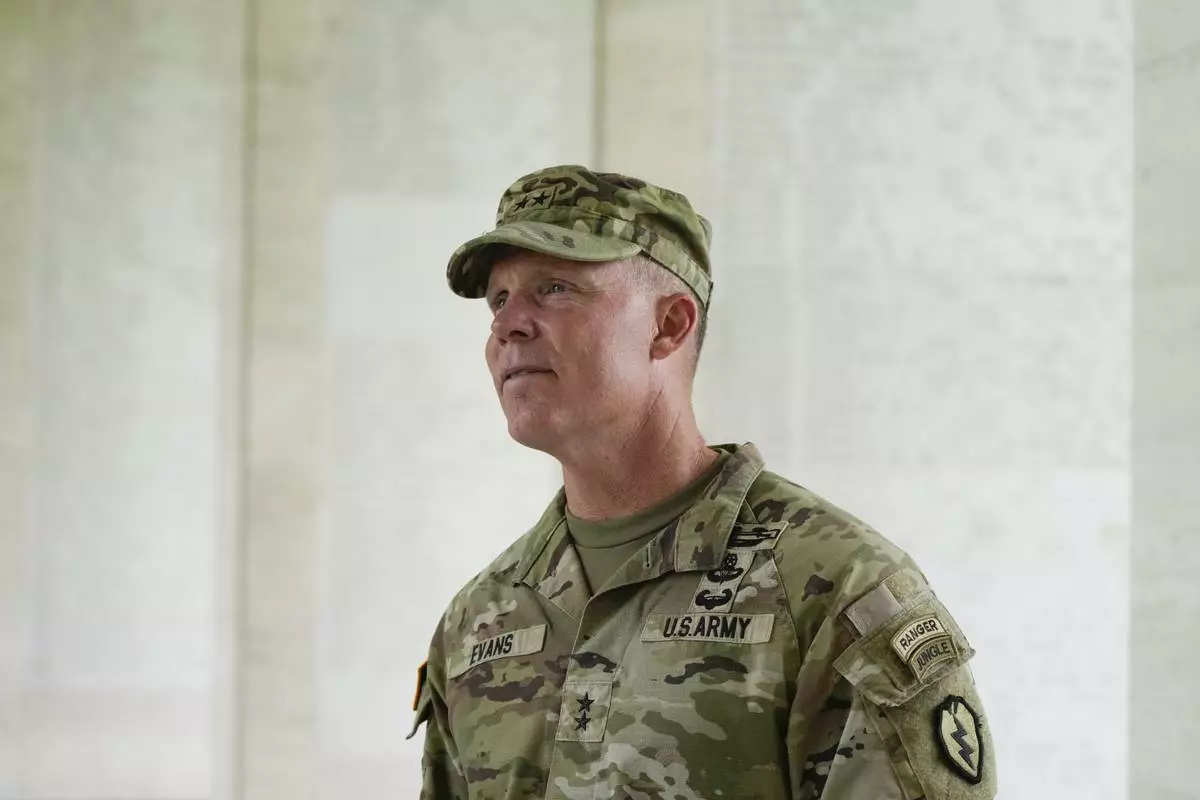
U.S. Maj. Gen. Marcus Evans, commanding general of the U.S. Army's 25th Infantry Division looks at names of American soldiers who died during World War II that are carved on a wall at the Manila American Cemetery and Memorial in Taguig, Philippines Monday, Oct. 21, 2024. (AP Photo/Aaron Favila)
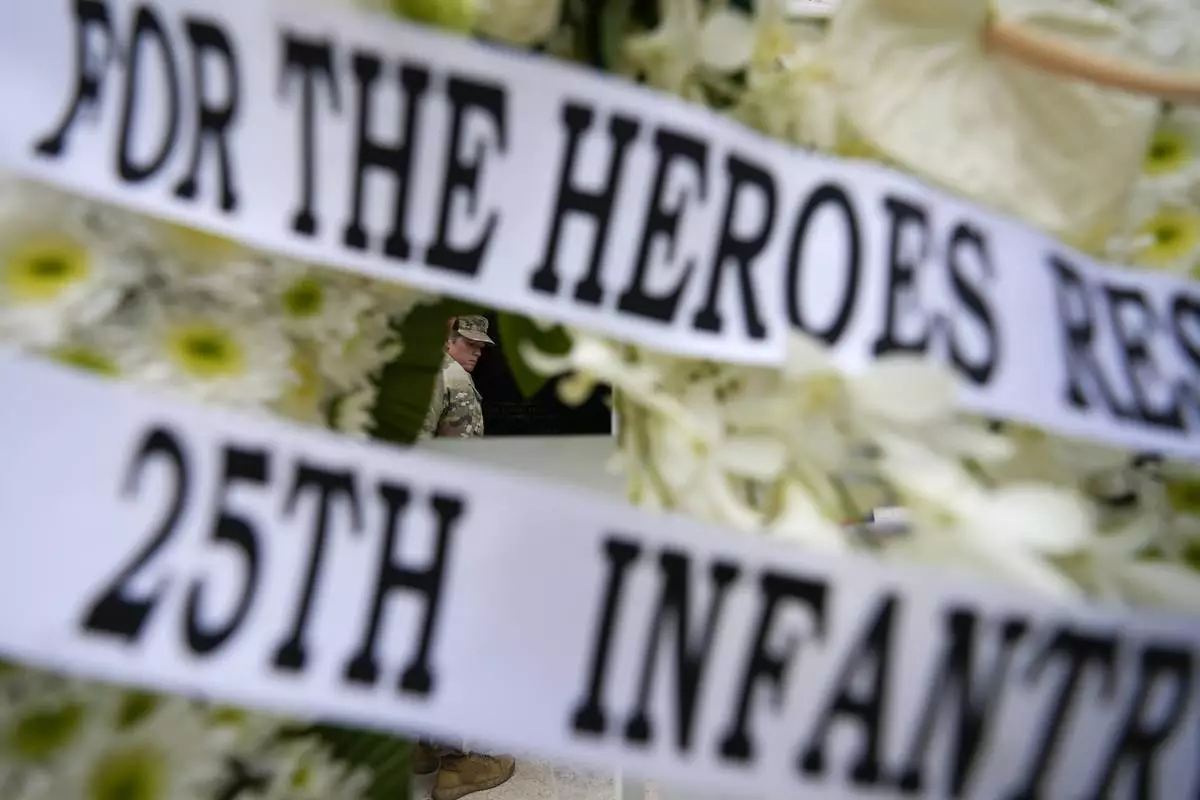
An American soldier walks past a wreath during ceremonies to honor American soldiers died during World War II at the Manila American Cemetery and Memorial in Taguig, Philippines Monday, Oct. 21, 2024. (AP Photo/Aaron Favila)
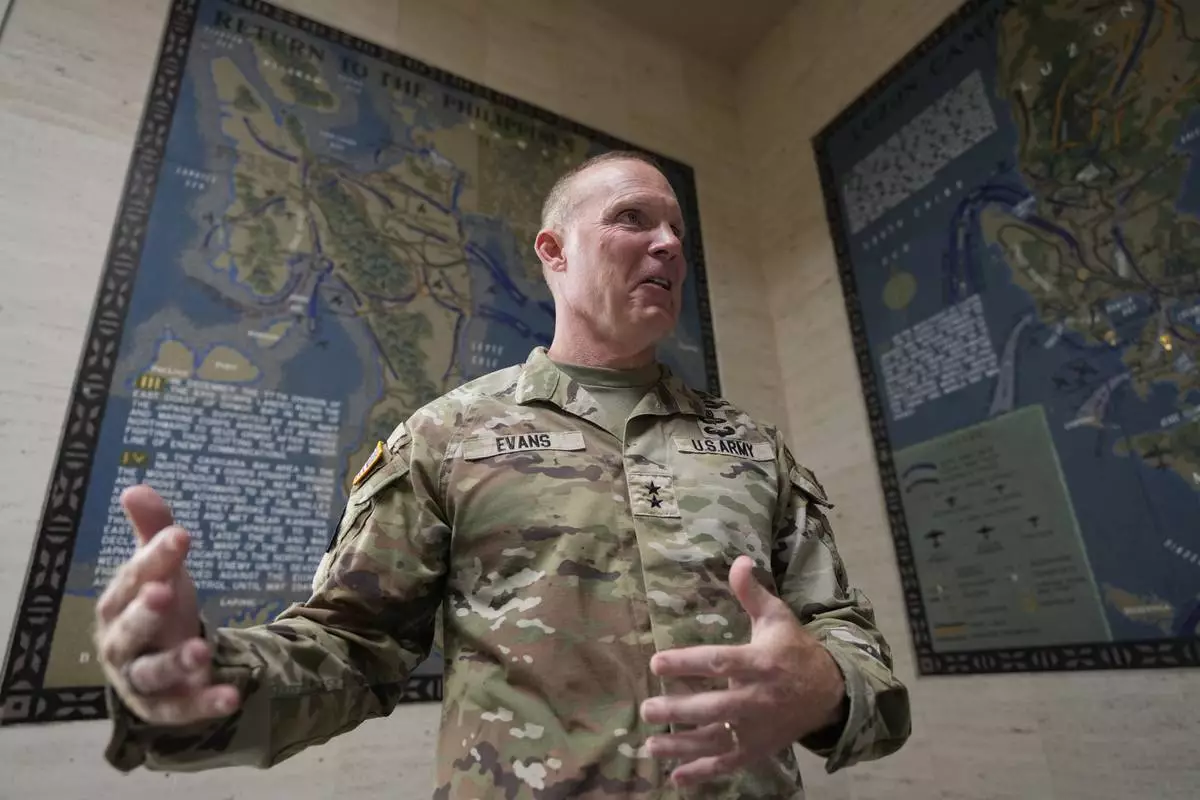
U.S. Maj. Gen. Marcus Evans, commanding general of the U.S. Army's 25th Infantry Division, gestures during an interview with The Associated Press at the Manila American Cemetery and Memorial in Taguig, Philippines Monday, Oct. 21, 2024. (AP Photo/Aaron Favila)
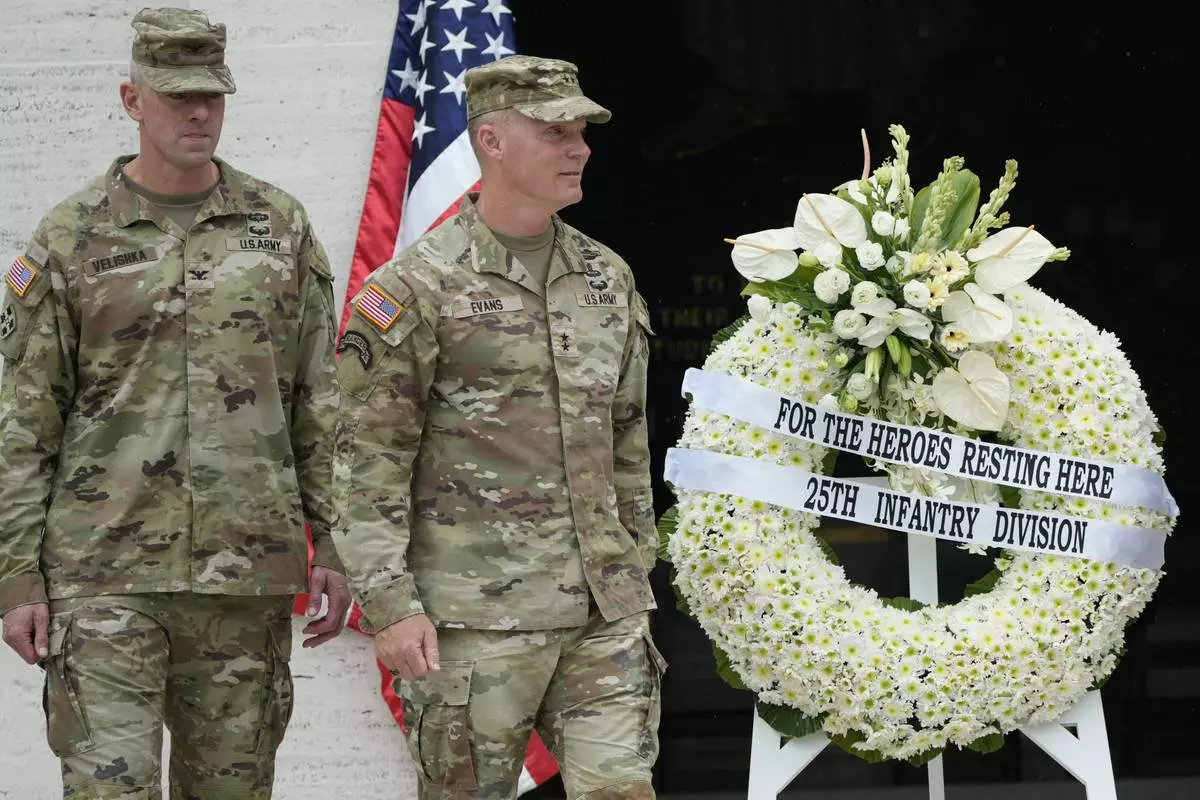
U.S. Maj. Gen. Marcus Evans, right, commanding general of the U.S. Army's 25th Infantry Division walks beside a wreath during rites to honor American soldiers died during World War II at the Manila American Cemetery and Memorial in Taguig, Philippines Monday, Oct. 21, 2024. (AP Photo/Aaron Favila)
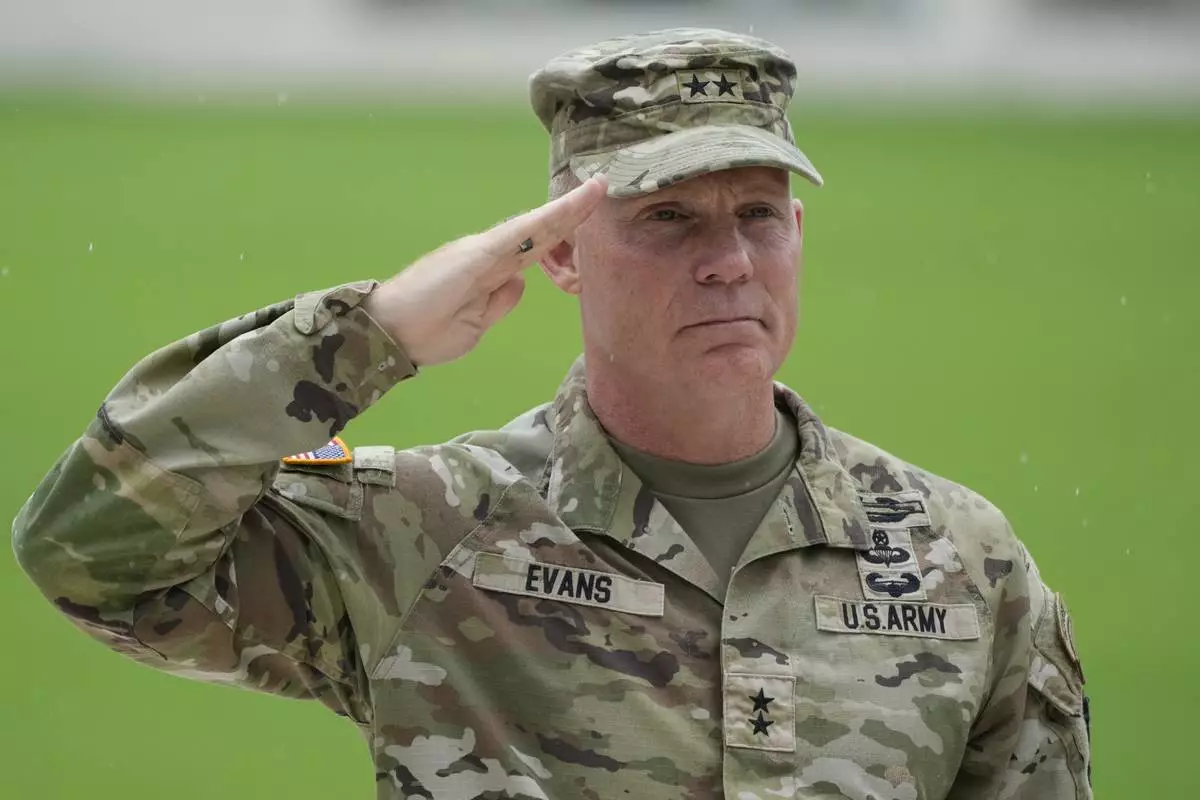
U.S. Maj. Gen. Marcus Evans, commanding general of the U.S. Army's 25th Infantry Division, salutes during a wreath laying rite to honor American soldiers died during World War II at the Manila American Cemetery and Memorial in Taguig, Philippines Monday, Oct. 21, 2024. (AP Photo/Aaron Favila)
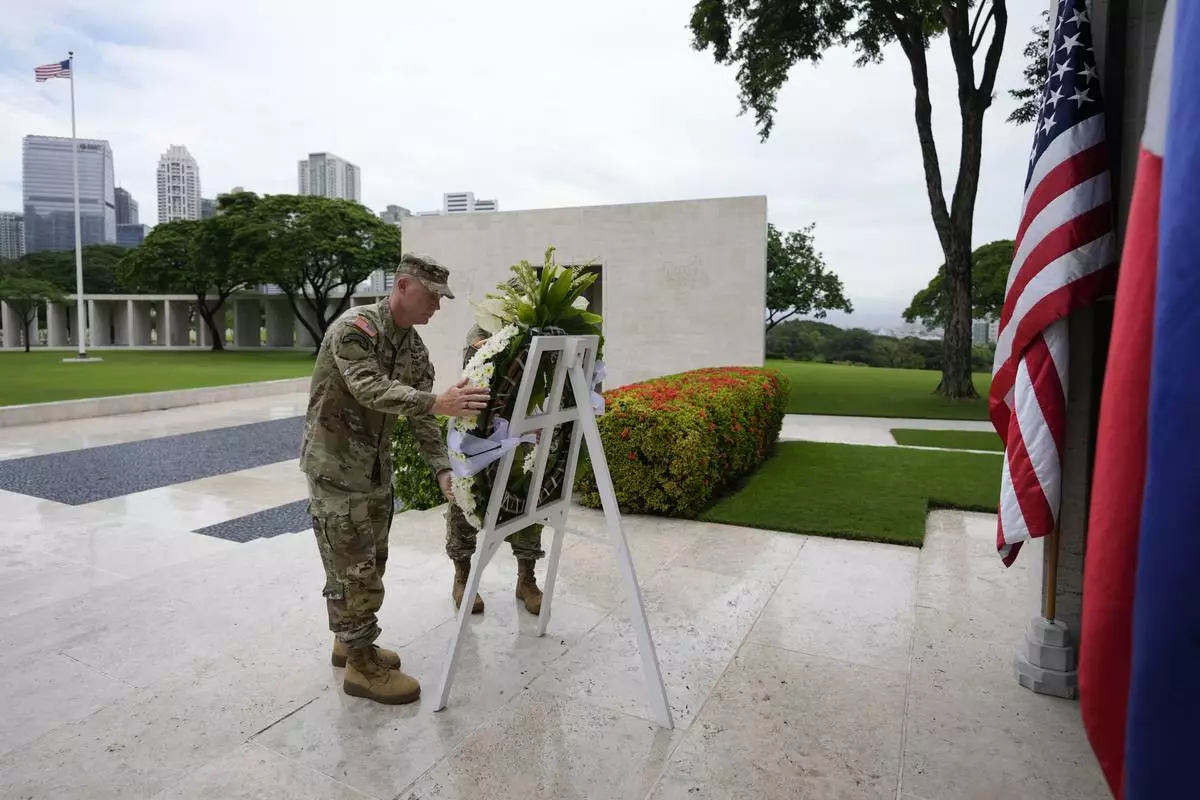
U.S. Maj. Gen. Marcus Evans, left, commanding general of the U.S. Army's 25th Infantry Division and Sgt. Major Shaun Curry arrange a wreath during rites to honor American soldiers died during World War II at the Manila American Cemetery and Memorial in Taguig, Philippines Monday, Oct. 21, 2024. (AP Photo/Aaron Favila)
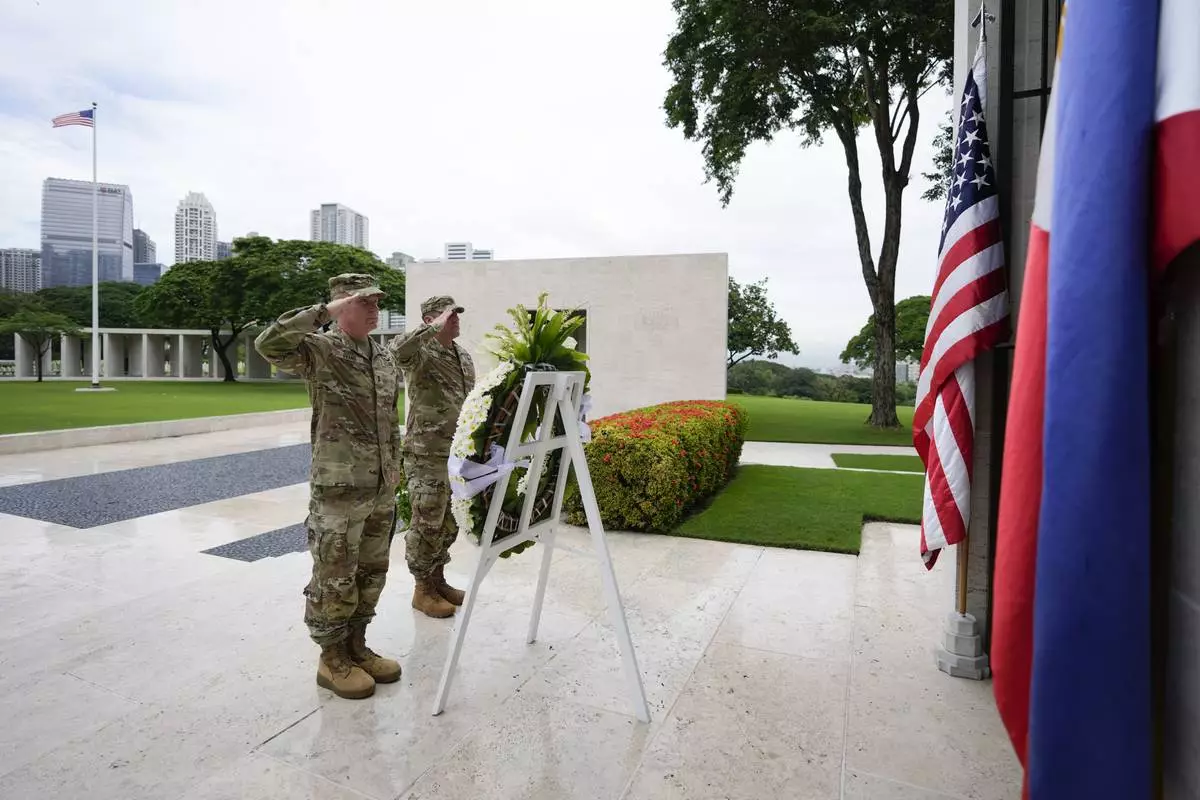
U.S. Maj. Gen. Marcus Evans, left, commanding general of the U.S. Army's 25th Infantry Division and Sgt. Major Shaun Curry salute during a wreath laying rite to honor American soldiers died during World War II at the Manila American Cemetery and Memorial in Taguig, Philippines Monday, Oct. 21, 2024. (AP Photo/Aaron Favila)
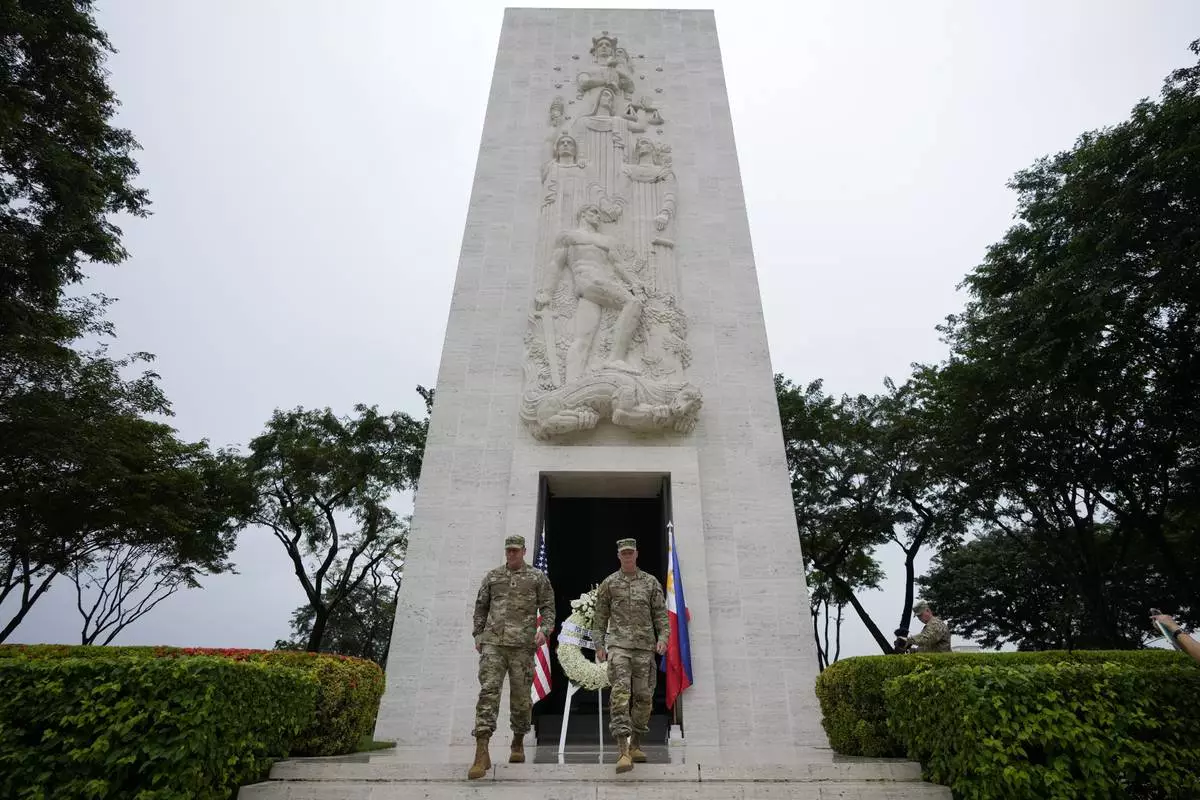
U.S. Maj. Gen. Marcus Evans, right, commanding general of the U.S. Army's 25th Infantry Division and Sgt. Major Shaun Curry walk after a wreath laying rite to honor American soldiers died during World War II at the Manila American Cemetery and Memorial in Taguig, Philippines Monday, Oct. 21, 2024. (AP Photo/Aaron Favila)