MANILA, Philippines (AP) — A Philippine court has convicted and sentenced to life 17 Islamic militants for kidnapping for ransom 21 people, including European tourists and Asian workers, from a dive resort in Malaysia more than two decades ago, officials said Monday.
The Filipino militants belonged to the small but violent Abu Sayyaf group.
Among those convicted by the Regional Trial Court in Taguig city, a suburb of the capital region, were two Abu Sayyaf leaders, Hilarion Santos and Redendo Dellosa, who had been included in a United Nations terrorism blacklist, the Department of Justice in Manila said.
The 17 were sentenced to life in prison with the possibility of pardon after 30 years, according to justice officials.
In April 2000, Abu Sayyaf militants armed with assault rifles and machetes, traveled by speedboats from their southern Philippine jungle strongholds and raided the Sipadan Island dive resort in neighboring Malaysia, where they abducted 21 Western tourists and resort workers at gunpoint.
The militants are an offshoot of the decades-long Muslim separatist unrest in the southern Philippines, homeland of minority Muslims in the largely Roman Catholic nation. The Philippines and the United States both consider the Abu Sayyaf a terrorist organization.
The militants carried out bombings, ransom kidnappings and beheadings during their heyday starting in the late 1990s, but they have been weakened considerably by battle defeats, surrenders and infighting.
The hostages consisted of a German family of three, two tourists from Finland, a South African couple, a Lebanese woman and two French citizens. The rest were Malaysians and Filipinos who worked in the far-flung resort.
They were taken by speedboats to the jungles of the southern Philippine province of Sulu, where they were held in harsh conditions before being mostly ransomed off using millions of dollars reportedly provided by then-Libyan leader Moammar Gadhafi.
Two Associated Press journalists, who were allowed by the Abu Sayyaf to interview the hostages while they were in jungle captivity at the time, saw most of the horrified captives sitting on banana leaves laid on the ground and surrounded by a fence of tree branches. Some rapidly scribbled letters and begged their families and embassies to send them food, water, medicine and find ways to free them.
After the hostages were freed, the Philippine military launched offensives that lasted several years and resulted in the killing or capture of most of Abu Sayyaf leaders and fighters.
Ghalib Andang, the militant who led the kidnapping, was killed by police commandos during an attempted jailbreak and siege in a high-security detention center in 2005 in metropolitan Manila.
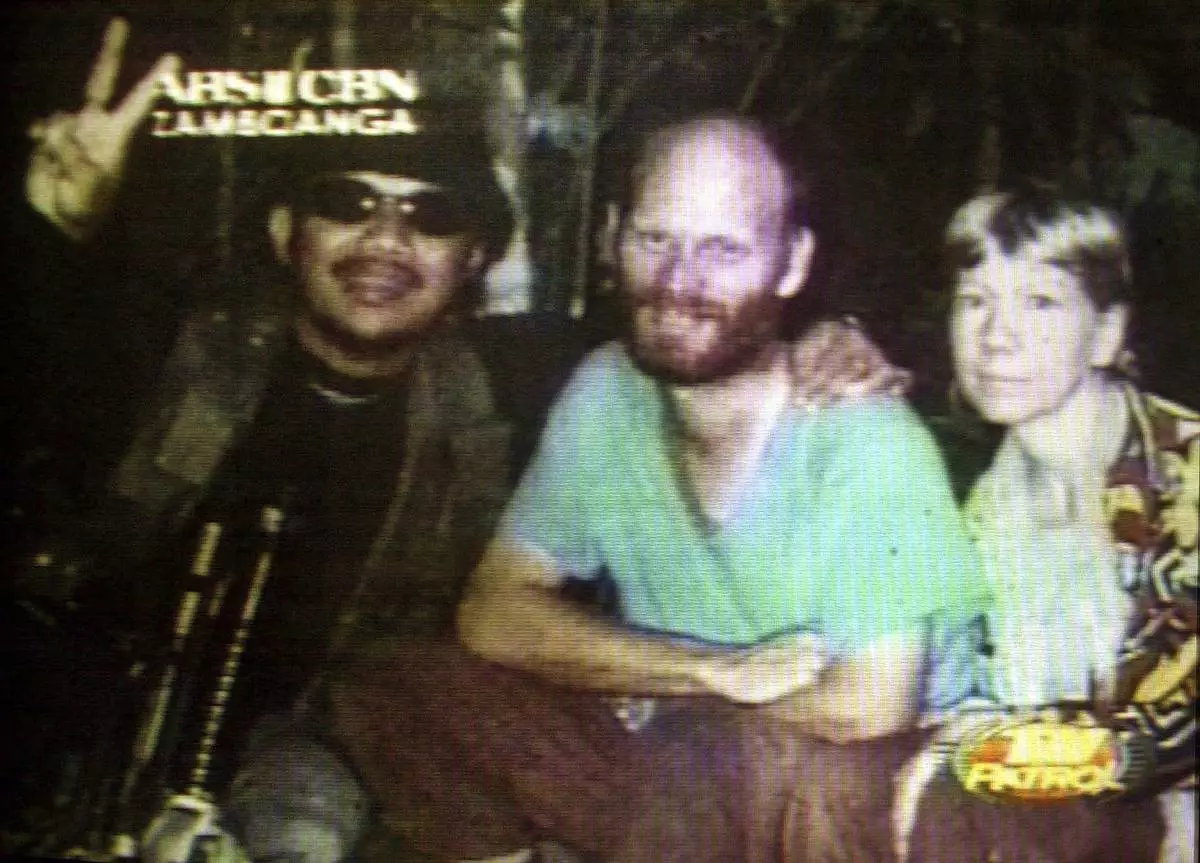
Kidnapped American missionaries Martin, center, and Gracia Burnham, right, who were kidnapped from a Philippines resort eight months ago, are seen beside their abductor Abu Sabaya, leader of the Muslim extremist group the Abu Sayyaf in this undated photo made from video, originally a still photo, released on Oct. 10, 2001. (ABS CBN via AP, file)
ALEPPO, Syria (AP) — First responders on Sunday entered a contested neighborhood in Syria’ s northern city of Aleppo after days of deadly clashes between government forces and Kurdish-led forces. Syrian state media said the military was deployed in large numbers.
The clashes broke out Tuesday in the predominantly Kurdish neighborhoods of Sheikh Maqsoud, Achrafieh and Bani Zaid after the government and the Syrian Democratic Forces, the main Kurdish-led force in the country, failed to make progress on how to merge the SDF into the national army. Security forces captured Achrafieh and Bani Zaid.
The fighting between the two sides was the most intense since the fall of then-President Bashar Assad to insurgents in December 2024. At least 23 people were killed in five days of clashes and more than 140,000 were displaced amid shelling and drone strikes.
The U.S.-backed SDF, which have played a key role in combating the Islamic State group in large swaths of eastern Syria, are the largest force yet to be absorbed into Syria's national army. Some of the factions that make up the army, however, were previously Turkish-backed insurgent groups that have a long history of clashing with Kurdish forces.
The Kurdish fighters have now evacuated from the Sheikh Maqsoud neighborhood to northeastern Syria, which is under the control of the SDF. However, they said in a statement they will continue to fight now that the wounded and civilians have been evacuated, in what they called a “partial ceasefire.”
The neighborhood appeared calm Sunday. The United Nations said it was trying to dispatch more convoys to the neighborhoods with food, fuel, blankets and other urgent supplies.
Government security forces brought journalists to tour the devastated area, showing them the damaged Khalid al-Fajer Hospital and a military position belonging to the SDF’s security forces that government forces had targeted.
The SDF statement accused the government of targeting the hospital “dozens of times” before patients were evacuated. Damascus accused the Kurdish-led group of using the hospital and other civilian facilities as military positions.
On one street, Syrian Red Crescent first responders spoke to a resident surrounded by charred cars and badly damaged residential buildings.
Some residents told The Associated Press that SDF forces did not allow their cars through checkpoints to leave.
“We lived a night of horror. I still cannot believe that I am right here standing on my own two feet,” said Ahmad Shaikho. “So far the situation has been calm. There hasn’t been any gunfire.”
Syrian Civil Defense first responders have been disarming improvised mines that they say were left by the Kurdish forces as booby traps.
Residents who fled are not being allowed back into the neighborhood until all the mines are cleared. Some were reminded of the displacement during Syria’s long civil war.
“I want to go back to my home, I beg you,” said Hoda Alnasiri.
Associated Press journalist Kareem Chehayeb in Beirut contributed to this report.
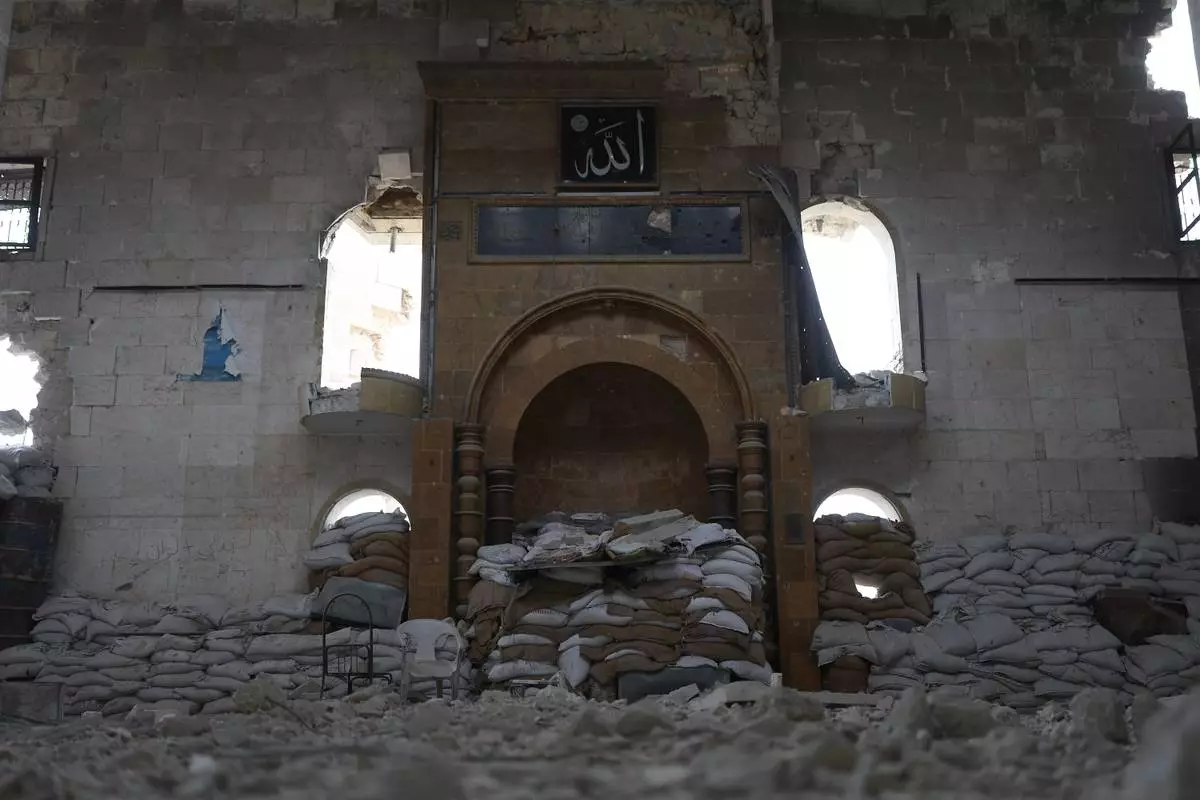
Sandbag barriers used as fighting positions by Kurdish fighters, left inside a destroyed mosque in the Sheikh Maqsoud neighborhood, where clashes between government forces and Kurdish fighters have been taking place in the northern city of Aleppo, Syria, Sunday, Jan. 11, 2026. (AP Photo/Ghaith Alsayed)
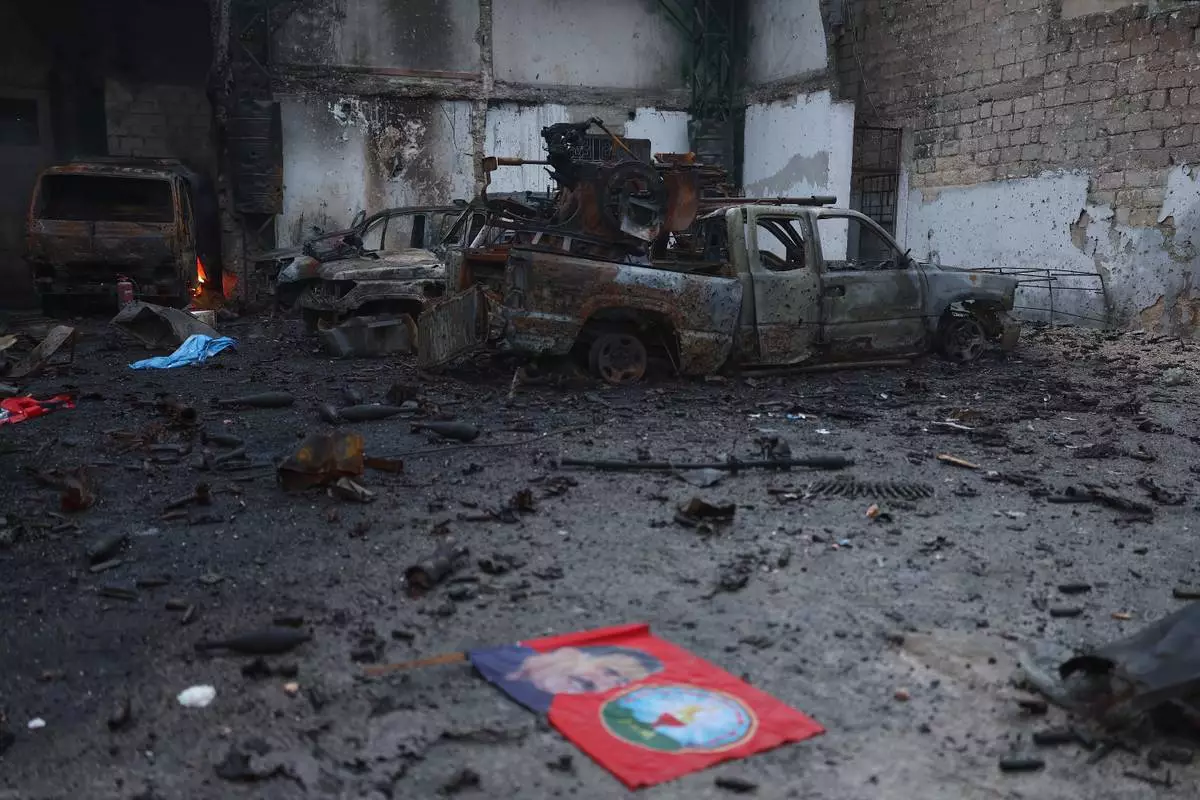
Burned vehicles at one of the Kurdish fighters positions at the Sheikh Maqsoud neighborhood, where clashes between government forces and Kurdish fighters have been taking place in the northern city of Aleppo, Syria, Sunday, Jan. 11, 2026. (AP Photo/Ghaith Alsayed)
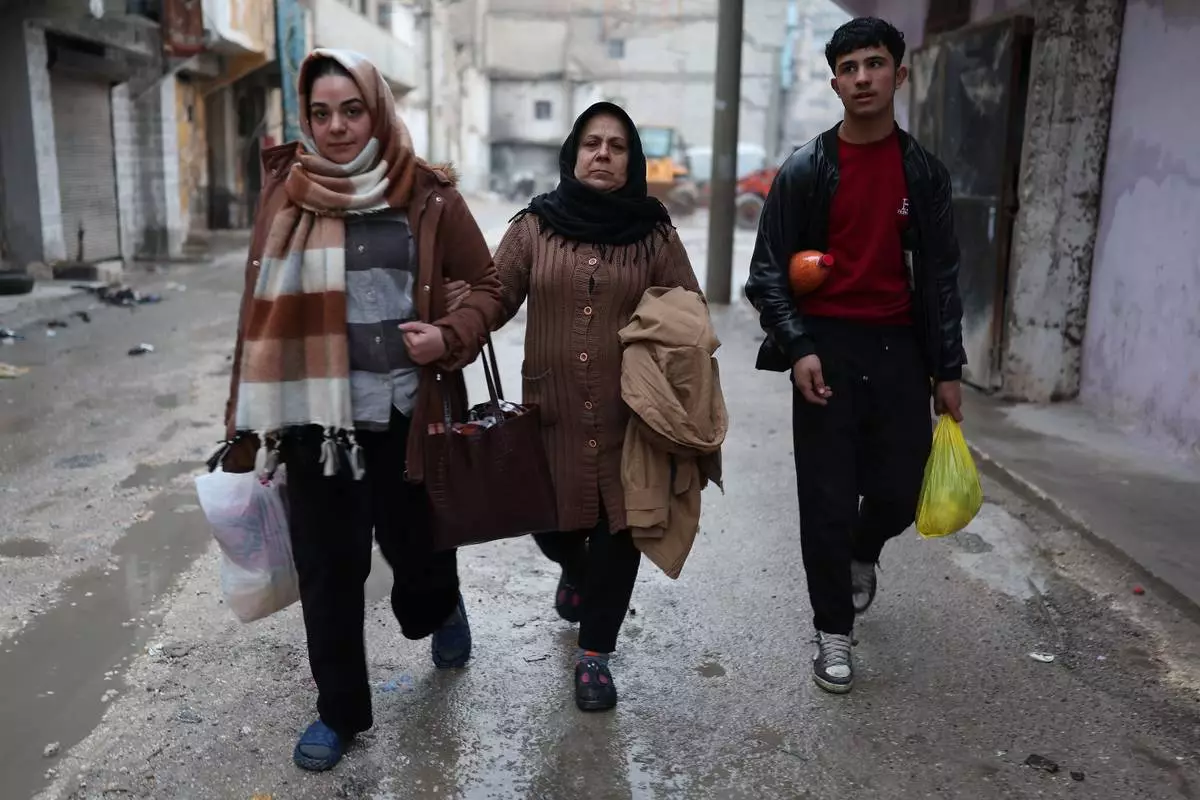
People flee the Sheikh Maqsoud neighborhood, where clashes between government forces and Kurdish fighters have been taking place in the northern city of Aleppo, Syria, Sunday, Jan. 11, 2026. (AP Photo/Ghaith Alsayed)
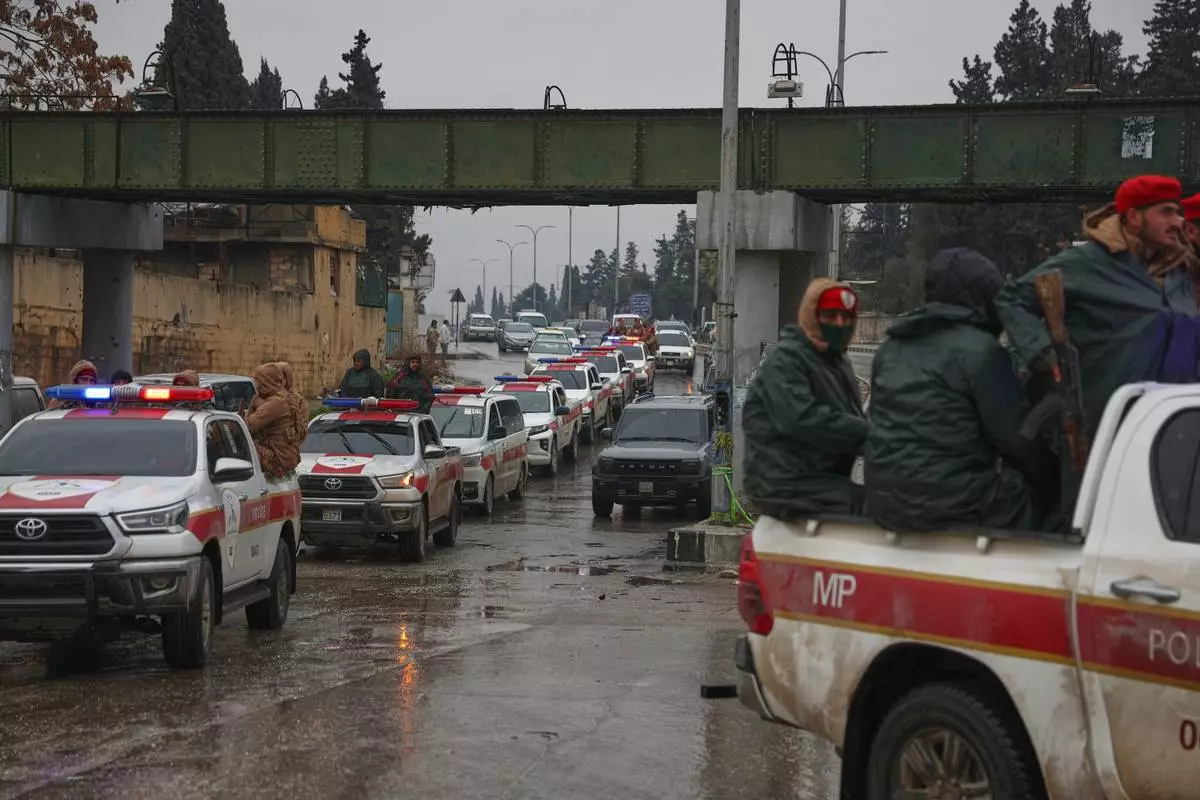
A Syrian military police convoy enters the Sheikh Maqsoud neighborhood, where clashes between government forces and Kurdish fighters have been taking place in the northern city of Aleppo, Syria, Sunday, Jan. 11, 2026. (AP Photo/Ghaith Alsayed)
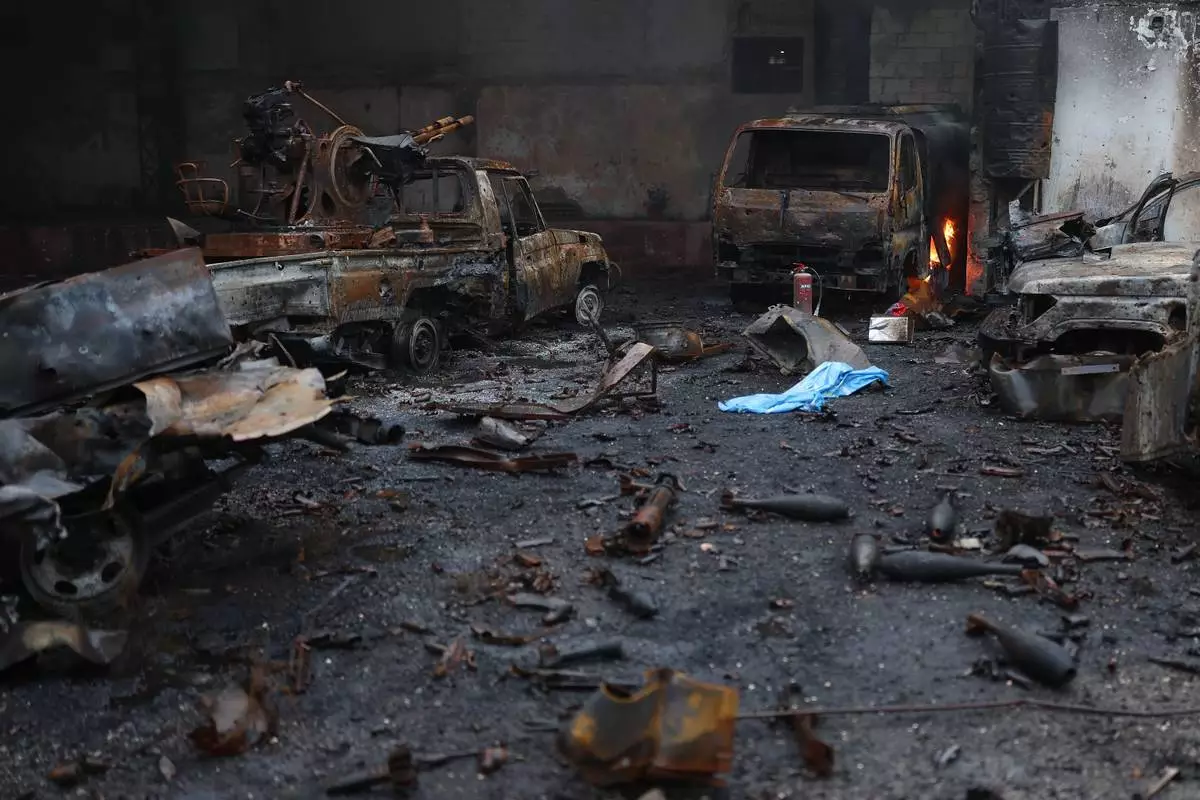
Burned vehicles and ammunitions left at one of the Kurdish fighters positions at the Sheikh Maqsoud neighborhood, where clashes between government forces and Kurdish fighters have been taking place in the northern city of Aleppo, Syria, Sunday, Jan. 11, 2026. (AP Photo/Ghaith Alsayed)