Skip to Content Facebook Feature Image

Adoptee deported from US criticizes Korean government and adoption agency over lack of citizenship

News

Adoptee deported from US criticizes Korean government and adoption agency over lack of citizenship
News

News

Adoptee deported from US criticizes Korean government and adoption agency over lack of citizenship

2024-10-23 19:51 Last Updated At:20:00

SEOUL, South Korea (AP) — Adam Crapser, an adoptee who was deported to South Korea in 2016 because his American parents never secured his citizenship, delivered a scathing denunciation of the Korean government and his adoption agency in a Seoul appeals court on Wednesday.

The 49-year-old’s yearslong legal battle highlights the systemic failures by both governments to secure citizenship for potentially thousands of Korean children adopted into U.S. homes over the past decades.

Crapser, who was adopted by a family in Michigan in 1979, became the first Korean adoptee to sue the Korean government and an adoption agency for damages in 2019.

The government and Crapser’s agency, Holt Children’s Services, were also sued earlier this month by a Korean birth mother who sees them as responsible for her daughter’s adoption to the United States in 1976, months after the child was kidnapped at age 4.

The lawsuits, along with an ongoing fact-finding investigation into grievances reported by hundreds of adoptees who suspect their origins were falsified or obscured, have increased pressure on the Korean government to address the widespread fraud and dubious practices that tarnished its historic adoption program.

Crapser accuses Holt and the Korean government of “malfeasance” that contributed to his traumatic adoption experience in the U.S. He says he was abused and abandoned by two different pairs of adoptive parents who never filed his citizenship papers. He ran into legal troubles as an adult that resulted in his deportation in 2016.

“I did not get the choice of whether or not I could grow up in my country. I did not get the choice to know my language, Korean, or the choice to know my culture. And I did not get the choice to grow up with my Korean family,” Crapser said in testimony at the Seoul High Court.

“It’s been said a lot that I made a lot of mistakes and I got into a lot of trouble in the United States and I admit that. I survived the best that I could in the United States, without a family and without any Korean people around me,” he said.

Crapser cried as he talked about struggling to adjust to life in Korea, without the ability to speak the language and lacking knowledge about the culture, and how he feels tormented by the separation from his two children, including a 10-year-old daughter.

“I’m supposed to be in America. I’m supposed to be living my life there, working. I spent my whole life there working hard, trying to … have a family all these years,” he said.

“Now I don’t see my daughter. I can’t have a life with her. She can’t come here. She can’t live here. You can’t grow up like other Korean kids here. I can’t grow up, I can’t be a Korean adult here. I’m like a Korean child in the Korean society here, every day.”

Crapser’s lawyer, Mina Kim, said her client was seeking 200 million won ($144,700) in damages and urged the court to see how the Korean government and Holt were supposedly liable for “their role in this illegal adoption, which was similar to human trafficking.”

The Seoul High Court will decide on the case on Jan. 8.

Crapser’s lawsuit accuses Holt of manipulating his paperwork to disguise him as an orphan despite the existence of a known birth mother, exposing him to abusive adopters by botching background checks and not following up on whether he obtained U.S. citizenship.

Kim says government officials should also be held accountable for failing to protect Crapser's constitutional rights as a Korean child, poorly monitoring an agency they licensed to handle foreign adoptions and not verifying whether his adoption was based on proper consent or whether his adopters were qualified to be decent parents.

During Wednesday’s hearing, Kim highlighted recent investigations led by The Associated Press in collaboration with FRONTLINE (PBS) on the abuses and fraud that occurred in Korea’s adoption system for decades and accused Holt of evading responsibility over the problems described in the reports.

Holt’s lawyer, Bae Hyeon-mi, argued that Kim’s presentation had nothing to do with Crapser’s case, which she said was basically about the interpretation of laws.

“Holt fulfilled all of its duties required by the law of the time,” Bae said.

A lower Korean court last year ordered Holt to pay Crapser 100 million won ($72,300) in damages for failing to notify his U.S. adopters they needed to take separate steps to obtain his citizenship after his adoption was finalized in their American state court.

But the Seoul Central District Court dismissed Crapser’s other accusations against Holt and absolved the government of responsibility. Crapser appealed and so did Holt, which claims it had no legal responsibility to ensure that Crapser received his citizenship.

The Korean government in the late 1970s eased agencies' obligations to check up on the citizenship status of the adoptees they sent as it removed judicial oversight on foreign adoptions, as part of various steps to empower agencies to process adoptions faster. Seoul was then ruled by military leaders who prioritized economic growth and promoted adoptions as a way to get rid of mouths to feed and establish closer ties with the West.

More than 4,000 Korean children were sent abroad in 1979, the year of Crapser's adoption.

Kim Jae-hak, a lawyer representing the government, said government workers weren't legally required to check up on adoptees’ citizenship at the time. He said there was no clear reason for government workers to suspect that the information on Crapser’s paperwork was inaccurate.

FILE - South Korean adoptee Adam Crapser speaks during an interview in Seoul, South Korea, on Jan. 2, 2019. (AP Photo/Ahn Young-joon, File)
FILE - South Korean adoptee Adam Crapser speaks during an interview in Seoul, South Korea, on Jan. 2, 2019. (AP Photo/Ahn Young-joon, File)
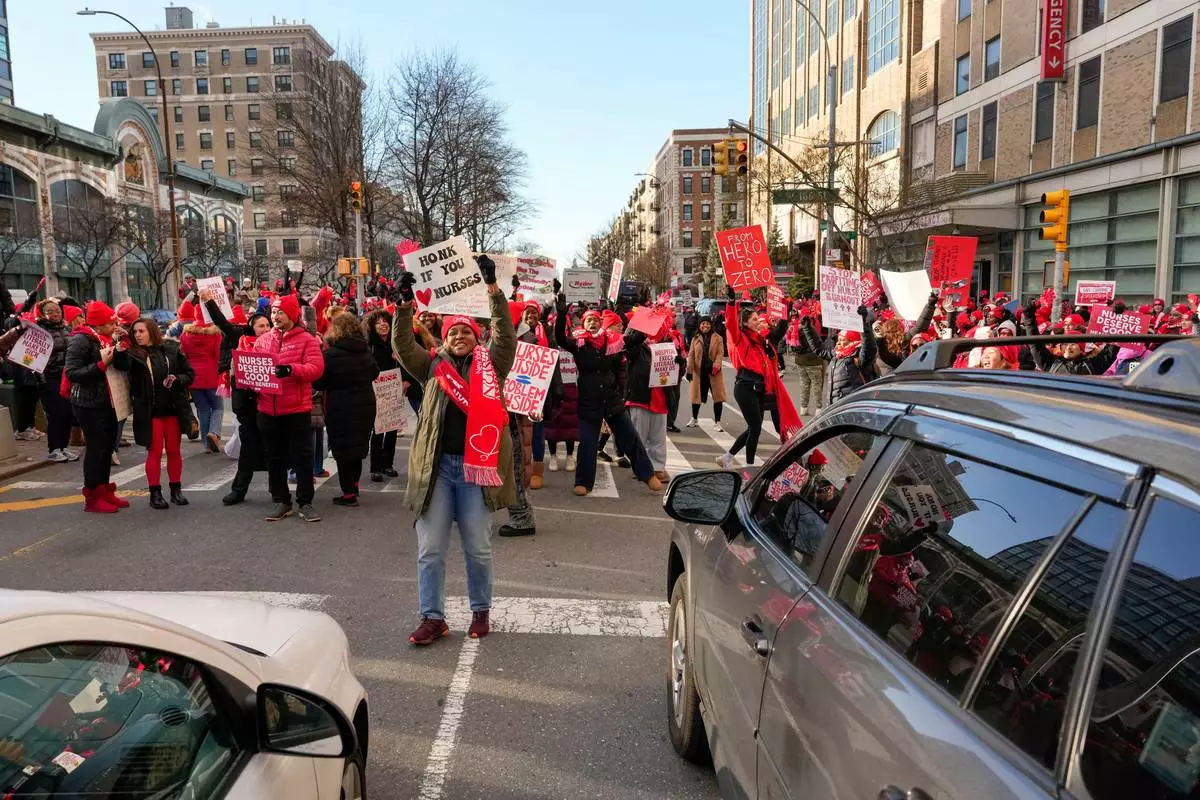
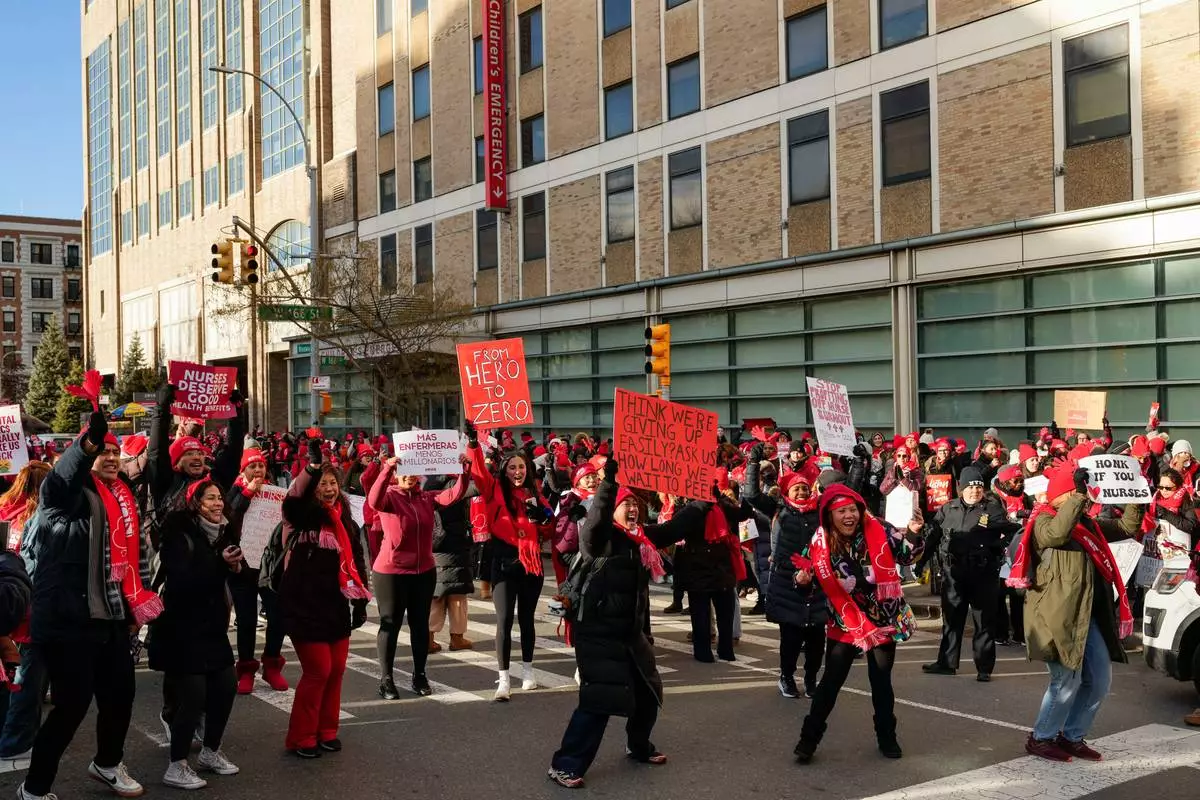
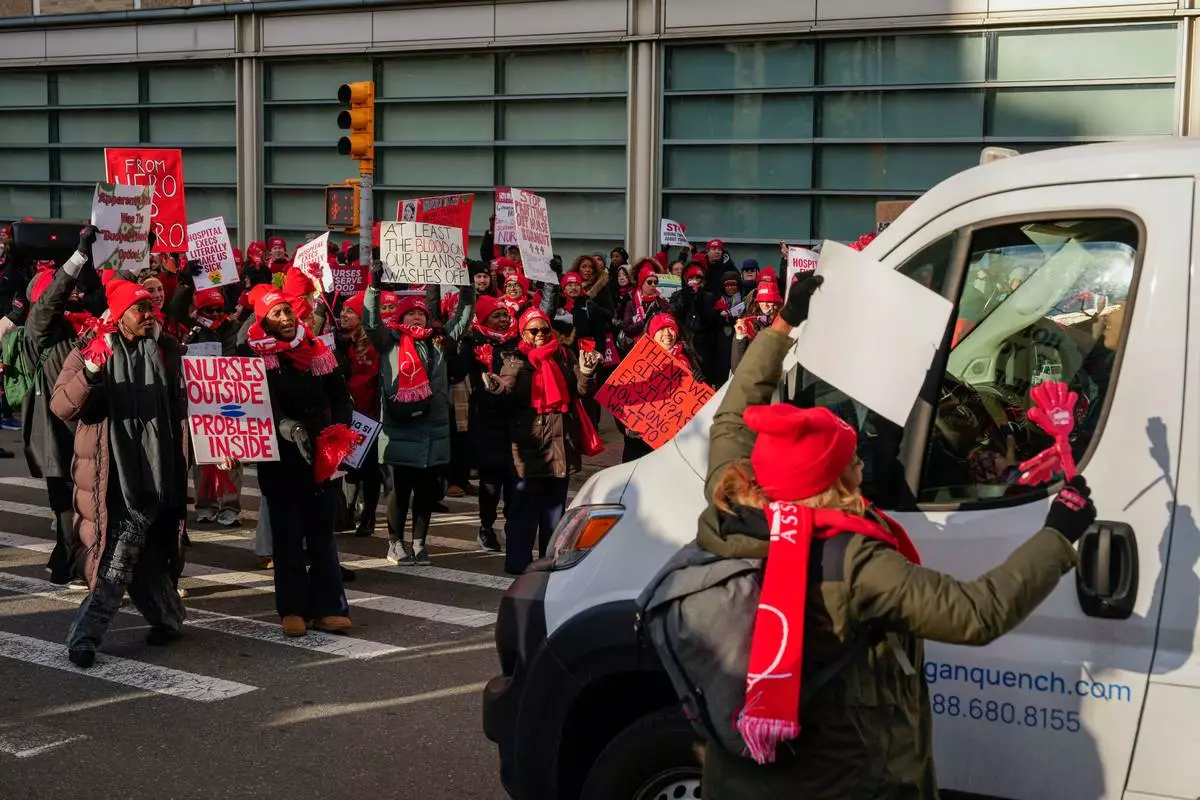
NEW YORK (AP) — Thousands of nurses in three hospital systems in New York City went on strike Monday after negotiations through the weekend failed to yield breakthroughs in their contract disputes.

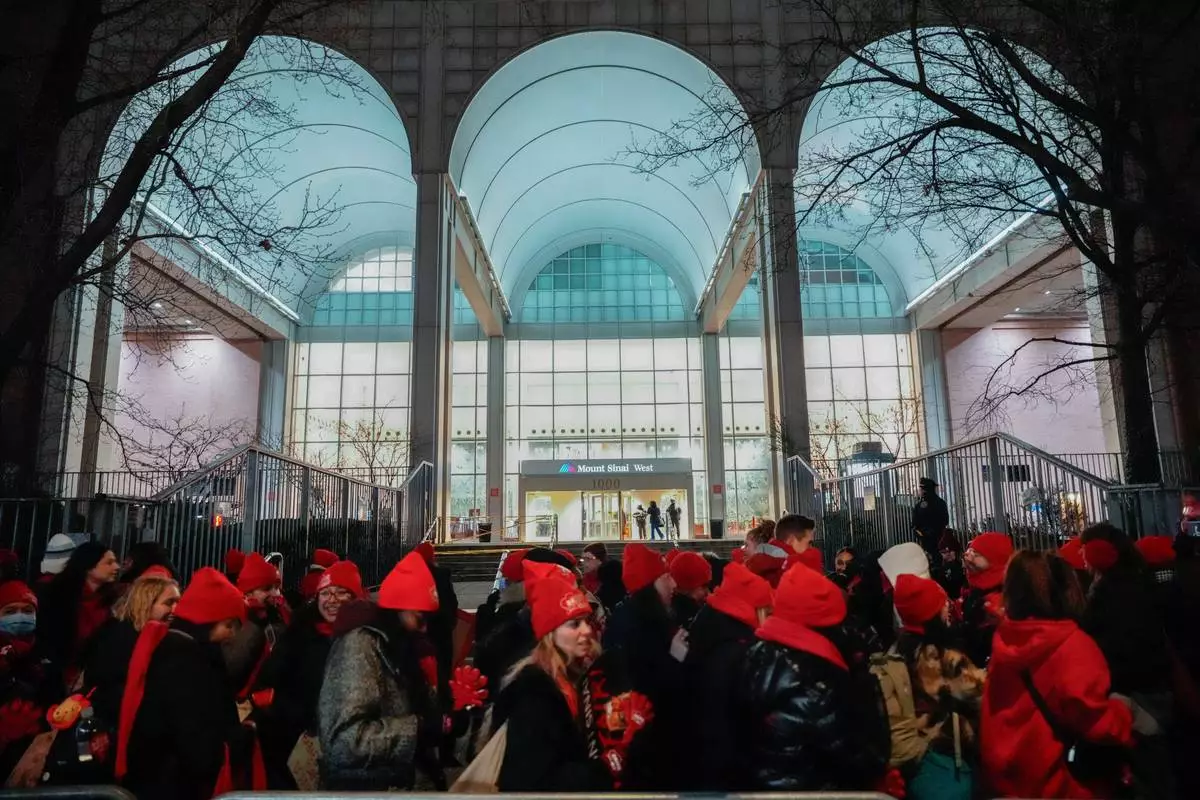
The strike was taking place at The Mount Sinai Hospital and two of its satellite campuses, with picket lines forming. The other affected hospitals are NewYork-Presbyterian and Montefiore Medical Center in the Bronx.

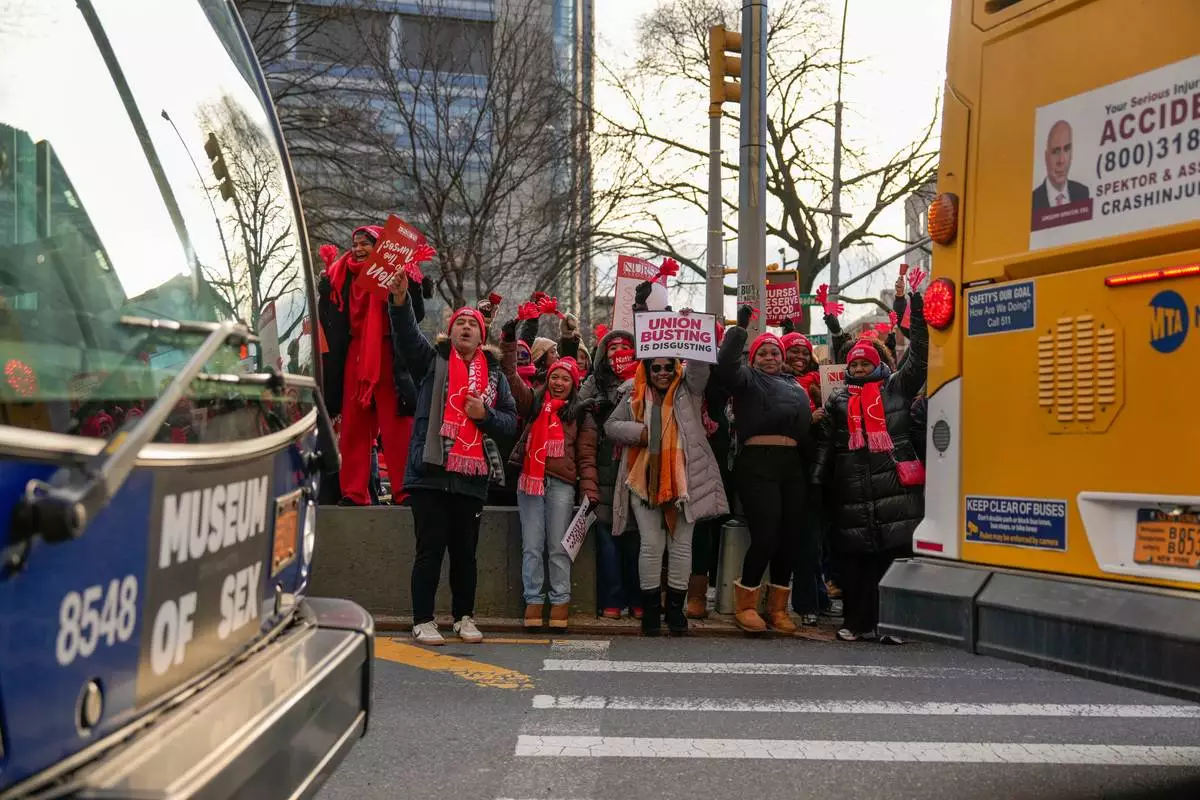
About 15,000 nurses are involved in the strike, according to New York State Nurses Association.

“After months of bargaining, management refused to make meaningful progress on core issues that nurses have been fighting for: safe staffing for patients, healthcare benefits for nurses, and workplace violence protections,” the union said in a statement issued Monday. “Management at the richest hospitals in New York City are threatening to discontinue or radically cut nurses’ health benefits.”

The strike, which comes during a severe flu season, could potentially force the hospitals to transfer patients, cancel procedures or divert ambulances. It could also put a strain on city hospitals not involved in the contract dispute, as patients avoid the medical centers hit by the strike.

The hospitals involved have been hiring temporary nurses to try and fill the labor gap during the walkout, and said in a statement during negotiations that they would “do whatever is necessary to minimize disruptions.” Montefiore posted a message assuring patients that appointments would be kept.

“NYSNA’s leaders continue to double down on their $3.6 billion in reckless demands, including nearly 40% wage increases, and their troubling proposals like demanding that a nurse not be terminated if found to be compromised by drugs or alcohol while on the job," Montefiore spokesperson Joe Solmonese said Monday after the strike had started. "We remain resolute in our commitment to providing safe and seamless care, regardless of how long the strike may last.”

New York-Presbyterian accused the union of staging a strike to “create disruption,” but said in a statement that it has taken steps to ensure patients receive the care they need.

"We’re ready to keep negotiating a fair and reasonable contract that reflects our respect for our nurses and the critical role they play, and also recognizes the challenging realities of today’s healthcare environment,” the statement said.

The work stoppage is occurring at multiple hospitals simultaneously, but each medical center is negotiating with the union independently. Several other hospitals across the city and in its suburbs reached deals in recent days to avert a possible strike.

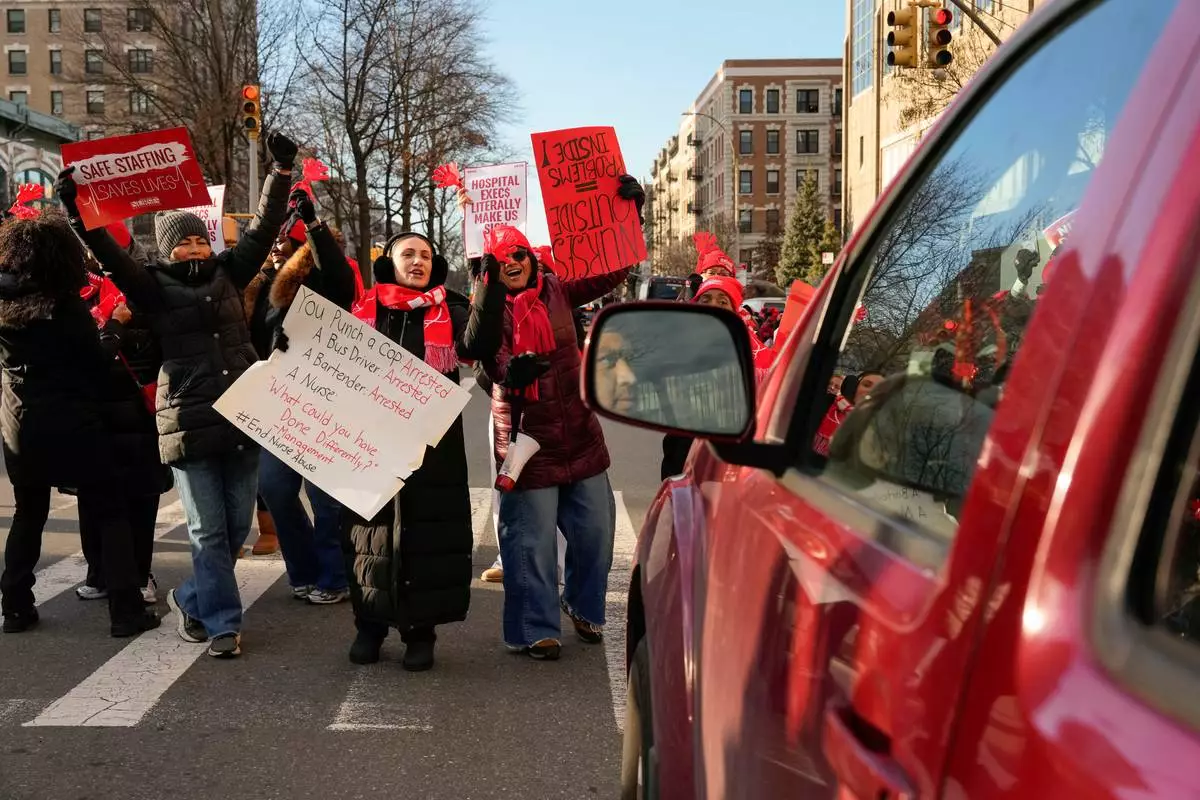
The nurses’ demands vary by hospital, but the major issues include staffing levels and workplace safety. The union says hospitals have given nurses unmanageable workloads.

Nurses also want better security measures in the workplace, citing incidents like a an incident last week, when a man with a sharp object barricaded himself in a Brooklyn hospital room and was then killed by police.

The union also wants limitations on hospitals’ use of artificial intelligence.

The nonprofit hospitals involved in the negotiations say they’ve been working to improve staffing levels, but say the union’s demands overall are too costly.

Nurses voted to authorize the strike last month.

Both New York Gov. Kathy Hochul and Mayor Zohran Mamdani had expressed concern about the possibility of the strike. As the strike deadline neared, Mamdani urged both sides to keep negotiating and reach a deal that “both honors our nurses and keeps our hospitals open.”

“Our nurses kept this city alive through its hardest moments. Their value is not negotiable,” Mamdani said.

State Attorney General Letitia James voiced similar support, saying "nurses put their lives on the line every day to keep New Yorkers healthy. They should never be forced to choose between their own safety, their patients’ well-being, and a fair contract.”

The last major nursing strike in the city was only three years ago, in 2023. That work stoppage, at Mount Sinai and Montefiore, was short, lasting three days. It resulted in a deal raising pay 19% over three years at those hospitals.

It also led to promised staffing improvements, though the union and hospitals now disagree about how much progress has been made, or whether the hospitals are retreating from staffing guarantees.

Nurses strike outside New York-Presbyterian Hospital, Monday, Jan. 12, 2026, in New York. (AP Photo/Yuki Iwamura)

Nurses strike outside New York-Presbyterian Hospital, Monday, Jan. 12, 2026, in New York. (AP Photo/Yuki Iwamura)

Nurses strike outside New York-Presbyterian Hospital, Monday, Jan. 12, 2026, in New York. (AP Photo/Yuki Iwamura)

Nurses strike outside New York-Presbyterian Hospital, Monday, Jan. 12, 2026, in New York. (AP Photo/Yuki Iwamura)

Nurses strike outside New York-Presbyterian Hospital, Monday, Jan. 12, 2026, in New York. (AP Photo/Yuki Iwamura)

Nurses strike outside New York-Presbyterian Hospital, Monday, Jan. 12, 2026, in New York. (AP Photo/Yuki Iwamura)

Nurses strike outside New York-Presbyterian Hospital, Monday, Jan. 12, 2026, in New York. (AP Photo/Yuki Iwamura)

Nurses strike outside New York-Presbyterian Hospital, Monday, Jan. 12, 2026, in New York. (AP Photo/Yuki Iwamura)

Nurses strike outside New York-Presbyterian Hospital, Monday, Jan. 12, 2026, in New York. (AP Photo/Yuki Iwamura)

Nurses strike outside New York-Presbyterian Hospital, Monday, Jan. 12, 2026, in New York. (AP Photo/Yuki Iwamura)

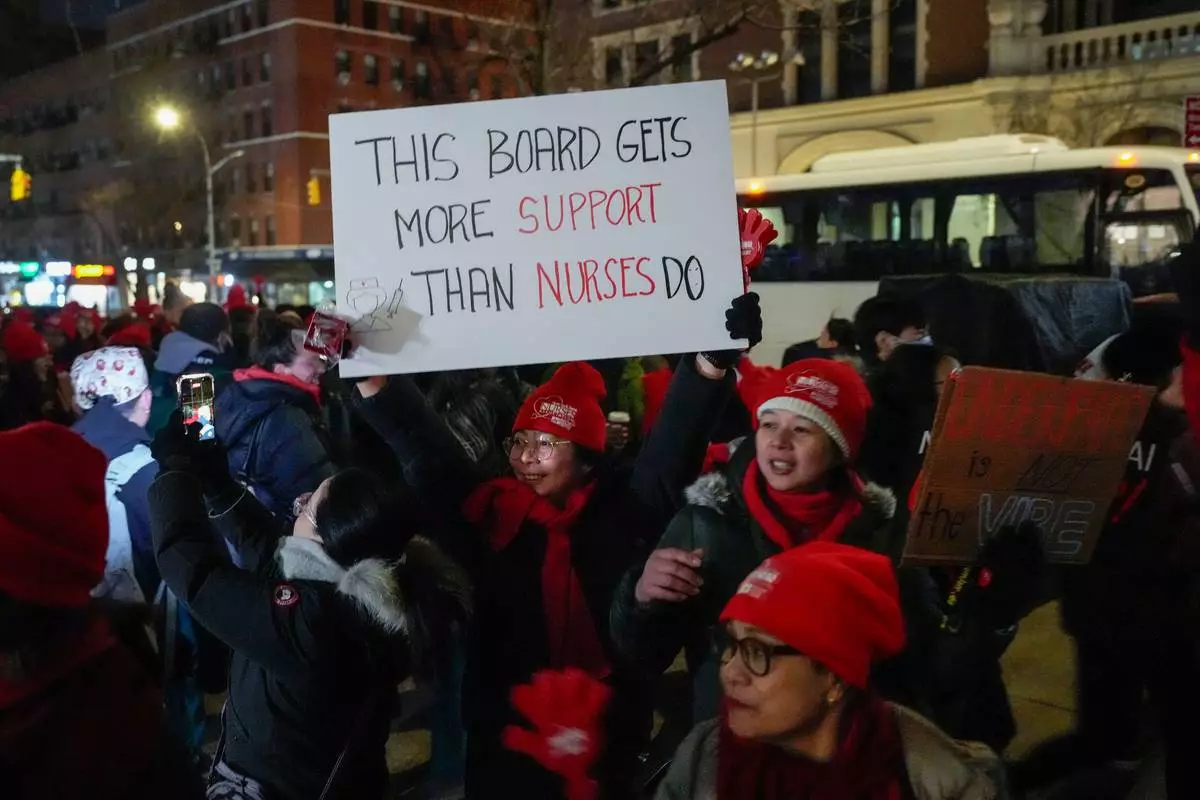
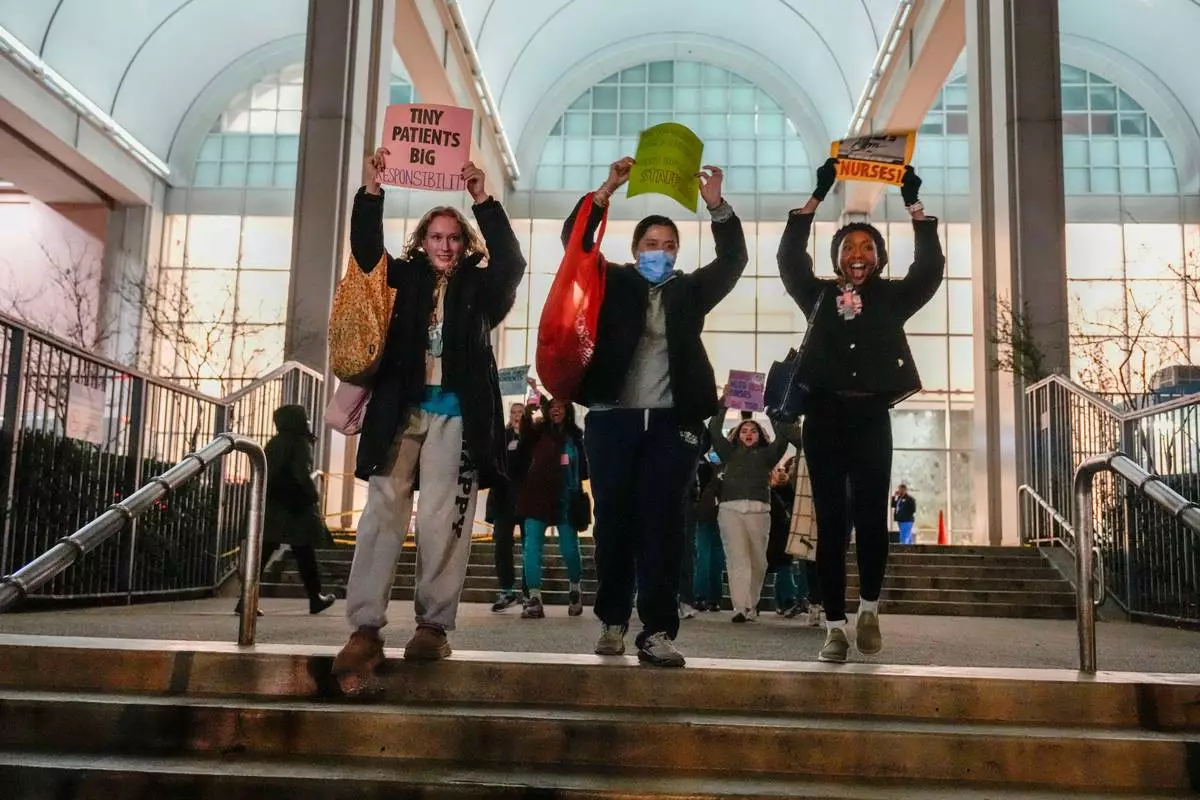
Nurses strike outside Mount Sinai West Hospital, Monday, Jan. 12, 2026, in New York. (AP Photo/Yuki Iwamura)

Nurses strike outside Mount Sinai West Hospital, Monday, Jan. 12, 2026, in New York. (AP Photo/Yuki Iwamura)

Nurses strike outside Mount Sinai West Hospital, Monday, Jan. 12, 2026, in New York. (AP Photo/Yuki Iwamura)

Nurses strike outside Mount Sinai West Hospital, Monday, Jan. 12, 2026, in New York. (AP Photo/Yuki Iwamura)

Nurses strike outside Mount Sinai West Hospital, Monday, Jan. 12, 2026, in New York. (AP Photo/Yuki Iwamura)

Nurses strike outside Mount Sinai West Hospital, Monday, Jan. 12, 2026, in New York. (AP Photo/Yuki Iwamura)

Nurses strike outside Mount Sinai West Hospital, Monday, Jan. 12, 2026, in New York. (AP Photo/Yuki Iwamura)

Nurses strike outside Mount Sinai West Hospital, Monday, Jan. 12, 2026, in New York. (AP Photo/Yuki Iwamura)

FILE - A medical worker transports a patient at Mount Sinai Hospital, April 1, 2020, in New York. (AP Photo/Mary Altaffer, File)

FILE - A medical worker transports a patient at Mount Sinai Hospital, April 1, 2020, in New York. (AP Photo/Mary Altaffer, File)

Recommended Articles