The 2024 World Science and Technology Development Forum opened on Tuesday in Beijing, where experts will contribute global wisdom on issues of scientific openness and cooperation among the global sci-tech community.
The forum, themed "Science and Technology for the Future", lasts until Thursday at the main venue in Beijing. More than 350 guests from 33 countries and regions, including more than a dozen Nobel Prize, Turing Award, and Lasker Award winners, are engaging in dialogue at this forum.
"We have recently launched an agreement between the Chinese Academy of Sciences and the National Center for Scientific Research in France about a network on biodiversity. Preservation of biodiversity, together with science, are essential all over the world for future generations," said Yvon Le Maho, a member of French Academy of Sciences
During the forum, scientists from around the world discussed topics such as the governance of artificial intelligence, promotion of sustainable development through interdisciplinary integration, and open scientific infrastructure to promote sharing and scientific cooperation in the global science and technology community. Many of these important topics were initiated by Chinese scientists.
"We must promote the interconnection and interoperability of open scientific data among countries in the world," said Yang Wei, academician of the Chinese Academy of Sciences.
Guests said China is playing a vital role in global sci-tech development.
"China has the wisdom to understand that science has to be left free, to explore new horizons. So I think what China is doing in the field of science and technology is good for China, and I think it's very good for the world," said Salvatore Arico, Chief Executive Officer of the International Science Council.
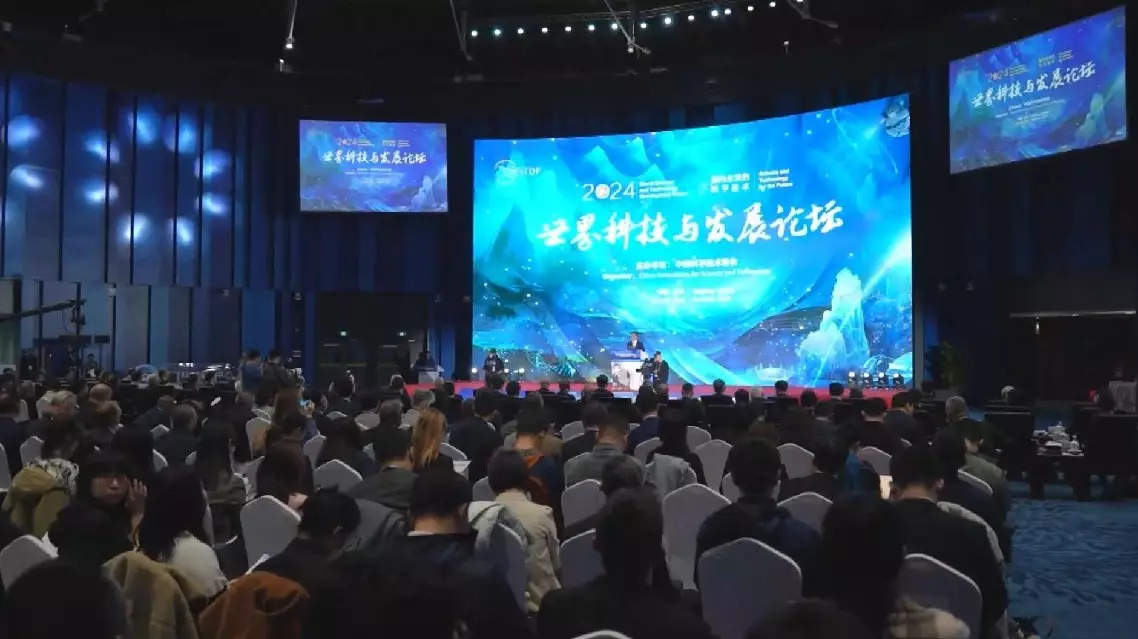
Sci-tech development forum in Beijing spotlights interconnectivity of research world
China is willing to continue working with Russia within the framework of the United Nations (UN) Security Council, maintain timely communication on major issues, and make joint efforts to help de-escalate the situation in the Middle East, safeguard regional peace and stability, and uphold common security for the world, Chinese Foreign Minister Wang Yi said on Sunday.
Wang, also a member of the Political Bureau of the Communist Party of China Central Committee, made the remarks in a phone conversation with Russian Foreign Minister Sergei Lavrov.
China and Russia, as permanent members of the UN Security Council, should uphold fairness and justice on matters of principle, adopt an objective and balanced approach, and seek greater understanding and support from the international community, Wang said.
Noting that China has consistently advocated the resolution of international and regional hotspot issues through dialogue and negotiation, Wang said that the situation in the Middle East continues to deteriorate, hostilities are still escalating, and the fundamental solution to ensuring navigation through the Strait of Hormuz lies in achieving an early ceasefire and bringing the war to an end.
For his part, Lavrov said Russia is highly concerned about the continued escalation of tensions in the Middle East.
Regarding the ongoing conflict and the issue of the Strait of Hormuz, Lavrov said Russia maintains that military operations must be stopped immediately and efforts should return to the track of political and diplomatic settlement to address the root causes of the conflict, and the UN Security Council should play a constructive role in this regard.
Russia stands ready to maintain close communication and coordination with China and continue to make efforts and speak out in support of a ceasefire and the end of the war, he said.
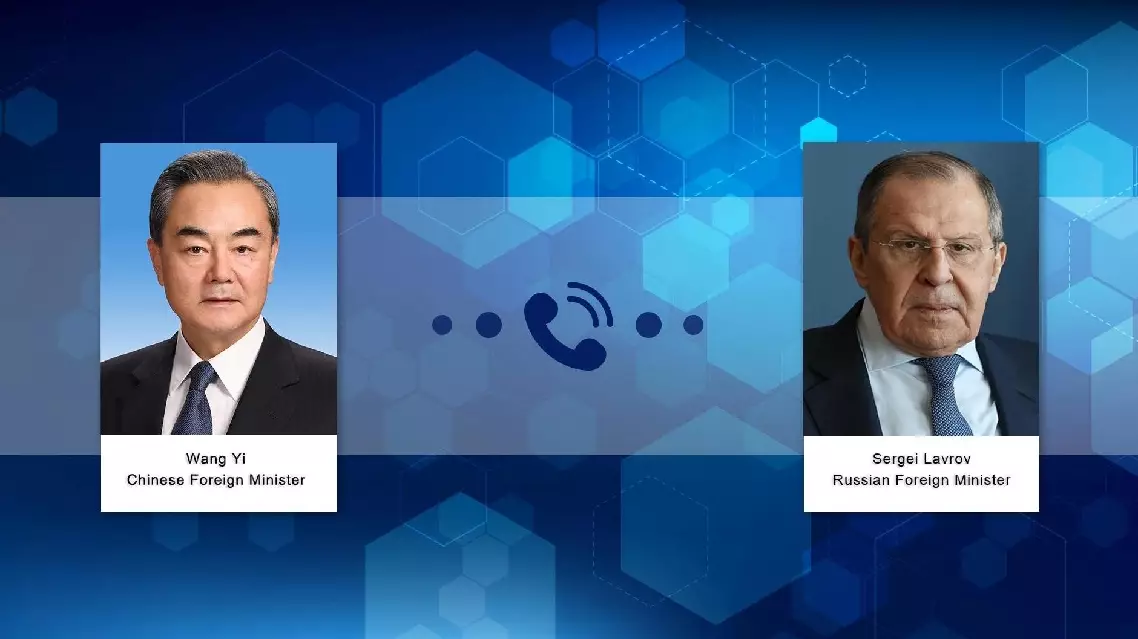
China willing to cooperate with Russia to de-escalate Mideast situation: FM