Chinese auto giant Changan Automobile on Monday launched the E07, an electric sport utility vehicle (SUV) that can be transformed into a pickup truck, in an attempt to meet a wider range of customer needs.
Debuting at the fourth Changan Tech Ecosystem Conference, the model features another selling point -- Changan's self-developed advanced intelligent driver assistance system.
"Through tech innovations, we have made breakthroughs in using foundation models to achieve end-to-end intelligent driving, as well as enhancing vehicle perception in complex scenarios. In the future, we will gradually introduce multimodal large language models (LLMs) and vision models to provide better interactive experience between drivers and vehicles," said Wang Jun, president of Chongqing Changan Automobile.
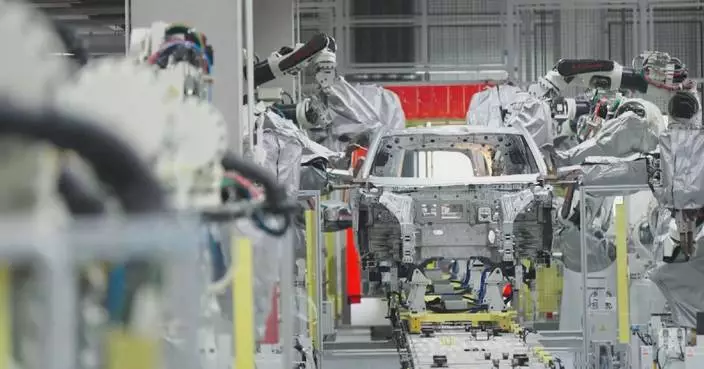
To cater to the personalized and diversified demands of customers, the automaker has built an intelligent plant with digital technologies, allowing consumers to participate in the manufacturing process.
"Once customers determine the specifications for the vehicle they want to buy on their cellphones, they can directly modify the parameters of our Bill of Materials (BOM) on the digital chassis. Then we will send material requirements to and place orders with our suppliers so as to efficiently match the personalized needs of our customers," said Wang.
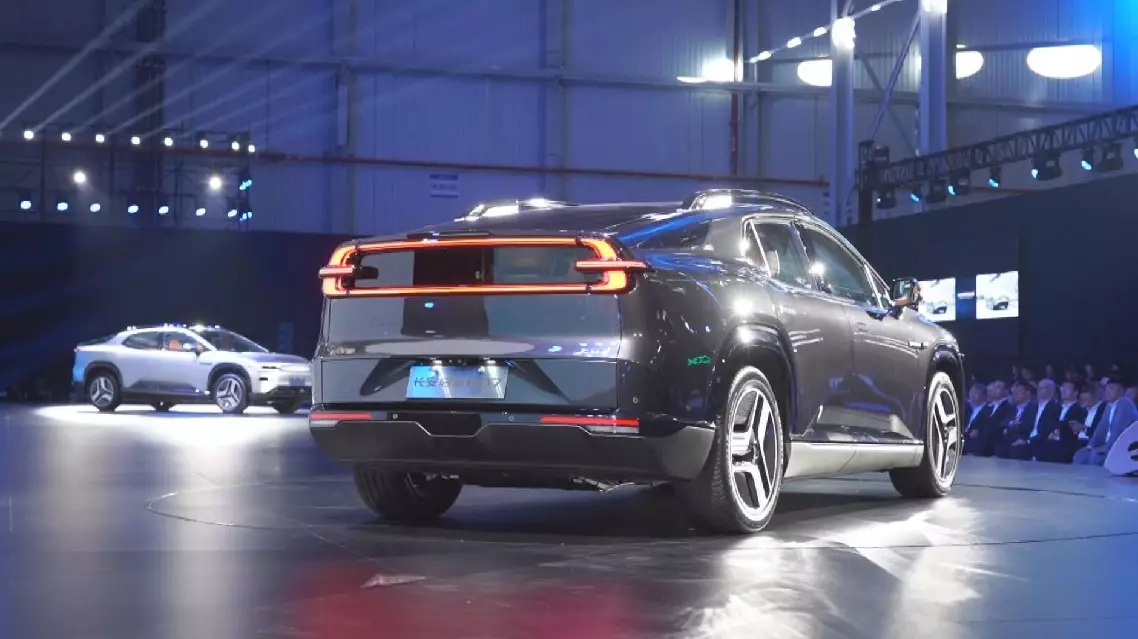
Changan Automobile debuts transformable electric SUV to meet customers' personalized needs
China's flagship nuclear fusion project reached a significant milestone ahead of the country's National Day holiday which begins Thursday, with the completion of the main complex for the Burning Plasma Experimental Superconducting Tokamak (BEST) facility in Hefei of east China's Anhui Province.
The BEST facility represents one of China's major ventures into controlled nuclear fusion and is designed to replicate the nuclear fusion reactions that occur inside the sun, unlocking a source of nearly inexhaustible clean energy.
Since July, several key components of the BEST facility have arrived at the site in succession, and assembly work has been progressing steadily with more than half of the overall work now completed.
With the construction of the outer complex now finished, the main unit has recently entered its most challenging phase inside the huge facility. The process which will deliver the nuclear fusion can be imagined as a giant, layer-upon-layer "thermos". Starting from the innermost vacuum vessel, engineers need to successively install a cold shield, toroidal field magnets, and various precision internal components.
The vacuum vessel serves as the "furnace" where fusion reactions take place, while the cold shield acts as a super-insulation layer, blocking heat transfer. The toroidal field magnets generate an ultra-strong magnetic field to confine the high-temperature plasma and prevent it from touching the container walls.
In recent years, China's fusion research has accelerated, with the BEST device - seen as the country's next-generation "artificial sun" - scheduled for completion by the end of 2027. It will conduct deuterium-tritium burning plasma experiments targeting 20 to 200 megawatts of fusion power and achieve a major net energy gain.
Fusion energy, which replicates the sun's power generation process, is hailed as an ideal clean energy source. For decades, scientists have used techniques like magnetic confinement to create the extreme conditions required for fusion.
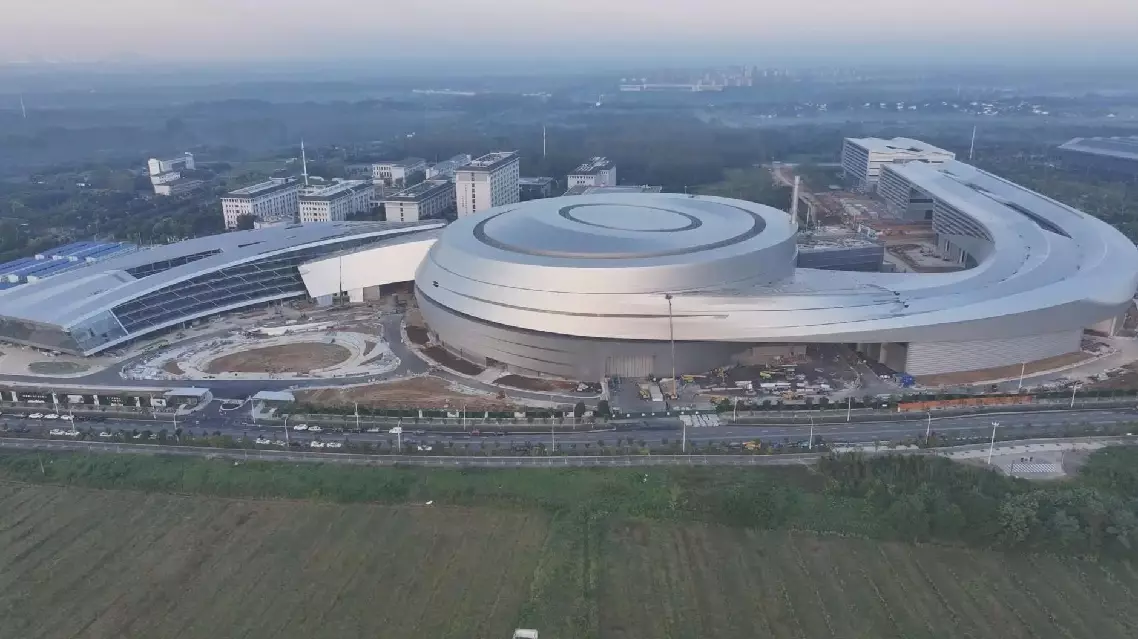
Main complex for China's "artificial sun" project completed in Hefei