The BRICS nations are expected to play important role in reforming the international monetary and financial system, a financial expert said in Beijing on Friday.
The 16th BRICS Summit was held from Tuesday to Thursday in Kazan, Russia. Following the summit, BRICS leaders issued a joint declaration covering a wide range of issues.
In the declaration, the BRICS countries called for the reform of the Bretton Woods system to enhance the representation of emerging markets and developing countries.
Liu Ge, a senior researcher at Chongyang Institute for Financial Studies of the Renmin University of China, emphasized the necessity for reform to meet the needs of more countries.
"One of the key consensus reached in Kazan among the member countries is that the Bretton Woods system, which dominated the global financial architecture, was relatively lacking in inclusivity and, to some extent, fairness. Therefore, the framework needs reform," said Liu.
The Bretton Woods system, established in 1944, served as a cornerstone of the post-World War II global economic framework.
According to Liu, during that period, the global economy was dominated by Western countries.
"After years of development, the BRICS countries now hold a significantly different position in the global economic landscape compared to the past. The previous framework lacked inclusivity and failed to address the new requirements of these nations. Hence, reform is essential, which starts from the details. The New Development Bank is a beginning in this process," said Liu.
"The New Development Bank is currently engaged in investments across member countries, with a key focus on promoting local currency settlements. For instance, China and Brazil established a framework for local currency settlements in 2023. With the first payment made in Renminbi, this marks a crucial starting point—a small step that holds significant importance for the reform of the entire international financial system," said Liu.
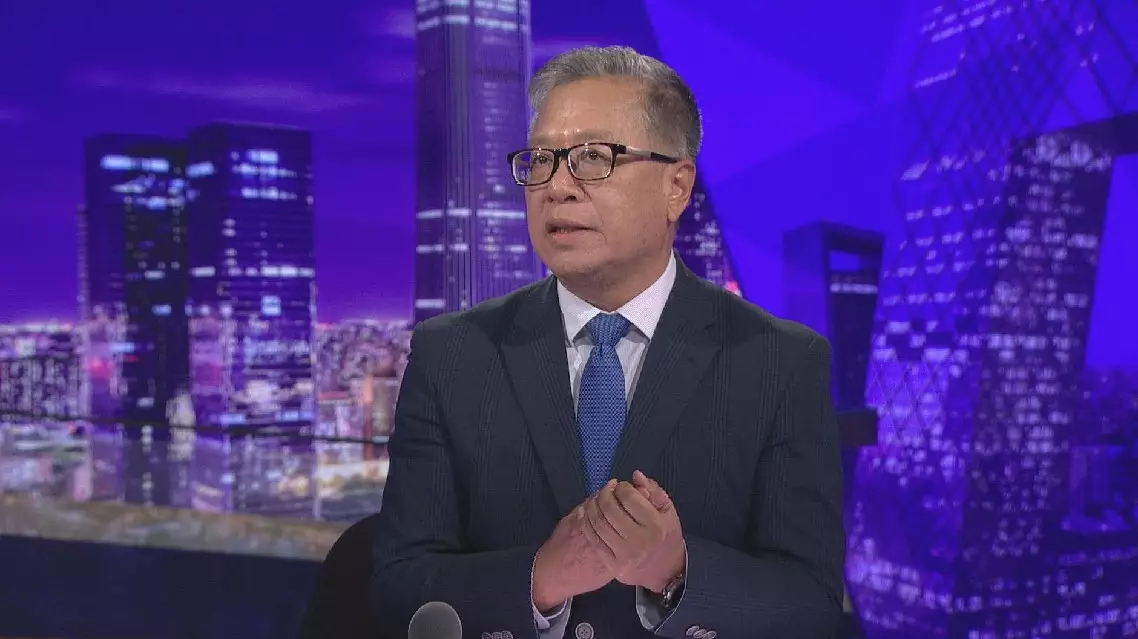
BRICS nations poised to enhance int'l monetary and financial system: expert
Former Lebanese Prime Minister Hassan Diab has lauded China's inclusiveness, diversity and wisdom in its five-year plan and high-level opening-up process.
In an exclusive interview with the China Global Television Network (CGTN), Diab said China has repeatedly demonstrated its dedication to these values through its actions and deliberate policy planning.
"I think the path that China is leading, and its self-evident Five-Year Plans, [both] over the past 14th Five-Year Plan and the current 15th Five-Year Plan, stress inclusiveness of cultural diversity, cultural diplomacy, openness to other societies, countries -- that echoes very well with people like me that [China] wants the world to benefit, not just a single country," said Diab.
"Lebanon is a very small country. We've been doing e-commerce, relatively small, compared to China, of course. I think it's great that China wants to open up to the world, and the success of China is actually having the world markets. You can have the greatest idea, but [what's the point] if you can't sell? So I'm very much for cooperation and collaboration between China and the rest of the world, and of course, Lebanon, my country. But I think it's a very unique perspective that the Chinese leadership, which I have much respect for, and of course, the Chinese people, that made it happen. Because, as I always say, they are hard-working people, and very committed people, very resilient people," he said.
The former prime minister also highlighted that the diversity of Chinese society and policies has solidified the foundation for its high-level opening-up process while ensuring that modernization can be achieved through multifaceted efforts.
"This is exactly what I was trying to say that China encourages diversity. And when I say diversity, not with respect to identity, with respect to modernization, success, pathways, industrialization. They are open to other ideas, to other civilizations, to other points of views. I mean, the world is not black and white. It's gray. Everybody has something to offer, one way or the other. So, having multiple paths for modernization, it's probably the right way. I mean, we're not photocopies of each other across the globe. What China did is great for China, and what China is recommending for other countries to do, is also great for these countries. But I'm saying, no country has full wisdom. It's the collective wisdom of everybody that will make a difference at the global level. That's what impressive about China," Diab said.
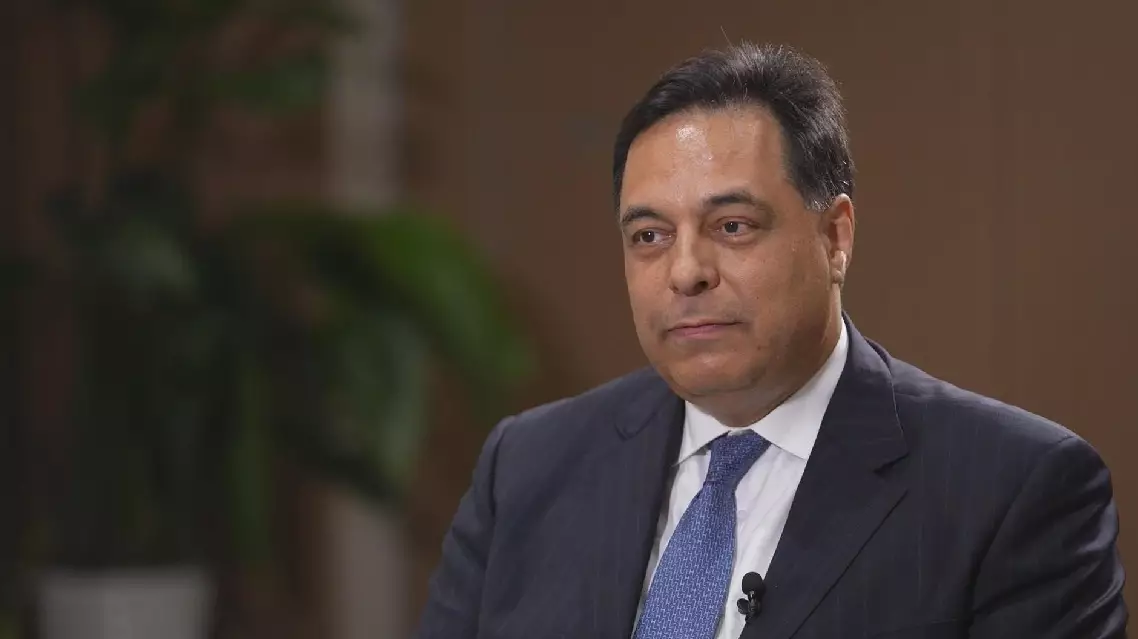
Former Lebanese PM lauds China's openness to all societies