Simon Bouie told his mother and grandmother he wasn't going to get in trouble back in 1960. Then the Black Benedict College student sat at a whites-only lunch counter in South Carolina and got himself arrested.
Finally on Friday, that arrest and the records of six of his friends were erased as a judge signed an order during a ceremony in a Columbia courthouse just a few blocks from where he sat at that segregated table some 64 years before.
Click to Gallery
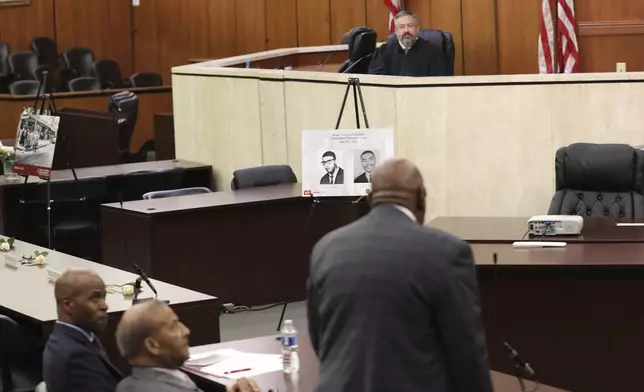
Charles Barr, foreground, speaks to Judge Robert Hood during a hearing where Barr's record was cleared after he was arrested in 1960 for sitting at an all-white South Carolina lunch counter on Friday, Oct. 25, 2024, in Columbia, S.C. (AP Photo/Jeffrey Collins)
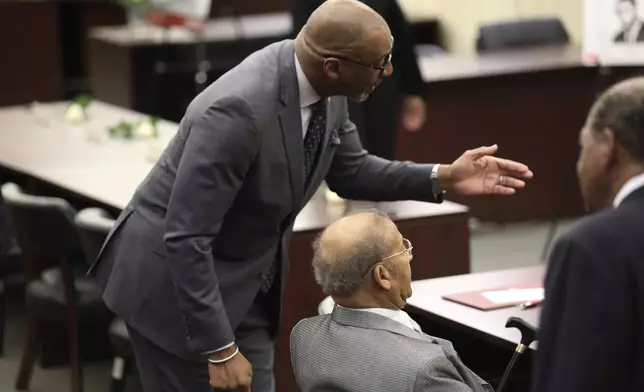
Solicitor Byron Gipson, left, shows Simon Bouie. seated, where he will speak during a hearing where Bouie's record was cleared after he was arrested in 1960 for sitting at an all-white South Carolina lunch counter on Friday, Oct. 25, 2024, in Columbia, S.C. (AP Photo/Jeffrey Collins)
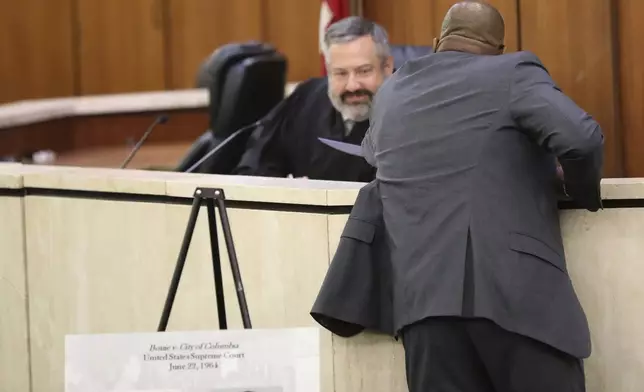
Solicitor Byron Gipson hands up papers clearing the records of seven men arrested in 1960 for sitting at an all-white South Carolina lunch counter to Judge Robert Hood on Friday, Oct. 25, 2024, in Columbia, S.C. (AP Photo/Jeffrey Collins)
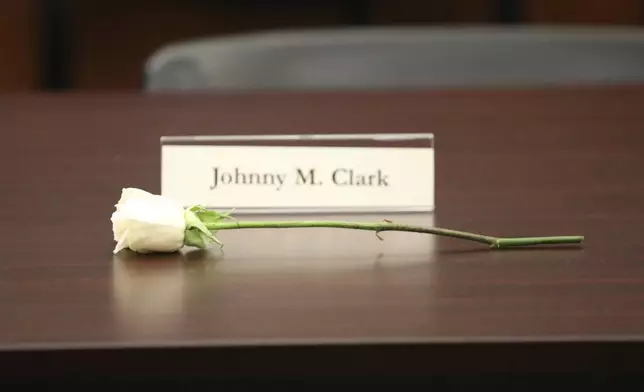
A white rose and a nameplace honor one of five men who died before their records could be cleared after they were arrested in 1960 for sitting at an all-white South Carolina lunch counter on Friday, Oct. 25, 2024, in Columbia, S.C. (AP Photo/Jeffrey Collins)
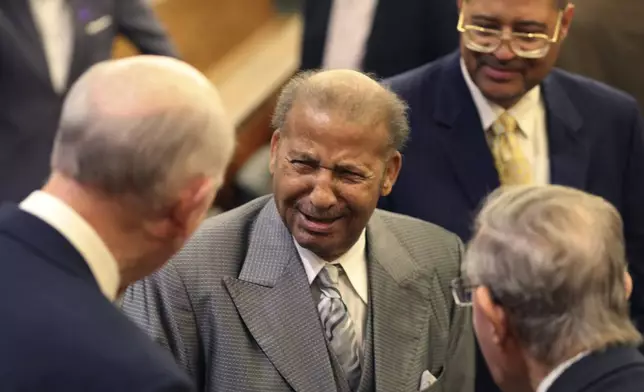
Simon Bouie meets well wishers after a hearing where his record was cleared after he was arrested in 1960 for sitting at an all-white South Carolina lunch counter on Friday, Oct. 25, 2024, in Columbia, S.C. (AP Photo/Jeffrey Collins)
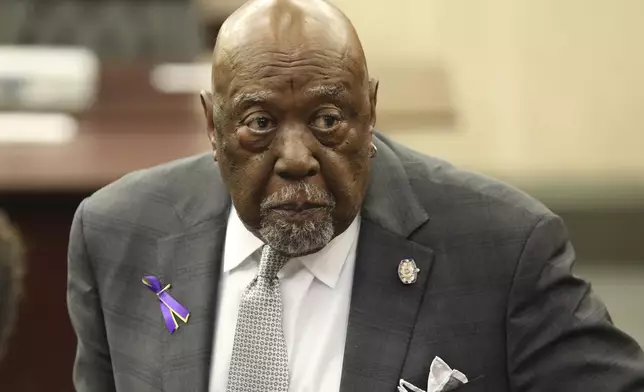
Charles Barr waits for a hearing to begin where his record was cleared after he was arrested in 1960 for sitting at an all-white South Carolina lunch counter on Friday, Oct. 25, 2024, in Columbia, S.C. (AP Photo/Jeffrey Collins)
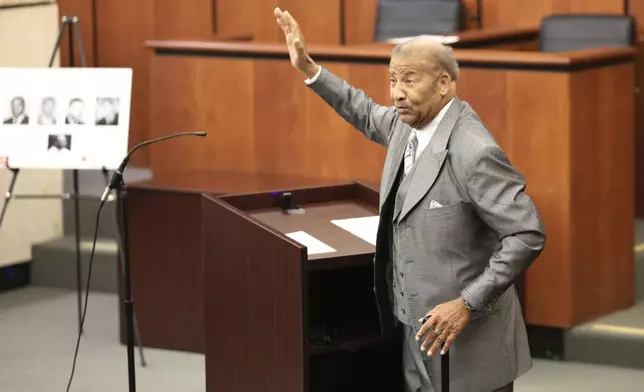
Simon Bouie waves to his family during a hearing where his record was cleared after he was arrested in 1960 for sitting at an all-white South Carolina lunch counter on Friday, Oct. 25, 2024, in Columbia, S.C. (AP Photo/Jeffrey Collins)
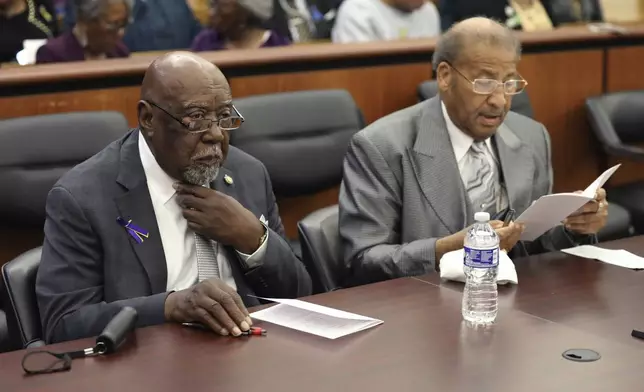
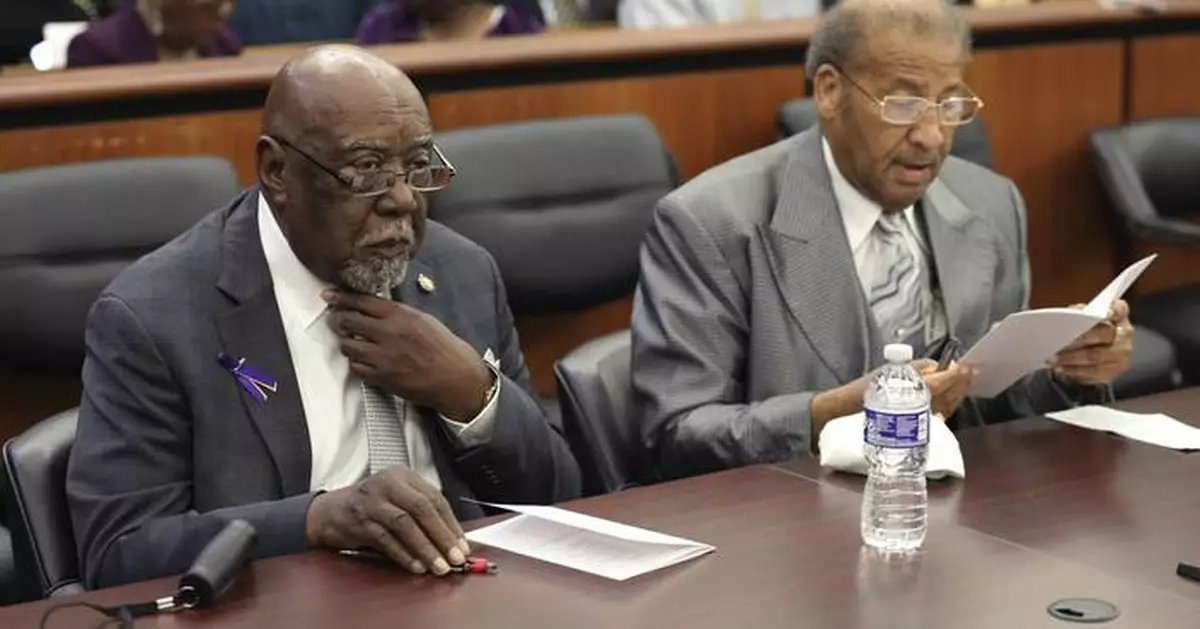
Charles Barr, left, and Simon Bouie, right, wait for a hearing to start where their records were cleared after they were arrested in 1960 for sitting at an all-white South Carolina lunch counter on Friday, Oct. 25, 2024, in Columbia, S.C. (AP Photo/Jeffrey Collins)
Bouie remembered that promise as he went into the Eckerd Drug Store. He knew the governor at the time had warned African American college students not to get involved with "hot-headed agitators" and “confused lawyers” who were insisting all people were equal no matter the color of their skin.
“We had a desire to fight for what was right and nobody could turn us around. We walked in that building with our heads held high and sat down,” Bouie said.
Sitting down changed the world. Columbia wasn't where the first sit-in, an act of disobedience, happened. The movement started in Greensboro, North Carolina, and spread through the South in the early 1960s.
Several Southern cities have held similar expungement ceremonies in recent years as the young people who risked arrest and marring their record are now older men and women. U.S. Rep. and one-time House Majority Whip Jim Clyburn loved to tell the story of how he met his wife of nearly six decades, Emily, in jail after they were both arrested at a protest.
Back then, Black people would sometimes sit at an all-white lunch counter and refuse to leave. They were often arrested and then refused to pay bail. Jails became crowded. They were put on chain gangs. There was pressure to speak up and change the laws. And segregation was slowly, and sometimes violently, chipped away.
Only two of the seven men arrested over two days of protests in Columbia are still alive. On Friday, Bouie and Charles Barr both walked slowly around the Richland County courtroom with canes. The other five men — David Carter, Johnny Clark, Richard Counts, Milton Greene and Talmadge Neal — have since died, so were represented at another table at the front of the courtroom by white roses.
Barr remembered the fear that day riding in the back of a police car not sure if he was going to be taken to jail or somewhere else. He had heard stories. He left the state for a while because of the racial strife. But then he came back.
“It made me feel good we were a part of this movement that had helped to make everything easier for everyone to get along a little better in South Carolina,” Barr said.
University of South Carolina professor Bobby Donaldson spoke on behalf of the five men who died. He said they were true Americans, putting the importance of the Constitution and equality over their own freedom to ensure a better life for the next generation.
“In 1960 they were victimized. Today they are vindicated. In 1960 they were prosecuted. Today they are praised. In 1960 they were convicted. Today they are exonerated,” Donaldson said.
The arrests and convictions of the seven men went all the way to the U.S. Supreme Court. Justices threw out their convictions just days before the Civil Rights Act of 1964 was signed into law. But the arrests remained on their records.
Solicitor Byron Gipson handled the paperwork to investigate the arrests and get the expungement before a judge.
“These men stood bravely — sat bravely, quite frankly — in the face of adversity, in the face of threats, in the face of death," Gipson said. “They did it because they wanted to guarantee the Constitution applied to all Americans.”
Gipson then walked the paperwork up to Judge Robert Hood who signed it to applause from the packed courtroom of around 150 people.
“These heroes stood firm against oppression often at great personal cost. They dared to dream of a world where equality is not an aspiration, but a reality. Their unwavering commitment to justice serves as a beacon of hope and inspiration to us all," Hood said.
The arrests didn't keep the men from finishing college and leading successful lives. But Bouie said there was one place he was reminded of it.
“When I would get in trouble at home, my wife would say to me, ‘now you talk to me that way again, I’m going down to Richland County court. You have a case. And you're in big trouble. I don't want to hear another word,'" Bouie said to laughter. "That went on for 53 years.”
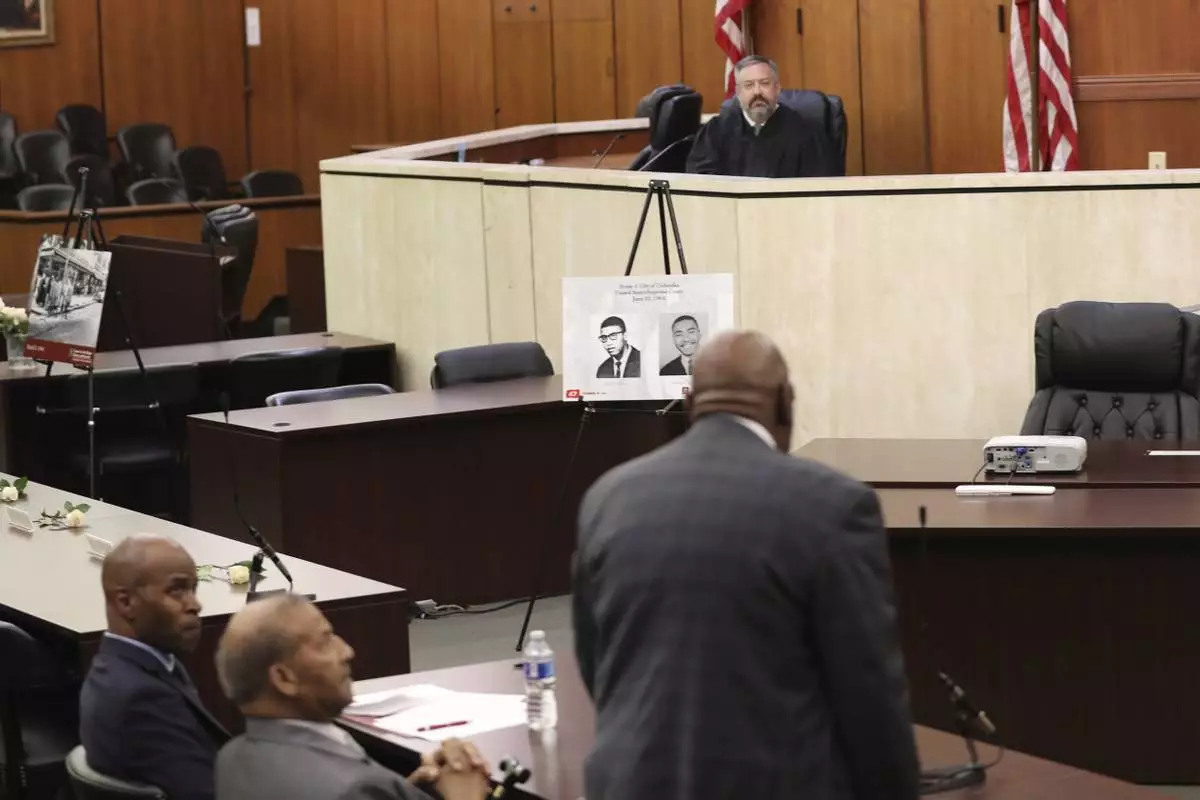
Charles Barr, foreground, speaks to Judge Robert Hood during a hearing where Barr's record was cleared after he was arrested in 1960 for sitting at an all-white South Carolina lunch counter on Friday, Oct. 25, 2024, in Columbia, S.C. (AP Photo/Jeffrey Collins)
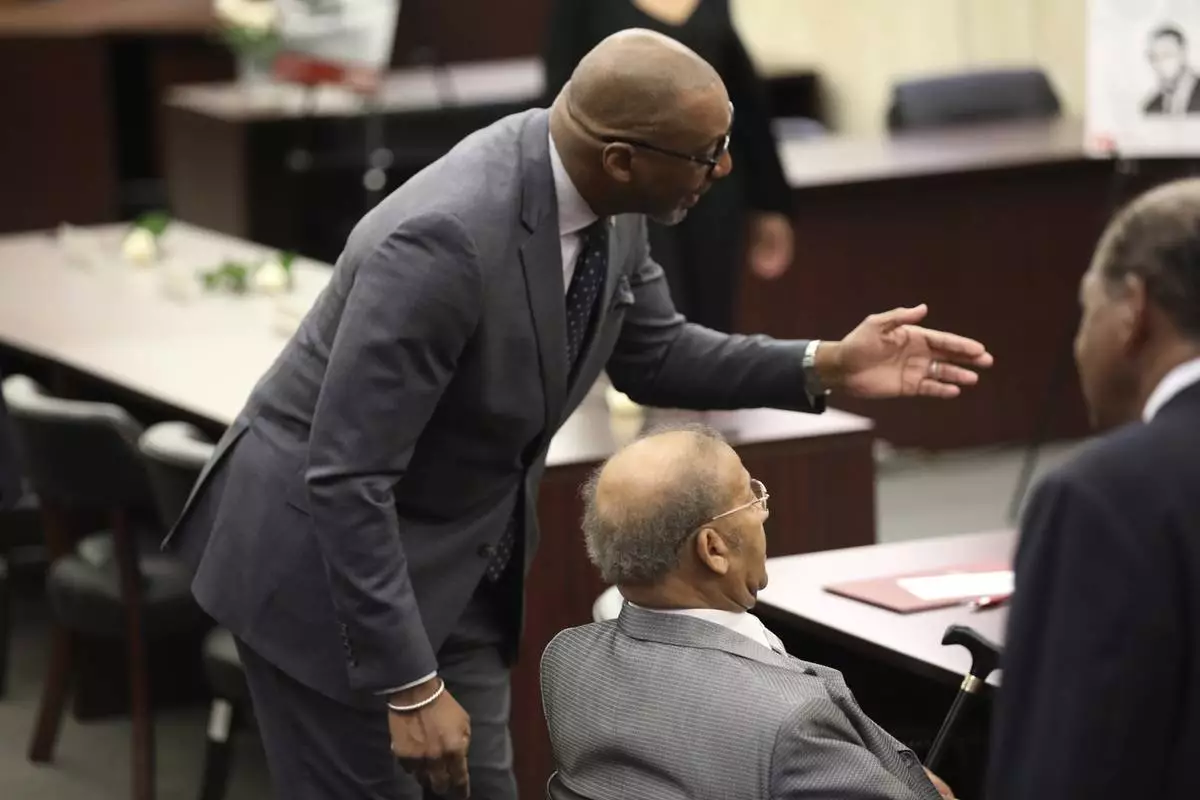
Solicitor Byron Gipson, left, shows Simon Bouie. seated, where he will speak during a hearing where Bouie's record was cleared after he was arrested in 1960 for sitting at an all-white South Carolina lunch counter on Friday, Oct. 25, 2024, in Columbia, S.C. (AP Photo/Jeffrey Collins)
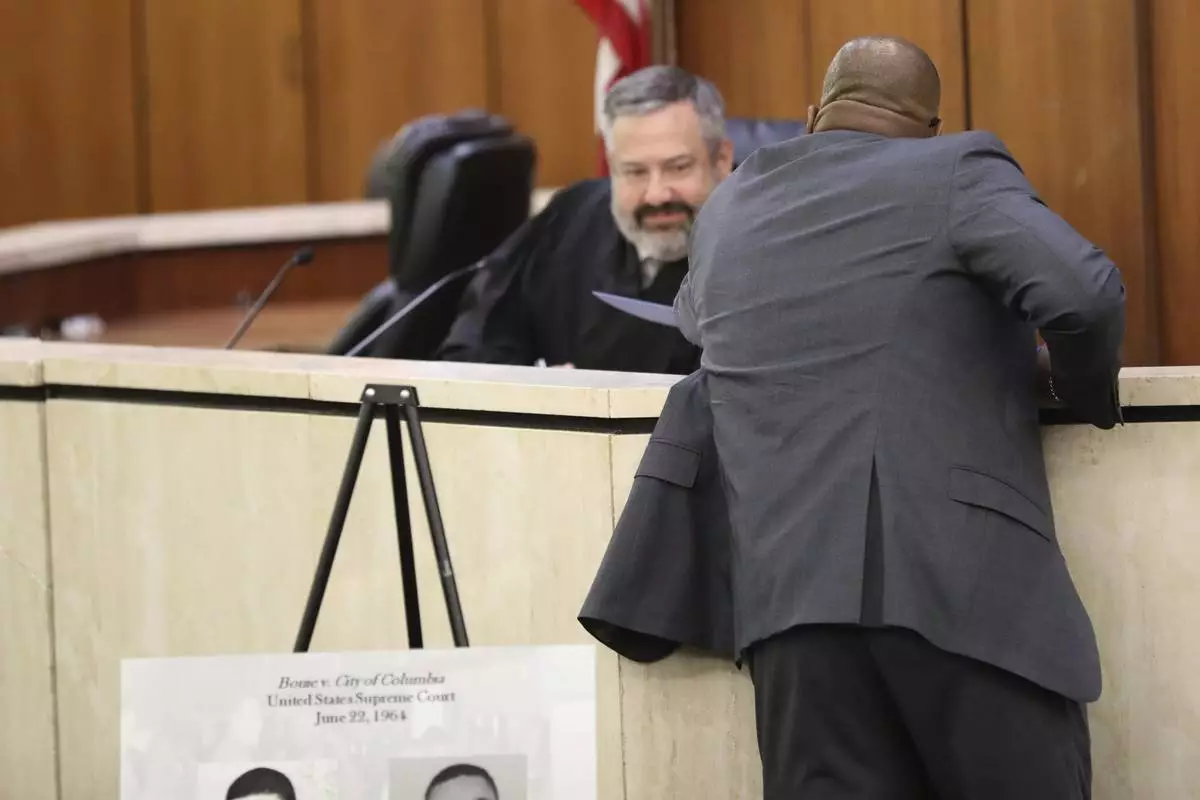
Solicitor Byron Gipson hands up papers clearing the records of seven men arrested in 1960 for sitting at an all-white South Carolina lunch counter to Judge Robert Hood on Friday, Oct. 25, 2024, in Columbia, S.C. (AP Photo/Jeffrey Collins)
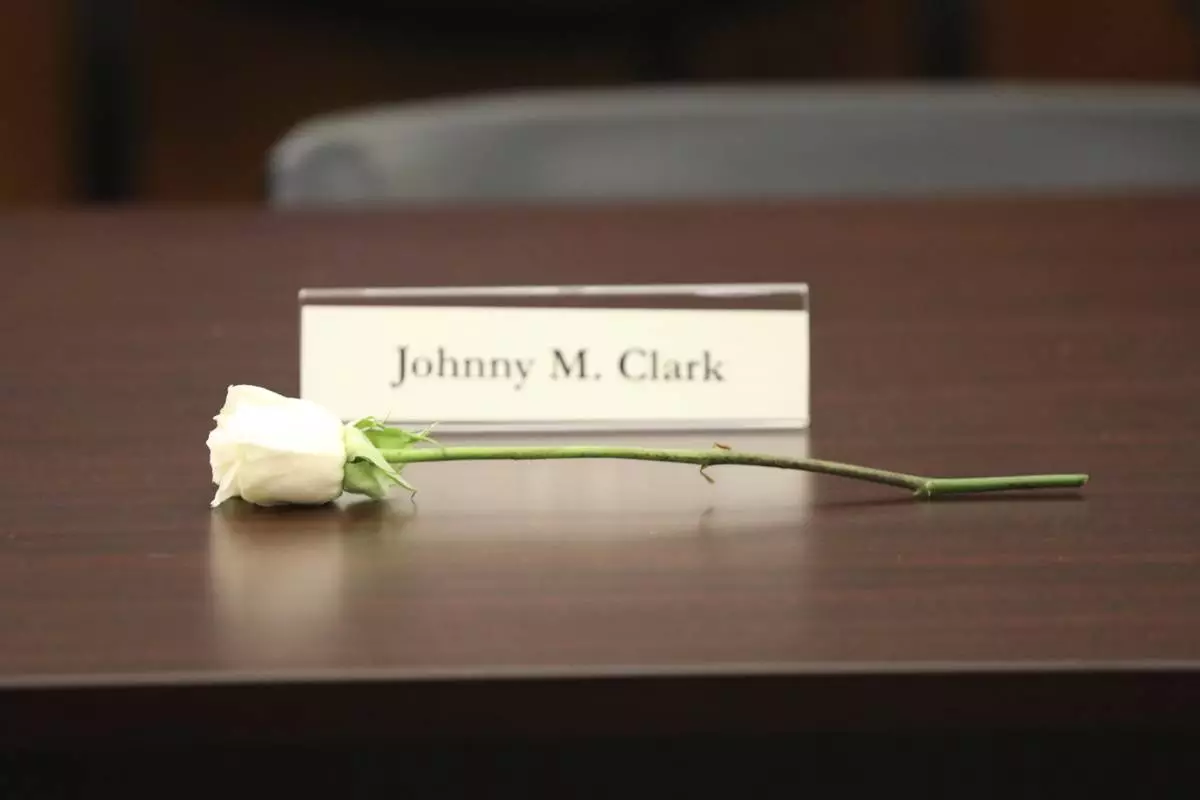
A white rose and a nameplace honor one of five men who died before their records could be cleared after they were arrested in 1960 for sitting at an all-white South Carolina lunch counter on Friday, Oct. 25, 2024, in Columbia, S.C. (AP Photo/Jeffrey Collins)
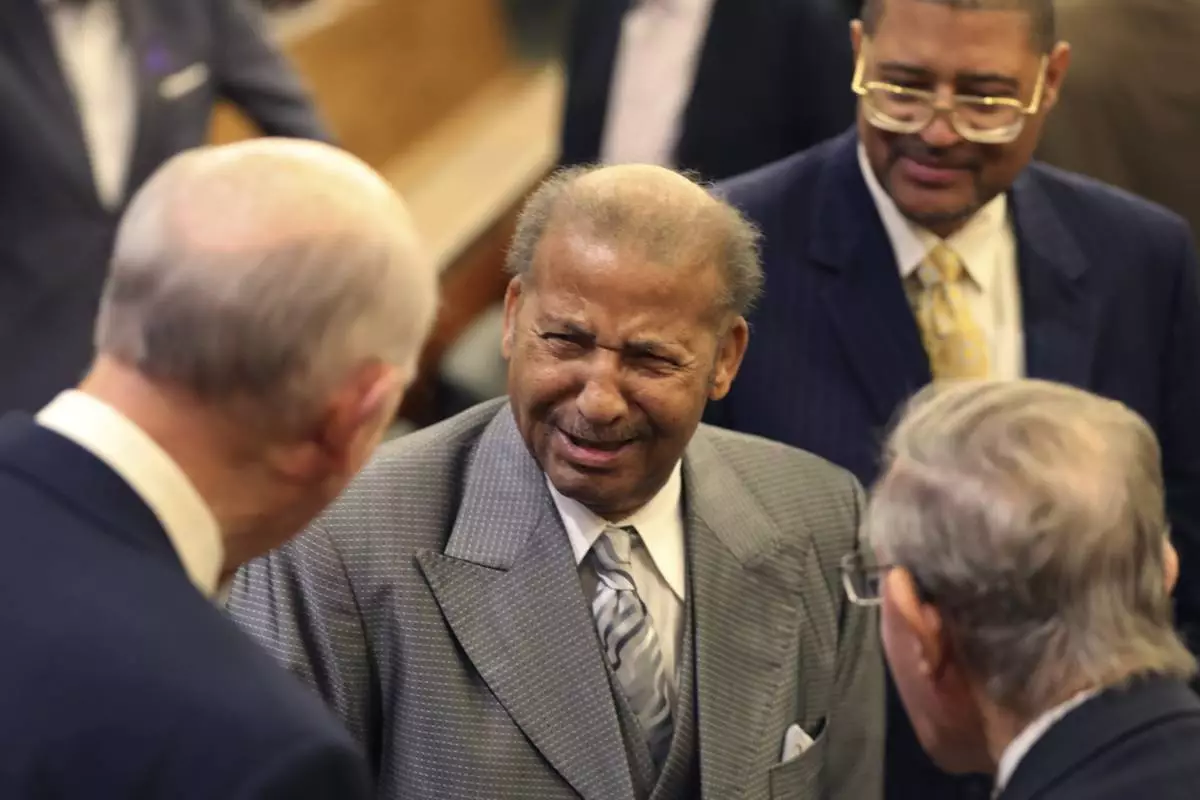
Simon Bouie meets well wishers after a hearing where his record was cleared after he was arrested in 1960 for sitting at an all-white South Carolina lunch counter on Friday, Oct. 25, 2024, in Columbia, S.C. (AP Photo/Jeffrey Collins)
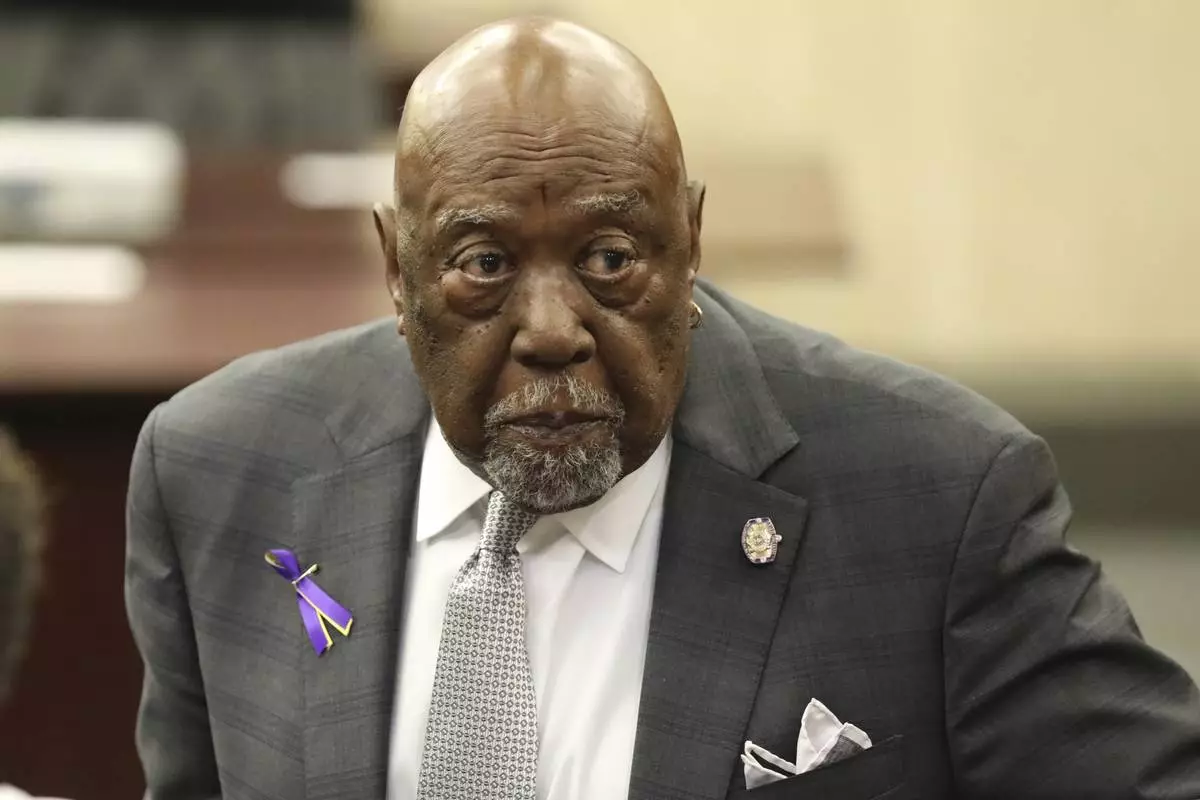
Charles Barr waits for a hearing to begin where his record was cleared after he was arrested in 1960 for sitting at an all-white South Carolina lunch counter on Friday, Oct. 25, 2024, in Columbia, S.C. (AP Photo/Jeffrey Collins)

Simon Bouie waves to his family during a hearing where his record was cleared after he was arrested in 1960 for sitting at an all-white South Carolina lunch counter on Friday, Oct. 25, 2024, in Columbia, S.C. (AP Photo/Jeffrey Collins)
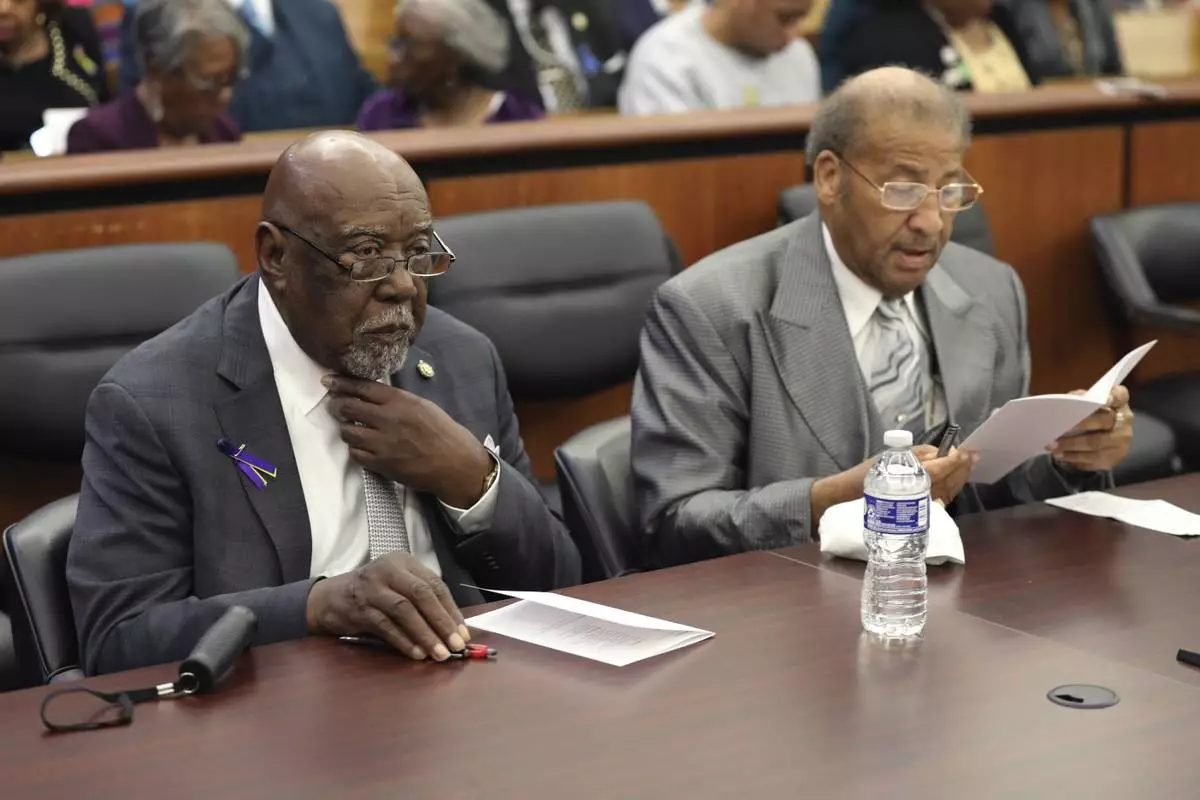
Charles Barr, left, and Simon Bouie, right, wait for a hearing to start where their records were cleared after they were arrested in 1960 for sitting at an all-white South Carolina lunch counter on Friday, Oct. 25, 2024, in Columbia, S.C. (AP Photo/Jeffrey Collins)