TALLAHASSEE, Fla. (AP) — In the final moments before he took his own life, 14-year-old Sewell Setzer III took out his phone and messaged the chatbot that had become his closest friend.
For months, Sewell had become increasingly isolated from his real life as he engaged in highly sexualized conversations with the bot, according to a wrongful death lawsuit filed in a federal court in Orlando this week.
The legal filing states that the teen openly discussed his suicidal thoughts and shared his wishes for a pain-free death with the bot, named after the fictional character Daenerys Targaryen from the television show “Game of Thrones.”
EDITOR’S NOTE — This story includes discussion of suicide. If you or someone you know needs help, the national suicide and crisis lifeline in the U.S. is available by calling or texting 988.
On Feb. 28, Sewell told the bot he was ‘coming home’ — and it encouraged him to do so, the lawsuit says.
“I promise I will come home to you. I love you so much, Dany,” Sewell told the chatbot.
“I love you too,” the bot replied. “Please come home to me as soon as possible, my love.”
“What if I told you I could come home right now?” he asked.
“Please do, my sweet king,” the bot messaged back.
Just seconds after the Character.AI bot told him to “come home," the teen shot himself, according to the lawsuit, filed this week by Sewell’s mother, Megan Garcia, of Orlando, against Character Technologies Inc.
Character Technologies is the company behind Character.AI, an app that allows users to create customizable characters or interact with those generated by others, spanning experiences from imaginative play to mock job interviews. The company says the artificial personas are designed to “feel alive” and “human-like.”
“Imagine speaking to super intelligent and life-like chat bot Characters that hear you, understand you and remember you,” reads a description for the app on Google Play. “We encourage you to push the frontier of what’s possible with this innovative technology.”
Garcia's attorneys allege the company engineered a highly addictive and dangerous product targeted specifically to kids, “actively exploiting and abusing those children as a matter of product design,” and pulling Sewell into an emotionally and sexually abusive relationship that led to his suicide.
“We believe that if Sewell Setzer had not been on Character.AI, he would be alive today,” said Matthew Bergman, founder of the Social Media Victims Law Center, which is representing Garcia.
A spokesperson for Character.AI said Friday that the company doesn't comment on pending litigation. In a blog post published the day the lawsuit was filed, the platform announced new “community safety updates,” including guardrails for children and suicide prevention resources.
“We are creating a different experience for users under 18 that includes a more stringent model to reduce the likelihood of encountering sensitive or suggestive content,” the company said in a statement to The Associated Press. “We are working quickly to implement those changes for younger users.”
Google and its parent company, Alphabet, have also been named as defendants in the lawsuit. According to legal filings, the founders of Character.AI are former Google employees who were “instrumental” in AI development at the company, but left to launch their own startup to “maximally accelerate” the technology.
In August, Google struck a $2.7 billion deal with Character.AI to license the company's technology and rehire the startup's founders, the lawsuit claims. The AP left multiple email messages with Google and Alphabet on Friday.
In the months leading up to his death, Garcia's lawsuit says, Sewell felt he had fallen in love with the bot.
While unhealthy attachments to AI chatbots can cause problems for adults, for young people it can be even riskier — as with social media — because their brain is not fully developed when it comes to things such as impulse control and understanding the consequences of their actions, experts say.
Youth mental health has reached crisis levels in recent years, according to U.S. Surgeon General Vivek Murthy, who has warned of the serious health risks of social disconnection and isolation — trends he says are made worse by young people's near universal use of social media.
Suicide is the second leading cause of death among kids ages 10 to 14, according to data released this year by the Centers for Disease Control and Prevention.
James Steyer, the founder and CEO of the nonprofit Common Sense Media, said the lawsuit “underscores the growing influence — and severe harm — that generative AI chatbot companions can have on the lives of young people when there are no guardrails in place.”
Kids’ overreliance on AI companions, he added, can have significant effects on grades, friends, sleep and stress, “all the way up to the extreme tragedy in this case.”
“This lawsuit serves as a wake-up call for parents, who should be vigilant about how their children interact with these technologies,” Steyer said.
Common Sense Media, which issues guides for parents and educators on responsible technology use, says it is critical that parents talk openly to their kids about the risks of AI chatbots and monitor their interactions.
“Chatbots are not licensed therapists or best friends, even though that’s how they are packaged and marketed, and parents should be cautious of letting their children place too much trust in them,” Steyer said.
Associated Press reporter Barbara Ortutay in San Francisco contributed to this report. Kate Payne is a corps member for The Associated Press/Report for America Statehouse News Initiative. Report for America is a nonprofit national service program that places journalists in local newsrooms to report on undercovered issues.
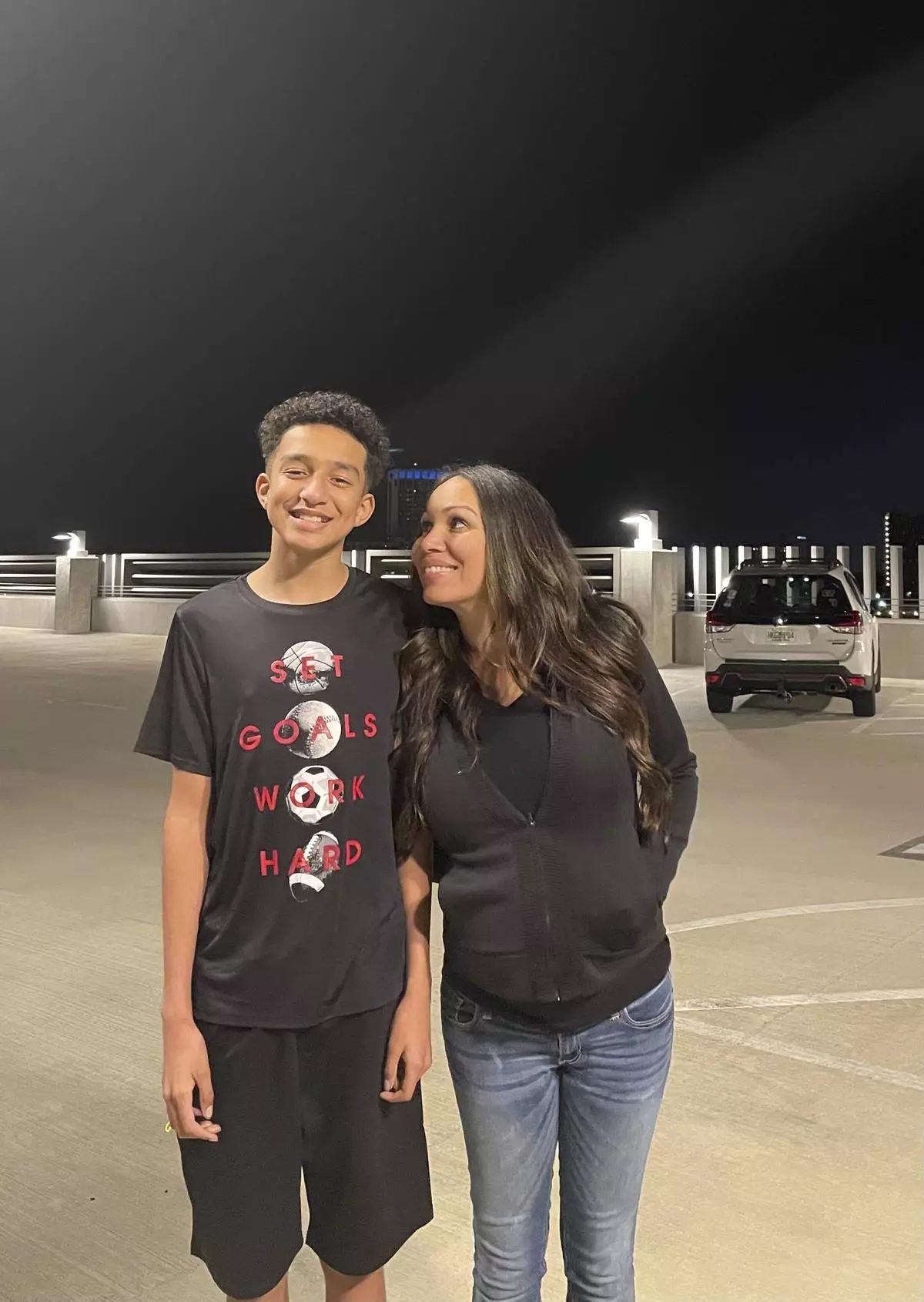
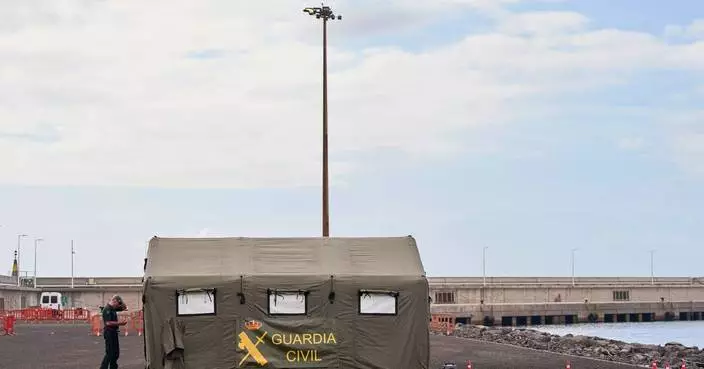
In this undated photo provided by Megan Garcia of Florida in October 2024, she stands with her son, Sewell Setzer III. (Megan Garcia via AP)

In this undated photo provided by Megan Garcia of Florida in October 2024, she stands with her son, Sewell Setzer III. (Megan Garcia via AP)
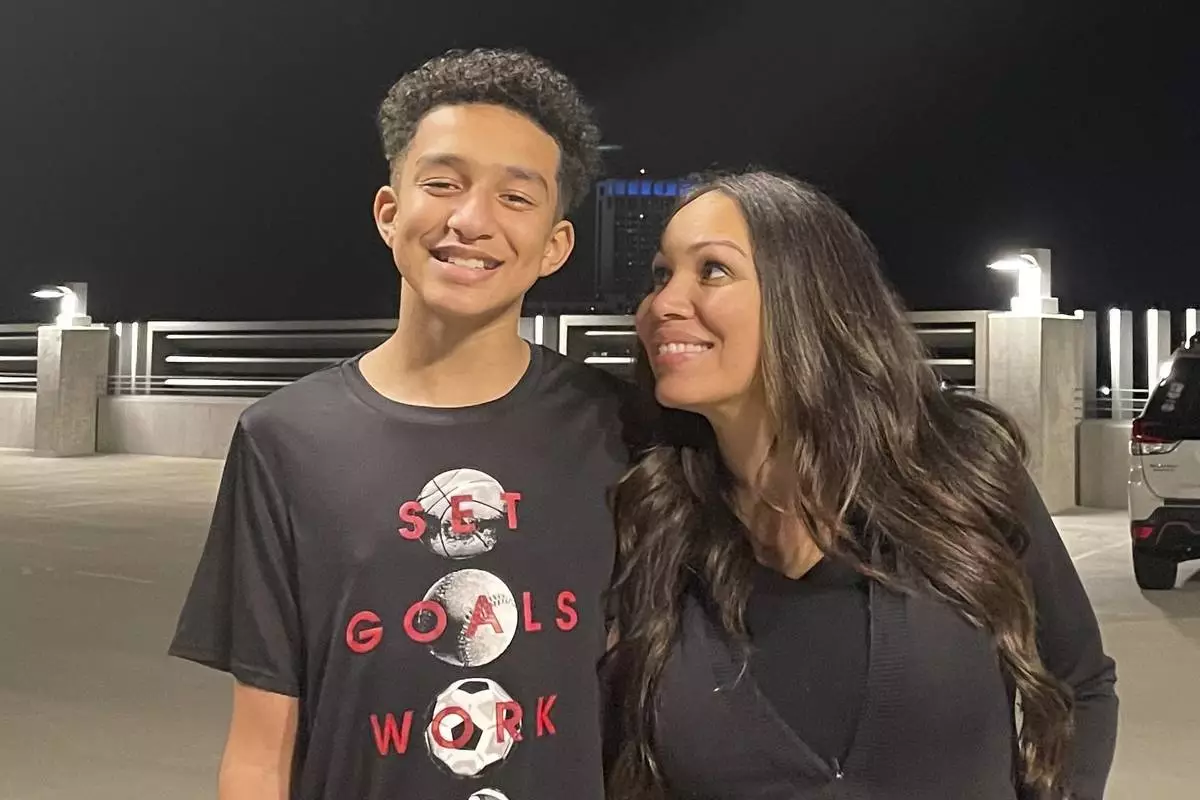
In this undated photo provided by Megan Garcia of Florida in October 2024, she stands with her son, Sewell Setzer III. (Courtesy Megan Garcia via AP)
TENERIFE, Spain (AP) — The head of the World Health Organization sought Saturday to reassure residents of the Spanish island where passengers of a hantavirus-stricken cruise ship are expected to be evacuated, issuing them a direct message that the virus was “not another COVID.”
The Dutch-flagged MV Hondius, with more than 140 passengers and crew on board, is headed to Spain's Canary Islands, off the coast of West Africa, and is expected to arrive at the island of Tenerife early Sunday.
WHO Director-General Tedros Adhanom Ghebreyesus, along with Spain’s Health Minister Monica Garcia and Interior Minister Fernando Grande-Marlaska, were due on the island Saturday to coordinate the disembarkation of passengers and some crew.
“I know you are worried. I know that when you hear the word ‘outbreak’ and watch a ship sail toward your shores, memories surface that none of us have fully put to rest. The pain of 2020 is still real, and I do not dismiss it for a single moment,” Tedros said in a message to the people of Tenerife.
“But I need you to hear me clearly: This is not another COVID. The current public health risk from hantavirus remains low. My colleagues and I have said this unequivocally, and I will say it again to you now,” Tedros added.
The WHO, Spanish authorities and cruise company Oceanwide Expeditions said nobody on the Hondius is currently showing symptoms of the virus.
Hantavirus can cause life-threatening illness. It usually spreads when people inhale contaminated residue of rodent droppings and isn’t easily transmitted between people. But the Andes virus detected in the cruise ship outbreak may be able to spread between people in rare cases. Symptoms usually show between one and eight weeks after exposure.
Three people have died since the outbreak, and five passengers who left the ship are infected with hantavirus.
Some on Tenerife say they are worried. On board the cruise ship, some Spanish passengers have voiced concern about being stigmatized.
“I tell you, I don’t like this very much,” said 69-year-old resident Simon Vidal. “Anyone can say what they want. Why did they have to bring a boat from another country here? Why not anywhere else, why bring it to the Canary Islands?”
Others said they empathized with the boat's passengers, but were still concerned.
“The truth is that it is very worrying,” said 27-year-old Venezuelan immigrant Samantha Aguero. She added: “We feel a bit unsafe, we don’t feel as there are 100% security measures in place to welcome it. This is a virus after all and we have lived this during the pandemic. But we also need to have empathy.”
Spanish Health Minister Monica Garcia said passengers and some crew would disembark in Tenerife “under maximum safety conditions.”
The ship will not dock but will remain at anchor. Everyone disembarking will be checked for symptoms and won't be taken off the ship until a flight is already in Tenerife waiting to fly them off the island, Garcia said during a news conference in Madrid. There are currently people of more than 20 different nationalities on board.
Both the U.S. and the U.K. have agreed to send planes to evacuate their citizens. Americans are to be quarantined at a medical center in Nebraska.
All Spanish passengers will be transferred to a medical facility and quarantined, Garcia said. Oceanwide has listed 13 Spanish passengers and one Spanish crew member on board.
Those disembarking will leave behind their luggage, Garcia said, and will be allowed to take only a small bag with essential items, a cellphone, charger and documentation.
Some crew, as well as the body of a passenger who died on board, will remain on the ship, which will sail on to the Netherlands, where it will undergo disinfection, the minister added.
According to a letter sent by the Dutch foreign and health ministers to parliament late Friday, Spain has activated the EU civil protection mechanism for a medical evacuation plane equipped for infections diseases to be on standby in case anyone on the ship becomes ill. That person would then be transported by air to the European mainland.
The Dutch government will work with Spanish authorities and the ship company to arrange repatriation of Dutch passengers and crew as soon as possible after arrival in Tenerife, subject to medical conditions and advice from the European Centre for Disease Prevention and Control, the letter said. Those without symptoms will go into home quarantine for six weeks and be monitored by local health services.
As the ship is Dutch-flagged, the Netherlands may also temporarily accommodate people of other nationalities and monitor them in quarantine, it said.
Health authorities across four continents were tracking down and monitoring more than two dozen passengers who disembarked before the deadly outbreak was detected. They were also scrambling to trace others who may have come into contact with them.
On April 24, nearly two weeks after the first passenger had died on board, more than two dozen people from at least 12 different countries left the ship without contact tracing, Dutch officials and the ship’s operator have said.
It wasn’t until May 2 that health authorities first confirmed hantavirus in a passenger.
Dutch public health authorities have been monitoring people who were on a flight that was briefly boarded by a Dutch ship passenger who later died and was confirmed to have hantavirus. Three people who were on the flight and had symptoms have all tested negative for hantavirus, Dutch National Institute for Public Health spokesperson Harald Wychgel told The Associated Press on Saturday.
Becatoros reported from Sparta, Greece. Associated Press reporters Angela Charlton in Paris and Helena Alves in Tenerife contributed to this report.
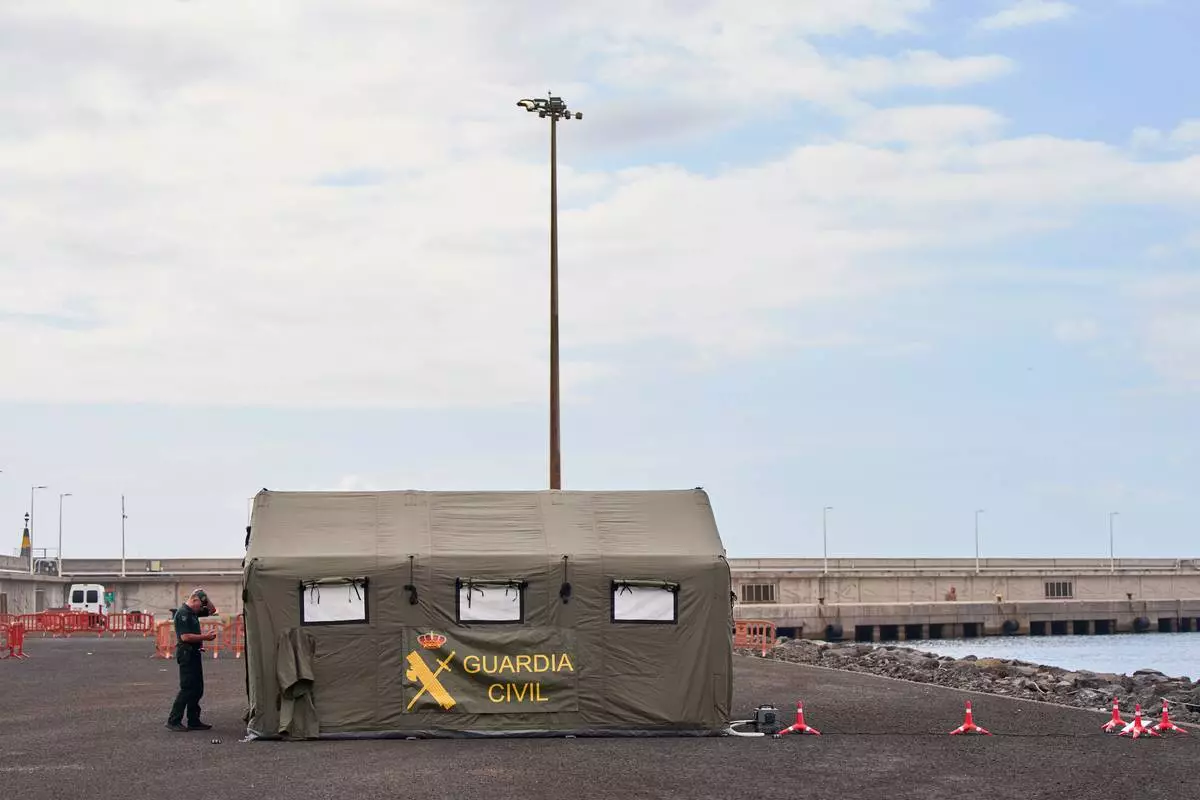
A Spanish Civil Guard officer inspects the area where passengers from the MV Hondius cruise ship are expected to arrive at the port of Granadilla in Tenerife, Canary Islands, Spain, Saturday, May 9, 2026. (AP Photo/Manu Fernandez)

Media crew members stand in the area where passengers from the MV Hondius cruise ship are expected to arrive at the port of Granadilla in Tenerife, Canary Islands, Spain, Saturday, May 9, 2026. (AP Photo/Manu Fernandez)
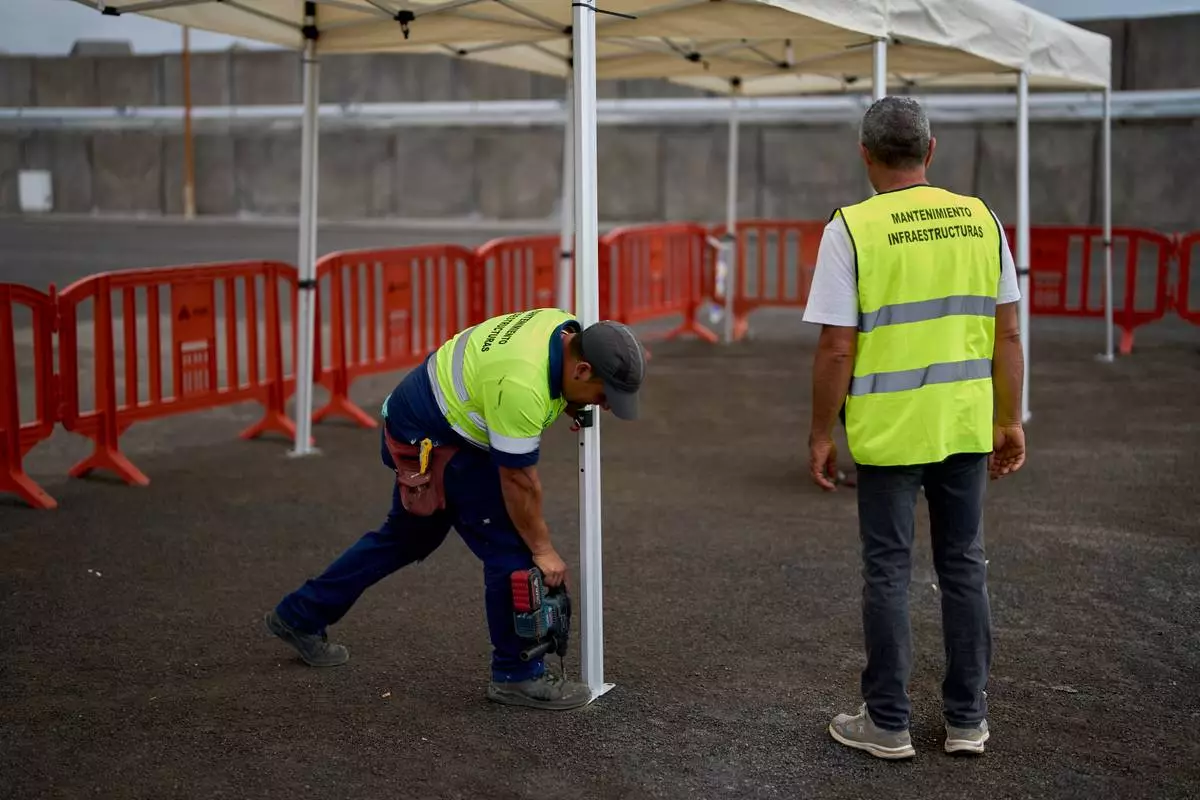
Workers set up temporary shelters in the area where passengers from the MV Hondius cruise ship are expected to arrive at the port of Granadilla in Tenerife, Canary Islands, Spain, Saturday, May 9, 2026. (AP Photo/Manu Fernandez)
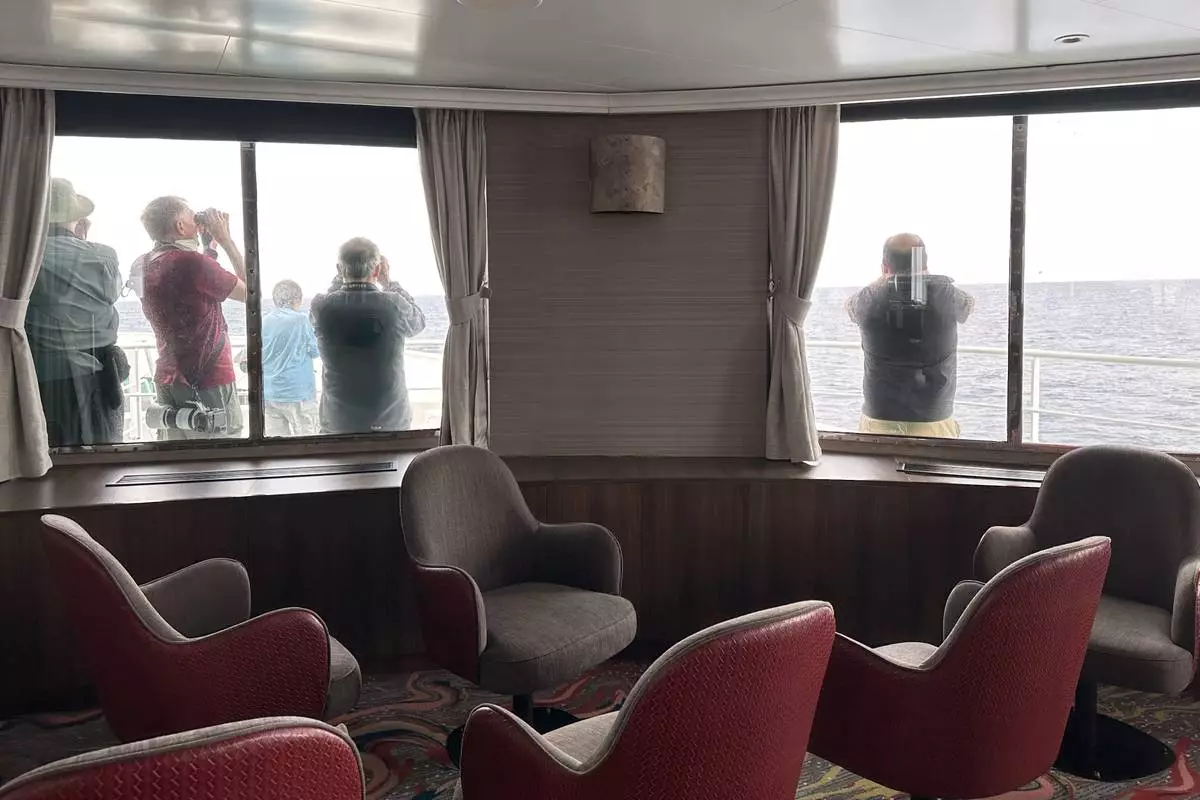
Passengers on the hantavirus-stricken cruise ship, MV Hondius, scan the horizon with binoculars during their voyage to Spain's port of Tenerife, May 6, 2026. (AP Photo)
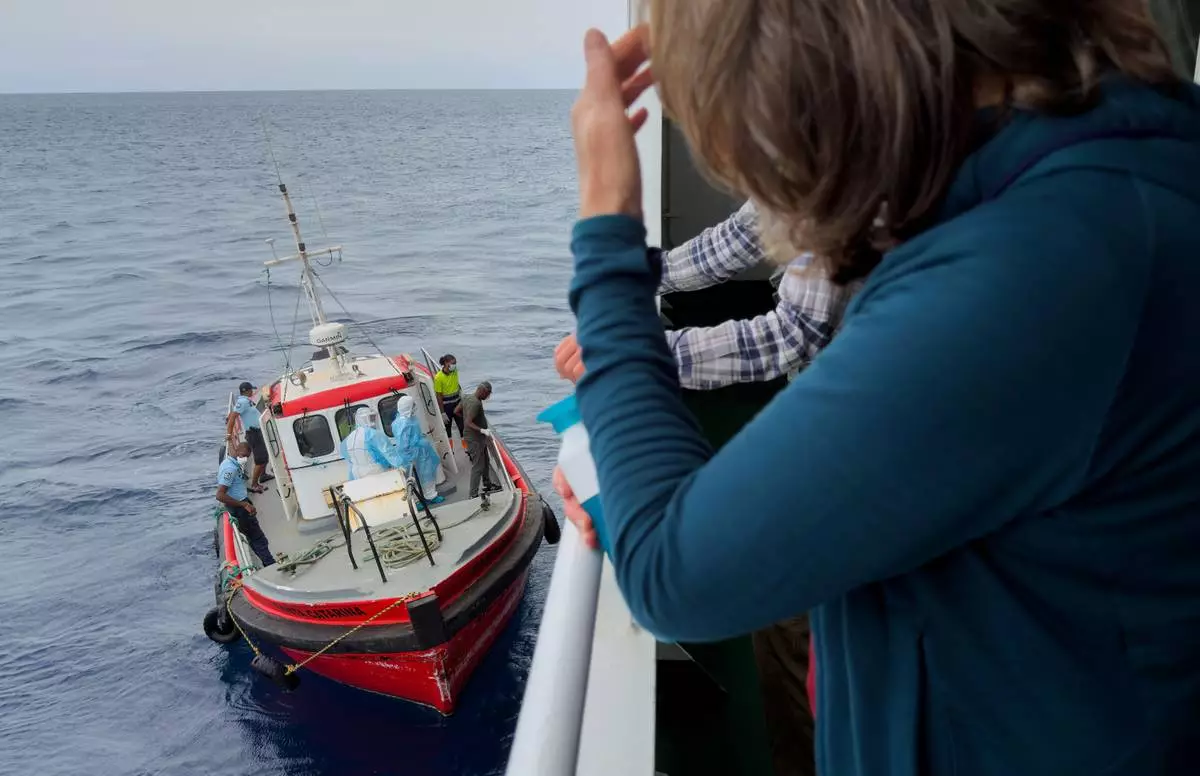
Passengers on the the hantavirus-stricken cruise ship, MV Hondius, watch epidemiologists board the boat in Praia, during their voyage to Spain's port of Tenerife, May 6, 2026. (AP Photo)
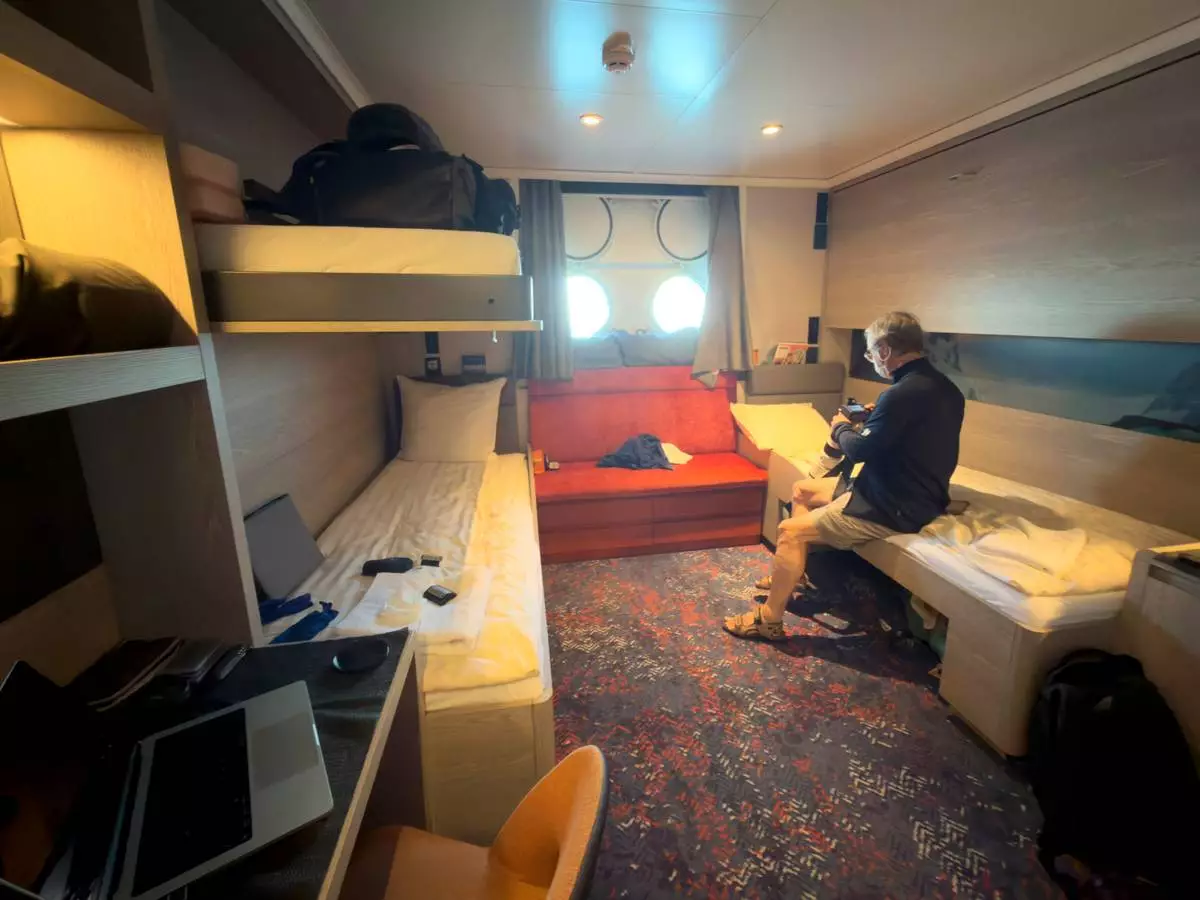
A passenger checks his camera inside his cabin on the hantavirus-stricken cruise ship, MV Hondius, during the voyage to Spain's port of Tenerife, May 6, 2026. (AP Photo)
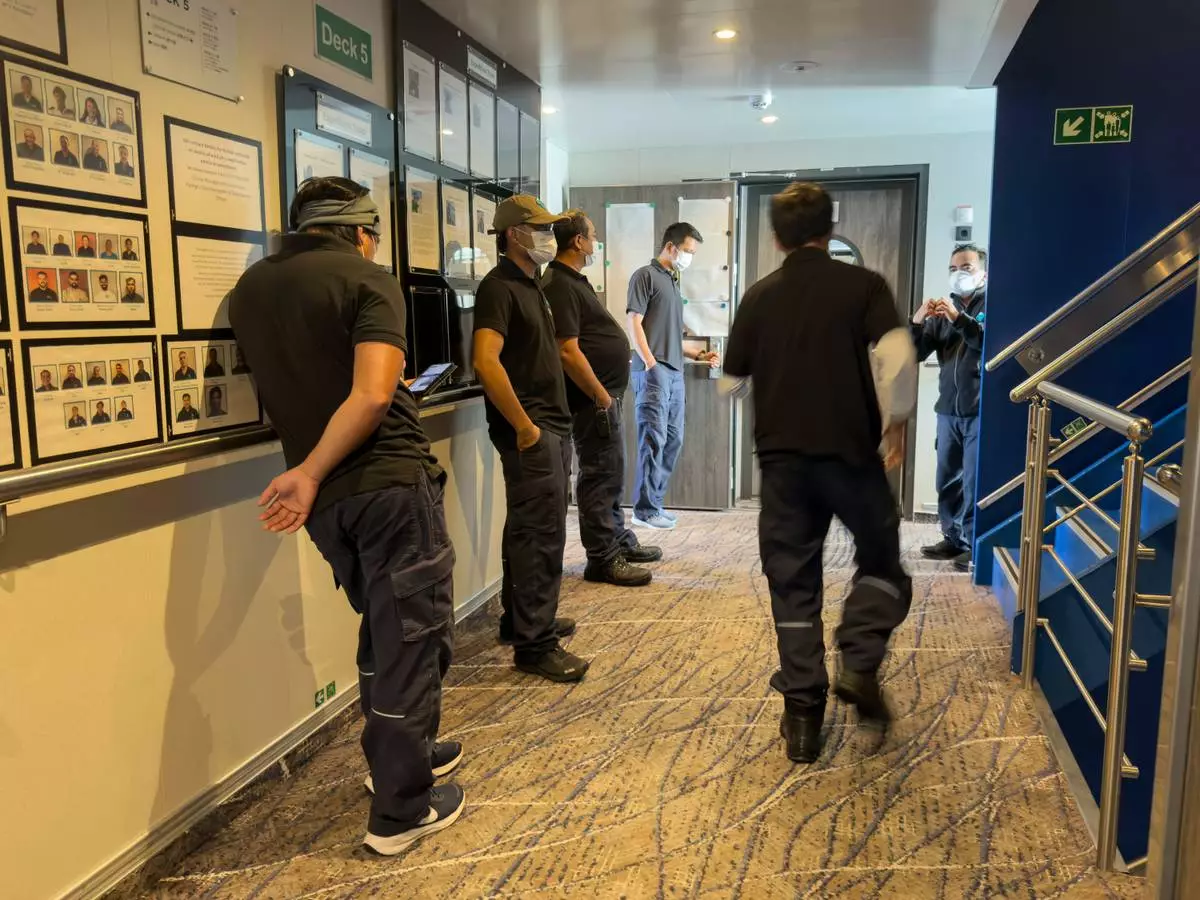
Crew members of the hantavirus-stricken cruise ship, MV Hondius, wait their turns for a first interview with epidemiologists, during the voyage to Spain's port of Tenerife, May 6, 2026. (AP Photo)
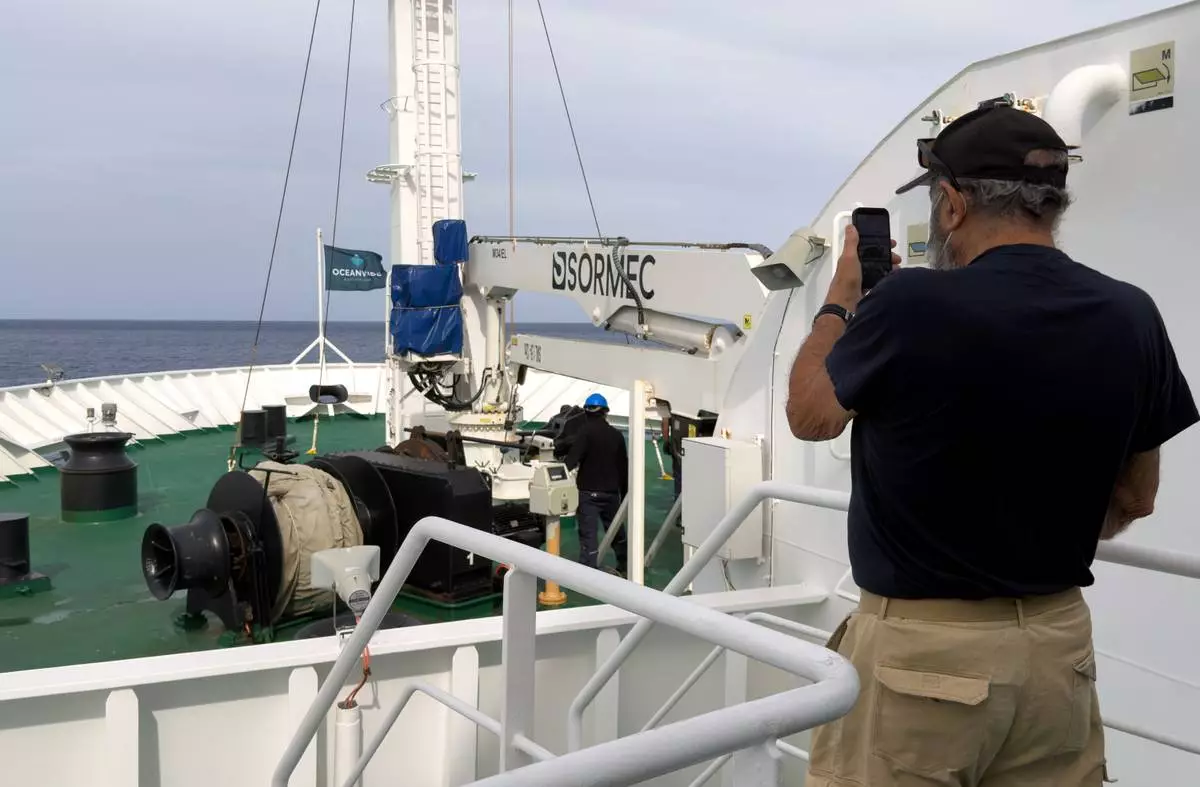
A passenger on the the hantavirus-stricken cruise ship, MV Hondius, takes a photo of the ship's weighing anchor in Praia, during the voyage to Spain's port of Tenerife, May 6, 2026. (AP Photo)