Skip to Content Facebook Feature Image

Washington Post becomes second major US newspaper this week to not endorse a presidential candidate

ENT

Washington Post becomes second major US newspaper this week to not endorse a presidential candidate
ENT

ENT

Washington Post becomes second major US newspaper this week to not endorse a presidential candidate

2024-10-26 06:03 Last Updated At:06:10

Less than two weeks before Election Day, The Washington Post said Friday it would not endorse a candidate for president in this year's tightly contested race and would avoid doing so in the future — a decision immediately condemned by a former executive editor but one that the current publisher insisted was “consistent with the values the Post has always stood for.”

In an article posted on the front of its website, the Post — reporting on its own inner workings — also quoted unidentified sources within the publication as saying that an endorsement of Kamala Harris over Donald Trump had been written but not published. Those sources told the Post reporters that the company's owner, billionaire Jeff Bezos, made the decision.

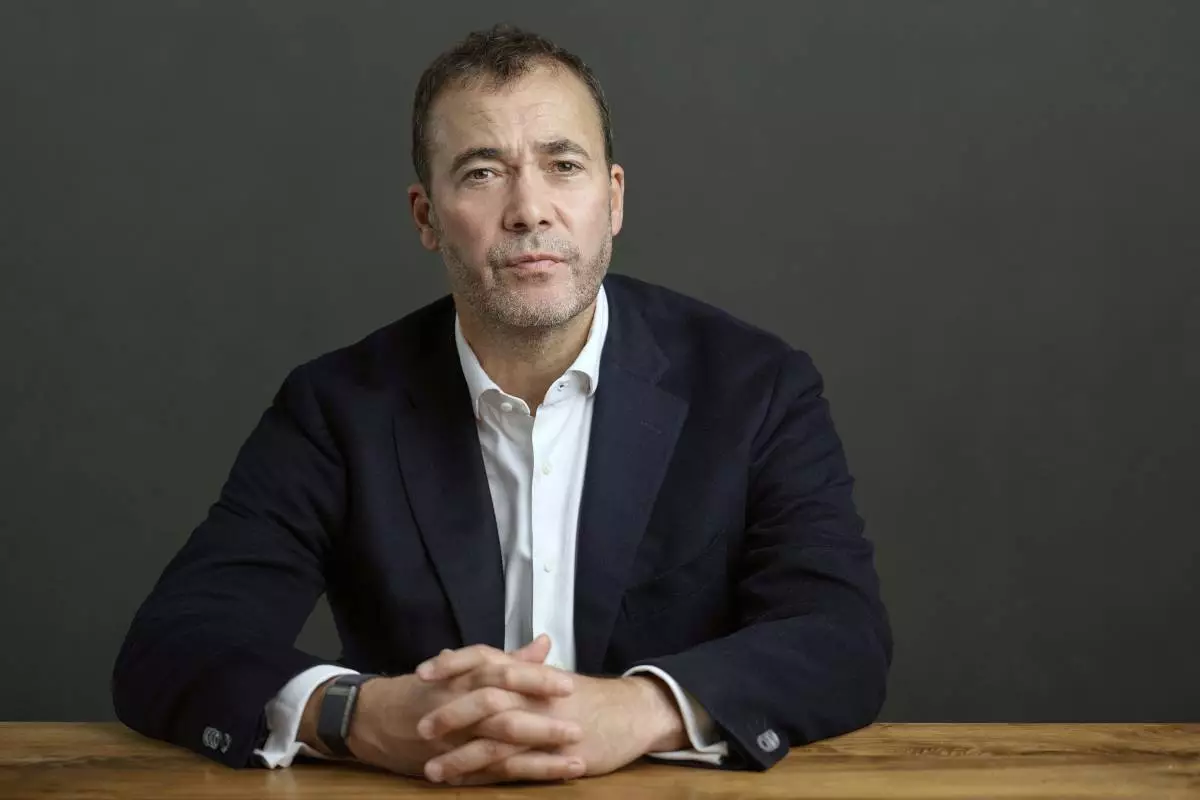
The Post's publisher, Will Lewis, wrote in a column that the decision was actually a return to a tradition the paper had years ago of not endorsing candidates. He said it reflected the paper's faith in “our readers' ability to make up their own minds.”

“We recognize that this will be read in a range of ways, including as a tacit endorsement of one candidate, or as a condemnation of another, or as an abdication of responsibility. That is inevitable,” Lewis wrote. “We don’t see it that way. We see it as consistent with the values the Post has always stood for and what we hope for in a leader: character and courage in service to the American ethic, veneration for the rule of law, and respect for human freedom in all its aspects.”

There was no immediate reaction from either campaign.

Lewis cited the Post's history in writing about the decision. According to him, the Post only started regularly endorsing candidates for president when it backed Jimmy Carter in 1976.

The Post said the decision had “roiled" many on the opinion staff, which operates independently from the Post's newsroom staff — what is known commonly in the industry as a “church-state separation" between those who report the news and those who write opinion.

The Post's move comes the same week that the Los Angeles Times announced a similar decision, which triggered the resignations of its editorial page editor and two other members of the editorial board. In that instance, the Times' owner, Patrick Soon-Shiong, insisted he had not censored the editorial board, which had planned to endorse Harris.

“As an owner, I’m on the editorial board and I shared with our editors that maybe this year we have a column, a page, two pages, if we want, of all the pros and all the cons and let the readers decide,” Soon-Shiong said in an interview Thursday with Spectrum News. He said he feared endorsing a candidate would add to the country’s division.

In August, the newly rebranded Minnesota Star Tribune also announced it would no longer endorse candidates. The paper is owned by billionaire Glen Taylor, who also owns the Minnesota Timberwolves. Its publisher is Steve Grove, who was economic development commissioner in the administration of Gov. Tim Walz — Harris' running mate.

Many American newspapers have been dropping editorial endorsements in recent years. That is in large part because at a time readership has been dwindling, they don’t want to give remaining subscribers and news consumers a reason to get mad and cancel their subscriptions.

Martin Baron, the Post's executive editor from 2012 to 2021, was in charge of its newsroom in 2013 when Bezos bought the paper. Baron immediately condemned the decision on X Friday, saying it empowers Trump to further intimidate Bezos and others. "This is cowardice, with democracy as its casualty," he wrote. “Disturbing spinelessness at an institution famed for courage.”

The decisions come at a fraught time for American media, newspapers in particular. Local news is drying up in many places. And after being upended by the economics of the internet and drastically evolving reader habits, the top “legacy media” — including the Post, The New York Times and others — have been struggling to keep up with a changing landscape.

Nowhere is this more true, perhaps, than in the political arena. The candidates this year have been rejecting some mainstream interviews in favor of podcasts and other niche programming, and many news organizations are vigorously ramping up to combat misinformation in near-real time on Election Day, Nov. 5.

Trump, who for years called the media covering him “the enemy of the people,” has returned to such rhetoric in recent days. His vitriol in particular is aimed at CBS, whose broadcast license he has threatened to revoke.

On Thursday, at a rally in Arizona, he returned to the language explicitly once more.

“They’re the enemy of the people. They are,” Trump said to a jeering crowd. “I’ve been asked not to say that. I don’t want to say it. And some day they’re not going to be the enemy of the people, I hope.”

The Post endorsed Trump’s Democratic rivals in 2016 and 2020, and Trump has often denounced critical coverage by the paper. On Friday, after Trump spoke in Austin, he greeted executives from Blue Origin, Bezos' space exploration company. Trump spoke briefly with Blue Origin's CEO and vice president of government relations. Some critics have publicly speculated that Bezos wants to avoid antagonizing Trump.

For the Post, the decision is certain to generate debate beyond the news cycle. It seemed to acknowledge this with a note from the paper's letters and community editor at the top of the comments section on the publisher’s column: "I know many of you will have strong feelings about this note from Mr. Lewis."

Indeed, by midafternoon, the column had elicited more than 7,000 comments, many critical. Said one, riffing off the Post's slogan, “Democracy Dies in Darkness": “Time to change your slogan to `Democracy dies in broad daylight.'”

Steve Karnowski in Minnesota and Jonathan J. Cooper in Arizona contributed to this report. Ted Anthony, director of new storytelling and newsroom innovation at the AP, can be followed at http://x.com/anthonyted
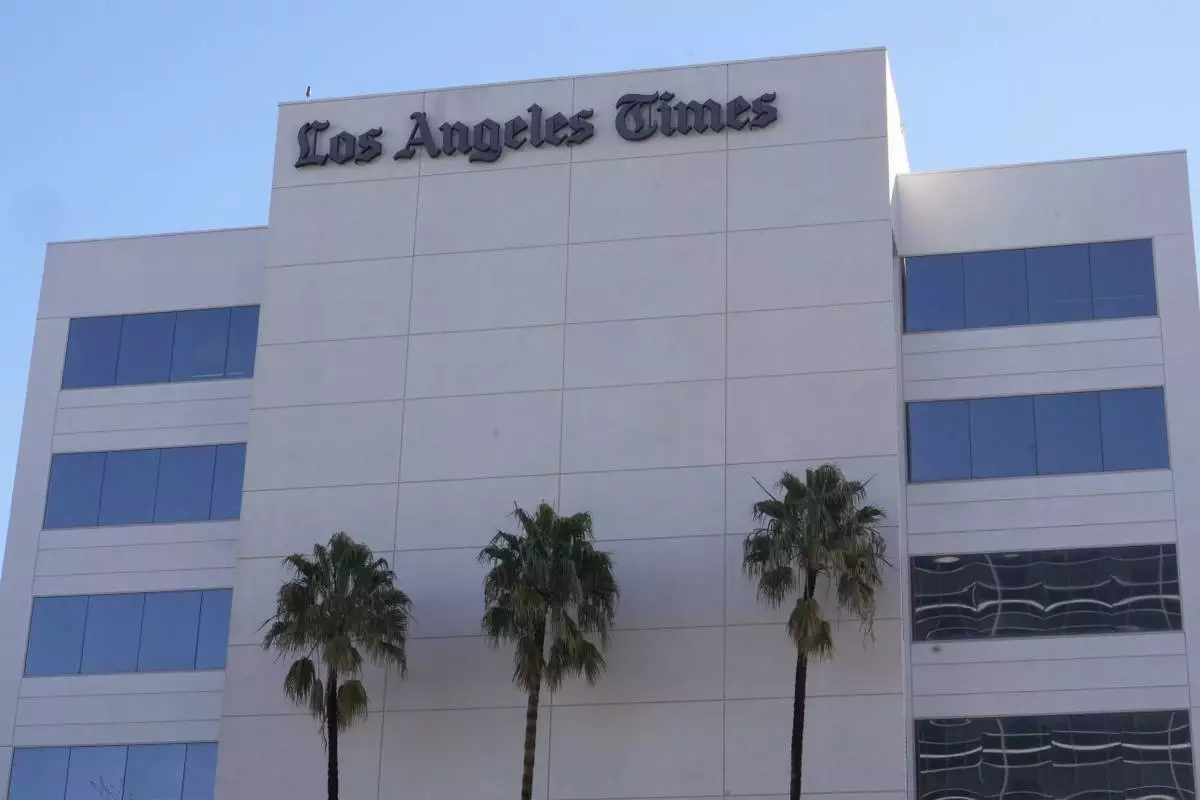
FILE - The Los Angeles Times newspaper headquarters is located in El Segundo, Calif., Tuesday, Jan. 23, 2024. (AP Photo/Damian Dovarganes,File)
FILE - The Los Angeles Times newspaper headquarters is located in El Segundo, Calif., Tuesday, Jan. 23, 2024. (AP Photo/Damian Dovarganes,File)

FILE - This is an undated photo showing Will Lewis, ofThe Washington Post. (Elliott O'Donovan/The Washington Post via AP, File)
FILE - This is an undated photo showing Will Lewis, ofThe Washington Post. (Elliott O'Donovan/The Washington Post via AP, File)

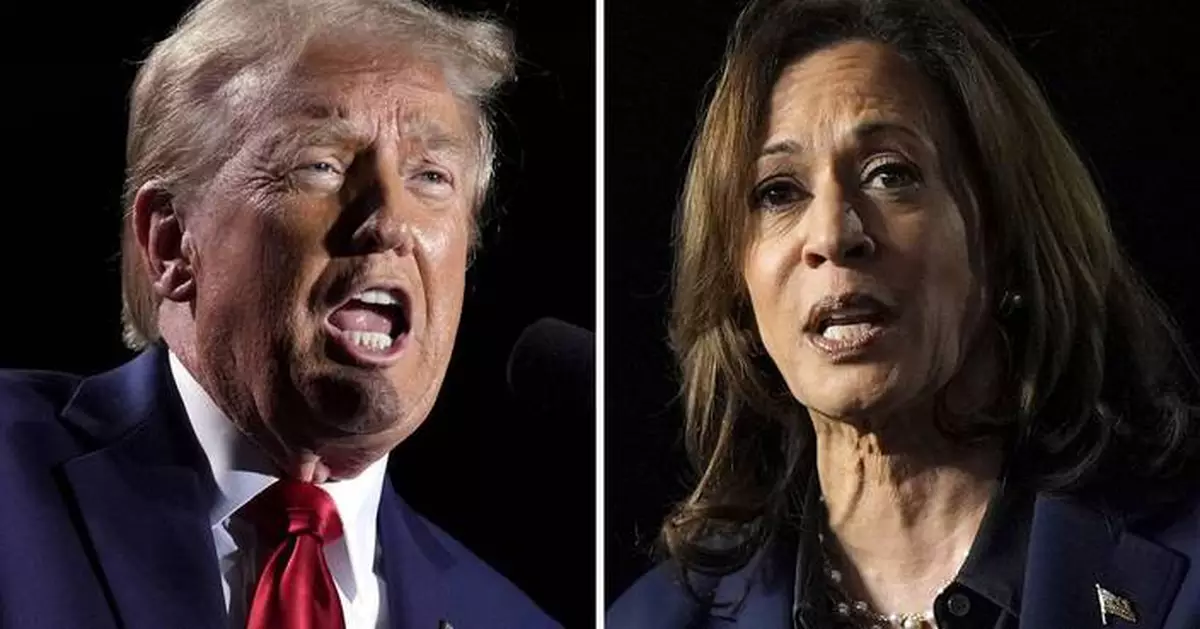
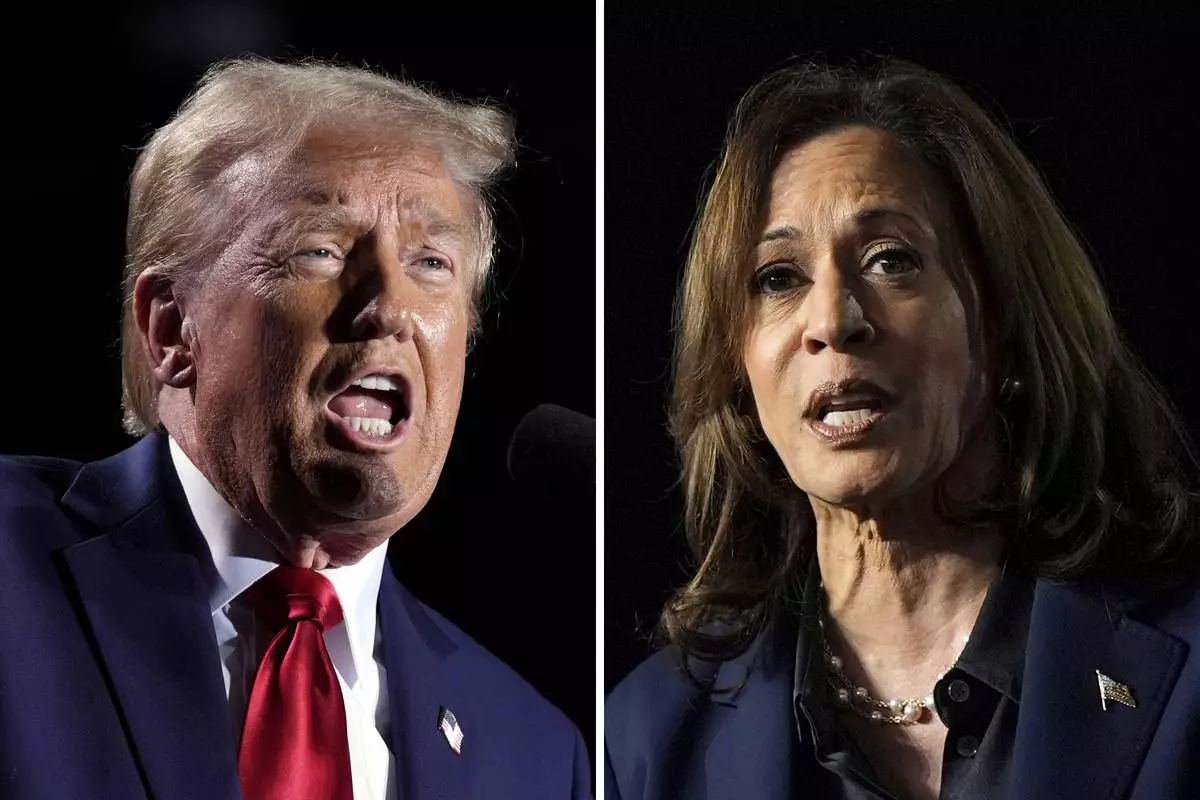
This combination of file photos shows Republican presidential nominee former President Donald Trump, left, speaking at a campaign rally, Oct. 18, 2024, in Detroit, and Democratic presidential nominee Vice President Kamala Harris, right, speaking at a campaign rally in Green Bay, Wis., Oct. 17, 2024. (AP Photo)
This combination of file photos shows Republican presidential nominee former President Donald Trump, left, speaking at a campaign rally, Oct. 18, 2024, in Detroit, and Democratic presidential nominee Vice President Kamala Harris, right, speaking at a campaign rally in Green Bay, Wis., Oct. 17, 2024. (AP Photo)
ALEPPO, Syria (AP) — First responders on Sunday entered a contested neighborhood in Syria’ s northern city of Aleppo after days of deadly clashes between government forces and Kurdish-led forces. Syrian state media said the military was deployed in large numbers.

The clashes broke out Tuesday in the predominantly Kurdish neighborhoods of Sheikh Maqsoud, Achrafieh and Bani Zaid after the government and the Syrian Democratic Forces, the main Kurdish-led force in the country, failed to make progress on how to merge the SDF into the national army. Security forces captured Achrafieh and Bani Zaid.

The fighting between the two sides was the most intense since the fall of then-President Bashar Assad to insurgents in December 2024. At least 23 people were killed in five days of clashes and more than 140,000 were displaced amid shelling and drone strikes.

The U.S.-backed SDF, which have played a key role in combating the Islamic State group in large swaths of eastern Syria, are the largest force yet to be absorbed into Syria's national army. Some of the factions that make up the army, however, were previously Turkish-backed insurgent groups that have a long history of clashing with Kurdish forces.

The Kurdish fighters have now evacuated from the Sheikh Maqsoud neighborhood to northeastern Syria, which is under the control of the SDF. However, they said in a statement they will continue to fight now that the wounded and civilians have been evacuated, in what they called a “partial ceasefire.”

The neighborhood appeared calm Sunday. The United Nations said it was trying to dispatch more convoys to the neighborhoods with food, fuel, blankets and other urgent supplies.

Government security forces brought journalists to tour the devastated area, showing them the damaged Khalid al-Fajer Hospital and a military position belonging to the SDF’s security forces that government forces had targeted.

The SDF statement accused the government of targeting the hospital “dozens of times” before patients were evacuated. Damascus accused the Kurdish-led group of using the hospital and other civilian facilities as military positions.

On one street, Syrian Red Crescent first responders spoke to a resident surrounded by charred cars and badly damaged residential buildings.

Some residents told The Associated Press that SDF forces did not allow their cars through checkpoints to leave.

“We lived a night of horror. I still cannot believe that I am right here standing on my own two feet,” said Ahmad Shaikho. “So far the situation has been calm. There hasn’t been any gunfire.”

Syrian Civil Defense first responders have been disarming improvised mines that they say were left by the Kurdish forces as booby traps.

Residents who fled are not being allowed back into the neighborhood until all the mines are cleared. Some were reminded of the displacement during Syria’s long civil war.

“I want to go back to my home, I beg you,” said Hoda Alnasiri.

Associated Press journalist Kareem Chehayeb in Beirut contributed to this report.

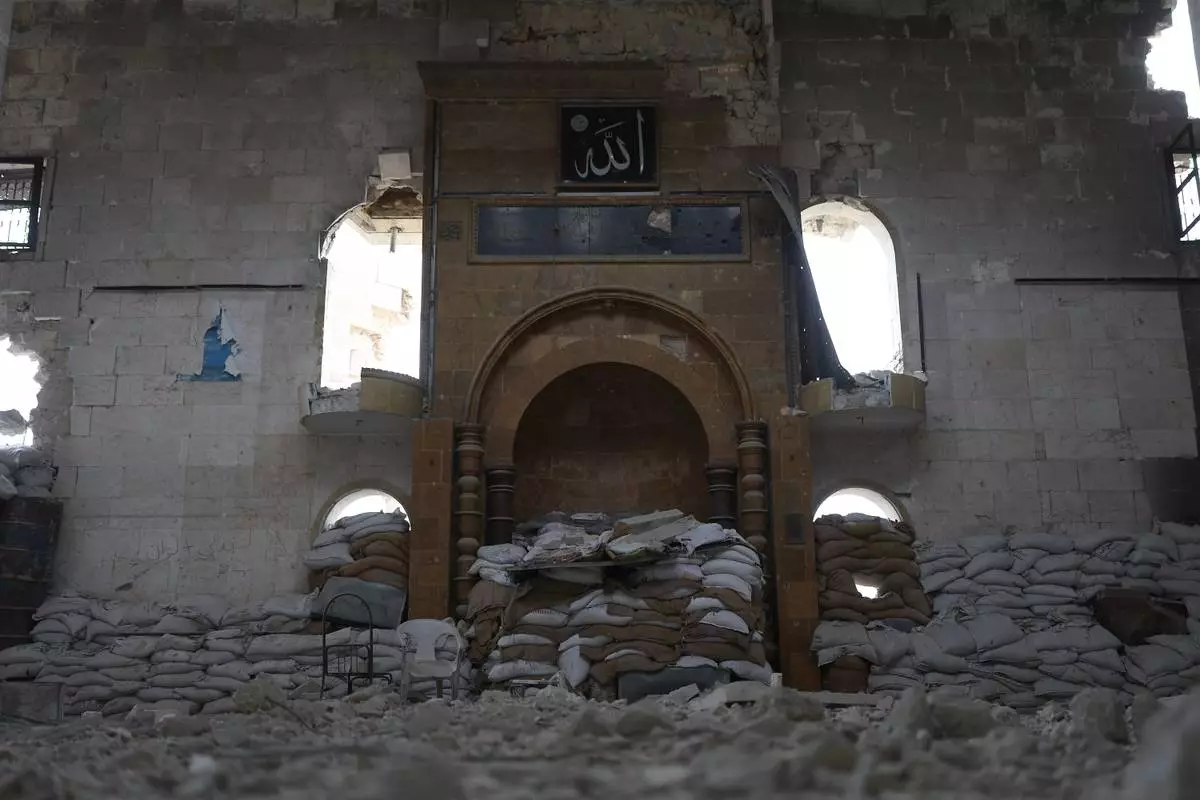
Sandbag barriers used as fighting positions by Kurdish fighters, left inside a destroyed mosque in the Sheikh Maqsoud neighborhood, where clashes between government forces and Kurdish fighters have been taking place in the northern city of Aleppo, Syria, Sunday, Jan. 11, 2026. (AP Photo/Ghaith Alsayed)

Sandbag barriers used as fighting positions by Kurdish fighters, left inside a destroyed mosque in the Sheikh Maqsoud neighborhood, where clashes between government forces and Kurdish fighters have been taking place in the northern city of Aleppo, Syria, Sunday, Jan. 11, 2026. (AP Photo/Ghaith Alsayed)

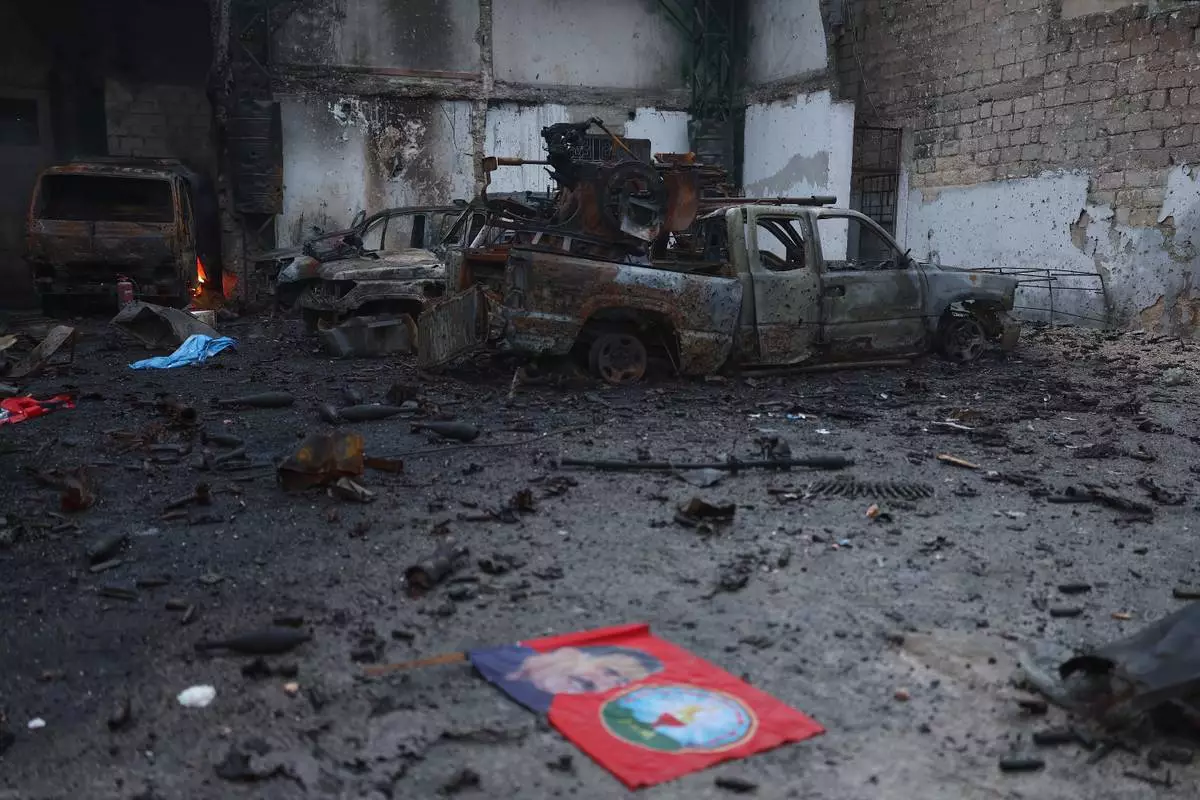
Burned vehicles at one of the Kurdish fighters positions at the Sheikh Maqsoud neighborhood, where clashes between government forces and Kurdish fighters have been taking place in the northern city of Aleppo, Syria, Sunday, Jan. 11, 2026. (AP Photo/Ghaith Alsayed)

Burned vehicles at one of the Kurdish fighters positions at the Sheikh Maqsoud neighborhood, where clashes between government forces and Kurdish fighters have been taking place in the northern city of Aleppo, Syria, Sunday, Jan. 11, 2026. (AP Photo/Ghaith Alsayed)

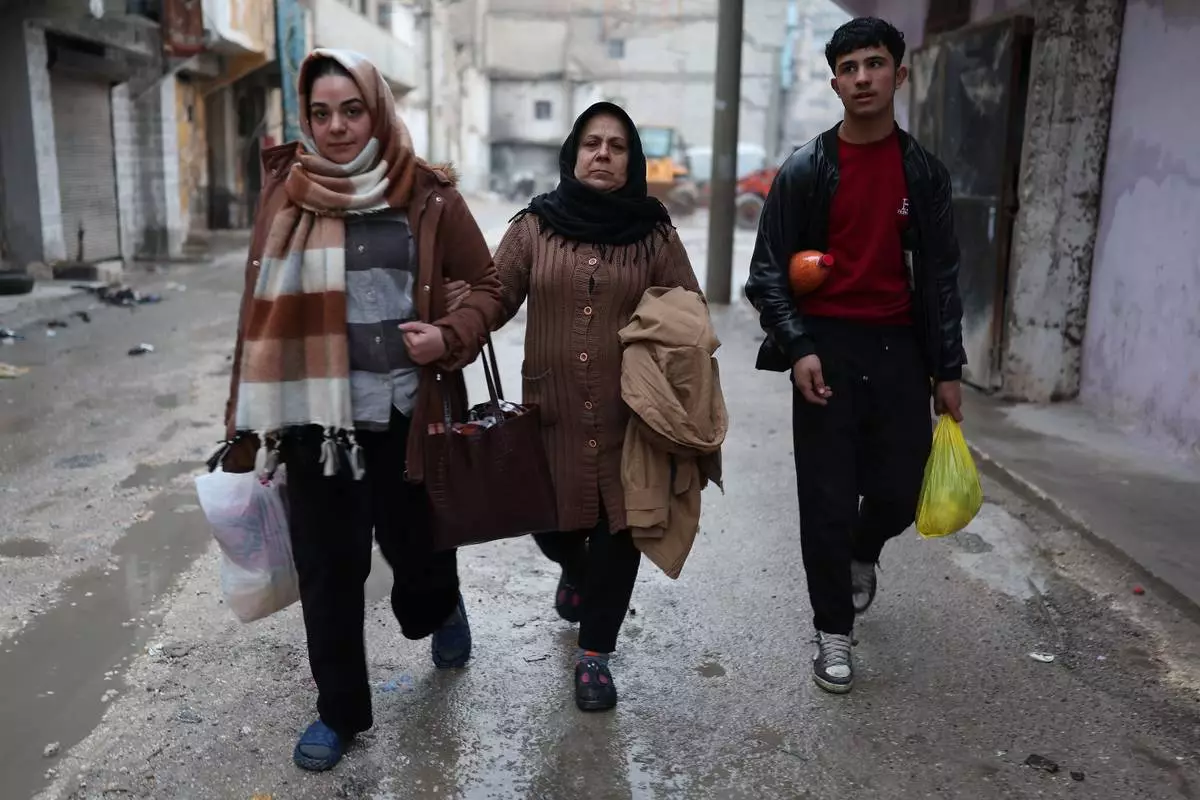
People flee the Sheikh Maqsoud neighborhood, where clashes between government forces and Kurdish fighters have been taking place in the northern city of Aleppo, Syria, Sunday, Jan. 11, 2026. (AP Photo/Ghaith Alsayed)

People flee the Sheikh Maqsoud neighborhood, where clashes between government forces and Kurdish fighters have been taking place in the northern city of Aleppo, Syria, Sunday, Jan. 11, 2026. (AP Photo/Ghaith Alsayed)

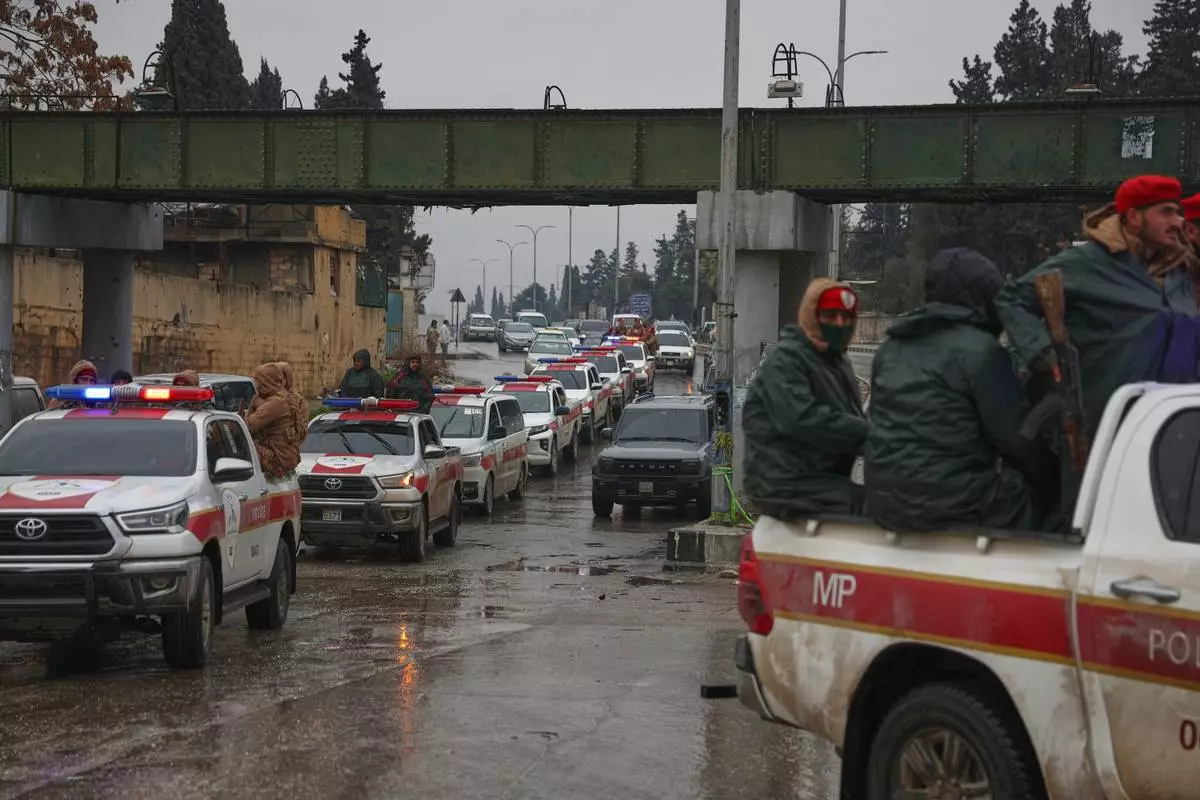
A Syrian military police convoy enters the Sheikh Maqsoud neighborhood, where clashes between government forces and Kurdish fighters have been taking place in the northern city of Aleppo, Syria, Sunday, Jan. 11, 2026. (AP Photo/Ghaith Alsayed)

A Syrian military police convoy enters the Sheikh Maqsoud neighborhood, where clashes between government forces and Kurdish fighters have been taking place in the northern city of Aleppo, Syria, Sunday, Jan. 11, 2026. (AP Photo/Ghaith Alsayed)

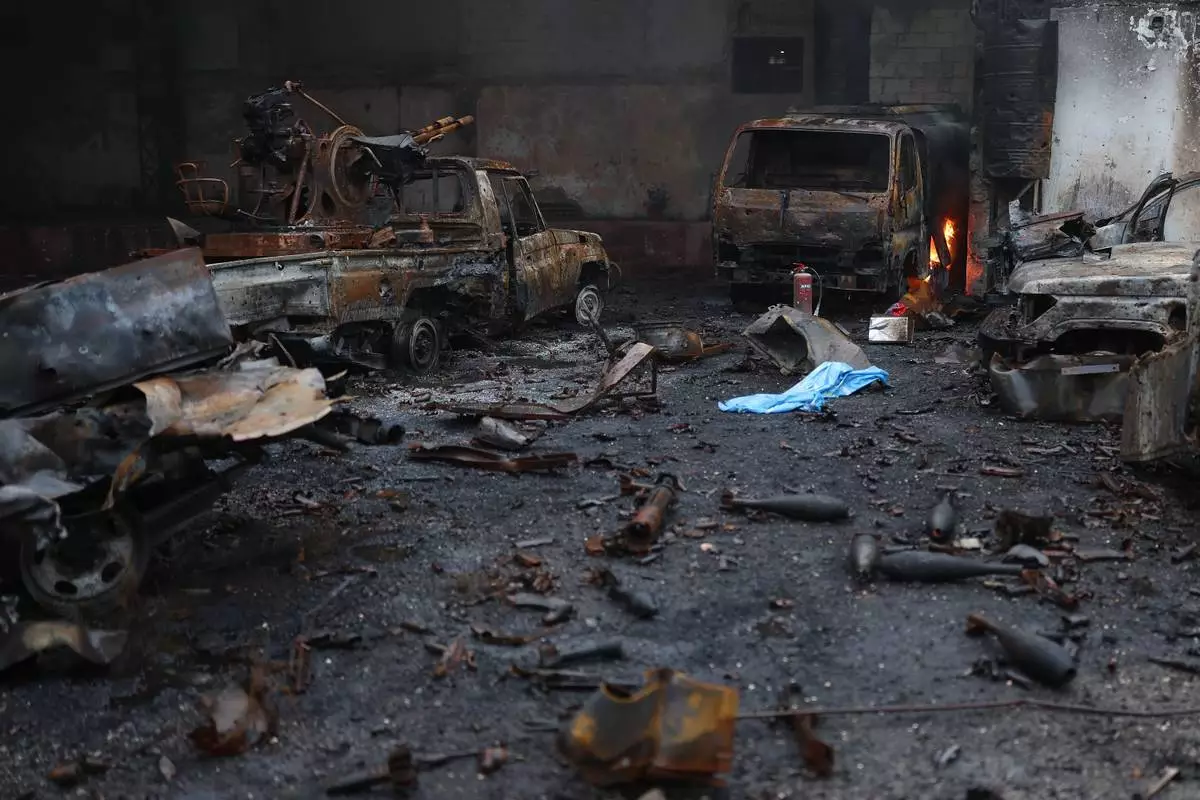
Burned vehicles and ammunitions left at one of the Kurdish fighters positions at the Sheikh Maqsoud neighborhood, where clashes between government forces and Kurdish fighters have been taking place in the northern city of Aleppo, Syria, Sunday, Jan. 11, 2026. (AP Photo/Ghaith Alsayed)

Burned vehicles and ammunitions left at one of the Kurdish fighters positions at the Sheikh Maqsoud neighborhood, where clashes between government forces and Kurdish fighters have been taking place in the northern city of Aleppo, Syria, Sunday, Jan. 11, 2026. (AP Photo/Ghaith Alsayed)

Recommended Articles