The 2024 International Dragon Boat Federation (IDBF) World Cup kicked off on Saturday in Miluo, central China's Hunan Province, drawing teams from 10 countries and regions to showcase their athleticism and teamwork.
It marks the fourth time the event has been held in China.
As one of the highest-profile IDBF competitions, this year's World Cup features five events across two categories: a 12-person 400-meter relay, a 1,000-meter pursuit, and 22-person mixed races in the 100-meter, 200-meter, and 500-meter sprints.
The Chinese Dragon Boat Association has sent two teams comprising elite athletes selected from this year's China Longzhou (Dragon Boat) Tournament.
In the 200-meter mixed sprint held on Saturday morning, Indonesia narrowly defeated China's Team One to secure the first gold medal of the event. Later in the day, China's Team One triumphed over teams of Indonesia and Canada to win the championship in the 100-meter mixed race.
"This competition shows that Indonesia's level is truly impressive. Although it's a pity that we lost by a narrow margin, we will work even harder in the upcoming events to achieve excellent results," Feng Guojing, coach of China's Team One.
On Sunday, the World Cup will feature the final three championship races, including the 12-person 400-meter relay, the 1000-meter pursuit, and the 22-person 500-meter sprint.
Originated from China more than 2,500 years ago, dragon boating has evolved into a fast, fun and thrilling team-based paddling sport across the world.
In China, the traditional Dragon Boat Festival commemorates the death of the patriotic poet Qu Yuan, who tragically drowned himself in the Miluo River. As such, Miluo is regarded as the birthplace of dragon boating, with Qu Yuan's legacy deeply honored.
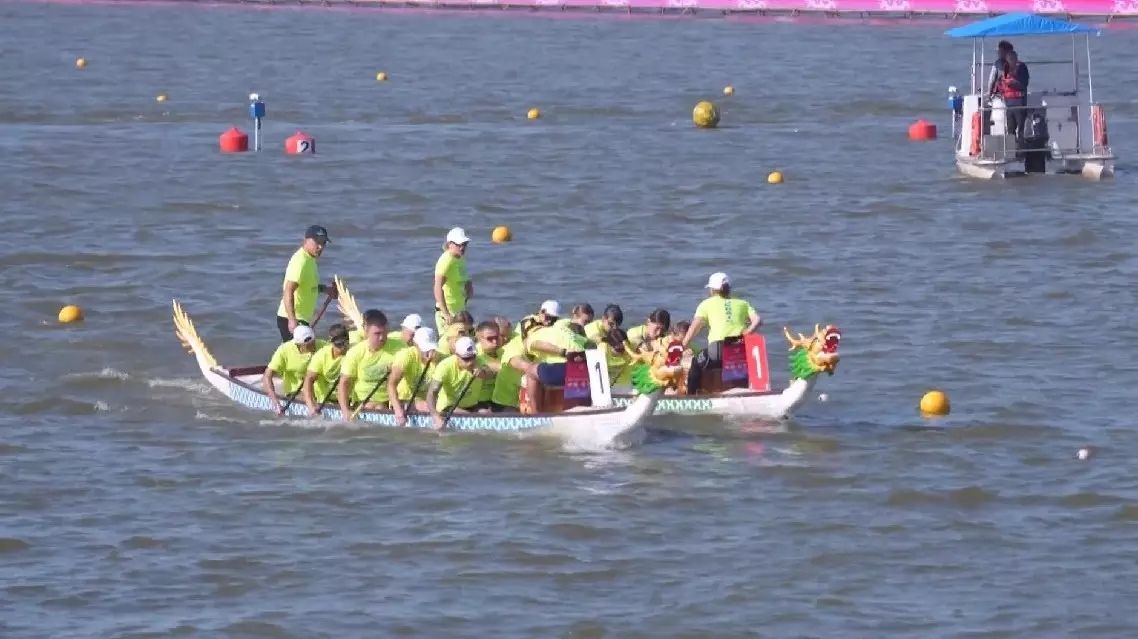
2024 International Dragon Boat Federation World Cup opens in Hunan
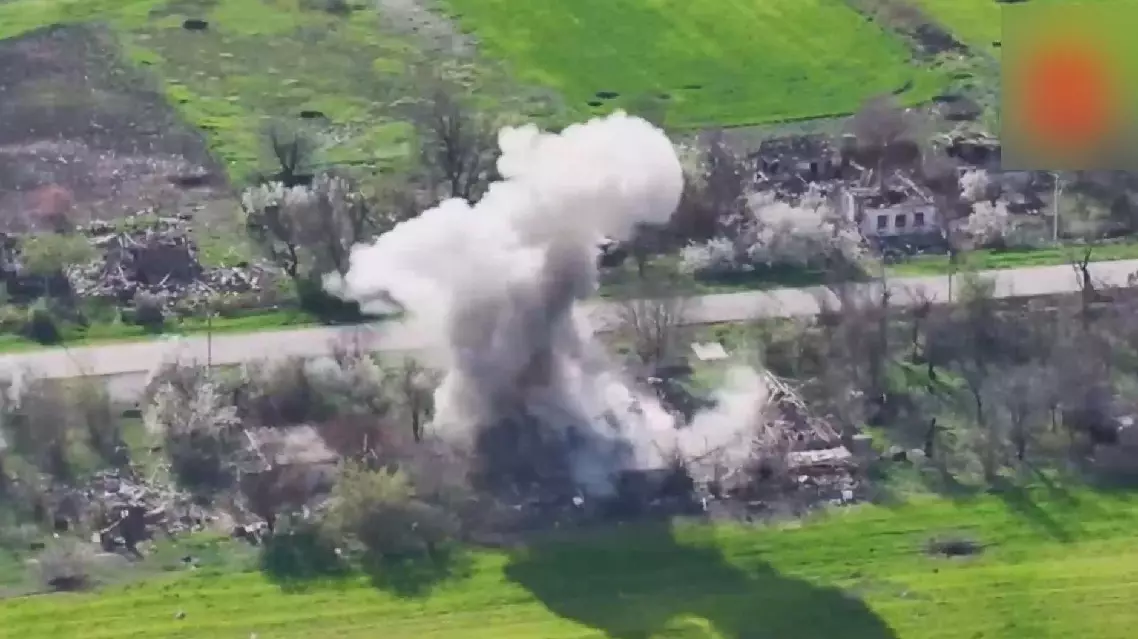
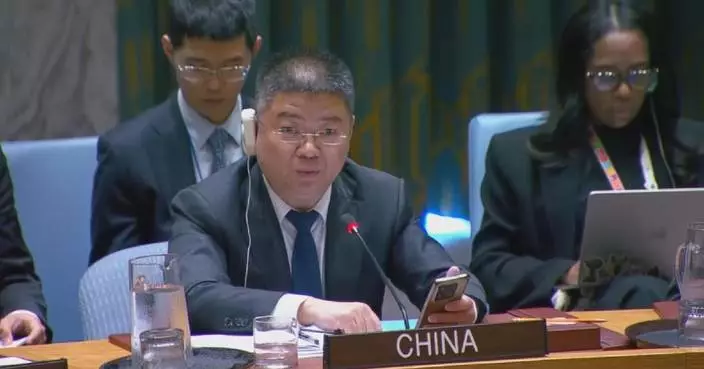
China urges the United States to return to talks and immediately stop military actions, said Fu Cong, China's permanent representative to the United Nations, on Thursday.
The United States, as the rotating president of the UN Security Council for March, convened a Security Council meeting under the "non-proliferation" agenda item and pushed forward the work of the Security Council Sanctions Committee (1737 Committee) related to the Iran issue. China and Russia explicitly opposed this.
Speaking at the meeting, Fu said that the "snapback" sanctions mechanism for Iran has procedural and legal flaws and urged the United States and Israel to immediately cease military actions and refrain from attacking Iranian nuclear facilities that are under the safeguards of the International Atomic Energy Agency (IAEA), in order to prevent further escalation of the situation and the spillover of the conflict.
After the meeting commenced, Russia raised a procedural motion opposing the consideration of this matter under the "non-proliferation" agenda item, and China expressed support for the Russian motion.
However, the Security Council adopted the meeting agenda with 11 votes in favor, two against, and two abstentions. China and Russia voted against.
In his statement following the vote, Fu pointed out that the current situation surrounding the Iranian nuclear issue remains tense. The pressing priority to resolve the issue is to cease the conflict and prevent escalation and avoid the spread of the war across the entire Middle East region, he said.
"Resorting to force is not the right way to resolve international disputes. The national sovereignty, security, and territorial integrity of Iran must be respected. The United States and Israel should immediately cease military actions, refrain from attacking Iranian nuclear facilities that are under the safeguards of the International Atomic Energy Agency (IAEA), avoid further escalation of tensions and keep the conflict from spreading across the entire Middle East region. We urge the United States to change course immediately, return to diplomatic negotiations, make a clear commitment not to use force, engage in sincere dialogue with Iran, and work toward a solution that meets the expectations of the international community," said Fu.
In 2006, the UN Security Council adopted Resolution 1737, imposing nuclear-related sanctions on Iran and establishing a specialized committee.
After the Iran nuclear deal was reached in 2015, the related sanctions were suspended under Resolution 2231, and the committee subsequently ceased operations.
At the end of August 2025, France, Germany, and the United Kingdom unilaterally issued a notification, claiming to trigger the "snapback" mechanism of the Iran nuclear deal, advocating for the reinstatement of previously suspended UN sanctions on Iran.
China urges US to return to talks, immediately stop military actions: envoy