An excerpt of a China Media Group (CMG) documentary tells the story about a heroic soldier who emerged as a pivotal figure in the life-and-death Battle of Lazikou, a strategic pass in Gansu Province, and sacrificed his life for the victory, during the epic 12,500 km Long March (1934-1936), a tactical retreat to evade Kuomintang forces.
In 1935, the Red Army arrived at Lazikou Pass, a narrow mountain pass that forms a gateway between southwest China's Sichuan and neighboring Gansu. It is the last line of defense for the Red Army to enter Gansu.
Lazikou has a dangerous terrain and is easy to defend but difficult to attack, with steep peaks on both sides, a narrow canyon in the middle, and a turbulent river flowing at the bottom of the valley. The Kuomintang army deployed heavy troops there in an attempt to stop the Red Army's advance. If the Red Army wanted to continue to move north, it had to break through the natural barrier of Lazikou.
In order to break through the enemy's defenses, the Red Army set up a death squad, which was tasked with breaking through Lazikou. This death squad consisted of the bravest and most determined fighters in the Red Fourth Regiment, who were ready to pave the way for the Red Army's march north with their lives.
In this death squad, there was an amazing soldier, 16 or 17 years old nicknamed Yun-Gui-Chuan (a name covering the name of three provinces) who emerged as a pivotal figure in the crucial breakthrough. Born from the Miao ethnic group, Yun possessed an innate talent for rock climbing nurtured since childhood. In order to find a way to break through the enemy's fortifications at Lazikou, this young Miao soldier volunteered to scale the daunting cliffs.
Facing the steep cliff, Yun used a long rod with an iron hook to slowly climb up the cliff, leaving many of the Red Army soldiers underneath dumbfounded. He successfully ascended to the summit, and was able to guide the troops to encircle and launch a surprise attack on the enemy's rear. In tandem with the frontal assault, they executed their mission with precision and determination.
To blow up the enemy's fiercest firepower point, Yun jumped into an enemy bunker with dozens of grenades strapped to his waist and perished in the battle with no one knowing his real name. He got his nickname because he had traveled through the three provinces of Yunnan, Guizhou and Sichuan since he joined the Red Army.
This excerpt is from the ninth episode of the ten-episode documentary aired on CMG's military channel from Oct. 17 to 26 in commemoration of the 90th anniversary of the starting of the Chinese Red Army's Long March.
From October 1934 to October 1936, the Chinese Workers' and Peasants' Red Army troops left their bases and marched through raging rivers, frigid mountains and arid grassland to break the siege of the Kuomintang forces and continued to fight the Japanese invaders.
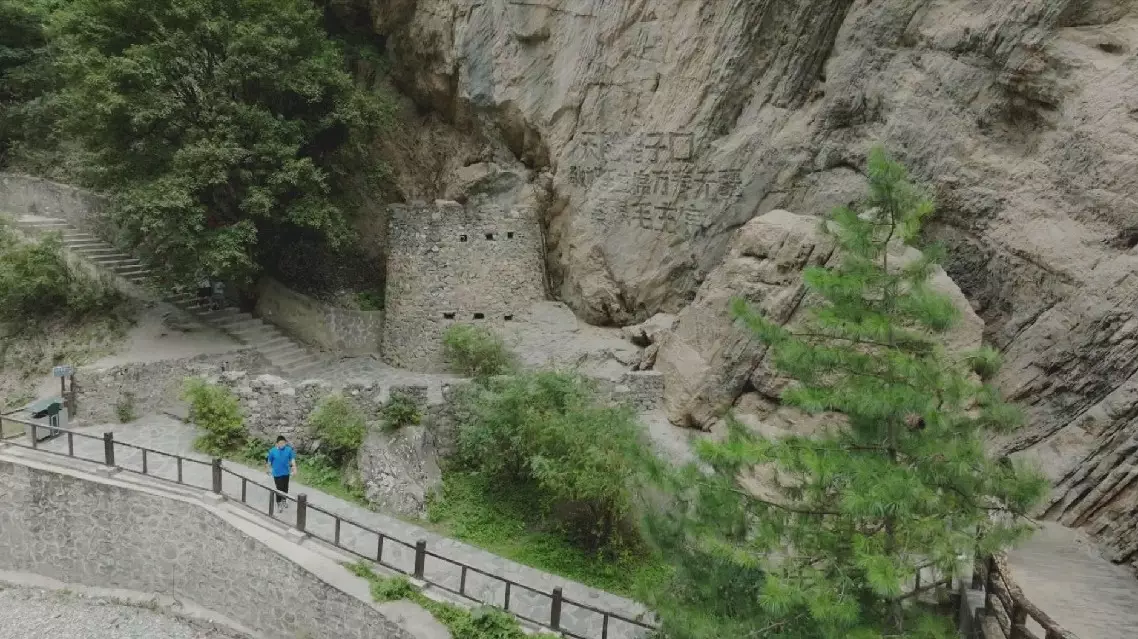
Heroic soldier sacrifices life for decisive Battle of Lazikou during Long March
Heroic soldier sacrifices life for decisive Battle of Lazikou during Long March