DETROIT (AP) — Jared Goff threw three touchdown passes but was far from the star for the Detroit Lions in one of the highest-scoring games in franchise history.
David Montgomery was the first of five Lions to score in the first half in a 52-14 rout of the Tennessee Titans on Sunday.
Click to Gallery
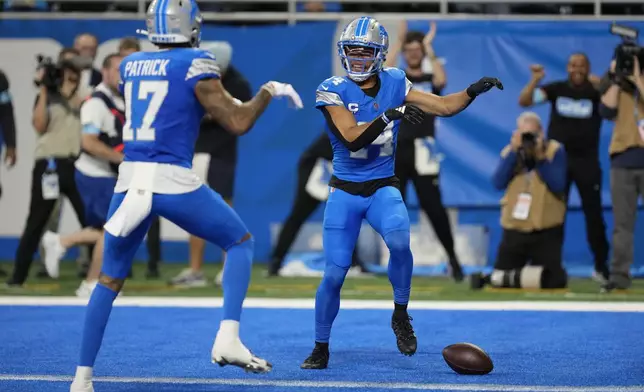
Detroit Lions wide receiver Amon-Ra St. Brown (14) celebrates his touchdown with teammate Tim Patrick (17) during the first half of an NFL football game against the Tennessee Titans, Sunday, Oct. 27, 2024, in Detroit. (AP Photo/Paul Sancya)
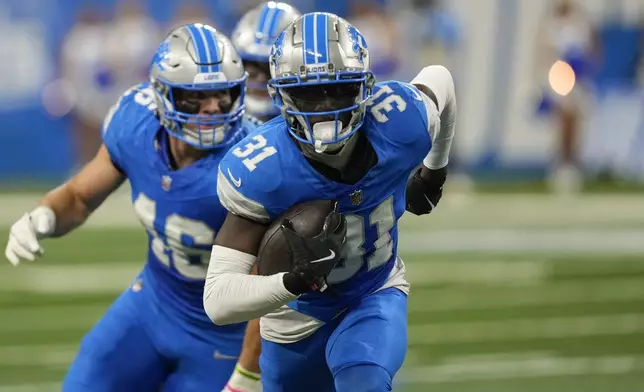
Detroit Lions safety Kerby Joseph (31) runs with the ball after making an interception during the first half of an NFL football game against the Tennessee Titans, Sunday, Oct. 27, 2024, in Detroit. (AP Photo/Paul Sancya)
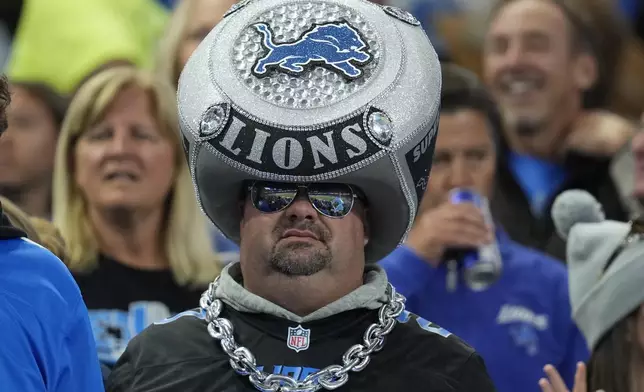
A Detroit Lions fan watches during the second half of an NFL football game against the Tennessee Titans, Sunday, Oct. 27, 2024, in Detroit. (AP Photo/Paul Sancya)
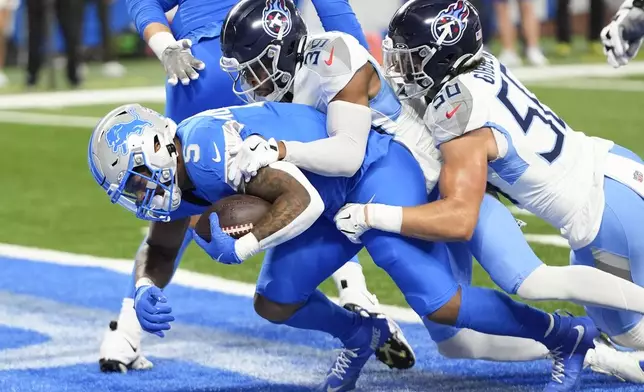
Detroit Lions running back David Montgomery (5) runs into the end zone for a touchdown past Tennessee Titans cornerback Darrell Baker Jr. (39) and linebacker Jack Gibbens (50) during the first half of an NFL football game Sunday, Oct. 27, 2024, in Detroit. (AP Photo/Paul Sancya)
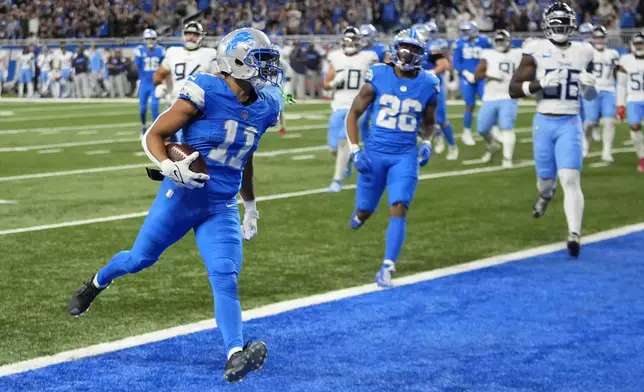
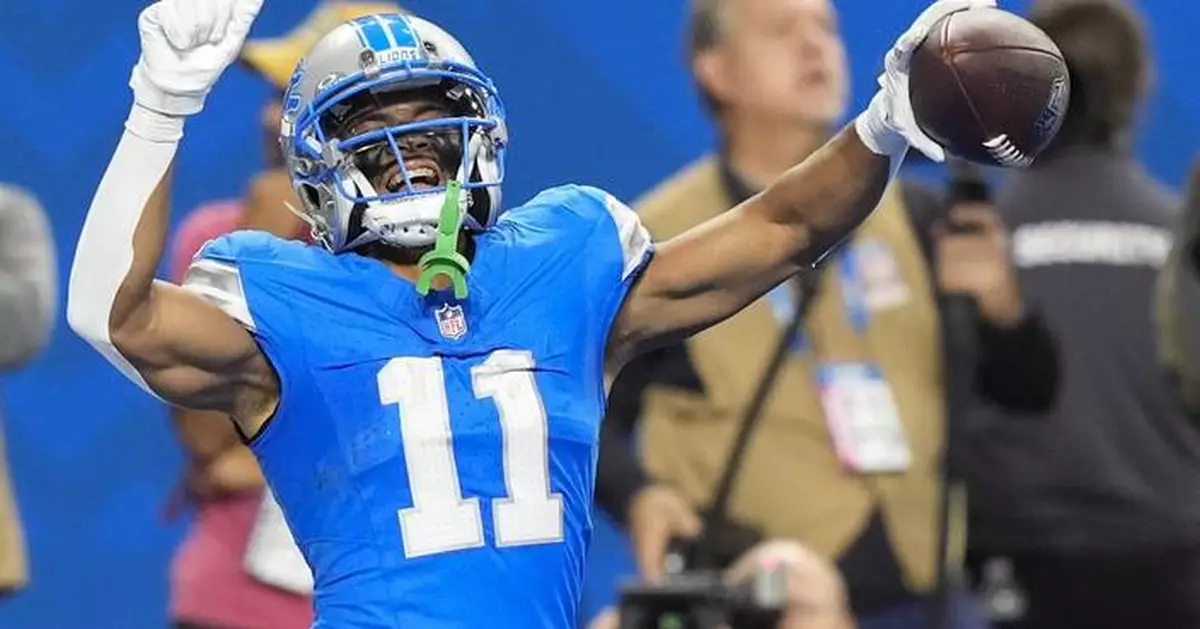
Detroit Lions wide receiver Kalif Raymond (11) scores a touchdown against the Tennessee Titans during the second half of an NFL football game Sunday, Oct. 27, 2024, in Detroit. (AP Photo/Paul Sancya)
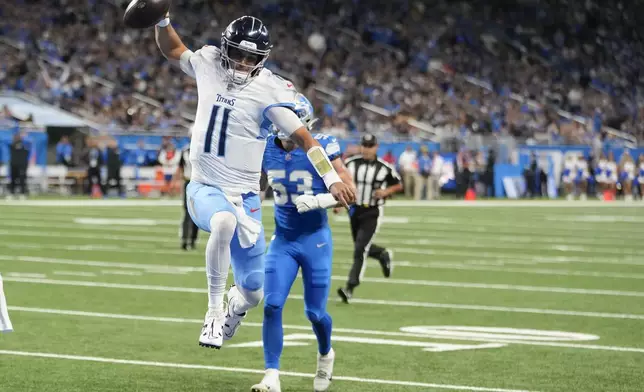
Tennessee Titans quarterback Mason Rudolph (11) runs into the end zone for a touchdown during the first half of an NFL football game against the Detroit Lions, Sunday, Oct. 27, 2024, in Detroit. (AP Photo/Carlos Osorio)
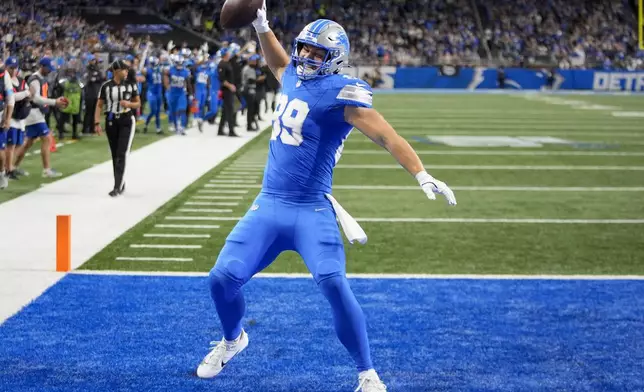
Detroit Lions tight end Brock Wright (89) celebrates his touchdown against the Tennessee Titans, during the first half of an NFL football game Sunday, Oct. 27, 2024, in Detroit. (AP Photo/Paul Sancya)
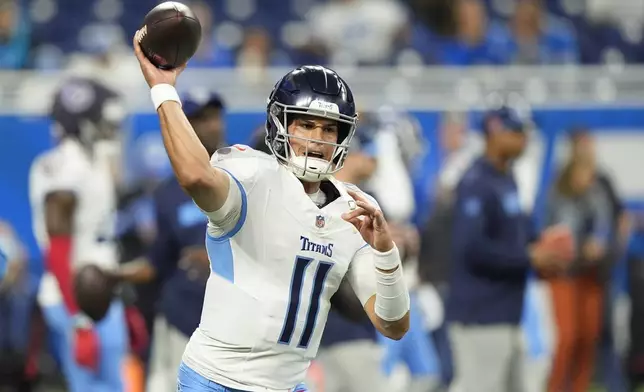
Tennessee Titans quarterback Mason Rudolph (11) before an NFL football game against the Detroit Lions, Sunday, Oct. 27, 2024, in Detroit. (AP Photo/Carlos Osorio)
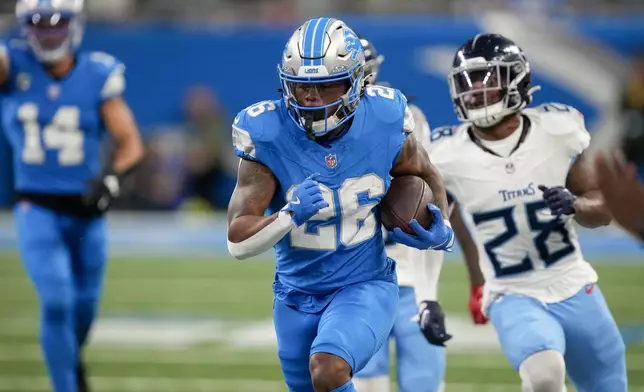
Detroit Lions running back Jahmyr Gibbs (26) runs for a touchdown past Tennessee Titans safety Quandre Diggs (28) during the first half of an NFL football game Sunday, Oct. 27, 2024, in Detroit. (AP Photo/Paul Sancya)
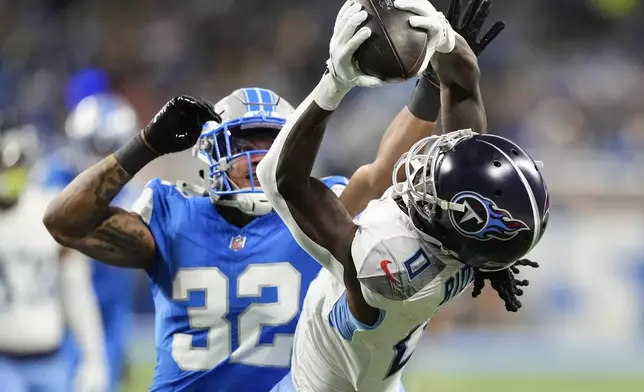
Tennessee Titans wide receiver Calvin Ridley (0) makes a catch past Detroit Lions safety Brian Branch (32) during the first half of an NFL football game Sunday, Oct. 27, 2024, in Detroit. (AP Photo/Carlos Osorio)
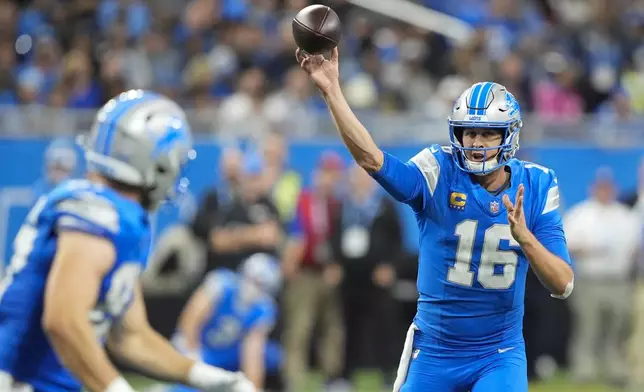
Detroit Lions quarterback Jared Goff (16) throws a pass during the second half of an NFL football game against the Tennessee Titans, Sunday, Oct. 27, 2024, in Detroit. (AP Photo/Carlos Osorio)
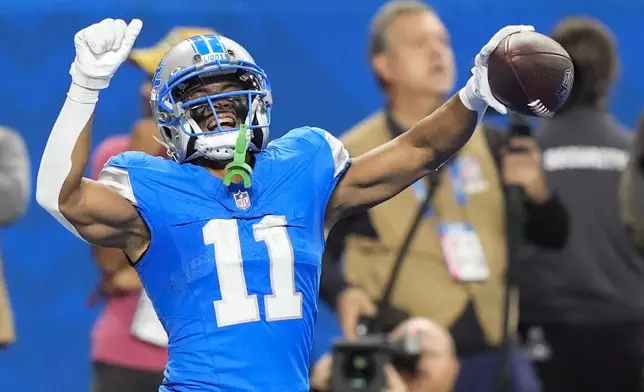
Detroit Lions wide receiver Kalif Raymond (11) celebrates his touchdown during the second half of an NFL football game against the Tennessee Titans, Sunday, Oct. 27, 2024, in Detroit. (AP Photo/Carlos Osorio)
The Lions were efficient on offense, converting on all five chances in the red zone, and the other two phases were dominant. Detroit's defense forced four turnovers, and its special teams produced Kalif Raymond's 90-yard punt return for a touchdown — he finished with 190 yards on five punt returns — and Khalil Dorsey's 72-yard kickoff return that set up another score.
Detroit became the third team since 1941 to have a punt return of 90 yards or more and a kickoff return of 70 or more in a game.
“We play with three units and when a couple of them are humming at the right time, it can bail out one of your units,” coach Dan Campbell said.
The NFC North-leading Lions (6-1) have the conference's best record after winning five straight games, averaging 40-plus points over the last four, and the franchise's best seven-game record since 1956.
Detroit's scoring total trailed only a franchise-record, 55-point performance against Chicago in 1997.
The Lions were fine without big-play receiver Jameson Williams, who served the first of a two-game suspension for violating the NFL's performance-enhancing substance policy.
“We didn't miss a beat,” Campbell said.
Detroit has been on a roll by leaning on Goff, but it had more points (42) than he had passing yards (28) early in the third quarter. He finished 12 of 15 for 85 yards, taking advantage of takeaways by the defense that set him up with short fields.
“I don’t think I've ever been a part of something like that,” the 30-year-old Goff said.
The Lions also pulled off a trick play as they do in most games — this time, a touchdown pass by running back Montgomery, who took a pitch from Goff and found Sam LaPorta from 3 yards out to give the Lions a 35-14 lead and their highest-scoring half since 1970.
Jahmyr Gibbs had a 70-yard touchdown run late in the first quarter and finished with a season-high 127 yards rushing. Dorsey's long return to set up Goff's 8-yard TD pass to Brock Wright early in the second.
Raymond's 90-yard kickoff return early in the third put Detroit ahead 42-14.
The Titans (1-6) were handed a lopsided loss for the second straight week and have already signaled this is a rebuilding year by trading veteran receiver DeAndre Hopkins and starting linebacker Ernest Jones Jr.
“You’re going to get blown out by every team in the league turning the ball over four times,” Titans coach Brian Callahan said. “We just don’t complement each other at all. Right now, our special teams gives up yards, our defense doesn’t get a stop and we don’t do anything on offense and we turn it over. Everything needs to be better.”
The Titans extended their streak of throwing an interception in every game when Mason Rudolph was picked off by linebacker Trevor Nowaske in the first quarter. Rudolph later floated a pass that Kerby Joseph intercepted.
Rudolph did rush for his first touchdown, an 11-yarder that fooled Detroit’s defense and tied the game late in the first quarter.
Rudolph, starting for the injured Will Levis, was 22 of 38 for 266 yards with a 5-yard touchdown pass to Nick Westbrook-Ikhine early in the second quarter and two interceptions.
“I’ve got to protect the ball better and put our defense in a better situation,” Rudolph said. “I thought we did good things in the first half and we did move the ball, possess the ball, but none of that matters when you get your butt kicked.”
Ridley matched a career high with 10 receptions for a season-high 143 yards. Tony Pollard ran for a season-high 95 yards on 20 carries.
Titans: Levis (shoulder) missed a second straight week and CB L’Jarius Sneed (quadriceps) was also inactive.
Lions: LB Malcom Rodriguez (ankle) was ruled out in the first half and Campbell said he didn't think it would be a season-ending injury. DE Josh Paschal (illness) was inactive.
Titans: Host New England next Sunday.
Lions: At Green Bay next Sunday.
AP NFL: https://apnews.com/hub/nfl
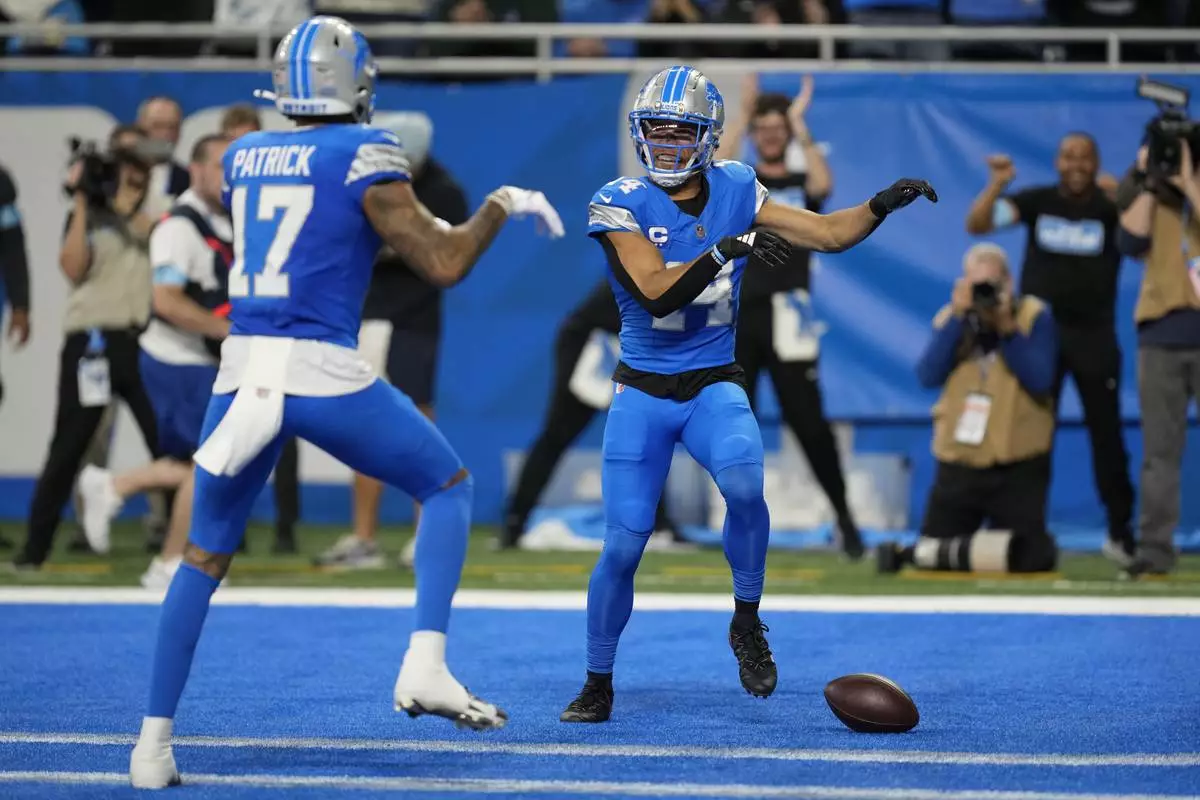
Detroit Lions wide receiver Amon-Ra St. Brown (14) celebrates his touchdown with teammate Tim Patrick (17) during the first half of an NFL football game against the Tennessee Titans, Sunday, Oct. 27, 2024, in Detroit. (AP Photo/Paul Sancya)
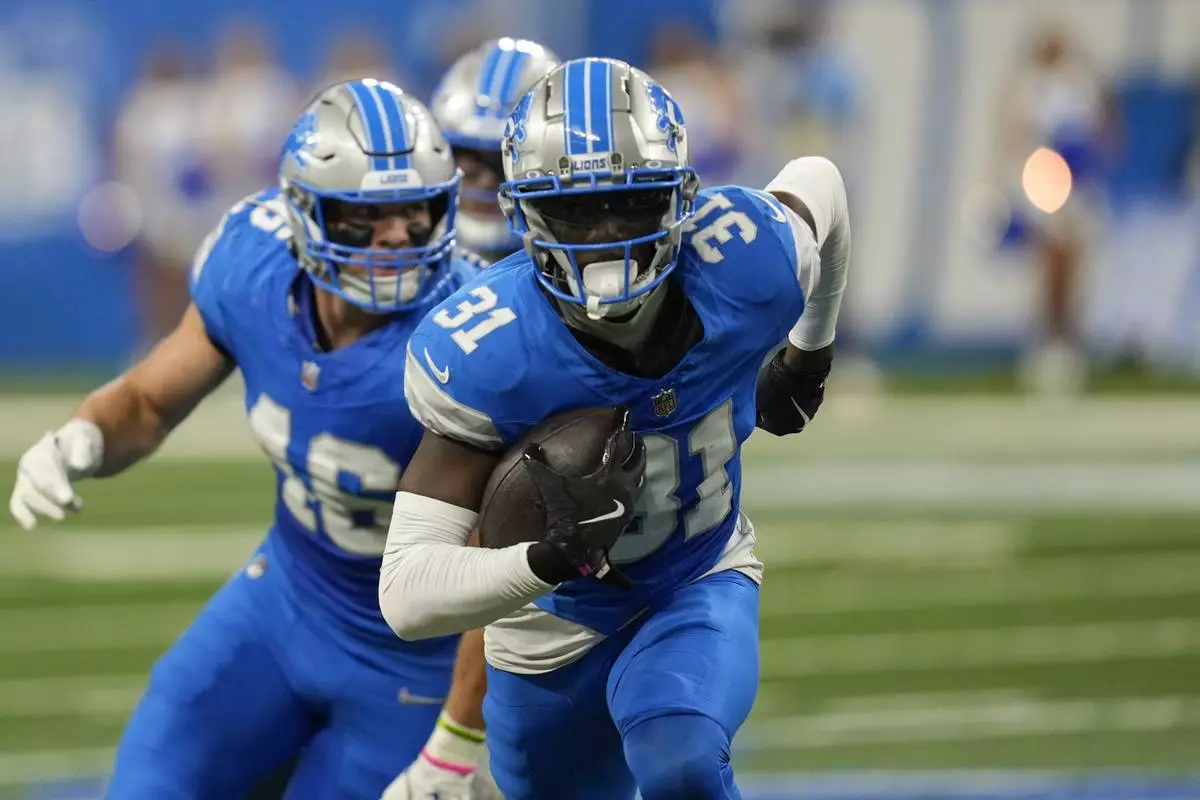
Detroit Lions safety Kerby Joseph (31) runs with the ball after making an interception during the first half of an NFL football game against the Tennessee Titans, Sunday, Oct. 27, 2024, in Detroit. (AP Photo/Paul Sancya)
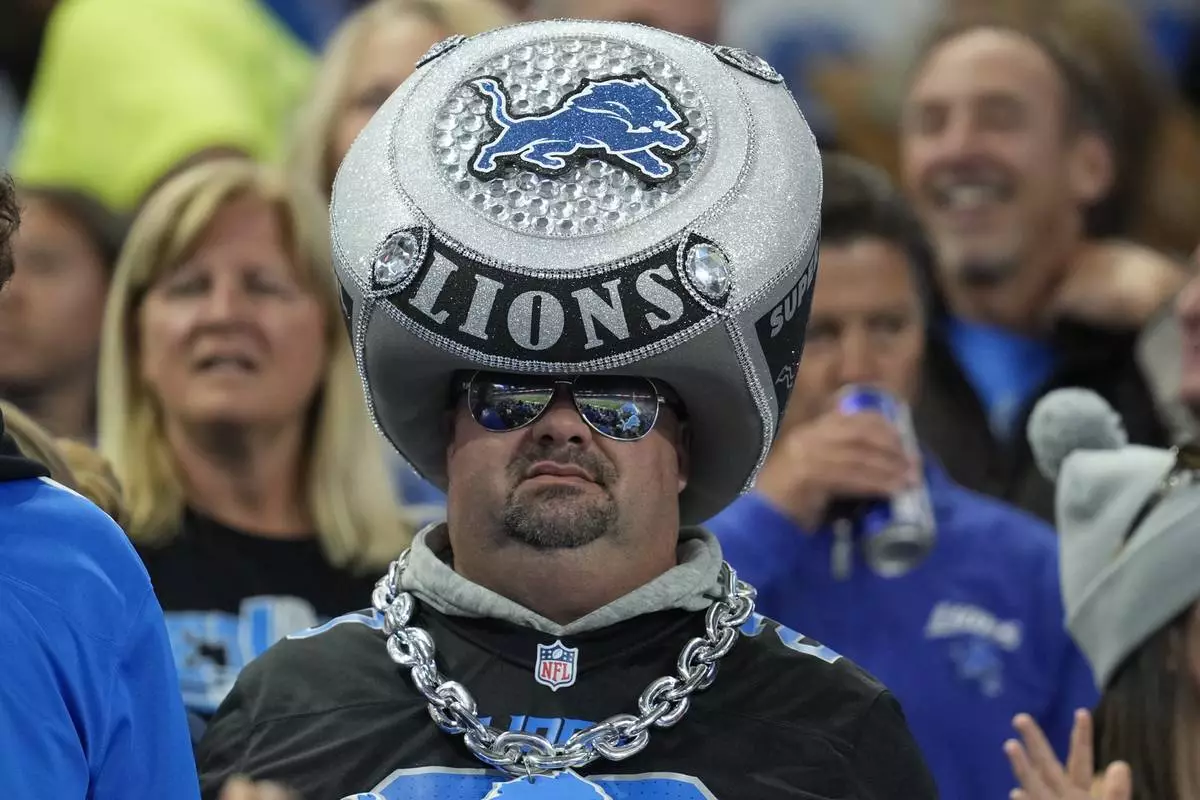
A Detroit Lions fan watches during the second half of an NFL football game against the Tennessee Titans, Sunday, Oct. 27, 2024, in Detroit. (AP Photo/Paul Sancya)
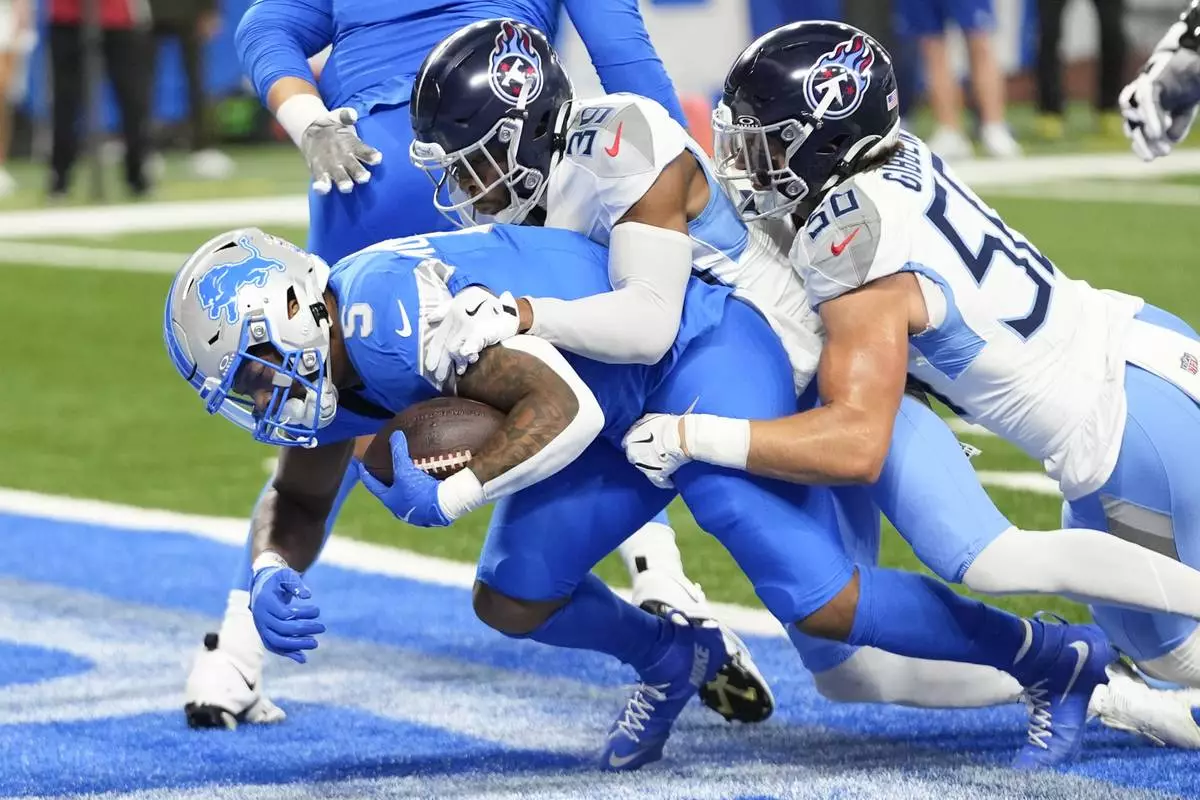
Detroit Lions running back David Montgomery (5) runs into the end zone for a touchdown past Tennessee Titans cornerback Darrell Baker Jr. (39) and linebacker Jack Gibbens (50) during the first half of an NFL football game Sunday, Oct. 27, 2024, in Detroit. (AP Photo/Paul Sancya)
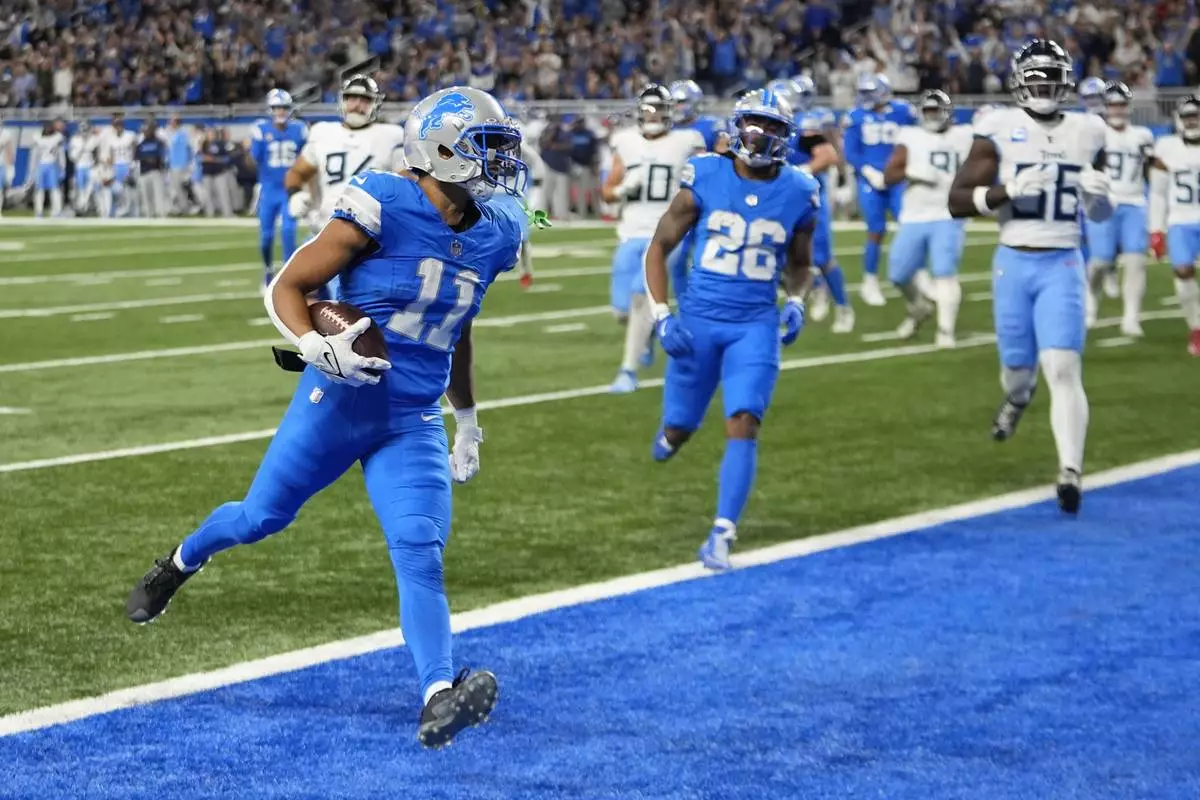
Detroit Lions wide receiver Kalif Raymond (11) scores a touchdown against the Tennessee Titans during the second half of an NFL football game Sunday, Oct. 27, 2024, in Detroit. (AP Photo/Paul Sancya)
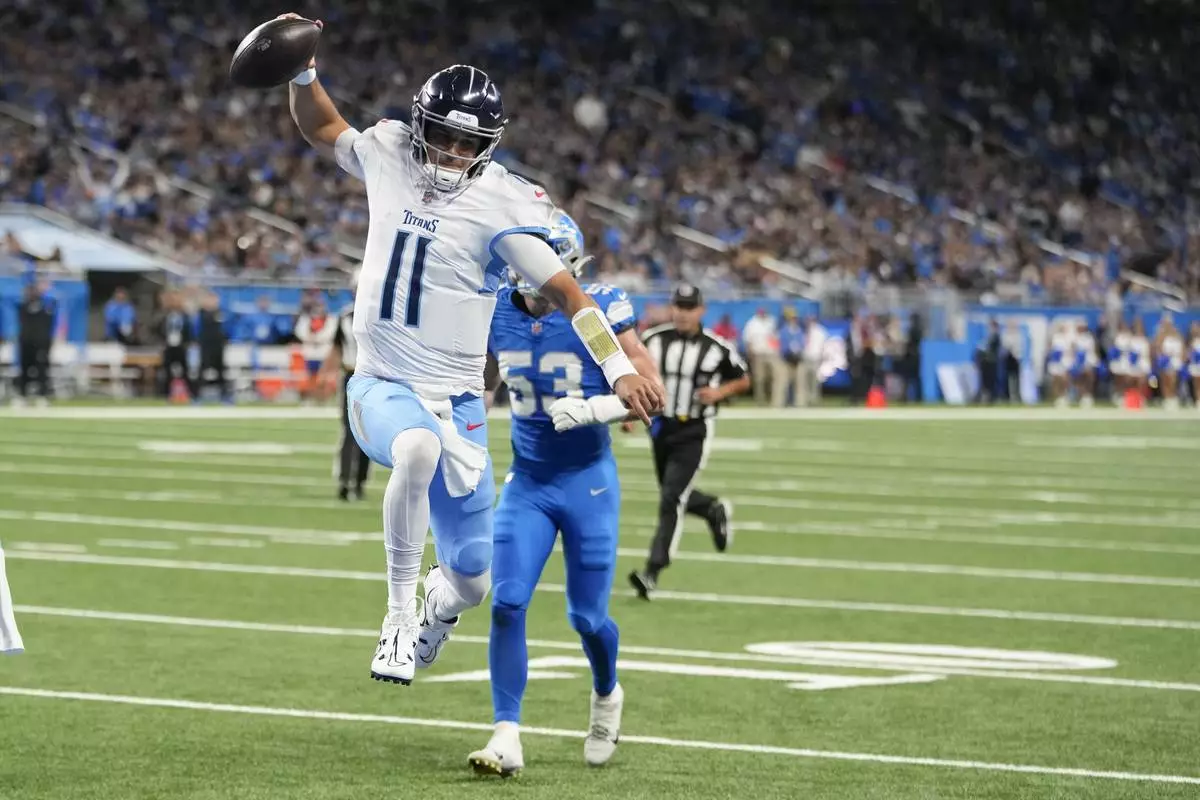
Tennessee Titans quarterback Mason Rudolph (11) runs into the end zone for a touchdown during the first half of an NFL football game against the Detroit Lions, Sunday, Oct. 27, 2024, in Detroit. (AP Photo/Carlos Osorio)
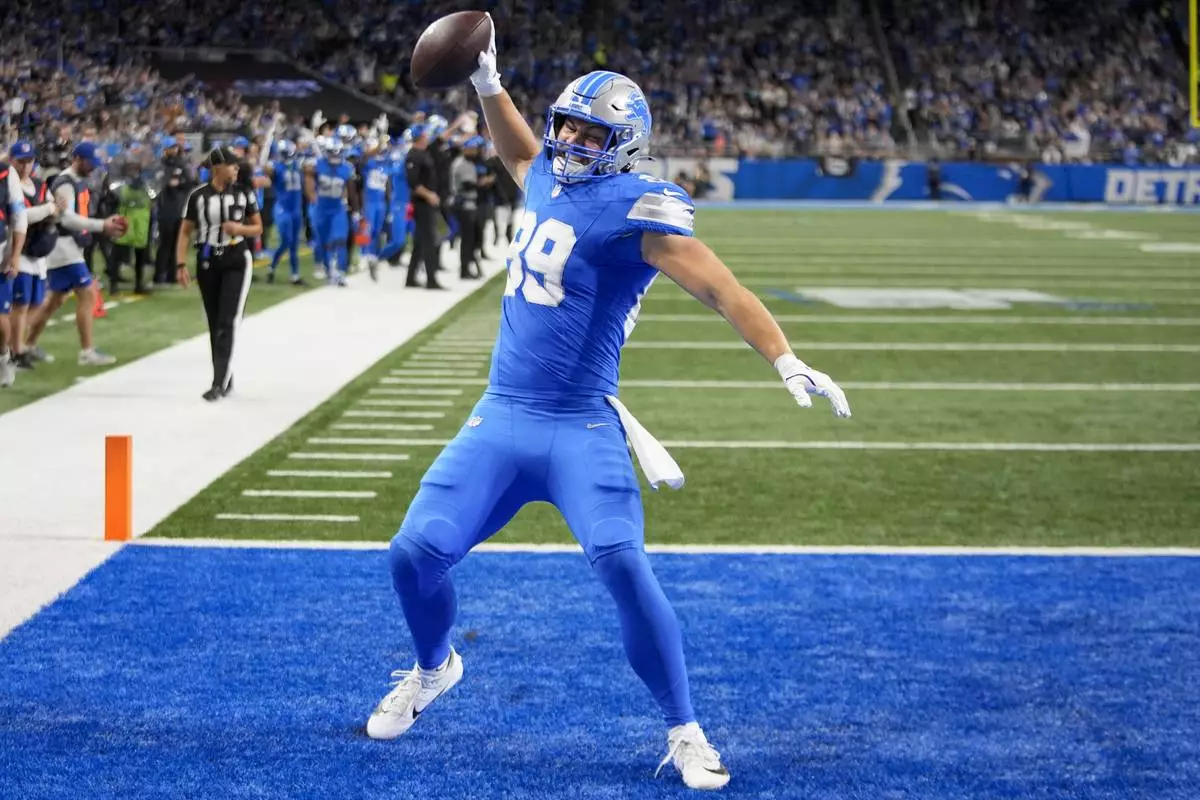
Detroit Lions tight end Brock Wright (89) celebrates his touchdown against the Tennessee Titans, during the first half of an NFL football game Sunday, Oct. 27, 2024, in Detroit. (AP Photo/Paul Sancya)
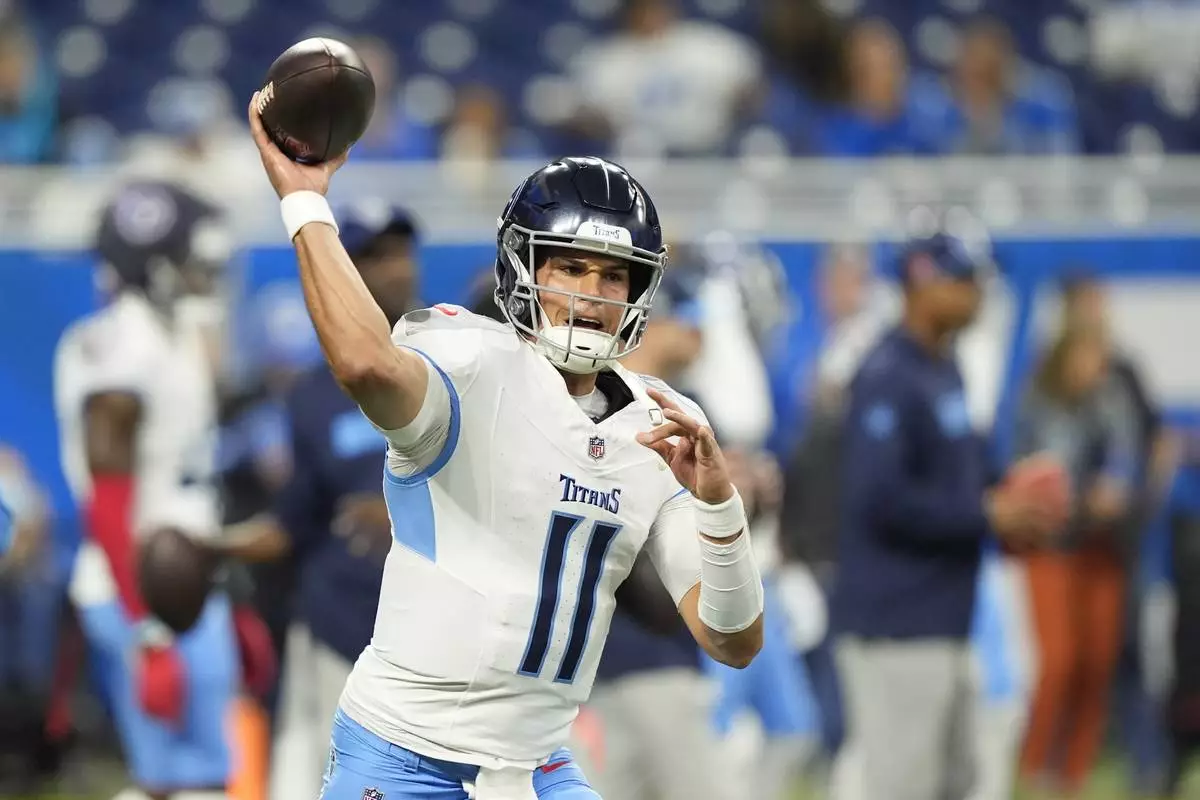
Tennessee Titans quarterback Mason Rudolph (11) before an NFL football game against the Detroit Lions, Sunday, Oct. 27, 2024, in Detroit. (AP Photo/Carlos Osorio)
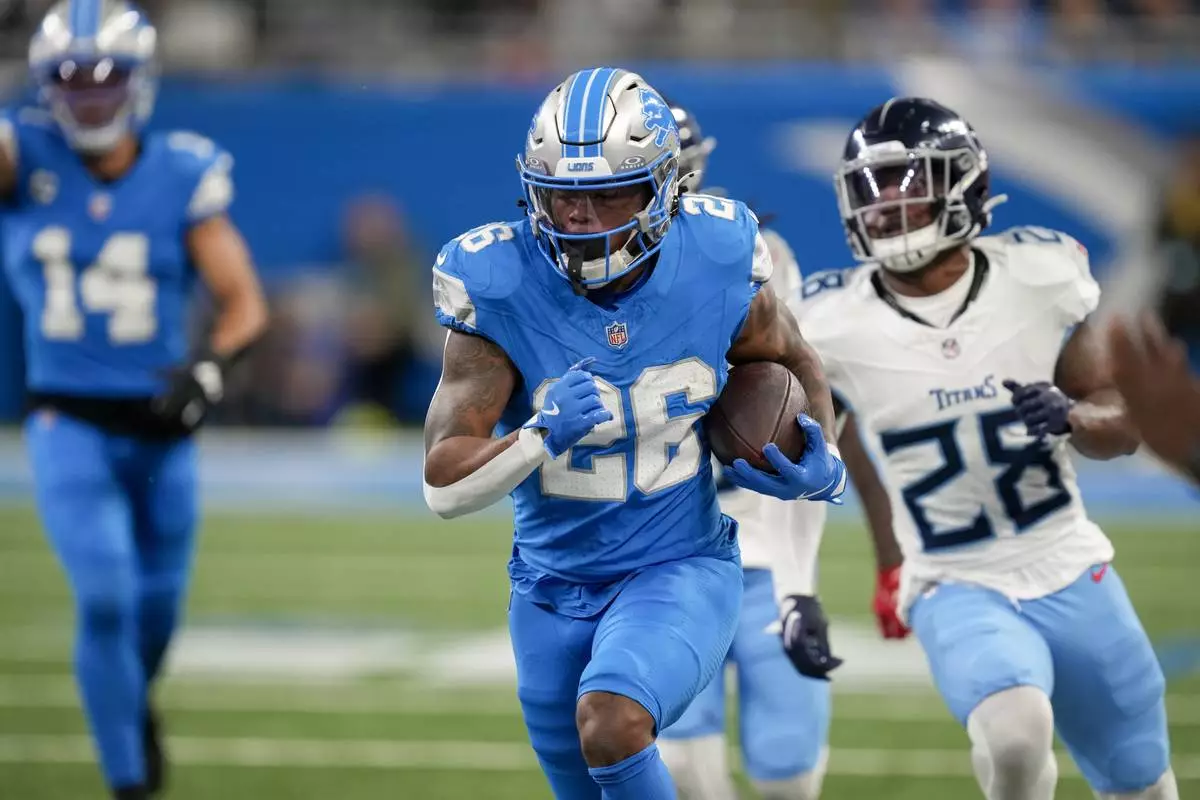
Detroit Lions running back Jahmyr Gibbs (26) runs for a touchdown past Tennessee Titans safety Quandre Diggs (28) during the first half of an NFL football game Sunday, Oct. 27, 2024, in Detroit. (AP Photo/Paul Sancya)
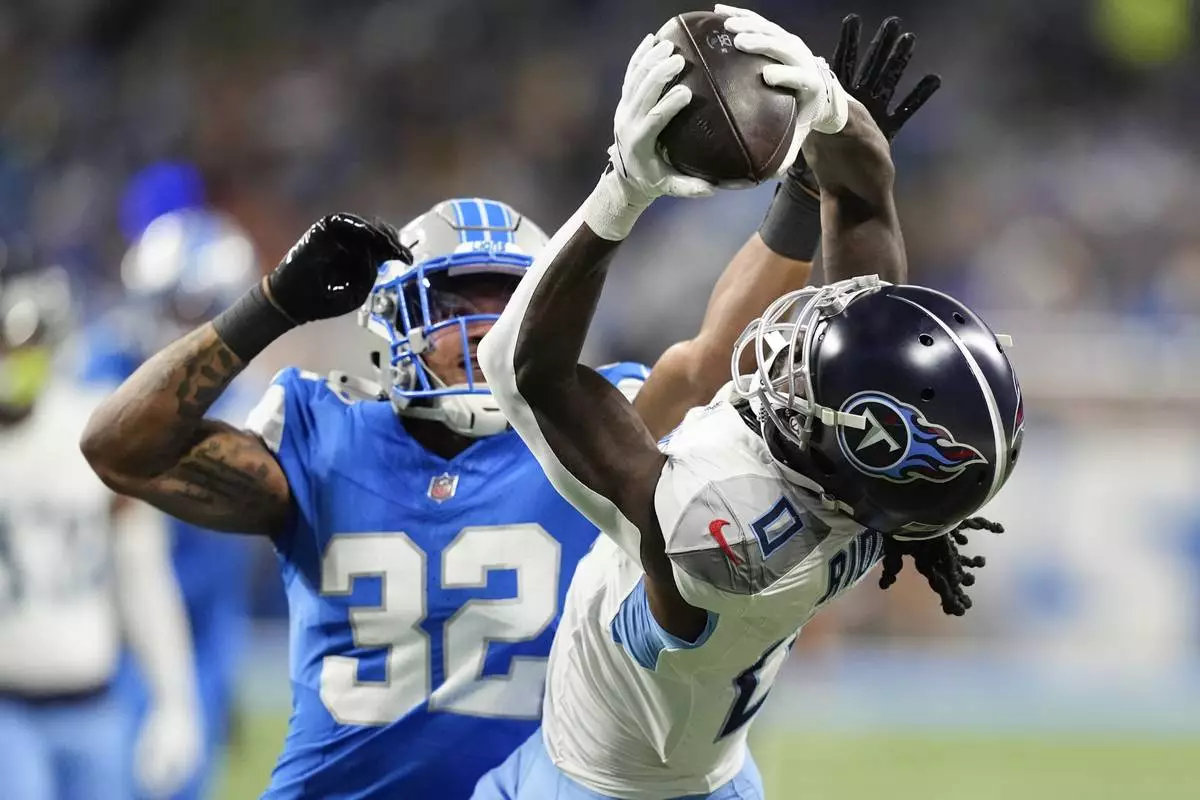
Tennessee Titans wide receiver Calvin Ridley (0) makes a catch past Detroit Lions safety Brian Branch (32) during the first half of an NFL football game Sunday, Oct. 27, 2024, in Detroit. (AP Photo/Carlos Osorio)
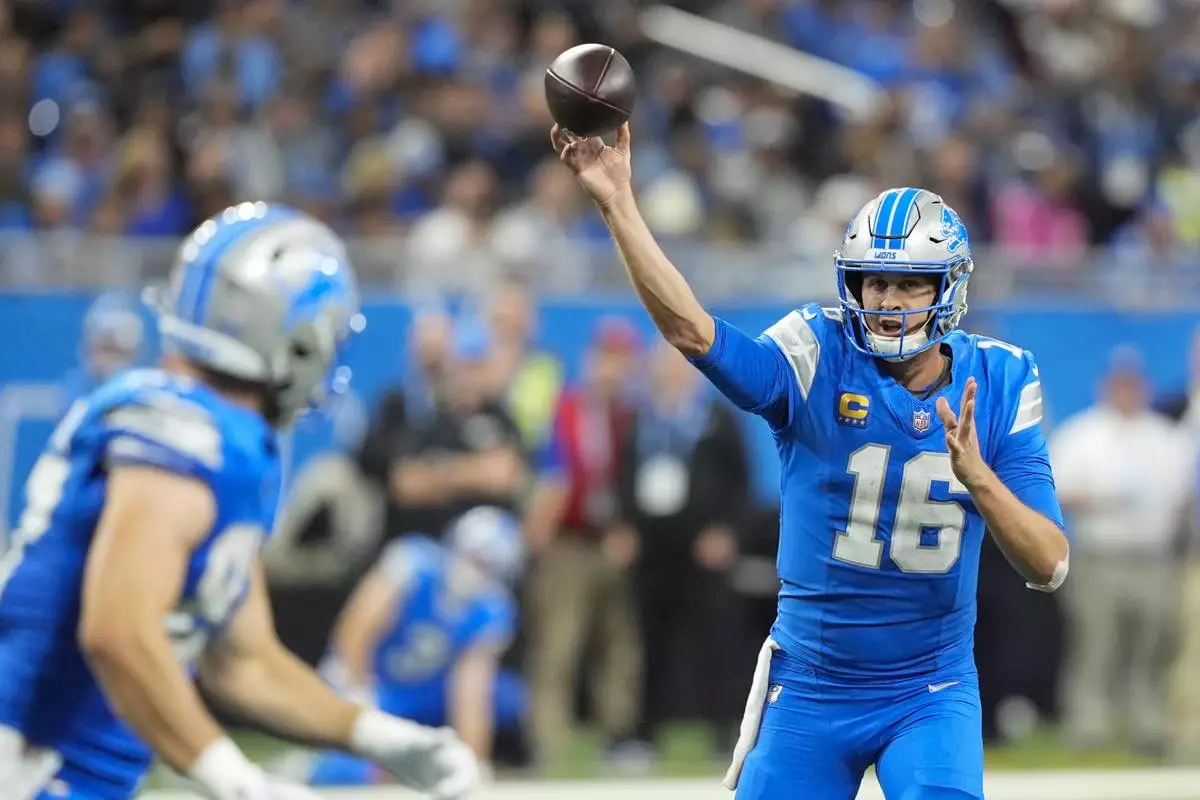
Detroit Lions quarterback Jared Goff (16) throws a pass during the second half of an NFL football game against the Tennessee Titans, Sunday, Oct. 27, 2024, in Detroit. (AP Photo/Carlos Osorio)
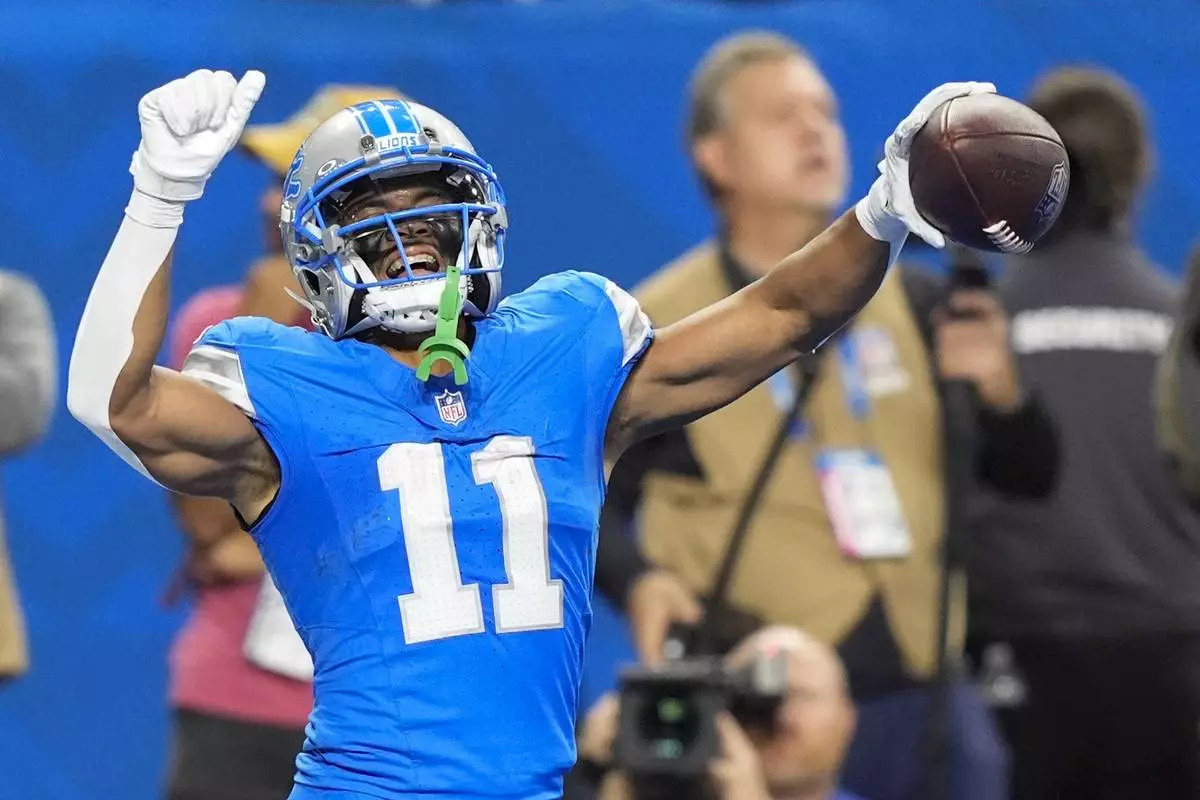
Detroit Lions wide receiver Kalif Raymond (11) celebrates his touchdown during the second half of an NFL football game against the Tennessee Titans, Sunday, Oct. 27, 2024, in Detroit. (AP Photo/Carlos Osorio)