Uzbekistan held its first mixed-system parliamentary election and local elections on Sunday, with the preliminary results of the elections for the 150-seat lower house of parliament expected late Monday.
Half of the 150 deputies who will take a seat in Uzbekistan's Legislative Chamber will be chosen through single-mandate constituencies with the other half based on political party lists in a proportional nationwide vote.
Five officially-registered political parties competed for these seats, with around 20 million voters registered to cast their ballots.
Parliamentary and local elections started at 8:00 on Sunday, with polls closing 12 hours later.
According to the Uzbek Central Election Commission, 71 percent of eligible voters cast their ballot by 17:00, which was well above the 33 percent needed for the vote to be valid.
The election serves as an important indicator of Uzbekistan's political trajectory over the next several years, and may also have a bearing on its diplomatic affairs.
"China is regarded as one of the biggest economic partners in the region and world. There lies a strong political will within the leaders of the two countries to actively develop relations between Uzbekistan and China. We believe that the results of this election will make a positive contribution to the future development of the relations between Uzbekistan and China and all other international partners," said Aloyev Bakhromjon Juraboyevich, Uzbekistan’s deputy foreign minister.
For the first time in the nation's history, this election was held based on a mixed electoral system.
Voters picked their preferred candidates through the E-Saylov, or E-election, system, marking the country's gradual shift toward modernizing its electoral process.
The election was monitored by 851 international and foreign observers.
"I've been several times to Uzbekistan, but it's the very first time to be an observer for the election. And I've got the impression that there are so many young people voting, because Uzbekistan is an extremely young country. They really have a target. They want to have better education. They want to have better aids and support for families and for starting companies, and also to learn languages and to be free to see other countries. I'm confident that they are really proceeding," said Ewald Konig, publisher of Diplo.news, and also one of the election observers.
The last parliamentary elections took place in December 2019.
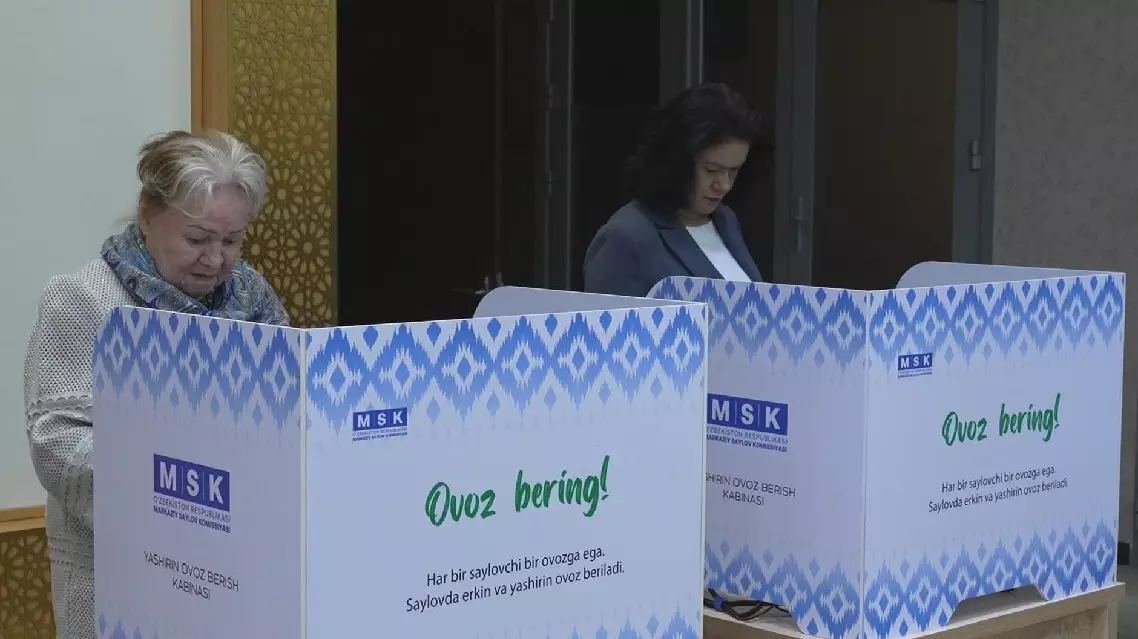
Uzbekistan holds parliamentary and local elections
Visiting Chinese Foreign Minister Wang Yi said Saturday China is willing to work with Lesotho to strengthen exchanges on governance experience, enhance coordination in multilateral affairs, and advance the China-Lesotho strategic partnership.
Wang, also a member of the Political Bureau of the Communist Party of China Central Committee, made the remarks when meeting with Lesotho Prime Minister Sam Matekane in the capital of Lesotho.
During the meeting, Wang congratulated Lesotho on the 60th anniversary of its independence this year, and spoke highly of Lesotho government's efforts to prioritize economic development and steer the African country onto a path of sustainable growth. Since the Beijing Summit of the Forum on China-Africa Cooperation (FOCAC) in 2024, the two sides have advanced cooperation under the 10 partnership action plans unveiled at the summit, successfully implementing a number of key projects to effectively promote Lesotho's development and revitalization, Wang said.
China stands ready to work with Lesotho to strengthen exchanges on governance experience, enhance coordination in multilateral affairs, and push for greater development of the China-Lesotho strategic partnership, he added.
Calling on the two sides to firmly support each other, Wang said that China will accelerate the implementation of its zero-tariff policy for African countries, including Lesotho, expand bilateral trade, investment and industrial cooperation, facilitate broader access of Lesotho's specialty products to the Chinese market, and continue to support Lesotho's national development.
China will continue to stand firmly with African countries, uphold justice for the Global South, including Lesotho, oppose unilateralism and acts of bullying, and work together to build a community with a shared future for humanity, Wang said.
On his part, Matekane said during the meeting that Lesotho cherishes its friendship with China and the strategic partnership between the two countries, and expressed gratitude for China's valuable support for the development of African countries, including Lesotho.
Lesotho firmly adheres to the one-China principle and resolutely supports China in safeguarding its core interests, he said, noting that his country stands ready to strengthen strategic mutual trust with China, expand people-to-people exchanges, jointly implement the outcomes of the FOCAC Beijing Summit, and deepen cooperation in areas such as infrastructure, manufacturing and energy.
Matekane stressed that China's zero-tariff policy for African products will inject new impetus into Lesotho's development. He also expressed Lesotho's willingness to strengthen solidarity and cooperation with China on multilateral platforms such as BRICS to jointly address global challenges.
On the same day, Wang also held talks with Lejone Mpotjoana, minister of foreign affairs and international relations of Lesotho.
China, Lesotho to strengthen exchanges, advance cooperation