Public urged to lead active and healthy lifestyle in support of World Stroke Day
In support of World Stroke Day, the Department of Health (DH) today (October 29) appealed to members of the public to lead an active and healthy lifestyle to guard against stroke.
World Stroke Day has been designated on October 29 each year by the World Stroke Organization to increase awareness and drive actions on strokes around the world.
A spokesman for the DH said that stroke is one of the major causes of ill health, long-term disability and death. Every year, strokes attack over 12 million people worldwide. In Hong Kong, stroke is the fourth commonest cause of death with 3 048* registered deaths in 2023.
A stroke happens when the blood supply to part of the brain is interrupted, or when the blood vessel of the brain ruptures leading to a haemorrhage. High blood pressure (HT) is the largest single risk for stroke, followed by a high body mass index and high blood glucose.
"Physical activity can modify these common biomedical risk factors of stroke. Epidemiological studies support a beneficial effect of engaging in a sufficient amount of physical activities on stroke risk, whether it is simply walking at a faster pace, bicycling or leisure pursuits," the spokesman added.
Stroke risk can be reduced by adhering to an active and healthy lifestyle. Members of the public are advised to engage in at least 150 to 300 minutes of moderate-intensity aerobic physical activity or an equivalent amount and intensity of physical activity throughout the week, and limit the amount of time spent being sedentary and replace sedentary time with physical activity of any intensity including a light-intensity physical activity. To further reduce the risk of having a stroke, members of the public should also maintain an optimal body weight and waist circumference, reduce salt intake and eat a balanced diet, avoid smoking and refrain from alcohol drinking to guard against stroke.
With an aim to advocate members of the public to increase their physical activities, the DH launched the "10,000 Steps a Day" Campaign in 2022 to encourage adults to gradually increase their daily step goal to 10 000 based on their own physical conditions, abilities, pace and individual circumstances. The campaign has entered its third phase this year, and this year's event coincides with the 75th anniversary of the founding of the People's Republic of China. The Health Bureau and the DH will for the first time partner with Greater Bay Area (GBA) Mainland cities to jointly promote walking to mark the celebration. In Hong Kong, a walking challenge with the slogan of "Shall We Walk and Talk" will be held through the "e+Life Platform" on November 1 to inspire the public to walk with friends. Participants can use a step-counting mobile application to record their step counts during the challenge period and synchronise the data with the "e+Life Platform". For details, please visit the event website of the Walking Challenge (www.10000stepsaday.hk/?lang=en) and the thematic website of "e+Life Platform" (app.ehealth.gov.hk/elife-overview).
The Primary Care Commission has established the District Health Centre (DHC)/DHC Express across 18 districts and has been proactively promoting the Life Course Preventive Care Plan. The DHC healthcare team would work hand in hand with Family Doctors to help clients to develop customised healthy living plans (including smoking cessation, balance diet, regular physical activity and weight management) based on individuals' health needs at different stages of life, enhancing the public's capability to take care of their own health and prevent strokes.
Apart from active and healthy living, early diagnosis and proper management of hypertension and diabetes is another key to lowering the risk of stroke. The Government launched the Chronic Disease Co-Care Pilot Scheme (CDCC Pilot Scheme) in November 2023, to subsidise Hong Kong residents aged 45 or above with no known medical history of HT or diabetes (DM) to undergo HT and DM screening services in the private healthcare sector. They can then receive long-term follow-up care in the community provided by Family Doctors, DHC /DHC Express, and other healthcare services. For more details, members of the public may browse the dedicated website of the CDCC Pilot Scheme (www.primaryhealthcare.gov.hk/cdcc/en).
In addition to promoting stroke prevention measures, the Government is committed to enhancing services for stroke treatment. The Chief Executive announced in this year's Policy Address that the Hospital Authority would set up the first stroke centre in accordance with the national accreditation standards at a public hospital of Hong Kong. Through cross-specialty and patient-centred integrated neuromedicine services, it aims to enhance the efficiency of diagnosing acute strokes, expedite treatment and improve patient care, thereby lowering mortality rates, hospital bed days and readmission rates as well as improving post-stroke rehabilitation.
The Government will continue to step up efforts in enhancing public awareness about the importance of active and healthy living in the area of stroke prevention and working in close partnership with community partners to build a health-enhancing environment. For details, please visit the thematic website at www.change4health.gov.hk/en/index.html.
*Provisional figure

Update on chikungunya fever
The Centre for Health Protection (CHP) of the Department of Health announced that, as of 5pm today (January 4), no new cases of chikungunya fever (CF) had been recorded.
Latest surveillance data
------------------------------
Hong Kong has recorded a total of 82 confirmed CF cases last year. Among them, 11 were local cases, and the rest were imported cases.
Since the beginning of 2025, and as of December 10, 2025, a total of 502 264 CF cases and 186 CF-related deaths have been reported in over 40 countries/territories. Cases have been reported in the Americas, Africa, Asia, and Europe. Although the northern hemisphere has entered the winter season, temperatures in subtropical and some temperate regions remain elevated due to climate change, creating favourable conditions for mosquito breeding. In addition, CF outbreaks continue to occur in many countries worldwide. The risk of imported cases persists. Members of the public should check the situation of the destinations before travelling abroad, especially when travelling to Southeast Asian countries.
Government's comprehensive follow-up actions
-----------------------------------------------------
Given that some local cases of CF have visited the Tsing Yi Nature Trails or the surrounding area in November last year, the trails are currently closed until further notice. Relevant government departments continue to conduct large-scale mosquito control and prevention efforts along the trails, and the CHP appeals to the public not to enter the area in order to reduce the risk of contracting CF and to avoid exposure to chemicals or interfering with the mosquito control operations. Since the confirmation on December 10, 2025, of a case involving a person who had visited the Tsing Yi Nature Trails on November 30, 2025, no further local cases have been recorded to date. The CHP continues to urge individuals who have recently hiked along the Tsing Yi Nature Trails to seek medical attention as soon as possible if they develop relevant symptoms and to call the enquiry hotline (Tel: 2125 2373), which operates from 9am to 6pm.
The Food and Environmental Hygiene Department (FEHD) has been continuously conducting intensive fogging operations to eliminate adult mosquitoes along the Tsing Yi Nature Trails and the surrounding area. At suitable locations, large ultra-low volume foggers have been deployed, and a robot dog is being put on trial to enhance operational effectiveness. The FEHD has also set up new mosquito trapping devices, cleared discarded containers and garbage that could cause stagnant water, and applied larvicide oil or larvicides in areas with stagnant water that cannot be removed immediately. The FEHD has been collaborating with the Kwai Tsing District Office, the Lands Department and the Drainage Services Department to strengthen efforts in eliminating potential mosquito breeding sites along the Tsing Yi Nature Trails. Pamphlets have been distributed to hikers in the area, urging citizens to be vigilant against mosquito infestations and take personal protective measures. The FEHD has also held meetings of the interdepartmental task forces on anti-mosquito work across districts to discuss the latest developments regarding the situation and plan accordingly to co-ordinate relevant departments and stakeholders in strengthening mosquito prevention and control measures in areas under their purview.
Continuously strengthening prevention and control
---------------------------------------------------------
The FEHD and relevant departments have comprehensively enhanced the mosquito control operations in Hong Kong since July last year, and this has continued. Among these, the FEHD has conducted vector investigations and targeted mosquito control operations against the imported and local cases. In light of the local case, the FEHD has immediately conducted follow-up actions, including:
carrying out intensive fogging in scrubby areas within a 250-metre radius of the relevant locations to kill adult mosquitoes;
carrying out inspections of the locations, removing stagnant water, applying insecticides and disposing of abandoned water containers every week with a view to preventing mosquito breeding; and
enhancing public education efforts through organising health talks, setting up mobile education stations, and distributing publicity leaflets.
The abovementioned measures will be continued. Furthermore, the Government will further enhance the mosquito control efforts in addition to the existing measures.
Preventive measures to be taken by the public
----------------------------------------------------
Members of the public should use DEET-containing insect repellents or other effective active ingredients properly to prevent mosquito bites, but the following precautions should be taken when using them:
read the label instructions carefully first;
apply right before entering an area with a risk of mosquito bites;
apply on exposed skin and clothing;
use DEET of up to 30 per cent for pregnant women and up to 10 per cent for children (for children who travel to countries or areas where mosquito-borne diseases are endemic or epidemic and where exposure is likely, those aged 2 months or above can use DEET-containing insect repellents with a DEET concentration of up to 30 per cent);
apply sunscreen first, then insect repellent;
reapply only when needed and follow the instructions; and
in addition to DEET, there are other insect repellents available on the market containing different active ingredients, such as IR3535 and picaridin. When using any insect repellent, the public should follow the usage instructions and precautions on the product label.
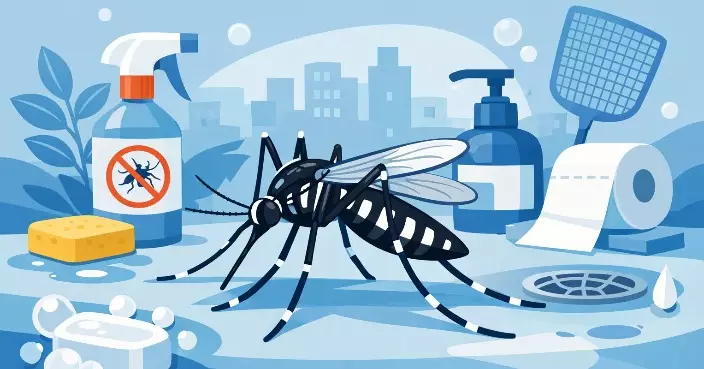
The FEHD also appeals to members of the public to continue to stay alert and work together to carry out mosquito prevention and control measures early, including inspecting their homes and surroundings to remove potential breeding grounds, changing water in vases and scrubbing their inner surfaces, removing water in saucers under potted plants at least once a week, and properly disposing of containers such as empty cans and lunch boxes. The FEHD also advises members of the public and property management agencies to keep drains free of blockage and level all defective ground surfaces to prevent the accumulation of water. They should also scrub all drains and surface sewers with an alkaline detergent at least once a week to remove any mosquito eggs.
The public should call 1823 in case of mosquito problems, and may visit the following pages for more information: the CF page of theCHPand theTravel Health Service, the latestTravel Health News,tips for using insect repellents, and the CHPFacebook Page,Instagram AccountandYouTube Channel, and also theMosquito Prevention and Control dedicated pageof the FEHD.
Source: AI-found images