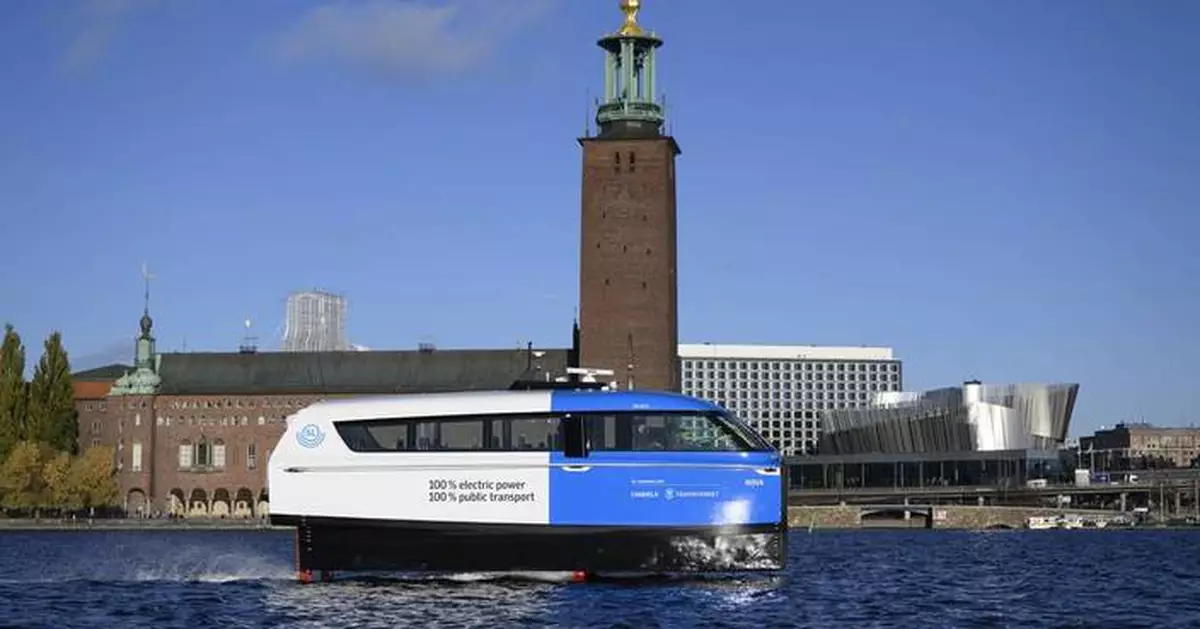
STOCKHOLM (AP) — A high-tech electric ferry service began operating in Stockholm Tuesday, offering commuters a low-carbon way to zip through the waterways of the Swedish capital, which is built on 14 islands.
In what Stockholm claimed as a world first, 25 commuters in the suburb of Ekero boarded the Nova, a hydrofoil ferry powered by electric motors. The ferry skimmed about 1 meter (3 feet) above the water and covered 15 kilometers (9 miles) to reach Stockholm’s City Hall in just 30 minutes. The morning commute on the regular diesel-powered ferry line takes 45 minutes without stops.
“We are doing this to show the way in the green transition at sea,” said Gustav Hemming, the city councilor in charge of climate and infrastructure. The aim of the nine-month pilot project was to “make more people park their cars and buy a (public transportation) card instead.”
Gustav Hasselskog, chief executive of the electric boat manufacturer Candela, called it "a paradigm shift for urban transport and a revival of our waterways.”
He said the Nova was the first of Candela’s new P-12 model to enter service. Its computer-controlled hydrofoil wings lift the hull above water, reducing energy consumption by 80% compared to conventional vessels by cutting water friction.
“Conventional ships haven’t evolved much in 100 years and are among the least energy-efficient transport modes, only rivaled by a battle tank,” Hasselskog said in a statement.
As of Tuesday, the Nova becomes part of the ferry fleet operated by Stockholm’s public transport provider SL.
The vessel is designed to carry 25 passengers, including one wheelchair space. There are speed limits on part of the route but on open water there is no restriction. The hydrofoil has a cruising speed of around 25 knots (46 kph or 29 mph) and can reach a maximum speed of 30 knots (56 kph or 35 mph) — considerably faster than other electric passenger ferries. It achieves this with carbon fiber hydrofoil wings that lift the boat out of the water, reducing drag.
An added benefit is that the vessel is exempt from the 12-knot speed limit in Stockholm because it leaves no wake — waves made by a boat’s displacement through water that increase with speed and could swamp other vessels or erode the shoreline.
Candela says its technology reduces the energy per passenger-kilometer by 95% compared with the diesel ferries in the picturesque Stockholm archipelago.
The vessel can operate in waves of up 2 meters (6.5 feet).
Candela hopes that as well as Stockholm, cities like San Francisco, New York and Venice will lead the electrification of waterborne public transport.
Stockholm has approximately 70 public transport vessels which use fossil fuels. There were around 6.2 million public transport boat journeys in the Stockholm region in 2022, and while boat traffic remains a small part of the entire public transit system, it is the fastest-growing mode of public transport after the COVID-19 pandemic.
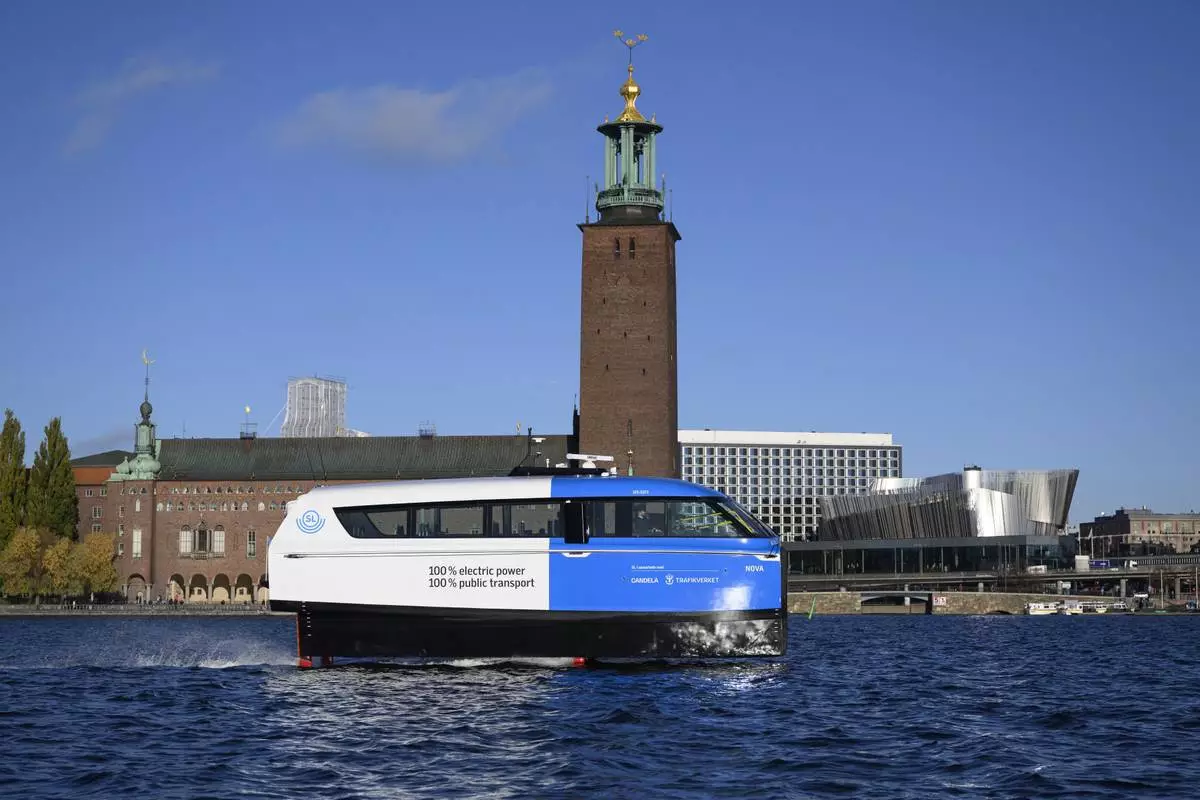
The electric hydrofoil ferry Nova moves during testing, with Stockholm City Hall in the background, on Friday Oct. 25 2024, in Stockholm. (Henrik Montgomery/TT News Agency via AP)
SOUTHAMPTON, N.Y. (AP) — The smashed-up locker at Oakmont last year is as much a part of Wyndham Clark’s resume as the U.S. Open title he won two years before that.
Such is life in a world teeming with cell phone cameras and viral video. Such is life in professional golf, a sport built on managing failure and harnessing emotions — and where success one week, or one year, doesn’t always carry over to the next.
Clark’s spot at the top of the U.S. Open leaderboard after his second round at Shinnecock on Friday brought up expected reminders of his emotion-filled journey through a sport — a life, really — that Clark himself acknowledged nobody truly ever masters.
“I was on top of the world in my game, at least when I won the U.S. Open, and then had some good years,” the 32-year-old said. “Then, next thing you know, I’m apologizing for breaking a locker."
Much as tennis great John McEnroe will always have “You cannot be serious!” alongside the seven grand slam singles titles he won in another of sports' biggest pressure cookers, Clark will always have the broken locker at Oakmont. He will always have the underhanded fling of the driver that smashed an advertising board and snapped off the clubhead at the PGA Championship, a few months before the locker debacle.
Because of that, he’ll probably also always have his share of detractors and critics — people watching for his next burst of brilliance on the golf course, but also waiting for the next big blowup.
“I’m fierce, competitive, love the game, respect the game, and I just had a bad moment,” Clark said. “Hopefully, I can win those people back.”
His breakthrough three years ago at LA Country Club was tinged with tears and stories of the personal growth Clark had to make to reach that point.
Much of it had to do with the emotional residue left from his mom’s death in 2013 — a family tragedy that he conceded had left him spiraling.
“I didn’t show any emotion off the course," Clark explained after his victory that day. “But when I was on the golf course, I couldn’t have been angrier.”
The easy way for the armchair psychologists (and sports pundits) to explain things after that win was to conclude that Clark’s victory proved he had harnessed the emotion, turned the page and beaten back all the demons.
It’s never that simple.
“For any of us, this is a process,” Clark’s sports psychologist, Julie Elion, wrote in her new book ’Mastering Your Mental Game.” “Golfers don’t reach the top and then stay there forever.”
Clark followed the U.S. Open win with 18 months of good golf, including a win at Pebble Beach. Last year was something different — he only had two top-10 finishes, did not make the FedEx Cup playoffs and was nowhere to be seen at the Ryder Cup.
“Mastering our mental game in golf or reaching a state of growth or self-improvement in life isn’t always a permanent condition,” Elion wrote. “It takes more work over more years, and there are frequently hills and valleys.”
At Shinnecock, where Clark will head into the weekend at 7-under par, four shots ahead of Xander Schauffele and three others, he finds himself back on the rise again. He recently took to social media to tell the world he had a new girlfriend, Emily Tanner, who held hands with him as they exited the 18th green after Friday’s round of 1-under 69.
Four weeks ago, Clark won the Byron Nelson for his first victory in 28 months.
“I kind of looked at it objectively and took a bird’s-eye view on it and said, ‘OK, I’m not hitting it good off the tee, I’m not putting as good as I was,’” he explained about his turnaround. “And I said, ‘All right, I’ve got to attack that.’”
He hired a swing coach, Pat Coyner at Cherry Hills, near where Clark grew up outside of Denver.
He's been hitting his driver straighter of late. His iron game has improved dramatically (up 110 spots in the analytic-driven stat: strokes gained on approach shots). He found a new putter, which has helped him dial in dramatically over the past four weeks, during which he also finished third at the Memorial and played in the final group last Sunday at the Canadian Open.
Never more did it look in sync than Friday on No. 18, where he sank a 35-footer to finish the day in red numbers.
Now, a chance for another breakthrough. With a win, he would celebrate again. But he knows as well as anyone that it wouldn't mean the work — both on and off the course — is behind him.
“I just think with the mental game there’s ebbs and flows,” Clark said. “If you think of it as climbing Everest, sometimes you go up, sometimes you have to go down to go back up. I think that’s kind of what happens both on the golf course and off the golf course. Right now I’m trending back up, which is nice.”
AP golf: https://apnews.com/hub/golf
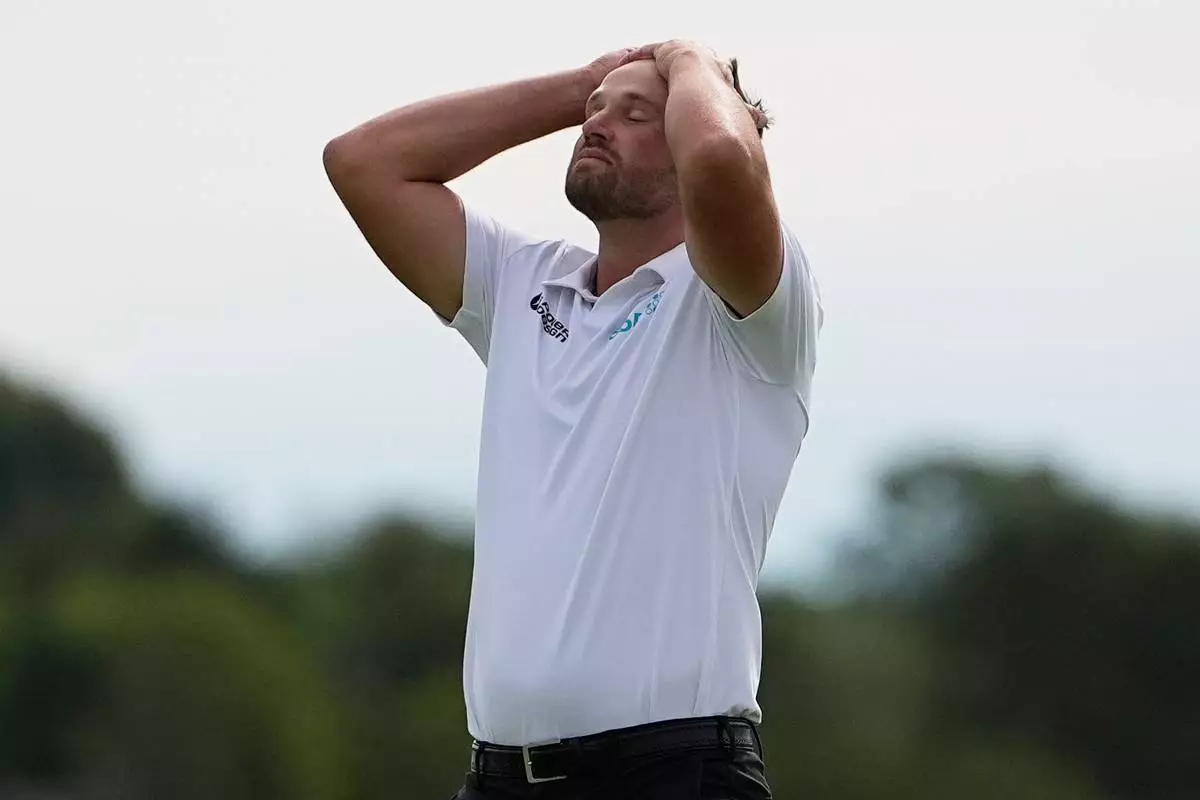
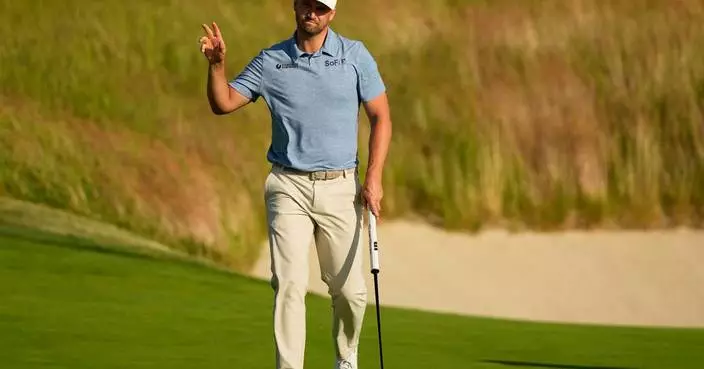
Wyndham Clark reacts after missing a putt on the 14th hole during the second round of the U.S. Open golf tournament at Shinnecock Hills Golf Club in Southampton, N.Y., Friday, June 19, 2026.(AP Photo/Gerald Herbert)
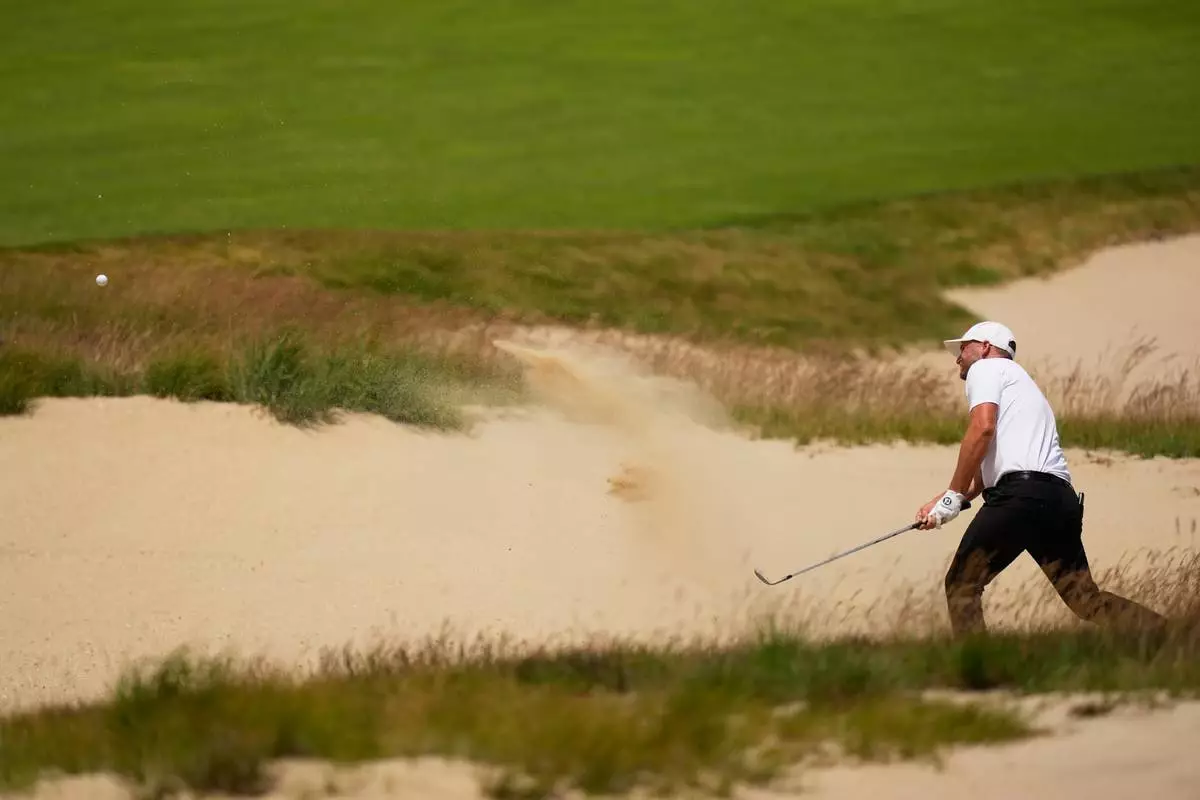
Wyndham Clark hits from the bunker on the 16th hole during the second round of the U.S. Open golf tournament at Shinnecock Hills Golf Club in Southampton, N.Y., Friday, June 19, 2026.(AP Photo/David J. Phillip)
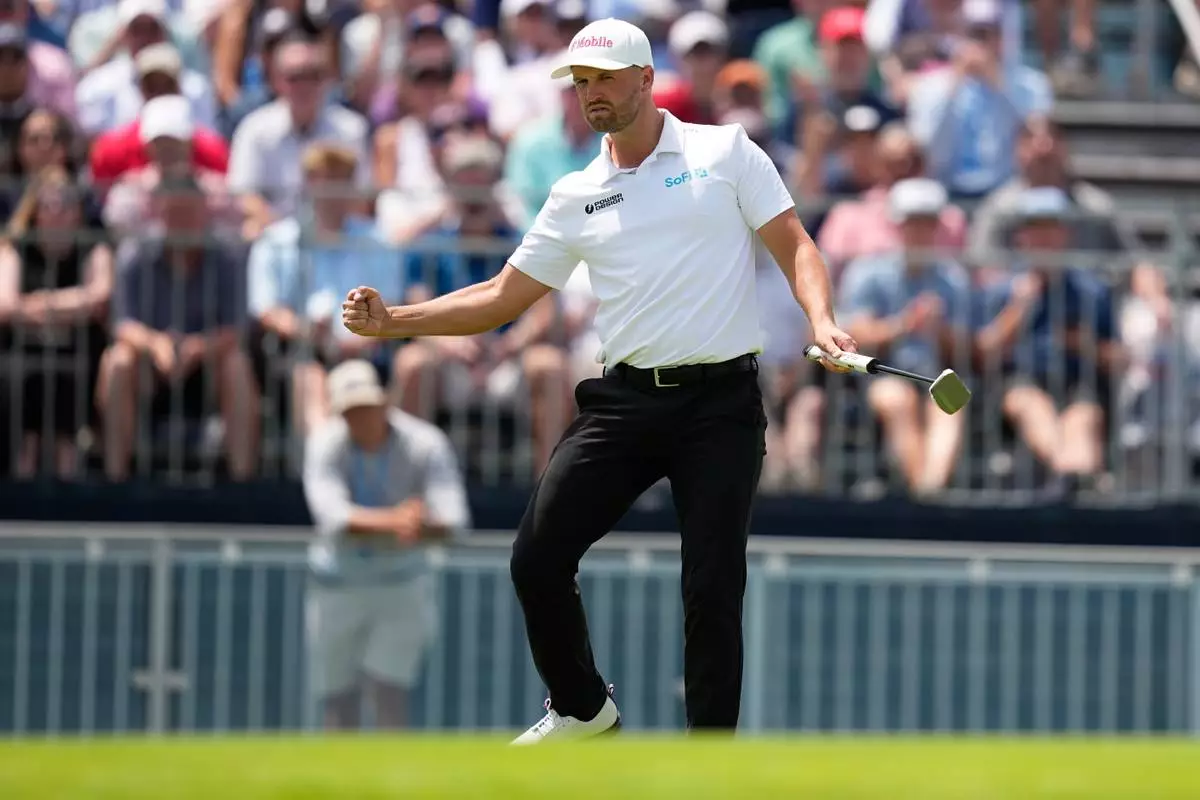
Wyndham Clark celebrates after a birdie on the 12th hole during the second round of the U.S. Open golf tournament at Shinnecock Hills Golf Club in Southampton, N.Y., Friday, June 19, 2026.(AP Photo/David J. Phillip)