China's homegrown regional jetliner, the ARJ21, successfully completed its longest commercial route flight Tuesday, landing in the southern Chinese city of Guangzhou after taking off from Manado, Indonesia. Flight 8B167, operated by the Indonesian airline TransNusa, landed at Guangzhou Baiyun International Airport to a ceremonial water salute, marking the inaugural flight on the airline's Manado-Guangzhou route and the longest commercial flight flown by the ARJ21.
This milestone also represents the first China-bound international flight operated by an overseas airline using the Chinese aircraft, according to the Commercial Aircraft Corporation of China (COMAC).
"We made it. It's the historical longest flight ever for the ARJ21. It [flew] not only in China, but it's outside China. So we go by the specification. The ARJ21 has great specifications of a regional aircraft. We will get more and more aircraft from China to use in Indonesia as now COMAC has good technology and the market need is there," said Leo Budiman, vice president of TransNusa.
Initially, the Manado-Guangzhou route will see flights arriving in Guangzhou on Tuesdays, Thursdays and Sundays and departing on Mondays, Wednesdays and Fridays. Starting from the end of November, the route will increase to daily service, all operated by TransNusa of Indonesia using the ARJ21 aircraft.
TransNusa has received three ARJ21 aircraft from COMAC since December 2022 and opened eight routes with the model.
The ARJ21, China's first regional jetliner designed in compliance with international civil aviation standards and holding complete proprietary intellectual property rights, began development in 2002, made its maiden flight in Shanghai in 2009, and entered commercial service with Chengdu Airlines in June 2016. To date, 148 ARJ21 jets have been delivered to 12 different clients.
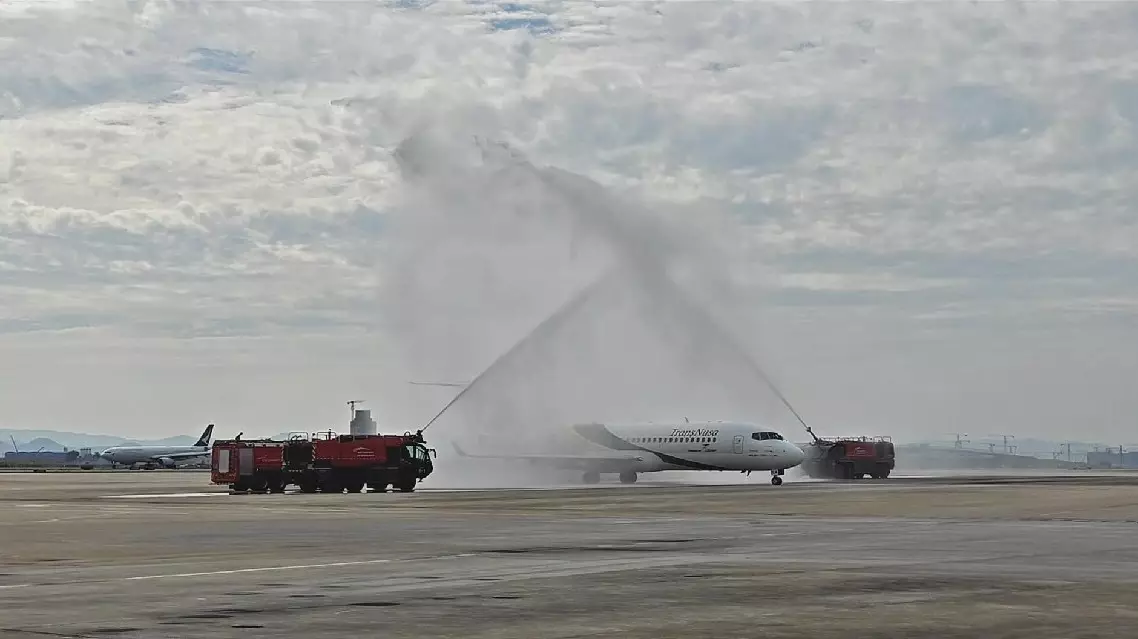
China's homegrown jetliner completes its longest commercial route flight
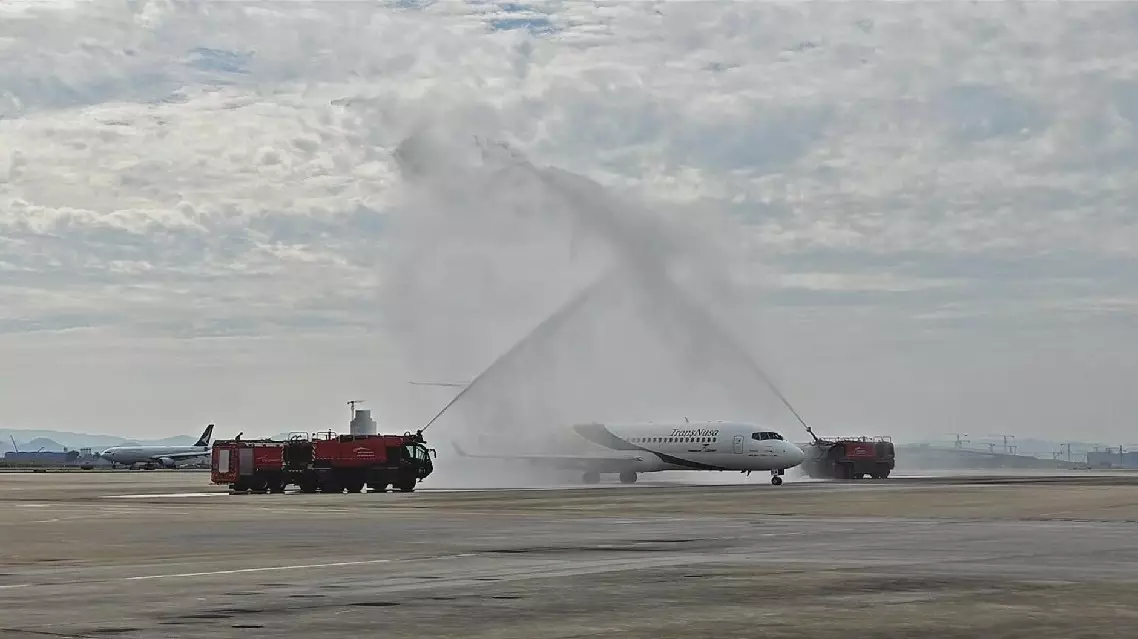
China's homegrown jetliner completes its longest commercial route flight
China will roll out a series of targeted measures to stabilize investment and unlock greater space for private capital, an official said on Thursday.
Chen Changsheng, deputy director of the State Council Research Office who participated in the drafting of this year's Government Work Report, made the statement at a press briefing held in Beijing.
He noted that China will leverage the guiding role of government funding and the driving effect of major projects to shore up investment.
Total government investment this year is set to exceed five trillion yuan (about 725 billion U.S. dollars), which will come from central budget investment and local government special bonds for major national strategies and security capacity building projects and equipment upgrades. Meanwhile, 109 major projects have been planned in the draft outline of the 15th Five-Year Plan (2026-2030).
China will also stimulate investment by opening up more application scenarios for businesses.
On the traditional front, a long-term mechanism will be improved to encourage private enterprises to participate in major national projects. For emerging sectors, China will further open scenarios in biomedicine, aerospace, and the low-altitude economy.
"Low-altitude economy has developed rapidly in recent years, with sound applications seen in fields such as agriculture, forestry plant protection, as well as surveying and inspection. Going forward, we will accelerate the opening of airspace resources and streamline approval procedures for low-altitude flights. This will unlock new scenarios including low-altitude logistics and urban management. Similar new opportunities can also be found in service robots and other sectors, all of which will create new space for private investment," Chen said.
By deepening reforms to further unlock investment potential, China will ease market access in the service sector, speed up revisions to the Bidding Law and the Government Procurement Law, and advance price reforms to broaden investment access for more enterprises.
"We will see a new round of investment potential unleashed. Major projects including the national water network, a new round of power grid upgrades, new generation communication networks, and computing power networks will drive massive investment, including demand from urban development. In addition, the campaign this year to expand and upgrade the service sector and the development of emerging industries will further expand space for private investment," Chen noted.
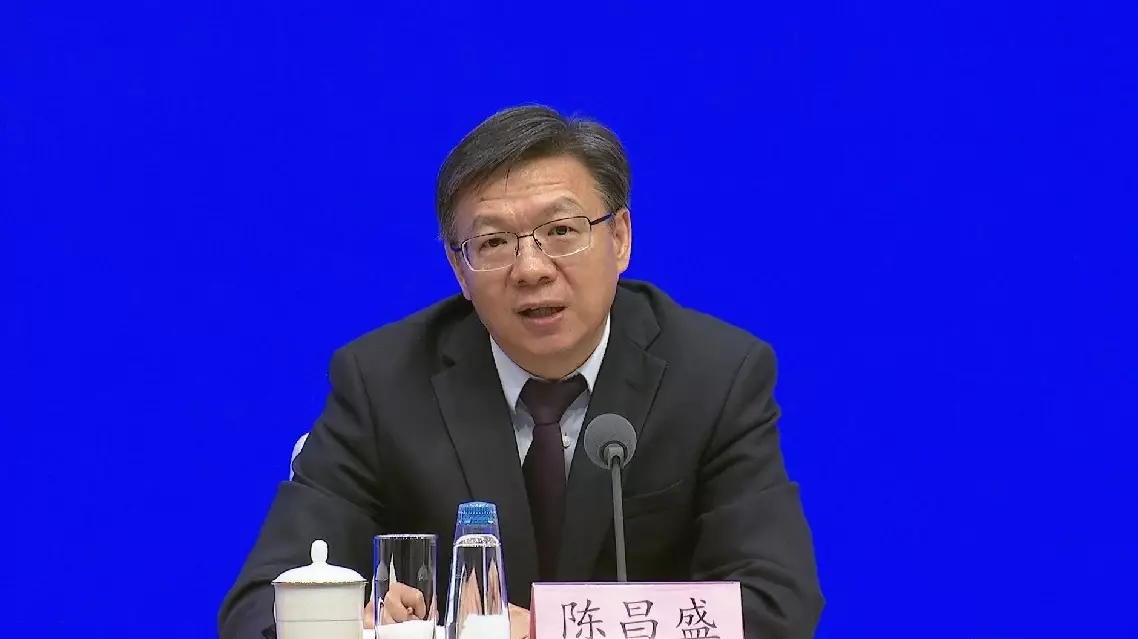
China to take measures to boost investment, expand space for private investment in 2026: official