LONDON (AP) — U.K. Treasury chief Rachel Reeves conceded Thursday that wages may rise by less than previously thought as a direct result of her budget decision to increase a tax that businesses pay for their employees.
On Wednesday, Reeves raised taxes by around 40 billion pounds ($52 billion) to plug a hole she claims to have identified in the public finances and fund cash-starved public services, in a budget that could set the political tone for years to come.
Click to Gallery
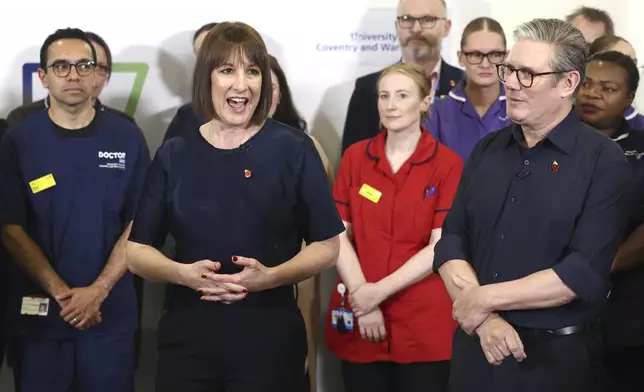
Britain's Prime Minister Keir Starmer and Chancellor Rachel Reeves speak with members of staff, during a visit to University Hospital Coventry and Warwickshire, in Coventry, England, Thursday, Oct. 31, 2024. (AP Photo/Darren Staples, pool)
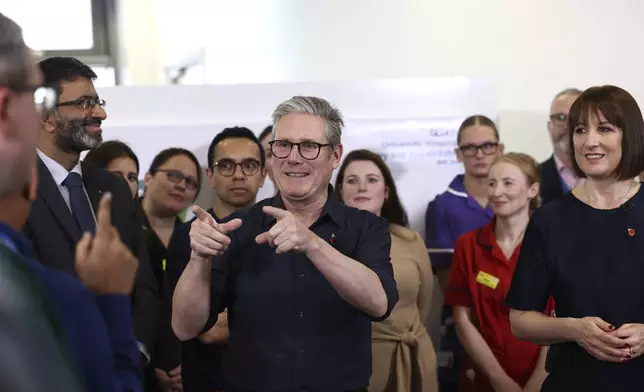
Britain's Prime Minister Keir Starmer and Chancellor Rachel Reeves speak with members of staff, during a visit to University Hospital Coventry and Warwickshire, in Coventry, England, Thursday, Oct. 31, 2024. (AP Photo/Darren Staples, pool)
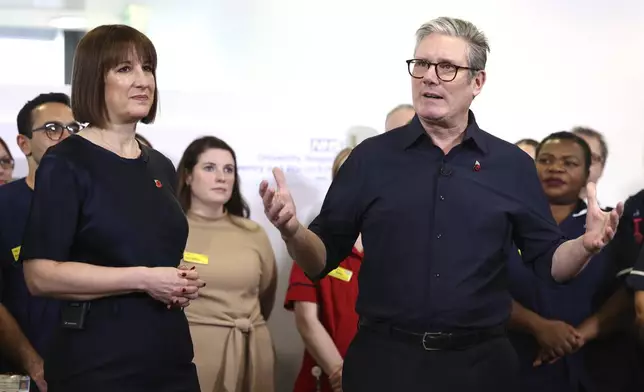
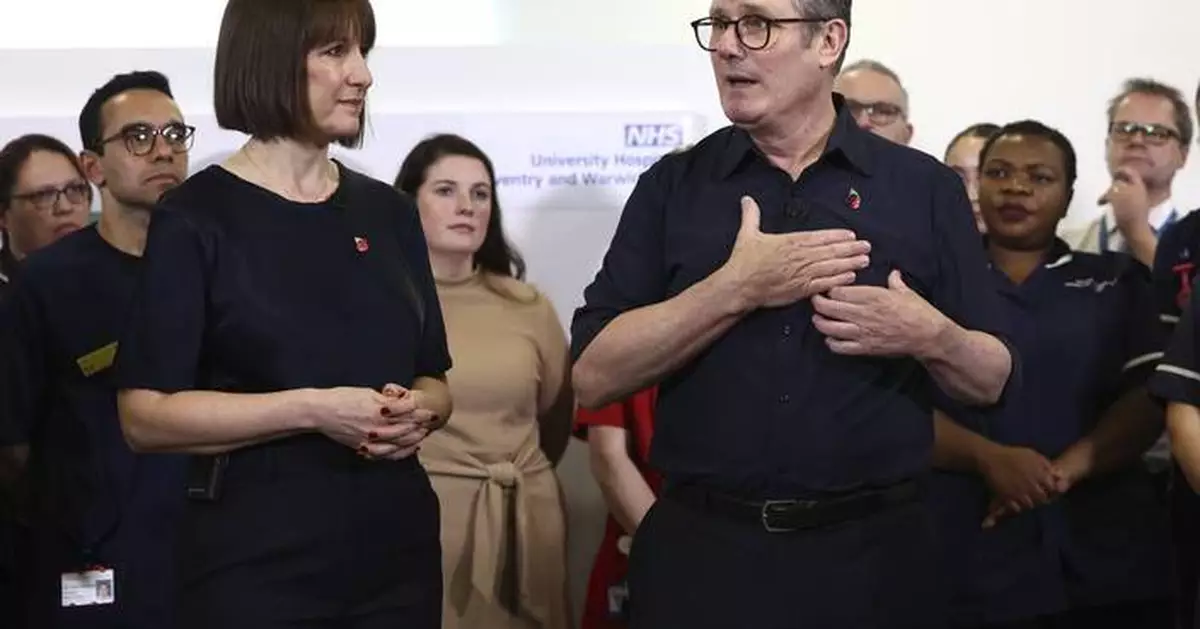
Britain's Prime Minister Keir Starmer and Chancellor Rachel Reeves speak with members of staff, during a visit to University Hospital Coventry and Warwickshire, in Coventry, England, Thursday, Oct. 31, 2024. (AP Photo/Darren Staples, pool)
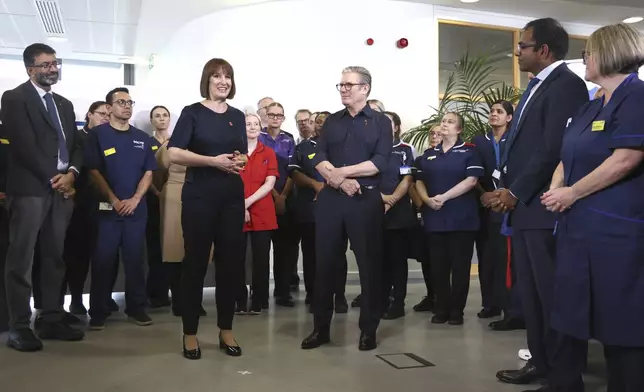
Britain's Prime Minister Keir Starmer and Chancellor Rachel Reeves with members of staff, during a visit to University Hospital Coventry and Warwickshire, in Coventry, England, Thursday, Oct. 31, 2024. (AP Photo/Darren Staples, pool)
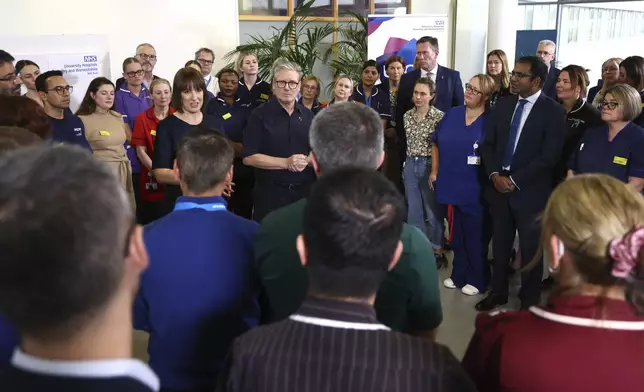
Britain's Prime Minister Keir Starmer and Chancellor Rachel Reeves speak with members of staff, during a visit to University Hospital Coventry and Warwickshire, in Coventry, England, Thursday, Oct. 31, 2024. (AP Photo/Darren Staples, pool)
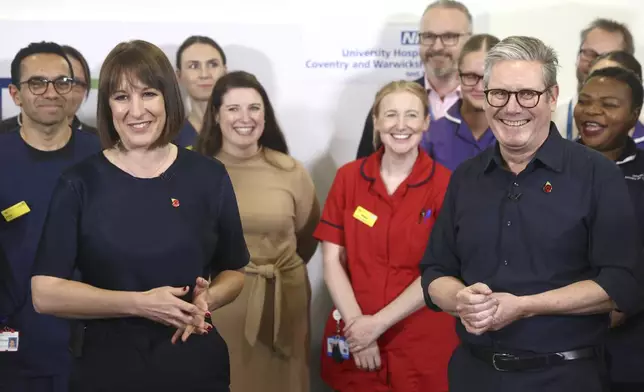
Britain's Prime Minister Keir Starmer and Chancellor Rachel Reeves with members of staff, during a visit to University Hospital Coventry and Warwickshire, in Coventry, England, Thursday, Oct. 31, 2024. (AP Photo/Darren Staples, pool)
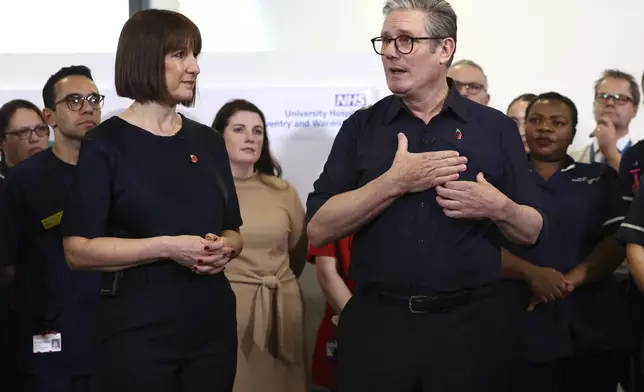
Britain's Prime Minister Keir Starmer and Chancellor Rachel Reeves speak with members of staff, during a visit to University Hospital Coventry and Warwickshire, in Coventry, England, Thursday, Oct. 31, 2024. (AP Photo/Darren Staples, pool)
The biggest single measure — worth some 25 billion pounds in five years — was an increase in the national insurance contributions employers pay in addition to the salaries of their workers. The levy, which was originally designed to pay for benefits and help fund the state-owned National Health Service but which is really absorbed into the overall tax take, will also be paid from a lower salary level.
Reeves admitted that the changes may prompt employers to pass on the additional financial burden by weighing down on wages.
“I recognize there will be consequences,” Reeves told the BBC. “It will mean that businesses will have to absorb some of this through profit and it is likely to mean that wage increases might be slightly less than they otherwise would have been.”
Her admission came as a widely respected British economic think tank warned that lower than anticipated wages may mean the tax raises more than thought, adding that Reeves may have to raise taxes again in coming years in order to support public services.
In its traditional day-after assessment of the budget, the Institute for Fiscal Studies said some of the projections looked “unrealistic,” particularly on public spending.
The IFS said the government will potentially need to raise up to another 9 billion pounds the year after next to avoid cutting spending in some departments.
Although day-to-day spending is set to rise rapidly after Wednesday’s Budget, increasing by 4.3% this year and 2.6% next year, it then slows down to just 1.3% per year from 2026.
IFS director Paul Johnson said keeping to a 1.3% increase will be “extremely challenging, to put it mildly.”
The center-left Labour party won a landslide election victory July 4 after promising to end years of turmoil and scandal under successive Conservative governments, get Britain’s economy growing and restore frayed public services. But the scale of the measures announced on Wednesday by Reeves exceeded Labour’s cautious general election campaign.
During the election, Labour said it would not raise taxes on “working people” — a loose term whose definition has been hotly debated in the media for weeks. Though Reeves did not increase taxes on income or sales, the Conservatives said hiking taxes on employers was a breach of Labour’s election promise and would lead to lower wages.
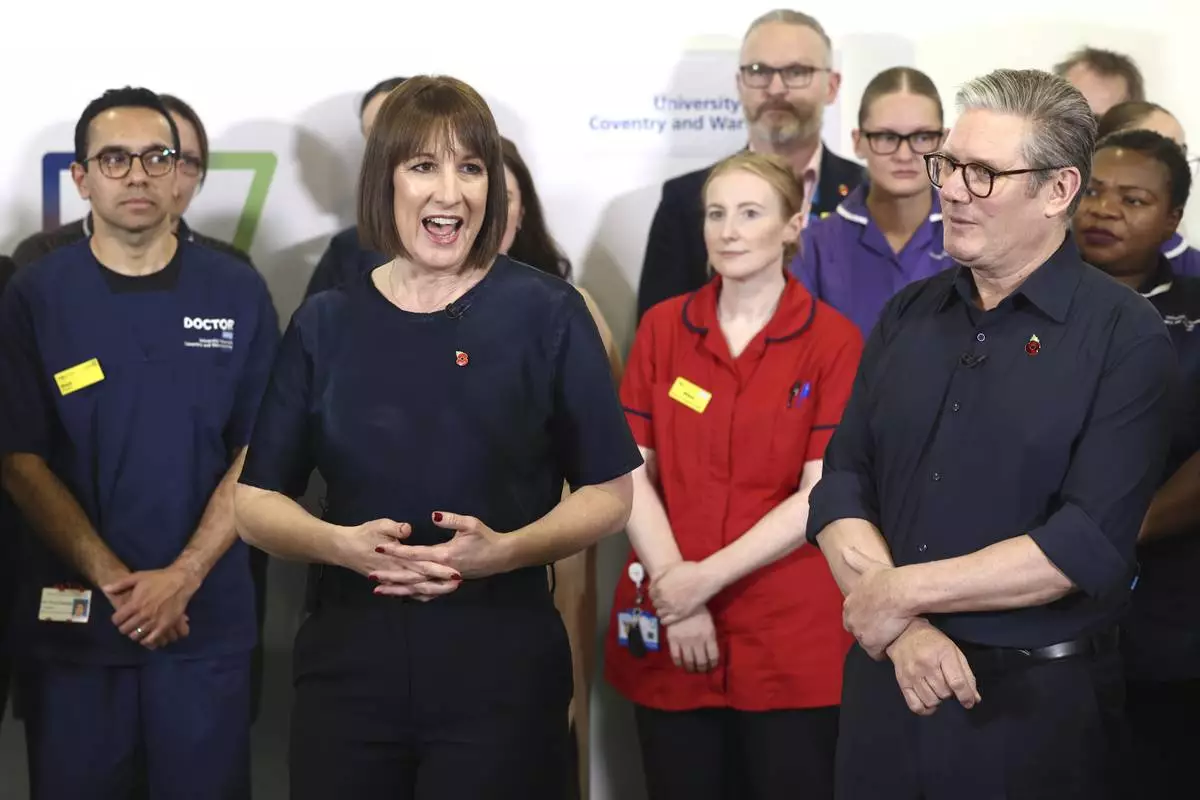
Britain's Prime Minister Keir Starmer and Chancellor Rachel Reeves speak with members of staff, during a visit to University Hospital Coventry and Warwickshire, in Coventry, England, Thursday, Oct. 31, 2024. (AP Photo/Darren Staples, pool)
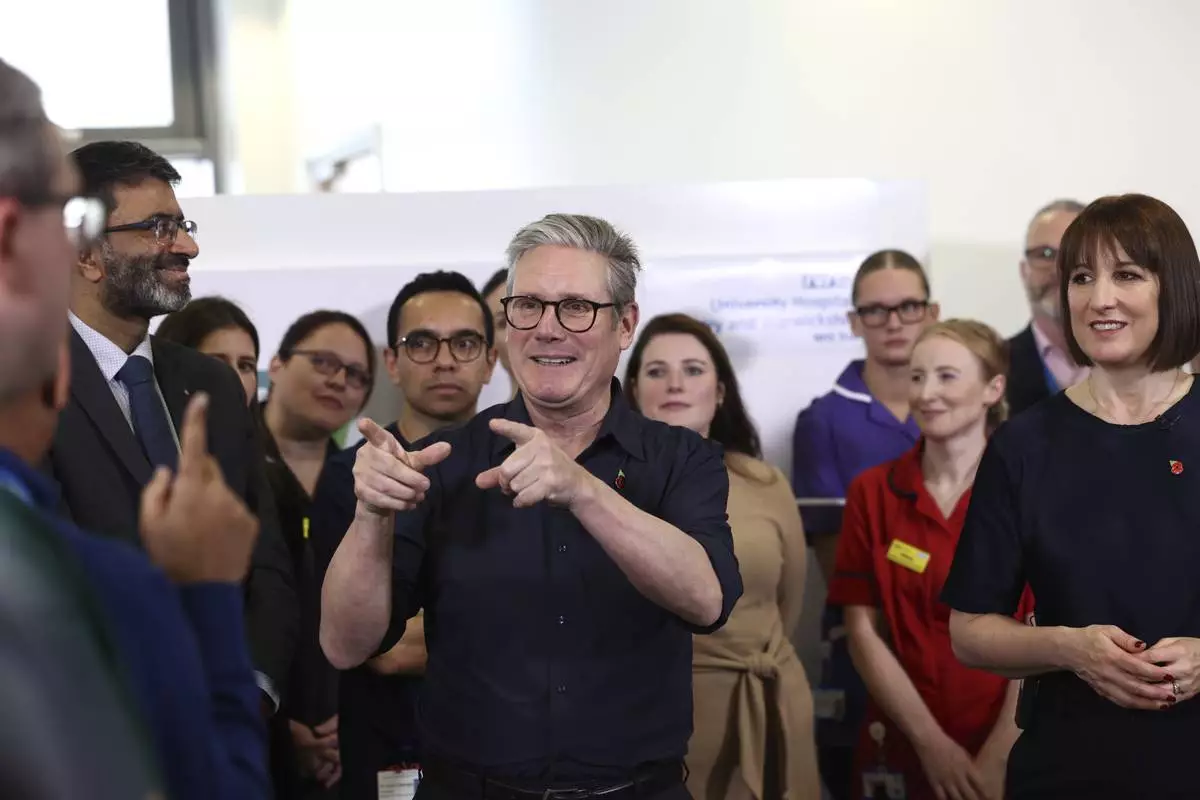
Britain's Prime Minister Keir Starmer and Chancellor Rachel Reeves speak with members of staff, during a visit to University Hospital Coventry and Warwickshire, in Coventry, England, Thursday, Oct. 31, 2024. (AP Photo/Darren Staples, pool)
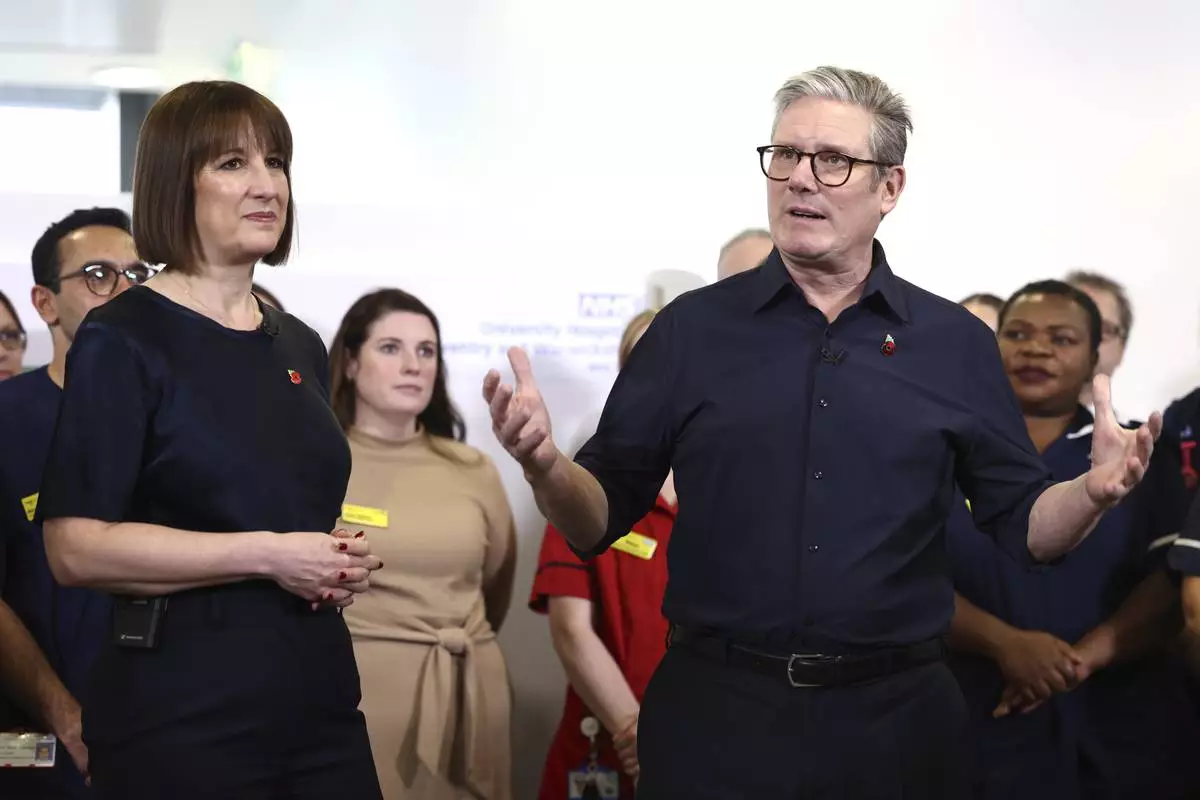
Britain's Prime Minister Keir Starmer and Chancellor Rachel Reeves speak with members of staff, during a visit to University Hospital Coventry and Warwickshire, in Coventry, England, Thursday, Oct. 31, 2024. (AP Photo/Darren Staples, pool)
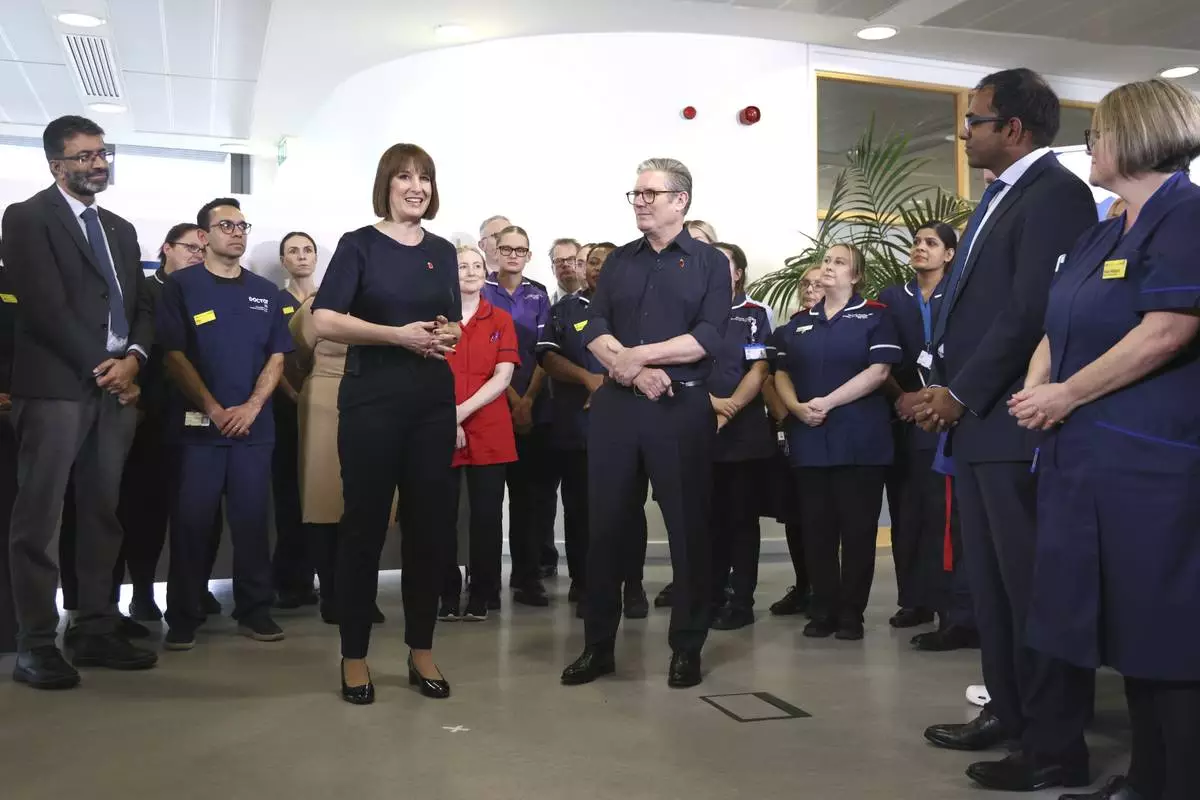
Britain's Prime Minister Keir Starmer and Chancellor Rachel Reeves with members of staff, during a visit to University Hospital Coventry and Warwickshire, in Coventry, England, Thursday, Oct. 31, 2024. (AP Photo/Darren Staples, pool)
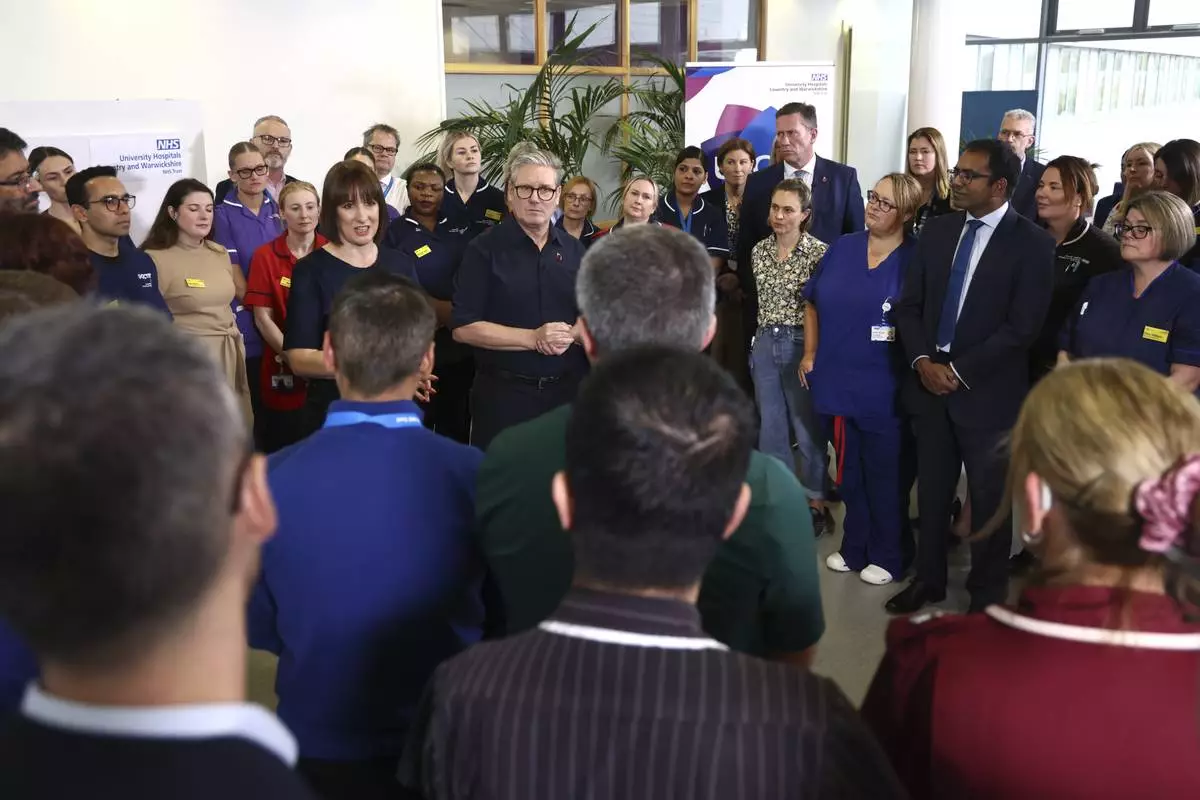
Britain's Prime Minister Keir Starmer and Chancellor Rachel Reeves speak with members of staff, during a visit to University Hospital Coventry and Warwickshire, in Coventry, England, Thursday, Oct. 31, 2024. (AP Photo/Darren Staples, pool)
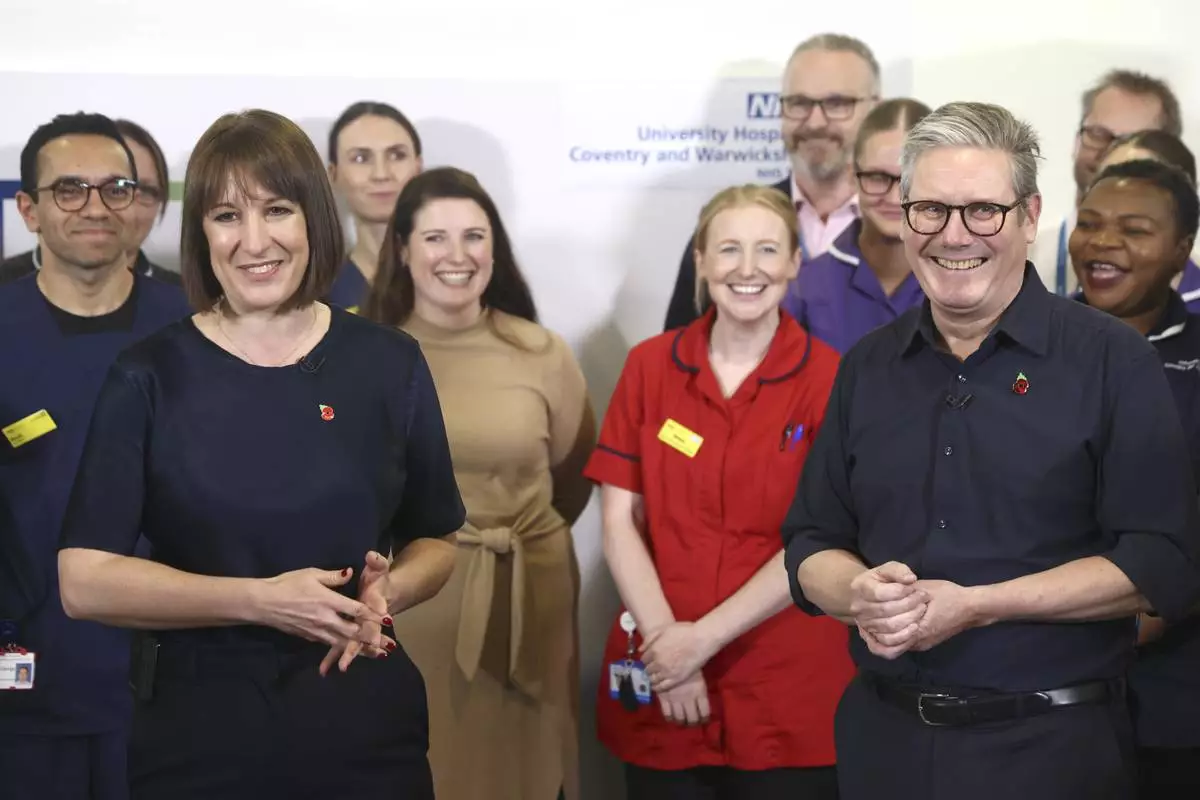
Britain's Prime Minister Keir Starmer and Chancellor Rachel Reeves with members of staff, during a visit to University Hospital Coventry and Warwickshire, in Coventry, England, Thursday, Oct. 31, 2024. (AP Photo/Darren Staples, pool)
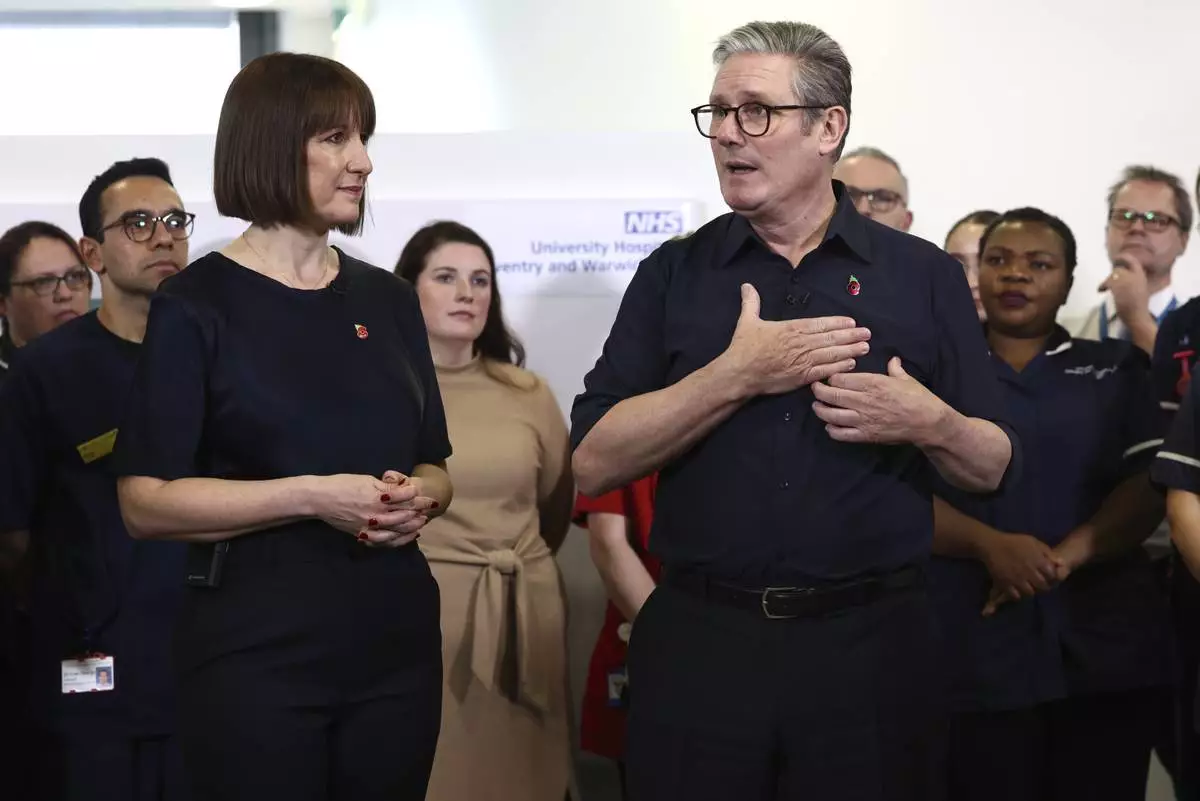
Britain's Prime Minister Keir Starmer and Chancellor Rachel Reeves speak with members of staff, during a visit to University Hospital Coventry and Warwickshire, in Coventry, England, Thursday, Oct. 31, 2024. (AP Photo/Darren Staples, pool)