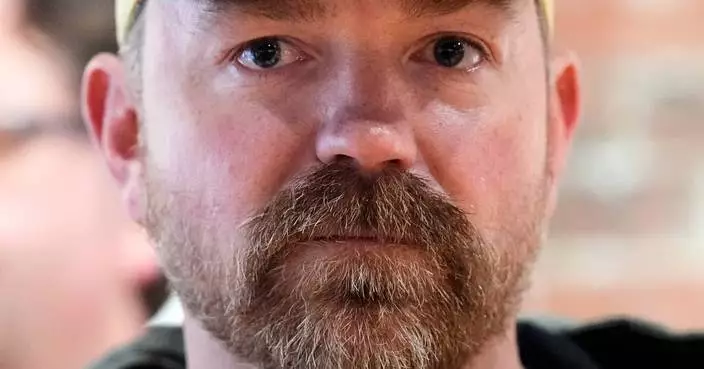
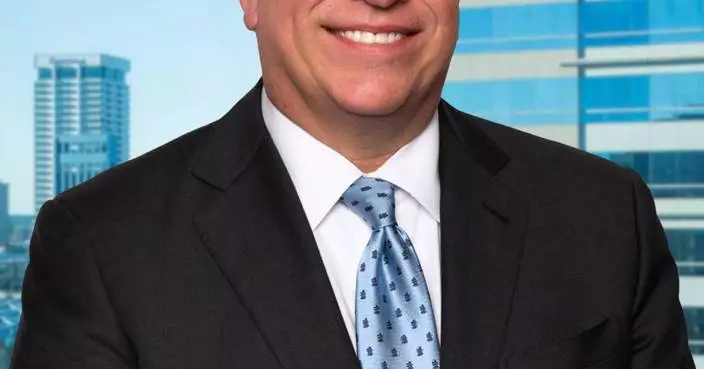
NEW YORK (AP) — Peloton has appointed its next CEO. Peter Stern, co-founder of Apple Fitness+ and a current Ford executive, will soon helm of the tech-fitness company.
Stern takes over as president and CEO on January 1, Peloton said Thursday. Karen Boone, one of two current interim CEOs, will continue to serve as chief executive through the end of the year, the company said.
Shares for the New York company climbed more than 20% Thursday.
Thursday's announcement arrives nearly six months after Barry McCarthy stepped down as Peloton’s chief executive. His departure in May came alongside larger restructuring and cost-cutting efforts at the company, which included the layoffs of hundreds of employees.
Sales of Peloton bikes soared during the early days of COVID-19, when many consumers turned to at-home workouts, but that all slowed as pandemic restrictions eased. As a result, the company has reported losses in more recent years.
Peloton also reported Thursday that it lost $900,000 during its first quarter on revenue of $586 million. Both were better than Wall Street had expected.
In efforts to turn things around, Peloton has been working on rebranding itself for some time — shifting its identity as a seller of luxury exercise bikes and equipment to health technology for all. The company recently unveiled plans to sell its deluxe stationary bike at a discount at Costco this holiday season. And back in 2022, Peloton made its exercise bikes and other gear available on Amazon in the U.S.
In a statement Thursday, Stern called working for Peloton “a dream come true" — adding that he is grateful for the opportunity "to take Peloton and its Members to even greater heights.”
According to the company, Stern himself has been a Peloton member since 2016. He currently serves as president of Ford Integrated Services — and previously also held leadership roles at Time Warner Cable and Apple, where he co-founded Apple Fitness+.
In connection with this week's announcement, Chris Bruzzo, who has been serving as Peloton's co-interim CEO alongside Boone, will step down on Friday. But both Bruzzo and Boone will remain members of Peloton's board. Stern is also expected to get a seat on the board.

FILE - Peter Stern, Apple Vice President of Services, speaks at the Steve Jobs Theater during an event to announce new products, March 25, 2019, in Cupertino, Calif. (AP Photo/Tony Avelar, File)
WASHINGTON (AP) — Dr. Nicole Saphier is President Donald Trump's latest pick for the vacant role of U.S. surgeon general, a nomination that ended the embattled campaign of his previous candidate, Dr. Casey Means, after it became clear she didn't have the votes to advance out of a Senate committee.
Saphier, a radiologist and former Fox News Channel contributor, has promoted several aspects of Health Secretary Robert F. Kennedy Jr.'s Make America Healthy Again agenda, including removing food additives, cutting ultraprocessed foods from diets and encouraging exercise.
But she has been a more vocal advocate for vaccination than Kennedy, and at times she has criticized the Trump administration's handling of health issues as “embarrassing.”
If confirmed as the nation's doctor, Saphier would be empowered to issue advisories that warn of public health threats. Surgeons general also have used the office to advocate on vaccination issues — though the office doesn't create vaccine policy.
Means, a Stanford University-educated physician and MAHA influencer who didn’t finish her surgical residency in Oregon and has an inactive medical license, had faced a grilling from senators of both major political parties over her experience and stance on vaccination. She told The Associated Press her failed nomination was the result of a “yearlong smear campaign."
Trump's new surgeon general pick is director of breast imaging at Memorial Sloan Kettering Monmouth, according to her profile on the institution’s website. She has a medical degree from Ross University School of Medicine in Barbados along with fellowships at the Mayo Clinic, the profile said.
She has earned the approval of institutions including the American College of Radiology, whose president, Dr. Dana Smetherman, on Thursday called her a “tireless advocate for women's health.” Kennedy said in a social media post that her experience with breast cancer patients and early detection will help the Republican administration take on the chronic disease epidemic.
Saphier also was a longtime Fox News Channel contributor until this week — one of several of the channel's personalities Trump has brought into his administration. Trump's first surgeon general pick, Dr. Janette Nesheiwat, was also a contributor at the network, but her nomination fell apart last year after questions arose about her academic credentials.
An author and podcaster with her own show, “Wellness Unmasked with Dr. Nicole Saphier,” Saphier frequently comments on the Trump administration's approach to health, often positively. She also used the phrase “Make America Healthy Again” years before Kennedy popularized it. It was the title of a book she wrote in 2020 that criticized government handling of healthcare and the Affordable Care Act.
Saphier also has dipped into the wellness product industry, creating a line of herbal supplements called Drop Rx, according to her LinkedIn profile.
A mom of three boys, Saphier has often said she is thankful that she decided to keep her first son when she became unexpectedly pregnant at age 17. She has advocated for more resources for mothers who make the same choice.
Like Means, Saphier has questioned some aspects of the U.S. childhood vaccine schedule, including the universal birth dose of the hepatitis B vaccine, a longtime recommendation that the Trump administration has been trying to weaken.
She also has aligned with Kennedy's disdain toward COVID-19 vaccination requirements in schools, saying on her podcast in September that they were “a complete disaster" and one of the reasons for declining trust in vaccination.
Saphier says she supports immunization while arguing patients should be free to make their own medical decisions. In March, she praised acting U.S. Centers for Disease Control and Prevention Director Dr. Jay Bhattacharya for posting a message encouraging Americans to get vaccinated against measles.
“The more vaccine confusion we create, the more preventable disease we will see,” she said in September, urging the administration to get itself in order "because it’s really upsetting.”
While being supportive of the Trump administration at large, Saphier has publicly cringed at some of its health mishaps. Last summer, she decried its long-anticipated first attempt at a MAHA report, which cited some studies that didn't exist.
"There were a lot of flaws in this report," she said on her podcast. “In fact, it was pretty embarrassing."
She said Kennedy's firing of his first CDC director, Susan Monarez, after less than a month on the job was “a mess.”
"When we keep hearing radical transparency and we’re going to regain trust, I can tell you these shenanigans are taking us farther away from that mission,” Saphier said on her podcast.
In an email to the AP last year, Saphier said Trump's advice to pregnant women not to take Tylenol, which promoted unproven ties between the medication and autism, was overly simplistic. She said equally important, and missing from Trump's message, was the fact that untreated fever or severe pain can also pose serious risks to mothers and babies.
After Means' confirmation hearings earlier this year, Saphier said on her podcast that she expected Means would do a good job as surgeon general but wished she were “a little bit less involved with MAHA.”
“I’d really like to see a little bit more reaching across the aisle when it comes to public health,” Saphier said. “That doesn’t mean it has to be some Democratic nominee for surgeon general, maybe just someone a little less aligned with the MAHA movement who, I don’t know, finished their residency and has an active medical license.”
At least a few prominent MAHA influencers have suggested Saphier is no ally. Turning Point USA podcaster and anti-pesticide campaigner Alex Clark said in a post Friday that Saphier “gets an F when it comes to all things MAHA.”
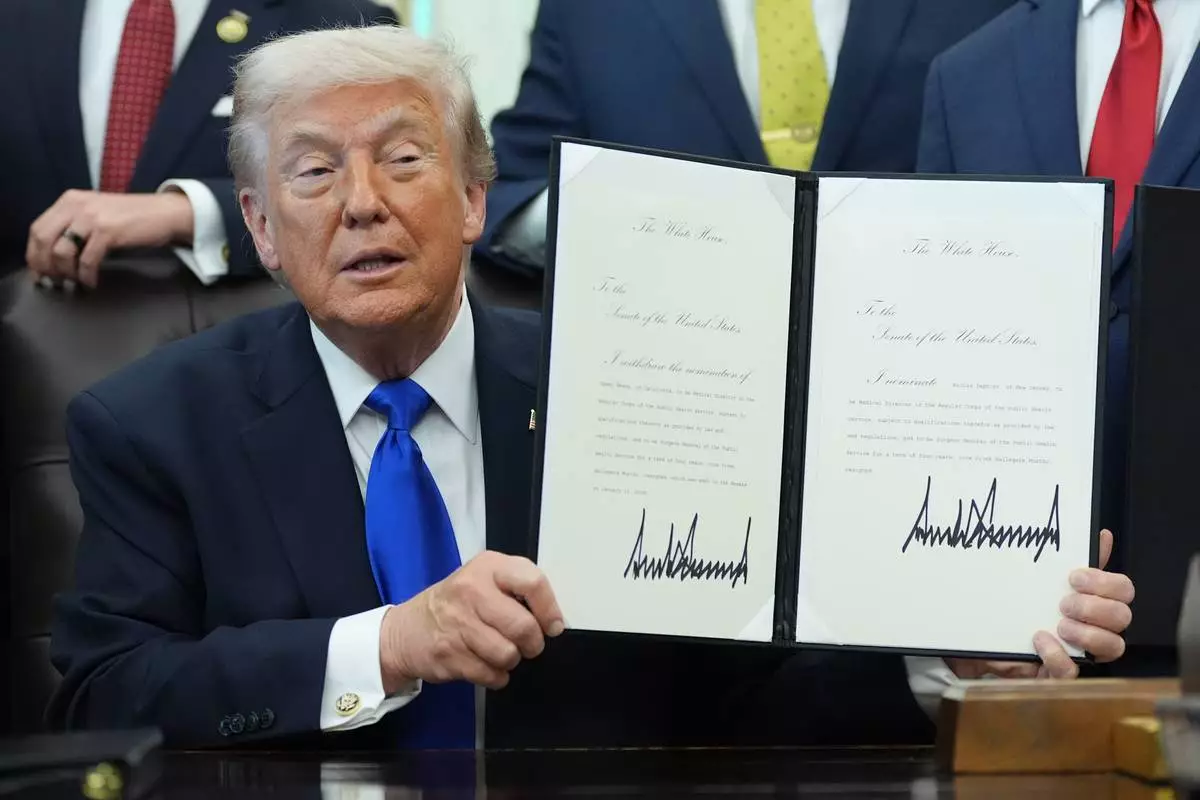
President Donald Trump signs documents regarding the withdrawal of the current nomination and nomination of a new surgeon general in the Oval Office of the White House, Thursday, April 30, 2026, in Washington. (AP Photo/Alex Brandon)