Speech by SJ at Second Legal Forum on Interconnectivity and Development (with photos/video)
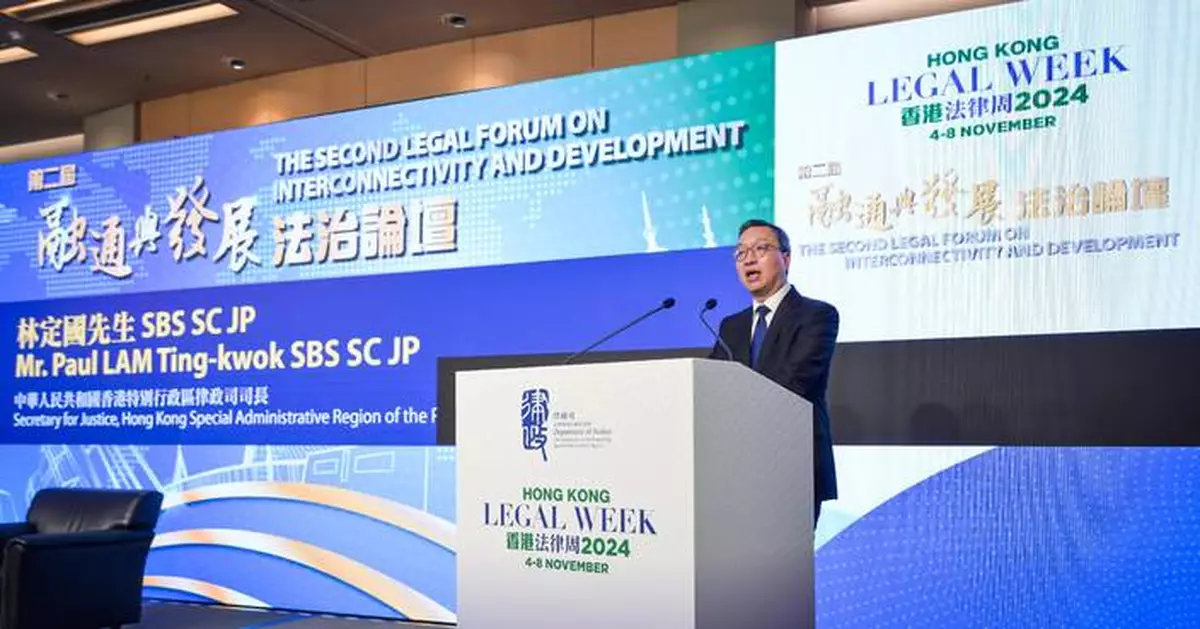
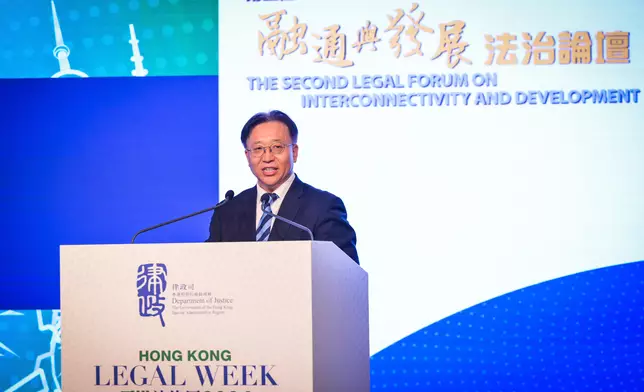
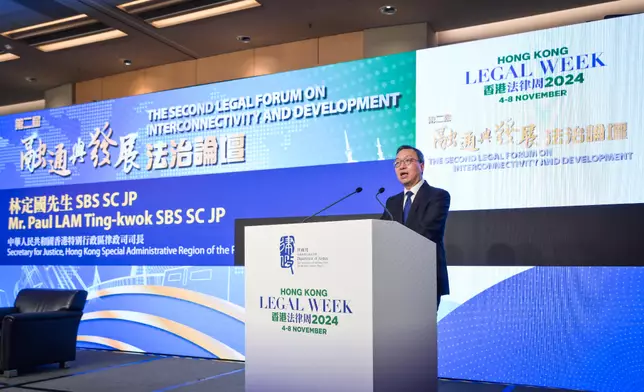
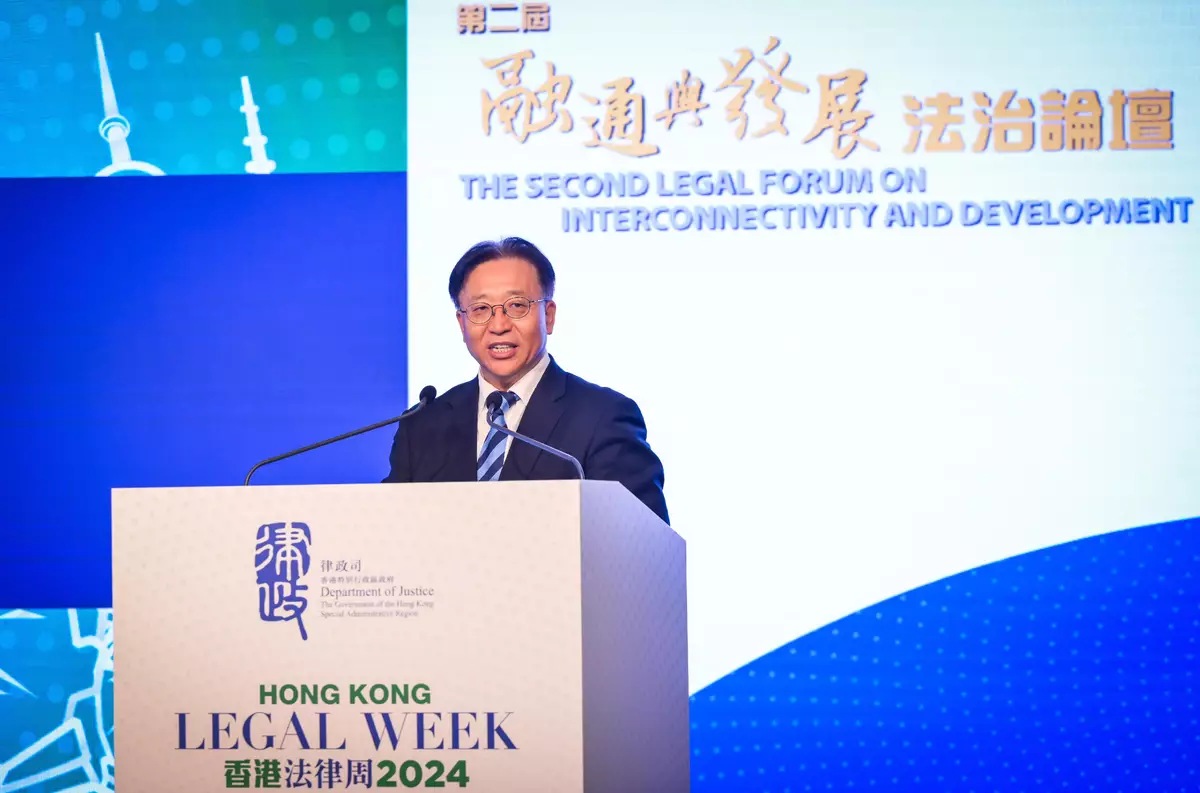
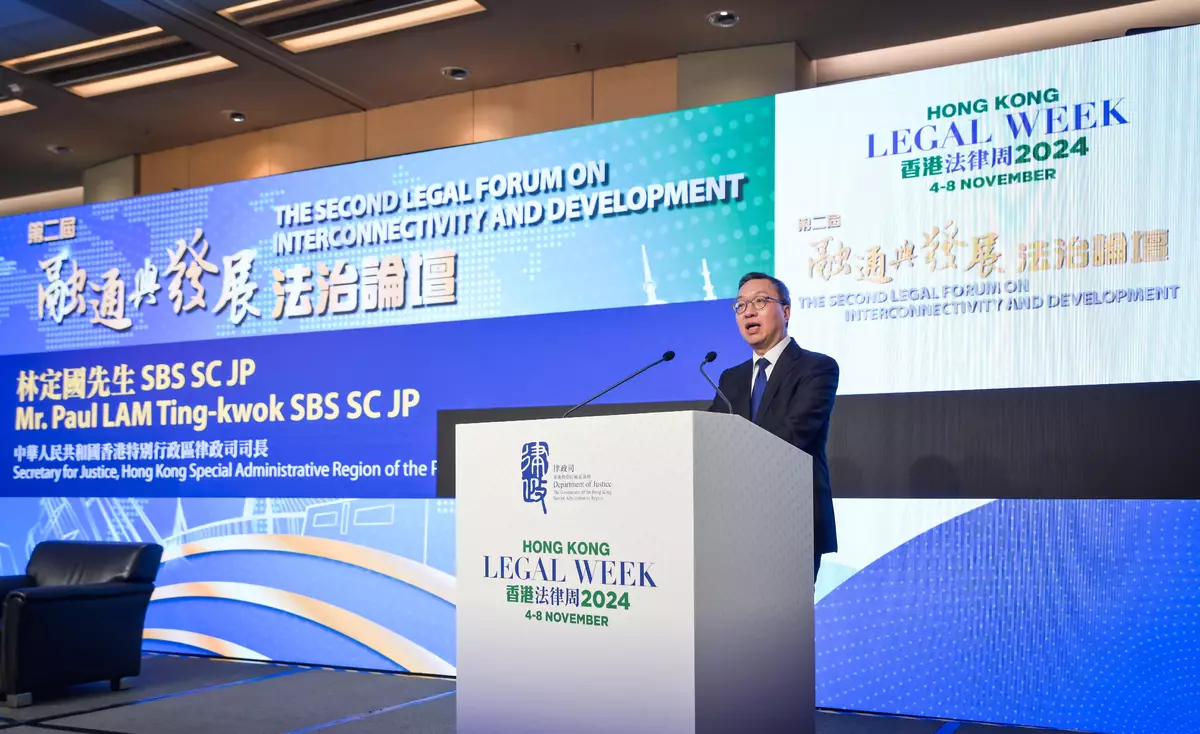
Following are the closing remarks by the Secretary for Justice, Mr Paul Lam, SC, at the Second Legal Forum on Interconnectivity and Development under the Hong Kong Legal Week 2024 today (November 5):
Click to Gallery
Speech by SJ at Second Legal Forum on Interconnectivity and Development (with photos/video) Source: HKSAR Government Press Releases
Speech by SJ at Second Legal Forum on Interconnectivity and Development (with photos/video) Source: HKSAR Government Press Releases
Speech by SJ at Second Legal Forum on Interconnectivity and Development (with photos/video) Source: HKSAR Government Press Releases
Speech by SJ at Second Legal Forum on Interconnectivity and Development (with photos/video) Source: HKSAR Government Press Releases
Speech by SJ at Second Legal Forum on Interconnectivity and Development Source: HKSAR Government Press Releases
Your excellencies, distinguished guests, ladies and gentlemen,
Thank you very much again for participating in this year's Second Legal Forum on Interconnectivity and Development. I would first like to express my gratitude to the Commissioner's Office of China's Foreign Ministry in the Hong Kong SAR (OCMFA) for co-organising this forum with the Department of Justice (DoJ) of the Hong Kong SAR. OCMFA's support and contribution are invaluable to the success of this event.
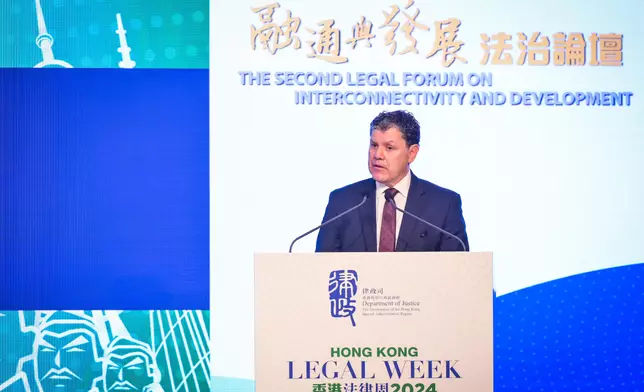
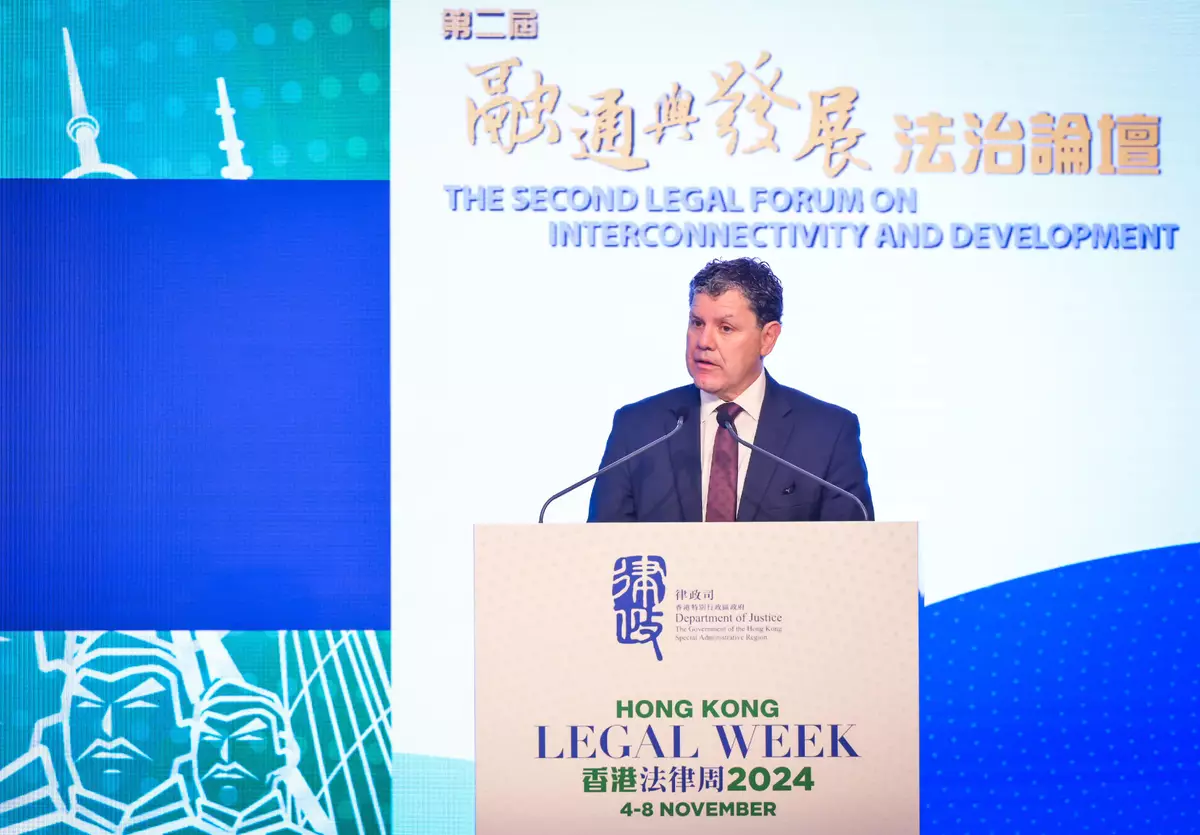
I would also like to extend my sincere thanks to the Asian Infrastructure Investment Bank (AIIB) and especially to their General Counsel, Mr Alberto Ninio, who delivered an impactful keynote address on promotion of good governance and high-quality development under international law earlier this morning. Hong Kong, China became a member of AIIB in 2017. Our arrangement for secondment of DoJ counsel to the legal department of AIIB in the past few years has been conducive to enhancing our collaboration with AIIB and strengthening the development of Hong Kong international legal and dispute resolution services, especially in the financial fields.
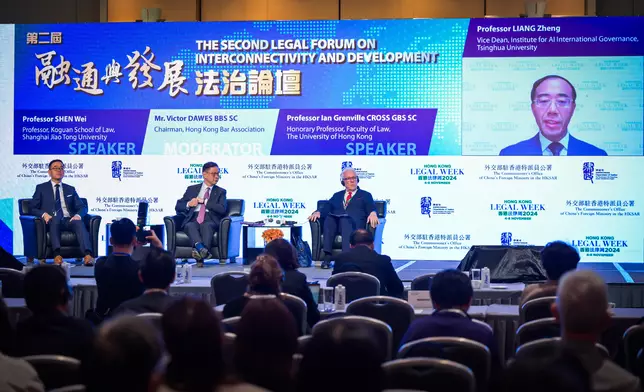
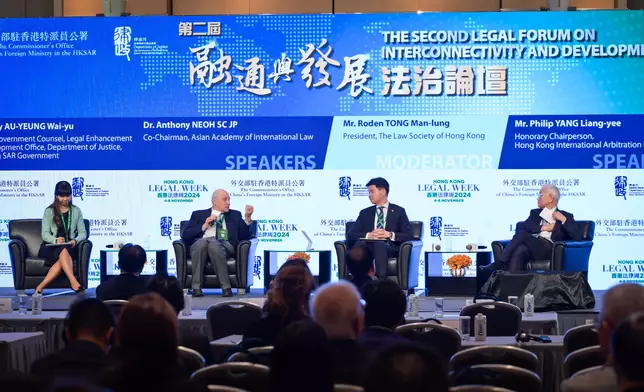
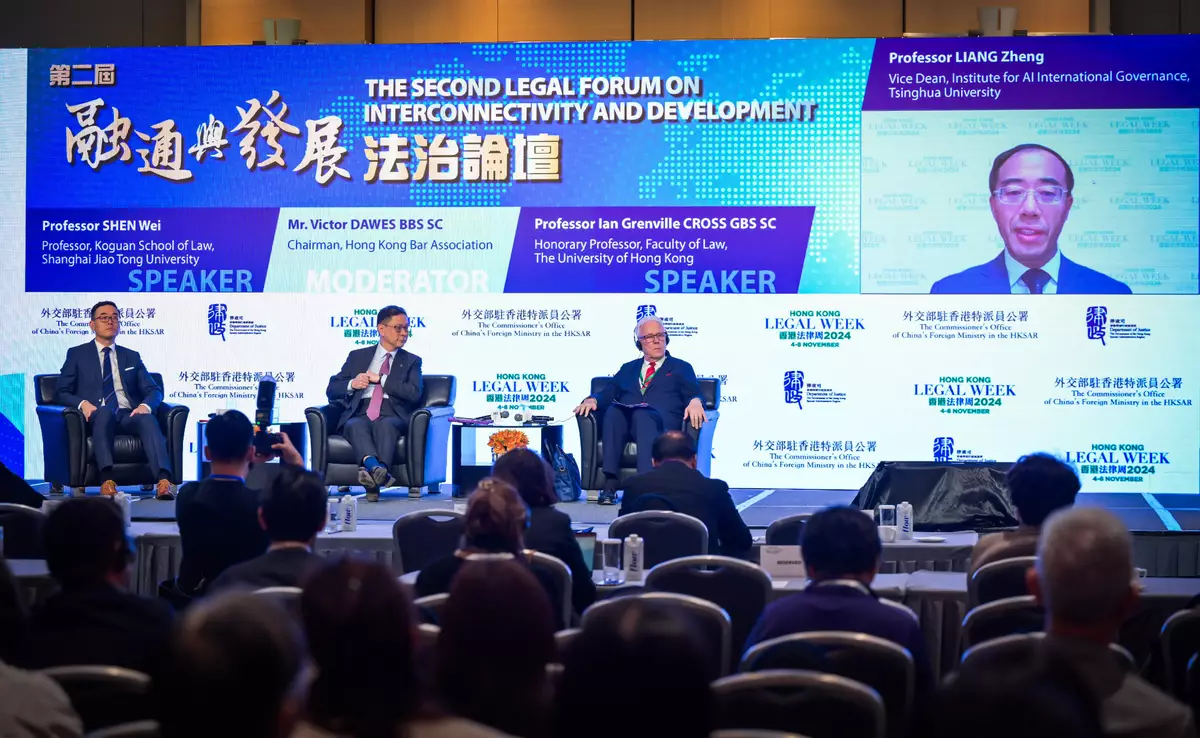
Following the keynote address from AIIB, the two Panel Sessions examined the critical importance of legal connectivity in our increasingly globalised landscape, as well as its impact across various fields, from international trade and commerce, dispute resolution, sanctions to emerging domains such as the governance of artificial intelligence (AI). The experience and practice of Hong Kong in connecting with high-standard international legal rules provide a good illustration for our discussion. Allow me to reflect briefly on today's discussions and Hong Kong's role in these vital developments.
Cross-border legal connectivity and China's foreign-related rule of law
Legal connectivity transcends borders, bringing jurisdictions closer and promoting shared prosperity. As President Xi Jinping has noted, the fundamental purpose of advancing foreign-related rule of law is to better safeguard the interests of the country and the people, promote the progress of international rule of law and the development of a community with a shared future for mankind. China's institutional opening-up progresses alongside its development of foreign-related legal frameworks. The rule of law forms the foundation of a favourable business environment.
The first session explored Hong Kong's evolving legal landscape, where, under the "one country, two systems" framework, it serves as a strategic nexus for trade and commerce and dispute resolution, regionally in the Guangdong-Hong Kong-Macao Greater Bay Area, as well as internationally. In this era of ever-changing global business norms, as China's institutional opening-up progresses, Hong Kong serves not only as a "super-connector" but also provides unique legal services under its legal and international arbitration framework.
Rule of law to safeguard sustainable development
On the importance of the rule of law to mitigate risks and to safeguard Hong Kong's and national sustainable development, the learned speakers have shared their insights into the global developments in financial sanctions and anti-sanctions, as well as legislative trends on anti-interference in major western countries.
As AI rapidly advances, it transforms industries and economies in a revolutionary way. This also brings with it complex global regulation and governance issues and related risks. As the final report on this subject by the United Nations Secretary-General appointed panel concludes, "the very nature of the technology itself - transboundary in structure and application - necessitates a global approach". The discussions on this topic today are timely and relevant as we consider how to safeguard sustainable development in an increasingly inter-connected world with AI.
As President Xi stressed during the 16th BRICS Summit, "as the world becomes more turbulent, it is even more important to uphold the banner of peace, development, co-operation and win-win outcomes". It is my sincere hope that the discussions in today's forum could bring out a spirit of co-operation and collaboration in traditional fields like economy and trade, as well as emerging areas like artificial intelligence, with our sustainable development safeguarded by the rule of law.
Hong Kong as a global legal and dispute resolution hub
On co-operation and development, aligned with Hong Kong's development of "eight centres" as outlined in the National 14th Five-Year Plan, the Department of Justice has taken forward policies to strengthen Hong Kong's role as a leading legal and dispute resolution hub.
The staunch support of the Central People's Government in strengthening the city as a centre for international legal and dispute resolution services in the Asia-Pacific region under the National 14th Five-Year Plan can be demonstrated by the establishment of the International Organization for Mediation (IOMed) Preparatory Office last year. The IOMed Preparatory Office has successfully facilitated the conclusion of negotiations on the Convention on Establishment of the IOMed last month. A decision has also been made by all the negotiating parties that a signing ceremony of the Convention will be held in Hong Kong next year and the IOMed headquarters will also be situated in Hong Kong once the Convention has entered into force.
As the world's first intergovernmental international legal organisation dedicated to resolving international disputes through mediation, IOMed is important for the implementation of settling international disputes by peaceful means as set out in the United Nations Charter. Upon its establishment, the IOMed will provide friendly, flexible, economical and efficient mediation services, thereby building Hong Kong as a capital for international mediation.
Apart from exciting development on IOMed, we also continue to enhance our collaboration with prominent law-related international organisations, such as the International Institute for the Unification of Private Law (UNIDROIT), with which we co-organised this year's Asia-Pacific International Private Law Summit yesterday. We are also in active discussion with UNIDROIT for the possible establishment of its liaison office in Hong Kong in the near future. These forms of collaborations enable Hong Kong to contribute to and align with international standards, thus enhancing its appeal as a global hub for dispute resolution.
In addition, with the support of the Central People's Government and the assistance of the OCMFA, the Department of Justice has put in place programmes to second local legal talents to several law-related international organisations including the UNIDROIT. Through participating in the work of such international organisations, local legal professionals can enhance their knowledge of international legal matters and develop global vision. Nurturing Hong Kong's legal talents is crucial for the sustainable development of the legal community, for consolidating our position as a leading international legal and dispute resolution services centre and for the long-term development of the rule of law, matters to which the Central Authorities and the HKSAR Government have attached great importance.
Fostering legal talent: Hong Kong International Legal Talents Training Academy
Following the announcement in the Chief Executive's 2024 Policy Address, the Hong Kong International Legal Talents Training Academy will be officially launched on this Friday, Day five of Hong Kong Legal Week. To make good use of Hong Kong's bilingual common law system and international legal status, the Training Academy will regularly organise practical training courses, seminars, international exchange programmes and more to promote exchanges among talents in regions along the Belt and Road region. It will also provide training for talents in the practice of foreign-related legal affairs for the country, and cultivate legal talents to be familiar with international law, common law, civil law, national legal systems and other legal areas. In future, our Department will make use of this capacity building platform to enable practitioners from different jurisdictions to exchange ideas on promoting the culture of harmony.
Looking ahead: Hong Kong's future role as an international legal hub
Looking to the future, we are reminded of the traditional Chinese saying by Confucius, in Chinese is "君子和而不同 and in English "a gentleman seeks harmony, not uniformity". This philosophy encourages us to pursue a shared vision despite our differences, and is crucial for enhancing interconnectivity and development in building a community of shared future for mankind. In our interconnected world, such harmony through diversity is essential for achieving lasting success and mutual respect across boundaries. Hong Kong's dedicated efforts in aligning with and contributing to international legal standards, its experience in international dispute resolution, as well as its commitment to legal capacity-building could leave a positive impact as the world navigates through complex challenges. As China moves towards deeper institutional opening-up, Hong Kong has a significant role to play in facilitating international engagement and promoting the progress of international rule of law.
In closing, my sincere thanks to all speakers, participants, supporting organisations, colleagues at the OCMFA and the DoJ for making this forum a success. I look forward to your support for the Third Legal Forum on Interconnectivity and Development next year. Thank you very much.
Speech by SJ at Second Legal Forum on Interconnectivity and Development (with photos/video) Source: HKSAR Government Press Releases

Speech by SJ at Second Legal Forum on Interconnectivity and Development (with photos/video) Source: HKSAR Government Press Releases
Speech by SJ at Second Legal Forum on Interconnectivity and Development (with photos/video) Source: HKSAR Government Press Releases
Speech by SJ at Second Legal Forum on Interconnectivity and Development (with photos/video) Source: HKSAR Government Press Releases
Speech by SJ at Second Legal Forum on Interconnectivity and Development Source: HKSAR Government Press Releases