Skip to Content Facebook Feature Image

CIIE offers Cote d'Ivoire cocoa opportunity for industrial upgrading

China

China

China

CIIE offers Cote d'Ivoire cocoa opportunity for industrial upgrading

2024-11-07 10:07 Last Updated At:10:37

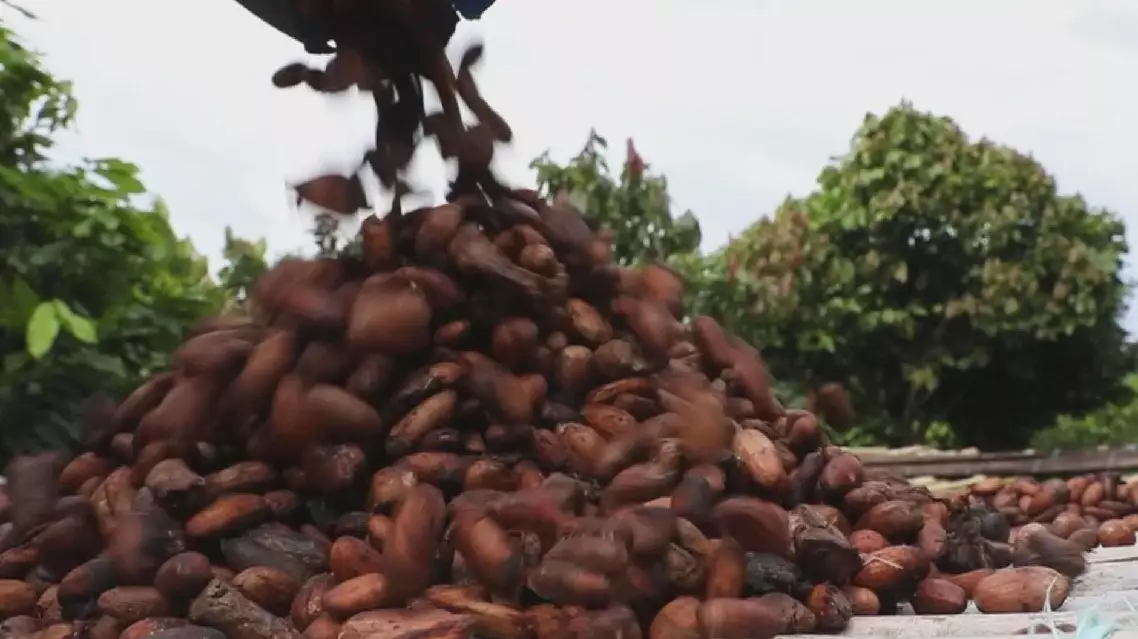
⁠⁠⁠⁠⁠⁠⁠Cote d'Ivoire, the world's largest cocoa producer and exporter, is leveraging the role of the ongoing China International Import Expo (CIIE) to advance the industrial upgrading of its cocoa industry.

Running from Tuesday to Sunday in Shanghai, the 7th CIIE has attracted participants from 152 countries, regions and international organizations, and achieved a new record with 297 Fortune Global 500 companies and industry leaders attending.

Located in West Africa, Cote d'Ivoire produces over two million tons of cocoa beans annually, accounting for 40 percent of the world's total production. About eight million people in the country work in the cocoa and relevant industries.

Sekongo Lucien is the chairman of the Management Committee for an agricultural cooperative in Biankouma, a town in the western region of the country. The cooperative is participating in this year's CIIE, showcasing its cocoa, coffee and other agricultural products.

"I am going to take a flight to Shanghai, and I appreciate the opportunities provided by the CIIE to foreign enterprises. China is a very welcoming country, and the Chinese are very nice. I hope Chinese partners will come to beautiful Cote d'Ivoire in the future to build a win-win partnership," said Lucien before leaving for Shanghai.

In order to help farmers increase their profits from cocoa planting, Cote d'Ivoire is exploring ways to change the traditional economic model of exporting raw cocoa beans and achieve industrial upgrading.

"We are working with China in the PK24 industrial park to build the largest state-owned cocoa storage warehouse and processing plant in Cote d'Ivoire. We hope to increase cocoa processing capacity and the added value of the cocoa industry to achieve industrial transformation. This is the ambition of Cote d'Ivoire," said Kone Brahima Yves, the General Manager of the Cafe Cacao Council of the country.

In the PK24 industrial park on the outskirts of Abidjan, Cote d'Ivoire's economic capital, a cocoa processing plant, jointly built by China and Cote d'Ivoire under the Belt and Road Initiative, is set to be completed by the end of this year.

The project will largely enhance the cocoa processing capacity of Cote d'Ivoire, and help the country train more skilled workers to promote the sustainable development of the cocoa industry, according to Tang Chong, the project manager of the Abidjan cocoa processing plant.

"Through this project, we expect to see an increase in domestic (Cote d'Ivoire) processing capacity of about 14 percent. By extending the industrial chain and setting up processing plants, the profits will be increased by 36 percent. The project will employ more than 500 workers after completion, which will be a strong force to improve the local cocoa production capacity," said Tang.
CIIE offers Cote d'Ivoire cocoa opportunity for industrial upgrading
CIIE offers Cote d'Ivoire cocoa opportunity for industrial upgrading

The Iranian government is focusing on public concerns and maintaining stable supplies of essential goods amid recent protests, Iranian President Masoud Pezeshkian said in a televised interview on Sunday.

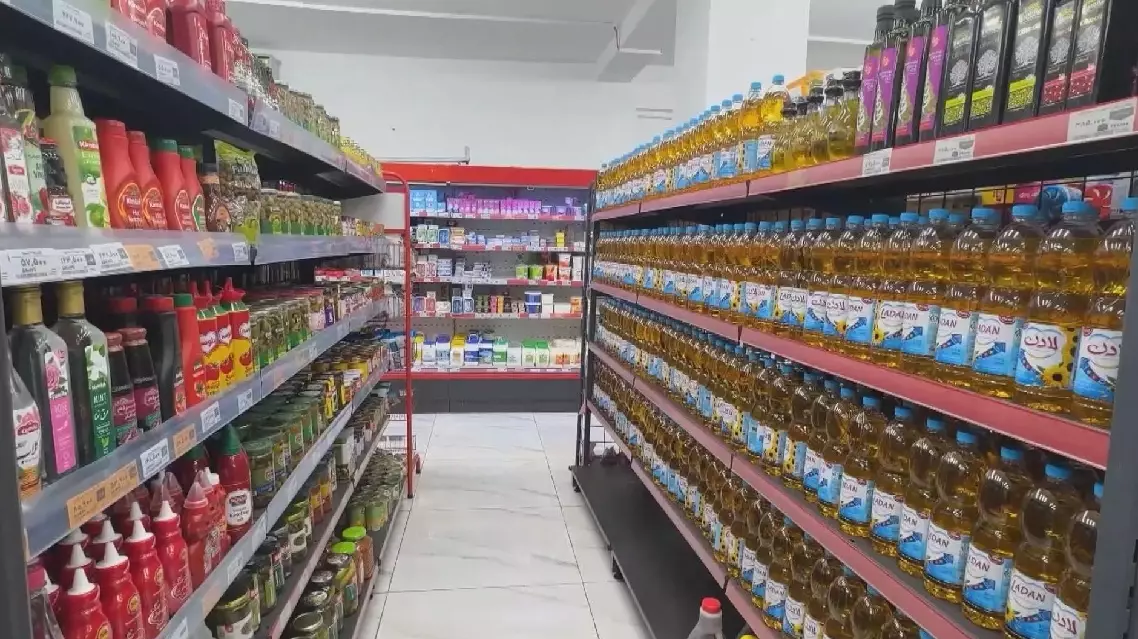
In the city of Karaj, northwest of the capital Tehran, daily life has largely continued as normal. A video filmed by a local resident on Sunday shows food stores open and grocery shelves fully stocked.

"This is the block near my home, and there are some food stores here. Daily life continues here. Last night we did not see many protests in Karaj. Right now the city is very safe. This is a grocery store close to my home. All the food is available; nothing is in shortage. Here are noodles and different types of beans. Here are dairy products, cheese, and yogurt. I also checked other grocery stores and didn't see any shortages. Everything is available," said local resident Ali Reza.

Iranian officials have described recent disturbances as acts orchestrated by the "enemy," including some carried out by well-trained and armed "terrorists." The incidents have caused casualties among security personnel and civilians, as well as property damage.

The Secretary of Iran's Supreme National Security Council Ali Larijani has directed authorities to severely punish the "terrorists."

Meanwhile, Iran's police chief Ahmad-Reza Radan said on Sunday that the police had raised alert levels and arrested several leaders of the troublemakers during the operations on Saturday.

President Pezeshkian noted in the interview that the normal demands of the Iranian people are reasonable and justified, but they must realize that triggering riots and carrying out terrorist acts are the enemy's attempts to undermine the country. He urged the public to remain vigilant.

Also on Sunday, Iranian Parliament Speaker Mohammad Baqer Qalibaf warned that Tehran would regard U.S. and Israeli bases and facilities in the Middle East as "legitimate targets" if Washington takes military action against Iran. His remarks followed media reports saying U.S. President Donald Trump is "seriously considering authorizing a strike" against Iran.

Iranian state media reported that at least 109 members of Iran's security forces have been killed in clashes since the protests began 14 days ago. Meanwhile, human rights groups based outside the country said the number of protesters killed has exceeded 200, though the figure could not be independently verified.

The protests initially erupted over a sharp depreciation of the rial and sweeping subsidy reforms. Iranian authorities have blamed the unrest on foreign-linked agents and sanctions imposed by the United States.

Iranian president says government focusing on ensuring supplies amid protests

Iranian president says government focusing on ensuring supplies amid protests

Recommended Articles