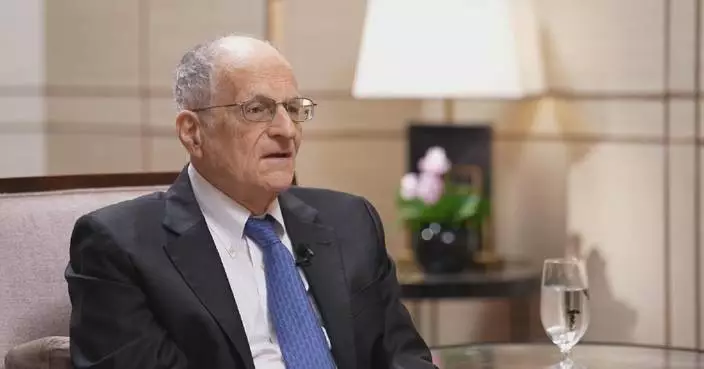
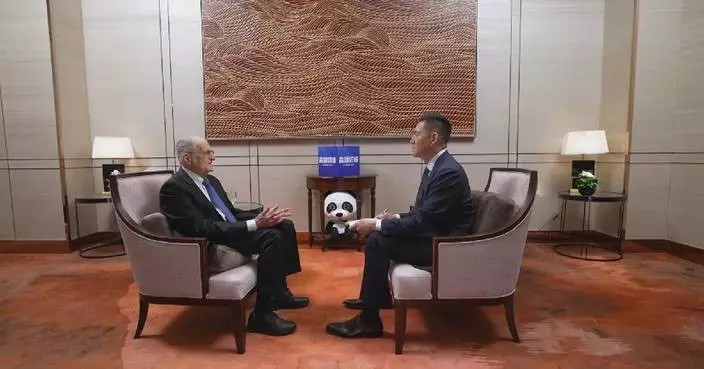
It will become increasingly challenging in the years ahead for nations to differentiate between legitimate protection against issues related to climate change and protectionism, said Fabian Zuleeg, CEO of the European Policy Centre, at a sub-forum of the Hongqiao International Economic Forum on Tuesday.
As an important part of the 7th China International Import Expo (CIIE), the Hongqiao International Economic Forum is taking place in Shanghai in tandem with the expo from Tuesday to Sunday, attracting more than 260 distinguished guests from political, business and academic circles.
Speaking at the sub-forum titled "China and 30 Years of the WTO: History and Evolution", Zuleeg noted that climate change should not be influenced by geopolitical and geo-economic issues.
"We have to continue to emphasize that climate change is an existential issue for humanity. It is not something which should be influenced by the current geopolitical and geo-economic problems. Essentially, we are facing an exponential challenge, which every year is getting worse. And our policies are not even denting the overall trends. And that cannot go on forever. So we have to do something, to do more and to do more decisively when it comes to climate action," he said.
"The big question for me in the coming years is we have a rise both in protectionism but also in protection and legitimate protection against certain issues, including environmental degradation and climate change. So how do we distinguish between the two and make the rules enforceable and applicable, so that we can distinguish between legitimate and trade distorting? And that, I think, is a very big task for the next years," Zuleeg noted.
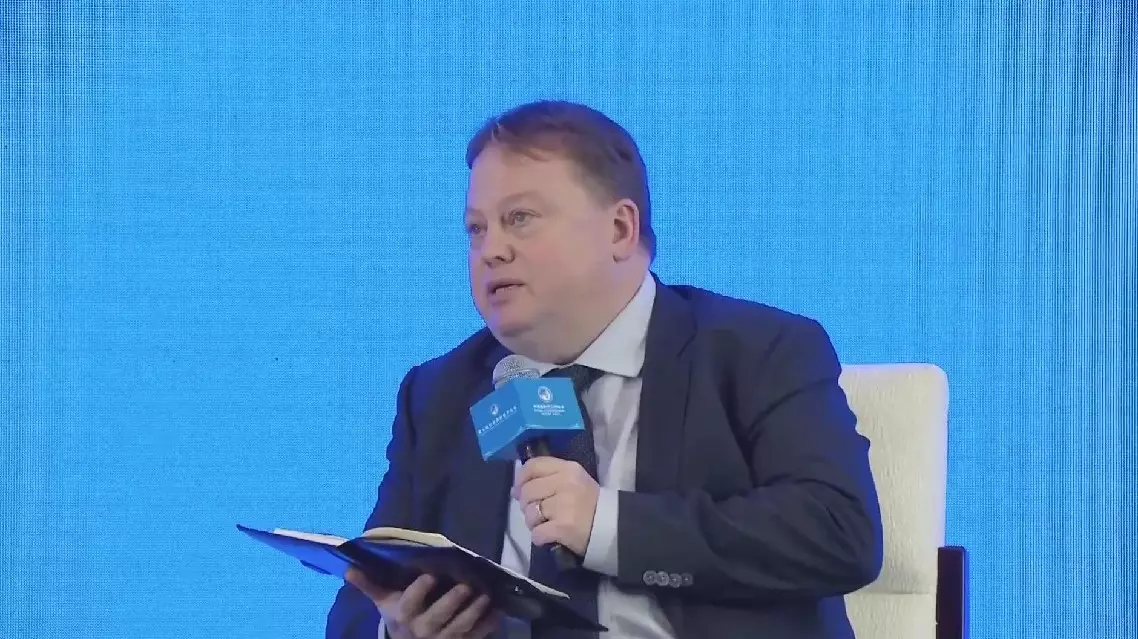
Distinguishing between legitimate protection, protectionism remains big task: EPC head
Pakistan's sense of global responsibility and concern over the impact of the ongoing conflict between Iran and the United States and Israel on the world order compel it to mediate between the warring parties, Javed Iqbal, president of the Pakistani National Institute of Maritime Affairs, said on Friday.
Pakistan is a key stakeholder in maritime security in the Strait of Hormuz, and because conflicts in one region can ripple across the world, the country sees mediation as essential to safeguarding its interests and promoting broader regional stability, Iqbal, who is also a senior defense analyst, told the China Global Television Network (CGTN).
"We are a part of not only the global community of nations, but also part of Global South. We are sitting at the mouth of the Strait of Hormuz. We are an important stakeholder in ensuring maritime security in the region, because it's an interconnected world. If there is a threat, it affects everybody. And we have witnessed in the last four weeks that how the oil prices, gas prices have impacted the entire world. The food security crisis is brewing. Prices of the commodities are going up. So Pakistan had to play this role, not only for its own interest, but also in the interest of the global community," he said.
Iqbal also noted that Pakistan is committed to not only ending the conflict, but also addressing its broader consequences, as the Middle East conflict continues to reshape the global order.
"And I think as a responsible nation, we are not only looking at the war termination, but we are also looking at the second order and the third order effects, the post war also, because it's a major, cataclysmic event. I think it will transform the world order. It will reset the global balance of power. It will reset the security order in the Middle East. So it's a very, very important event. And being a critical stakeholder, in the interest of the global security, global peace, and development, Pakistan is playing its due role and acting as a conveyor of the messages between the United States and Iran," he said.
Pakistan has been relaying messages between Iran and the United States, helping bring an end to the conflict. The country will host a quadrilateral meeting of foreign ministers including Türkiye, Egypt and Saudi Arabia on Monday to discuss tensions in the Middle East, according to Pakistan's state media.
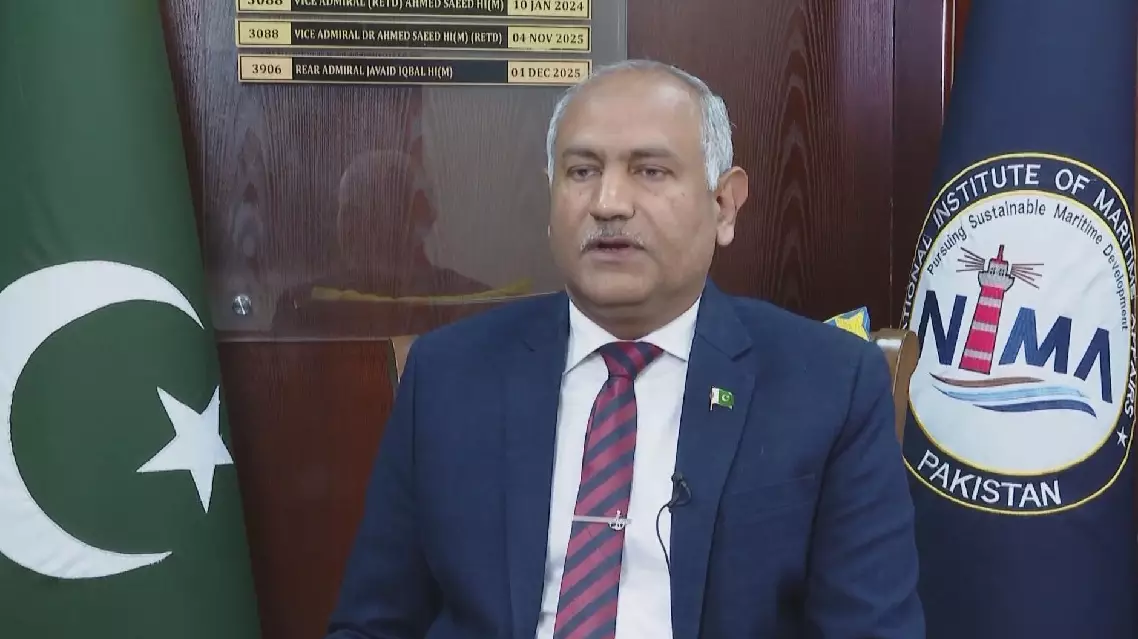
Pakistan affirms responsibility to mediate as Middle East conflict reshapes global order: analyst