PAXTON, Mass.--(BUSINESS WIRE)--Nov 8, 2024--
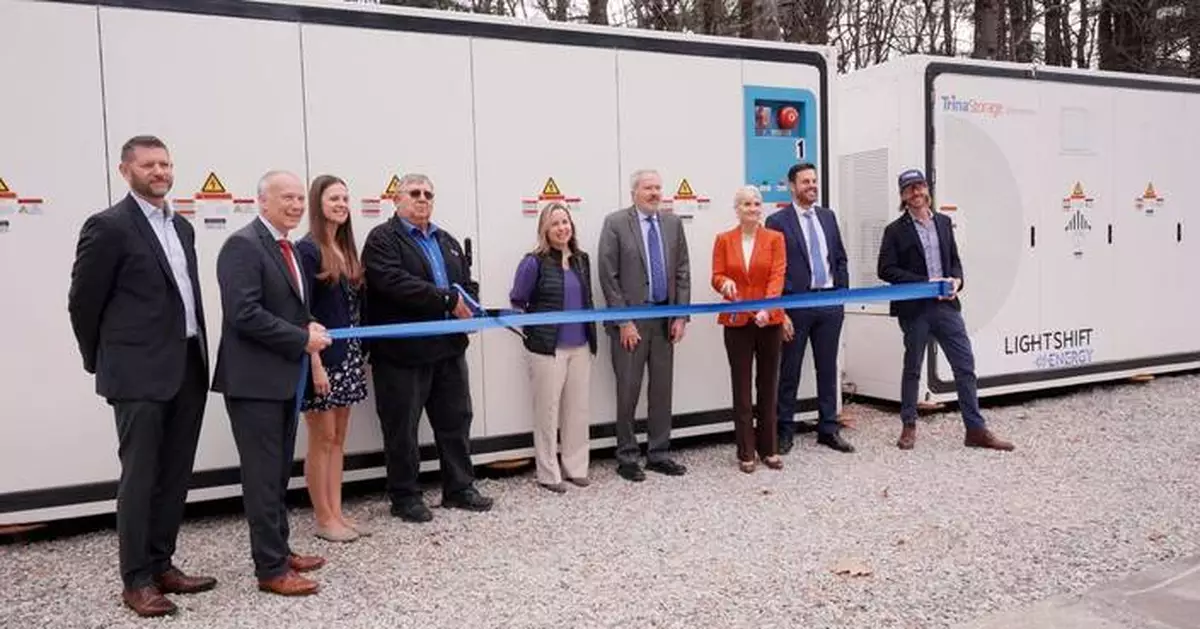
Paxton Municipal Light Department (PMLD) and Lightshift Energy, a leading energy storage project developer, owner and operator, on Thursday hosted a ribbon-cutting ceremony to unveil the battery storage project in Paxton, Massachusetts, which will bolster the grid for PMLD and its customers. Part of a first-of-a-kind program to deploy battery storage for Massachusetts Municipal Wholesale Electric Company (MMWEC)’s municipal utilities, the energy storage project will reduce grid load during peak events, saving PMLD up to $10 million in energy costs and lessening the Commonwealth’s reliance on fossil fuels.
This press release features multimedia. View the full release here: https://www.businesswire.com/news/home/20241107076905/en/
Solidifying Massachusetts as a leader in the nation's clean energy deployment, representatives from across the state, including State Senator Peter Durant and Chair of the Massachusetts Department of Public Utilities, James Van Nostrand, participated in the press conference. The speakers celebrated how this 3 megawatt (MW)/9 megawatt-hour (MWh) battery storage project is a testament to the state’s growing stake in the clean energy economy and its broader commitment to bringing cleaner solutions to all communities.
“For smaller utilities such as Paxton Municipal Light Department, early adoption of new technologies can be cost prohibitive,” said Tara Rondeau, General Manager at PMLD. “Thanks to MMWEC’s efforts in establishing a partnership with Lightshift, PMLD is able to utilize battery storage. This will help offset rising capacity and transmission costs for our ratepayers while focusing on cleaner solutions.”
A small community nestled outside of Worcester, Paxton is one of the first municipal utilities to participate in the partnership between Lightshift and MMWEC to deploy a fleet of energy storage projects across the state. First announced in May 2024, the program is expected to provide more than $200 million in energy savings across MMWEC’s municipal utilities, while bringing grid resilience to communities and helping the state meet its ambitious renewable energy goals.
“Anytime we can combine savings for our local communities with the possibility of cleaner energy, that’s a win,” said State Sen. Peter Durant, R-Spencer. “Projects like this are often too expensive for smaller communities, so we appreciate partnerships like the one between Paxton Municipal Light Department and the Massachusetts Municipal Wholesale Electric Company that make it possible for those towns to acquire newer technology.”
“Paxton is an excellent example of how smaller communities can have a large impact on the clean energy ecosystem, all while providing significant electricity bill savings to ratepayers,” said Lightshift Co-Founder and Managing Partner Rory Jones. “Grid demand is rapidly straining local energy resilience, and this project will serve as an economic and energy anchor for Paxton. We’re encouraged to see municipal utilities across the state continue to bolster grid reliability while contributing to a clean energy future.”
About Lightshift Energy
Lightshift Energy is a utility-scale energy storage project developer, owner and operator headquartered in Arlington, Virginia. Founded in 2019, Lightshift is developing a diverse, multi-gigawatt pipeline of energy storage projects, located throughout the U.S. With leading energy storage analytics, application design, finance, and development expertise, Lightshift deploys dynamic, multi-use energy storage projects that maximize value for utilities and other partners, while reinvesting directly into the communities where their projects are located. For more information, please visit www.lightshift.com.
About Paxton Municipal Light Department
Paxton Municipal Light Department (PMLD) was established in 1914 and serves just under 2,000 customers in Paxton, Massachusetts. As one of 40 municipal utilities in Massachusetts, PMLD is owned by the community it serves. It prides itself on providing safe, reliable and superior service at the lowest cost.
About the Massachusetts Municipal Wholesale Electric Company (MMWEC)
MMWEC is the Commonwealth’s designated joint action agency for municipal utilities in Massachusetts. Through its enabling state legislation, Chapter 775 of the Acts of 1975, MMWEC became a not-for-profit, public corporation and political subdivision of the Commonwealth of Massachusetts. MMWEC’s enabling legislation gave it the unique power to issue tax-exempt revenue bonds to finance electric generating facilities and other projects. Using this statutory authority, MMWEC has issued more than $7 billion in bonds since 1976. It is the largest provider of asset-owned generation for municipal light departments in New England.
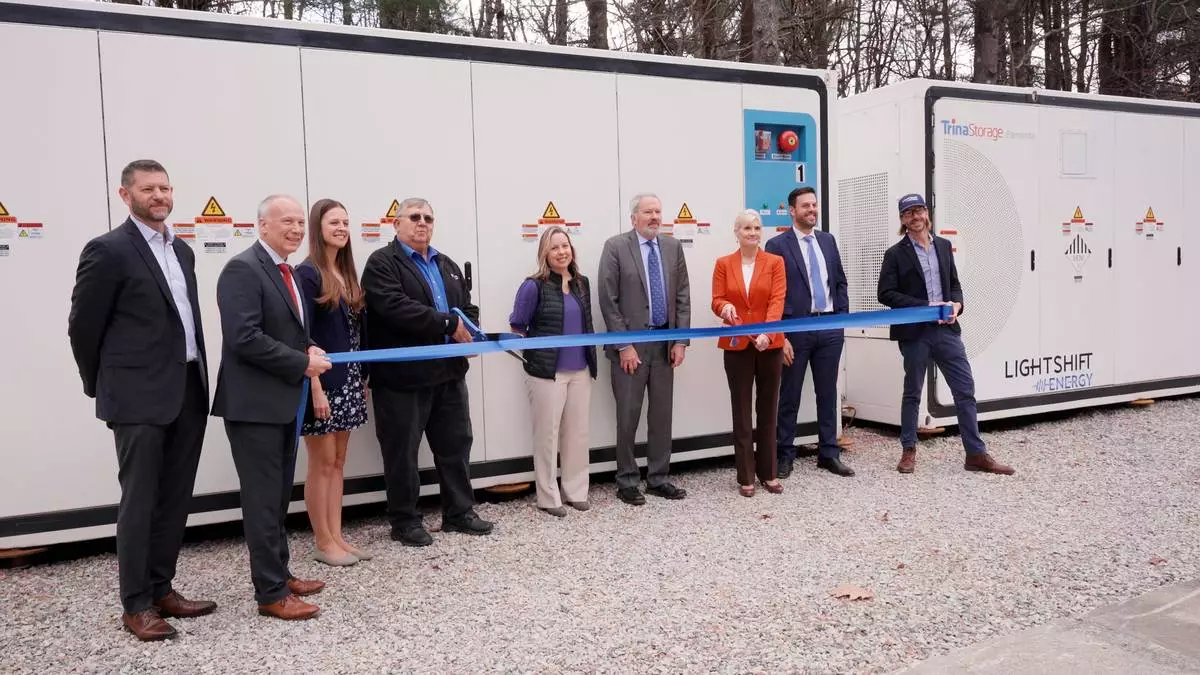
Massachusetts representatives and electeds join MMWEC and Lightshift Energy executives to unveil Paxton, MA’s new battery storage project. (Credit: Nicole Gaffney, UFO Originals)
MINNEAPOLIS (AP) — Federal agents carrying out immigration arrests in Minnesota's Twin Cities region already shaken by the fatal shooting of a woman rammed the door of one home Sunday and pushed their way inside, part of what the Department of Homeland Security has called its largest enforcement operation ever.
In a dramatic scene similar to those playing out across Minneapolis, agents captured a man in the home just minutes after pepper spraying protesters outside who had confronted the heavily armed federal agents. Along the residential street, protesters honked car horns, banged on drums and blew whistles in attempts to disrupt the operation.
Video of the clash taken by The Associated Press showed some agents pushing back protesters while a distraught woman later emerged from the house with a document that federal agents presented to arrest the man. Signed by an immigration officer, the document — unlike a warrant signed by a judge — does not authorize forced entry into a private residence. A warrant signed by an immigration officer only authorizes arrest in a public area.
Immigrant advocacy groups have conducted extensive “know-your-rights” campaigns urging people not to open their doors unless agents have a court order signed by a judge.
But within minutes of ramming the door in a neighborhood filled with single-family homes, the handcuffed man was led away.
More than 2,000 immigration arrests have been made in Minnesota since the enforcement operation began at the beginning of December, said Homeland Security spokesperson Tricia McLaughlin.
Homeland Security Secretary Kristi Noem told Fox News on Sunday that the administration would send additional federal agents to Minnesota to protect immigration officers and continue enforcement.
The Twin Cities — the latest target in President Donald Trump’s immigration enforcement campaign — is bracing for what is next after 37-year-old Renee Good was shot and killed by an immigration officer on Wednesday.
“We’re seeing a lot of immigration enforcement across Minneapolis and across the state, federal agents just swarming around our neighborhoods,” said Jason Chavez, a Minneapolis city councilmember. “They’ve definitely been out here.”
Chavez, the son of Mexican immigrants who represents an area with a growing immigrant population, said he is closely monitoring information from chat groups about where residents are seeing agents operating.
People holding whistles positioned themselves in freezing temperatures on street corners Sunday in the neighborhood where Good was killed, watching for any signs of federal agents.
More than 20,000 people have taken part in a variety of trainings to become “observers” of enforcement activities in Minnesota since the 2024 election, said Luis Argueta, a spokesperson for Unidos MN, a local human rights organization .
“It’s a role that people choose to take on voluntarily, because they choose to look out for their neighbors,” Argueta said.
The protests have been largely peaceful, but residents remained anxious. On Monday, Minneapolis public schools will start offering remote learning for the next month in response to concerns that children might feel unsafe venturing out while tensions remain high.
Many schools closed last week after Good’s shooting and the upheaval that followed.
While the enforcement activity continues, two of the state’s leading Democrats said that the investigation into Good's shooting death should not be overseen solely by the federal government.
Minneapolis Mayor Jacob Frey and U.S. Sen. Tina Smith said in separate interviews Sunday that state authorities should be included in the investigation because the federal government has already made clear what it believes happened.
“How can we trust the federal government to do an objective, unbiased investigation, without prejudice, when at the beginning of that investigation they have already announced exactly what they saw — what they think happened," Smith said on ABC’s "This Week."
The Trump administration has defended the officer who shot Good in her car, saying he was protecting himself and fellow agents and that Good had “weaponized” her vehicle.
Todd Lyons, acting director of U.S. Immigration and Customs Enforcement, defended the officer on Fox News Channel’s “The Sunday Briefing.”
"That law enforcement officer had milliseconds, if not short time to make a decision to save his life and his other fellow agents,” he said.
Lyons also said the administration’s enforcement operations in Minnesota wouldn't be needed “if local jurisdictions worked with us to turn over these criminally illegal aliens once they are already considered a public safety threat by the locals.”
The killing of Good by an ICE officer and the shooting of two people by federal agents in Portland, Oregon, led to dozens of protests in cities across the country over the weekend, including New York, Los Angeles, Washington D.C. and Oakland, California.
Contributing were Associated Press journalists Giovanna Dell’Orto in Minneapolis; Thomas Strong in Washington; Bill Barrow in Atlanta; Christopher Weber in Los Angeles; and John Seewer in Toledo, Ohio.
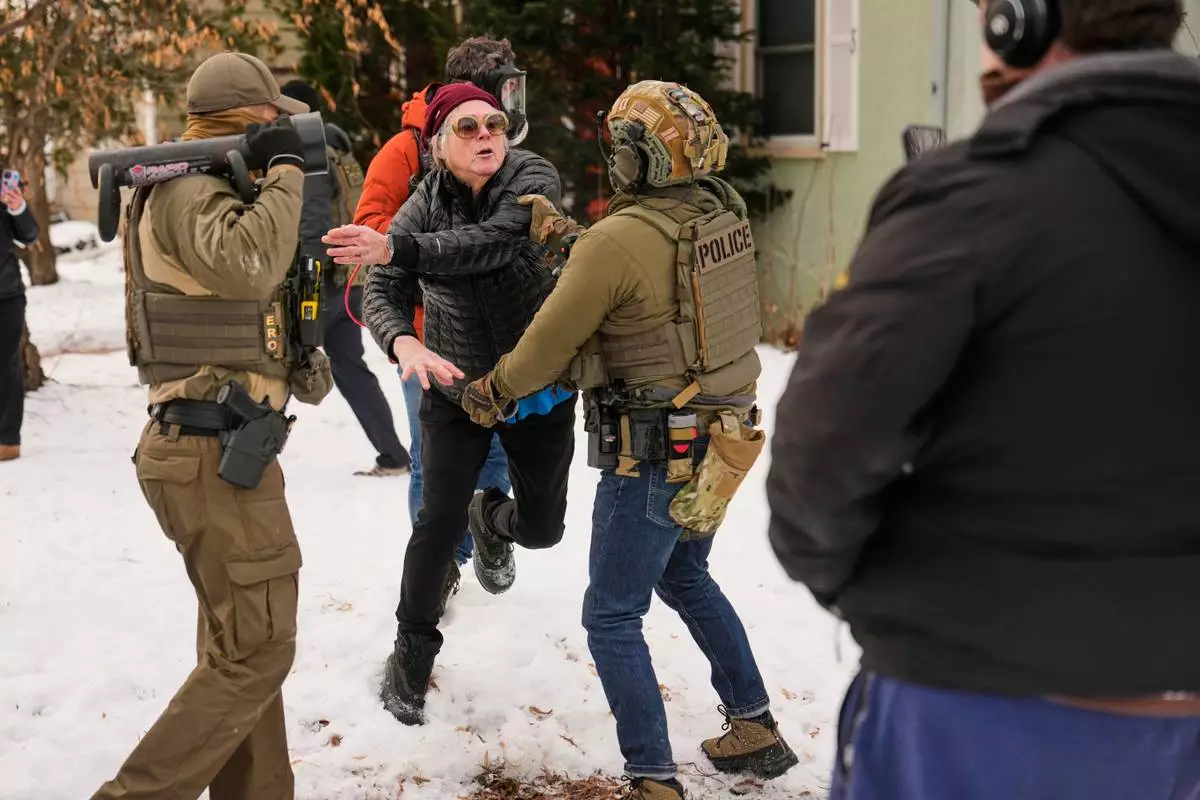
A woman gets into an altercation with a federal immigration officer as officers make an arrest Sunday, Jan. 11, 2026, in Minneapolis. (AP Photo/John Locher)

A federal immigration officer deploys pepper spray as officers make an arrest Sunday, Jan. 11, 2026, in Minneapolis. (AP Photo/John Locher)
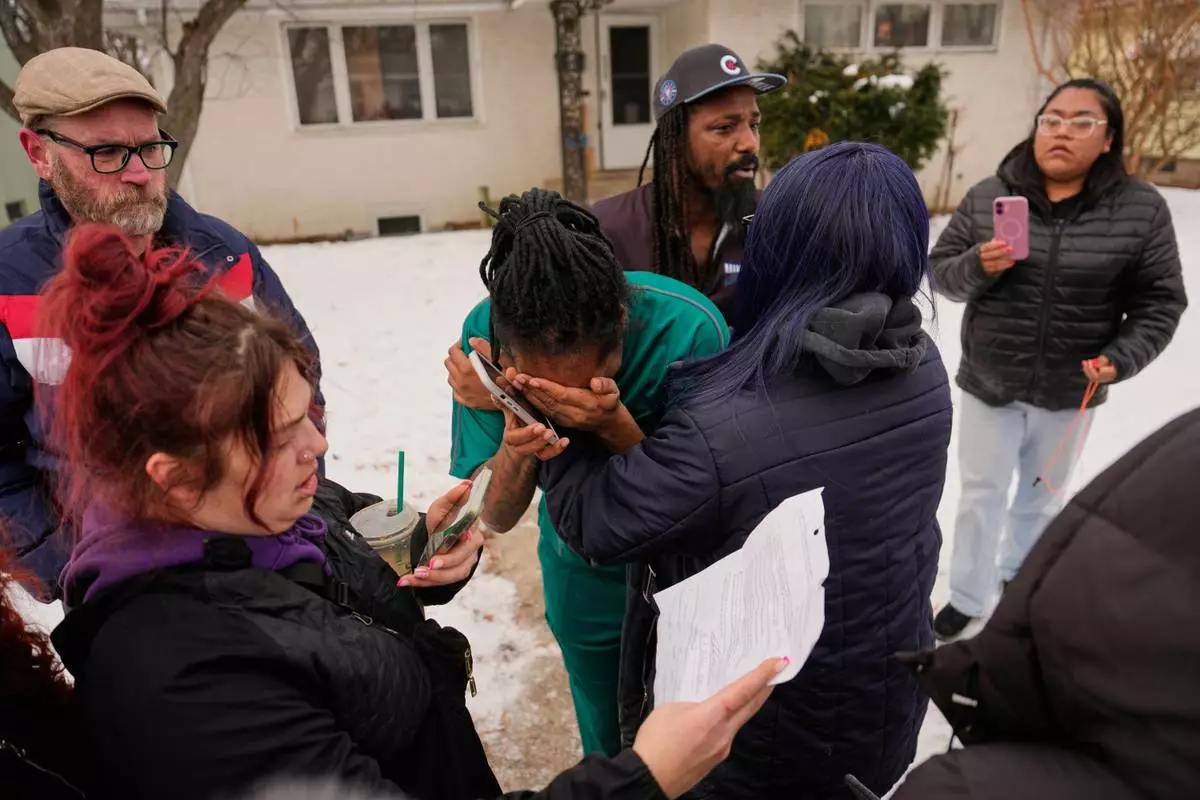
A family member, center, reacts after federal immigration officers make an arrest Sunday, Jan. 11, 2026, in Minneapolis. (AP Photo/John Locher)
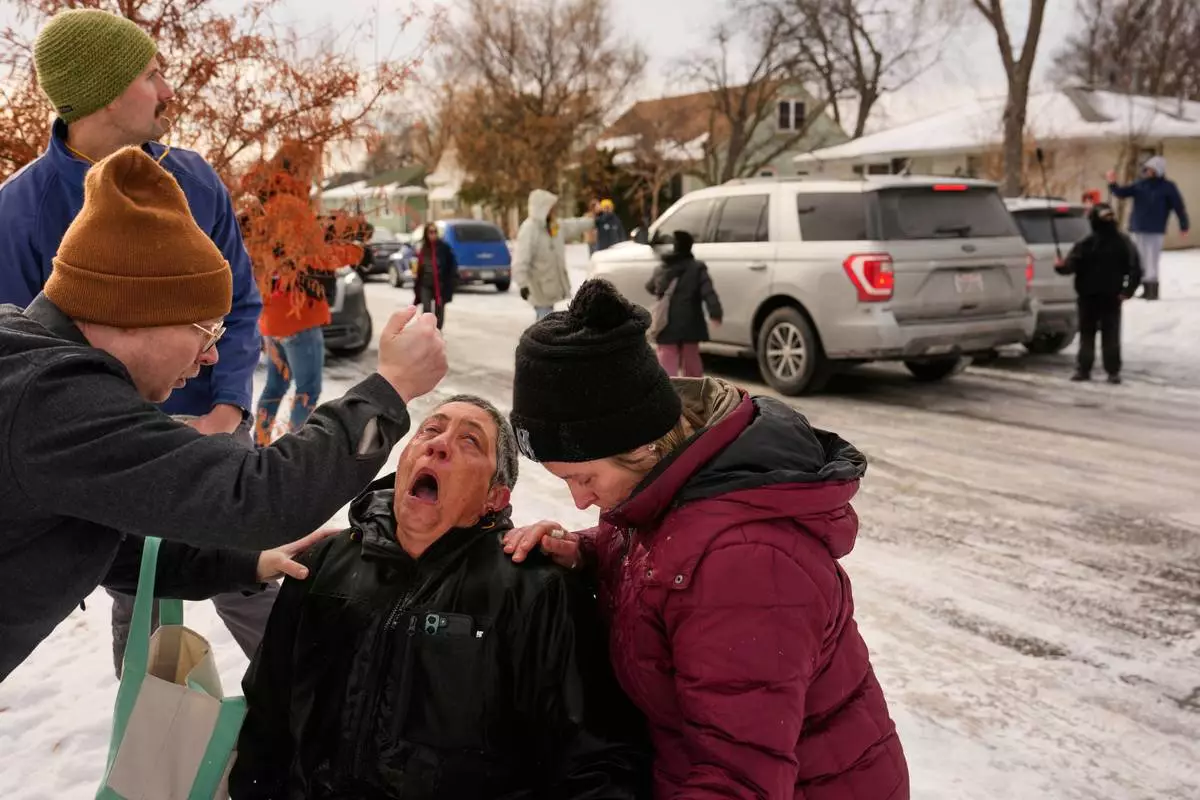
Bystanders are treated after being pepper sprayed as federal immigration officers make an arrest Sunday, Jan. 11, 2026, in Minneapolis. (AP Photo/John Locher)
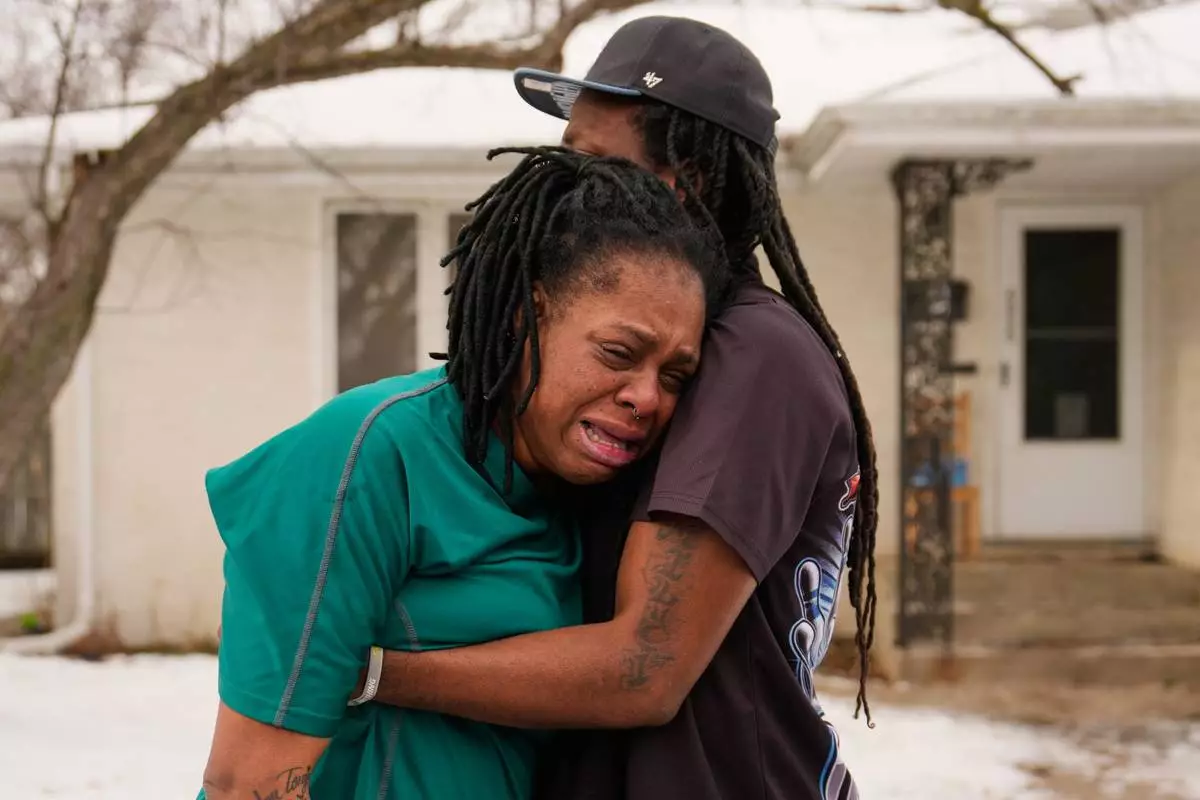
A family member reacts after federal immigration officers make an arrest Sunday, Jan. 11, 2026, in Minneapolis. (AP Photo/John Locher)
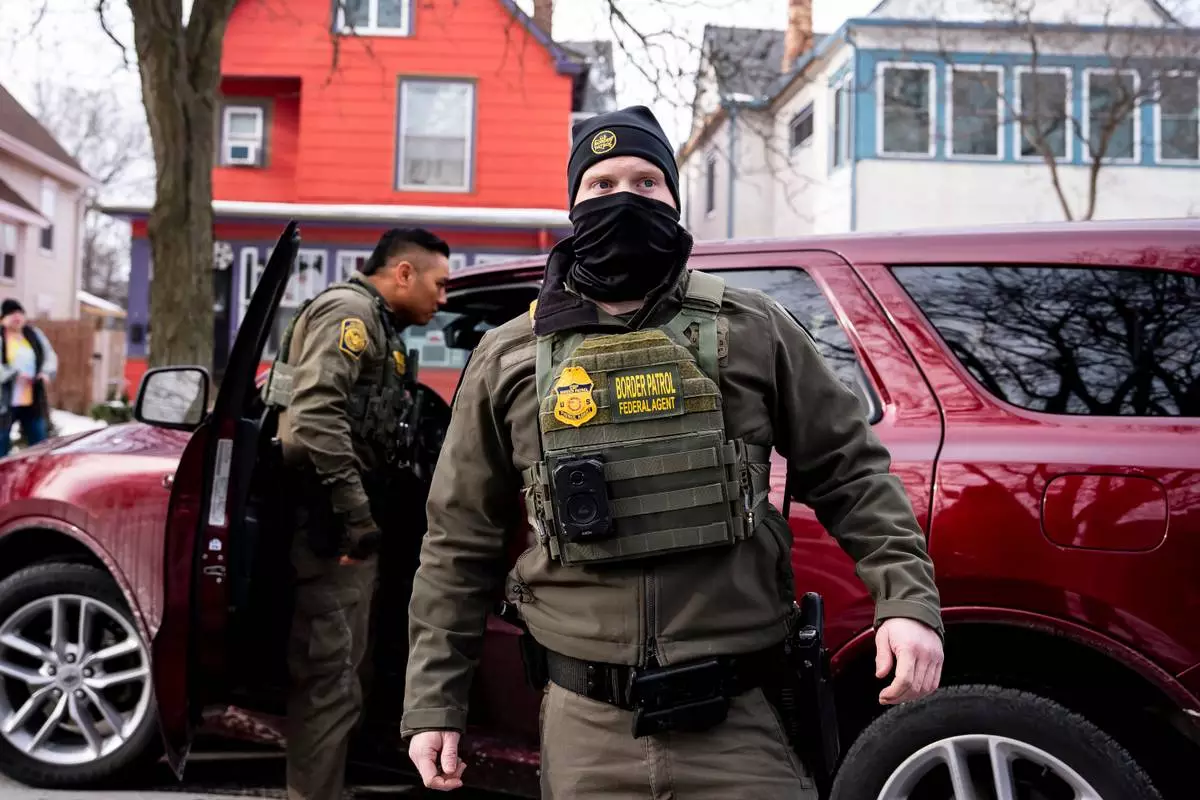
Federal agents look on after detaining a person during a patrol in Minneapolis, Minn., Sunday, Jan. 11, 2026. (Christopher Katsarov/The Canadian Press via AP)
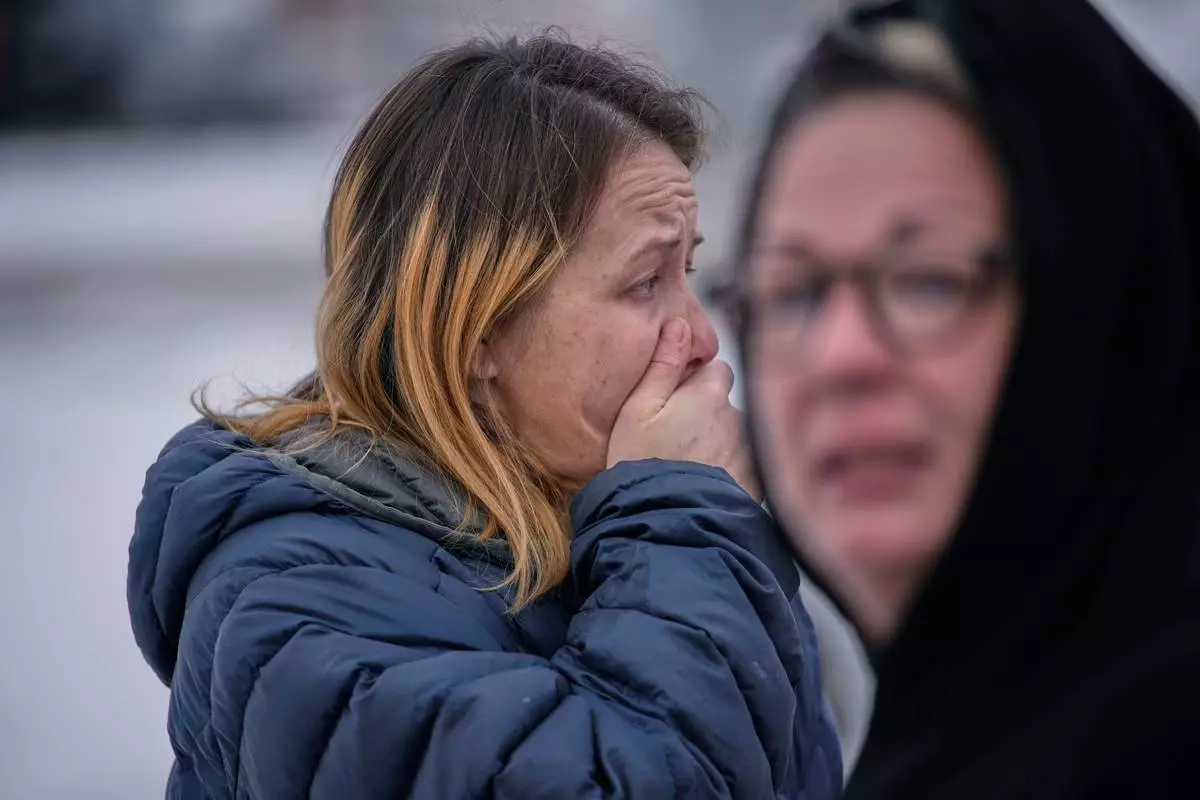
Bystanders react after a man was detained by Immigration and Customs Enforcement (ICE) agents during a traffic stop, Sunday, Jan. 11, 2026, in Robbinsdale, Minn. (AP Photo/John Locher)
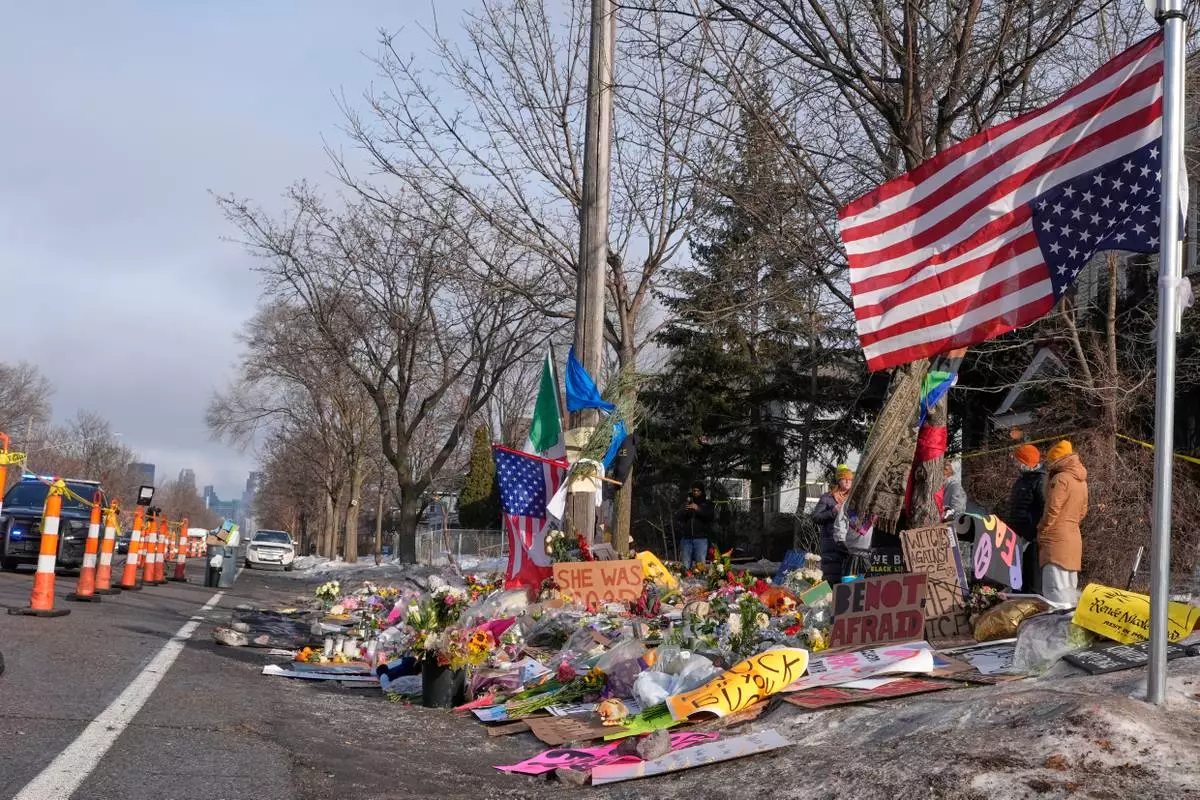
People stand near a memorial at the site where Renee Good was fatally shot by an ICE agent, Sunday, Jan. 11, 2026, in Minneapolis. (AP Photo/Jen Golbeck)
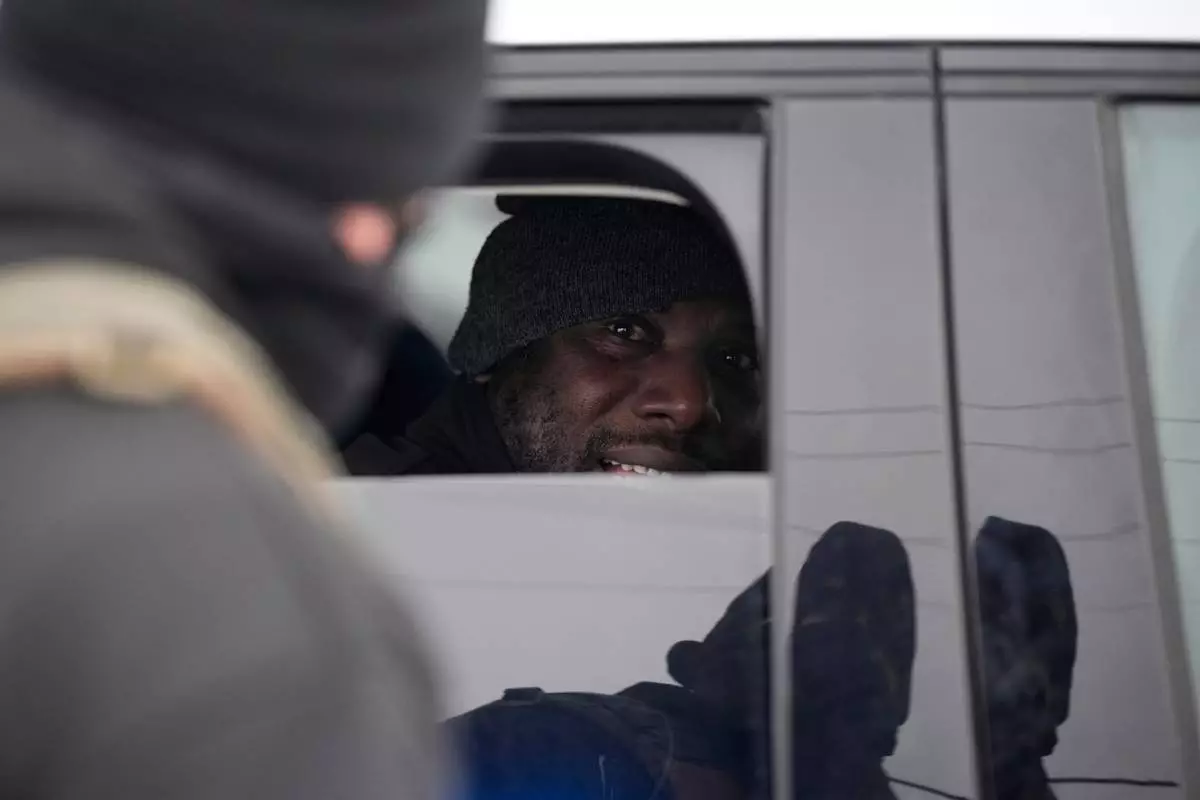
A man looks out of a car window after being detained by Immigration and Customs Enforcement (ICE) agents during a traffic stop, Sunday, Jan. 11, 2026, in Robbinsdale, Minn. (AP Photo/John Locher)
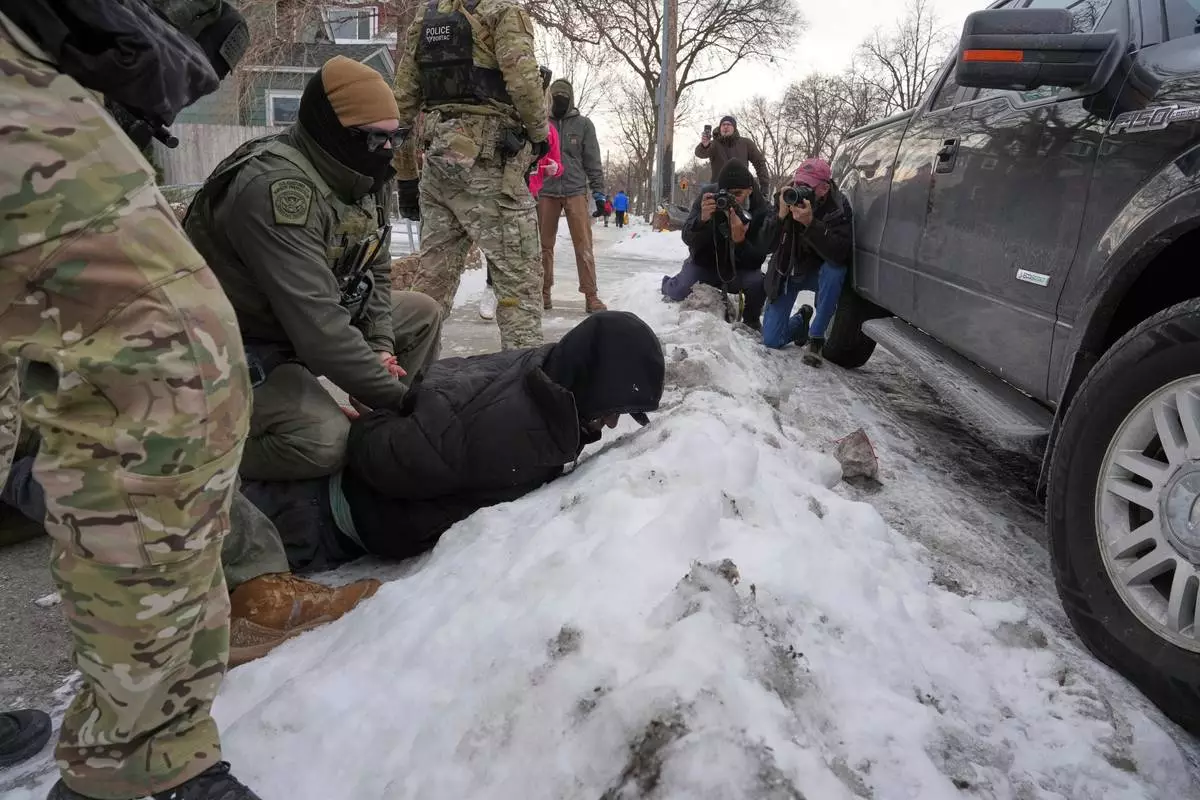
Border Patrol agents detain a man, Sunday, Jan. 11, 2026, in Minneapolis. (AP Photo/Adam Gray)
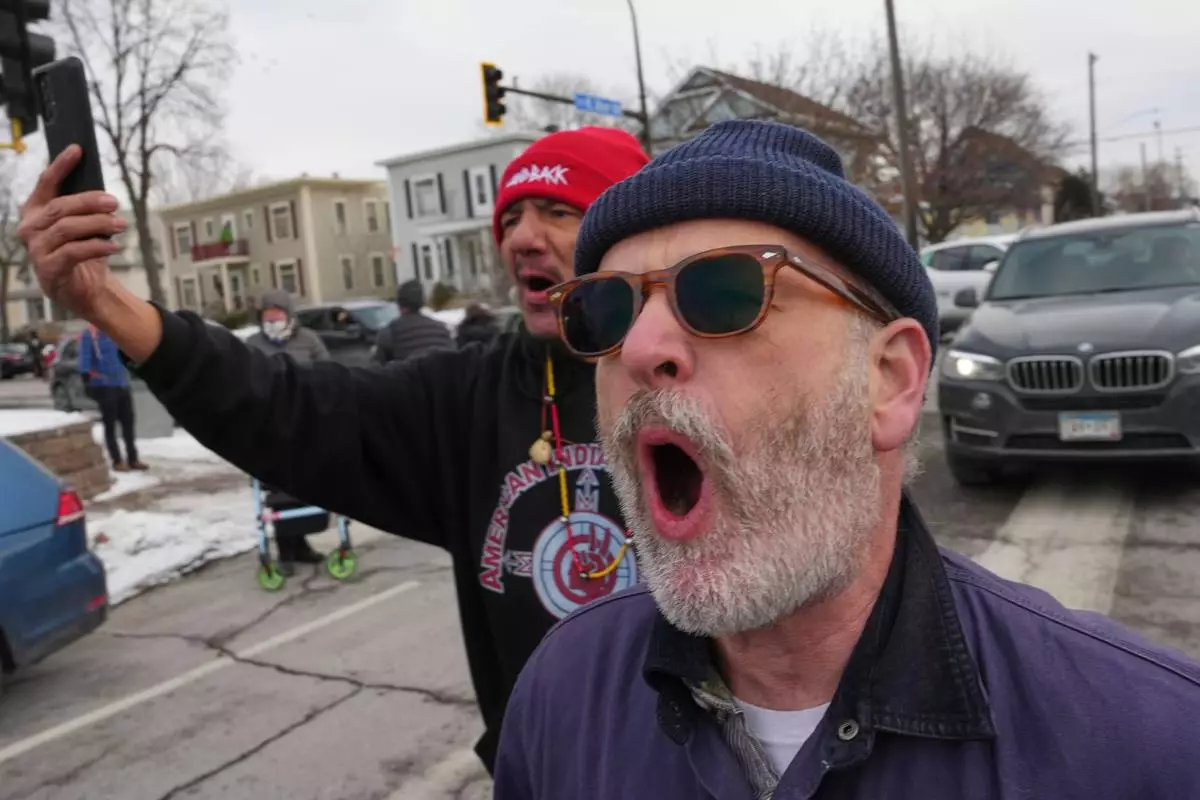
People shout toward Border Patrol agents making an arrest, Sunday, Jan. 11, 2026, in Minneapolis. (AP Photo/Adam Gray)
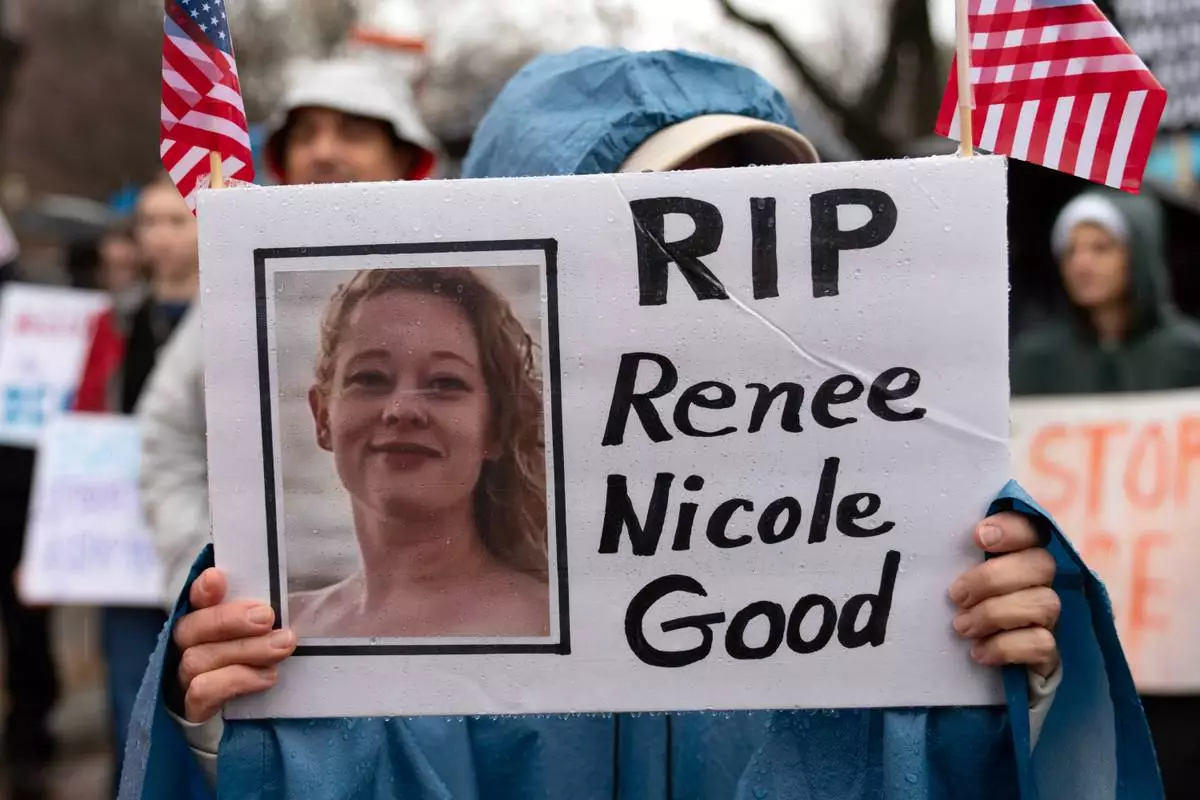
Demonstrators protest outside the White House in Washington, Saturday, Jan. 10, 2026, against the Immigration and Customs Enforcement agent who fatally shot Renee Good in Minneapolis. (AP Photo/Jose Luis Magana)
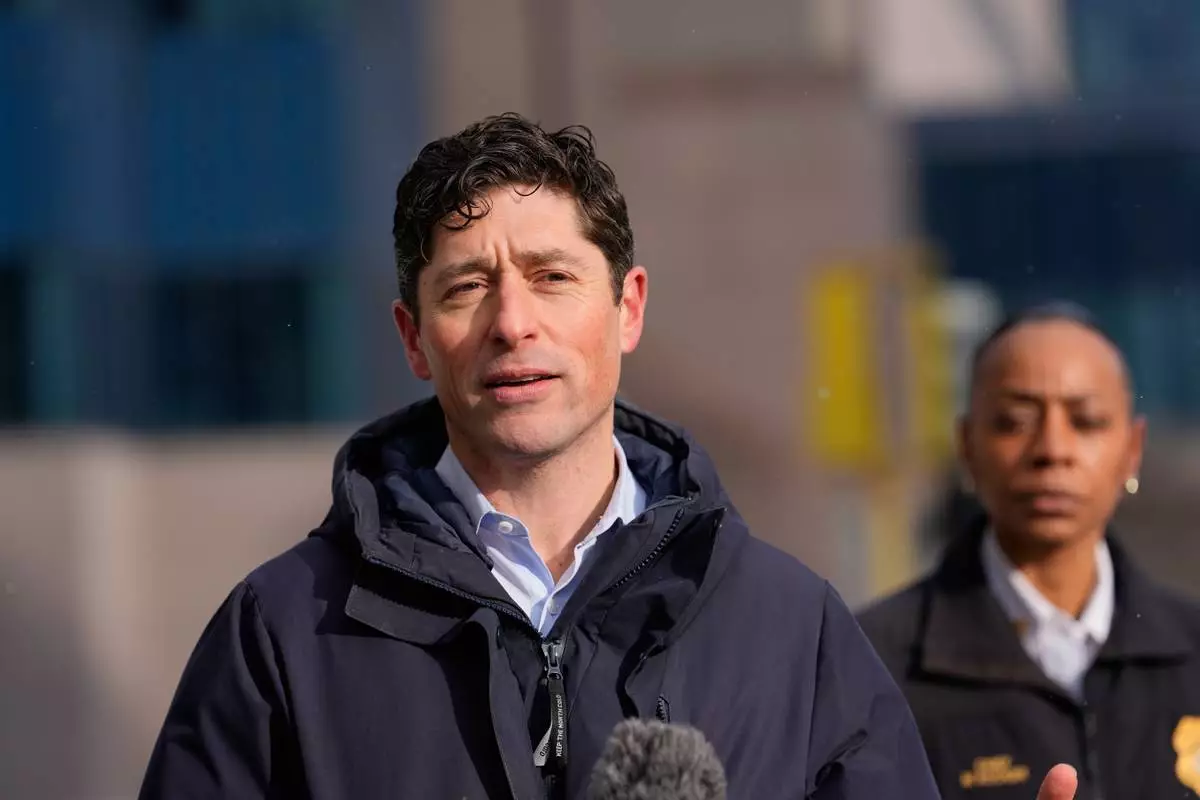
Minneapolis Mayor Jacob Frey holds a news conference on Saturday, Jan. 10, 2026, in Minneapolis. (AP Photo/Jen Golbeck)
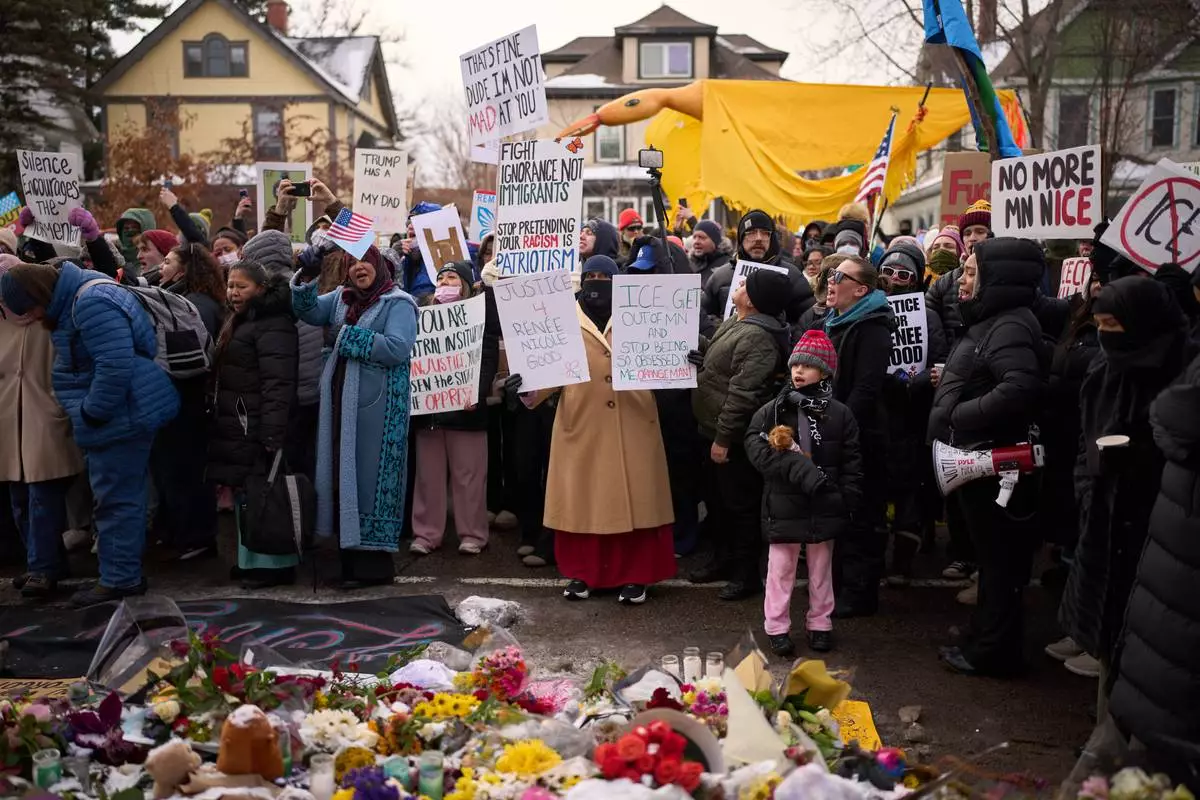
Protesters react as they visit a makeshift memorial during a rally for Renee Good, who was fatally shot by an ICE officer earlier in the week, Saturday, Jan. 10, 2026, in Minneapolis. (AP Photo/John Locher)