Skip to Content Facebook Feature Image

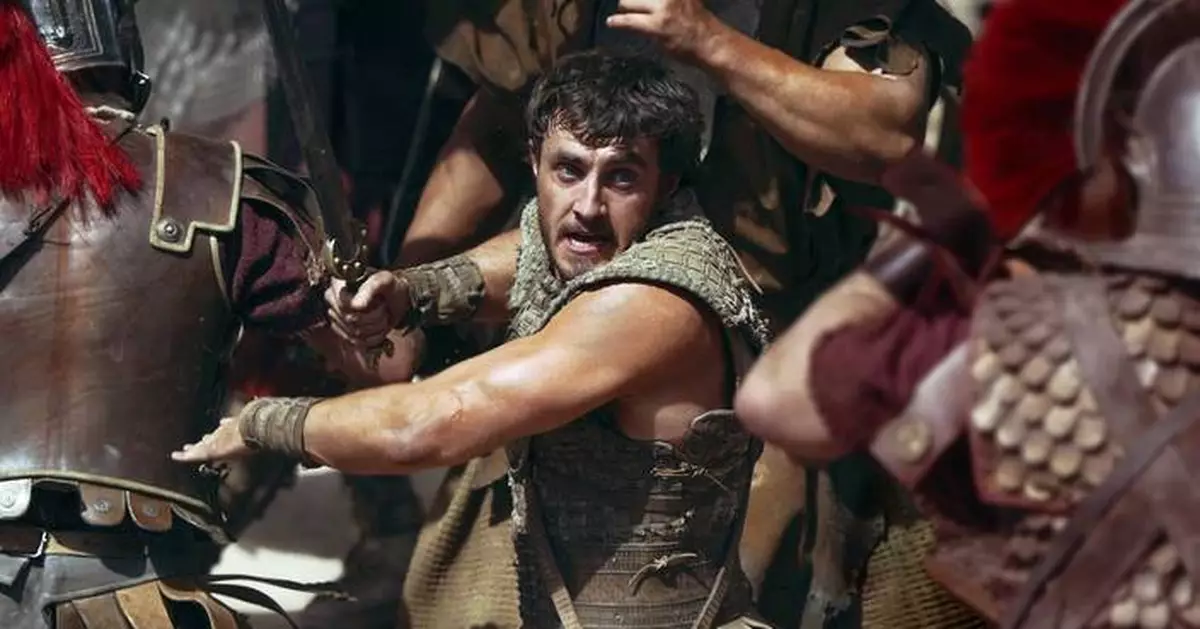
Movie Review: 'Gladiator II,' with Denzel Washington, goes back into the arena

ENT

Movie Review: 'Gladiator II,' with Denzel Washington, goes back into the arena
ENT

ENT

Movie Review: 'Gladiator II,' with Denzel Washington, goes back into the arena

2024-11-11 22:11 Last Updated At:22:21

Rome teeters on the brink in Ridley Scott’s “Gladiator II.” Its fall is said to be imminent. The dream it once symbolized is dead. The once high-minded ideals of the Roman Empire have deteriorated across a venal land now ruled by a pale-faced emperor.

On the throne is Geta (Joseph Quinn), who sits alongside his sniveling brother, Caracalla (Fred Hechinger). The heart of this Rome, of course, is the Coliseum, where throngs cheer for the gladiators who fight and die. There, the ageless Scott remains remarkably at home. The arena, with its eruptions of spectacle and violence, is a stand in for the director’s own vision of the big screen: Go big or go home.

More Images
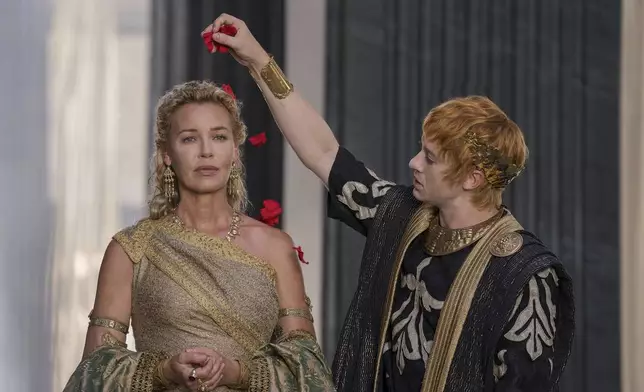
This image released by Paramount Pictures shows Connie Nielsen, left, and Joseph Quinn in a scene from "Gladiator II." (Aidan Monaghan/Paramount Pictures via AP)
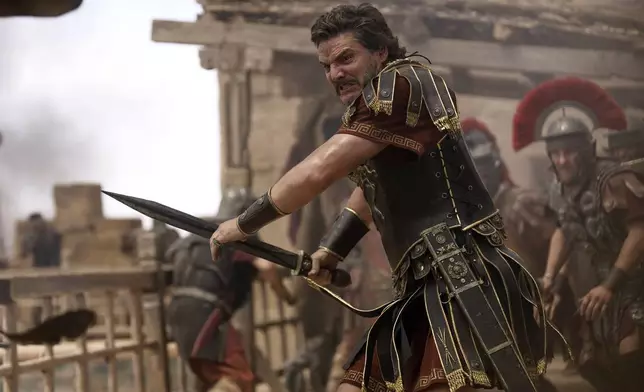
This image released by Paramount Pictures shows Connie Nielsen, left, and Joseph Quinn in a scene from "Gladiator II." (Aidan Monaghan/Paramount Pictures via AP)

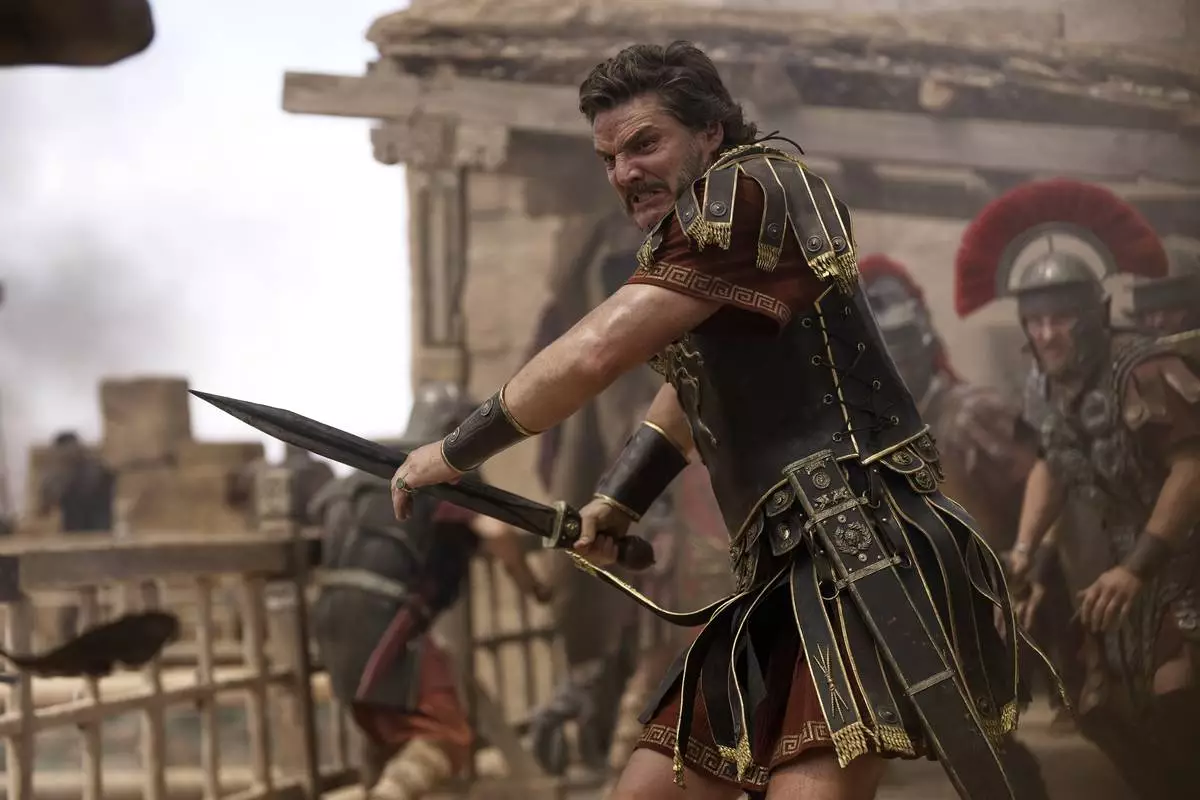
This image released by Paramount Pictures shows Pedro Pascal in a scene from "Gladiator II." (Aidan Monaghan/Paramount Pictures via AP)
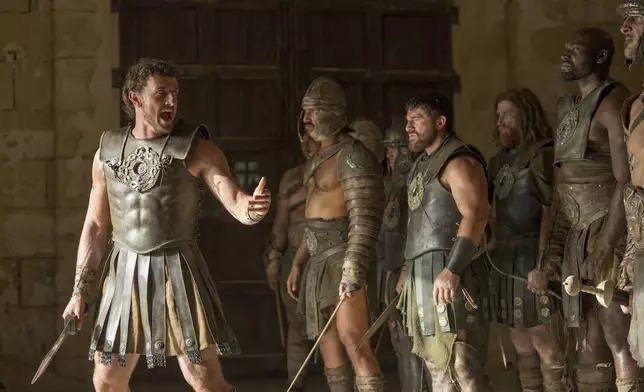
This image released by Paramount Pictures shows Pedro Pascal in a scene from "Gladiator II." (Aidan Monaghan/Paramount Pictures via AP)

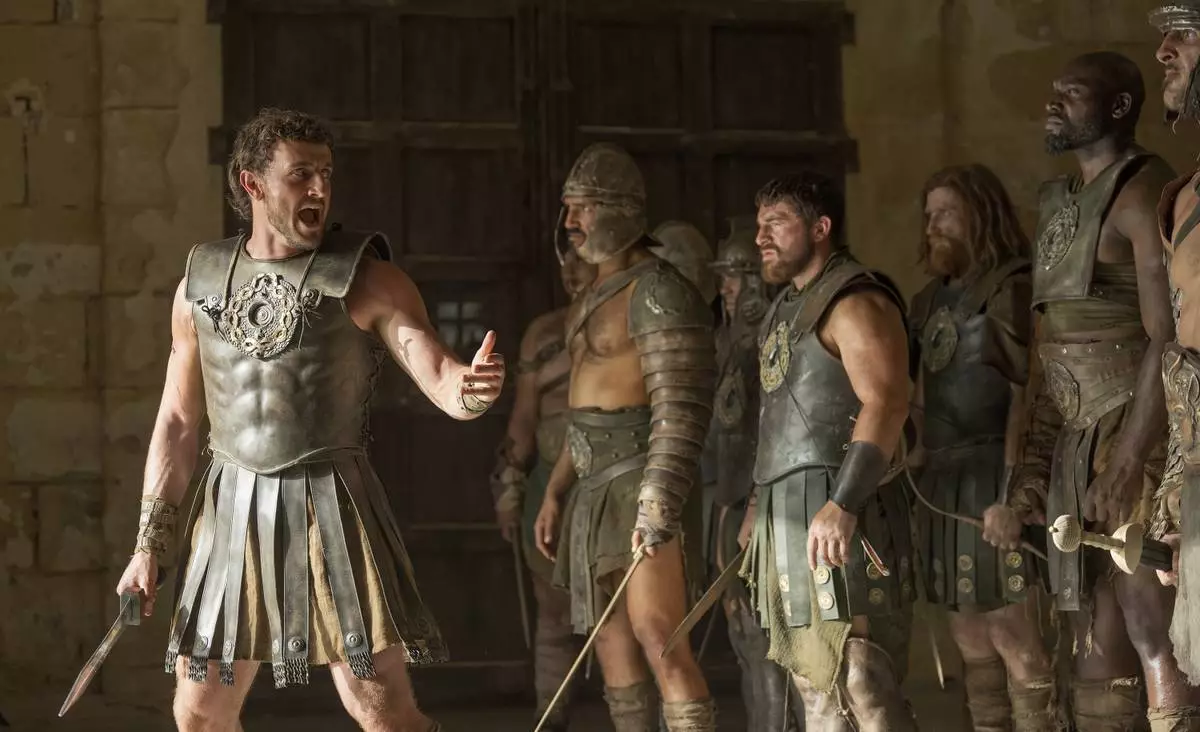
This image released by Paramount Pictures shows Paul Mescal, left, in a scene from "Gladiator II." (Aidan Monaghan/Paramount Pictures via AP)
This image released by Paramount Pictures shows Paul Mescal, left, in a scene from "Gladiator II." (Aidan Monaghan/Paramount Pictures via AP)

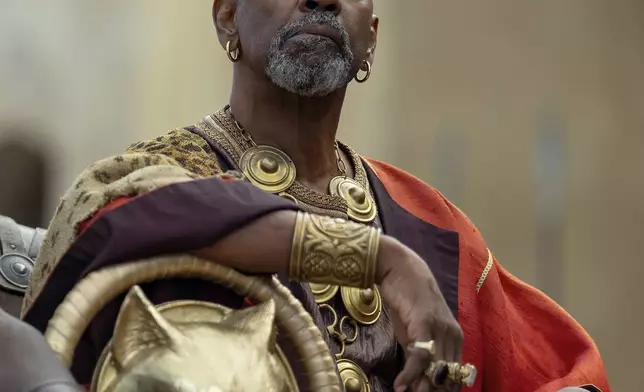
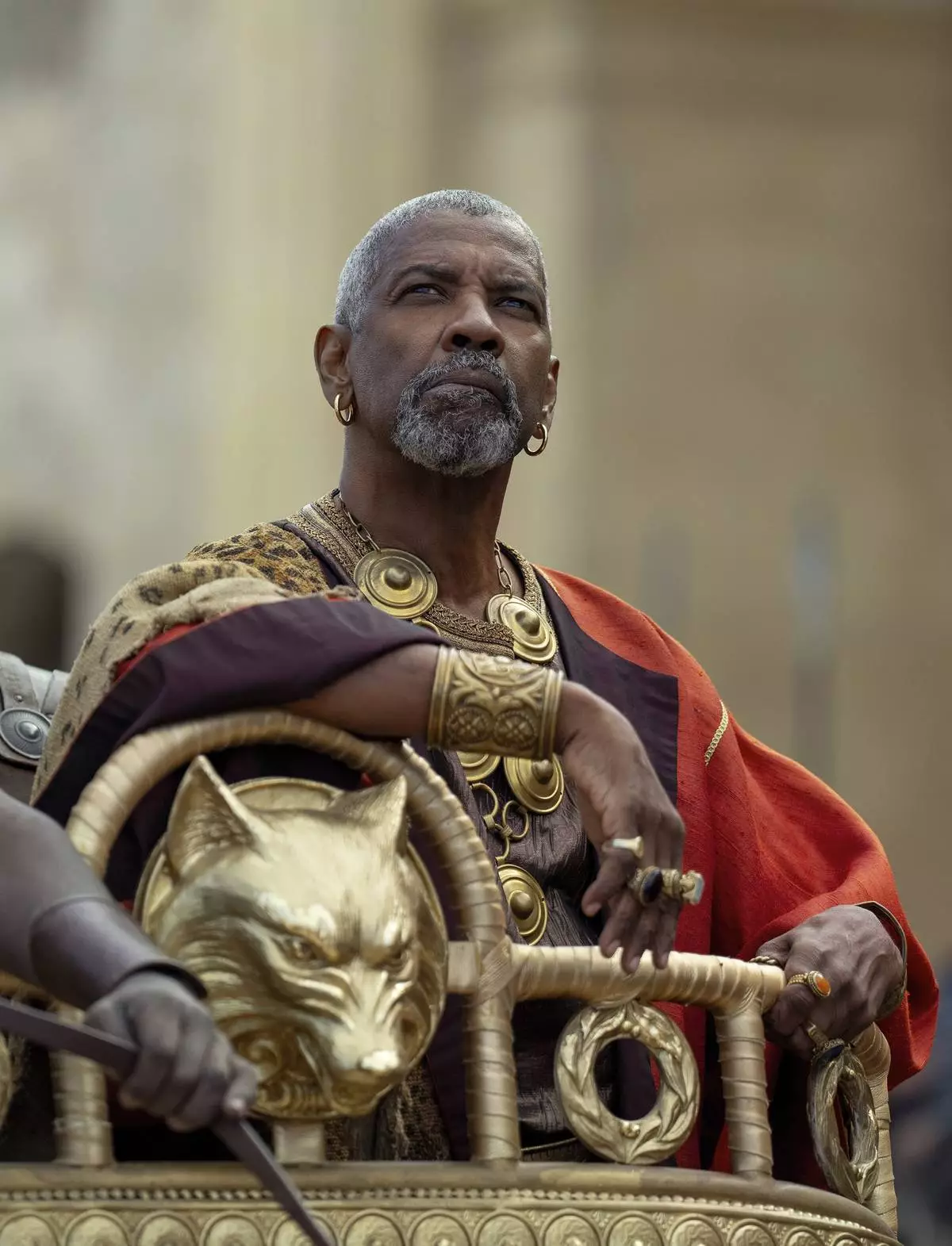
This image released by Paramount Pictures shows Denzel Washington in a scene from "Gladiator II." (Aidan Monaghan/Paramount Pictures via AP)
This image released by Paramount Pictures shows Denzel Washington in a scene from "Gladiator II." (Aidan Monaghan/Paramount Pictures via AP)

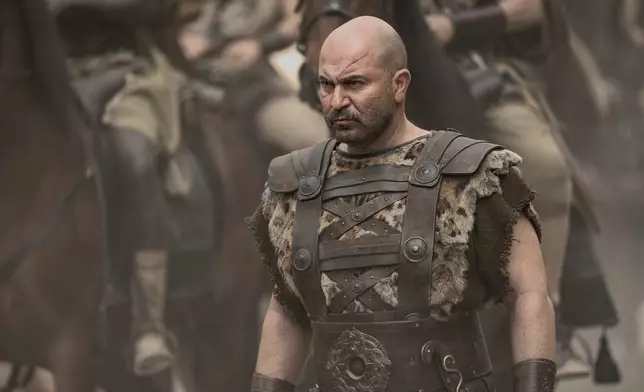
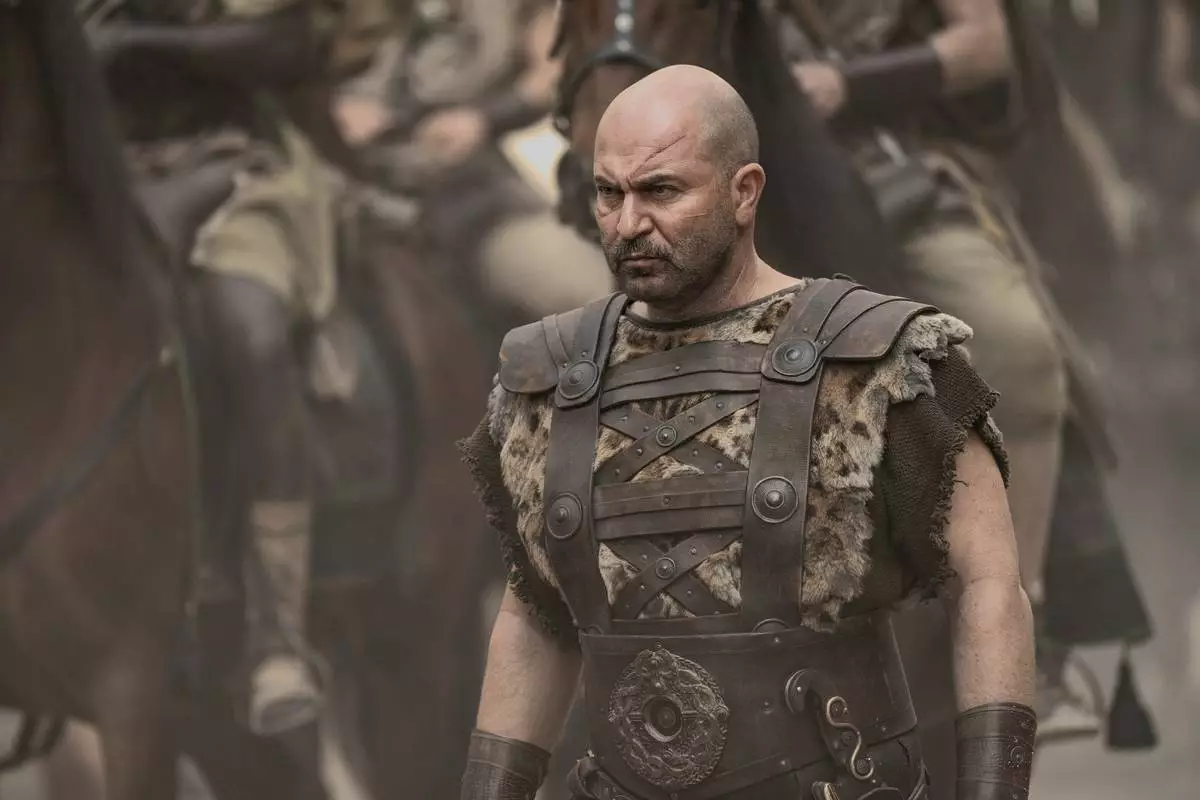
This image released by Paramount Pictures shows Lior Raz in a scene from "Gladiator II." (Aidan Monaghan/Paramount Pictures via AP)
This image released by Paramount Pictures shows Lior Raz in a scene from "Gladiator II." (Aidan Monaghan/Paramount Pictures via AP)

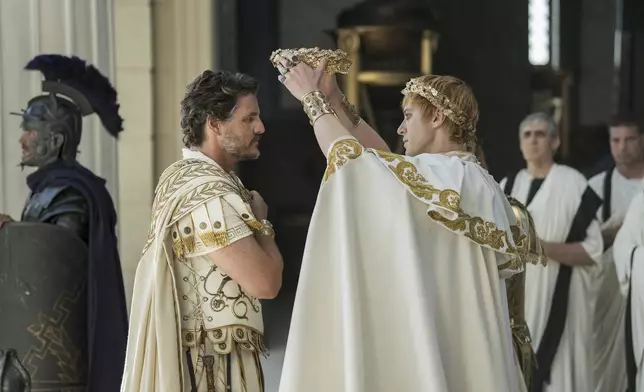
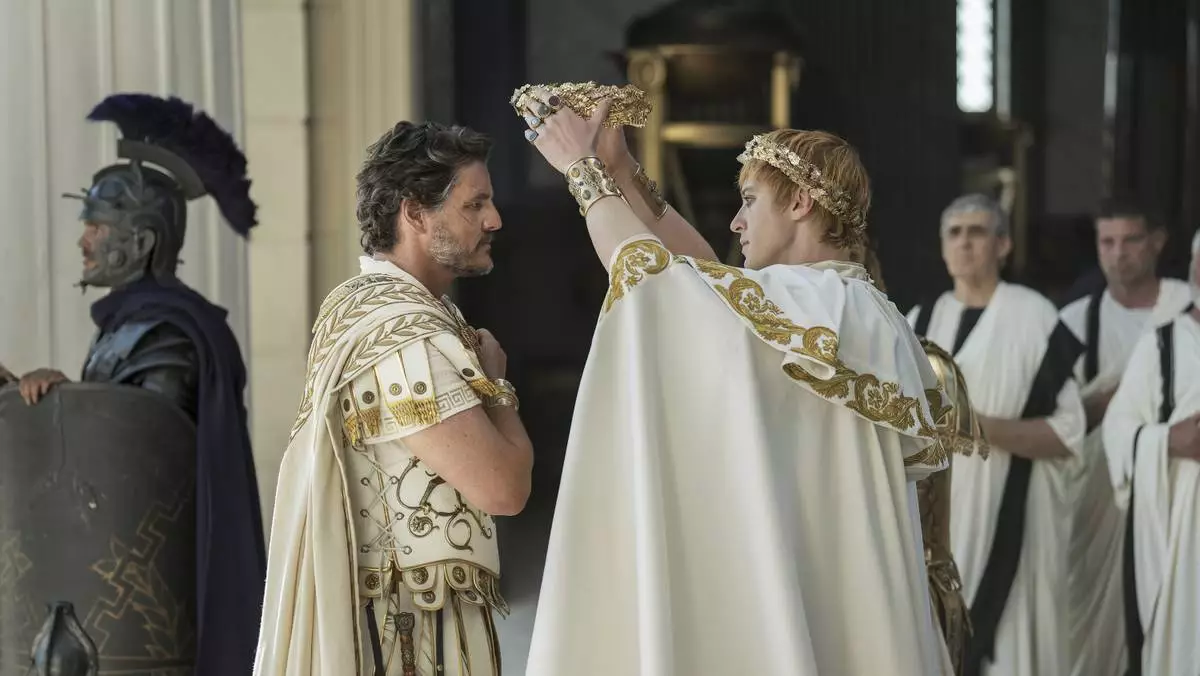
This image released by Paramount Pictures shows Pedro Pascal, left, and Joseph Quinn in a scene from "Gladiator II." (Aidan Monaghan/Paramount Pictures via AP)
This image released by Paramount Pictures shows Pedro Pascal, left, and Joseph Quinn in a scene from "Gladiator II." (Aidan Monaghan/Paramount Pictures via AP)

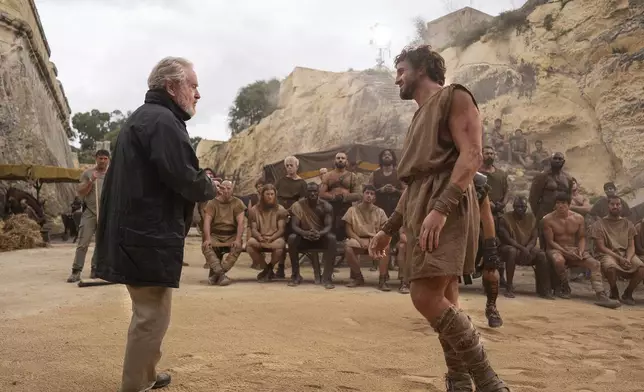
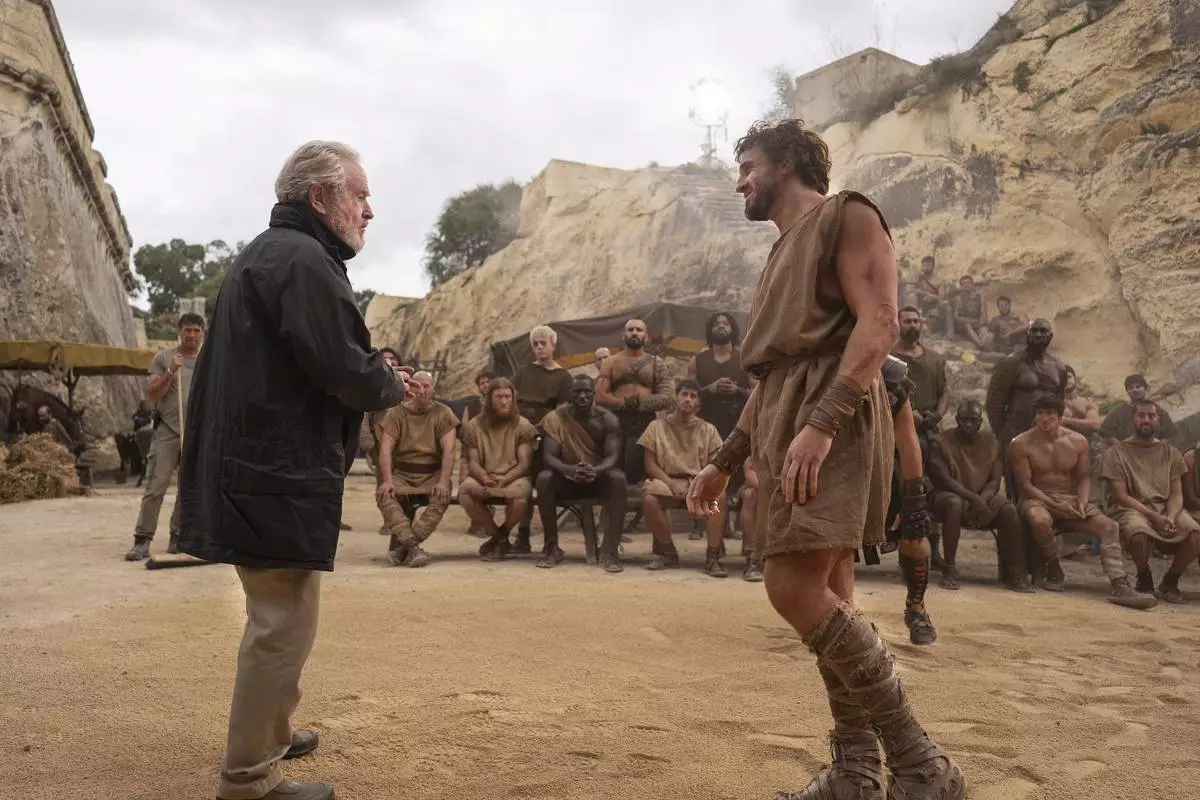
This image released by Paramount Pictures shows director Ridley Scott, left, and Paul Mescal on the set of "Gladiator II." (Aidan Monaghan/Paramount Pictures via AP)
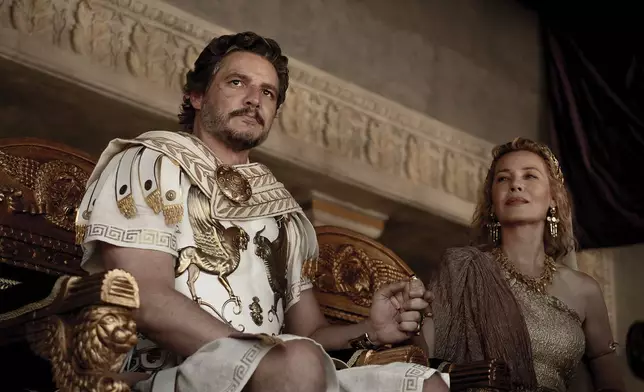
This image released by Paramount Pictures shows director Ridley Scott, left, and Paul Mescal on the set of "Gladiator II." (Aidan Monaghan/Paramount Pictures via AP)

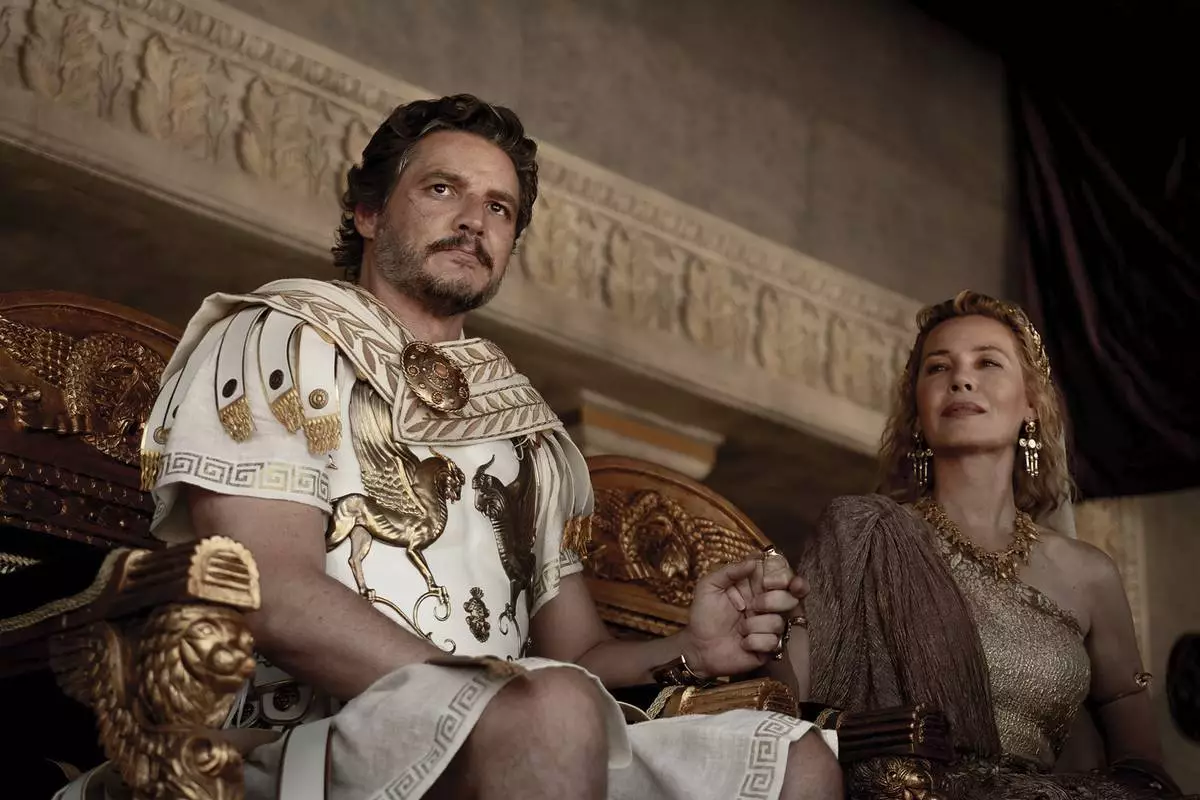
This image released by Paramount Pictures shows Pedro Pascal, left, and Connie Nielsen in a scene from "Gladiator II." (Cuba Scott/Paramount Pictures via AP)
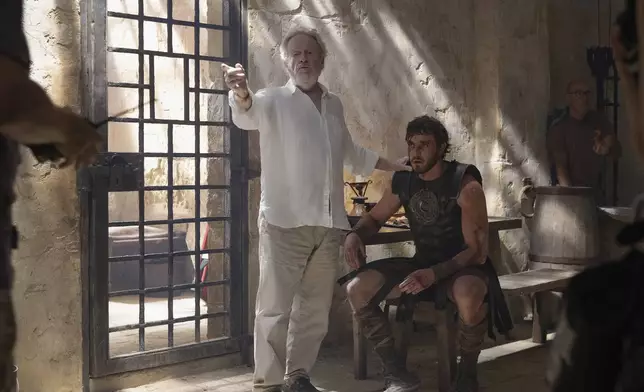
This image released by Paramount Pictures shows Pedro Pascal, left, and Connie Nielsen in a scene from "Gladiator II." (Cuba Scott/Paramount Pictures via AP)

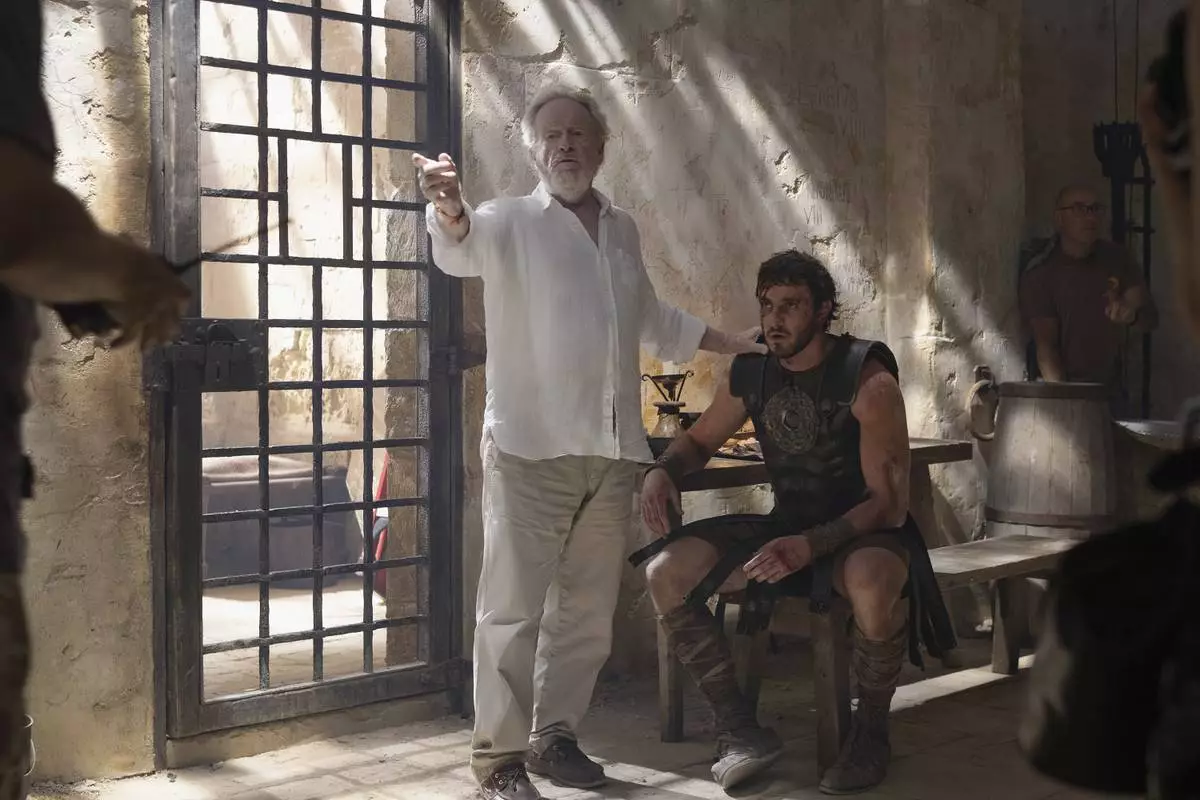
This image released by Paramount Pictures shows director Ridley Scott, center, Paul Mescal on the set of "Gladiator II." (Aidan Monaghan/Paramount Pictures via AP)
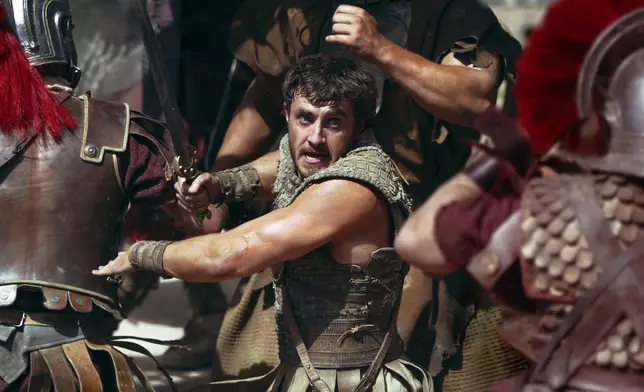
This image released by Paramount Pictures shows director Ridley Scott, center, Paul Mescal on the set of "Gladiator II." (Aidan Monaghan/Paramount Pictures via AP)

This image released by Paramount Pictures shows Paul Mescal in a scene from "Gladiator II." (Aidan Monaghan/Paramount Pictures via AP)

This image released by Paramount Pictures shows Paul Mescal in a scene from "Gladiator II." (Aidan Monaghan/Paramount Pictures via AP)

This dichotomy — a fallen society and its insatiable need for entertainment — is the clever and not altogether flattering backdrop of the “Gladiator” films. Part two, set 20 years after the events of the first movie, brings a new combatant to the Coliseum — a mysterious outsider named Lucius Verus, played by Paul Mescal. And to answer the inevitable question, yes. Yes, I was quite entertained.

“Gladiator II” isn’t quite the prestige film the first one, a best-picture winner, was in 2001. It’s more a swaggering, sword-and-sandal epic that prizes the need to entertain above all else. No one in “Gladiator II” understands that more than Denzel Washington. His performance as the Machiavellian power broker Macrinus is a delicious blur of robes and grins – so compellingly over-the-top that he nearly reaches 1990s Al Pacino standards.

Inside this Rome are scattered interests in toppling it, including Marcus Acacius, a decorated general who has just returned from a successful campaign taking Numidia in northwest Africa. (That siege makes the movie’s blistering opening, with an armada racing at almost NASCAR speed toward the walled city, with towers on the bows of the boats to scale the parapets.)

Acacius is a loyal Roman but, when he learns that the emperors have only more bloodlust for further territory and more war, he and his wife, Lucilla (Connie Nielsen) begin plotting to overthrow the brothers.

In a movie where everyone nurtures some secret, few stay hidden long. Foremost among them is Lucius Verus, a warrior in Numidia who’s taken prisoner and forced to fight as a gladiator. He’s the son of Lucilla and Maximus (Crowe in “Gladiator”). Following the events of that film, Lucilla sent him, an heir to the empire, to Numidia to grow up outside of the empire’s power struggles.

Mescal, the terrific Irish actor of “Aftersun” and “All of Us Strangers,” smoothly steps into a blockbuster arena for the first time. “This one is interesting,” says Macrinus, eyeing him for the first time. Mescal’s Lucius is vengeful — the Roman army kills his warrior wife in the Numidia battle. “Rage pours out of you like milk,” Macrinus says, admiringly. The glint of mischief in Mescal’s eyes gives Lucius a little more character than your average revenge-seeking gladiator.

We watch as Lucius cunningly survives arena after arena. Meanwhile, Macrinus manipulates him to steer the public’s routing interest away from the emperor. It’s a rich if slightly cartoonish tapestry of palace intrigue, with Macrinus deftly pulling all the strings.

But, really, none of the power machinations are as compelling as the increasingly carnivalesque scenes of the Coliseum. In the gladiators' first trip there, they’re greeted by man-eating monkeys. Next, it’s a rider atop a giant, charging rhinoceros. Then, the piece de resistance: a flooded Coliseum festering with sharks. There are even little mock islands with palm trees spread about.

Now, “Gladiator II” may not stand up to much inquiry from historians. (Some issues were also taken with Scott’s last historical epic, “Napoleon,” which likewise was scripted by David Scarpa). But this is not a movie built for accuracy. It’s made for taking a few bits of history and inflating them into a feast and the charms of watching Washington’s Macrinus brandish a head recently relieved of its body.

Yes, heads do roll in Scott’s “Gladiator” sequel. Macrinus succeeds in whipping Rome into a frenzy. In fact, he does it so easily and guilefully that, once things begin unraveling for him, the air leaves “Gladiator II.” You don’t quite believe his recklessness after he so patiently and artfully turned the screws.

Nevertheless, two possible successors emerge – Lucius, who has a birthright to the throne, and Macrinus, who comes to within its grasp purely by his own wit. Is it any wonder that I was rooting for Macrinus, all the way? How could you not, with Washington chewing scenery like this and making zestful (and rather apt) pronouncements like: “That, my friend, is politics!”

“Gladiator II,” a Paramount Pictures release. is rated R by the Motion Picture Association for “strong bloody violence.” Running time: 148 minutes. Three stars out of four.
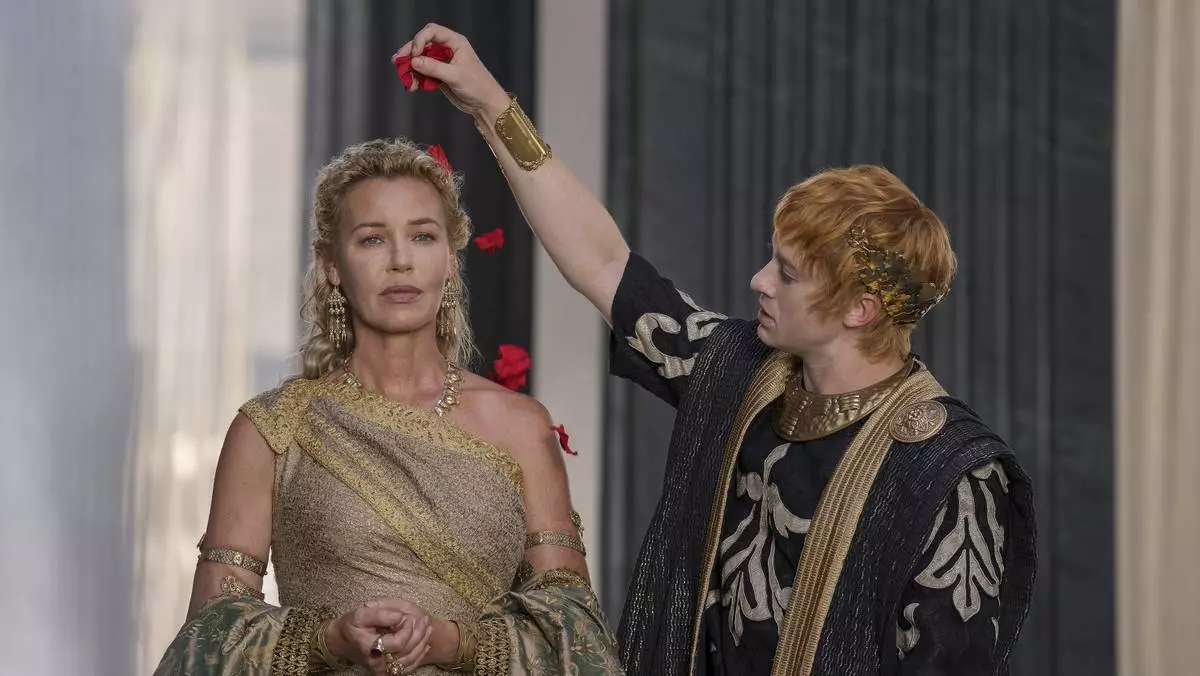
This image released by Paramount Pictures shows Connie Nielsen, left, and Joseph Quinn in a scene from "Gladiator II." (Aidan Monaghan/Paramount Pictures via AP)
This image released by Paramount Pictures shows Connie Nielsen, left, and Joseph Quinn in a scene from "Gladiator II." (Aidan Monaghan/Paramount Pictures via AP)

This image released by Paramount Pictures shows Pedro Pascal in a scene from "Gladiator II." (Aidan Monaghan/Paramount Pictures via AP)
This image released by Paramount Pictures shows Pedro Pascal in a scene from "Gladiator II." (Aidan Monaghan/Paramount Pictures via AP)

This image released by Paramount Pictures shows Paul Mescal, left, in a scene from "Gladiator II." (Aidan Monaghan/Paramount Pictures via AP)
This image released by Paramount Pictures shows Paul Mescal, left, in a scene from "Gladiator II." (Aidan Monaghan/Paramount Pictures via AP)

This image released by Paramount Pictures shows Denzel Washington in a scene from "Gladiator II." (Aidan Monaghan/Paramount Pictures via AP)
This image released by Paramount Pictures shows Denzel Washington in a scene from "Gladiator II." (Aidan Monaghan/Paramount Pictures via AP)

This image released by Paramount Pictures shows Lior Raz in a scene from "Gladiator II." (Aidan Monaghan/Paramount Pictures via AP)
This image released by Paramount Pictures shows Lior Raz in a scene from "Gladiator II." (Aidan Monaghan/Paramount Pictures via AP)

This image released by Paramount Pictures shows Pedro Pascal, left, and Joseph Quinn in a scene from "Gladiator II." (Aidan Monaghan/Paramount Pictures via AP)
This image released by Paramount Pictures shows Pedro Pascal, left, and Joseph Quinn in a scene from "Gladiator II." (Aidan Monaghan/Paramount Pictures via AP)

This image released by Paramount Pictures shows director Ridley Scott, left, and Paul Mescal on the set of "Gladiator II." (Aidan Monaghan/Paramount Pictures via AP)
This image released by Paramount Pictures shows director Ridley Scott, left, and Paul Mescal on the set of "Gladiator II." (Aidan Monaghan/Paramount Pictures via AP)

This image released by Paramount Pictures shows Pedro Pascal, left, and Connie Nielsen in a scene from "Gladiator II." (Cuba Scott/Paramount Pictures via AP)
This image released by Paramount Pictures shows Pedro Pascal, left, and Connie Nielsen in a scene from "Gladiator II." (Cuba Scott/Paramount Pictures via AP)

This image released by Paramount Pictures shows director Ridley Scott, center, Paul Mescal on the set of "Gladiator II." (Aidan Monaghan/Paramount Pictures via AP)
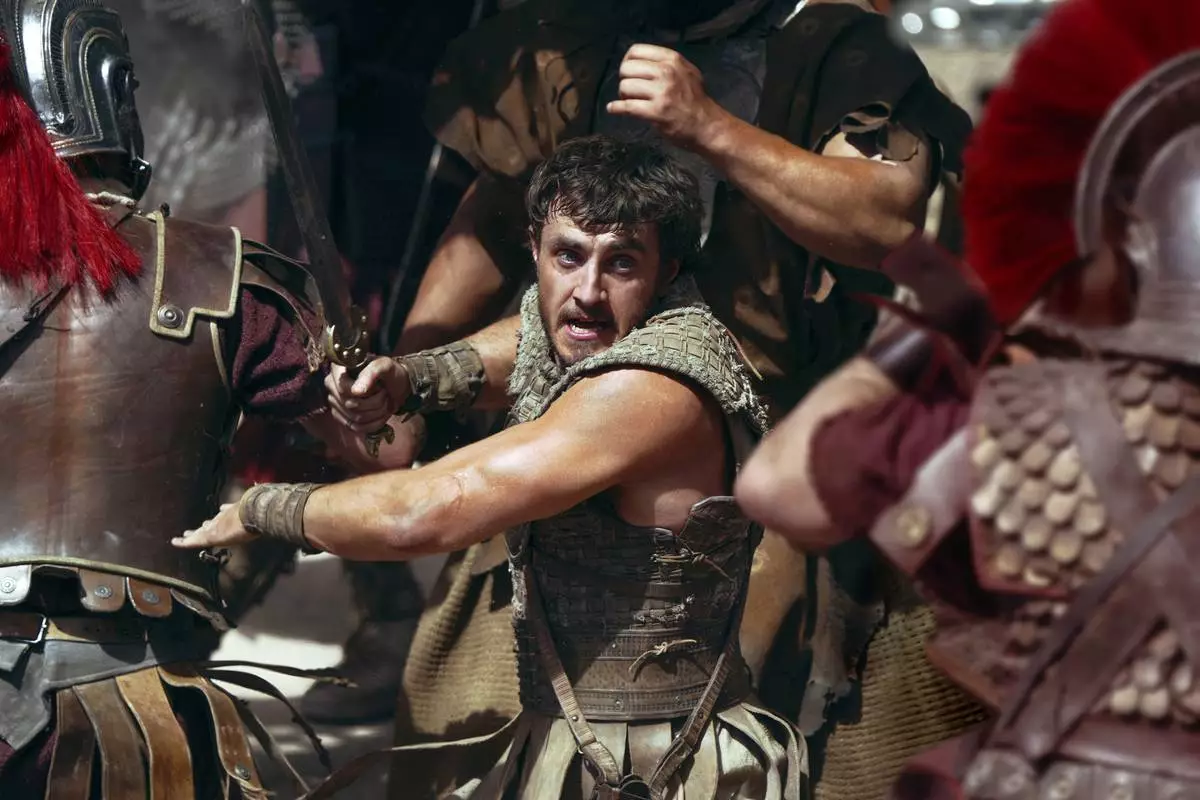
This image released by Paramount Pictures shows director Ridley Scott, center, Paul Mescal on the set of "Gladiator II." (Aidan Monaghan/Paramount Pictures via AP)

This image released by Paramount Pictures shows Paul Mescal in a scene from "Gladiator II." (Aidan Monaghan/Paramount Pictures via AP)
This image released by Paramount Pictures shows Paul Mescal in a scene from "Gladiator II." (Aidan Monaghan/Paramount Pictures via AP)
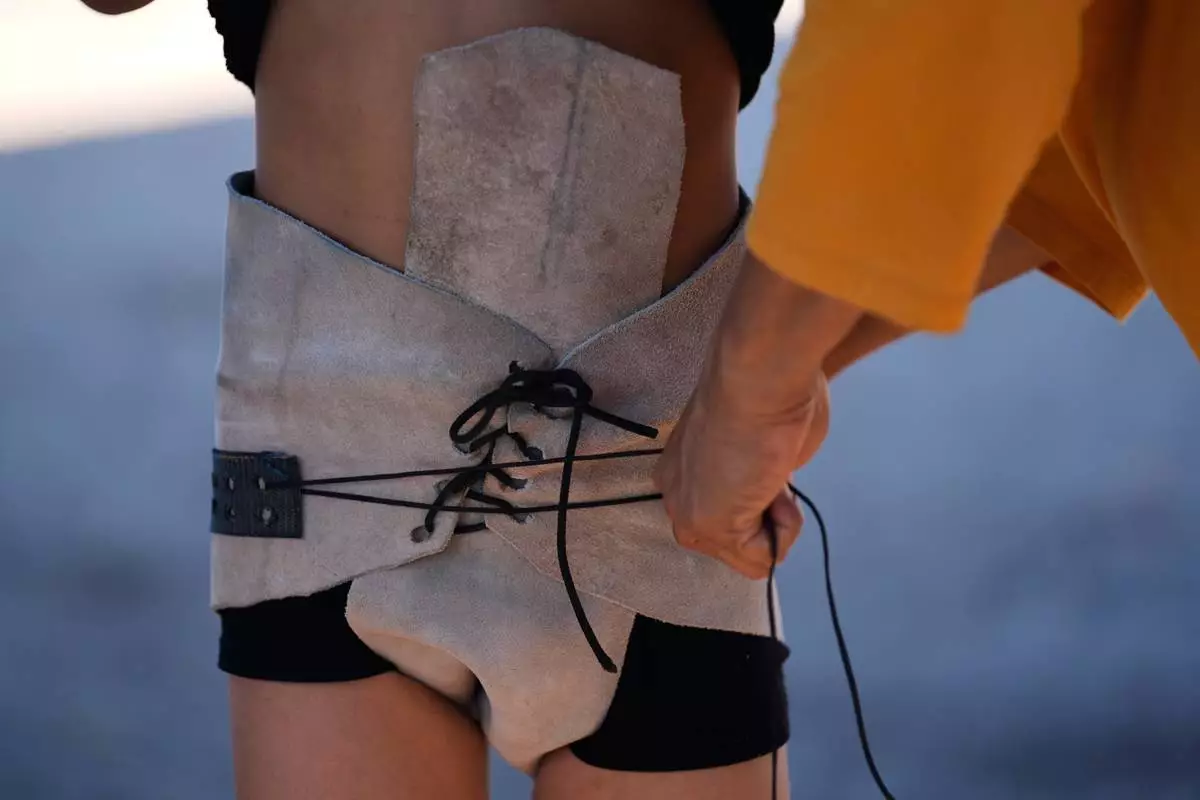
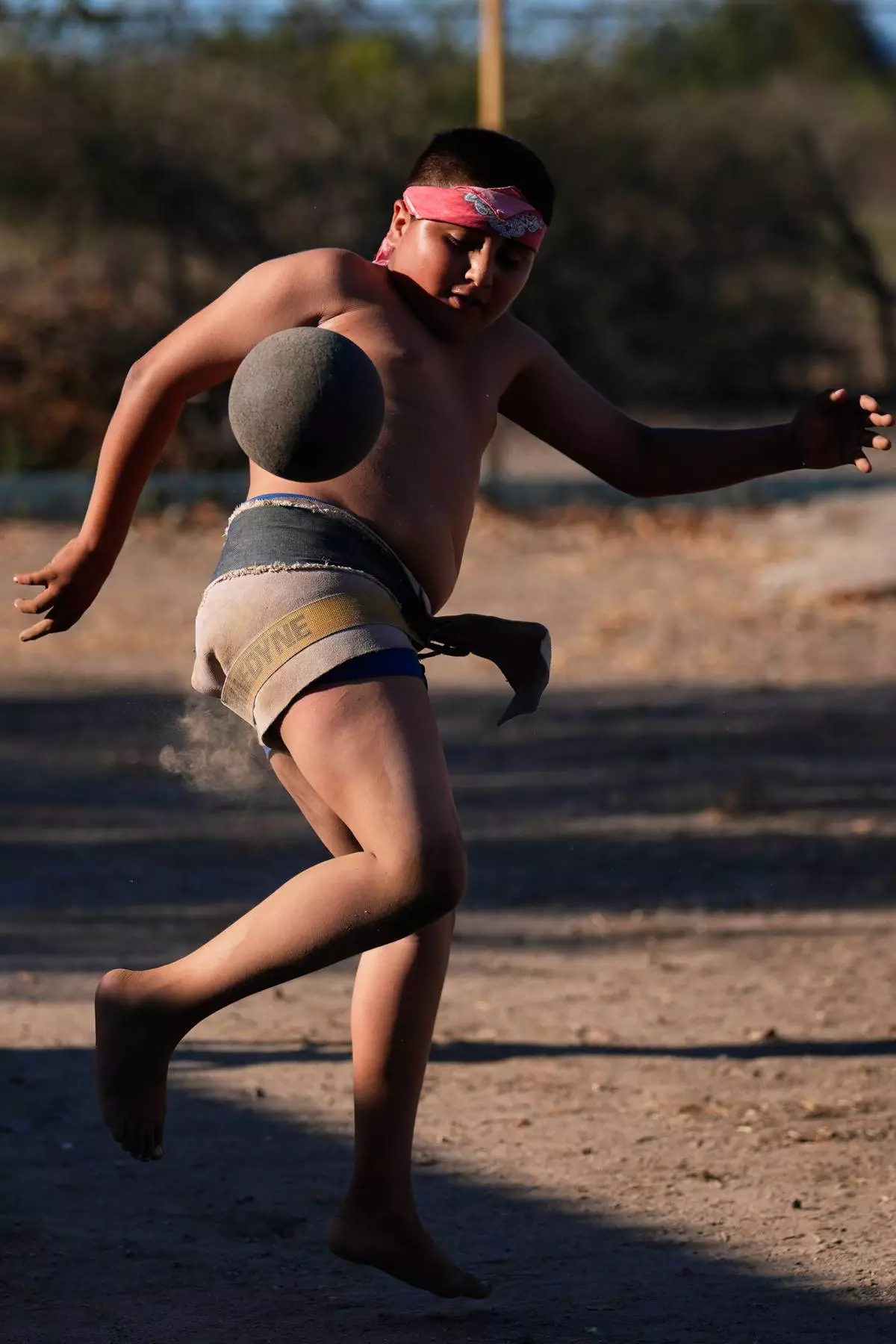
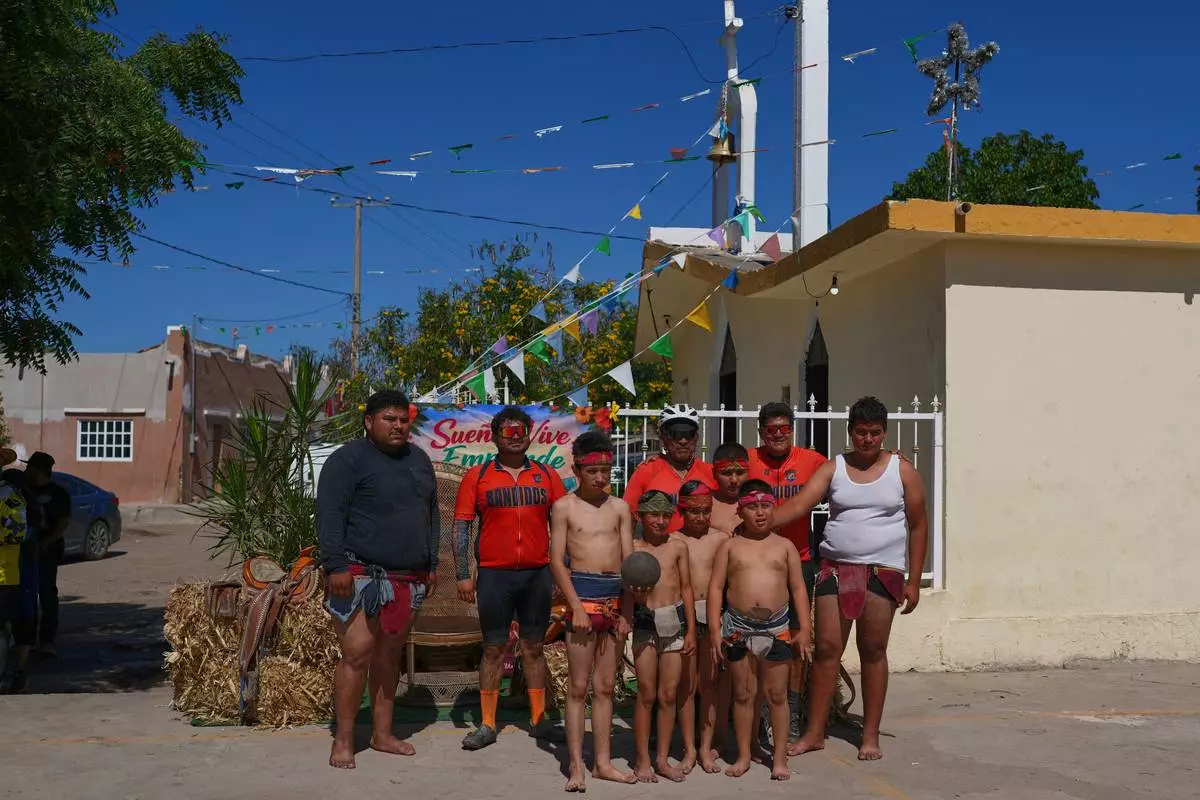
LOS LLANITOS, México (AP) — On a dirt field on Mexico’s Pacific coast, five cousins between the ages of 8 and 13 strip down and kick off their shoes. Nearby, adults help them fasten the pre-Hispanic-style “fajado,” securing loincloths and leather belts that wrap around their hips.

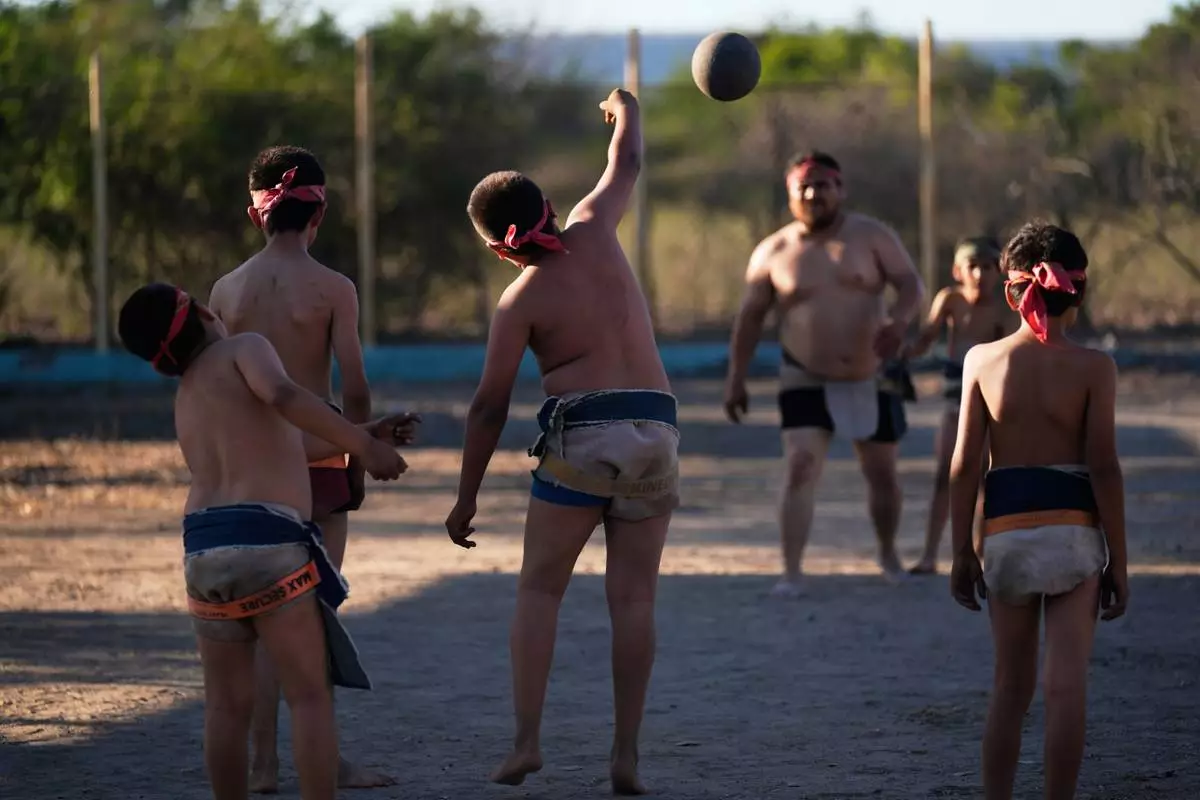
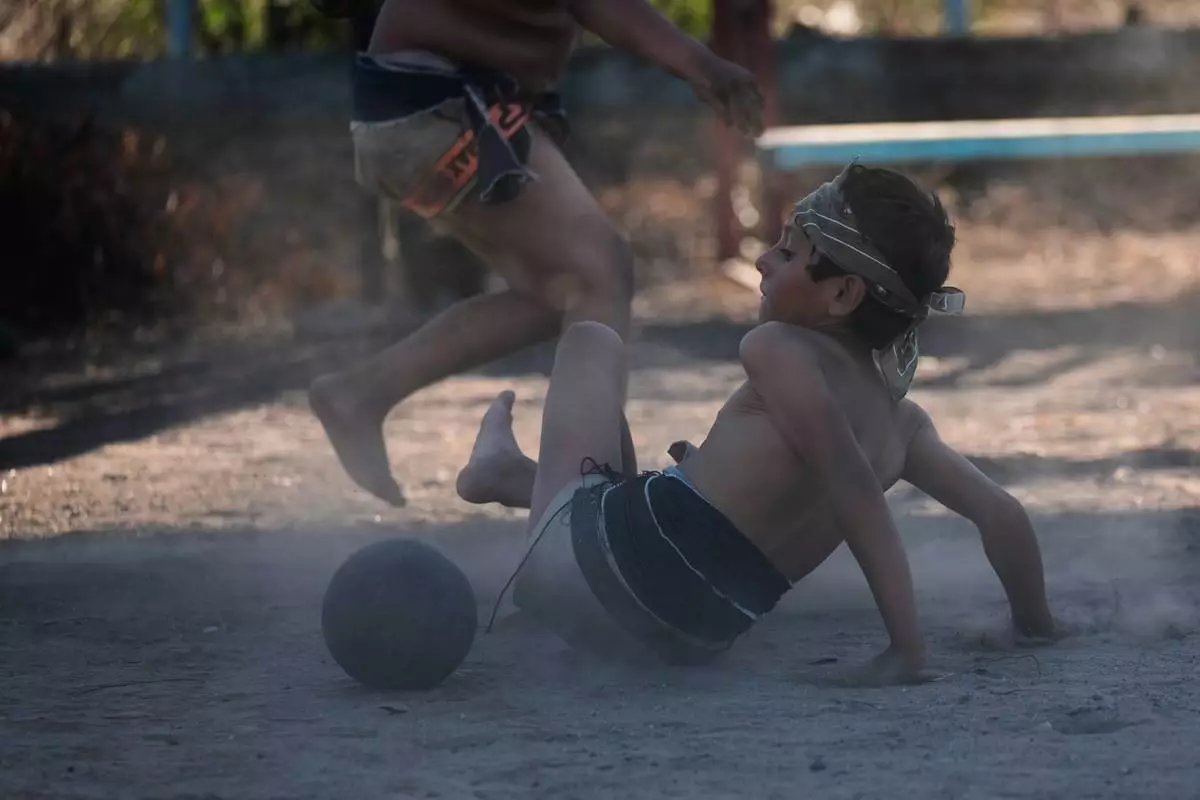
The Osuna children grab the rubber ball, all 3.2 kilograms of it — around 7 pounds or seven times heavier than a soccer ball — and begin playing. Only the hips may touch it, forcing players to leap through the air or dive low when it skims the ground.

As Mexico prepares to co-host the 2026 FIFA World Cup, the nation is looking back 3,400 years to one of the oldest team sports: the ancient ballgame known as ulama, a ritual practice nearly erased during the Spanish conquest that survived only in the remote pockets of northwestern Mexico before its late 20th-century rebirth. Today, authorities and its modern players are leveraging the momentum of international soccer to shine a spotlight on the ancient sport once again.

While players acknowledge that tourism fueled the sport’s revival, many worry that projecting an “exotic” image undermines a tradition central to their identity.

“We must rid the game of the notion that it is a living fossil,” said Emilie Carreón, a researcher at the National Autonomous University of Mexico, UNAM, and director of a project aimed at studying and practicing the sport.

That's exactly what the Osuna family is trying to do. After ulama player Aurelio Osuna died, his widow, María Herrera, 53, continued his legacy, teaching the ballgame to their grandchildren in their small village in Sinaloa, 1,000 kilometers (620 miles) northwest of Mexico City.

“This seed will bear fruit someday,” she said.

According to the Popol Vuh, the sacred Mayan book, the world was created from a ballgame, where light and darkness clashed to balance life and death and set the universe in motion.

Long before the Maya, the Olmecs — the earliest known Mesoamerican civilization — practiced the sport; the recreation of this clash of opposing forces was common in various pre-Hispanic cultures. The evidence is in millennial rubber balls unearthed in Mexico and in nearly 2,000 ball courts found from Nicaragua to Arizona.

The game, depicted in codices, stone carvings and sculptures, had many variations and meanings, from fertility or war ceremonies, to political acts and even sacrifices.

While some players were beheaded — possibly the losers — Guatemalan archaeologist and anthropologist Carlos Navarrete explained this occurred only during specific periods and in certain regions. The physically demanding game was primarily a big social event, drawing crowds for fun and betting.

Spanish conquistador Hernán Cortés was impressed by the spectacle presented by the Aztec emperor Moctezuma but the Spanish ultimately banned ulama and ordered the destruction of its courts, likely viewing the tradition as a form of resistance to Christianity. For the Catholic Church “the ball was the living devil,” Carreón said.

The game — played by hitting the ball with the hip, the forearm or a mallet — survived only on the Mexican northern Pacific coast, where the colonial process led by Jesuit priests was less aggressive and ulama was accepted in Catholic festivities, said Manuel Aguilar Moreno, a professor of art history at California State University.

On the opening day of the 1968 Mexico City Olympics, spectators watched as burly men contorted their bodies in unexpected ways to keep the rubber ball moving for as long as possible. The exhibition sparked studies about the ballgame and how to preserve it in the following decades.

Luis Aurelio Osuna, 30, Herrera’s eldest son, began playing hip ulama after school, just as his father did decades ago in Los Llanitos, a ranch next to the port city of Mazatlán. Now his three children also play.

Osuna and his mother teach the children how to hit the ball and guide them through the complicated rules, which include a scoring system with points that are won and lost.

They do it out of passion, but also out of pragmatism in a state where organized crime is pervasive.

“We need to find a way to keep them entertained with good things,” said Osuna.

Hip ulama teams have up to six players and the Osuna family sometimes participates in tournaments or exhibitions.

Decades ago, matches were big events tied to religious feasts, sometimes stretching on for an entire week. But those days are gone, as interest waned and rubber balls became hard to get.

In the 1980s, filmmaker Roberto Rochín documented the work of perhaps the last rubber ball-maker in the mountains of Sinaloa. The artisan made them similar to the Olmecs, who discovered that mixing hot rubber sap with a plant created a strong, elastic and durable material. This civilization made some of the oldest balls of the world.

During the 1990s, staff from a resort in the Mexican Caribbean traveled across the country in search of Sinaloan families who could represent the ballgame as a tourist attraction in the Riviera Maya, where no one played it anymore.

“It’s pure spectacle: they paint their faces and put on feathered costumes,” Herrera said. Yet, she acknowledges the value. “That’s where the revival began.”

The ballgame began to spread and to be known outside Mexico. Osuna, with the family team his father had formed, ended up playing hip ulama in a Roman amphitheater in Italy. It attracted so much attention that they were hired for a deodorant commercial, he said.

As the World Cup approaches, authorities and corporations are launching exhibitions in Mexico City and Guadalajara, and featuring ulama players in ad campaigns highlighting Mexican heritage — a move that has sparked mixed feelings.

“We’re not circus monkeys,” says Ángel Ortega, a 21-year-old ulama player from Mexico City who recently participated in a TV commercial alongside football players.

Ilse Sil, a player and member of the UNAM project led by Carreón, believes that institutional support will help to preserve ulama but officials need to promote the game in communities and schools to recruit more young players, as it remains a marginal sport with approximately 1,000 players mainly in México and Guatemala.

In Los Llanitos, Herrera’s grandchildren love playing. They don't care where — in the dirt field, in a court or even in the house corridor — but always with the precious inheritance: a handmade decades-old rubber ball from the mountains of Sinaloa. They say it cushions the blows better.

Eight-year-old Kiki is the most enthusiastic. He says he is determined to keep practicing until he fulfills the dream of leading a team of his own.

Follow AP’s coverage of Latin America and the Caribbean at https://apnews.com/hub/latin-america

Juan Osuna plays ulama, a traditional Mesoamerican ballgame dating to pre-Hispanic times, in Los Llanitos on the outskirts of Mazatlan, Mexico, Saturday, April 25, 2026. (AP Photo/Marco Ugarte)

Juan Osuna plays ulama, a traditional Mesoamerican ballgame dating to pre-Hispanic times, in Los Llanitos on the outskirts of Mazatlan, Mexico, Saturday, April 25, 2026. (AP Photo/Marco Ugarte)

The Osuna family poses for a photo before a match of ulama, a traditional Mesoamerican ballgame dating to pre-Hispanic times, that they organized in Los Llanitos on the outskirts of Mazatlan, Mexico, Saturday, April 25, 2026. (AP Photo/Marco Ugarte)

The Osuna family poses for a photo before a match of ulama, a traditional Mesoamerican ballgame dating to pre-Hispanic times, that they organized in Los Llanitos on the outskirts of Mazatlan, Mexico, Saturday, April 25, 2026. (AP Photo/Marco Ugarte)

Iker Salgueido plays ulama, a traditional Mesoamerican ballgame dating to pre-Hispanic times, in Los Llanitos on the outskirts of Mazatlan, Mexico, Saturday, April 25, 2026. (AP Photo/Marco Ugarte)

Iker Salgueido plays ulama, a traditional Mesoamerican ballgame dating to pre-Hispanic times, in Los Llanitos on the outskirts of Mazatlan, Mexico, Saturday, April 25, 2026. (AP Photo/Marco Ugarte)

Iker Salgueiro stands still as an adult fastens a pre-Hispanic-style “fajado,” or leather belt, in preparation for ulama, a traditional Mesoamerican ballgame dating to pre-Hispanic times, in Los Llanitos on the outskirts of Mazatlan, Mexico, Saturday, April 25, 2026. (AP Photo/Marco Ugarte)

Iker Salgueiro stands still as an adult fastens a pre-Hispanic-style “fajado,” or leather belt, in preparation for ulama, a traditional Mesoamerican ballgame dating to pre-Hispanic times, in Los Llanitos on the outskirts of Mazatlan, Mexico, Saturday, April 25, 2026. (AP Photo/Marco Ugarte)

Youth play ulama, a traditional Mesoamerican ballgame dating to pre-Hispanic times, in Los Llanitos on the outskirts of Mazatlan, Mexico, Saturday, April 25, 2026. (AP Photo/Marco Ugarte)

Youth play ulama, a traditional Mesoamerican ballgame dating to pre-Hispanic times, in Los Llanitos on the outskirts of Mazatlan, Mexico, Saturday, April 25, 2026. (AP Photo/Marco Ugarte)

Recommended Articles